The Idle

Old Testament: 2 Chronicles 8 & 9

Poetry: Psalm 3

New Testament: 2 Thessalonians 3

     We don’t know how many variations of belief people in the early church fell into. We read indications of some in the Bible, like the legalism of the Galatians or the spirit-enthused group in Corinth. It may be that Thessalonica had a division, for a time, over how to understand the day of the Lord which might be seen in 2 Thessalonians 3.

     It is remarkable what people can convince themselves of, at least briefly. In the 1960s in America, a group said it was not necessary that they eat food to live. They considered that it was fine to eat food for the pleasure of it, if you chose to, but that eating had simply long been assumed to be important. They claimed all one really needed to do for continued life was breathe air. That group died out, but there have been many such extremes in history.

     We don’t know if false claims about the day of the Lord having already come affected the behavior of some in Thessalonica, but it could explain why some stopped working. We read of something like that attitude from part of the Corinthian church (1 Corinthians 4:8). Paul had made a point of telling the believers in Thessalonica that they should work with their hands and lead quiet lives (1 Thessalonians 4:11). We know that Paul himself wrote more than once about how, as an apostle ministering the gospel, he had the right to receive financial assistance but chose to work. In his work he set the people an example, but not all of them maintained it (2 Thessalonians 3:8‑9). In Thessalonica it seems that some believers who were capable of working took advantage of others’ assistance, they stopped working and behaved as busybodies (11). Whatever the reason for their behavior, it needed to change. It was bad for those who were being lax, and for the community’s reputation with outsiders. But if a claim about the kingdom was the reason for their actions it gives a nice twist to Paul’s response – if they thought the curse on the soil was past, and that work was no longer needed for food to be produced, they were wrong (Genesis 3:19). They were to return to work if they would continue to eat.

     Paul wrote that “undisciplined” people who did not obey the instructions of the letter were to be admonished and not associated with, so that they would be put to shame, but they were not to be treated as enemies (2 Thessalonians 3:11, 14, 15). They still could be brought around, and that is good. The extremes and oddities of Christianity would keep cropping up in the world, but all that Paul was asking from them was simple lives, lead with an appreciation of what Jesus had done for them. They were to live as examples of Christ’s behavior and speak his words. They were to do good, and not grow weary of it (13).

     Lord, thank you for the many and differing blessings we have in work. Work may have its origins in a curse on the soil, but you are often willing to take what began as a burden and use it to show your power and your grace. Thank you for allowing work to sometimes be a platform for our creativity, an opportunity to form friendships, a way to gain joy in our efforts. At times we may feel we are doing little more than proving we can hold out against boredom – but please help us to remember our goal of serving our Lord even as we engage in worldly employment. Thank you when you help us to locate work, thank you when you help us to do it well, and thank you for helping us to find courage and opportunity to leave it at the right time. Thank you, for so many of us who do not work in paid positions, that there are others able to provide us with financial support. Thank you, Lord. Amen.

-Daniel Smead

Reflection Questions

  1. It has been suggested that the sharing of goods in Jerusalem when the church first started had special causes, in part with so many people having come from other areas. Do you think it helped set bad influences for some churches later on?
  2. If any of the “undisciplined” chose not to work, but rather left the church over this situation, do you think that shows they were more than just “undisciplined”?
  3. What effect do you think going through this effort at correcting the “undisciplined” had on the Thessalonian church after it had been completed?

Don’t Let Anyone Deceive You

Old Testament: 2 Chronicles 6 & 7

Poetry: Psalm 2

New Testament: 2 Thessalonians 2

     2 Thessalonians 2 is one of those chapters of scripture that can make us wonder why it was written. Did the people receive a false “spirit or a message or a letter as if from [Paul], to the effect that the day of the Lord” had already come (2)? And if they received such a communication about the day of the Lord, what was its purpose? Was the idea just to plant doubts and create turmoil? Did it achieve anything more than getting the people to check in with Paul?

     Maybe someone tailored a piece of misdirection based off Paul’s words in 1 Thessalonians 5:2, that the day of the Lord would come like “a thief in the night,” to suggest that the day was able to arrive and pass without people becoming aware of it. Such an idea would not fit well with the overall uses of the “day of the Lord” in the Bible, as Paul pointed out in 2 Thessalonians 1:10 speaking of “that day”, but we don’t know how the Thessalonians thought of the phrase before Paul wrote this letter. In 2:1 Paul linked “the coming of our Lord Jesus Christ” with “our gathering together to Him” before he addressed the idea of false communication about the day of the Lord. Perhaps the point of whatever deceiving message the people received was an attempt to separate the day of the Lord from one or both of those ideas in their thoughts.

     Returning to the “thief” metaphor for a moment, any metaphor or parable generally has only one application to be made from it, and can easily be misunderstood by being overapplied. The “thief” metaphor came from Jesus’ words, and it emphasized diligence (Matthew 24:43, see through chapter 25). Jesus didn’t apply any risks of the metaphor to those who were faithful. We do not know when Jesus is coming, but as believers we will not be left floundering when the world changes because of his return – the believers will join with him in celebration.

     Paul has a much plainer case to make than the implications of a metaphor, however, he points out that he already told the church that those who are alive when Jesus is just about to return will have seen signs before his coming. As part of this Paul describes a man engaged in a campaign of evil on behalf of Satan. Paul may seem to write of this remarkably calmly, though admittedly it can be difficult to read tone into written words. And, of course, we don’t know what the Thessalonians had imagined their situation was based on the “spirit” or “message” or “letter” Paul wrote of – he needed to clear things up. We do know that the circumstances Paul is describing will be extreme, and he mentions that he spoke about these things with them in person (v. 5), so he may have previously offered comforting words about the potential of living during this situation. In any case Paul leaves no doubt of who is more powerful, the man of lawlessness, or Jesus. Jesus will slay him by his mere breath (maybe a spoken word?) – it is not a contest. The call to the believers is to stand firm, and having received eternal comfort, and good hope by grace, to desire also to be strengthened in their hearts in every good work and word.

     On the other hand, the situation will be extreme for those who have rejected the truth. They will receive a “deluding influence so that they will believe what is false, in order that they all may be judged who did not believe the truth, but took pleasure in wickedness” (11‑12). This is not the situation of those we are trying to reach with an understanding of God’s love, history will have moved beyond that. It will be like what we read about in Exodus, when God hardened Pharaoh’s heart so He could show His signs and wonders in Egypt at the time of the ten plagues (4:21; 7:3). Pharaoh abandoned good behavior well before Moses arrived, but if shown enough miracles he might have been swayed from his course, even if only temporarily. God wanted a clear-cut setting in which to show His power. God intended to punish Egypt. It seems that things will go similarly with the man of lawlessness and his followers at the end of this age. It would be hard for anyone to remain loyal to such an evil leader and not try to weasel their way into compromises, even if just into other forms of evil, after God’s judgment is made clear. But by that point in history God wants a clear-cut setting to show His judgment. (I admit to finding some of this a bit distressing, but Paul had seen more of the evils of the world than I have, so I can understand if he was able to have a more clear-eyed view about it than I as he wrote about it.)

Lord, thank you for your strength, and that I feel able to put my trust in you no matter what situation I arrive in, even if I were to be living during the reign of the man of lawlessness. You are far greater than he. Your son is far greater than he. I trust that your love and your mercy will be comfort to me whatever may come. To whoever of your servants do live in that time, please let them have great outpourings of your grace and confidence from your Spirit. Life is not painless, but life is worthwhile when lived for you. Thank you, Lord. Amen.

-Daniel Smead

Reflection Questions

  1. Do you think the origins of 2 Thessalonians 2 might be from a prank? Or perhaps did it result from a serious attempt to damage a church’s faith where it seemed to be vulnerable? It has been said that it is normally easier to tear down than to build up. What is the best way you have experienced that a church has been built up? How can you visualize being part of building a church up?
  2. How surprising is it to you that Paul needed to write two letters to the church in Thessalonica, perhaps in the same year, based on their confusion about issues of eschatology? What might have happened if these issues went uncorrected? How much have you studied and compared scriptures about the future to develop your grasp on these ideas if you wanted to discuss them? How deeply do you choose to investigate these matters for yourself, compared to where you stop, considering that if you wished to examine the issue further you would take a question to a “Paul”?
  3. Do you find it hard to imagine a time when there will be no room for shifting between those who are fully committed to evil and those who serve God with their whole hearts? If you thought such a time was coming soon, are there things you would be doing today to prepare?

What’s in Your Future?

Old Testament: 2 Chronicles 3-5

Poetry: Psalm 1

New Testament: 2 Thessalonians 1

     Yesterday we read some of Paul’s words about the future, along with his instructions about preparing for the future through good conduct. In 2 Thessalonians 1 Paul chose to say more about coming events to the same audience. (Your Bible may have notes suggesting that only four to six months passed between the two letters.) Paul remains proud of the people’s conduct, and again mentions their shared status with him as persecuted believers (1 Thessalonians 2:2, 14; 2 Thessalonians 1:3-7). But here Paul emphasizes the coming of a “just” repayment for the poor treatment they have received: “when the Lord Jesus will be revealed from heaven with His mighty angels in flaming fire, dealing out retribution to those who do not know God and to those who do not obey the gospel of our Lord Jesus.” (7-8).

     Paul tells the Thessalonians that God intends to “repay with affliction those who afflict you, and to give relief to you who are afflicted” at the appearance of Jesus (6-7). I think it is worth noting that God’s justice for those who mistreated the believers is not about providing ongoing torture, as some have imagined, but “the penalty of eternal destruction” (9). Paul used the same Greek word for “destruction” here and in 1 Thessalonians 5:3 (when he wrote of “sudden” destruction), but here he emphasized a link to the coming age. (To say “eternal” destruction, as the NASB chose to do, is not a great translation of the Greek. What Paul wrote conveys more “of the aion” or “of the age”.) But, to those who have believed, the Lord Jesus “comes to be glorified in His saints” and “to be marveled at among all who have believed” (10). That is a lovely image.

     In a way Paul repeats his theme of preparation for the future at the end of the chapter. Paul says he always prays for the people in Thessalonica that God will count them worthy of their calling, and “fulfill every desire for goodness and the work of faith with power” (11). So, he wants them to be able to be as good and as faithful as they are desiring to be, knowing that it is God’s power which permits that desire to be fulfilled.

     It feels like Paul is inviting the Thessalonians to think about their lives more in terms of the future. We don’t know what he has heard about them in the last few months, but he is concerned over them. They are afflicted, we don’t know how badly, perhaps they are very frustrated. But Paul wanted them to realize that what they were waiting for was more than worth all they were going through. Of faith, hope and love we know that love is the greatest (1 Corinthians 13:13), but it would never be enough on its own. As Paul also said, if Christ had not been resurrected we would be in an awful state (15:13-19). We would have no future to look forward to no matter how much God valued us, and no matter how much we valued God or each other. But we do have a future, a glorious future we can tell others about and seek for them to share with us, and a savior on whom to put our faith and our hope. Rejoice, brothers and sisters!

     Lord, please help me to desire greater goodness, and more works of faith in my life. Please also clear out of the way whatever would prevent me from serving you as I ought to do, so that I can be the servant you desire me to be. Knowing that the day will come when Jesus is glorified in his saints, and that I hope to be among those saints, help me not to hold back from any good thing that I know I ought to do. Relying on you, I pray these things, Amen.

-Daniel Smead

Reflection Questions

  1. How different do you think the New Testament would appear to us if we had not only the letters Paul sent, but also messages he received which prompted those letters, so we could better understand things like the situation in Thessalonica which prompted what he wrote? Do you think that not having the specific causes for the letters may help us to treat what Paul wrote as being more universal in its application? If so, is that sometimes a problem?
  2. How often do you find yourself dealing with frustrations or concerns about your daily life by looking to the hope you have in the return of Christ? What aspects of that return do you find the most compelling to your thoughts? Is there some particular passage of scripture that draws you, or an image, or a piece of a song? Have you ever shared your perspective with someone else?
  3. Paul reminds us that in large measure what our lives becomes is about what we decide to aim for. Words like “perseverance” and “desire for goodness” and “the work of faith”, these are about the choices we make, particularly the choices we make against external and internal opposition. When did you last examine your life to decide what you will seek?

The Times

Old Testament: 2 Chronicles 1 & 2

Poetry: Psalm 150

New Testament: 1 Thessalonians 5

     1 Thessalonians 5 carries on Paul’s discussion from the end of chapter 4 about death and resurrection (13-18). Paul had just said what it meant for a person to be dead (asleep, as a metaphor), awaiting resurrection. He said this instruction was intended to avoid the Thessalonians being “uninformed” and allow them to “comfort” each other (4:13, 18). But it is hard to imagine that Paul had not already told them about these things. We aren’t told that the people received conflicting teachings from another source. Perhaps after members of the congregation died confusion developed about how events were meant to work out. It may be that they asked, through Timothy, for more instruction on the topic of death, resurrection, and the future.

     In 5:1 the discussion shifts to when these things could be expected. Paul wrote “you have no need of anything to be written to you” on the subject of “the times and epochs” – a phrase used by Jesus in Acts 1:7 apparently to describe the basic idea of events for the future including his return. When Paul wrote “you have no need” it doesn’t seem like Paul meant that the believers in Thessalonica had a clear understanding of everything related to the future, but rather that they have heard about these things before and should not need to ask for more information on the topic. The essence of the situation, as Paul lays it out, is that believers know about what is coming and non-believers don’t – in the sense of being forewarned. It is not just this awareness that affects their conduct, of course, but they will behave quite differently. One group is in preparation for that time and the other is not (Luke 21:34-36). But the future issue of knowing when that time will come is beyond both groups. Jesus had earlier declared it was even unknown to himself and to the angels in heaven (Matthew 24:36, 43). It is for God to set the schedule, and to declare it.

     The events of “the times and epochs” relate to judgment, rewards, resurrection, death, joy, sorrow, renewal, and discovery. There is more tied up in that than I would try to express in one devotional, and I don’t understand it all anyway. But even with the Thessalonians clearly not having understood all that was involved in that, Paul felt that he could write: “Therefore encourage one another and build up one another, just as you also are doing.” (5:11). He felt good about them, and what they were getting done, although they didn’t have their eschatology (ideas about the future) all straightened out. That is comforting. Still, Paul figured they were about to have it cleared up, since he had written his letter. I’m not saying none of this mattered to him (he didn’t want to leave them uninformed and figured it would have made them uncomfortable). But it is nice to think there is some room for uncertainty, while we seek to build each other up.

     Lord, thank you for those who have built me up and encouraged me. Help me to accept the strengthening they have offered me, and to not allow myself to be torn back down by the world. Let me use that strength for useful purposes. Help me to encourage and build up others. Please let me take that goal seriously and give me opportunities to do so. Let your Spirit work in your people to draw us closer together and show your love more clearly. Thank you, Amen.

-Daniel Smead

Reflection Questions

  1. We hear a lot about the day of Christ’s return being “like a thief” meaning it will catch people unawares – but it seems like that is meant to emphasize the effect on unbelievers. Do you think the real effect of the metaphor might have been to make us concerned about other people not being ready for that day?
  2. We don’t know what confusion the believers in Thessalonica had about death, we could imagine all kinds of things. Maybe they just assumed that believers weren’t supposed to die before Jesus returned, having heard of believers who were returned to life. What difficulties do you think there were for Christians as they moved into a second generation of believers?
  3. How might things have been changed if God simply told the first generation of disciples exactly when Jesus was going to return? Do you think they might have left that information out of the Bible if they had received it? What if Jesus promised to give the believers a 30-year warning alert of when he would return? Is it better to be left with each generation not aware if it is the generation that will be alive when the trumpet sounds?

A House for God

*Old Testament: 1 Chronicles 28 & 29

Poetry: Psalm 149

New Testament: 1 Thessalonians 4

     First Chronicles 28 and 29 relates the end of David’s time as king. Mostly it discusses an assembly where David laid out responsibilities his son Solomon would have for building God a temple and encouraged the people to join in that work with him. By gathering that assembly David was also making it clear that Solomon was the chosen heir – chosen by God. The line of succession had been contested before, and David called on all present to commit their loyalty to both God and Solomon (28:5; 29:24).

     David had desired to build God a dwelling place but was denied that role because he had shed blood. Joyfully for David, the time when he learned of his rejection was paired with learning about the promise of a special covenant with God. In the years that followed David stockpiled resources in preparation for the Temple to be constructed by his promised son. In 22:14 we read of huge amounts of gold and silver David stored up. In 29:4 we are told of additional sums he provided near the end of his reign. That was followed by him encouraging the people to offer their own commitments (6-9). They gave tons of gold and silver and brass and iron, along with precious stones. And “the people rejoiced because they had offered so willingly, for they made their offering to the Lord with a whole heart, and king David also rejoiced greatly.” (9). As David had said, this was not a temple “for man, but for the Lord God” and they were able to rejoice in the idea of giving to the project (1).

     I read some years ago about a study in which people of varying incomes were asked what they considered would be enough money for them to be content. There was a remarkable similarity in the answers given to the researchers, from those who made fairly little, on through those who made far more. People tended to want 15% more income than they currently had. Knowing this, of course, we can guess that very few people whose income increases become content – instead they adjust to their new circumstances and change their target for “contentment.” Of course we are not to view the world in that way, though we can all too easily become caught up in the distractions of worldly thinking. If we are seeking to store up for ourselves treasure in heaven, rather than on earth, we are less susceptible to such errors.

     I find it a matter of joy that the people of Israel in David’s time chose to join in setting up the Temple. They could have hesitated to give, and left matters to David and Solomon. They could have suggested that the vast amounts David had already collected would be enough for the task. (To try to put some numbers to this, we are told in 22:14 that David had collected 100,000 talents of gold. One calculation puts a talent at about 75 pounds, which would mean David had collected about 3,000 tons of gold. By a useful coincidence it is estimated that 750,000 pounds of gold were collected during the California Gold Rush, so a tenth of what David had gathered.) But the people still wanted to be involved with honoring God by contributing from their own wealth, which had itself come from God’s blessings (29:14, 16).

     (I find it interesting, as well, how God’s intentions may have been set up across the generations. David being a man of war could tie in with the extent of the nation’s wealth and how he prepared the way for Solomon. David was not accepted to build God a Temple, but he was freed to go forward in fighting against the enemies of God’s people and to help prepare a time of peace for Solomon. At the same time David’s victories brought in wealth that would enable the Temple to be funded to an incredible degree.)

        While David thought of the promises he had received in terms of Solomon, and prepared for his reign, we recognize a greater fulfillment in terms of another son, Jesus. Even in the text of these chapters there are hints at that, statements that “if” Solomon will serve God “with a whole heart” his descendants will continue to possess the land forever (28:8, 9). That kind of obedience was not available from Solomon, or any of the kings in David’s line who lived in Old Testament times. So while Solomon was able to fulfill the prophecy in one sense, building a house for God, it was destroyed after only a few hundred years. Another house waited to be built by a son yet to come.

     Lord, please help me not to be caught up in material concerns to the detriment of spiritual calls. Please let me have my daily bread so that I will not be distracted by wants, but please help me not let desires for more than I actually need get in the way of things that truly matter, like other people, and worshipping you. Help me to recognize how truly kind you are to me, and to give you credit and praise for your blessings to me and my family. Help me be willing to go out of my way for things that are important to you. Thank you for your care, Amen.

-Daniel Smead

Reflection Questions

  1. David and Solomon approached worship very grandly, perhaps more so than anyone today. What lessons might we be meant to take from the stories of the Temple?
  2. It may seem like an absurd amount of gold and silver was collected for use with the Temple construction, and we aren’t sure how all of it was used, but what impression do you think it would give to worship at a Temple where the walls were coated with gold? What if you knew that you, or your ancestor, contributed to building that Temple?
  3. Do you think it is harder to see yourself as receiving blessings from God when your income is from wages instead of through farming or spoils of battle?

God’s Fellow Worker

Old Testament: 1 Chronicles 25-27

Poetry: Psalm 148

* New Testament: 1 Thessalonians 3

Have you even been introduced to someone as God’s fellow worker? It has a nice ring to it, doesn’t it? Paul described Timothy as, “our brother and God’s fellow worker in spreading the gospel of Christ, to strengthen and encourage you (the Thessalonians) in your faith” (1 Thessalonians 3:2). Could you be described as God’s fellow worker?

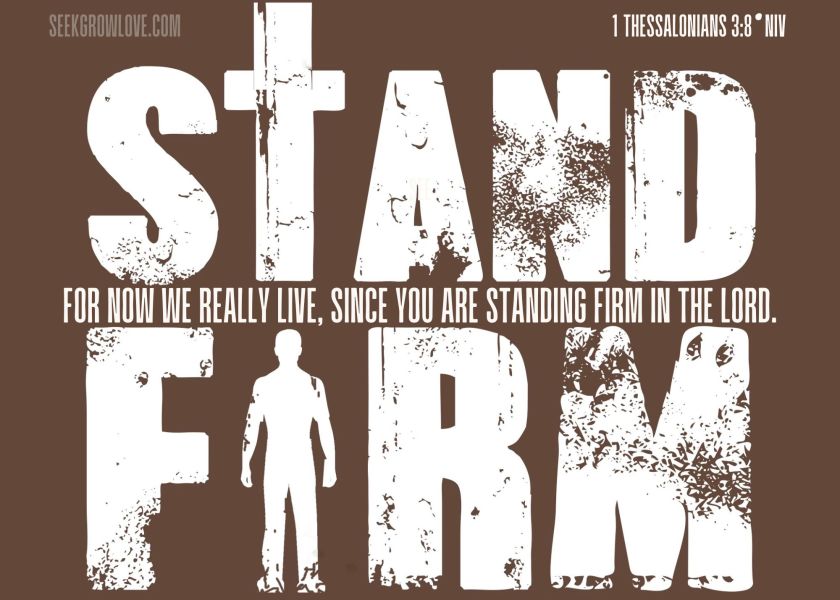
I am impressed in this chapter (1 Thessalonians 3) with Paul’s obvious heart for his fellow workers (there was a reason they were called brothers even though they had no blood relations) and his heart for the church – some of whom he had not known long and had only spent a short time with. And yet, with the good news Timothy brought of the Thessalonians’ strong faith and love Paul says, “For now we really live, since you are standing firm in the Lord” (1 Thess 3:8). You can hear his heart filled with joy. For now we really live!

Paul had been concerned that when he and his fellow workers moved on to carry the gospel message to other towns the tempter might be successful in tempting the young Thessalonian church away from true faith in God and love for Him and one another. It is a very real and powerful threat that is still active and alive today. It is why the armor of God is so important. Thankfully, the Thessalonians were standing strong.

Another way that Paul shows his heart is through his prayers – night and day – most earnestly – remembering the Thessalonians, praying they might see each other again, and praying that their faith would be strengthened even more. This is an important reminder to keep praying for our brothers and sisters in the church – even if they appear to be doing alright and don’t have any known health problems (often the most common needs on the church prayer list). The tempter is always looking for little cracks in the armor. Prayer is huge. Keep at it. Night and day. Most earnestly. Remember your extended church family in your prayers. Pray for their faith to be strong and growing – with any gaps filled in to present a stronger front against the tempter.

Healthy faith displays action and love. Pray also that love will be increased – love for each other (the church) and also for “everyone else” (vs. 12) including those outside who need to know God and His Son Jesus. Increasing love. Love is a beautiful thing – but increasing love is even so much better. Don’t be content being a loving person – strive and pray to have increasing love. Be a parent, a spouse, a neighbor, a boss, a co-worker, a missionary, one of God’s fellow workers with increasing love. Pray for increasing love for yourself, each other and everyone else.

AND – of course we have to end this devotion as Paul ends every chapter in 1 Thessalonians – REMEMBER – Jesus is coming back!! So live your life preparing for that day! As Paul says so well – “May he strengthen your hearts so that you will be blameless and holy in the presence of our God and Father when our Lord Jesus comes with all his holy ones.” This is my prayer for you – my fellow SeekGrowLove reader. Blameless and holy, I hope to see you there. Come, Lord Jesus, come!

-Marcia Railton

Reflection Questions

  1. Wh0 has been God’s fellow workers with you? What have they done for you and for God? Do they know how much you appreciate them?
  2. How is your faith and love doing – if someone were sent to give Paul a report on you and your church’s faith and love what would Paul hear back? Would he rejoice that you are standing firm? Where can your faith grow, filling in the gaps? How can your love increase?
  3. Pray the prayers of Paul in 1 Thessalonians 3 (for faith filled in, increasing love and blameless/holy people ready to stand/bow before God when Jesus returns) for yourself, and your church family and extended church family. Use specific names God brings to mind. Repeat night and day – most earnestly.

Your Joy

Old Testament: 1 Chronicles 22-24

Poetry: Psalm 147

*New Testament: 1 Thessalonians 2

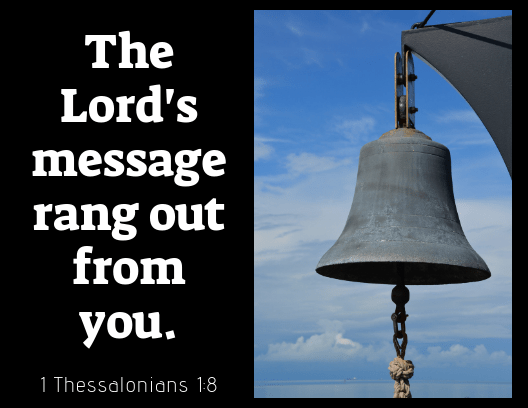
In the first chapter of First Thessalonians, which we discussed a little yesterday, we see Paul commending the Thessalonians for welcoming the gospel message with joy, even in the face of severe suffering. He is thankful for their work, labor and hope. They had left behind their idols and were serving God and waiting for the return of His Son. Paul notes how they became imitators of him and of the Lord. It is obvious they had first of all listened and believed the message; but then they were also doing, working, sharing the message and actively being a model to others so that “the Lord’s message rang out from you…your faith in God has become known everywhere” (1 Thessalonians 1:8).

I love this picture of Paul’s effective ministry! People have heard the message, they have responded, changed their lives and are serving God. The Lord’s message is now ringing out from the ones Paul shared the Scriptures with! This is a beautiful picture of an effective ministry. This is what I want. Do you want it, too?

Keep in mind, ministry is not just for the licensed pastor. Being a minister of God’s word to God’s creation is for the SS teacher, the elder, the parent, the prayer warrior, the family member, the neighbor, the co-worker who has a heart for God and following his commands and loves people enough to show them the way to be saved through Jesus. Are you a minister? I hope so. Am I a minister? I hope so. If so, let’s do it well. What can we learn from Paul about effective ministry? There’s a lot of wise answers in this short chapter of 1 Thessalonians 2 – here are some of my favorites.

– Know that you don’t do it alone. ONLY do ministry with God’s help. It is HIS gospel message and he will give you the courage and knowledge to share it the way He desires (vs 2).

-Expect some strong opposition. Opposition doesn’t always mean you should stop what you are doing. Sometimes (vs. 2) it means you need God’s help to be bold and carry on because you are doing God’s work and man is opposing you. Other times Paul was stopped from doing what He thought God wanted him to do because God wanted him to do something else. Sometimes, it is Satan opposing us (vs. 18) and we pray and pray some more. In this particular instance Paul found other ways to continue his ministry – can’t go to Thessalonica now but can send Timothy and write letters. Prayerfully consider the source of the opposition before you decide how to proceed.

-Watch yourself so you don’t spread untruths or have impure, selfish motives or use trickery or flattery. Don’t pretend to be someone you are not, don’t be greedy – that’s a huge turn-off (vs. 3 & 5).

-DON’T work to please men. Work to please GOD! (vs. 4) A ministry built to please men will NOT be pleasing to God. It will crumble. Men (and women) are fickle and wrong and selfish and proud and sinners – don’t spend your efforts trying to make them happy and trying to have them like you. God is right and holy and awesome and love and perfect and just. What He says is the One that matters. Live your life and do your ministry to hear His praise and not man’s (vs.6). That doesn’t mean people don’t matter! They matter so much Jesus died for them. But their opinions, wants and view of the truth are always inferior to what God wants and knows to be true. Seek to always please God not men.

-Be gentle – like a mother. And encouraging – like a father. Help them feel valued, important and safe – while urging them to life lives worthy of God who is calling them into his kingdom and glory (vs 7-12). Share your life with them. Be genuinely interested in who they are. Paul wasn’t a street corner evangelist yelling at people as they walked by. He definitely spent a lot of time helping people study and learn the Scriptures – he also spent time working alongside people and having deep discussions – just like a spiritual parent.

So those were some of my favorite pearls of wisdom on how Paul did his effective ministy. Read the chapter to find your own favorites. And then, pray and get to work. We are called to make disciples. What will your ministry look like? How will you imitate Paul and Jesus and the early church which are models for us?

And, as this chapter ends again with a most important theme and reminder, so this devotion ends with the same – Jesus is coming back. Paul was looking forward to the day not only for his sake – but for the joy he would have in standing next to his spiritual brothers and sisters whom he had ministered to in Thessalonica and many other places. They would be his crown, glory and joy as they too were now anxiously anticipating and prepared for the return of Jesus. Look around you today. Prayerfully consider – who is God calling you to minister to? Who is he asking you to prepare for the return of Christ? How is he asking you to do it? Who do you want to be standing next to when Jesus returns, knowing that they are your joy?

-Marcia Railton

Questions for Reflection

  1. Do you have a ministry? What does it look like? How is it similar and different from Paul’s? What do you want it to look like?
  2. What could you do to make your life and ministry more pleasing to God? Pray about it and make a plan with steps to move in this direction.
  3. Prayerfully consider – who is God calling you to minister to? Who is he asking you to prepare for the return of Christ? How is he asking you to do it? Who do you want to be standing next to when Jesus returns, knowing that they are your joy?

Ring Out!

Old Testament: 1 Chronicles 19-21

Poetry: Psalm 146

New Testament: 1 Thessalonians 1

How often does the Lord’s message ring out from you? How often do you mention and talk about the return of Jesus Christ? Have you had the joy of seeing someone you told about Jesus telling others about Jesus even in the midst of trial and persecution?

Before we jump into 1 Thessalonians, let’s back up a minute to consider the city of Thessalonica, its church, and the missionary, Paul , who would be writing this letter to them. We know from Acts 16 that Paul had not necessarily planned to include this Macedonian (northern part of Greece) city in his second missionary trip. He had wanted to go into the province of Asia but was prevented from traveling there by the Holy Spirit. Then Paul received the vision at night of the man from Macedonia calling out for help – and Paul and his companions went right away.

First stop – Philippi, which ended with a jail stay with Silas, complete with a hymn sing, an earthquake and a saved jailer. It was time to move on. Next stop, Thessalonica. When Paul answers the call of the Macedonian man in his vision he answers big. Thesssalonica was the largest city, the capital city of Macedonia. It was known for its seaport as well as its major highway, commerce, wealth, and strong Greek (pagan) character which all combined together to create a booming city of sin. A city of sin in need of the message of Jesus. A city of sin in need of the message of Jesus and needing to know that Jesus is coming back.

Thessalonica did have the benefit of a Jewish synagogue and community with some God-fearing Greeks as well. So as was his custom, that is where Paul would start. Acts 17 tells that Paul spent three Sabbaths in the synagogue teaching about Jesus from the Scriptures. Some believed, others were jealous of this new missionary with a new message about the Messiah who had come once and would come again. They created a mob which you can read about in Acts 17:5-9 but the end result was that Paul and Silas fled from Thessalonica that night (sent by the brothers) and would travel on to meet and minister to the Bereans (who were more noble than the Thessalonians because they examined the Scriptures daily to see if what Paul said was true. Acts 17:11) Perhaps that daily searching in the Scriptures could be one of the reasons why we don’t have a letter or two from Paul to the Bereans in our New Testament?

Anyway, that’s the background information we are given on Paul’s ministry to Thessalonica. He likely hadn’t been there too long – perhaps only 3 weeks, perhaps a little longer -but he spent that time teaching them the Scriptures about Jesus. The newfound Christian church there would definitely see more persecution as those in the city had not only persecuted Paul while he was there but even sent agitators to Berea when they heard Paul was preaching there. They would not stop just because Paul was out of town. It wasn’t an easy town to be a new Christian in – maybe you can relate.

Fast forward a few months and Paul is now in the city of Corinth. In his first letter to them Paul would tell the Thessalonians he had wanted to come see them again and again to see how they were standing up- but Satan had prevented it. So, he did the next best thing – he had sent Timothy to go check things out. Timothy had just returned to Paul with overall good news about the church in Thessalonica, as well as a few things to iron out in their understanding and actions – and so Paul would take the occasion to write a letter to them – and thus we have the the book of 1 Thessalonians. What would he tell them that we should hear, too?

-In prayer, thank God always for those who are standing strong in the faith.

-To be one others will thank God for, your faith must produce work, your love must lead to labor, and your hope in your Lord Jesus Christ must give you endurance. How are you doing in those areas?

-Realize that God’s message is for all those loved and chosen by God – share it, don’t hoard it.

-People are imitating you – make sure you are imitating Jesus.

-Keep doing what Jesus (and Paul) would do – even in the midst of suffering.

-The Holy Spirit wants to see the message spread and gives power and joy when the message is received and welcomed.

-Let the Lord’s message ring out from you! Everywhere! Let your faith in God be known! Everywhere! (Pick a spot to start today – you can’t start with everywhere – but you can start somewhere.)

-Change! Turn away from your idols (self, pride, worldly attitudes and actions, sin) to serve the living and true God.

-God raised Jesus from the dead to rescue us from the coming wrath at the time of judgment. Wait faithfully for God’s Son to return from heaven. He wants to rescue you, but not just you.

It is a great time to note that each of the 5 short chapters in this letter from Paul to the church in Thessalonica will end with teaching and encouragement regarding the return of Jesus Christ – and why it makes a difference in how you live your life today. How will you live your life today because Jesus is coming back?

-Marcia Railton

Reflection Questions

  1. Does the Lord’s message ring out from you? If so, how and when? If not, what can – and will – you do to make it so, how and when?
  2. Who do you know who needs to be saved from wrath? Who may God be calling you to spread the good news to -perhaps its not who you were thinking of first? Ask God to show you who and how and have a stronger passion for sharing the good news. Remember – Jesus is indeed returning and it is closer today than ever before. Why is this important?
  3. How are your work, labor and endurance holding up? Do you need to fine-tune your faith, love and hope in order to see more/better work, labor and endurance?
  4. What do you love about 1 Thessalonians 1? It’s so short re-read it a couple of times today.

Deserving of Our Praise

Old Testament: 1 Chronicles 16-18

*Poetry: Psalm 145

New Testament: 1 & 2 Thessalonians Intro – see below

Yesterday we looked at David dancing and worshiping God as the Ark of the Covenant was brought to Jerusalem and placed in the Tabernacle. Today we are looking at a song of praise, written by the very same man, King David. 

This Psalm speaks of different aspects of who God is, and David tells us that he meditates on those attributes and tells everyone about them. I think that in this he also invites us to do the same. Last week in his class at Family Camp about the Bible, Steve Mattison spoke to us one day about meditating on the word of God, and on God’s goodness and on all His attributes, and how scripture calls for us to do this day and night. It simply means to keep reminding yourself of these truths and thinking about them all the time. That is what David speaks of himself doing in this Psalm. He says, “I will meditate on your majestic, glorious splendor and your wonderful miracles.” (Psalm 145:5 NLT)

Then the rest of the Psalm just speaks of how awesome God is. He speaks of how the Lord is slow to anger and abounding in love, how He always keeps His promises, and how He helps the fallen and the hungry and thirsty. David speaks of how God’s Kingdom with last forever and how God’s eyes are close to those who call on Him. There are many more that David speaks of here and all these attributes are amazing and worthy of all of our praise. 

So the question is, what can you praise God for today? I’m sure there are things that He has done for you that are deserving of your praise. But you may right now be in a difficult place, where you may be struggling and feel far from God. If you are, then something that would be a good practice for you at this time is to meditate on what God has done for you in the past, and praise Him for those things and praise Him for what He has promised to do in the future. It may seem difficult to do in the middle of the storm you may be going through, but remember Paul and Silas who were beaten and thrown into prison, or David when he was being hunted down by Saul, who wanted to outright kill him. They and others in the Bible and throughout church history, when they found themselves in a dark place chose to focus on God’s goodness, rather than their storm and to praise Him, because no matter what He is worthy of our praise.

So let me leave you with David’s words that he ends this Psalm with, “I will praise the Lord, and may everyone on earth bless his holy name forever and ever.” (Psalm 145:23 NLT)

-Jonny Smith

Reflection Questions

  1. Is God deserving of your praise? Why or why not (answer in more than a couple words)?
  2. What are some of the best ways for you to show your praise to God? How often do you do them?
  3. Do you meditate on God’s words and on His goodness/wonderful works? Would there be benefit in doing this more? If so, what benefits?
  4. Is God still deserving of your praise when you are in a difficult place and time? Why or why not (answer in more than a couple words)?

1 & 2 Thessalonians Introduction

Scholars believe Paul wrote the first letter to the Church in Thessalonica during his second missionary journey, while in Corinth – just a few months after he left Thessalonica, between 49 and 51 AD.  

The main theme of 1 Thessalonians is Jesus’ Second Coming.  Since Jesus is going to return, Christians are called to live lives worthy of God – blameless and holy in the presence of our God and Father.  When Jesus returns, the dead in Christ will rise first, then the living will be caught up to meet the Lord in the air.  Paul tells the Thessalonians to encourage each other with these words.

While unbelievers will suffer God’s wrath, “…God has not appointed us to suffer wrath but to receive salvation through our Lord Jesus Christ” (1 Thessalonians 5:9)

Paul wrote 2 Thessalonians to correct the misunderstanding that the “Day of the Lord” had already come.   More details are given of Jesus’s return – when “he will punish those who do not know God and do not obey the gospel of our Lord Jesus.” – 2 Thessalonians 1:8.  Paul gives details of the rebellion that will take place before the return of Christ, and the rise of the “man of lawlessness” (the antiChrist).  Paul warns in 2 Thessalonians 2:9-10, “The coming of the lawless one will be in accordance with the work of Satan displayed in all kinds of counterfeit miracles, signs, and wonders, and in every sort of evil that deceives those who are perishing.  They perish because they refused to love the truth and so be saved.”

May we take to heart Paul’s encouragement and his warning in these two books, and fervently seek the truth.  I’ll close with 2 Thessalonians 3:13, “And as for you, brothers, never tire of doing what is right.”

-Steve Mattison

Try Again

Old Testament: 1 Chronicles 13-15

Poetry: Psalm 144

New Testament: Colossians 4

This story from I Chronicles is one of my favorite Old Testament stories. (It Can also be found in II Samuel.) David has just gone through years of being hunted down by a man who wanted to kill him out of jealousy. David never retaliated against Saul, and never sought to take the throne (which was rightfully his) from Saul by force. In fact the day that David learned of Saul’s death, he didn’t celebrate, but instead mourned his death.

Now where we are in the story, David has been made king over all of Israel, he has conquered the city of Jerusalem, and made it the new capitol of Israel, and the first thing he wants to do is get the Ark of the Covenant (the golden box that represents God’s presence among His people) returned to its rightful place in the Tabernacle.

The Ark of the Covenant has been away from the Tabernacle for many years at this point. It had been lost when the sons of Eli took it into battle against the Philistines, back when Samuel was a child, and it was captured by the Philistines and placed in the temple of their god. The Ark didn’t stay in Philistia for very long. (It is a pretty cool story that you should really check out in I Samuel 5-7.) Long story short, the Ark ended up in the town of Kiriath-Jearim for many years. 

The Bible says that the people of Israel felt like God had abandoned them during this time. So David decided that the Ark needed to be returned to the Tabernacle. The first attempt to move the Ark did not go so well. They didn’t move it in the way that was required for it to be moved, to show the respect and honor that was needed. They basically took the symbol that represented God’s very presence and put it on a farm cart, pulled by an ox to carry it. In the end a man died, and David and the others took a step back to rethink what they were doing. 

The second attempt to move the Ark went much better. This time we see that David got together the Levites (those whom God had chosen to handle and move all the articles of the Tabernacle and the holy elements). He had some of them carry the Ark with the specialized poles that were prescribed by the law, and others were appointed to sing songs of praise to God as they went along. We are also told that David dressed himself, that day, in the garments of a priest rather than kingly garments, humbling himself before the ark. We are also told that there were proper sacrifices made to God, because God Himself helped them move the Ark. This time the Ark was carried into Jerusalem and up into the Tabernacle without incident, with David dancing before the Ark the whole way. 

So what does this story teach us? I think it teaches us to not take our time with God for granted. Our God is a loving father, who wants to spend time with us, and that is awesome! But sometimes we forget how special that really is. I’m talking about us getting the chance to be in the presence of Almighty God, and have his complete and full attention. Do you realize how amazing that is? I’m not saying that we need to go through any certain rituals or ceremonies, or need to jump through any hoops to spend time with God. He is waiting eagerly for time with us. I’m just saying that we should treat our time with the Almighty with a healthy dose of awe and respect. As the Psalmist wrote, we should “enter His gates with thanksgiving in our hearts and enter His courts with praise.” Our God is an awesome God, and we should do well not to forget it.

-Jonny Smith

Reflection Questions

  1. What does it mean to you that God wants you to be in His presence? What has He done through the ages to make it possible for people to spend time in His presence?
  2. How do you spend time in His presence? Do you take it for granted? What can you do to increase the quality and quantity of your time in His presence?
  3. The first time they tried moving the ark it failed because they had not asked God how they should do it. Is there something God might want you to do – but you have not been doing it in the WAY He wants so it has not worked well? What can you do to try again?