Praying through the Ups and Downs

Psalms 25-30: Praying through the Ups and Downs

As an English major, I have come to be a voracious reader, and one of my favorite past-times is cuddling up with a good novel and a cup of coffee. In all my reading, I’ve come to see patterns in books.  I am now able to discern what I will like to read and what I won’t. A common thread through all the books I like is how they display a wide range of emotions of humanity, not just the good aspects. Instead of painting a glossy, rose-tinted picture, the novelists try to capture how broken the world is, and by doing so, show something much deeper, a common humanity.

I love novels and reading, but I will be the first to say that I do not look to these things for my hope and salvation. When I want to look to something that speaks to my life now, I look to the Bible. As I read through the Psalms, I recognize in scriptures the same thing I love in literature through these prayers and praises. The Psalms we read for today, Psalms 25-30, were all written by David. In these Psalms, David pleads to God for vindication and deliverance and praises God when he does so. These wonderful prayers model for us how we can come to God in all our pain as well as our joy. In both of these places, God longs to hear from us.

Like novels and books help the author to communicate to us, Psalms shows us how we can communicate with God and the many ways that God can communicate back, through His word, nature, and more. These prayers show us how to come to God in a way that is pleasing to Him and open up our hearts to what He wants from our lives.

God longs for us to pursue Him with prayer, and the New Testament focuses on this heavily. Jesus gives us an example of prayer in Luke 11 with the Lord’s prayer. Paul says in Ephesians 6:18 and 1 Thessalonians 5:17 to pray constantly. These examples and admonitions about prayer point to the same thing that David’s psalms do: we should communicate with God all the time. James says it best in his letter, chapter 5 verse 13, “Is anyone among you suffering? He should pray. Is anyone cheerful? He should sing praises.”

As we can see in the Psalms and through the life of Jesus, prayer is the backbone of our faith. To know and pursue God we need to communicate with Him, and prayer is where that communication, that relationship, begins. We don’t have to gloss over our problems or focus on them solely. God longs for our whole humanity, and we, like David, can bring it to Him.

-Cayce Ballard

books

Our Provider

Psalms 19-24: God is our provider.

sheep

There are so many nuggets of truth in these Psalms that I couldn’t touch on here. Today, when I sat down to open my Bible and try to sift through it all to find what I wanted to write about, I happened upon a very familiar scripture. Psalms 23 is a Psalm that many people know, even those who aren’t Christians. Even through this Psalm, which contemplates death, shadow, and sorrow, the hope that it communicates draws people to it and to God. As I read through this Psalm in the context of those that surround it I was struck.

In Psalm 21 and 22, we see David crying out in praise and pain to God for his provision. In both emotional states, David knew that God was his provider, his savior. God was the person who could save him from his enemies. In Psalm 22, even when David could not see God acting in that moment, he prayed and praised God from the faith that didn’t come from the physical evidence around him.

What does provision mean? When we talk about provision, a word which literally means ‘something, like food or drink, that is supplied, especially for a journey,’ we think about the material thing that we are eating or drinking. But, David says that the LORD is his provision. I recently got a new puppy (and if you are my friend on Facebook you’ve probably seen plenty of pictures of him). This dog lives inside and does not have access to food or water, unless I provide those things for him. So, even though the food or drink is the literal provision, I am his provider. I am the one that sustains him. God is the same. He does grant us the things that we need, but most importantly, God is the one sustaining us. Without him, we have nothing, just like without me, my puppy would not have what it needed. When we rely on God to be our provider, we can say with assurance, as David does, “The LORD is my shepherd; there is nothing I lack.”

As we think through these psalms, let’s remember to look to the LORD, our shepherd, in both the difficult times and the good, because he is our provision.

– Cayce Ballard

img_5227
Meet Finnegan! 


Photo Credit: http://www.globalmeatnews.com/var/plain_site/storage/images/publications/food-beverage-nutrition/globalmeatnews.com/industry-markets/future-of-eu-sheep-discussed/10353815-1-eng-GB/Future-of-EU-sheep-discussed.jpg

Our Boundary Lines

boundarylinesWhen the Israelites finally entered the Promised Land after wandering for forty years, they had a big job to do. After taking possession of the land, they had to divide the land between the twelve tribes. Joshua was given this job, and you can find the boundary lines of each tribe in Joshua 16-21. These boundary lines were designed by God so that each tribe would have access to enough good land to survive. They were a provision from God as the Israelites settled into their new home.
Hundreds of years later, David talks about boundary lines in Psalm 16. He says,

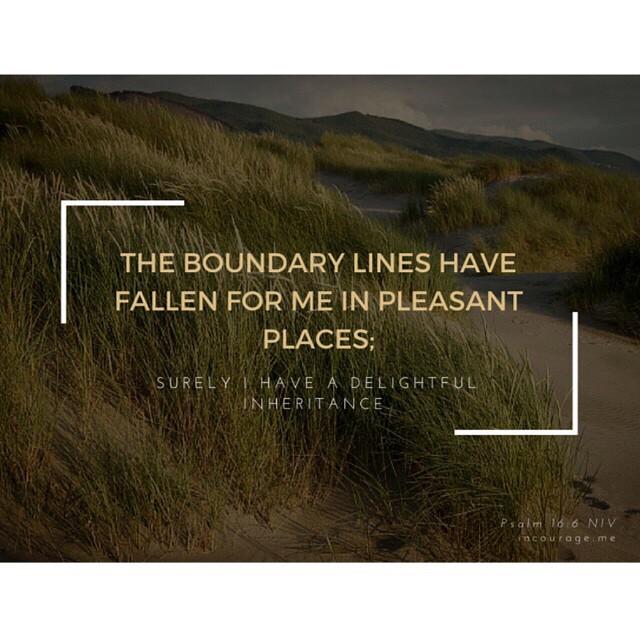
“LORD, you are my portion

and my cup of blessing;

You hold my future.

The boundary lines

have fallen for me

In pleasant places;

Indeed, I have

A beautiful inheritance.” –vv. 5-6

The boundary lines David was talking about were not only boundary markers on the ground dictating the land he would inherit. These boundary lines concerned something far more important. These boundaries established a spiritual inheritance that we also receive, the Kingdom of God.

Hebrews 9:15 says, “Therefore, He is the mediator of a new covenant, so that those who are called might receive the promise of the eternal inheritance.” Jesus is our mediator, so that we can receive our promised inheritance. The portion that we receive, our future and our inheritance, is the Kingdom of God. Indeed, our boundary lines have fallen in pleasant places!

Like many of David’s psalms, his celebration of God does not end with a praise. David always includes action. If we continue to read through the rest of Psalm 16, we see the reflection of a heart change in David’s life. He praises God, because God counsels Him- through his meditation on God’s word, he reflects on how he can better live for God. Through David’s purposeful study of God’s word, he walks on the path of life, which leads to the Kingdom.

Often, we think about boundaries as hemming and restricting us. David rejoices because, though the law does give him restrictions on how to live, he sees that life with the law is pleasant. Our boundary lines are great not only in the future to come, but also this world now.

Let’s rejoice in our inheritance and follow David’s example of walking and reveling in God’s word and presence.

-Cayce Ballard


Photo Credit: https://pbs.twimg.com/media/B8CzfQUIcAAi1yT.jpg

Look to the Cross

Psalm 8-14

prettyplace.jpg

“When I observe Your heavens,
the work of your fingers,
the moon and the stars,
which You set into place,
what is man that you remember him,
the son of man that you look after him?” -Ps. 8:3-4

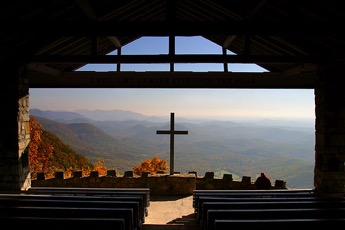
A few years ago on the UP Project, me and several other groggy kids were woken up at 5am to travel up into the heart of the South Carolina Blue Ridge Mountains.  Our destination was Pretty Place, an open chapel in a camp ground. From the chapel, the view of the ridges of the mountains are held in stunning display as they roll towards Greenville. The view can easily take your breath away. But, this chapel never held the view above the object that was placed directly before it.

In the middle of this lookout is a cross, and sitting in the pews, you can’t look at the view without first looking at the cross.

Psalm 8 describes our wonderful God and creator, who made the heavens majestic and us the caretakers of this world. Like David, there have been many times that I have called out, “Who am I, Lord? Who am I that you should remember me?” Travelling through this country and others, the magnificence of God is always in my mind, the way that he formed so many different places for us to inhabit. But, again I think, who are we to be the partakers of this beauty? My thoughts turn back to that image of the cross, held in stark relief to the blue hills below.

Today is Christmas, a day where we celebrate the birth of the heir to David’s throne, Jesus Christ! During this advent season, I remember that my Savior, God’s son, was born for me, and there are many times when I echo David’s question of ‘who is man that you remember him?’ When I think about the great love that God has for us, that he would send his son to die for us, my breath is taken away, similar to, but much greater than, the feeling I had as I gazed out over the mountains. God gave us this great gift, even while we were still sinners. Even on, especially on, this quiet (or perhaps rather hectic) Christmas morning, we should dwell on the Savior that was born for me and you.

Through Jesus’ birth and, like that cross symbolizes, his death, the great divide between God and man was overcome. The position of the cross at Pretty Place should mirror the position of the cross in our lives. The beauty of this world and its comforts are all secondary to the gift we have from God. Without Jesus’ death, we are nothing, but with the death of Jesus, we become God’s adopted children. Praise God for this wonderful gift we have been given!

-Cayce Ballard

Cayce is a Senior this year at the University of South Carolina, studying Secondary English Education. She plans to continue her education next year in the M.T. program at USC. She loves traveling, reading, and playing with her new puppy, Finnegan. Cayce leads a Young Adult Bible Study based on the Grow reading plan.  She would like to thank everyone for contributing to these devotions.

Photo Credit: http://m0.i.pbase.com/u15/jrandyh/upload/20105330.pplacec01.jpg

The Other Christmas Story

Psalms 1-7

second-coming

Saturday, December 24

In our reading today, we enter into the book of Psalms.  To use an analogy, Psalms is probably like the collection of worship music that your worship team is using at church.  They were written to be set to music, have a variety of authors, covers a wide variety of themes and topics, and even have instructions to the “worship leader” as how (tempo, instruments, mood) many of these psalms should be played.  You will notice as you read throughout the book of Psalms there are lines, stanzas, and chapters that have found their way into the Christian worship (and even some secular music) of today.

One recurring topic, laced throughout the book of Psalms that fits our reading and the season, is the prophetic telling of a promised Messiah: his jubilant arrival, the long awaited Word of God becoming flesh.  The angels, the earth, the heavens, and every man had been created with a longing for this event and had waited its fulfillment (Colossians 1:15-20).  Sadly, much of the focus of this season has turned away from the telling of this story, and turned to other ones.  In many of the Christmas movies I know,  someone asks, “Who wants to hear the story of Christmas?”  The family patriarch takes a seat by the fire.  Children gather around at his feet.  Everyone quietly listens as the story begins.  “Twas the night before Christmas and all through the house…”  I sigh.  This is not the LIFE-ALTERING, SALVATION-BRINGING, PROPHECY-FULFILLING, HISTORY-CHANGING Christmas story I know, BUT there is a rivaling Christmas story that is equal, or even greater than the one we currently know about the humble beginnings of a baby in a manger. This story is made mention of in the Psalm 2:

“I have installed my king on Zion, my holy mountain.  I will proclaim the Lord’s decree:

He said to me, “You are my son; today I have become your father. Ask me, and I will make the nations your inheritance, the ends of the earth your possession. You will break them with a rod of iron; you will dash them to pieces like pottery.” – Psalm 2:6-9

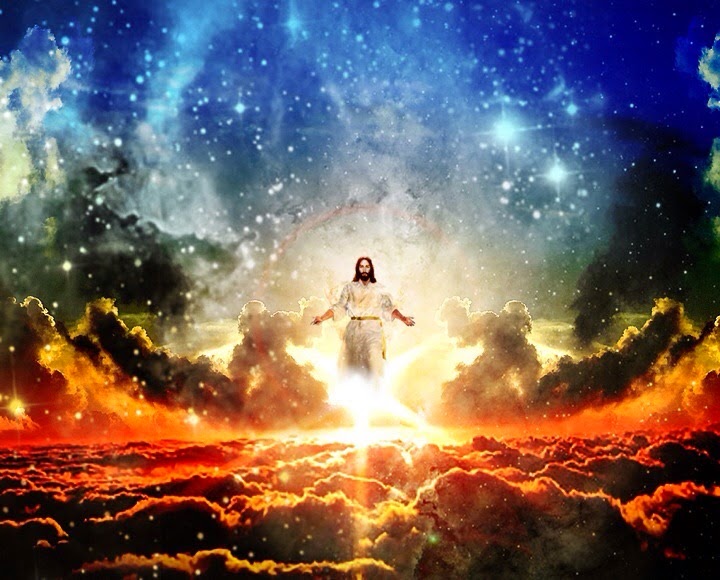
The first advent of Jesus Christ is the fulfilling of prophecy, but it is not complete; there is more to come.  There is a second advent of Christ.  He will come to earth not quietly in a manger, but as the King empowered by God Almighty.  EVERYONE will know of his arrival. To those who know Jesus, it will harken a time of great joy, restoration, and peace; however, the fulfillment is still not complete.

“Therefore, you kings, be wise;be warned, you rulers of the earth. Serve the Lord with fear and celebrate his rule with trembling.  Kiss his son, or he will be angry and your way will lead to your destruction, for his wrath can flare up in a moment.  Blessed are all who take refuge in him.” – Psalm 2:10-12

 There is no justice in telling part of this.  For these wonderful things to occur sin, evil, and death must be destroyed, including those who do not give their lives to the King of Kings.  When all this has happened, the story is complete, and a new age and life begin.  If there is another story we tell at Christmas, let it be this one; the one that has power to bring everlasting joy, peace, salvation to all men.

-Aaron Winner