Hungry Kings and Unlawful Bread

Old Testament: 1 Samuel 21 & 22

Poetry: Psalm 68

New Testament: Galatians 2

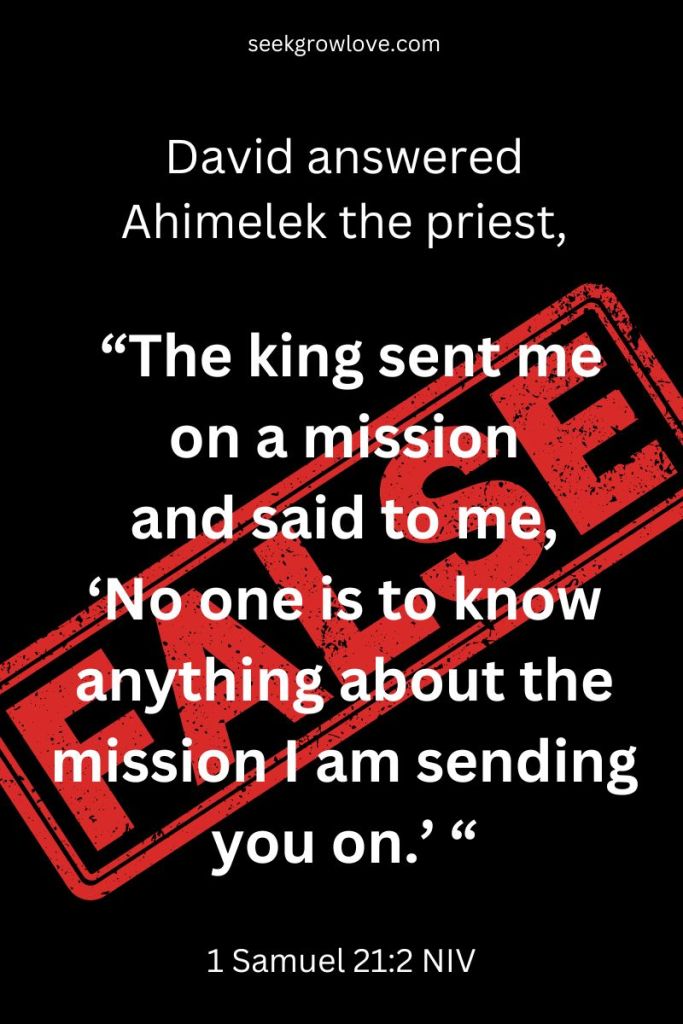
In the beginning of our reading today, we have a strange interaction. If you want to remind yourself, 1 Samuel 21:1-6 is the focus. David is running from Saul, so he goes to the priest, tells him his companions are hungry, and asks if he can have any bread. The priest responds by offering the consecrated, holy bread. David and his companions eat and they are on their way. 

The strangeness comes to play because

David lies about what he is doing, 

David realizes that his interactions with the priests led to their deaths,

and David, nor his men are supposed to eat the bread. 

Time would fail us in trying to understand if David was justified in lying to the priest about his true intention; that is, not to do Saul’s bidding but to run from him. 

David wants to make up for the slaughter of the priest, both by housing the survivor and no doubt by desiring to build the temple after he becomes king. (He had many reasons to desire to build the temple.)

The strange part I want to examine with you is that David and his buddies weren’t supposed to eat the bread. The Bread of the Presence, or the showbread, is commanded to be placed in the temple regularly.(Exodus 25:30) While there are different theories on *why* God commanded there to be bread, the name “bread of the presence” or “presence bread” indicates that it was meant to be set in the presence of God always, to remind the priests that God’s presence is in this place, and God is the one with whom we should wish to dine. Leviticus 24:5-9 describe the use of the bread; it was to be a covenant of the people forever and to be eaten by Aaron and his sons. Yet the priest does not ask David (who he knows is not a priest) if he was a priest, but simply if he was clean. David, who we know has lied before this point, may not have known, but answers in the affirmative. 

Did David sin? Should he be punished for this?

A good question. 

Why did Jesus use this story to justify “working” on the Sabbath?

A *better* question. 

In all three synoptic gospels (Matthew 12:1-8, Mark 2:23-28, Luke 6:1-5), Jesus and his disciples are going through fields of grain and picking the heads and eating it. The Pharisees declare this is too much work; things like picking up your mattress, lighting a fire, walking more than a set amount, all considered too much work, based on the Torah and later tradition. 

What does Jesus say in response? Yes, my disciples eat grain, but David ate the consecrated bread. And yet, though you would call him unlawful, that is not what God saw. 

See, Jesus says, “the Sabbath was made for man, not man for the Sabbath”. (Mark 2:27)

“The Son of Man is Lord of the Sabbath.” (Luke 6:5)

“Something greater than the temple is here.” (Matthew 12:6) 

What do we do with that? Let me give a few quick thoughts. 

The Bible is a strange book. We’ve talked about how it is more complex than we give it credit for, it is also strange. This does not mean there is no application, but you might need to think for a bit to see what God is saying. 

What God is saying through the story of Christ referencing David and his companions becomes clearer we we recognize that we can’t pull stories out of their context. First, Jesus is saying that the laws that were intended to give a nation of slaves rest and worth beyond what they produce were being used by the religious elite to control them. (“The Sabbath was made for man.”) We can only know this by knowing that the pharisees were trying to determine the lawfulness or unlawfulness of any and every action. But more importantly than the cultural context, the written context shapes what we should see in this story: Jesus goes on in every version of this story to heal a man on the Sabbath, a man with a withered hand. It’s pretty clear that “working” on the Sabbath, doing the good things God places in front of us, healing the sick and saving the dying, is not work that takes a back seat, but is the very thing God might be calling us to do. 

Finally, Jesus is Lord, even of the Sabbath. Jesus changes everything. As his follower and apprentice, his interpretation of the Bible is the one I want to use, and his way of living out the commands of God, even if that changes them, is the way I want to live. If Jesus says that doing good is lawful, then I will do good on every day, whether or not it is my Sabbath. 

May you eat the bread of the covenant in the presence of the Lord. 

-Jake Ballard

Reflection Questions

  1. The Lies of Abraham, Jacob, and David : Abraham lied about Sarah, Jacob lied about Esau, and David lied about his mission. Why do you think the Bible records the lies and failures of the patriarchs? One of the Ten Commandments is “thou shalt not bear false witness”, the Hebraic equivalent of lying; does the Bible condone it here and prohibit it elsewhere? 
  2. Finding Your Sabbath: Saturday is probably not your day of worship, and you might even work on a Sunday. But do you have a Sabbath? Do you take a day away from the hurry of life, from the bustle of doing, completing, competing, overcoming, achieving, and instead find solace in simply being? The Sabbath, the work-and-rest pattern of life, was given by God to man, because humans are worth more than what they produce and what they achieve. How would you like to live out the gift of Sabbath? Pick a day and let it be a day of rest.
  3. Lord of the Sabbath: Jesus as Lord lived out the commands of God, but also would change them; he made foods clean and abolished the need for sacrifices as much as he kept kosher and celebrated Passover. Jesus is greater than the temple and than the Sabbath. Have you honored the Lord of the Sabbath by both resting when you need to rest and working when he calls you to work? Have you honored the Lord of your life by living the life he showed you and empowered you to live?

If you would like to know more about rest and about the elimination of hurry and are in your 20s and 30s, consider attending the Young Adult Getaway, June 9-12, in Sevierville, TN. Get more information at http://www.yagetaway.com

The Marriage Supper of the Lamb AND The Great Supper of God

Old Testament: Ezekiel 31-32

Poetry: Psalm 104

New Testament: Revelation 19

     At the start of Revelation 19 heaven rejoices over God’s actions regarding Babylon the great. Soon we hear about the coming of the marriage supper of the lamb, and John is informed that the bride is clothed in fine linen which “is the righteous acts of the saints” (v. 8). He is also told to write that those who are invited to the wedding supper are blessed. This feels a bit like when Jesus commented in 16:15 “I am coming like a thief,” drawing our attention forward to coming attractions rather than remaining in sequence with events.

     The voice which spoke about the marriage supper came from God’s throne, and hearing it speak caused John to fall and want to offer worship. John is corrected for this and told that only God is to be worshipped (v. 10). But it seems like in this case he made an understandable error. Throughout Revelation voices come from a variety of exalted sources, among them angels, strong angels, mighty angels, an angel standing in the sun, the Temple, the altar, and the horns of the altar. For John it may have been like experiencing holy surround sound, never knowing where the next proclamation would emerge from. Maybe degrees of grandeur are indicated by who spoke from where, giving different impacts to their statements. It wasn’t always clear to John what the intention was.

     The message of the chapter proceeds, announcing the arrival of Christ, and of the armies of the world gathered for Armageddon. In fact, the word “Armageddon” is only named back in 16:16 where its origin is explained. Here the battle is previewed as “the great supper of God” – a supper for the birds, to eat the carrion it will provide, in contrast to the wedding supper of the lamb (v. 17‑18). With Jesus on the move there is no contest (2 Thessalonians 2:8). Jesus seems to be given credit for the entire victory: the gathered forces “were killed with the sword which came from the mouth of Him who sat on the horse.” That is, except for the beast and the false prophet. Those two are removed from the scene and dropped into the lake of fire, receiving their punishment for serving the dragon and for deceiving the nations.

     The description of Christ includes having “a name written on Him which no one knows except Himself” (v. 12). Note that this mirrors part of Christ’s letter to the third church, Pergamum. There Christ said he would give overcomers a white stone with a new name written on it, which only the recipient would know (2:17). (That same letter identifies Christ with the sharp two-edged sword, shown in John’s opening vision sticking from Christ’s mouth, much as in chapter 19; 1:16; 2:12.) I like the idea of these names which are known only to oneself. I wonder if I am being fanciful in thinking this new name involves having a sense of your own identity. You won’t need to share that with anyone else. There will be no need to. There will no longer be self-doubt, rivalry, jealousy, any of the potential bitterness that plagues our current lives. It will be a wonderful time. I hope to see you then.

     Lord, I look forward to the day when your kingdom has come on earth as you now reign in heaven. You have been waiting for a long time, allowing more people to be saved through the grace of your son. May your glory and your majesty be shown in my life while I wait for that day. Let me be empowered and enthused to perform righteous actions that will please you. Let me set my mind on the things of the Spirit, live as your humble servant, and exalt you. Let my light so shine before men that they will glorify you. Let me present my body as a living and holy sacrifice, acceptable to you. Renew my mind, so I may prove what your will is. Thank you, my God. In Jesus’ name I pray these things, Amen.

-Daniel Smead

Reflection Questions

  1. Do you ever think about the fact that it is our opportunity, and honor, to clothe the bride of Christ in righteous acts?
  2. Who are some of the people you want to sit with at the wedding supper of the lamb? What do you think you will talk about there?

What’s He Gonna Say About Me?

Old Testament: Lamentations 1&2

Poetry: Proverbs 30

New Testament: Revelation 3

Waaaay back in 1995, the Christian group, Point of Grace put out a song that would become a permanent resident inside my head. It’s a song that seems to bubble to the surface of my brain when I am tempted to behave in a way that is unbecoming of a representative of Christ. What is Christ going to say about me?


What’s He Gonna Say About Me?


Now and then I must admit I hide behind my shallowness
I must confess I don’t begin to say enough
I’ll tell you of my lessons learned but I may never quite express
That God has blessed me far beyond what I deserve


I often miss the chance to show my faith in Him
By failing to convey what I have seen
And then I wonder while I face eternity
How Jesus ever finds a way to intercede for me


What’s He gonna say about me
When He weighs the works that I have done
Against the words that I have failed to speak
What’s He gonna say about me
When the chaff is sifted from the wheat
Will there be evidence that I believed


After this lifetime will come, the thankfulness that I forget
I will regret when I see clearly who He is
Then I’ll know all I should have said
So I must choose to not neglect
But resurrect the praise for all He is to me


If I confess Him before men
He will confess me before the Father in Heaven


The last line is straight out of Matthew 10:32, but Christ also promises to confess us before God in Revelation 3:5. In today’s reading, Christ is pretty hard on the churches in Asia, because he loves them and wants them to grow and thrive. These admonitions must have worked because here I am 2023 years later (give or take a year) writing to you about them! They spread the gospel…they turned from being lukewarm to setting the world on fire for Christ. While I don’t believe our salvation is predicated on our works alone, others will not be saved if we don’t let them know about the salvation that is freely given! My prayer is that we look for every opportunity to share Christ and our faith
in him. I want Jesus to confess me!

-Maria Knowlton

Reflection Questions

  1. In Revelation 2 & 3 what does Jesus promise to those who overcome? Do any (or all) of these serve as good motivators for you to be found an overcomer? What does Jesus want you to overcome today?
  2. What was your impression of the song, What’s He Gonna Say About Me? Do you often think about what Jesus will (and does currently) say about you?
  3. What grade would you give yourself on confessing your faith and spreading the gospel? Can you think of a specific time you could have/should have said something and you didn’t? What do you want to do “next time”? Pray about it.

Arise, Lord!

Old Testament: Jeremiah 11 & 12

Poetry: Proverbs 9

New Testament: 1 Peter 1

And, since there is never a wrong Bible passage to read and discuss on any given day, today’s devotion will be over Psalm 9.

For quite some time, the headlines of news reports have involved some form of injustice taking place in the world. Human trafficking is finally getting the attention needed to address the problem, but it is still very much an epidemic that needs to be solved. Racial discrimination has received national attention for various reasons, and is one that Christians who believe that we are “all one in Christ Jesus” (Galatians 3:28) take very seriously. Poverty in many third-world countries (and some first-world countries) remains a constant issue that governments have been unable to correct. For all the wrong done in this world, and has gone wrong since mankind fell in the Garden, there is an ultimate answer to put our hope in: our heavenly Father’s justice.

Our reading in Psalm 9 today tells us what God is going to do when the end of this age comes: judge the world in righteousness (v. 7-9). When our heavenly Father intervenes in the last days, He is going to do something about the injustices that many suffer from. He is going to favor those who have been oppressed, those who were powerless to do anything, and those who are the poorest among us. This tells us that our heavenly Father values each and every person on earth, seeing the injustice that they suffer from as a personal attack on what He has created. Every individual on earth is made in His image (Genesis 1:26-28), and they should be treated as such by our leading figures, and especially by us as followers of Jesus Christ.

There is a warning here in this passage: you don’t want to be on the other side of the Great Judgment coming in the end. Those who are the oppressors and abusers should take heed; they are in serious danger if they don’t change and repent. This should strike a healthy amount of fear into our hearts, if we have people around us who we have wronged (v. 20). Jesus warns us that we need to reconcile differences with others before the End comes, or we have some dangerous things waiting for us (Matthew 5:21-26).

Brothers and sisters, let today be a challenge to you to do two things: reconcile with anyone you may have wronged, and stand up for those who are being unjustly oppressed. It could be as simple as a classmate who is being bullied; stand up for them and help them. It could be a co-worker that is being treated unfairly by a boss; stand up for them and help them. Because when we help the “least of these”, we are ultimately helping Jesus (Matthew 25:40).

-Talon Paul

Reflection Questions

  1. How important is justice to you? How have you and can you be a part of seeking justice for the oppressed? How important is justice to God? How has He and will He show His righteous justice?
  2. Prayerfully consider who you need to reconcile with and then do it.
  3. This devotion was written before the events of this past weekend – the attacks on Israel. How does it relate and what are your thoughts and feelings after reading Psalm 9? Pray for Israel and for God’s intervention and righteous judgment. Come, Lord Jesus, Come and do the work your Father has prepared for you.

Tongue Resolutions

Old Testament: Jeremiah 3 & 4

Poetry: Proverbs 5

New Testament: James 3

Yesterday we saw how the tongue can be vile, deceptive, and hurtful. How it can hurt even those closest to us. What do we do when something so small like the tongue controls us?

The Bible teaches us that the words by which we express our deepest desires, instincts, and opinions may produce helpful and pleasing fruit. The wise man of Proverbs 15:4 says “The soothing tongue is a tree of life, but a perverse tongue crushes the spirit.” So, what we learned from the book of James is that the tongue is an instrument of extraordinary power, in spite of its size. Whatever its size, its most significant point is the connection to the heart — whether hardened by sin or recreated by grace.

James is chiefly concerned that we should have a sense of the convicting power of his teaching. For this reason he began by addressing the difficulty of taming the tongue. It is a word spoken primarily to bring conviction of sin. For the tongue is difficult, indeed impossible, to tame naturally, because, as we have also seen, it exercises power out of all proportion to its size. That means we can’t do it ourselves. It takes the regenerative power of God to make that happen. After regeneration, we begin to see and hear and seek after divine things; we begin to live a life of faith and holiness. Now Christ is formed in the hearts; now we are partakers of the divine nature, having been made new creatures (2 Corinthians 5:17). God, not man, is the source of this transformation (Ephesians 2:1, 8). God’s great love and free gift, His rich grace and abundant mercy, are the cause of the rebirth. The mighty power of God—the power that raised Christ from the dead—is displayed in the regeneration and conversion of sinners (Ephesians 1:19–20). What does all this mean? You have to remember something Paul said.  “Whatever the law says it speaks to those who are under the law, so that every mouth may be stopped” (Romans 3:19). You have to add God’s law (the Bible) into your life. You have to say it out loud so your tongue can be trained and then it will go into your heart.

A Fire (verse 6). A small fire can destroy an entire forest; all it takes is an uncontrolled spark. So it is with the tongue. A sharp word, a loose sentence, a callous aside can cause a conflagration that cannot be extinguished. Words can consume and destroy a life. But a controlled fire can be used to light a path, make a campfire. Its up to you to allow God to change that tongue of yours. Will you allow God to control your tongue? I hope so. He gives life.

Here, then, are four resolutions on the use of the tongue to which James’ teaching gives us:

1.     To ask God for wisdom to speak.

“If any of you lacks wisdom, let him ask God, who gives generously to all without reproach, and it will be given him. . . . in faith with no doubting. . . . For that person must not suppose that he will receive anything . . . he is a double-minded man, unstable in all his ways” (James 1:5–8).

2.     To boast only in Christ’s exaltation.

“Let the lowly brother boast in his exaltation, and the rich in his humiliation, because like a flower of the grass he will pass away” (James 1:9–10).

3.     To resist quarrelsome words as marks of a bad heart.

“What causes quarrels and what causes fights among you? Is it not this, that your passions are at war within you?” (James 4:1).To be constantly quick to hear, slow to speak.

“Know this, my beloved brothers: let every person be quick to hear, slow to speak, slow to anger” (James 1:19).

4.     To never speak evil of another.

“Do not speak evil against one another, brothers. The one who speaks against a brother or judges his brother, speaks evil against the law and judges the law. But if you judge the law, you are not a doer of the law but a judge” (James 4:11).

-Andy Cisneros

Reflection Questions

  1. How can you use your tongue to bring life today?
  2. Which of the four resolutions is most difficult or overlooked for you? What could happen if you were more consistent with this resolution regarding the use of your tongue? How can you put a greater focus on following through with this resolution for the next 21 days?

A Better Way to Safety

Old Testament: Isaiah 11 & 12

Poetry: Psalm 64

New Testament: Hebrews 9

    I worked at a nuclear power plant a few years ago, in its documents department. I rarely had to enter the main part of the plant, which involved passing through radiation detectors on the way out, but I learned about safety procedures, shielding, radiation levels, etc. Different parts of the plant had increased levels of risk and protection connected to them. There was also a limit on individuals’ total allowed lifetime exposure to radiation at the plant, which needed to be tracked. Each day meetings were held to discuss mistakes which had been reported at plants around the country, to gather what could be learned from them. Safety was considered highly important; workers have sometimes died in nuclear plants after what would be viewed as simple errors in other settings.

     My experiences at that nuclear plant may affect how I now think about the tabernacle. I recall the fact that people were only scheduled to enter the central reactor chamber for refueling every 18 months, and after long and careful planning. I compare that with the high priest only entering the Holy of Holies one day of the year after carefully preparing his purity for that event. I also remember the account of how Moses’ face would glow after he spent time speaking with God. Moses covered that glow with a veil, trying to put people’s minds at ease. Even before that, when the people said they did not want to hear from God directly anymore, God agreed that was for the best (Exodus 34:29-35; Deuteronomy 5:25-29). No analogy is perfect of course, but I don’t think that God could help being dangerous to humans under the first covenant. God protected the Hebrews by limiting their exposure to direct contact with such pure holiness. They were not fit for returning to a Garden of Eden-type relationship with their creator. They needed separation, division, mediation.

     In the first covenant people were to be kept safe by many rules. The Levites and priests were to guide them, teaching them what they needed to know. Everything was wrapped in warnings. But the teachers did not always teach, and the students did not learn well enough. Nations fell. Happily, joyously, a new covenant with better promises came and we now have a mediator who can do more than purify from things done in ignorance (Hebrews 9:7). We have Jesus, who can cleanse the conscience from dead works so that we can serve the living God (v. 9, 14). Our perfecting is not yet complete in this age, but while we look forward to its fulfillment we have reason to eagerly await our Lord Jesus (v. 28). We have been offered something quite different from what was offered to the Hebrews in Moses’ time.

     Lord, please let us have a joy that matches the wonder of what you have done for us. Please allow our lives to demonstrate an appreciation for you that is suitable to what you have done. I don’t know what you have in store for tomorrow, but I know that you are a God of wonderful surprises. Even if I will only see the kinds of miracles from you that I have seen before, they justify my praise and exaltation to you. Let me always eagerly await your son, who has done so much in my life. I want to be eager and ready to speak about how wonderful he is. Amen, my Lord!

-Daniel Smead

Reflection Questions

  1. What does this text tell us about how God values His son? What does it tell us about how God values His creation?
  2. You may have read or heard the idea that high priests entered the Holy of Holies with a rope tied to their ankle in case they died while inside, so they could be pulled out. This seems to be one of the ‘holy myths’ that develops around the edges of the Bible. The first we find of the story was many hundreds of years after the Temple had been destroyed, with no strong reason to think it was true. The Law specifies what a high priest was to wear, and the story as told would violate those standards. Perhaps it results from someone wanting to build up the dangers of the role, or having asked “what if” questions. Do you think such stories are problems of themselves?
  3. Do you feel that you eagerly await Jesus? If you do not, what holds you back from feeling that way?

Searching Scripture

Old Testament: 2 Samuel 13 & 14

Poetry: Proverbs 23

New Testament: Acts 17

     It is hard to discuss Acts 17 without mentioning verse 11, and the more “noble-minded” behavior of the Bereans, compared with the Thessalonians. They received the word with great eagerness and searched the scriptures daily to determine if what they were being told was true. The central comparison with the Thessalonians involved those residents of the city who had rejected the truth and driven out Paul and his companions. So it seems like the issue was the Bereans’ openness to examine the truth and receive it, making Bible study itself secondary. But the verse offers a lovely image of people being excited with the truths of the gospel they are hearing, while still being cautious to verify they are not being led astray. That image fits better for a group of Jewish believers, already familiar with the Old Testament, than it would have for a group of Gentiles who were only first hearing about the Gospel and learning about the scriptures. But you can see how the image may also apply to those who are familiar with the Bible and then are exposed to a new way of understanding it, perhaps the Gospel of the Kingdom, or the sleep of the dead. To first grasp such an idea and then figure out how sections of the Bible you previously thought you understood actually fit together and form a different picture may require examining dozens of texts. And in that process the new understanding becomes more fully owned, and more ready to be shared with others.

     After Paul left Berea he found at Athens one of the centers of Greek paganism, paired with one of the centers of Greek philosophy. Neither aspect of the city impressed him, but he considered that the altar to “an unknown god” (theos agnostos) gave him a discussion point for speaking with the philosophers of Athens. The idea of the altar wasn’t, apparently, to be cautious and try to honor some nation’s god which the people were not yet aware of. The phrase was intended to describe divinity in a Platonist way, saying there was a fully transcendent god, so “other” as to be unknowable to humans. It suggested a being who was infinite, formless and changeless. When Paul described “The God who made the world and all things in it” the philosophers present may have immediately known that Paul had in mind something quite different than the altar was for – our God is glorious and transcendent, yes, far beyond us, but also immanent, capable of creating, capable of loving that creation, and desiring to save creation. When Paul argued that God doesn’t dwell in temples, and can’t be represented by statues of gold, silver or stone he was rejecting aspects of the “pagan” Athens, not the “philosophical” Athens, and the philosophers may have been right in line with his words. But then he spoke of the resurrection, and most of them could get no grasp on what he was referring to. The normal philosophical notions of perfection were all about being freed from the physical realm, they involved the mind, and continuing life after death as a spirit being. The idea of desiring to regain a body after dying played no part in that. A very few members of the group were willing to leave with Paul and learn more, but it seems that Paul was not interested in coming back to keep talking to the rest of them. Their reputation was that they loved to talk and to listen, but Paul could tell there were better things to do with his time.

     As an odd note, the name of Dionysius the Areopagite (who left with Paul in v. 34) was taken up for a very prominent fraud. The tradition of studying and teaching philosophy in Athens continued into the 500s, though it is considered that the last major figure in that line was Proclus who died in A.D. 485. Sometime in A.D. 500-520 a set of ten letters and four treatises was released, portrayed as being by “Dionysius the Areopagite,” who was remembered as having become the first bishop of Athens. It presented a Christian philosophical-theology in line with Proclus’ writings. Because it claimed to be from the first century it could be used to support a number of ideas it contained, like the trinity, which were not established by the Bible. One of the writings is credited with coining the Greek word for “hierarchy,” and it describes the structure of the church with bishops, priests, deacons, monks, etc. After these works came to public attention in 533 a bishop did ask why, if they were really from Dionysius in the first century, they had never been heard about or quoted from before. But as people found these texts useful for claiming what they wanted to prove, objections were set aside. The writings of Pseudo-Dionysius-the-Areopagite weren’t properly questioned for centuries, and they were not widely rejected until issues were raised in the Renaissance in the 1400s. Eventually it was seen that the text of one of the works had plagiarized Proclus, which made the sequence of events clear, but that wasn’t recognized until 1895. Truly this was a case where it would have been better if people had been content to examine the scriptures and compare them to what they were learning elsewhere.

     Paul wrote to the Corinthians that “the Greeks search for wisdom; but we preach Christ crucified, to Jews a stumbling block and to Gentiles foolishness, but to those who are the called, Christ the power of God and the wisdom of God.” (1 Corinthians 1:22-24). Paul had some experience with Greek people, not just in Greece, who wanted to hear things that would let them feel big, and wise. It is enough to accept that God is those things.

     Dear Lord, please help me be open to knowing you as your child, as Paul wrote. Simply, and lovingly. Please remove complications that aren’t needed, barriers that get in the way. Open my eyes to you, please, and let me see. Amen.

-Daniel Smead

Questions:

  1. Have you attempted to examine the scriptures to determine that what you have learned was correct?
  2. Paul’s speech to the philosophers seems well crafted, he found an interesting hook, he cites Greek poetry, he pays attention to local concerns – it seems like a good example of Paul trying to be all things to all people that some might be saved. (1 Corinthians 9:22) How do you view the idea of trying to be “all things to all people”? Do you think Paul ever had much of a chance to have a big impact with the group he was trying to reach in Athens? Do you think there was more potential for those who he had reached to reach others there after he left?
  3. What do you think could cause someone to feel they needed to write a book under a borrowed name to present their beliefs about Christianity? What could they have done next?
  4. What do you think made it so hard for people to see the truth about the writings of Pseudo-Dionysius-the-Areopagite?

How to Fall Less Often

Old Testament: 1 Samuel 19 & 20

* Poetry: Proverbs 11

New Testament: Acts 5

From the assortment of proverbs that we find in chapter 11, I want to select one proverb for us to deliberate on in more detail. Let’s consider Proverbs 11:14, “Without wise guidance, people will fall, but with a multitude of advisors, there is deliverance.” Part of the context that must be inferred is who is the one needing “wise guidance” or else they will fall? Presumably this would be a king or governmental official of a city or nation who is in need of counsel in order to make good choices.


The metaphor “fall” can refer to any number of detrimental circumstances such as the decline in the local economy, the failure to enforcement of civil policies, or worse, being conquered and destroyed by an invading enemy army. Most likely the last circumstance probably forms the best background with which to interpret the proverb since the terminology of “deliverance” often refers to being saved from the threat of defeat in battle.


The parallelism structure of the proverb is antithetic where the two lines express opposing ideas. The first line says that if you don’t listen to “wise guidance” then you will experience a “fall,” but if you listen to a “multitude of advisors,” then you will have “deliverance.” The first line offers a negative outcome, while the second a positive one. These outcomes are intended to motivate the reader to understand that in order to not “fall” and in order to
have “deliverance” one must listen to counsel and instruction from trusted individuals. To ignore “wise guidance” will result in failure (i.e., defeat), but with the wisdom that comes from many advisors, there will be victory/safety. Thus, the proverb is exhorting the reader to listen to and learn to follow sound advice in order to make better decisions.


We may not be fighting battles where the quality of our military strategies can result in either being conquered or successfully defending a territory, but we are faced with difficult decisions every day about situations that can result in potentially negative outcomes. Think about a time when you made a decision, only to find out later that it wasn’t a very good decision because you realized something that you didn’t know beforehand, and then you thought to yourself, “If I only knew this at that time, I would have decided to….”

We probably have all had that thought—and perhaps some of us (like myself) have it quite often. If we ask for advice from others, oftentimes they can see things in a situation that we are blind to, or their experience from a similar situation can help steer you away from making a foolish decision. Whatever the case may be, we are better suited to make a smart choice if we gather “wise guidance” from others. Remember, “None of us is as smart as all of us!” So, don’t resist listening to the counsel of others, because to think that we know better is to prepare ourselves for a “fall.” And believe me, falling hurts!

-Jerry Wierwille

Reflection Questions

  1. When was a time that you “fell” because you tried to figure it out without hearing the wisdom of others?
  2. Who is currently in your list of people you turn to when you need advice? Do they provide wisdom and guidance?

Tabernacles of Yesterday to Tabernacles of Tomorrow

Old Testament Reading: Numbers 16 & 17

Psalms Reading: Psalm 67

New Testament Reading: 2 Corinthians 4

Today’s reading of Numbers 16-17 takes us back to the time of the Old Testament tabernacle which is super relevant to what comes later in the New Testament since the Bible is woven together from beginning to end. At this time, the tabernacle was a physical structure in the middle of the camp with the 12 tribes of Israel camped around. And there were some special rules/regulations regarding the tabernacle. Things like only the Levites could hand carry the ark of the covenant (versus toss it in the ox-cart and hope for the best), there were specific offerings at specific times and places, burning incense, priests had certain duties, the High Priest had a sacred role, etc. Given the expectations were literally put in place directly by the LORD himself, it seems unlikely that it was without reason or design or something to ignore. But, today’s reading starts with 250 Israelites fighting against the rules stirring up more rebellion like we see time and time again in them. . .and in us. Unfortunately, these were God’s rules set by his sovereign design, and as we know well, the Israelites, just like us, simply do not know as well as God does. So, God cleared things up for them. It involved a plague, a fire from heaven consuming some, and men falling facedown before Him, but His way was known.

Some of the OT readings about the tabernacle and all the details used to be areas I kind of avoided.  (Though to be fair, if you started telling me about the dimensions of your house and every piece of home décor, I would also likely find myself checking out). But, this past year I had a friend share some of a study she was doing about the symbolism of the tabernacle (and all its little details) and its foreshadowing to Jesus, and it was very interesting. The story of the Old Testament tabernacle definitely seems symbolic to the arrival of the Messiah and the promise of the coming tabernacle of God that one day will descend from heaven to earth. A place where those who are followers of Christ will finally be able to dwell with the LORD and His son.

Revelation 21:3 (ESV)

And I heard a great voice out of heaven saying, Behold, the tabernacle of God is with men, and he will dwell with them, and they shall be his people, and God himself shall be with them, and be their God.

-Jennifer Hall

Reflection Questions

  1. What do we learn from Numbers 16 & 17 about who God chooses? And what should our attitude be towards those he chooses for leadership?
  2. What do we learn from our reading today about the Lord God?

The God Who Sees Me

Old Testament Reading: Genesis 15 & 16

Psalm Reading: Psalm 10

New Testament Reading: Matthew 9

We have a need to be heard.

We have a need to be seen.

In today’s Psalm, the psalmist begins writing about a wicked man who preys on the weak, he doesn’t seek God, “in all his thoughts there is no room for God” (Psalm 10:4), he is haughty and God’s laws “are far from him” (10:5), he is full of lies and threats, and, “He says to himself, ‘God has forgotten; he covers his face and never sees'”(10:11).

There are those who would like to think that God never sees. Don’t be one of them.

In the second part of the Psalm, the psalmist calls out for God to arise and take action, remembering the helpless.

“Why does the wicked man revile God: Why does he say to himself, ‘He won’t call me to account’? But you, O God, do SEE Trouble and grief; you consider it to take it in hand…You HEAR, O LORD, the desire of the afflicted; you encourage them, and you LISTEN to their cry, defending the fatherless and the oppressed” (Psalm 10:13, 14a, 17a)

And it just so happens that our reading in Genesis has an excellent example of this. Unfortunately, our very own Sarai and Abram, to whom God had promised a child and descendants as numerous as the stars in the sky, got tired seeking God’s way and waiting on Him. Perhaps Sarai didn’t think God really saw her trouble and grief, or wasn’t able to do anything about it, if He did see. So her solution (and an accepted custom of the time – still not making it right) was to have her husband sleep with her maidservant Hagar and build a family through her. Hagar did become pregnant and jealousy and bitterness mounted within the household leading Hagar to run away.

She had been oppressed, abused and used.

But God heard her cry.

An angel of the LORD tells her it will be safe for her to go back to Sarai and resume her servant’s role, but that won’t be the end of her story. She will have a child and her descendants will be too numerous to count. I love that she was told to name her child Ishmael which means ‘God hears’. What a great life-long reminder she would have every time she said his name. I also love Hagar’s response. After God named her child, this oppressed and helpless Egyptian servant girl who just met God in the wilderness gives a name to God. “She gave this name to the LORD who spoke to her: ‘You are the God who sees me,’ for she said, ‘I have now seen the One who sees me.'” (Genesis 16:13 NIV).

You are the God who sees me.

What a privilege to be seen by God.

In our Matthew reading we see that God has passed along this compassionate, caring, seeing trait to his son Jesus as well. Jesus sees the paralytic in need of forgiveness and healing. Jesus sees (and eats with and calls) the sinners and tax collectors (much to the dismay of the pharisees). Jesus sees the sick, the dead, the blind, the demon-possessed, the crowds that are like sheep without a shepherd. He sees and he has compassion and he gives hope and a new life. I am sure God is proud of His son – seeing these traits passed down.

Jesus says there is still work to be done. The harvest fields are full of the sick, the sinners, the oppressed, the Hagars. They want to be seen. They want to be introduced to the God who sees. Pray for God to show you where He wants you to work in his harvest field.

-Marcia Railton

Reflection Questions

  1. Are there times you have resembled the man of Psalm 10:4 – “In his pride the wicked does not seek him; in all his thoughts there is no room for God.” How will you make room in your thoughts for God and seek Him? What role does pride play?
  2. When have you known God sees you? How can you introduce others to the God who sees and His Son who gives a new life?
  3. What did God reveal about Himself to you in your reading of His words today?