Giving and Serving

Numbers 7-8 and Psalm 38-39

The Tabernacle played a very important role for the Jews before the Temple era.  The Tabernacle served as the central area where the Jews worshiped God.  Therefore, it was important that the Tabernacle was well taken care of.  We discussed two days ago that the Levites were responsible for the upkeep of the Tabernacle.  Although not all the tribes participated in the actual work of the upkeep of the Tabernacle, the tribes did provide gifts for the Tabernacle.  When we think about the church today, we may not all partake in the physical upkeep of the church building.  However, we should follow the example set in Numbers 7, and everyone should provide for the needs of the church.

After 88 verses describing the different gifts that the tribes presented to the Tabernacle, Moses communicates with God.  Moses went into the tent of meeting (the Tabernacle), and God spoke to Moses from above the mercy seat that was on the Ark of the Covenant.  The Ark of the Covenant represented the presence of God to the Israelites, and it was an extremely important artifact for the Israelites.  I, along with Indiana Jones, have often wondered where in the world the Ark of the Covenant is located today. 

Chapter eight talks more about the responsibilities of the Levites.  Not only were the Levites responsible for the upkeep of the Tabernacle, but they were responsible for serving the people of Israel at the Tabernacle.  The upkeep of the Tabernacle and the upkeep of our church buildings are important, but it is all for naught if we neglect the people of God.  Therefore, let these two chapters serve as a reminder to provide for our church buildings, but also more importantly to care for the people of God.

A note from Psalms:

“But for you, O LORD, do I wait; it is you, O Lord my God, who will answer.” Psalm 38:15

Praise God that we serve a good God who hears and answers our prayers.  God may not always answer our prayers the way we want or expect to, but he will provide an answer.  Sometimes, we need to remember to wait on the LORD.

-Kyle McClain

Links to today’s Bible reading – Numbers 7-8 and Psalm 38-39

Set Apart

Numbers 5-6 and Psalm 37

            This past year has been quite the crazy one to say the least!  The main contributor to this for many was COVID-19 and how we responded to it.  Many governments throughout the world encouraged their citizens to quarantine because of the virus.  These decisions received a lot of support and a lot of backlash at the same time (you’re never going to be able to please everybody!).  I’m not here to provide support or backlash for these decisions, but I am here to inform you that this was nothing new.  In Numbers chapter 5 verses 2-3, God commanded the Israelites to “quarantine” the “unclean” people.  The word “quarantine” isn’t found in any translations that I found, but that is precisely what was taking place.  Now obviously the circumstances are by far and away vastly different in Numbers chapter 5 compared to the year 2020.  Therefore, take this bit of information for what it is worth in comparison to our past year’s circumstances.

            Chapter 5 also describes a test to see if a woman has committed adultery against her husband.  Sex outside of marriage was not something that the nation of Israel took very lightly, as God had very strict rules for them in this regard.  It’s a shame that our society does not value the sanctity of marriage like the Israelites in the Old Testament.  Our society teaches us that the physical benefits of marriage are for everyone, whether married or not, and that hinders many marriages.  Let’s revisit and exemplify the positive values demonstrated by the Israelites and live a sanctified life.

            Speaking of living a sanctified life, there were some Israelites who took this concept above and beyond.  Those Israelites took on the Nazirite vow.  The purpose of the Nazirite vow was to “separate himself to the LORD,” (Numbers 6:2).  There were a number of different rules revolving around the Nazirite vow, but the two most well-known ones are abstaining from alcohol and cutting your hair.  Some may recall that the judge Samson took on the Nazirite vow, and he did not cut his hair – until a lady came in and ruined it for him.  We don’t necessarily need to take on the Nazirite vow ourselves, however, we shall strive to live lives that are set apart from the rest of the world – the purpose of the Nazirite vow. 

A note from Psalms:

“The righteous shall inherit the land and dwell upon it forever.” Psalm 37:29

What a glorious hope that we have!  If we live a sanctified life, then we can inherit the land forever and ever!

-Kyle McClain

Links to today’s Bible devotions – Numbers 5-6 and Psalm 37

Belonging to the Lord

Numbers 3-4 and Psalm 35-36

            Today, we get to talk about the Levites.  We should already basically be pros on the Levites, as we just finished the book of Leviticus.  Just a refresher though, the Levites descended from Levi, the son of Jacob.  If we remember from Exodus, God saved the Israelites and spared their firstborn sons through the Passover.  Therefore, rather than God taking the oldest son of each family, the descendants of Levi would be dedicated to God.  We can read about that in Numbers 3:11-13, as God says, “They shall be mine: I am the LORD.”  Moses and Aaron were both Levites as well who belonged to the LORD.

            The Levites had a number of jobs, but they are mostly known for being priests.  Aaron himself was one of the Levite priests, and his descendants followed in his footsteps.  No matter what job a Levite had, they were to be used for God’s glory and sake.

One of the main responsibilities of the Levites were to care and provide for the Tabernacle.  I like to refer to the Tabernacle as a “portable temple”.  The Israelites were constantly moving around in the wilderness.  Therefore, they had to build the Tabernacle out of curtains so that they could move it around easily. 

            Chapter four talks about the Kohathites, and they are a clan within the Levites.  Their jobs specifically revolved around the Tabernacle.  The Kohathites were in charge of setting it up and breaking it down each time.  It reminds me a lot of the last day at a church camp, and we all have to pitch in to put away all the equipment.  It’s a tough job that we sometimes forget about.

All in all, the Levites were a very important group of people in the Old Testament, as they ultimately belonged to God.

A note from Psalms:

“Then my soul will rejoice in the LORD, exulting in his salvation.” Psalm 35:9

Let this serve as a joyful reminder that we should constantly be rejoicing in the LORD.  We serve a good, good God who provides each of us the opportunity to partake in his salvation!  Hallelujah!  Praise God!  Amen!

-Kyle McClain

Links to today’s Bible reading – Numbers 3-4 and Psalm 35-36

Counting

Numbers 1-2 and Psalm 33-34

            We have made it to the book of Numbers – yay!  I’m sure not many of you are celebrating being to the book of Numbers, as it is notoriously known for being one of the most boring books of the Bible, if not the most boring.  However, I think it’s a false representation.  I think the false representation comes from the name of the book – Numbers.  The title “Numbers” isn’t a book that just screams to be read.  However, we have to understand where this name comes from. 

The reason that the book is entitled Numbers is because the nation of Israel took a census at the beginning of the book and near the end.  In other words, the book is entitled Numbers because of 2 chapters out of 36.  That’s it!  The book of Numbers actually has a lot of really cool, unique stories. It’s a book that consists of a talking donkey, spies, the earth eating people, and more!  Therefore, I’d encourage you to celebrate the book of Numbers!  There’s a lot more in it than just two censuses.  Whether this is your first-time reading Numbers, your second, or fiftieth, I hope that you can learn something from this fun, yes fun, book.

            Well, let’s get down to it and take a look at the first two chapters of Numbers.  The book starts off with one of the previously mentioned censuses.  Their objective was to count all of the men who were able to fight in war.  The number came out to be 603,550 men.  This census was taken in just the second year after the Israelites escaped from Egypt.  This number also only includes the number of fighting men, so one could assume that Israel had about 2 million people.  That’s a huge increase from 400 years prior, as they were just the family of Jacob.  That’s a lot of multiplying taking place in 400 years to say the least!

A note from Psalms:

            Each day this week I would like to include a verse from the reading in Psalms as well, and provide a very brief note.  Here is today’s verse:

“Let all the earth fear the LORD; let all the inhabitants of the world stand in awe of him!” (Psalm 33:8).  Let’s remember to have that healthy fear for God and just be in awe of His great wonders.

-Kyle McClain

Links to today’s Bible reading – Numbers 1-2 and Psalm 33-34

In His Presence

Leviticus 25-27 and Psalm 31-32

We have learned so much as we finish the book of Leviticus. Chapter 26 begins with a warning from the LORD. The Israelites are told not to make any object to became an object of worship. We can look at the Israelites throughout their history and become very critical. They succumb many times to the worship of idols. Every generation had to make the choice to follow the LORD God or to worship the false gods that the Israelites had allowed into their culture. Even future Kings would face this choice and unfortunately many choose to devote their lives to idols.  But I also have to wonder if we are not making that same choice today? Are there false gods in our lives? For example, we don’t create our own electronic devices and bow down to them, but perhaps we spend hours surfing, checking out what is on social media, texting, gaming, … When something is receiving our focus and taking our attention away from God, we should consider it a negative. We are allowing something to get in the way of our relationship with God. Anything or any person that negatively affects our connection with God is a modern-day idol.  In Colossians we are told that sexual immorality, impurity, lust, evil desires and greed are idolatry. (Col. 3:5) It states that we should put these actions to death. But it is not enough just to remove the idols, we need for God to change our hearts.  When our hearts are filled with love for God, our actions start to align with what God wants us to do.

As God explained to the Israelites, they needed to observe His Sabbaths, show reverence for His sanctuary, follow His decrees and obey His commands to receive amazing blessings. Then He would walk among them, He would be their God and they would be His people. How incredible is that?! We are presented with a choice to make today as well. We can enter into a loving relationship with God. We can ask Him to make our love for Him and others strong. We can invite God to be the center of our lives. We can place our focus on His Son Jesus Christ. We can live in His presence by the power of His spirit. God is still reaching out to us, His people. He offers us blessings and the greatest one is to be in His presence.

May he strengthen your hearts so that you will be blameless and holy in the presence of our God and Father when our Lord Jesus comes with all his holy ones. 1 Thessalonians 3:13

-Rebecca Dauksas

Links to today’s Bible reading – Leviticus 25-27 and Psalm 31-32

Make Today a Festival

Leviticus 23-24 and Psalm 29-30 

Just 37 days until Easter. We get to celebrate the Resurrection of Jesus Christ on Sunday, April 4 this year. Our church is already planning a special weekend that includes a prayer walk and a special outdoor worship service. I love religious holidays. We have time to think about the true meaning of the celebration. This Christmas we sang, read Bible stories, and celebrated the birth of Jesus Christ for several weeks. We had multiple Services including a candlelight service on Christmas Eve. We also have special services for Thanksgiving which allow us the opportunity to express how truly grateful we are.   

In Leviticus 23 the Lord’s appointed festivals are given to the people. The sabbath was observed each week with rest from regular work and a sacred assembly. The Israelites were to hold festivals, sacred assemblies and offerings at appointed times annually. Each had special meaning. These festivals were reminders of what God had done, to thank Him for what He was still doing and also provided an occasion for interaction with the LORD through worship and offerings. An opportunity to break from the everyday routine and focus on the LORD. The (1)Sabbath, (2)Passover and Festival of Unleavened Bread, (3) Offering the Firstfruits, (4)Festival of Weeks, (5)Festival of Trumpets, (6)Day of Atonement and (7)Festival of Tabernacles began.

As Christians, we daily set aside time to spend with the LORD and we regularly assemble with other Christians to join in Worship and Praise through our Lord Christ Jesus. We daily walk with God and follow the example of Christ. How blessed are we to live in a time when we can openly celebrate the major holidays, and we can also celebrate every day because our God lives in us by His Holy Spirit. (Romans 8:11) We can praise Him for every good thing we experience every day.  He is available to us at all times through our mediator Christ Jesus. The book of Hebrews explains that through Jesus, we can continually offer to God a sacrifice of praise-the fruit of lips that openly profess his name.  The passage also reminds us that we should not forget to do good and to share with others, for with such sacrifices God is pleased. (Hebrews 13:15-16) So let’s dedicate every day to the LORD. 

-Rebecca Dauksas

Links to today’s Bible reading – Leviticus 23-24 and Psalm 29-30

Seek His Face

Leviticus 21-22 and Psalm 27-28

You may have noticed that the SeekGrowLove blog features a key verse: “You will seek me and find me when you seek me with all your heart” from Jeremiah 29:13. The LORD confirms that our seeking is worth it, because ultimately, we will find Him. However, there is an important requirement; we need to seek with all our heart. What does this phrase “with all our heart” really look like? How can we seek “with all our heart”? Perhaps “with all our heart” seeking is completely and sincerely devoted. Maybe determined and enthusiastic. This type of seeking is relentless, full of passion for what is right. It can’t be stopped. Psalm 27:4 states, “The one thing I ask from the Lord, this only do I seek: that I may dwell in the house of the Lord all the days of my life, to gaze on the beauty of the Lord and to seek him in his temple.” Verse 8 continues, “My heart says of you, ‘Seek His face!’ Your face, Lord, I will seek.’” You can hear the determination in that statement. The writer wants to be in the presence of the LORD. They are completely and sincerely devoted. Enthusiastic for the presence of the LORD. They are pursuing him ‘with all their heart.’

This is what the LORD desires for us. “The Lord looks down from heaven on all mankind to see if there are any who understand, any who seek God.” (Psalm 14:2) He wants us to seek him wholeheartedly. Passionately. Relentlessly. In life, we can be distracted with many pursuits, desires, and distractions. However, we can choose to refocus on the one who matters. We can choose to seek “with all our heart.” The benefits of this type of “with all our heart” seeking is great. Matthew 6:33 says, “Seek first the kingdom of God and His righteousness.” This desire to be close to God will be rewarded.  We are rewarded today with our close loving relationship with God and later when we see Him face to face. So, if you start to feel discouraged or distracted, remember who our seeking will lead to: “Look! God’s dwelling place is now among the people, and he will dwell with them. They will be his people, and God himself will be with them and be their God. He will wipe every tear from their eyes. There will be no more death or mourning or crying or pain, for the old order of things has passed away.” (Revelation 21:3,4)

-Rebecca Dauksas

Links to today’s Bible passages – Leviticus 21-22 and Psalm 27-28

Be Holy

Leviticus 19-20

God’s message to the entire assembly of Israel was “Be holy because I, the LORD your God, am holy”. (Lev. 19:1) As we move through Leviticus, we are seeing that God is giving very specific instructions to show the people and priests how to be ceremonially clean. He is setting them apart from the other nations. He is forbidding horrendous behavior (like child sacrifice) and presenting them with the idea of being holy. As followers of Christ, we are asked to be holy as well. As 1 Peter 1:15 states, “just as He who called you is holy, so be holy in all you do”. And Paul’s writings state that God did not call us to be impure, but to live a holy life.

When we think about God’s holiness, we might feel overwhelmed because He is so awesome. But let’s consider how God is Holy. God’s supreme Holiness sets Him apart from His creation. He is unique. He is the Only True God (Jn. 17:3). He is perfect in every way. He is the Creator and Giver of all that is good, He is compassionate, gracious, slow to anger, abounding in love and faithfulness, forgiving, just, God is Love…

So how could the Israelites become holy? The LORD tells them to consecrate themselves-turn their lives over to the LORD. He states that they should keep and follow His decrees. Most important He said that He is the LORD who makes them holy. (Lev. 20:7-8) This was true for the Israelites, and it is true for us today. He is the LORD who can make us holy.

We need to offer ourselves to Him as living sacrifices (Rom.12:1) and accept God’s ultimate sacrifice of Jesus Christ. “We have been made holy through the sacrifice of the body of Jesus Christ once for all. For by one sacrifice he has made perfect forever those who are being made holy.” (Hebrews 10:10b and 10:14) 

-Rebecca Dauksas

Links to today’s Bible reading – Leviticus 19-20 and Psalm 25-26

Boundaries for the Sheep

Leviticus 17-18 and Psalm 23-24

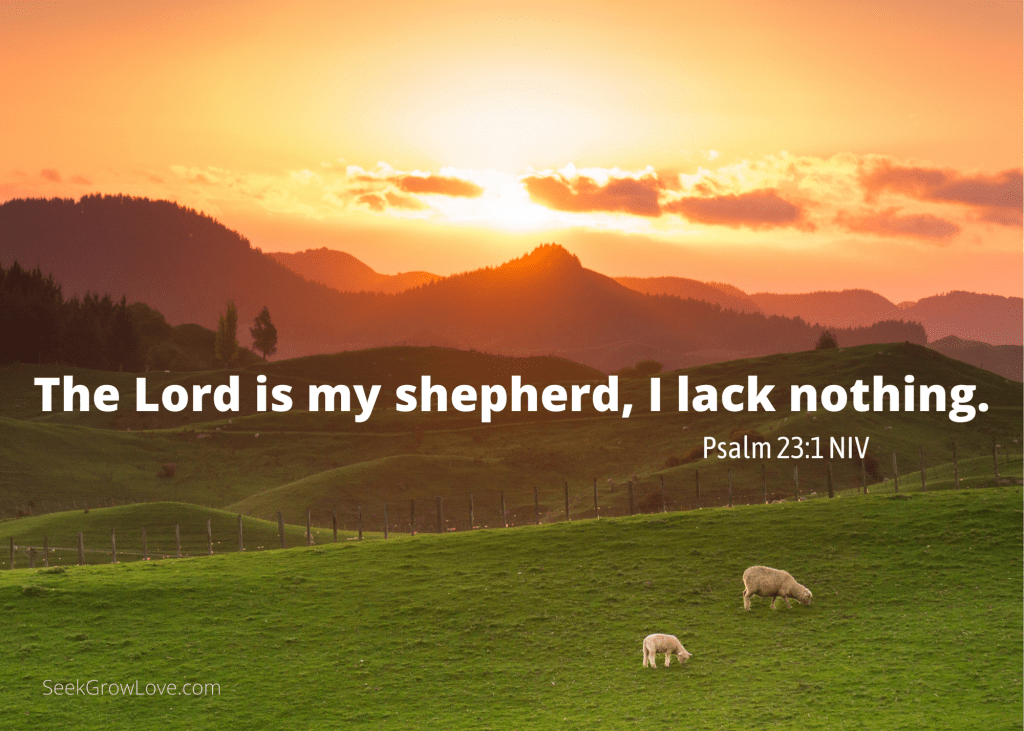
“The LORD is my shepherd, I lack nothing.” These words are so well known that most Christians immediately recognize this first line of Psalm 23. But there are so many truths that we can begin to understand from this simple phrase.

 The LORD is called MY shepherd.

The sheep has accepted the shepherd and as a result the sheep “lack nothing.”  The Psalm goes on to explain the ways that the LORD provides, cares for, and guides His sheep, but all of this is possible because He is Our Shepherd. There has to be a relationship.

We have to have trust in the shepherd and we need to stay in the Shepherd’s boundaries. From Leviticus 18 we are learning that God is establishing decrees and laws to govern the Israelites’ behavior including sexual relations. If we truly accept our relationship with God as the director of our lives and the overseer of our well-being, we can trust Him with all areas of our lives including our sexuality. We can trust that His commands on sexuality are right. We can personally follow them. For instance, he placed restrictions on certain sexual activity like incest. No sexual relations between relatives. This makes perfect sense.  God has designed the marriage relationship as the place where sex is one expression of love. Other family relationships need to be cultivated in nonsexual ways. We love through acceptance, encouragement, kindness, patience, …and so many other actions. This creates a safe, nurturing and sound family atmosphere.

God’s commands are given to keep us healthy physically and whole relationally while He nourishes us to produce spiritual fruit.  So as we read through Leviticus, we are learning that God’s commands are life-giving boundaries for us-His sheep. Our shepherd guides us so we are nourished, safe and loved.  

-Rebecca Dauksas

Links to today’s Bible reading – Leviticus 17-18 and Psalm 23-24

The Scriptures Are for All Generations

Leviticus 15-16 and Psalm 21-22

One huge benefit of living in our day and time is having an extensive body of God’s scriptures available to us. We can see scriptures that clearly confirm God’s plan has been actively unfolding throughout all ages and to each generation. Leviticus 16 explains the event that we refer to as the Day of Atonement.

The High Priest would follow the ordinances on one special day once a year to cleanse all the members of the community from their sins. The people would observe a Sabbath rest because on that day atonement would be made for them, to cleanse them. “Then, before the Lord, you will be clean from all your sins.” (Lev. 16:30)

Of course, as Christians we can see that these offerings were pointing to the ultimate sacrifice of Jesus Christ. We know that he is our great high priest (Heb. 4:14) who offers us the opportunity to be forgiven of sin.  He sacrificed his own blood for our forgiveness. He wanted us to be cleansed from all of our sins and to be reconciled to God.

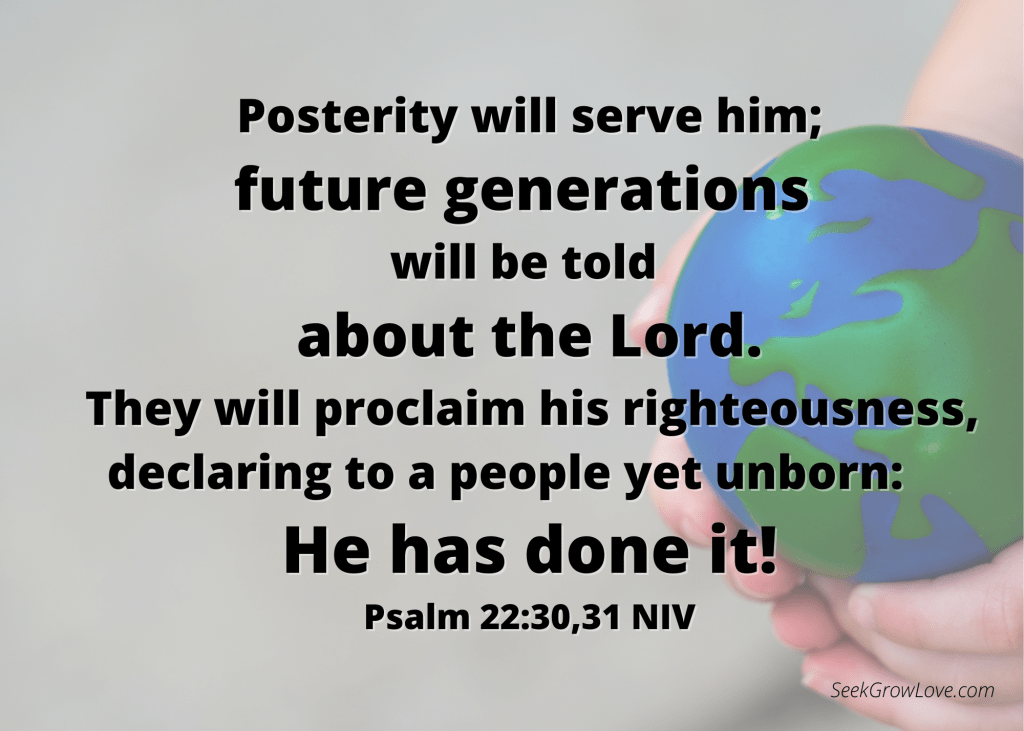
That was carried out through his sacrificial death on the cross and amazingly Psalm 22 reveals what this experience was like for Jesus Christ.  David may be writing about personal experiences and yet he miraculously described the crucifixion. He wrote this event about 1,000 years before it occurred. This Psalm begins with the words spoken by Jesus on the cross, “My God, my God, why have you forsaken me?” Yet the Psalm ends in praise to God. It states that all future generations will serve Him and be told about the Lord. “They will proclaim his righteousness, declaring to a people yet unborn: He has done it! (Psalm 22:31)

We have the benefit of seeing the results and rewards that Christ accomplished for himself and for all his followers. Praise God that we have the scriptures that explain this to us. Scriptures that were written through many centuries and passed on to the next generations. We have a bird’s eye view of how beautifully God works through His faithful followers. Be faithful to share the scriptures with others because all that God has spoken through them will be accomplished.

-Rebecca Dauksas

Links to today’s Bible reading – Leviticus 15-16 and Psalm 21-22