
Warning, Mourning and a Whisper of Grace

Micah 1-3

Like many times in history, Israel had to be confronted by a prophet who had a message from God that wasn’t savory. That is, in times of comfort, complacency, and wickedness they would find that they were not walking with the Lord. In Micah 1-3, Micah speaks for the Lord and completely rebukes the state of Israel and the leaders that allow for it to be in the state it is. Their morals have been corrupted, their path is unjust, and they have implemented idols again into their nation. 

The themes from previous days’ devotions persist here. Violent imagery and a great lament is detailed in Micah 1-3 as he warns and mourns the judgement that is to come. The imagery from Micah 3:1-4 is especially fiery and vivid to the imagination as Micah rebukes the leaders of Israel. To pile onto the agony being described, Micah also details that God will be separated from those in religious authority in Israel in Micah 3:7:

“The seers will be ashamed

    and the diviners disgraced.

They will all cover their faces

    because there is no answer from God.”

With this, we must reflect on our own lives. In a position of leadership, we must set an example. James 3 echoes this idea of the judgement that will be faced by those who teach and lead those astray. If we are to act as examples for others, we must also walk in the ways of the Lord. Micah is clear with this striking message: where in our lives have we settled for religiosity without righteousness? Comfort without compassion?

God’s heart breaks over injustice. He doesn’t just call it out. He promises to act. That’s a sobering reminder: God cares too much to remain silent in the face of oppression. However, tucked inside Micah’s warnings is a whisper of grace: “I will surely gather the remnant…” (Micah 2:12). God’s judgment is never the end of the story. Even as He tears down, He is preparing to build again. On that foundation, with that remnant, he will build on principles of humility, justice, and faith.

-Colby Leggitt

Discussion Questions

1. Where in your life or community do you see injustice that needs to be addressed?

2.Are there areas where you’ve grown comfortable with compromise or overlooked truth?

3. How can you walk more humbly and live more justly today?
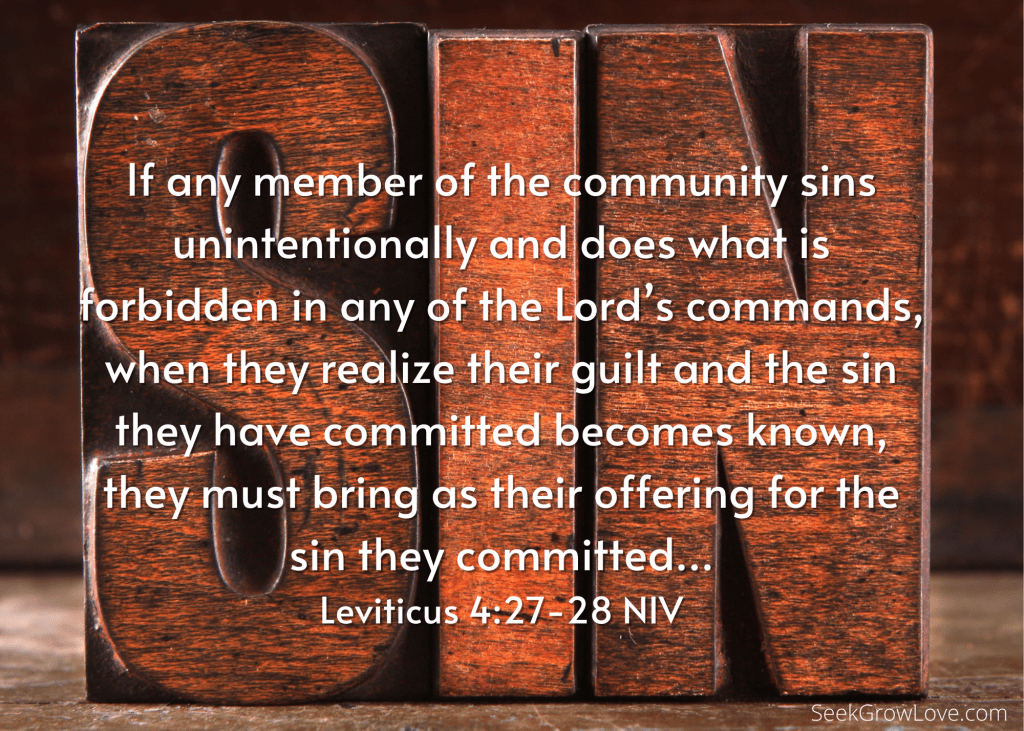
Confessing & Confronting

Leviticus 3-4

Yesterday, we looked at the seriousness of sin and the reason why the Israelites were expected to offer sacrifices for those sins. Before we continue on, I want to offer some helpful advice for reading the first few chapters of this book, so that you don’t become overwhelmed. There are only five sacrifices listed here: the burnt offering (ch. 1), the grain/cereal offering (ch. 2), the peace/fellowship offering (ch. 3), the sin offering (ch. 4-5), and the guilt offering (ch. 5-6). Each of these sacrifices are included for different purposes, not always for sin, and all of them have their own process of being offered. Usually a good study Bible will point this out, but just in case you don’t have one, I wanted to offer this to help you along the way.

Have you ever considered how your sins have affected someone else, whether in your family or in your church? When you act out in a sinful way, you are not only affecting yourself, but are infecting the entire community that you are involved in. Leviticus is very strong in chapter 4 on this point, and calls out the leaders and the congregation in the same breath. For those leading churches, homes, or any other area of life, you are responsible for those whom God has put under your care, and when you sin, you are affecting everyone. In Leviticus 4:3, it states that when the anointed priest (i.e. the leader) sins, he brings guilt on the entire congregation. What a responsibility! Maybe that is why the New Testament is so strong on the moral qualifications of those who want to be leaders in the church (see 1 Timothy 3).

It is not just the leader who affects the whole congregation, but the people that are being led also. Leviticus 4:13-21 discusses how the whole congregation is responsible for the sin that takes place within their midst. This truth still carries on today; whatever you do in sin affects those within your community. From “minor” sins like lying and gossipping, to “major” sins like being sexually immoral; these all have results and those results are deadly. The whole congregation of people has an obligation to confront the sin in their midst (in a loving way) and remove that practice from their group (see 1 Corinthians 5).

Church, we need to do better about both confessing sin and confronting it within our midst. When we allow sin to continue unchecked in our churches and homes, we are allowing a deadly cancer to affect everyone within. Leaders, you are responsible for making sure that the people you are leading are taken care of and being as holy as possible for God’s presence. Those of you who are being led, you have a responsibility for keeping your leaders accountable and for doing everything you can to personally confess and deal with your sin. We can all improve in this area, as difficult and awkward as it can be to admit to our faults. However, there is much peace and healing that comes from confessing and confronting the sins in our lives (James 5:16).

-Talon Paul

Links to today’s Bible reading – Leviticus 3-4 and Psalm 7-9