
Choose Your Battles

Mark 10-13

temple tantrum brick testament

Thursday, May 11

What are some of the things that make you mad and how do you react when you are upset?  Do you think Jesus ever got mad or expressed his anger?

We read in Mark 11 of a time where Jesus was anything but quiet and soft spoken. We see Him turning tables and running people out of the temple. This is not to say that we should go flipping tables and chasing people whenever we get upset, that is NOT what was happening here. Jesus reacted in this way not because someone disagreed with Him, in those instances He says to turn the other cheek. He reacted this way because these individuals had taken the temple of His Father and they were using it like a common marketplace. The things they were doing were a disgrace to the sanctuary of God. Jesus was angry with a righteous indignation. He was furious because the temple of God was being defiled!

Do you get more upset and react in a more dramatic way if someone speaks against you or against your God? Hopefully we are faster to defend our God rather than ourselves. We tend to be pretty quick to jump at small things, leaving the big things for someone else to handle. I think of David before He became king, he was willing to fight a giant because of what he had said about our God.

We must pick our battles. It isn’t easy to let someone talk about you or your family. It isn’t easy to let them bad mouth a friend. These things don’t matter as much in the end though. What truly matters is how we defend our faith, how we stand for our God. We MUST stand firm when it comes to the scripture, we MUST share our faith, and we MUST learn to choose our battles as Jesus did.

– Bill Dunn


(Photo Credit: 

http://www.thebricktestament.com/the_life_of_jesus/temple_tantrum/jn02_15b.html)
Different Prophet; Same Message

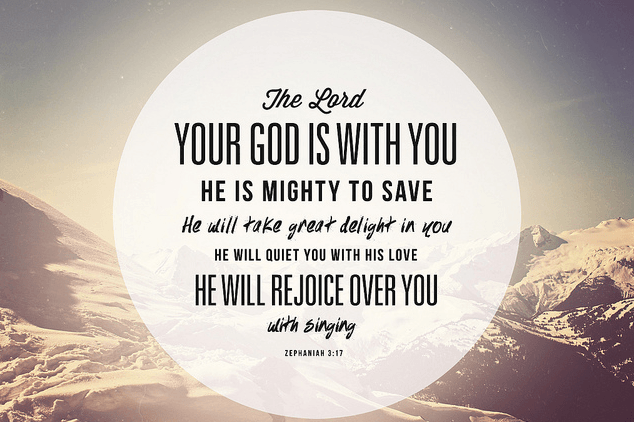
Zephaniah

Zephaniah-3_17

Friday, April 21

The job description of a prophet doesn’t vary much. Speak the words God has given you. Usually these words and utterances are judgement and wrath, Zephaniah follows the same pattern. Something worth mentioning is the name Zephaniah provides in verse one: “Zephaniah son of Cushi”. Cushi in Hebrew has meaning and connotations of African descent. In other words, Zephaniah may have an african heritage and we may have a book written by an African.

Zephaniah is believed to have been proclaimed and written between 630-620 BCE to the residents of Judah concerning Judah’s judgement and her enemies judgement. We have seen a common thread in all the minor prophets we’ve looked at this week: God holds all evil, wickedness, and injustice accountable whether it’s done by his own people or people of foreign nations. God is impartial. Chapter one contains God’s judgement on his own people. Chapter two is judgment pronounced on many of Judah’s enemies and chapter three is a mixture of judgement with the promise of a remnant being left who will love the true God with their heart, mind, soul, and body and God will dwell with them.

The minor prophets, I would say, are the most neglected books in the Bible. Though their historical contexts and their way of life is completely foreign to the modern Christian, the promises and principles communicated by God through prophets are ones that apply to us today. Injustice, oppression, apathy, disobedience, and so on are things we see and deal with in our lives. God speaks to us about these things in the minor prophets.

-Jacob Rohrer

(Photo Credit: https://worshipwithscripture.com/tag/zephaniah-317/ by Kelli Wommack)