Are You Keeping Your Promises? 

The devotion by Cayce Fletcher reflects on the nature of promises and covenants, highlighting humanity’s tendency to break commitments. It draws parallels between God’s covenant with Israel and our relationships today. Despite human unfaithfulness, God remains steadfast. Fletcher encourages readers to evaluate their promises and live faithfully, inspired by God’s unwavering commitment.

Jer 11-12

Ps 125

Luke 7

-Devotion by Cayce Fletcher

One of my favorite movies is the original animated Beauty and the Beast. In one of the scenes, Cogsworth is explaining how to ‘woo’ a woman, and he says you do it with “flowers, chocolates, promises you don’t intend to keep.”

A promise is supposed to be something that is lasting. That you are committed to upholding. But, unfortunately, today, promises are viewed as disposable. 

From the covenant of marriage, to the relationships between family members, to simple contractual obligations, everyone seems to be breaking their word. It’s almost like the human bent is to break our promise. 

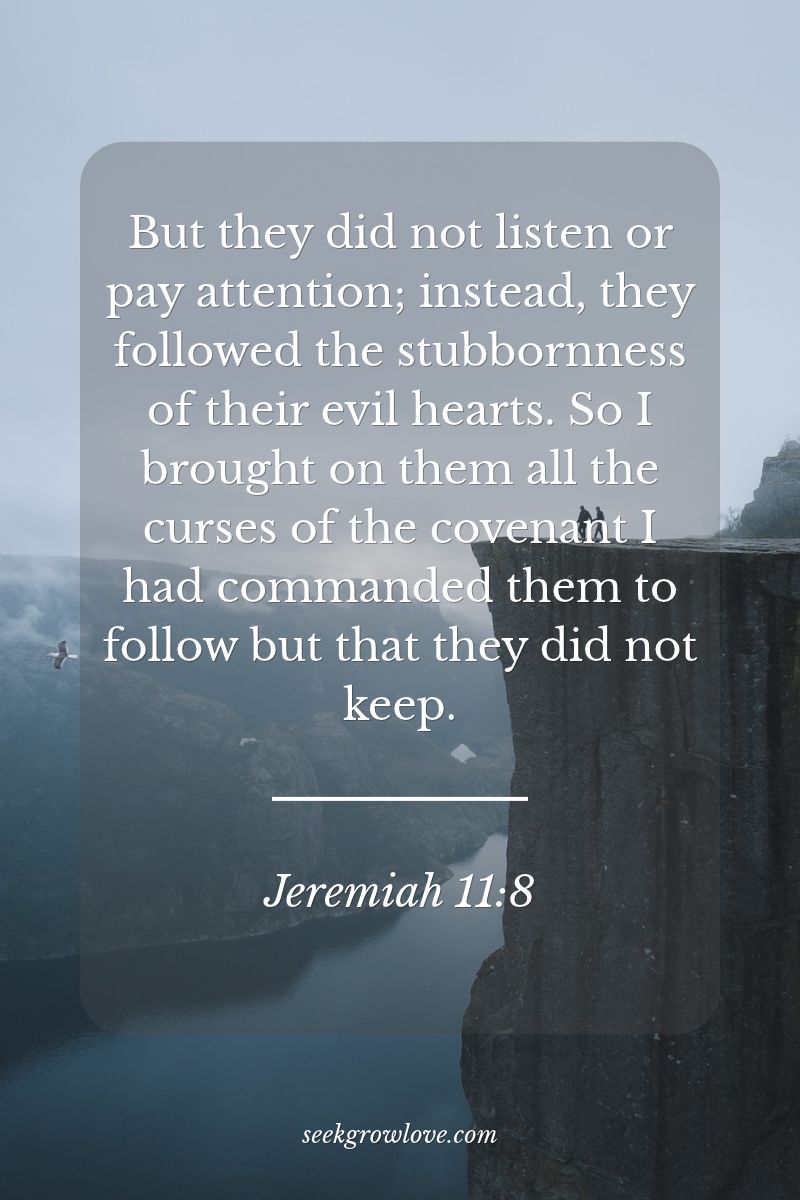
In today’s passage, we read of a similar story: God is reminding Israel of their covenant promise, but Israel refuses to listen. In Exodus (through Deuteronomy), God establishes the Mosaic covenant with His people. In Deuteronomy 30, he presents to them a choice: Choose life and keep the covenant, or choose death and reject it. 

Jeremiah reminds the people of the covenant that was made in the wilderness, which the people continue to break (Jer. 11). God continually called them back, but the people continued to reject Him. 

The old covenant has given way to the new covenant, which we are under today in Christ. The curtain is torn (Matt. 27:51), the old covenant is done away with, and through Christ we are able to enter into the Most Holy Place (Heb. 10:19). We don’t have to wear bells and fear dropping dead; instead, the very Spirit of God has come to dwell in us as His temple (1 Cor. 6:19). 

The story of Israel reminds us just how easy it is for people to make promises to God and then slowly wander away from them. We can sing the songs, say the prayers, and profess our devotion—and then live as though those promises have little bearing on our everyday lives.

But God is not like us. He does not make “promises He doesn’t intend to keep.” Throughout Scripture, even as His people prove themselves unfaithful again and again, God remains faithful.

And because He has been faithful to us, we are called to be faithful to Him.

So take some time to consider the promises you have made. Are you living faithfully in your covenant relationship with God? Are you keeping your word to your spouse, your family, your church, and the people around you?

In a world where promises are increasingly treated as disposable, let us be people whose word means something—because we belong to a God who always keeps His.

Cayce Fletcher is a wife and mom of three. In addition to homeschooling and other ministry projects, she writes and podcasts at amorebeautifullifecollective.com about faith, motherhood, and theology. 

Reflection Questions

  1. Why is keeping promises important? Why is it so hard to keep promises? 
  2. How are covenants similar to and different from promises? 
  3. What is so unique about the New Covenant that we have in Christ?

Prayer

Dear Lord, thank you for the New Covenant that we have in Christ—that we can enter into the most holy place and not be afraid. We praise you and honor you with our lives. In Jesus’ Name, Amen. 
SGL.2026.CalendarDownload

Unfaithfulness of Israel—and the Faithfulness of God

In today’s passage, Jeremiah paints a picture of “faithless Israel.” The relationship between Israel and God (and later the Church and Christ) is always compared to a marriage.

Jer 3-4

Ps 123

Luke 5

-Devotion by Cayce Fletcher

In today’s passage, Jeremiah paints a picture of “faithless Israel.” The relationship between Israel and God (and later the Church and Christ) is always compared to a marriage. 

Marriage was one of the first societal systems God put in place. In the garden, he described marriage: “That is why a man leaves his father and mother and is united to his wife, and they become one flesh” (Gen. 2:24). 

Later on, Paul references this passage when he says, “For no one ever hated his own flesh, but nourishes and cherishes it, just as Christ does the church, because we are members of his body. “Therefore a man shall leave his father and mother and hold fast to his wife, and the two shall become one flesh.” This mystery is profound, and I am saying that it refers to Christ and the church” (Eph. 5:29–32). 

The oneness that is experienced in the covenant of marriage is supposed to symbolize the unity that we experience under the covenant relationship with Christ. 

This is why the word faithfulness is central to our relationship with God. 

Faithfulness is the “quality of being loyal, trustworthy, and steadfast in performing duties, keeping promises, or adhering to facts.” When we are faithful in our marriages, we are completely honest and trustworthy. We are loyal to our spouse. To be unfaithful means to step outside that covenant relationship and pursue a relationship outside those bounds. 

In today’s passage, Jeremiah describes Israel (and Judah) as unfaithful. They continually pursued idols rather than pursuing a relationship with their first love, God. Jeremiah, speaking the words of God, puts it strongly: “Yet you have the brazen look of a prostitute; you refuse to blush with shame” (Jer. 1:3). 

But in spite of God calling to the people of Judah, she “did not return to me with all her heart, but only in pretense” (Jer. 1:10). 

 What does unfaithfulness look like in our relationship with God? 

  • We give something else the devotion that belongs to God. Our idols may not be carved images, but anything we consistently look to for our security, identity, satisfaction, or hope can begin to occupy a place that belongs to God alone. Money, success, comfort, approval—even good things like family or ministry—can become objects of misplaced devotion.
  • We obey God selectively. Faithfulness isn’t simply believing the right things or showing up at church. If we gladly follow God where it is convenient but ignore Him where obedience costs us something, we aren’t giving Him our whole heart.
  • We go through the motions without giving God our hearts. Judah returned to God “only in pretense.” We can pray, read Scripture, attend church, and say all the right things while our hearts are somewhere else. Faithfulness isn’t merely maintaining Christian habits; it is continually turning our hearts toward God.

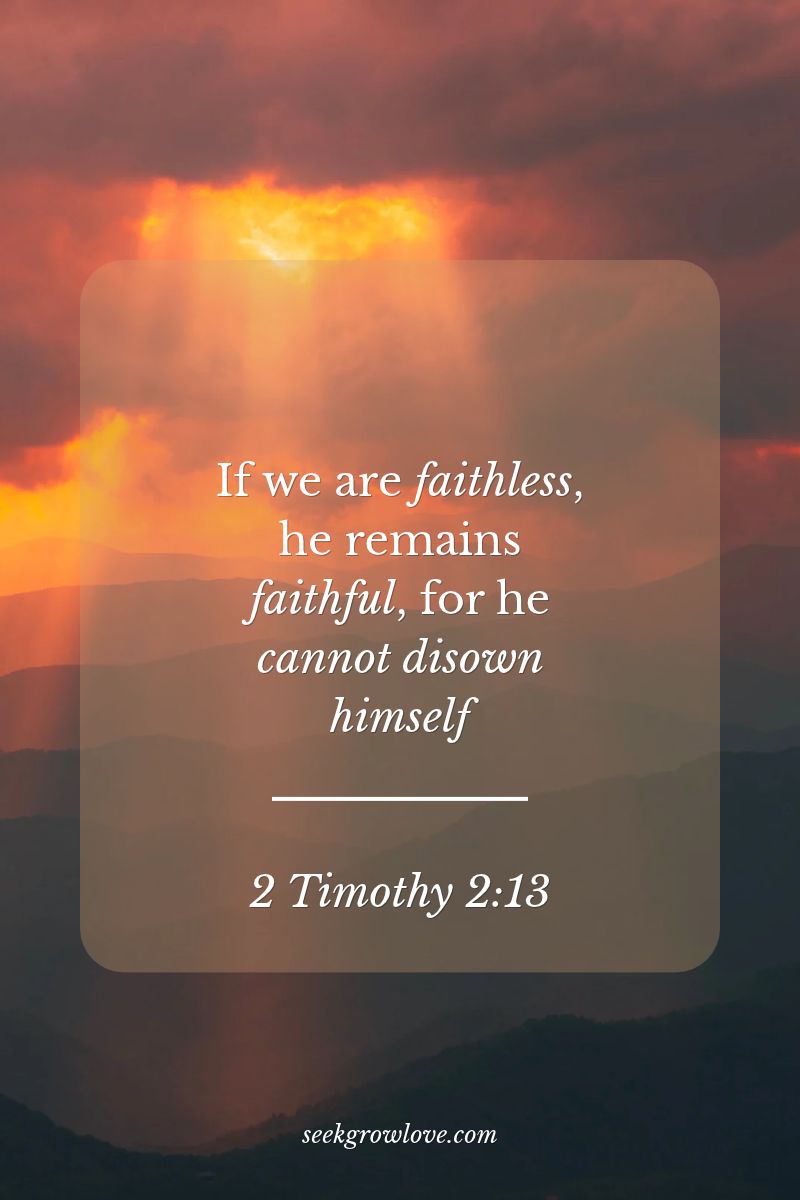
If you feel convicted by this, we can remember these words of Paul: “Here is a trustworthy saying: If we died with him, we will also live with him; if we endure, we will also reign with him. If we disown him, he will also disown us; if we are faithless, he remains faithful, for he cannot disown himself” (2 Tim. 2:11–13). 

God will remain faithful, despite our unfaithfulness. We see this in today’s passage. Just a few verses later, God gives a glimpse of the future hope of redemption, when the people will be gathered together and follow God faithfully. 

No matter where you are at now, today is always a new chance to follow God faithfully, completely, wholeheartedly. God is always faithful and will listen to the one who trusts in Him. 

Cayce Fletcher is a wife and mom of three. In addition to homeschooling and other ministry projects, she writes and podcasts at amorebeautifullifecollective.com about faith, motherhood, and theology. 

Reflection Questions

  1. Why do you think marriage is so often referred to as a metaphor for God and His people?  
  2. What does unfaithfulness to God look like? 
  3. Where might you be unfaithful to God? What choices could you make to pursue Him wholeheartedly? 

Prayer

Dear Lord, thank you for your faithfulness. You are a good God—a God who is rich in mercy and love. May we be a faithful people, wholeheartedly committed to you. Reveal to us places where we are unfaithful and draw us more fully into relationship with you. In Jesus’ Name, Amen.

SGL.2026.CalendarDownload

If and Then

2 Chronicles 5-7

2-chron-7-14

Friday, November 25

Sitting by my nephew tonight during our Thanksgiving meal I witnessed a typical ‘If and Then’ moment. “If you finish your turkey, then you can have dessert.” It’s a generally easy concept to understand and often times harder to live. Do you recall “If you eat of the tree, then you will surely die?”

These chapters in Chronicles hold many if and then scenarios. The Temple is built and praise is lavished upon God and Solomon alike. God offers that if the people who are called by his name keep their covenants then he will bless them. If the people reject him and break covenant with Him, then he will turn away from blessing them.

In the beginning God walked with His son. His creation. His love. God was not interested in Kings and Temples. What He desired was a one on one relationship with individuals. God relented and gave Israel a King. God allowed the Temple to be built, but it was not His plan, but David’s.

In Chapter 6:20 Solomon instructs the people to pray toward the Temple. God is being put into a box where He can be contained in the mind of Solomon and as a result the people of Israel. Solomon was creating a divide between men and his creator. God always lets us know He is longing for intimate contact and consistently seeks ways to bring us back into a relationship that centers on looking toward Him.

Solomon’s Prayer of Dedication over the temple is worth the read. There is more ‘if’ and ‘then’ bargaining going on. Most end with if (when) you sin, then turn again to God and repent. He wasn’t referring to a turning toward the Temple where he surmised God would dwell, but turn toward God’s goodness and mercy and see His rightness against any sin or ‘wrongness’.

God specifically told David He did not need or want a house built, that His preference was to walk with the people as they traveled about. God inhabited the praises of His people as they worshiped at the Temple, but the Temple was more about Israel’s need to have a place to point toward than a place where God wanted to dwell. God replies to Solomon’s prayer of dedication over the Temple with a response of His own. After many ‘if’ statements regarding specific behaviors and consequences God ends with a popular verse all of us have heard.

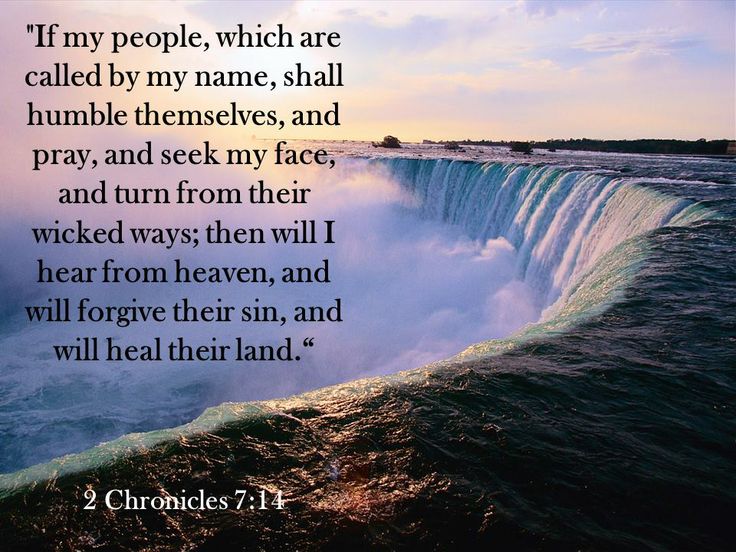
II Chronicles 7:14~ If My people who are called by My name shall humble themselves, and pray, and seek My face,  and turn from their wicked ways; Then will I hear FROM HEAVEN , and will forgive their sin, and will heal their land.”

The if and then list that finishes out the chapter describes in detail the consequences of following after other gods and building idols for them to dwell among them. God wants to walk with us daily, just as He did in the beginning of time with Adam and Eve. Anything that prevents taking that daily walk or trying to box God into a safe space to visit occasionally is simply an idol and false worship.

‘If’ and ‘then’ is still at work in our lives today. If you call upon His name, then He will hear and begin the healing that needs to take place. God is still looking for a place to live. Make room in your life today.

-Glennis Walters