See a Victory

Psalm 137-138

As we close our week of devotions together, it’s fitting to end with the words of David himself. Known for his incredible Psalms (though he surprisingly didn’t write them all), David is a perfect example of what it means to be a worshipper of God. 

In the first verses of Psalm 138, we see David connect to Psalm 136. “Give thanks to your name for your steadfast love and your faithfulness”. David follows the pattern of thanking God for who he is before thanking God for what he had done in his life. 

This is key. God didn’t have to do anything for you for him to be worthy of praise. He gave you life and breath. He gave his Son. He gave you the hope of eternal life. Our creator did it all. Regardless of the blessings he has brought to you in your life (which are awesome, please don’t misunderstand me), God has earned gratitude and praise from you. He deserves it. Don’t forget to show gratitude and recognize that he is God when you come before him in prayer. 

David follows in verse three showing how God answered prayer in his life. This wasn’t the first, nor the last time David called and God answered, but I love how simple this prayer is. 

“On the day I called, you answered me, you increased my strength of soul.” (v 4 Ps. 138)

How beautiful is that? I called and you answered. That is such a rich picture. David is wanting everyone to understand the power of prayer. More importantly, he wants God to know that David heard God answer his call. God wants to know when we recognize how he works and moves in our life. It brings him joy when we get it. It’s like a father seeing his kids opening up a gift he gave them. Our father loves it when we love the gifts he brings us.

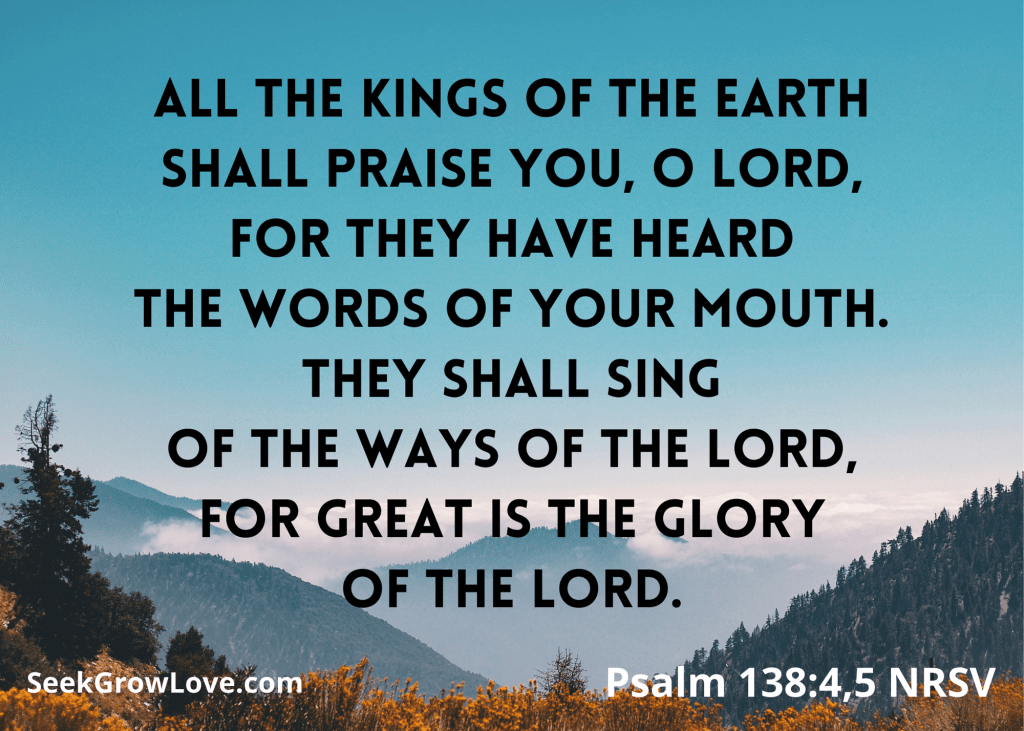
Reading down, David proclaims that all of the kings that have heard God’s word shall praise you. I believe this is a calling to us as well All of us that have tasted and seen the works of God are called to sing his ways–because his glory is great. 

But for us, we know more of the story than David did. Which gives us an even greater calling. We have the Son of Man who died on a cross, was raised from the dead, and sits at the right hand of God. Jesus gives us access to the throne room. He is our victor. Our forerunner. Our king. 

Though David never met Jesus, he still understands the power that the anointed one holds…

Though I walk in the midst of trouble,

    you preserve me against the wrath of my enemies;

you stretch out your hand,

    and your right hand delivers me.

The Lord will fulfill his purpose for me;

    your steadfast love, O Lord, endures forever.

    Do not forsake the work of your hands.    -Psalm 138:7-8

I can’t help but think that David is seeing a picture of the Christ at the right hand of God in this. As Jesus is a descendant of David, it is incredible to see the connection between these two men. 

The right hand of God delivers us as well. How gracious and miraculous is that? 

I have loved going through these scriptures with you this week. I hope your devotions continue to draw you closer to the LORD and his Son. I hope you feel inspired to praise and sing to our God. He hears each moment. And, he will answer your call.

Our final song is: See a Victory by Elevation Worship. Because, I think David would bring his drum and sing this one with us. 

-Leslie Jones

Read or listen to today’s Bible reading plan passages at BibleGateway.com here – Psalm 137-138 and Daniel 1-2

His Steadfast Love Endures Forever

Psalm 136

I hope you all had a wonderful thanksgiving. We are continuing in Psalms today with Psalm 136. Here, we see a proclamation of God’s great works for this people through history. The author expresses how the LORD struck Egypt and brought freedom to Israel (Ps 136: 10-11).  That same God also parted the Red Sea, overthrew Pharaoh and his army, struck down famous kings, and gave the land of those kings to Israel. 

The author is proving that the LORD is righteous and steadfast. The God of Genesis 1:1 who created all things  endures forever. He ALONE is the God of Heaven. He is the one who performed those miracles the author exclaims in this Psalm. And, he is the same God that the apostles honored and praised. He is the same God that our Messiah, Jesus, relies upon, heeds to, and loves. 

This same God will rescue you too. He isn’t finished yet. As long as you have breath in your lungs, God isn’t done with you. He gave each of us a purpose. It’s our job to bow low and follow his lead. 

Start with giving thanks. If you take anything away from these devotions this week, I hope that you recognize that God has earned every ounce of gratitude and praise we can give. 

After thanking him, remember this: “You are the only you God has.” (Sadly, not my quote. I wish I could take credit for this, but alas). This means that you have work to do! You have to walk through the seas God parts for you. You have to be willing to move. Be brave. 

Today’s song doesn’t directly quote this Psalm. However, it encourages you to pray for God to move in your life as he did for the Israelites discussed in Psalm 136. Pray that God will mold you into the man or woman you need to be for him. He knows what’s best for you. 

Listen to “Canvas and Clay” originally written by Pat Barrett. My favorite version is sung by Katie Torwalt (The live version). If you have time, listen to  both! 

“When I doubt it Lord remind me, I’m wonderfully made. You’re an artist and potter. I’m the canvas and the clay…

-Leslie Jones

You can read or listen to today’s Bible reading plan passages at BibleGateway.com here – Psalm 136 and Ezekiel 47-48

Pray Like This

Psalm 132-133

This morning, we are reading Psalm 132-133. The author of these Psalms calls upon God to remember David, his afficitions, his praise, and the promises that God gave him. We get a taste of David’s endurance and God’s faithfulness to him and the people of Israel. 

I read these scriptures as a prayer. This author is intimate and transparent. They desire for God to rise up for them. And he is specific about it. He asks God to remember the promise he gave to David and to keep going. Wow. I admire the spiritual confidence of this author. 

The idea of calling upon God in this way is tricky. We should never go to God with demands and tell him what to do for us. “Okay, God. You WILL do this.” Nah… I don’t think that will get us anywhere. We can never forget the privilege it is to be able to sit at our Father’s feet and pray to him. We can thank the Messiah for that–along with so much more.

However, I think this Psalmist is doing something right. He is praying in a way that we likely don’t do enough. We praise God for what he did, what he’s doing, and what he WILL do. 

The LORD wants us to remember. Hebrews 1 is another amazing biblical example of this idea. The author of Hebrews exclaims the faithfulness of so many of those that came before him–all to the glory of God. 

By the author asking God to remember David, the author is expressing to God that he believes, relies, and wholeheartedly trusts in him to work and move. The author is expressing that he is right where David was–open and available to God. 

I want to pray like this. I want God to know that I am excited for him to fulfill the promises he made to the men and women who walked with his Son, our Lord Jesus first. I want him to know that I am making him my resting place as they did. I will always remember. 

Our God never fails. He is faithful. He is true. And he always will be. 

Today’s song is Faithful Now by Vertical Worship.

-Leslie Jones

Read or listen to today’s Bible reading plan passages at BibleGateway.com here – Psalm 132-133 and Ezekiel 43-44

Filled with JOY

Psalm 126-128

Today, we will be reading from Psalm 126, 127, and 128. Wow, what an incredibly rich set of scriptures. As a worship leader at my local church in Nashville, I am always convicted to meet God in a deeper place when I read Psalms. These authors understood the honor and glory that worship brings to the LORD. 

I am in awe of the authenticity and vulnerability of these authors. I have always wanted to be able to worship like David — I hope to worship with him in the Kingdom. 

These specific Psalms are short in nature but packed for exaltation and prayer to God. I was specifically drawn to Psalm 126. 

“When the Lord restored the fortunes of Zion,

    we were like those who dream.

Then our mouth was filled with laughter,

    and our tongue with shouts of joy;”  -Psalm 126: 1-2 

Have you ever been filled with so much joy that you can’t help but laugh? It’s the feeling where in that moment nothing else matters. All of the anxieties, worries, and struggles vanish in that brief time. I would like to think of this as a taste of the kingdom– where joy will be at home every morning. 

Today, my message is simple and short. Be a dreamer in God. Pray that he draws you closer to him. Pray for his plans for you to be made evident! And when he shows up (He is never late afterall), remember to give him the glory he is owed. 

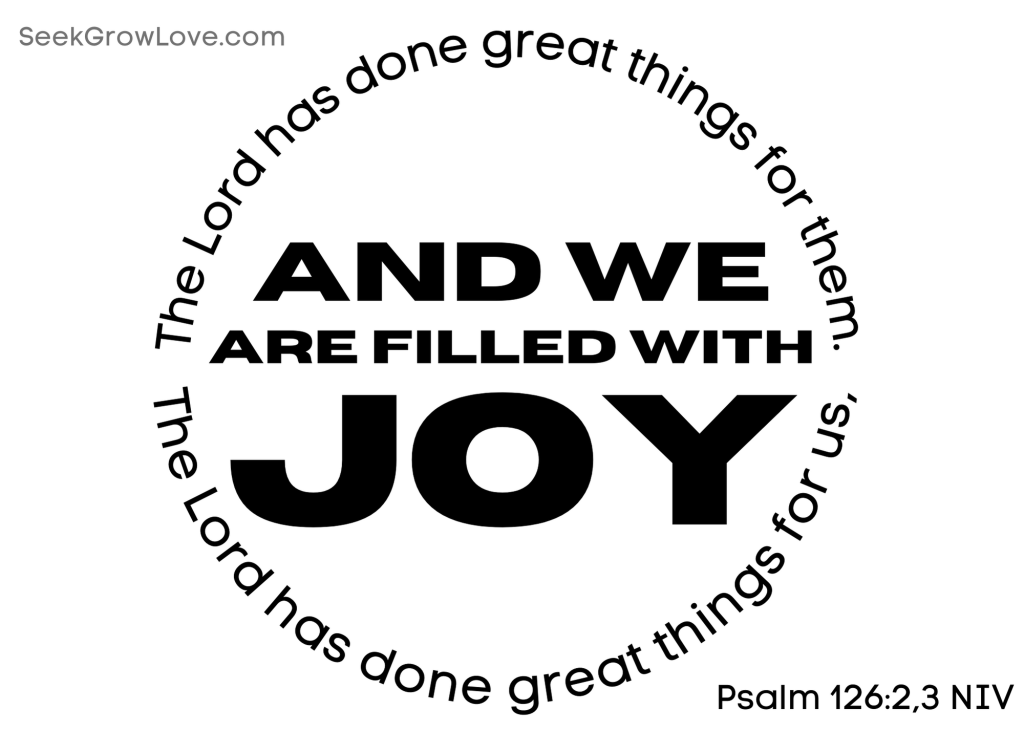
Our God is a doer of great things. He has done so much for you. From raising his Son from the dead to bringing breath into your lungs, God has worked in your life. And he doesn’t plan on stopping anytime soon.

Today’s song is “Great Things” by Phil Whikham. Is it theologically perfect? No. However, I believe it expresses the heart and mind of the author of Psalms who was brought to laughter from God’s providence. Yes and amen.

-Leslie Jones

Read or listen to today’s Bible reading plan passages at BibleGateway.com here – Ezekiel 39-40 and Psalm 126-128

A New Heart

Judgement, God’s Will, and Salvation

Ezekiel 25-36 in one day!

While we have been thinking about the importance and beauty of God’s word in Psalm 119, we have also been reading Ezekiel. I want to lead you on a speed run through Ezekiel 25-36. 

For the most part, Ezekiel is given a message of judgement against the nations. These nations are those who have harmed the people of God. Many of the Minor prophets got similar messages which could be summed up in modern words as, “You have hurt and abused God’s people, and he will give you justice.” The nations that are judged in these chapters are Ammon, Moab, Edom, Philistia, Tyre, Sidon and Egypt. He spends quite some time on both Tyre and Egypt, and even speaks to their kings directly. The praise he gives in his lamentations over these nations is rather grand. Read Ezekiel 28:11-19. God had blessed the King of Tyre, given him so much, and yet look how far he fell! I hope you can see why a number of people have thought that God started talking about Satan here; an angelic powerful force from the beginning of the world falls to the pit because of pride. I don’t think the text is specifically talking about Satan, but that the King of Tyre represents the satanic spirit and lives his life parallel to the Satanic fall. In these laments, I don’t think God is necessarily mocking their fall. I don’t think he wants to bring the evil back on their head (see 36:11), but the nations and their rulers acted pridefully and never sought the good of his people. God does not allow that to go unpunished. 

And so God sends in his man. So now we get to see the Israelite King or General or War Hero who vanquishes his foes and becomes King over the Kingdom…

Right?

No, God didn’t work that way. God instead says, “I will strengthen the arms of the King of Babylon and put my sword in his hands.” (30:24) God used Babylon. The same Babylon that would later take his people into captivity, the same Babylon that would later be used as the image of the proud nation, as the one who exiles the people of God. What is God doing using Babylon?! 

He’s doing what God always does; His will. 

God is smart enough, wise enough, powerful enough, good enough, loving enough, to take all the broken pieces and people in this world, with their free will and desires and urges and traumas and prejudices and hatreds and pains and hopes…

And God can use it for the good of his people

and the working of his plan. 

Babylon acted in freedom, maybe even sin, and God can take that and make it work for him. 

God can give true freedom to love him or reject him, to walk in righteousness or sin, and he can still work out his will in people. 

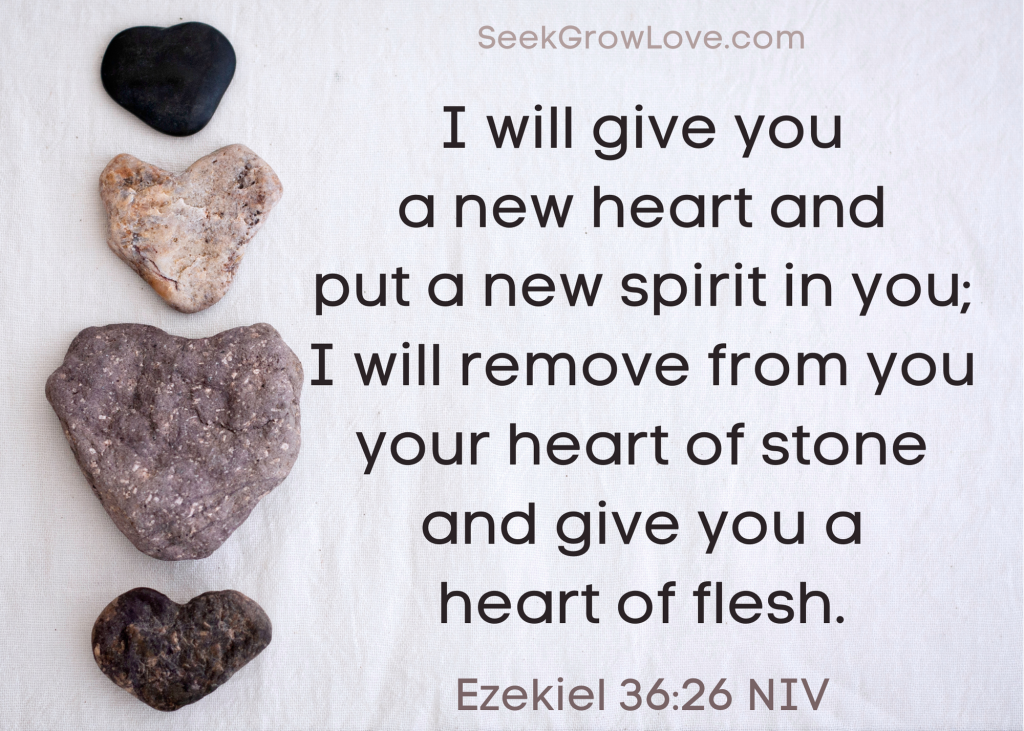
You have this freedom. In Ezekiel 33:10-16, God tells his people, “I take no pleasure in the death of the wicked, but rather that the wicked turn from his way and live.” Are you living a life of wickedness, separated from God? I stand, like Ezekiel, as a watchman(33:7), begging you to see the truth. To turn from that sin and live! If you choose to believe in the God of this prophecy, the God of the Torah, the God of all Scripture, who gave us these words and the Word, made flesh in Jesus Christ, If you choose to follow him, then the promise from Ezekiel 36 will happen in you. “ Then I will sprinkle clean water on you, and you will be clean; I will cleanse you from all your filthiness and from all your idols. Moreover, I will give you a new heart and put a new spirit within you; and I will remove the heart of stone from your flesh and give you a heart of flesh. I will put My Spirit within you and cause you to walk in My statutes, and you will be careful to observe My ordinances. You will live in the land that I gave to your forefathers; so you will be My people, and I will be your God.” (25-28)

May you trust in the saving power of Jesus Christ. 

May you turn from sin and judgment. 

May you turn to righteousness, hope, and love. 

May you have YHWH, the one true God, be your God today. 

May you all be the people of God. 

-Jake Ballard

Jake Ballard is pastor at Timberland Bible Church. If you’d like to hear more from him, you can find Timberland on Facebook (https://www.facebook.com/TimberlandBibleChurch/ ) and on Instagram (https://instagram.com/timberlandbiblechurch?igshid=t52xoq9esc7e). The church streams the Worship Gathering every Sunday at 10:30. Besides studying and teaching God’s word, he is raising three beautiful children with the love of his life, loves Disney (especially the princess movies), and believes that Christmas music is acceptable from the first Sunday in Advent to January 6th. If you’d like to reach out to talk Bible, talk faith, or talk about your favorite Christmas Song (and why Mariah Carey sings it), look Jacob Ballard up on Facebook (https://www.facebook.com/jacob.ballard.336 ) or email him at jakea.ballard@yahoo.com
God bless you all!

Read or listen to today’s Bible reading plan passages at BibleGateway.com here – Ezekiel 35-36 and Psalm 120-122

Spiritual Disciplines and Psalm 119

Psalm 119 Part 4 (verse 121-152

Before you click away, don’t be scared, turned off, or apprehensive of the words “spiritual discipline”! It’s a shorthand term for something like “the practices and habits that, when performed in love for God, move our hearts and minds to such a place that God can change us.” You can see why “spiritual disciplines” is easier. Psalm 119 has, implicitly and explicitly, four of these practices running through the text. If continually done, these practices and habits can put us in a place to live the best kind of life, the kind of life God wants us to live. 

Prayer

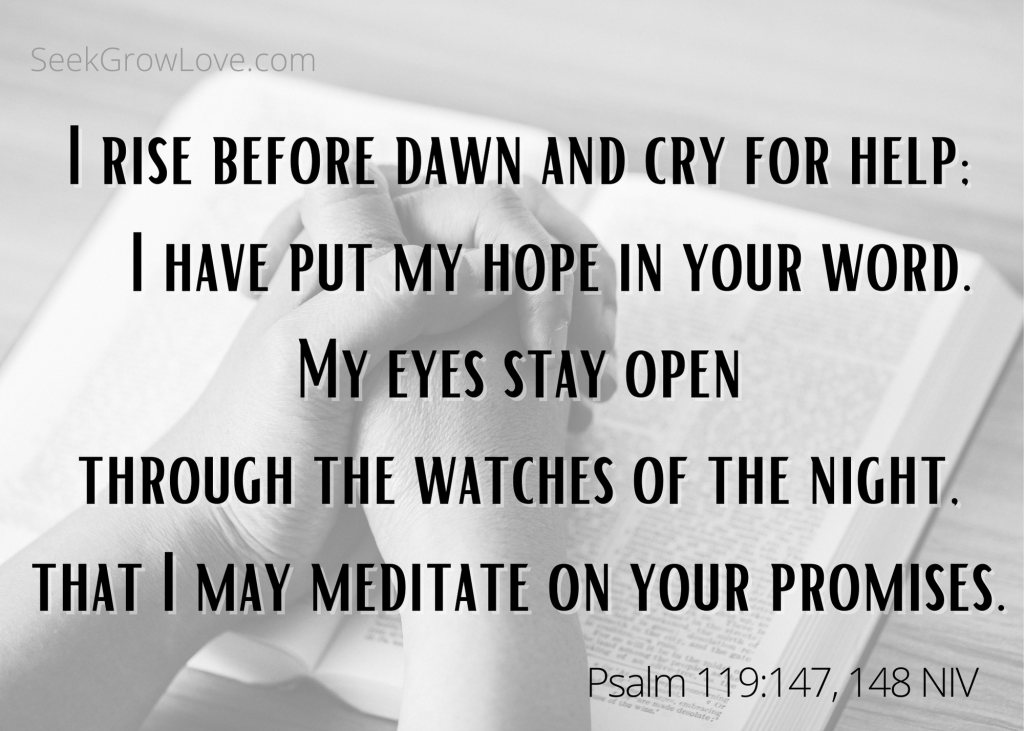
First, the psalm itself is a prayer. The psalmist is constantly calling on God. God is the “you” in the psalm. “You have ordained your precepts” and “By keeping it according to your word” are both ascribing worth and prestige to God. He is the God who gives precepts. He is the God who gives his word. The ground of every discipline is prayer, speaking to God and allowing space for him to speak back. In verse 147 this is the most clearly said. “I rise before dawn and cry for help; I wait for Your words.” The psalmist speaks and is ready to listen. The psalmist has cultivated a prayer life in God as he opens the pages of the Torah and begins to read. 

Bible Reading

Second, an extremely important spiritual discipline is Bible reading. While we should be open to hearing God’s voice in a miraculous vision from heaven, in speaking in tongues, and in prophecy (all which may have a place in the Christian life), the most common and most sure way to hear the words of God is to open a Bible and start reading. What an amazing gift it is that we can do this on computers, tablets, and in our homes. The psalmist would have to wait to go find a scroll in the temple to be able to read or hear the words of the Lord. The psalmist delights in the commandments of God. (See verse 47) Twice in two verses (47-48) he says that he LOVES the commandments of God. How can we love a book we never read? The psalmist knew that the only way to ground his life in truth was in God’s words. “Your Law is truth.”(142) He also knows that it’s not just a truth “out there” that we assent to and merely know, but truth that we can live by. “Your word is a lamp to my feet and a light to my path.”(105) Do you read the word of God to know truth and to know how to live truly?

The third and fourth discipline is also founded on this one. Simply reading God’s word is necessary to be able to spend more time with it. 

Biblical Meditation

And spending time with God’s word is the way to define “Biblical meditation.” Meditation has grown in popularity in the west in the past few years. In Hinduism, Buddhism, and Yoga, meditation is quieting the inner voice so that enlightenment and oneness may connect you to everything else. (At least, that is the claim of these philosophies and beliefs.) In these practices, one wants to detach and empty oneself from the world. In modern, western meditation, self-emptying is a part, but so that one can fill up with visions of the future they would like to make manifest, or they speak words of affirmation over themselves. You focus, but the focus is on you. 

In Biblical meditation, you engage your mental faculties on God. You pour over his words. You take words into your mind, but so that they can travel the 18 inches from you brain to your heart. “I will delight in Your commandments, which I love. And I shall lift up my hands to Your commandments, which I love; and I will meditate on Your statutes.” (47-48) The psalmist loves God’s word, so he wants to allow them to rumble and roll around in his head and heart. Meditation is allowing the words to tumble in your mind. To read with love is different than to read to understand. When I read a love letter from my wife, I don’t parse every word to make sure I have the proper tense of the verb. But I do mull over the words in different ways. Each turn of phrase leaves a sweet taste in my mouth as I sound them out. When we were apart before we got married, every “I miss you” text felt like a dagger. And the same is true for the words of the Torah. We mull them over and feel the pain when we are no longer with the Father who loves us and the God who made us. The psalmist in his delight of God meditates. “I will meditate on Your precepts and regard Your ways. I shall delight in Your statutes; I will not forget Your word.” (15-16) It seems the psalmist reads early in the day so that the words can be there all day long. “How I love Your Law! It is my meditation all the day.” (97) And meditating on God’s word, focusing on his words to the exclusion of everything else, is both facilitated by and facilitates the final discipline. 

Bible Memorization

How many verses of scripture do you know? 

Did you know that by 10-13, most Jewish boys were expected to memorize the Torah?

Someone said recently “Well, they memorized their whole Bible!” And I said “Yes, but it was shorter!” 

But, I don’t have the Bible memorized, not even an entire book. I do have sections down, many verses memorized. But I could always learn more. 

Meditation helps memorization and vice versa. When we read a verse in the morning and spend time thinking about it, and allow it to be the focus of our thoughts through the day, then we will have an easier time memorizing. If we memorize verses, then we will be able to have then stick in our heads. 

The psalmist clearly did this. “I have treasured Your word in my heart, so that I may not sin against You.”(11) The psalmist treasured up the words of God in his heart, meaning they were not just known but acted out. BUT, to be acted out, they must be known, memorized. In the midst of temptation the psalmist wasn’t fumbling around for a Bible, or a scroll. “The snares of the wicked have surrounded me, but I have not forgotten Your Law.” (61) The way of life was know to them. He understood that it was vital to memorize God’s law. It was life or death! “My life is continually in my hand, yet I do not forget Your Law.” (109) He knew that following the words of God was because God was the one who gave him life through his birth (73) and the one who gave him new life every day. (93)

Brothers and sisters, 

May you connect with God through prayer in a new and powerful way today,

May you hear his voice as you read his words, in this and every book of the Bible, 

May you hold his words in your mind, 

And as you have them memorized, may they transform your heart. 

And may God bless you this day and every day. 

-Jake Ballard

Read or listen to today’s Bible reading plan passages at BibleGateway here – Ezekiel 31-32 and Psalm 119:121-152

A Love Poem to the Torah

Psalm 119 (verses 81-120)

In both Monday’s and Tuesday’s devotion, I threw out a word that I did not explain that is really the centerpiece of the entire Psalm. The very first verse of Psalm 119 tells us how a person can be blessed. “Blessed are those who are blameless, who walk according to the law of the LORD.” Those last five words are the focus of Psalm 119. “The law of the Lord.” Transliterated from the Hebrew as “the Torah of YHWH.” (That last word is pronounced yah-way, and is the name of God anytime we see LORD in the Old Testament.)

What is torah? Torah comes from another Hebrew word, yarah. Biblical Hebrew has fewer words than Greek or English, so each word has a range of meanings that depend on the context, but one of the ways to translate yarah would be “to direct, teach, instruct.” When that word nominified is “Torah”. That means the word is something along the lines of “direction, teaching, instructions.” While the word law isn’t wrong, it may not be the best description of what Torah conveys. Instructions, the words of a loving God speaking to his beloved people, are instructions on how to live the best life.

“Blessed are those who are blameless, who walk according to the instructions of YHWH.”

But while that defines Torah, that really doesn’t tell us where to find it. The “Torah” understood as one thing, is the first five books of the Bible, Genesis -Deuteronomy. These books tell us how the Jews became God’s people, how they were rescued from Egypt, and how they were to live in response to that salvation from God. God gave these beginnings of these books to Moses in 1400 BC and had Moses and others edit and change bits and pieces all the way up to about the rule of King Josiah, in 600s BC. These inspired, authoritative, and true books tell us what God likes, dislikes, commands, demands, and desires from his people. 

In the Hebraic culture, the way one went about their day, from caring for their sheep, to planting or harvesting their crops, to going up to Jerusalem for a feast, one had to walk. In both the times of Jesus and the times of Moses, to “walk” in a way was to live that way out. You can begin to see the key ideas around verse one take shape. 

“Blessed are those who live according the the instructions that tell us the commands, demands, and desires of YHWH.”

Throughout Psalm 119, you aren’t always going to read “law”, but the words judgements, precepts, testimonies, and the rest are all words that are speaking about the same Torah. And the Psalmist recognizes their worth. Just today the psalmist’s “eyes fail with longing for your word” (82). The law is his delight (92). He loves both the law and the testimonies of God. (113, 119) These laws are not burdensome and followed begrudgingly. They are the source of life and salvation for the Psalmist. “Sustain me according to your word!” (116) “I am yours, save me; for I have sought your precepts.” (94)

“Blessed are those who live according to the saving, life-giving instructions and commands that YHWH has blessed his people with so we may know him more.”

The Torah commands a lamb to be sacrificed. 

“Behold the Lamb of God who takes away the sin of the world!”

The Torah commands us to love God. 

“Love the Lord your God with all your heart, soul, mind, and strength…”

The Torah commands us to love our neighbor like ourselves. 

“and the second is like is love your neighbor like yourself. These sum up the law and the prophets.”

The Torah shows us the mind, heart, soul, and desire of God for his people. 

Christ shows us the perfected way of following God. 

While things change, and we are not commanded to keep the Torah in the way Christ kept it perfectly, can we speak with the same kind of love for the first five books the way the Psalmist loved them, the way JESUS loved them? Are we able to speak about the commands of scripture in the same way as the Psalmist, that every command comes to bring life and salvation? 

Jesus saves us through faith before we ever act, and no amount of work on our part could earn salvation. BUT, the commands of scripture are given to show us the best way to live, and the commands of the Old Testament show us the way the Jews were commanded to live and show us insight into the mind of our beloved Father. 

Let us love God’s word the way the Psalmist did 

and may we all be blessed today. 

“Blessed are those who are blameless, who walk according to the law of the LORD.”

-Jake Ballard

Today’s Bible reading plan passages can be read or listened to at BibleGateway.com here – Ezekiel 29-30 and Psalm 119:81-120

Oh that God would Reveal Himself

Psalm 119 Part 2 (verses 41-80)

Do you ever think about just how amazing this blog is?

First, humans have languages all across the world. Then, in some places, human societies developed in such a way that business transactions needed to be written down. Then, they decided they could write about more than business transactions and began to codify spoken word into written words, then those words develop for centuries. New technologies like the printing press and then the internet allow those words that express the concepts of all language to reach wider and then near global audiences. The reason human society was able to be where it is now is not just because humans are smart, but because we are able to take the best of the best ideas and pass them on in written format. That’s what allows our massive growth of collective knowledge to be used by and benefit future generations. 

In around 1400 BC, a community of slaves, leaving behind literate, powerful, imperial Egypt, write down, in words and letters, their story of the beginning of all things, how they got out of the mess their people were in, and what they were going to do about it. These people write “In the beginning, God created the heavens and the earth.” It was at this point that the Jewish people, an enslaved community, became a community focused around words. They were not just focusing on what their hands could produce, but on what these words said. Because the words were not simply words. 

How can we know the mind of another person? 

We can know their actions, know what they say. In legal proceedings, the prosecution and defense will try and show both the action a person took but also the state of mind behind the action. But we can’t know, we can only deduce and guess. 

Unless, we can trust someone and they tell us exactly what they were thinking. 

I don’t trust people to guess the mind of God. Too many people through the years have said “God wants it to be this way” to me in the midst of pain, and their words rang hollow. Too many people said “This is the judgement of God” and their words feel cruel. 

I only trust what is going on in the mind of God if God tells me. 

THAT is the beauty of the words of the Torah. A bunch of slaves leave Egypt, taking the money, the power, the labor force that made Egypt a superpower of it’s day. Moses writes about the experience in the Torah, and the Jews believed and believe that it is the word of God given to know his mind, his heart, who God is. 

Reason shows that God is probable. 

Intuitions about justice and beauty shows God makes sense. 

History shows that God is powerful. 

But the Torah gave the Jews something beyond general truths about God. It showed the Jews the best way to live. The way to live in accord with the God of the universe, to keep themselves pure and holy. All in words written down on a page so that generations upon generations could read them. 

We will talk more about the way that the author of psalm 119 writes about the Torah tomorrow, but I want you to realize that God did not have to reveal Godself. God reveals his desires as one trustworthy and tells us exactly what he means. We don’t have to guess, because we wouldn’t get him right. The Jews experienced the fire of God on the mountain, and trusted that what Moses received was the word of God. David believed that, as did the prophets, as did John the Baptist, as did Jesus. 

As amazing as this blog is, isn’t it even more amazing that God in his goodness and grace would reveal himself to humans. What a gracious gift to know the mind of the Lord. May we continually remember that as we read Psalm 119 this week.

-Jake Ballard

Today’s Bible reading plan passages can be read or listened to at BibleGateway.com here – Ezekiel 27-28 and Psalm 119:41-80

Don’t Miss the Artistry

Psalm 119 – part 1

For the weekdays of this week, I do encourage you to continue to read through Ezekiel. In Saturday’s devotion, we will catch the highlights of those verses. However, our focus for the next few days will be Psalm 119. The longest chapter in the Bible, by both verse and words, Psalm 119 is worth the time we are going to spend with it. Rather than going through verse by verse (we will do a bit of that on Wednesday and Thursday), I’d like to talk about the themes that come out of reading Psalm 119. We’ll talk about God’s self-revelation, in both the Torah and the whole Bible, and we’ll discuss some ways that we can honor God’s word by keeping it close to us. 

But today, I want to talk about Psalms in general, and this Psalm in particular. The Bible is a dense book. Often we can treat it like a study guide, a how-to manual, a game plan for life. And, these are not incorrect. But that is NOT ALL the Bible is. It is not simply an owner’s manual for our life, but it is a vast collection of biographies, histories, letters, and poems that are inspired by God’s Words, authoritative about our lives, and true in everything it affirms. 

The Psalms in general help disabuse us of our study guide/owner’s manual/game plan approach to the Bible, because they are not always God’s words to people, but people’s words BACK TO GOD. In the Psalms there is rage, despair, longing, frustration, ecstasy, devastation, joy, sorrow, wrath, contentment, love. The whole gamut of the human experience is on display. But more than just these emotions, they are the human experience, recreated and retold in beauty.

Think about your favorite song. Do you hear the twang of a steel guitar? Do you feel the rumble of the bass from the hook? Does the distortion make you want to turn up the speakers to 11? What do the lyrics mean? What do the lyrics SAY? Are those two the same, or is the meaning conveyed not in words but in how they are sung or how the music crescendos at the same time they are singing of silence? Let me venture a guess; you like your favorite song. This genius insight of mine is because we all think our song has a certain beauty. I like metal and the screams of the vocalists and the distortion of their guitars are just wonderful and gorgeous. But more often than not, in metal and rock, the music and the lyrics work in tandem to make the pain, betrayal, loss, anger, and even love of the musicians real and visceral. There is beauty in my favorite songs, and in yours, even if you like country. 

Psalm 119 is also beautiful, a labor of love that took the artist hours of labor spent crafting the art to perfection. Just because God guided the Psalmist doesn’t mean the Psalmist didn’t put his blood sweat and tears into crafting a beautiful poem in honor of God and his word. What I want you to notice today is the beauty. Read all of Psalm 119. Read it from start to finish, top to bottom. But DON’T MISS THE ARTISTRY. Think about why the Psalmist used this word in this place. Why? Does one line jump out at you? Why is that? Does one line not sit well with you? Why do you not connect with that line? 

Moreover, think about the breakdown of the Psalm. There are 22 sections of 8 verses of Psalm 119. In your Bibles, there may even be a strange mark and word. For many this would be something that looks like an X and the word “Aleph” or “Alef”. The translators are helping you see that this poem is an acrostic. The first letter of each verse is aleph. Eight times over. Then the same with beth, then gimmel, so on and so forth. The artist had to be intentional to work out each line to build off the previous one, but also each verse needed a new word. That takes time, commitment, dedication. Artistry. 

Don’t miss the artistry. 

Don’t miss the passion or the beauty of this psalm. That is why when you saw””Read all of Psalm 119” and you skipped that and kept reading the devotion, you really should go read the entire Psalm today. The beauty the artist wanted to display for God is in the text, and I don’t want you to miss it. 

Don’t miss the artistry. 

-Jake Ballard

Today’s Bible reading plan passages can be read or listened to at BibleGateway.com here – Ezekiel 25-26 and Psalm 119:1-40

Grace and Discipline

Psalm 117 & 118 and Ezekiel 23 & 24

Read Psalm 118, or read it again. What is this Psalm all about? What is the refrain? “Give thanks to the Lord for he is good; his love endures forever.” God’s people look back on what has happened in their past and speak of God’s grace goodness and love. The Psalmist says that “he” (we don’t know the psalmist, but we will use he as the pronoun) speaks from his own perspective. The people from all nations were against him, but GOD is for him. In verse 6 he asks the great question, “What can humans do to me?” If God is for us, then who or what could ever stop us? God will save and send protection and salvation. The author says that this does not only hold true for him but it’s true for ALL of God’s people. The community asks God to save. “O LORD, do save, we ask you!” And when God answers, salvation, grace, and protection are for both the individual and the community. Upon his people he gives light (v.27) and to the individual he has become his strength, his song, and his salvation. (V. 14)

Now, compare that with Ezekiel 24:15-27 (go read it). All the words God has said in Psalm 118 don’t seem to make sense in light of Ezekiel 24. Ezekiel is God’s servant. He is a “good man” speaking to the “bad people” of Jerusalem. So what does God do? 

God kills Ezekiel’s wife. 

You may say “Jake, that’s extreme. God doesn’t kill people. He just allows her to die.” I could agree with you, maybe, if all we had was Ezekiel 24:18. Ezekiel reports the fact that his wife dies and he wasn’t allowed to mourn. But just two verses earlier, God explains that HE is taking  Ezekiel’s desire with a blow. God killed her. An innocent wife of a good man, to teach bad and rebellious men. 

Does Ezekiel say, “His love endures forever?”

Do we expect him to?

How do we reconcile this?

First, let me start with the fact that Ezekiel, his wife, and all the prophets recognized that their life was totally forfeit to the God who had power over life and death. I don’t think we should think of Ezekiel’s wife as an innocent bystander caught in the crossfire, no matter how much her story may suggest it. Ezekiel knew that everything he owned and everyone he loved was ultimately owned by God and loved by him more. 

Second, YES love. The love of God is the most fundamental element of his being. “God is love.” “For God loved the world in this way: He gave his one and only Son.” “What great love the father has lavished on us that we should be called the children of God!”

“His love endures forever!” 

So, the primary text is not Ezekiel but the Psalm. The Psalm prescribes who God is in love. And even there, we get our answer for Ezekiel. 

“The Lord has disciplined me severely.” 

Words alone weren’t cutting it with the people. They had heard the voice of the prophets again and again to return to the Lord. In Ezekiel 24, God is done telling them what they will experience, but will show them WHAT he will do. He was going to take his own sanctuary away from the sinning, unfaithful Israelites. He was going to discipline them. But they were not going to mourn even the presence of God being taken from them. Ezekiel showed them that they were going to lose the presence and be totally OK with it. They needed to see it, because it proved that God is the one in control. 

Finally, we need to recognize that too often we are worried too much about this life. Ezekiel’s wife may not have wanted to die, but she trusted in the Lord, as did her husband. Psalm 118 itself reminds those of us who are faithful followers of Christ that this is not the end. The stone that the builders rejected that has become the chief cornerstone. That one is Jesus of Nazareth. This work of God is marvelous in our eyes. God has made our days, our night, our beginning, and our ending. But for the faithful, this life is NOT the end. God has promised that the one who came in the name of the Lord to the shouts of “Hosanna”, or “Save us”, that same Jesus will be the one who comes in power to raise the living and the dead and give the reward to those who love him. 

Life eternal.

Goodness for forever.

Since God’s love endures forever, he promises those he loves will endure forever. 

So, give thanks to the Lord for he is good. 

His love endures forever. 

-Jake Ballard

(P.S. Not part of the main devotional text, but for those who are going through or know someone going through pain, read on. 

This post may have made you uncomfortable. Let me add the following thoughts. 

Quick summary of my points:

  1. Ezekiel’s wife had given God her life
  2. God’s love, not his judgement or anger, defines his divine actions
  3. We limited humans are too worried about the short time here when we have eternity of joy through faith

However, let me be clear :  these are not the words you share with the hurting, nor will these be your first thoughts in pain. Death is an enemy that God will destroy. We are to weep with those who weep. Understanding Ezekiel in light of the Psalm 118 is our ideal, but it may take time. If you are not in a place of pain, do NOT tell the suffering to “just get over it”. Do NOT say that God took someone’s loved one away. If you are in pain, I am not saying God took your loved one or that their life did not matter.

Ezekiel’s wife’s situation is not the way scripture speaks about every death. 

But God loves everyone, and God wishes that none perish; God is a God of life, wholeness, and health. One day, creation will again reflect the life, wholeness and health of it’s Creator, but it’s not there yet. But God may use even his enemies, death, brokenness, sickness, and pain, to bring about a greater goodness in spite of their wickedness. If you are suffering, in need of someone to hear your story, just be with you in your pain, I would encourage you to reach out to a pastor or trusted friend and ask them to listen. If you need someone to listen who doesn’t know you from Adam, but is willing to walk through your pain, please reach out to the author (Jake Ballard) via https://www.facebook.com/jacob.ballard.336. You can also find his contact information at TimberlandBibleChurch.org

May God bless show his love to you in the midst of whatever pain you experience.)

Read or listen to today’s Bible reading plan passages at BibleGateway.com here – Ezekiel 23& 24 and Psalm 117 & 118