Festivals

*Leviticus 23

Psalm 13

Matthew 26

Devotion by Emilee (Ross) Christian

Our reading in Leviticus lists the six festivals the LORD commanded the Jews to follow and observe. I thought it would be fun to take a deep dive into each. For each festival, I searched additional scriptures where it was mentioned. I also investigated how it is celebrated in today’s modern world.

Passover and Festival of Unleavened Bread

This is perhaps the most commonly known Jewish holiday. In our passage today, the festival is said to last seven days, the first and last days marked with a “holy assembly” and “no work.” This festival commemorates when the tenth plague passed over the Israelites in Egypt. This final plague ultimately led to their deliverance from Egyptian slavery. In scripture, Passover is seen as a time of rededication, purification, remembrance, and celebration. It is during this celebration the Last Supper takes place, and from this the Christian practice of communion. The reverence and sincerity in which passover is handled in the Old Testament is a reminder to us Christians of the mindset we should have when taking communion. The passover is still celebrated by Jews, today. Jewish families gather in their homes for a special meal called the Seder. During this, the story of the Israelites exodus from Egypt is read. Special food is served at this meal to symbolize aspects of the Jewish faith. 

Celebration of First Harvest

This celebration is marked by bringing sacrificial grain offerings from the first fruits of the crop to be presented to the LORD. It is also referred to as the Feasts of Firstfruits and is tied into the Festival of Harvest, yet still as a separate day of celebration, according to the text. I found it much more difficult to find information of this day alone as it is so closely related to the Festival of Harvest. From what I can tell, this day is no longer celebrated on its own. Yet, God made a distinction here, in Leviticus. I think part of that purpose is to show how God desires our worship and honor. God wanted a separate day set aside just for the first fruits of a crop. This was so he could be acknowledged as creator and giver of life. One way that we as Christians can continue this theme of gratitude for provisions is to pray before our meals. 

Festival of Harvest 

The Festival of Harvest, or Festival of Weeks, was later referred to as Pentecost and is known today as Shavout. It is to take place fifty days after the Celebration of the First Harvest. According to our text in Levitus, this festival was marked by various offerings of “pleasing aroma to the LORD” and a day or holy assembly in which no work was to be done. In Deuteronomy 16:9-12 it is described as a time of great celebration. The focus of the holiday in today’s age is no longer agricultural but instead serves as a time to celebrate the giving of the Torah. It is a sacred time in Jewish culture. It is observed with traditional foods, decoration of synagogues, and confirmation services. I think it’s incredibly special how practicing Jews set aside a time to remember and give thanks for their scriptures. How often do we as Christians pause and give thanks for our own Scriptures? When was the last time you honestly thanked God for the Bible? Perhaps we Christians could learn something from the modern day celebration of Shavout. 

Festival of Trumpets

The Festival of Trumpets is a day for holy assembly and no work. Specific offerings are to be presented. These are described in more detail in Numbers 29:1-9. During this celebration there is to be a blast of trumpets. I imagine this was the biblical version of setting off fireworks. This festival later became known as Rosh Hashanah, the Jewish New Year. It is celebrated by traditional foods, such as sweet breads to signify the hopes of a sweet new year. The specific readings during services focus on God’s sovereignty, past deeds, and anticipation of the future. The instructions in Leviticus for this festival are unique as it shows music as an example of worshipful offering. This is something each of us are capable of doing. God wants to hear our praise in song and deed. 

Day of Atonement 

The Day of Atonement is the second most well-known Jewish holiday. It is known today as Yom Kippur. Leviticus 16 goes into further detail of the requirements for the Day of Atonement. It is a day of holy assembly, fasting, and offerings of purification made by the High Priest. Jesus is our High Priest and his sacrifice on the cross is symbolic of the offerings made on the Day of Atonement. It is considered one of the holiest days in Jewish culture. Today, it is marked by a time of fasting and confession. The Day of Atonement shows that God is in the business of reconciliation. He provides a path of redemption for all people. The Day of Atonement was a physical reminder of God’s covenant grace with his people. Jesus has allowed that same covenant of grace to extend to all people who come to Christ. 

Festival of Shelters

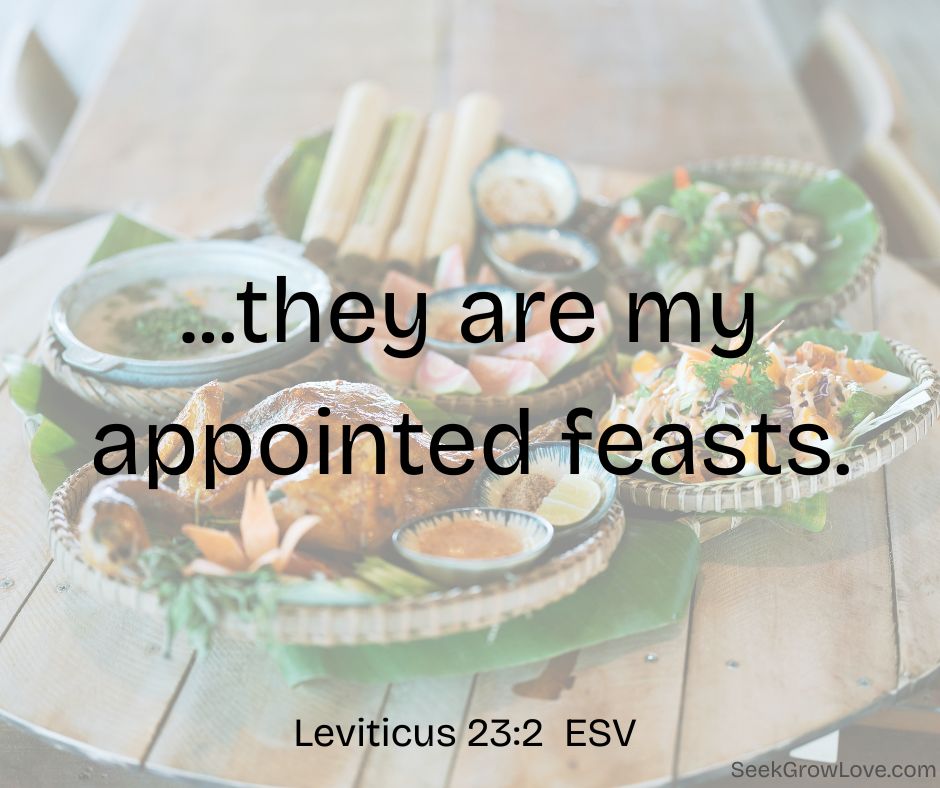
The Festival of Shelters is also referred to as Festival of Booths or Festival of Tabernacles. It is an eight day celebration. Days one and eight are characterized by holy assembly days and days of rest. On each day of the festival, specific offerings are to be made, detailed in Number 29:12-40. Deuteronomy 16:13-17 reveals it is to be a time of great joy and celebration, reflecting upon the good harvest. Our text, Leviticus 23, instructs families to build tiny huts from branches to live in during the week of the Festival. This is to represent their time living in shelters after being delivered from Egypt. Today, this holiday is known as Sukkot. Interestingly enough, it is still widely celebrated in a similar fashion with families gathering in small temporary huts called sukkahs. This festival reminds us of the importance of pausing to thank God for all our many blessings. It is meant to be a joyous celebration, where we are to rejoice in God’s goodness. We should have this attitude of praise daily, but it is also good to set aside time dedicated just for thankfulness. 

Questions: 

  1. What do you do to prepare yourself for communion?
  2. Do you pray before every meal? Why or why not?
  3. Do you think Christians take scripture for granted? How can we remember to treat God’s word with holiness? 
  4. Do you sing along during worship at church? Why or why not? Do you think you should start?
  5. In what ways is Jesus our High Priest?
  6. Can you think of a U.S holiday similar to the Festival of Shelters? Even though Thanksgiving is a long ways away, how will you plan to make this year’s celebration a holy time?

PRAYER:

Dear Lord God, You are so worthy of our worship. Help me daily, and in special ways and times, honor and celebrate You, Your scriptures (yes, including Leviticus), Your precious Son – the perfect High Priest we need, , the good gifts that You give, the good God that You are. Thank you for life and redemption, for your perfect plans through the ages, for music, prayer, communion, church, feasts, fasting and holidays. Help me to prepare well for the celebration that will surpass them all, when Your Son returns to earth to set up Your Kingdom for eternity.

Help for the Struggle

Psalm 25, 29, 33, 36 & 39

With the rates rising steadily over the years, I can bet that about 20% of you reading this now are struggling with anxiety of some kind.  I understand this struggle personally, having navigated periods of severe anxiety that required medication and endured panic attacks with lingering effects, to feeling totally and completely normal.  I won’t pretend to have any fabulous cure-all to share with you, but I can tell you something that has helped me and others. 

Cultivating gratitude can shift your perspective and reduce stress. Experts confirm that gratitude releases dopamine, lowers cortisol levels, and improves sleep. While gratitude won’t eliminate life’s challenges, it can provide balance and stability.

If you’re searching for things to be thankful for, explore the Psalms- many of which sing praises about the great things God has done. Psalm 33 is one worth bookmarking to have handy when you’re searching for things to be grateful for.  

Psalm 33 reminds us that we can praise God because his word is upright, and he is faithful.  We can be thankful that by His words, God created the heavens and the earth and knows the depths of the sea.  We can be grateful that God shares his wisdom with us and that it is unchanging and reliable.  What’s more, we needn’t worry because everything is in God’s hands. Even kings can’t guarantee their safety, just like the strongest among us can’t guarantee our success.  The same God that created this world is the same God that created you.  Throughout our anxiety, we are encouraged to “wait for the Lord” and trust that our creator can handle it.

-Hope Fletcher

Reflection Questions

  1. When do you feel anxious?
  2. Practice gratitude. Remember back to a difficult time in your life. What can you be grateful for even during those troubles? What can you be thankful for today?
  3. Read through Psalm 33 again. Look for all the things God has done and all He is that you can give thanks for and that can give you peace. What will it look like to wait on Him today?

Still Giving Thanks

Old Testament: Daniel 9,10

Poetry: Psalm 118*

New Testament: Matthew 4

In our homeschool history lessons, my children and I have been learning about much of the world exploration that happened following the Reformation. Prior to this time period, two entire continents – North and South America – were largely unknown to the charted world. When there was religious persecution in England, the Puritans, who believed they should be able to worship God in their own way rather than under the thumb of the Church of England, decided to venture to the New World, where they could be truly free. Explorers had already paved the way for their travels; some colonies survived, but some did not. These Pilgrims were supposed to arrive at an existing Virginian village, but because a fierce storm blew The Mayflower off course, they ended up in Massachusetts instead. Their journey was wrought with difficulties, but they were careful to make note of God’s provision along the way, such as providing a kind Native American named Squanto who knew English (as a result of his own hardship of being sold into slavery in England for a time) and taught them how to grow food and survive the winter. Though half of the Pilgrims died that first year, they joined with their new Native American family after the first fall harvest to give thanks to God for his blessings. 

Psalm 118 begins and ends with praise; what a great reminder of how we should start and finish each day! It continues on to tell of difficulties and challenges, but immediately shares how YHWH God showed up each time, a reminder of His faithfulness and provision. 

Last week, many of us gathered to thank God for our blessings, remember the historical first Thanksgiving, and express gratitude for our religious freedom. Thanksgiving is perhaps my favorite holiday; it’s often a simple gathering with a mighty feast of both food and gratitude. My favorite part of the day is participating in the Cain family prayer song. Before we dig into our meal, thirty or more of us – original Cains, their spouses and families and extended families, and many friends – hold hands and sing “Give Thanks with a Grateful Heart” in a variety of harmonies. This sends shivers through my body as it reverberates through the large room that was once a church sanctuary and in which there have been countless prayers offered and innumerable songs sung. I always think of the bookend verses of Psalm 118 (verses 1 and 29, NIV) on Thanksgiving, but it is wise to remember at the beginning and end of every day of the year: “Give thanks to the LORD, for he is good! His faithful love endures forever.” 

Reflection:

-Commit to memory the first and final verses of Psalm 118. Then practice saying them as you wake up for the day and as you tuck yourself back into bed at night.

-Gratitude is an attitude! How can you cultivate more gratitude? 

Rachel Cain

Because I Received Mercy

Matthew 18

matthew 18 33


There are some things that are not optional for the followers of Jesus, and forgiveness is one of them. Jesus talked many times about forgiveness to his disciples, but he couldn’t be more clear than in Matthew 18:21-35. We not only learn that we must forgive others, but also learn that there are consequences if we refuse, and the reason why we are expected to forgive.


Jesus gives his disciples a parable about a guy who owed his master 10,000 talents of money. Now, one talent was equal to about 15 years worth of labor, so this guy owed his master 150,000 years worth of labor. By today’s standards, the average person makes about $50,000/year in the United States; that would be equal to $7.5 billion dollars!!


Needless to say, there was absolutely no way that this guy is going to pay his master back. However, he begged his master to be patient with him and give him more time. His master showed mercy on him and forgave everything!! You would think that this guy would be the most grateful man ever and forgive everyone else that he came across, right?


Unfortunately, after all of this, he found a slave of his who owed him money (not nearly as much as he owed his master), and refused to forgive his debt as he had been forgiven. Because of his actions, the guy’s master punished him by putting him in prison until he paid back all he owed, which would never happen…


This is a stern warning from Jesus for us today. Our debt for sin has been completely removed from us because of Jesus’ sacrifice! Because of that fact, we should be the most forgiving people on earth! Whatever someone has done to you cannot compare with the debt that has been paid for us; we need to forgive freely to all those who ask for it. We cannot bear grudges or hatred for anybody; it is time to let it go.


-Talon Paul

Happiness vs. Joy

Joy

Joy is the foundation for a positive life.  Our world lacks joy and has way too much fear, worry, discouragement, and depression these days.  We need to fully trust God and have joy even in the hard moments and seasons of life. It we are not fully trusting our Father, then we will never be able to experience pure joy.

Biblical joy, the true joy, comes from filling the spiritual void with good relationships, mostly the intimate relationship with the One who is pure joy.  Jesus put it this way: “I am the vine, you are the branches. He who abides in Me, and I in him, bears much fruit” (John 15:5). That fruit includes much joy!

The Bible speaks much more often of joy than of being happy. “Hap” means chance and is the root of several words— happen, happening, haphazard (dependent on mere chance), hapless, happenstance (a chance circumstance) and happy.

Happiness is a glad feeling that depends on something good happening. God wants you to experience happy times (as long as God approves of what is happening). But His greater desire is that you have unconditional joy. Jesus said His joy would “remain in you” and “your joy no one will take from you” (John 15:11; John 16:22).

Think of joy as a strong foundation that supports a variety of healthy emotions, including happiness. The long-range evidence of joy is general gratitude, contentment, optimism, a sense of freedom and other positive attitudes.

-Katie-Beth Fletcher