Lessons from the Wilderness: Jesus

Wilderness Wandering Lesson #4: God’s word sustains us when we are depleted by the trials of the wilderness.

god's word does.

This week, as we’ve been thinking about our wilderness wanderings, we’ve primarily looked through the lessons from the Old Testament. Today though, we’re going to turn to the New Testament to see an example of a wilderness experience that can teach us a lot about how to make sure this experience makes us and doesn’t break us.

In Matthew 4, Jesus is tempted in the desert by the Devil for 40 days and 40 nights before he begins his ministry. This is a familiar story that shows the humanity of Jesus and how he can relate to us, but today, I want to focus on where Jesus was tempted. It says in verse 1 that “Jesus was led up by the Spirit into the wilderness to be tempted by the Devil.” In our time thinking about the wilderness, we’ve focused on the types of wilderness experiences we may have and how God’s faithful love can sustain us. As we look at Jesus’ experience, we can see how to survive and thrive in the wilderness.  

The first lesson we can glean from this passage is that sometimes, as is the case with the Israelites and Elijah, we are led into the wilderness by God. Jesus was led into the wilderness by the Spirit where he fasted 40 days and 40 nights. At this point, Jesus had not begun his ministry, so this time could have been for testing and strengthening Jesus’ faith and dependence on God so that we could learn from it. By asking ourselves during each wilderness experience “What can I learn from this? How can I grow?”, we can better face the times in wilderness with palms held open instead of allowing bitterness to grow in us.

The second lesson we can learn from Jesus’ time in the wilderness is that God’s word is crucial for surviving in the wilderness. In the wilderness, Jesus had to face physical hunger, thirst, and exhaustion. He also was probably emotionally drained in this time as well. This may sound like a description of ourselves when we go through times in the wilderness. How often in these times where we are sad, lonely, depressed and drained – how often do we pause in these moments and stop the spiral of depression and wandering by saturating ourselves in God’s word? By looking at Jesus’ example, we can see how we can stop temptations in their tracks by responding with God’s word, more specifically by aligning our actions with God’s word.

The last lesson that I want us to focus on today is looking at when this wilderness experience took place. Though Jesus had not begun his ministry yet, in the previous chapter, he had just gotten baptized. All too often, we think that if we have committed our life to God that things will go well, that we’ll never have to experience trials or periods of suffering. But, we can look at Jesus’ life to see that this is simply not that case. Aside from Jesus’ experience on the cross, we can look at the beginning of his ministry as well to see that as these periods will happened to him, they will happen to us.

Jesus survived in the wilderness, and he thrived in the wilderness. I’m not sure what Jesus gained spiritually or emotionally in the wilderness, but I know what I can learn from his experience there. In the wilderness, Jesus was able to overcome temptation and suffering, including not only physical trials – but also spiritual trials – through God’s word. God’s word sustained Jesus and allowed this time to be a springboard into Jesus’ ministry instead of something that would have crippled his ministry. Now, we can look at this story and lessen the impact of what Jesus was able to do because Jesus was the son of God. But, Jesus was capable of growth and change, as seen in Luke 2:52. This is what makes him the perfect mediator for us. So, as we close this lesson today, I want to leave you with the words of Jesus as he readied his disciples for the trials they would face during the days leading up to the crucifixion: “I have told you these things so that in Me you may have peace. You will have suffering in this world. Be courageous! I have conquered the world” (John 16:33). With Jesus, we can conquer the world, including all our days of wilderness wanderings.

~ Cayce Fletcher

spurgeon quote

Lessons from the Wilderness: Elijah

Wilderness Wandering Lesson #2: Remembering past circumstances can help to steady our heart in the midst of our current despair.

This slideshow requires JavaScript.

It was at that moment though that the sky got a little cloudy and the wind started to pick up. We wanted to hike a little, so we to hike the trail towards the top of the mountain, with cattle lazily grazing along the rocky path. Quickly, the picturesque scene turned gray. We made it to the summit, but the mountain had clouded over, so much so that it was difficult to see straight in front of you. We quickly walked back down and waited out the fog in a small cafe, trying to warm up our hands with a coffee, before making our way to the tram.

That hike was beautiful and totally worth our short brush with the fog. But, what I’ve found is that our lives sometimes mirror that hike, but the fog can be much more dangerous. Sometimes, our lives are steady, and we exist in the happy medium of contentment and love. At other times though, our lives can be a stormy cycle of highs and lows, mountains and valleys. In our case, we were on a mountain, a mountain where we were elated. We had traveled far to get there and wanted to rest in the view and the glory. But, it was on this mountain that what we had traveled far to see and done a lot of work to do (including a 1 hour train ride and a flustered conversation in German) that we experienced a storm that clouded our experiences and made us doubt if it was really worth it.

Elijah the prophet experienced his own brush with the wilderness right after he experienced the high of his life. He was no stranger to the wilderness after relying on God’s provision in 1 Kings 17. In 1 Kings 18, he is able to testify to God’s glory and work as he goes through a showdown with the prophets of Baal. He actually gets to see the fire of Yahweh fall from heaven and rid the people of the prophets of Baal!

If we saw these things, we might be tempted to say that we would never doubt God. After seeing this, we might be elated, speechless, high on our mountaintop moment. But, for Elijah, the fog rolled in. In chapter 19, Jezebel sends word to Elijah that she was planning on killing him as soon as she could get her hands on him. Elijah panics and runs for his life into the wilderness. There, he lays down and prays for God to take his life (v. 4). Sometimes, our wilderness moments can lead us to places like this. Our vision can get cloudy if it’s focused on our circumstances that may stormy and volatile. And, in those moments, dark despair can set in, and we may think it would be better to just give up.

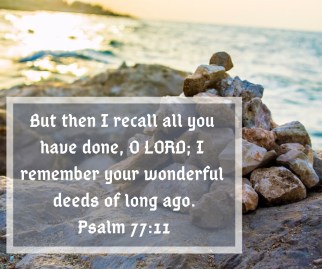
But then I recall all you have done, O LORD; I remember your wonderful deeds of long ago.If you are in that moment, remember that God does not leave Elijah there, and he doesn’t want to leave you there either. Instead, he says, “Get up and eat (v. 5). After Elijah eats twice, he goes on a journey forty days and forty nights to the mountain of God. There, Elijah waits, first through a great wind, then through an earthquake, and lastly through a fire. In each of these places, he does not hear God’s voice. Finally, he hears it in the soft whisper, as God asks him “What are you doing here Elijah?” (v. 13) Elijah responds by saying, “I have been very zealous for the Lord God of Hosts, but the Israelites have abandoned your covenant, torn down your altars, and killed your prophets with the sword. I alone am left, and they’re looking for me to take my life” (v. 14). Elijah feels this despair because he had forgotten what God just showed him. In the desert when he was hungry, God was there with provision. He had forgotten that in the showdown, God was there with provision. When we turn our eyes from God to focus on our fractured circumstances, it can lead us to doubt. But, one remedy for that doubt is not only to remember the character of God but also to remember how God has exhibited that character in previous actions of faithfulness. We can trust in him not only because of what we know from the Bible but also because of what we know from our own lives. So, if you are in a wilderness period in your life, pause and remember God’s past faithfulness instead of dwelling on your despair. These reminders can help us to remember that even in our darkest times, God will carry us through.

~ Cayce Fletcher

Lessons from the Wilderness: The Israelites

heb.Over the next few days, we’re going to look at four wilderness stories in the bible to learn a lesson about what the wilderness is and what it can teach us. The first Wilderness Wandering Lesson is this:
Wilderness Wandering Lesson #1: The faithful love of God is infinitely more secure than our fractured circumstances.

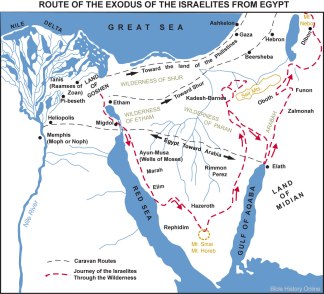
The most recognizable story of wilderness is that of the Israelites. After 400 years of servitude to the Egyptians, the Israelites kept crying out to God for the deliverance prophecied by Joseph in Gen. 50:25. That help came in the form of Moses, who was commissioned by God to lead the Israelites to the land of Canaan. So this so-called Promised land, part of the covenant promise that God made with Abraham in Gen. 12, was the Israelites’ destination. Even in the Israelites’ time in the wilderness, we can see two purposes in the wilderness. The wilderness in the first year was a time of purification and dependence. It is in the wilderness that the Israelites learned to trust God for direction (Fire and Cloud – Ex. 14) and sustenance (Manna and Water – Ex. 16). In Exodus 16, God even says, “I will test them to see whether or not they will follow my instructions” (v. 4). This testing was his goal for the first year the Israelites spent in the wilderness. Spent mostly at the base of Mt. Sinai, it was in this time that the Israelites received the ten commandments, built the tabernacle, and received the rest of the law (Ex. 15-Num. 10). Though there was difficulty in this time (think Golden Calf – Ex. 32), this time in the wilderness was also full of incredible closeness to God. It was during this time that the Israelites were able to witness the Shekinah glory of God descend on the tabernacle. And, during this time, the Israelites experienced the humbling dependence on God that came from relying on him.

Map-Route-Exodus-Israelites-Egypt

We can think of this first year in the wilderness as the training wheels period where God was showing the Israelites that relying on him was best. That trusting in him was the way to choose life and joy. In Numbers 10, the Israelites break camp and move towards the border of the Promised land. In Numbers 11, the cracks begin to show again as the Israelites complain more and more about hardship, food, and in the case of Aaron and Miriam, the power and relationship with God that Moses had. Based on the tendencies that we see in these chapters, we shouldn’t be as surprised as we generally are that the Israelites get to the border of the promised land and choose to go against God and refuse to take the land because of their fear (Num. 14). The Israelites chose not to go into the promised land because their trust in God was lacking. They didn’t think that God would do what he said he would. Instead, they based their decisions on their circumstances, which seemed too difficult to overcome. It’s this that ultimately angers God and leads towards his judgment against the Israelites: They would wander the wilderness for 40 years (one year for each day they spent scouting the wilderness). In the remaining chapters of Numbers, we see more instances of rebellion and provision as the Israelites do exactly as God says and wander the wilderness for 40 years. It is not until the book of Joshua, that we see the next generation of Israelites rise up and take the land just as God promised his people that they would.

These two tales are frequently told together, but they tell two very different stories of the wilderness. In the first, the Israelites seemed to have done nothing to be put in the wilderness, while in the second, the wilderness was a place of punishment for the past sin of the people. But, the purpose of each wilderness experience is the same. The wilderness is meant for purification and refinement, to make the people of God ‘holy, because [he] is holy’ (Lev. 19:2). Too often, I think we view the wilderness as a punishment, and because of that, we go back to asking God, “Why? Why am I here?” We may even sound like some of my high school students when they get called out, “Why? I wasn’t even doing anything!” (No matter what they are doing.) We need to stop viewing the wilderness as a place of punishment. It can be that place, as we’ve seen with the Israelites. But, more importantly, this time in the wilderness is where God is beckoning us back to him. It’s in this time that all of the Israelites first heard God’s word. It’s in this time that they felt the characteristics of God that Moses spoke in Numb. 14:18. In your wilderness wanderings, instead of focusing on the doubt – the questions of why you are in that experience – focus on who God is:

“The Lord is slow to anger and rich in faithful love, forgiving wrongdoing and rebellion. But He will not leave the guilty unpunished, bringing the consequences of the fathers’ wrongdoing on the children to the third and fourth generation.” (Numb. 14:18)

Rest on God’s faithful love, and in your time in the wilderness, don’t forget to remember who he is. When we trust in him, our circumstances don’t seem so challenging anymore.

~ Cayce Fletcher

The Purpose of the Wilderness

Deep calls to deep in the roar of your waterfalls; All your breakers and your billows have swept over me. Psalm 42_7 (1)If you are not in a wilderness period now, chances are you will probably experience a time like this in the future. It’s the moments where we are spiritually thirsty and hungry for God. It can be puzzling when we are in these moments because we begin to doubt and question God. If there was a word that could be used to define these moments, I would say that it would be “Why.” Why do I feel like this? Why am I in this desert? Why does God seem so far from me? Why won’t he return to me?

Though it can seem presumptuous to ask God these questions, we can find the psalmist asking these questions as well. In Psalm 42, the psalmist says, “Why am I so depressed? Why this turmoil within me?” (v. 5, 11) Later on, he writes, “I will say to God, my rock, Why have You forgotten me? Why must I go about in sorrow because of the enemy’s oppression?” (v. 9) It’s natural to question God during these moments, and even Jesus on the cross asked God, “Why have you forsaken me?” (Matt. 27:46). Sometimes, we know the purpose of the wilderness, as Jesus did when he asked God that question. Other times, we may not know in this life why we have to experience the things that we do.

In these times, it’s incredibly important to remind ourselves of two things: (1) we can trust that there is a purpose for the wilderness, and (2) in the wilderness, we can rely on the goodness of God to carry us through. As we think about the ‘why’ behind our wilderness wanderings, it’s first important to ask ourselves how we got to this point. Sometimes, our wilderness comes from forces outside of us, whether that’s circumstances, conflicts with others, or the adversary like we discussed yesterday. We can look at the examples of Elijah and Jesus to see wilderness experiences that were due to the fallenness of the world, not their own failings. Yet, at other times, the wilderness can be caused by our own actions, like in the case of the Israelites.

During these times, we have two options: We can turn toward God or away from him. It’s this choice that will determine whether or not the wilderness experience will help us to grow or to be destroyed. In this devotion, we won’t be able to come to a definitive answer of why bad things happen to good people. But, we can answer the real ‘why’ behind our wilderness experiences. During this time, we have the option to lean on God and learn what it means to walk hand in hand with him. To experience complete dependence on God. The wilderness may be difficult, but it’s also in these moments that we experience more deeply the salvation of God. Going back to the Psalmist words in Psalm 42, we see that our wilderness experiences can make our recognition of God’s love more real and vivid when, after asking why, he says:

mthermon1
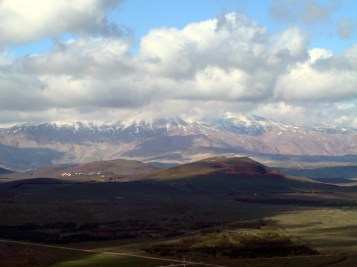
Mt. Hermon (2,814 m – 9,232 ft) on the northern border of Israel

“Put your hope in God, for I will still praise Him, my Savior and my God. I am deeply depressed, therefore I remember You from the land of Jordan and the peaks of Hermon, from Mount Mizar. Deep calls to deep in the roar of Your waterfalls; all Your breaks and Your billows have swept over me. The Lord will send His faithful love by day; His song will be with me in the night – a prayer to the God of my life” (v. 5-8).

We can pray to the God of our life. In these times in the wilderness, trust in your creator, and he will send his faithful love to you.

~ Cayce Fletcher

Wandering in the Wilderness

Text placeholderChristmastime can bring so much joy to our lives. It’s during this short period at the end of the year that we reconnect with family and friends and enjoy time spent resting from work and school. I think it’s so fitting to end our year reflecting on the importance of who Jesus is in our lives. As seen in the carols that Jill discussed last week, we spend the month of December reflecting on and resting in the truth of who Jesus is before moving into the new year with high hopes and resolutions.

Though it’s not a Christmas carol, I love the song “It’s the Most Wonderful Time of the Year,” partly because of Andy Wiliams’ voice and partly because I agree that Christmas is the most wonderful time because it is the “hap-, happiest time of the year.” However, some Christmases don’t always bring this cheer. Sometimes, in the midst of the crowds of happy faces and the busyness of the year, we can feel lost in the drift of the season. Feeling this way can make us feel lonely, upset, or isolated from those that we love, and crucially, it can also make us feel isolated from the voice of God. I like to call these times in our lives our ‘wilderness wanderings.’ It’s the moments when it seems like God isn’t near you, has ‘turned his face from you,’ and that feeling affects every part of your life. Though this can happen in the hustle and bustle of the Christmas season when we’ve forgotten to focus on God, it can also happen throughout the year, in the low points and in the high points.

Too often, I think we choose to focus on the high points of our relationship with God or on the ‘do’s and don’ts’ of our faith. Though our relationship with God can bring us blessings after blessings and should be the foundation of our faith and though a life that reflects a heart that loves God is incredibly important both for our relationship with God and the credibility of our witness to others, I think focusing on these moments of wilderness wanderings is crucial to fostering a life that honors God. Because, it can be hard to get back to those high points if we are crippled in the wilderness by doubt and sin. 1 Peter 5:8-9a says that “Your adversary the Devil is prowling around like a roaring lion, looking for anyone he can devour. Resist him and be firm in the faith.” If we lose ourselves in the wilderness and allow Satan to steal our joy, we can be destroyed in that wilderness.

So, this week, we’ll be looking through scripture to see what the purpose of the wilderness is and how to make it through. Words translated as wilderness “occur nearly 300 times in our Bible.”** By looking through some of these occurrences, we will gain the tools to understand the purpose of our own wildernesses. We’ll look at the wilderness experiences of the Israelites, Elijah, David, and Jesus to learn from their examples. And, at the heart of this, we’ll focus on the importance of joy, both at this time of the year and every other time. Don’t despair if you are going through a time in the wilderness. Have hope. And most importantly, have joy, because “the joy of the Lord is your strength!” (Neh. 8:10b)

joy to the world


~ Cayce Fletcher

** View this link for more information on wilderness in the Bible: http://www.environmentandsociety.org/exhibitions/wilderness/midbar-arabah-and-eremos-biblical-wilderness

Why Mercy?

matt 12 7

Matthew 12:1-8

At that time Jesus went through the grainfields on the Sabbath. His disciples were hungry, and they began to pluck heads of grain and to eat. 2But when the Pharisees saw it, they said to him, “Look, your disciples are doing what is not lawful to do on the Sabbath.” 3He said to them, “Have you not read what David did when he was hungry, and those who were with him: 4how he entered the house of God and ate the bread of the Presence, which it was not lawful for him to eat nor for those who were with him, but only for the priests? 5Or have you not read in the Law how on the Sabbath the priests in the temple profane the Sabbath and are guiltless? 6I tell you, something greater than the temple is here. 7And if you had known what this means, ‘I desire mercy, and not sacrifice,’ you would not have condemned the guiltless. 8For the Son of Man is lord of the Sabbath.”

This passage deals with an incident that happened on this most holy day of the week. The Sabbath was everything to God’s people under the Old Covenant. The Jews had extensive regulations for how to properly keep the Sabbath in order to abide by God’s commandment to keep the Sabbath holy and dedicated to him. The encounter is between Jesus (and his disciples) and the Pharisees over the meaning and significance of the Sabbath. Jesus and the Pharisees saw the purpose and observance of the Sabbath in completely different ways.

After being critically questioned by the Pharisees when Jesus’ disciples picked grain and ate it on the Sabbath as they were walking through a field, Jesus responds by explaining their misperception in what the Sabbath truly was. Jesus did not dismiss the appropriateness for Sabbath observance; that was good and necessary according to the law given by God (cf. Exod 20:10).  However, the Jews had the wrong idea altogether about the significance and meaning of the Sabbath. For them, the Sabbath was about never doing anything that would violate the commandment to not work on the seventh day of the week—no exceptions!

But Jesus offers them two exceptions straight from the writing of the law that they were trying to follow so strictly: David (1 Sam 21:1-6) and the priests (Num 28:9-10). But Jesus then affirms that “something greater” is now here, something even beyond the hunger of David and his men, or the necessity of the priests to offer sacrifices. These reasons to set aside strict observance of the Sabbath pales in comparison to the coming of Christ to bring salvation to all people.

Therefore, Jesus says, “if you had known what this means, ‘I desire mercy, and not sacrifice’” (v. 7; cf. Hos 6:6) to point out that the Pharisees, while intently reading the law and desiring to follow its every command, had failed to realize the heart of the law. It is not that sacrifice was not important, for it had also been commanded by God, but that “mercy” (or compassion) was MORE important. Mercy and compassion are what truly characterize a servant of God, not external and outward actions only. Strict mechanical obedience to the law is not what God desires; God desires to care for people and to see to their needs.

Are there times when you are challenged to not act as a Pharisee, to not be quick to judge or claim being right? Is our heart the same as God’s heart? Is “mercy” more important than “sacrifice”? Our fallen humanness will tell us to make sure we are doing what is “right” and are not at “fault” or culpable of any criticism. We don’t want to be viewed as an accomplice or advocate for unrighteousness. But compassion isn’t about tolerating sin; it is about reaching out and helping someone where they are at, so they know that someone else cares about them. That is God’s heart. Let’s not miss it like the Pharisees did.

-Jerry Weirwille

Have Confidence!

1 Corinthians 15 58

We have come to the end of I Corinthians 15, also known as the Resurrection Chapter. The last few days we’ve had chunkier denser passages but today we end with just one verse:

“Therefore, my beloved brethren, be steadfast, immovable, always abounding in the work of the Lord, knowing that your toil is not in vain in the Lord.”

Paul has explained a lot in the previous 57 verses, such as:

  1. The resurrection appearances of the Lord to many groups and individuals including Paul himself (3-8)
  2. The absurdity of denying the resurrection if you hold to the faith (12-19)
  3. Jesus being the prototype of those who have fallen asleep in him. Just as Jesus was raised, so too you and I will also at his return (20, 23)
  4. All those “in Christ” can and will share in the victories of Jesus and have life (22)
  5. Our bodies will be raised completely transformed and glorified and we will receive the gift of immortality. Because of this transformation through Jesus we are able to have access to God and entrance into his kingdom (42-50)
  6. At the resurrection event sin and death will finally and completely be defeated and those “in Christ” will experience victory made possible by God in and through Jesus (54-57)

Then Paul concludes, “therefore”. In light of the resurrection and its implications, this is how you you should live. Paul says four things: be steadfast, be immovable, abound in the work of the Lord, and know your work is not in vain in Jesus. I want to take a moment to look at each one briefly.

To be steadfast is to hold onto something tightly and to be without waiver. In light of Jesus’ resurrection, no adversity we face in this life should have the power to keep us from remaining in the faith and and stop us from being obedient. In the same vein, we should be immovable. Our hope and faith in Christ should be immovable with the reality of Jesus rising from the dead and God’s promise to those who are in Christ. The next phrase is a call for action. Because Jesus rose from the dead and is coming back we should strive to work for the Lord. One, because we want to share the good news with all people and disciple them, and two, he will hold us accountable for the works we have done in the body, “for we must all appear before the judgement seat of Christ, so that each one may be recompensed for his deeds in the body, according to what he has done, whether good or bad” (II Cor. 5.10). Lastly, Paul offers encouragement. Being in ministry can be a grind and sometimes you wonder if you’re making a difference at all. Sometimes you won’t see the fruit of your labor and someone else will. But you know who won’t forget or miss all the work you do and the fruit that comes from it? God and Jesus. Because God is faithful and Jesus is returning we can have confidence and assurance that our work is not in vain because even though no one may remember the work we did or see anything come from it, God and Jesus see it. And you will be rewarded as such when Jesus returns and you are given life.

Thank you for reading and live life in light of the resurrection reality.

-Jacob Rohrer


(Photo by Alice Railton of Lake Waubee at Camp Mack in Milford, IN)


Resurrection and Loyalty


1 Corinthians 15 22

In today’s section we’ll look at verses 20-28 of I Corinthians 15. Did you know that you’re a king or a queen? So many blessings and riches are made available to us “in Christ” and in today’s section Paul speaks of another gift that comes with being “in Christ” – resurrection.

Paul begins by affirming that Jesus has indeed been raised from the dead, given the sad reality of if he hadn’t (v. 12-19). He then proceeds in verses 21-22 to compare Adam to Christ. Just as by a man came death, so to by a man came the resurrection of the dead. Paul clarifies this saying in the next verse by identifying the two men. In Adam all die but in Christ all live. This is a critical teaching of Paul about the dichotomy between Adam and Christ. By default all of us are in Adam, that is, we are identified and participate in the sphere of Adam which is rebellious and God hating. This inevitably results in death. But you and I can go from being “in Adam” to “in Christ”. When we are found “in Christ” that is our new identity (II Cor. 5.17) and this inevitably leads to life, specifically, resurrection and immortality (II Tim. 1.10). The way we can go from being “in Adam” to “in Christ” is by repentance, acceptance of the gospel, and obedience to Jesus as Lord. For more on the Adam-Christ teaching read Romans 5.12-21 and all of Romans 6 for what it means to be “in Christ” (“in Christ” is a technical term found often through Paul’s epistles that is rooted in his understanding of Adam and Christ). But Paul specifies that there is an order to the resurrection: Jesus first then those who are his at his coming.

Then Paul says literally “then the end”, when Jesus hands over the kingdom to his God and Father when he has abolished all rule and authority. In other words, when Jesus comes back he will dismantle and overthrow every human authority and government and establish his Father’s rule and reign with him as king. Then concluding, Paul says after this happens Jesus will hand over the newly established rule to his God and father, being subjected to him, so that God may be all in all forever and ever.

To be “in Christ” means so much more than just ‘I’m saved’ it’s larger meaning is that we get to participate in the sufferings and victories of Jesus. Specifically, because Jesus was raised from dead, we will be raised from the dead (I Cor. 15.20,23). Because Jesus ascended to God’s right hand and has been given all rule and authority, we too are seated with Christ and share in Jesus’ power and authority (Eph. 1.20-21, 2.4-7). You are a king and queen in the making whom God is making ready to rule and reign through our Lord Jesus Christ by means of the resurrection!

-Jacob Rohrer

The Ultimate Leap – Matthew 6: 24-34

In Quantam Leap, Dr. Sam Bekett was a quantum physicist. He had a scientific experiment go bad and in result became trapped in “quantum leap” traveling from various time frames throughout history.  He was morphed into all body types and had to fix the situation to try to get back home.  He visited the Wild West, became a high school basketball star and even was even a prisoner seated in an electric chair.  Each episode had forms of humor, drama and suspense with Sam hoping each “morphing” would bring him back home.

We know that our forever home will be in God’s Kingdom.  We wish and pray for the Lord’s return.  Unlike Sam in this story, we will be victorious in finally seeing our Heavenly Father.  It is ours.  All we have to do is commit, follow, have faith, lead and serve.  Pray today to follow God’s will to be done in your lives.  Pray for his coming Kingdom. The ultimate leap is coming: rejoice and prepare for that day!

~ Emily Moyer


Are You Battle Ready?

“I may never march in the infantry

Ride into cavalry

Shoot the artillery

I may never fly o’er the enemy

But I’m in the Lord’s army!”

Growing up in Sunday School, this song was my favorite, and it is so applicable to our theme this past week. You, as a soldier in God’s army, are fighting in a different kind of war—a spiritual battle. It’s a battle of God and sin competing for your heart. It’s a battle of protecting your flag, the Gospel message that has been placed inside of you. It’s a battle of sharing the Gospel with a broken fallen world that needs to hear a message of hope.

Just as Gideon and his men shouted into battle, you, too, need a battle cry. A word to inspire you, unite your army, and intimidate your enemy. This week, I’ve proposed a few words for you to embrace throughout the year, but don’t stop there. Find words that resonate with you, hold them tight, and live by them each and every day.

Surrendered: In a society that strives for control, surrender isn’t easy, but knowing that who you are surrendering to is more powerful than any another force in this world should give you peace. Like Elijah, choose a place of vulnerability to let God blow your mind. If He can send fire to an altar drenched in water and rain to a scorched earth, just imagine what He can do in your life.

Broken: You can rejoice in your brokenness because you didn’t stay broken. Through Jesus, your wounds were healed and are now a sign of victory. You are a teacup that was shattered but has been pieced back together with gold; you are restored and you have value. God is eagerly waiting to use you in big and unimaginable ways, just like He used Rahab.

Committed: God wants His soldiers to be fully committed to battle. He is jealous for every ounce of you. When Jesus asked three men to follow him, they answered back with excuses and pre-arranged plans, leaving Jesus unsatisfied. When Jesus has a task for you, I challenge you to answer yes, leaving behind your comfort zone and things of this world.

Bold: Boldness rejects popularity for the truth, and comfort for the cross. Just as John and Peter stood up for Jesus, their Savior and friend, be unashamed of the hope that you have. You may receive opposition, but don’t fret because Jesus’ side is going to win the war in the end. Thus, go forth with confidence and boldness.

Connected: You can’t win this battle alone. Stand hand in hand with your brothers and sisters, just as the Early Church modeled for us. The depth of our connection to other believers is dependent on the depth of our connection to God. Abide in Him together with the Church, the Bride of Christ.

Inline image 1


~ Mackenzie McClain