
Hebrews 8
Monday, September 26, 2022
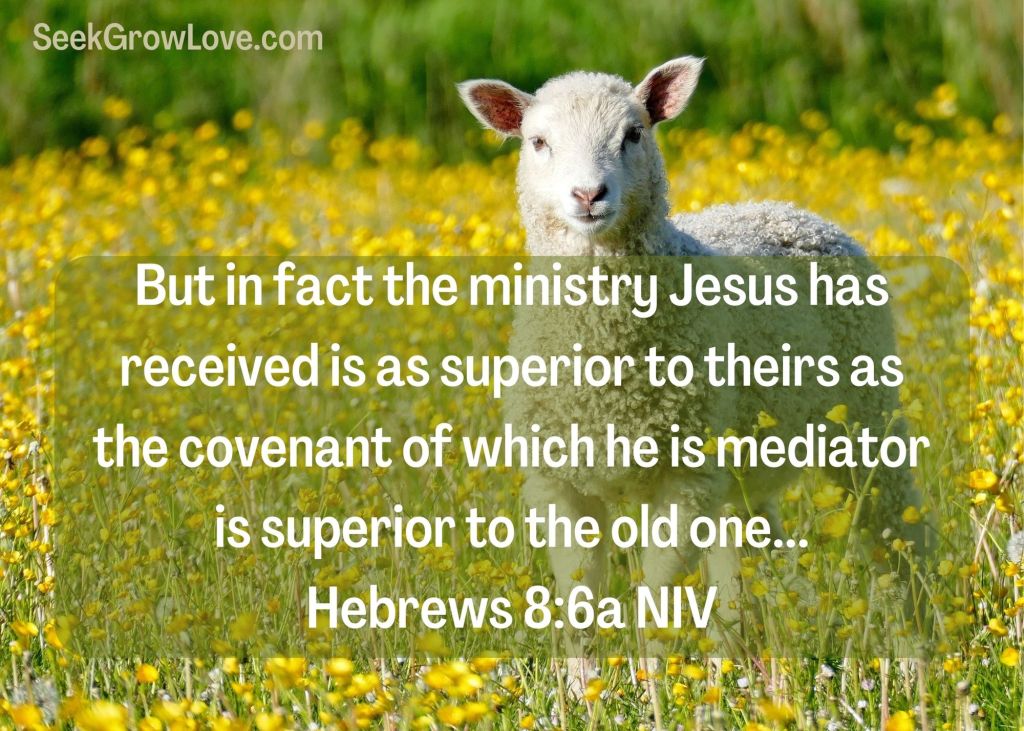
In verse 6 of Hebrews chapter 8, it states that Jesus has now obtained a superior ministry and therefore is the mediator of a “better covenant” with “better promises.” What then follows in verses 8-12 is the longest consecutive Old Testament quotation in the New Testament. The quotation comes from a section in chapter 31 from the Prophet Jeremiah.
Now, when the author of Hebrews says that Jesus is the mediator of a “better covenant,” it doesn’t mean that the covenant is just a little bit better. It is indeed better, but how much better? Is there a way that we could quantify the degree of “betterness” that characterizes the new covenant? I don’t think so.
The new covenant is greater and better than the old covenant to such a degree that a comparison is nearly impossible. Perhaps we might say that the distance between the two covenants is like the difference between the height of the earth’s atmosphere and then the height of the universe. As glorious as the old covenant was, it was still imperfect. But, the new covenant brings the perfection that the old covenant pointed toward and prefigured in a typological way.
And with Jesus mediating a new covenant, this indicates that the old covenant is obsolete and no longer needed since the new covenant has totally eclipsed its purpose and function. Everything that the old covenant stood for and provided—the ways that it conveyed God’s law to his people, revealed the knowledge of him, and made provision for atonement for sin—has been fulfilled and superseded in the new covenant by Christ himself.
The new covenant promises which surpass anything that the old covenant offered was prophesied by Jeremiah when he wrote, “I will put my laws into their minds and write them on their hearts. I will be their God, and they will be my people. And each person will not teach his fellow citizen, and each his brother, saying, ‘Know the Lord,’ because they will all know me, and the least to the greatest of them. For I will be merciful to their wrongdoing, and I will never again remember their sins.”
Therefore, it might help to think about the new covenant as being the “best covenant” because there will not be another covenant. There will be no “new covenant 2.0” or the “new revised covenant.” Nothing that can improve the new covenant any further. God’s law is in the hearts and minds of his people, he instructs them in his ways, all God’s people know him, and he has forgiven their sin completely, never to remember it.
The light of the new covenant is so far greater than the light of the old covenant that the old covenant simply pales in comparison. The well-known colloquial idiom, “It doesn’t even hold a candle to it” seems apt to apply here where if we imagine the new covenant having the glory and radiance of the sun, then what source of light can compete with it. The old covenant is like the moon, when reflecting the sun, the moon provides just enough light to walk around at night and see most objects near you. But it is still dark, and the potential to stumble or trip is very real. However, the light of the new covenant is like noon day where everything is illumined, and we now walk with full vision of what is before us.
The new covenant is better in every way, and we are able to receive and experience all of these better promises it has to offer. Let us count ourselves blessed to have a Savior who mediates this superior covenant that we can enjoy.
-Jerry Wierwille
Application Questions
- What are the differences between the old covenant and the new? (You can find several differences in this chapter alone, but
- Why do you think the all-knowing God didn’t just start out with the best/new covenant?
 Seek Grow Love