Painful Growth Rewarded

Gen 15 13,14

Moses: Introduction and backdrop


Hey i’m Chris Mattison and I would like to take this week to look at Moses and his incredible life story. First, though I would like to take today to look at the situation into which Moses was born.


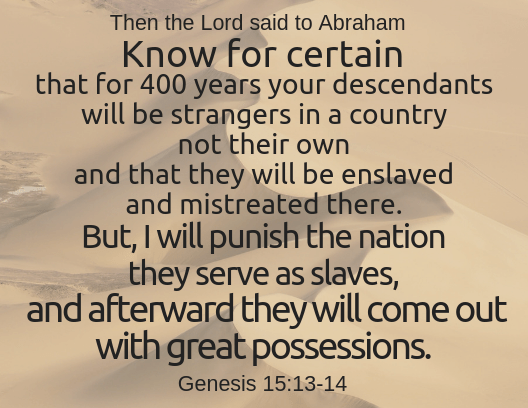
God had made a covenant with Abraham that his descendants would be numerous and would inhabit the promised land (Genesis 15).  In this promise God did tell Abraham that his people would have to leave to a strange land and be enslaved for 400 years, but that they would return to their own land.  As we know countries do not like to have foreigners moving into their land, so God moved Joseph into place as the right hand of Pharaoh so that he could guide the nation through a seven year famine and so that he could provide a place of protection inside of Egypt for the Israelites (Genesis 45:8-11).  As they continued to live in Egypt they prospered and grew in numbers so much that the Egyptians became worried that they would pose a threat to them someday so the Egyptians enslaved the Israelite people. Through all of this their numbers continued to grow as their nation was being painfully incubated inside the protection of Egypt (Exodus 1:8-14).


It is difficult to form a new nation in the ancient world because groups always intermarry with those around them and we see this as a major issue for the Israelites for the rest of the Old Testament, and later on God uses the laws and customs that he gives them to keep them separate and unique, but at this time God uses their enslavement to keep them as a single coherent nation of people.  This is maybe one of the most “tough love” ways to keep a promise.


During this time the Israelites began to forget about God’s promise and to worship the gods of the Egyptians, because in their minds those gods must be more powerful if the Egyptians are more powerful than them.


God’s people always seem to thrive in adversity.  In the early church the numbers of Christians continued to grow even though they were being fed to lions for spectator sport and were being persecuted in every manner imaginable.    Today in areas like China where Christianity is viewed as a threat to the government and is actively repressed the number of Christians is estimated to be around 30 Million and growing rapidly.


Maybe you feel like your faith in Christ has set you apart and alienated you from your friends, and that is probably very difficult for you to deal with.  Following Christ means dying to self and maybe that means you have to die to your social group and put up with some ridicule and rejection from society. It can be easy to be worn down by the world and give in and start following the gods of society, and many people do that.  But we need to have endurance to run the race to the end (2 Timothy 4:7).

-Chris Mattison

Time in the Desert

josh1 9

There are several instances of people in the Bible spending time in the desert.

Moses was raised in Pharaoh’s house but he was an Israelite. When he was a young man he killed an Egyptian who was beating one of the Jewish people. Fearing for his life, he fled to Midian, married and became a shepherd. We don’t hear from him again until God appears to him in a burning bush in Exodus 3. Moses went on to become one of the most famous leaders of the Jewish people and led them out of Egypt and to the brink of the Promised Land.

The children of Israel were at the threshold of the Promised Land but they let fear hold them back, and so God made them wander for 40 years in the desert. In Deuteronomy 8:2 “You shall remember all the way which the Lord your God has led you in the wilderness these forty years, that He might humble you, testing you, to know what was in your heart, whether you would keep His commandments or not.”

Israel became a mighty nation that proclaimed the name of God to all nations on the earth. The prophet Elijah after his encounter where he defeated the prophets of Baal, feared for his life, and ran away, he was fed by an angel, then traveled 40 days and 40 nights, and ended up in a cave in Horeb. The Lord came to him in the cave and asked in 1Kings 19:9b “What are you doing here, Elijah?” This was right before the Lord showed himself to Elijah in the small whisper of wind. Elijah went on to continue being a bold prophet of God to the Israelites.

John the Baptist was in the desert until his appointed time to proclaim the good news of Jesus Christ. He preached the gospel of the coming of Jesus to thousands.

Jesus spent his time in the desert when he was going through his temptation. After this, he went on to establish a ministry that would change the world. He became the sacrifice that would save us all from our sins.

In all of these instances, God was with them and so they had no reason to fear. Fear is a natural emotion for humans but when we give in to fear instead of trusting in God, it is a bad thing. My daughter painted this picture for me a few years ago, because she knew that Joshua 1:9 was one of my favorite verses “Be strong and courageous, do not be afraid, do not be discouraged, for the Lord, your God, will be with you wherever you go.”

When we feel like we are in the desert, due to circumstances in our lives, we need to relax and let God give us some rest and then get out of the desert and let God use our lives in an incredible way. In all of these instances, they came out of the desert a better person. All of these people allowed God to use them for what he had planned for their lives. I pray that we all let God use us to fulfill His plans for us. We can always rest in the knowledge of Jeremiah 29:11 “For I know the plans I have for you,” declares the LORD, “plans to prosper you and not to harm you, plans to give you hope and a future.”

Sherry Alcumbrack

In His Word – the 1st 5

Deut 8 3

Can you imagine giving an algebra book to a preschooler and expecting the child to start solving intricate problems on their own?  I think some searching and new Christians (and even some old ones) may feel a bit like that preschooler when they think about reading the Bible.  They have heard and might even believe it can be helpful to their Christian walk.  But, it still seems like such a large, overwhelming book – they would prefer the pastor just tells them what they need to know.  The good news is that our little preschooler can learn to count, and then add, subtract, multiply, divide, replace numbers with variables and before you know it – they have grown in their math skills and are solving algebraic equations.  And, even better news, it doesn’t need to take 10 plus years to get better acquainted with God’s Word and benefit from the countless opportunities to grow in our knowledge, faith and relationship with our Heavenly Father through his words.  We can each continue growing today, no matter where we are in our current understanding of His Word, we can and ought to be dedicated to knowing God more and more as he reveals himself in His Word – daily.


A basic understanding of how the Bible is organized can help greatly in knowing the big picture of God’s story – which is profitable in also seeing how it applies to our daily lives as well since it is the same God at work.  The 66 books are divided into the Old Testament (39 books covering creation through Israel’s history up to 400 years before the birth of Jesus) and the New Testament (27 books detailing the life, death & resurrection of Jesus, the acts of the early church, letters to the various churches and church leaders, and finally, a vision of the end times and coming kingdom).  Each testament can be further subdivided into helpful divisions.  For example:
THE OLD TESTAMENT

Law (5 books)

History (12 books)

Poetry (12 books)

Major Prophets (5 books)

Minor Prophets (12 books)


Today we will give a quick overview of the 5 books of the Law

The Books of the Law were mostly written by Moses and for many years they were the only sacred scriptures of God’s word for his people.  These 5 books cover a great deal of the early years of the Jewish and Christian faith and it is here that God first reveals himself to his creation.  While the setting includes many ancient cultures – beginning about 6,000 years ago – which can seem rather foreign at first, it doesn’t take long before we recognize many human characteristics we still see in ourselves and our neighbors today: selfishness, greed, pride, envy, as well as faithfulness, dedication, patience, and compassion.  And, we also see GOD – the creative, all-powerful, jealous, wise, holy God of all the ages.  Too often the Old Testament is sadly regarded as too old to be useful.  However, Jesus knew much of the Old Testament, and in the Gospels he quoted from or referenced passages from all 5 of the books of Law.  They were important to Jesus.  These Scriptures helped him fight temptation, teach about God and live a holy life.  If the Son of God found them so useful – it seems well worth my time to look into them further.

These are some of the exciting things you can look forward to reading and learning from in the Books of the Law . . .


Genesis – A Book of Beginnings!

Starting with Creation, Adam and Eve and the Fall (first sin), Noah and the Flood, and the Tower of Babel.  Then, enters Abraham who would be the father of a great nation, and so begins the patriarchal family and the following generations, each with their own story to tell: Isaac, Jacob/Esau, and Joseph.  This book covers the beginning of the universe, life, mankind, marriage, family, sacrifice, sin, death, redemption and more.  This book of 50 chapters spans more years than the rest of the 65 books of the Bible put together – and in it we get our first predictions of the promised Messiah – Jesus.  God’s story begins.

Exodus – The Exit Out of Egypt!

Hebrews enslaved in Egypt.  Baby Moses saved in a basket – grows up in Pharoah’s house – leaves Egypt  – burning bush – back to Egypt to free his countrymen – 10 plagues – the first Passover – crossing the Red Sea – manna – the Ten Commandments (chapter 20) – other laws – golden calf – preparing the tabernacle

Leviticus – Holiness

Now that God’s people were called out to be a rescued people for him – with their own tabernacle where they were to worship him – they needed direction.  This book includes the rules for worship of a holy God and for the Levites – the tribe of priests who would serve in the tabernacle.

Numbers – Counting in the Desert

12 tribes of Israel counted, 12 spies sent into the Promised Land (10 were bad and 2 were good), faithless Israel listens to the majority and wanders in the wilderness 40 years

Deuteronomy – Repeating the Law

Moses reminds the Israelites of their history and God’s laws as they prepare to enter the Promised Land – Moses dies.


And – God is there – in it all!  Through the ups and the downs.  Just as He is with you, today – and yesterday and tomorrow.  If you are looking for one chapter to read today to sum up the books of the law – Deuteronomy 32 is a good choice – or Deuteronomy 30 – or 28 – or Exodus 20.  Maybe you can listen to a few chapters on your way to work, or during your bike ride.   God put good stuff in there just for you – thousands of years ago.  Thanks, God!


May I Find You There, God,

Marcia Railton

The Underdogs

used by God

Moses is one of the most real people in the Bible. What I mean by this, is that in reading his interactions with God, often times, his responses are not ultra-spiritual, but rather down to earth and matter of fact. For example, when God tells him he has been chosen to free his people from Egypt, Moses tells God “nope, sorry! You’ve got the wrong guy! I don’t do public speaking, I’m shy…find someone else.” (paraphrasing Exodus 3). Moses does this time and time again throughout his story . What’s so great, is that God puts up with Moses. In fact, he made him one of the most famous people in scripture. That knowledge reassures me that God can handle whatever sass I may throw at him. That when I am angry and fed up with him, that I can be just as real as Moses was. That when I pray and talk to God, I don’t have to act like I’ve got it all together and sound super spiritual. I can just be me. God will not reject me when I doubt or complain. He may be a bit annoyed with me, but he won’t abandon me. I’ll never be too much for him. That’s the first lesson we can learn from Moses.

The second thing that Moses teaches us is that our weakness does not limit us in our ability to serve the LORD. Several years ago, a bunch of contemporary Christian artists got together to make an album called The Story with songs designated for each major Bible story. Bart Miller, the lead singer for MercyMe sings “It Must Be You” a song for Moses. Right now, go open up a new tab in your browser and type in “It Must Be You the story” click on the first video that pops up and listen to that song.

Moses’ life in itself is a miracle. He was supposed to die as a baby – murdered by the pharaoh, not taken in to be his ward. Moses was a stutterer and afraid. He wasn’t supposed to lead an entire nation – and yet, through God’s power, he did. God sees something in each and every one of us. Potential to do great things for him and through him.

I know this because I see God at work in my own life. You see the chorus to that song “It Must Be You” is my life’s anthem. I wasn’t supposed to succeed. In second grade I was diagnosed with ADHD and tourettes. In fifth grade, I was diagnosed with OCD. My OCD and tourettes were so bad, I was taken out of public school and homeschooled. I could hardly go into public places without freaking out. I was scared of germs and scared of soap. It was completely debilitating.

But somehow by the grace of God, I recovered. I defeated tourettes, I learned how not to let it control me. I graduated high school seventeenth in my class of 586. I went to college on a full tuition scholarship. I picked up a minor in speech communication and found how much I enjoy and how good I am at public speaking. I recently graduated with high honors. Now the little girl who would freak when a stranger touched her arm has plans to attend the Bible College this coming August.

The story of Moses teaches us that with God there are no limitations. In fact, we serve a God that invites the challenge. When we succeed, he wants to ensure that people know it was because of him. That’s why he picks the underdogs, the Moseses. It’s why he’s chosen you.

-Emilee Ross


HARD Hearts

Hebrews Chapter Three

Hebrews 3_15

Similar to chapter one, chapter three starts with Jesus being compared to someone else.  In chapter one, we saw Jesus being compared to both the angels and prophets.  The author raised Jesus above the angels and prophets.  In chapter three, the author compares Jesus to Moses.  Moses, above anyone else, was absolutely adored by the Jews.  He was the one, under God’s provision and guidance, who led Israel out of Egypt and delivered the law to them.  Moses is a central piece of the Old Testament.  The comparison between Moses and Jesus would have helped the Jewish Christians gain or keep their affection for Jesus.  Not only is Jesus compared to Moses, their hero, but Jesus’s given more glory than Moses by the author.

In verses three through six, we see a beautiful illustration by the author about a house.  There are four parts to this illustration: God built the house, Moses is the servant for the house, Jesus is the ruler of the house, and we are the house.  This illustration helps show how Jesus is counted more worthy than Moses.  We are God’s beloved creation.  Moses served the Israelites when he led them out of slavery and delivered the law to them.  He was a phenomenal help to them.  Christ is also a great help to us, but not only that, he is the ruler of us.

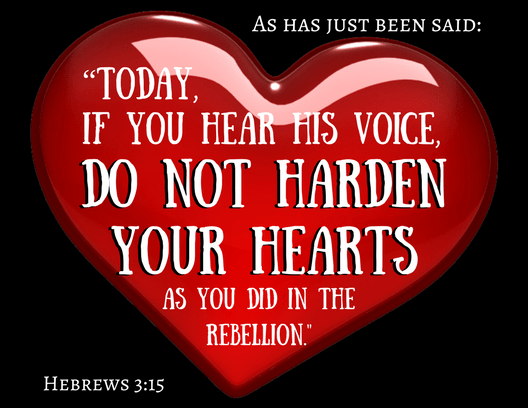
Verses seven and eight read, “Therefore, as the Holy Spirit says, ‘Today, if you hear his voice, do not harden your hearts as in the rebellion, on the day of testing in the wilderness.’”  First thing I want to point out is that the Holy Spirit is talking.  In verses nine through eleven, the Holy Spirit talks in first person as well using pronouns me, my, and I.  It is interesting to see that the Holy Spirit is talking here and talks in the first person.  It is something to mull over.  What I want to highlight though is the focus to not harden your heart.  This is repeated in verse fifteen.  The author must be trying to make a strong point that we are to not harden our hearts.  The Israelites who Moses led out of Egypt hardened their hearts, and they rebelled against God when God continually provided for them.  It was because of their hardened hearts that they did not obey God, and they had unbelief.  This caused their generation to not enter the rest in the Promised Land.  The author of Hebrews is urging us to learn from the Israelites, as they hardened their hearts.  If we harden our hearts, then we too will not be able to enter God’s rest.

The chapter ends at an awkward break, as the talk about rest continues into chapter four.  Personally I don’t understand the purpose of the chapter break between chapters three and four.  It’s important to note that the chapter and verse breaks were not included in the original writing.  Therefore, the author of Hebrews did not intend for people to stop reading at this section.  Therefore, you should stick around for tomorrow, as we continue the talk on God’s rest.

Have a great day!

Sincerely,

Kyle McClain

The Key to COURAGE!

Joshua 1

Joshua 1-8

Monday, October 9

40 years of wandering have passed since yesterday’s devotion and the Israelites stand at the doorway to the Promised Land once more.  But, this time their leader Moses is dead and Joshua and Caleb – the two who courageously trusted God to lead them into the land of giants – are the only ones of their generation to have survived the wandering.  A new generation is at the door – this time with Joshua as their leader.  Is there any hope that this new generation, which did not personally see how God provided miracle after miracle in saving His people out of Egypt, will have the courage to do what their fathers did not?

Just before his death, Moses – at 120 years of wisdom – had rallied together the younger generation for some final words.  He knew the power of fear and discouragement and he remembered all too well the events of 40 years ago.  To the gathered Israelites he said, “Be strong and courageous.  Do not be afraid or terrified of them, for the Lord your God goes with you; he will never leave you nor forsake you.” (Deuteronomy 31:6).  Then he called forward Joshua and spoke to him: “Be strong and courageous, for you must go with this people into the land…The Lord himself goes with you…Do not be afraid; do not be discouraged.” (Deuteronomy 31:7-8).

What more could be done to inspire them to action with a courageous heart and not crumble again in fear?  God knew they would need a strong connection to Him, reminders of His faithfulness as well as His requirements.  So He directed Moses to write it all down and make sure it was shared with the people – and thus the first five books of the Bible were created – with direction to listen to it, learn it, and teach it to the children – so that they would fear the Lord their God – rather than fearing the circumstances around them.  What a gift!  What a treasure!

And so, in Joshua 1 God himself speaks to Joshua – giving him his orders and how to lead His people.  In one short paragraph (Joshua 1:6-9), God tells Joshua three times, “Be strong and courageous!”  This is important!!  Fear and discouragement must not be allowed to reign in Joshua’s heart.  And what is sandwiched in between that repeated refrain – the answer of HOW to build up Joshua’s courage and give him daily doses of Godly direction.  “Do not let this Book of the Law depart from your mouth; meditate on it day and night, so that you may be careful to do everything written in it.  Then you will be prosperous and successful.”  (1:8).

There it is: the answer to living a courageous life of action following God’s direction (as well as being successful) —  daily – meditating – on – His – Words.   Are you ready to exchange fear and discouragement for a good dose of strength and courage?  Get in His Word!  How many times can you read Joshua chapter 1 today?  What new directions, warnings, details will you find each time?  God’s Word is loaded with what we need.  It is our connection to the God of the Universe.  Use it boldly and courageously!

Go With God Today – Marcia Railton


Living Words

Acts 7-8

acts_waterdrop

Wednesday, June 7

Stephen had an interesting life that was cut way too short.  I wonder what would have happened had he lived longer?  How many more people could he have reached?  I admire the way he knew his Old Testament history.  Beginning with Abraham leaving his country, Stephen then recounts stories of Isaac and Joseph and Moses.


In verse 38 of Chapter 7, it tells us of the living words Moses received to pass on to us.  These words are still being passed on to this day.  Even when people hear the living words, they have a choice of what to do.  Back in Moses’ day, these living words were rejected.  The people refused to obey and in their hearts turned back to Egypt (7:39).  How have you heard the living words and what has your response been?  Are you listening to these words or rejecting them?


I respect the courage Stephen had in saying what needed to be said even if it meant angering those who could kill him.  Even as he was being stoned, he was full of the Holy Spirit and saw the glory of God, and Jesus standing at the right hand of God.  Stephan prayed that the Lord Jesus would receive his spirit and he asked him to not hold this sin against them.  This is an example of an extremely dedicated and devoted man of God.  How many of us can praise God as Stephan did while being persecuted?


While Godly men buried Stephen, Saul began to destroy and persecute the church.  Tomorrow we will hear more about Saul and his stories.


-Jason Railton


Stop Dwelling on the Past

Isaiah 43-44

isaiah-43-18-19

Saturday, February 18

In Isaiah 43:16, Isaiah remembers that God is the one who parted the Red Sea and led Moses and the Israelites into it followed by the Egyptians. Right after he remembers this powerful act of God, God says “Forget the former things! Stop dwelling on the past (43:18)!” If we always look to the past, we’ll miss the things that God is doing right now. Sometimes we get so caught up thinking about all the good places we used to be that we don’t realize the good that is happening right in front of us. We look back to when we were younger, fitter, smarter or anything else we can imagine. All that does is blind us! No matter where we are right now, whether north, south, or the ends of the earth, God is trying to take us home (43:6). Don’t let the treasures of your past keep you from seeing the path that God is trying to take you down. Open your eyes and see. Open your ears and listen. Follow the cloud and the fire in your life.

– Nathaniel Johnson

(Photo credit: http://dustoffthebible.com/Blog-archive/tag/isaiah-43/)

May Our Choices be Righteous & Courageous! (Joshua 22-24)

Thursday, September 29

joshua-24

Nikki Green

As we wrap up the book of Joshua, we find our strong and courageous leader in the last days of his life.  Joshua calls the twelve tribes together to review all God had done for His people.  Joshua states that the LORD fought for Israel and drove out the other nations.  He urges the Israelites to remain faithful to God.  He warns them not to worship foreign gods or marry outside the Israelite nation.  He cautions them not to disobey – not to turn to the right or the left.  The theme of courage is echoed again.  He reminds them that what God gave, He can take away.  The land has always been His.  Joshua’s words of wisdom lead to a choice when he says, “Choose this day whom you will serve… but as for me and my house, we will serve the LORD” (Josh 14:15).  The Israelite people responded with the commitment, “We will serve the LORD, for He is our God” (Josh 24:18).

After the remarkable history lesson and reflection on the mighty deeds of God, we read that Joshua died at age 110.  He was buried in the land of his inheritance – the Promised Land.  Israel served the LORD throughout the lifetime of Joshua, which speaks volumes about his leadership and authority.  The book of Joshua ends with the completion of a generation of heroes.  We are reminded of Moses and Aaron, the dynamic duo, who began this great land repossession quest.  Joshua and Eleazar, the priest, jump in and prove to be the next generation of heroes.  Joshua was mentored by Moses.  Eleazar was the son of Aaron, Moses’ brother, and received outstanding mentorship from these men as well.  The book ends with the death of these “super men” and symbolically completes the story of conquest and conquer as “The LORD Saves” (Big thanks to Moses for Joshua’s new name & the answer to what we all need)!


Consequences (Deuteronomy 28 & 29)

Tuesday, September 20

deut-28-picdeut-28-pic-2

By Jill McClain

Moses had previously told the people all of God’s directions and commands.  He gave them very detailed instructions about what type of behavior God expects.  Next Moses lays out the consequences for either following or disobeying God’s rules.  God has created all humans with a free will.  We are free to walk in his ways or to defy his directions.  However, there are definite consequences for the choices we make.  Chapter 28 first lists a series of blessings that the people will receive if they observe God’s decrees.  There are blessings for individuals and the entire nation.  Crops, livestock and children will all flourish, enemies will be defeated, and the people will be granted “abundant prosperity” (verse 11).  Conversely, there is also a list of curses that the people will face if they are disobedient.  Diseases, plagues, famine, and the loss of their land are just some of the curses listed.  Ultimately, God’s people are always free to choose if they will follow in his ways, but there will be consequences for their actions.

Forty years earlier God and his people had made a covenant.  God promised to bless the Israelites, and they in turn, vowed to love and obey God.  In Chapter 29, Moses once again urges the people to honor their commitment.  The chapter concludes with verse 29, “The secret things belong to the LORD our God, but the things revealed belong to us and to our children forever, that we may follow all the words of this law.”  There are some secrets that God has not revealed to us.  However, he has shared with us all that we need to know to have eternal life. It is up to us to diligently study the Bible and apply all we have learned to our own lives.