

OLD TESTAMENT: Isaiah 25-27
POETRY: Song of Songs 3
NEW TESTAMENT: Hebrews 9
No one talks about the sins committed by God’s people in ignorance. But it’s these sins that the Levitical high priest offers a sacrifice for yearly. If that’s the case, then what of the sins of the people that are committed willfully? I think we’ll find out about them in Hebrews Chapter 10.
The more I read, the more I have to change my mind about what God’s will for me actually is. There’s so much confusion that’s been passed on from generation to generation that gets stuck in our minds and in our hearts. Confusion is not good, because if we continue in it, someone’s going to get hurt. This studying of the book of Hebrews has helped me tremendously in that regard.
The Old Covenant had a high priest who sacrificed for sins with regulations that had to do with food, drink, and regulations for the body UNTIL the reformation of the covenant. An example of this is in washing hands and feet prior to entering the tabernacle or making a sacrifice. God told them that if they didn’t do this, they’d die. The priest would do this to make sure they didn’t die (literally), for the purpose of cleansing the flesh (the body) of the sin that was committed that year. But it could not cleanse the conscience. It, along with the various gifts and sacrifices offered amongst the people of God under the Old Covenant, could never make the worshiper perfect in conscience. Why?
The Holy Spirit (God) had not yet revealed the way into the holy place while the outer tabernacle was standing, separating the people from God. Nothing offered could compel the person to desire to flee dead works and serve the living God out of self-sacrificial love (God’s will for us all) because Jesus hadn’t demonstrated this kind of love yet. Jesus’s love is what changes the heart, soul, mind—the conscience, if you will. It causes us to desire to repent when we miss the mark and strive to do God’s will out of love.
The New Covenant, with its better high priest, better promises, and better tabernacle, will help the chosen people of God live well for his kingdom. They (we) can start living that way now because the Kingdom of God is at hand. Our great high priest Jesus is working for us (in us), from heaven for our own good, and for the good of others to do God’s will out of love. We’ll desire this with a clean conscience because of what our savior did for us.
The Levitical high priest was only able to make a sacrifice on behalf of his own and the people’s sin once a year. He was only able to cleanse sin once a year. But Jesus’s one time love sacrifice makes it available to cleanse our conscience of sin at any time, as he is available to save forever those who draw near to God through him, since he always lives to make intercession.
It makes sense that if Jesus is always available to make intercession for us that we can become entangled in sin again that kills. When that is the case, we can draw near to God through our high priest and repent because he’s always available to save. I think this is what the writer to the Hebrews is trying to get across. They needed to draw near to God through their new, better high priest with repentance. And they can do that without dying because Jesus already did that.
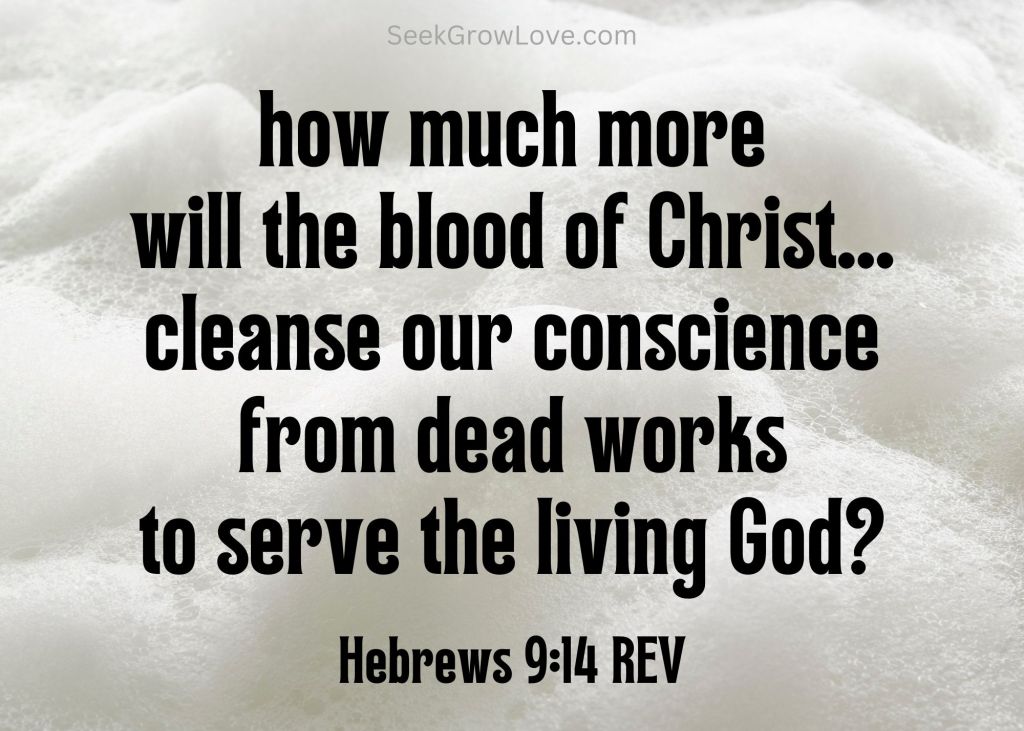
The new, better high priest has the job role of cleansing our conscience from dead works to serving the living God once we enter the holy place of God. We are the people who desire that because of what Jesus did for us. He demonstrated for us that love conquers sin and sets people free (to serve God). We must choose to follow in Jesus’s footsteps to remain cleansed, repenting when we miss the mark.
God’s desire for his people isn’t new. This has always been God’s will for his people. That’s why he brought his firstborn son Israel out of slavery to Egypt, to serve him, with a clean conscience (the heart) so that it would be well with them. But most of them chose not to.
How the people would be reconciled back to God is new. It was revealed by the Holy Spirit after the veil was torn. Jesus’s body was torn so that we could be in God’s presence to offer sacrifices, just like the Levitical Priests could, but without a chance of dying when we enter (Jesus already did that). The sacrifices we bring in are repentance, praise, thanksgiving, humility, brokenness, contriteness, etc.
People can now have hope of resurrection from the dead to everlasting life by entering the New Covenant, made available through Jesus’s love sacrifice. We are called to do the same, Jesus showed us how. Jesus was able to do this through the eternal spirit working in him. We can do it through Jesus’s spirit working in us.
Jesus tells us what is required of us. It’s the better requirement than the Old Covenant stipulations because it can make us perfect in conscience. Our requirement is to love, as Jesus loved. How has he loved? Jesus Christ laid down his life for us. And we ought to lay our lives down for our brothers and sisters. Hopefully not literally, but we will be willing to if it comes to that. We can do this through the spirit of Jesus working in us. We can desire this because of Jesus’s demonstration of love. If we don’t, Jesus is always able to save when we draw near to him (repent) with our better sacrifices.
-Juliet Taylor
Reflection Questions
1. Without the shedding of blood, there is no forgiveness. Those under the Old Covenant were forgiven for their sins through the blood of animal sacrifice that year, but it didn’t save them (they had no hope of resurrection). With the shedding of Jesus’s blood, there is forgiveness of sins that saves us. What do you think is the difference between forgiveness under the old law and forgiveness under the new law?
2. Hebrews 9:26 says, “Otherwise, He would have needed to suffer often since the foundation of the world; but now once at the consummation of the ages He has been manifested to put away sin by the sacrifice of Himself.” This does not mean that people don’t sin anymore. We can clearly see that that’s not the case. What do you think it means to “put away sin”?
3. Christ loved us by dying for us. How do you think God wants you to demonstrate his love to someone today who is in need of some love from you?
 Seek Grow Love