
God’s People and His Clay

OLD TESTAMENT: Isaiah 63 & 64

POETRY: Psalm 113

NEW TESTAMENT: 1 Peter 2

Isaiah 63:7 (LEB):

“I will make known the loyal love of Yahweh,

the praises of Yahweh,

according to all that Yahweh has done for us,

and the great goodness to the house of Israel

that he has done for them according to his compassion

and according to the abundance of his loyal love.”

Isaiah 64:8-9 (LEB):

“Yet, Yahweh, you are our father;

we are the clay, and you are our potter,

and we all are the work of your hand.

Do not be exceedingly angry, O Yahweh,

and do not remember iniquity forever!

Look! Behold, we all are your people.”

Psalm 113:3 (LEB):

“From the rising of the sun to its setting,

the name of Yahweh is to be praised.”

1 Peter 2:9-10 (LEB):

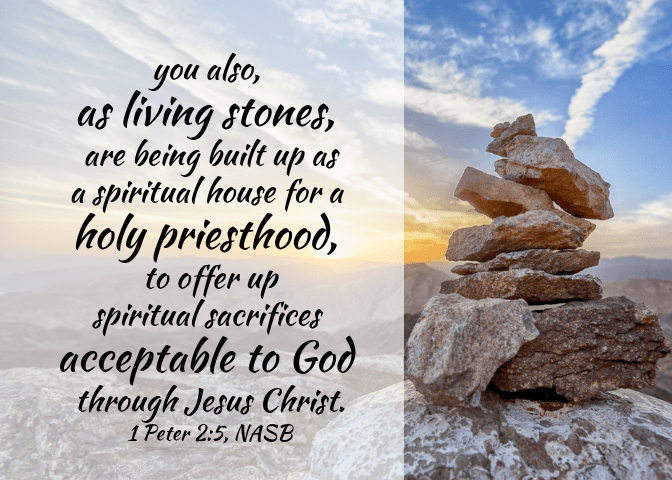
“But you are a chosen race, a royal priesthood, a holy nation, a people for his possession,

so that you may proclaim the virtues of the one who called you out of darkness into his marvelous light,

who once were not a people, but now are the people of God,

the ones who were not shown mercy, but now are shown mercy.”

Isaiah 63 begins with a reflection on God’s loyal love and compassion. Despite Israel’s history of rebellion, the prophet praises God for His great goodness and mercy. This loyal love is not based on Israel’s worthiness but on God’s steadfast character. The passage recounts how God delivered His people, bore their suffering, and worked for their redemption throughout history.

However, Isaiah 64 shifts to a cry for mercy and forgiveness. The people of Israel acknowledge their sin and unworthiness, likening themselves to clay in the hands of a divine potter. They plead with God not to remember their iniquity forever and ask for Him to show mercy once again. This chapter reminds us that no matter how broken or far from God we may feel, He remains our loving Father, and we are the work of His hands. He is able to mold us, forgive us, and restore us according to His mercy.

Psalm 113 calls all creation to praise the name of Yahweh from the rising of the sun to its setting. This psalm exalts God’s sovereignty, lifting Him high above all the nations. Yet, despite His greatness, the Lord cares deeply for the lowly. He raises the poor from the dust and lifts the needy from their affliction. God’s majesty and compassion are held together in perfect harmony, and His name is worthy to be praised at all times and in all circumstances.

This psalm challenges us to recognize God’s goodness, even in the midst of difficulty. From the moment the sun rises until it sets, His name deserves our praise. Whether in times of blessing or struggle, God’s compassion remains steadfast, and our response should be one of continuous worship and gratitude.

In 1 Peter 2, we are reminded of the incredible transformation we experience through Jesus Christ. We, who were once in darkness, have been called into God’s marvelous light. Peter describes believers as a “chosen race, a royal priesthood, a holy nation, a people for His possession.” These titles reflect our new identity in Christ and the purpose for which we were called—to proclaim the virtues of the One who saved us.

Peter contrasts our former state of not being a people with our new reality of being God’s people. Once, we were outside of mercy, but now we have received mercy. This passage is a powerful reminder that our identity is not defined by our past or our failures, but by God’s choosing and grace. As His chosen people, we are called to live in holiness, reflecting His light to the world.

This week, reflect on God’s mercy in Isaiah 63-64 and His greatness in Psalm 113. Let these truths shape your understanding of your identity in Christ, as Peter describes. As God’s chosen people, live in His light, praising His name, and proclaiming His goodness to the world around you.

-Jeff Ransom

Reflection Questions:

How does the imagery of God as a potter and us as clay in Isaiah 64 speak to your relationship with Him? In what areas of your life do you need to submit to His molding?

How can you live out the call to praise God from the rising to the setting of the sun, even when circumstances are difficult?

Reflect on your new identity as described in 1 Peter 2:9-10. How can understanding that you are a chosen and holy person shape the way you live and share your faith with others?

In what ways can you proclaim the virtues of the One who has called you out of darkness into His marvelous light in your daily life?
Forevermore!

Old Testament: Judges 13 & 14

Poetry: Psalm 113

New Testament: Luke 13

Psalms 113-118 are known as “Hallel,” which means praise. These Psalms are recited, either in unison or responsively, in Jewish observances such as Passover and Hanukkah. This specific passage of Psalms is a prayer of thanksgiving and praise to God for the blessings He poured out on Israel during the Exodus from Egypt. Though “Hallel” typically refers to Psalms 113-118, two other sections of Psalms are also referred to as “Hallel.” Thus, Psalms 113-118 are also specifically referred to as the “Egyptian Hallel” due to recounting of the Exodus story in Psalm 114.

In Passover remembrances, the Hallel is used within both the temple and homes. Before the Passover meal, Psalm 113-114 would be sung together. Most scholars believe that Jesus and his disciples would have sung these verses together while gathered for the Last Supper. When you read the verses of Psalm 113 closely, they seem a fitting hallmark to Jesus’ ministry.

In verses 7-9, we read, “He raises the poor from the dust, and lifts the needy from the ash heap, to make them sit with princes, with the princes of his people. He gives the barren woman a home, making her the joyous mother of children.” Throughout Jesus’ ministry, his work angered many because he focused on the ones that others forgot or ignored. Just like the words of the Psalm, he shook social norms. How many instances can we recount of him healing the less desirable, such as the woman at the well, or socializing with sinners, such as Zaccheus? Jesus acknowledged in words and actions that all will be made equals in God’s kingdom? 

In today’s New Testament text, we read another example of Jesus lifting the needy, while others found fault. In Luke 13: 10-13, we read, “Now he was teaching in one of the synagogues on the sabbath. And there was a woman who had had a spirit of infirmity for eighteen years; she was bent over and could not fully straighten herself. And when Jesus saw her, he called her and said to her, “Woman, you are freed from your infirmity.” And he laid his hands upon her, and immediately she was made straight, and she praised God.” Later in the text, we read how the Synagogue leaders were indignant that Jesus healed on the Sabbath, causing Jesus to rebuke them. He had once again turned expectations upside down.

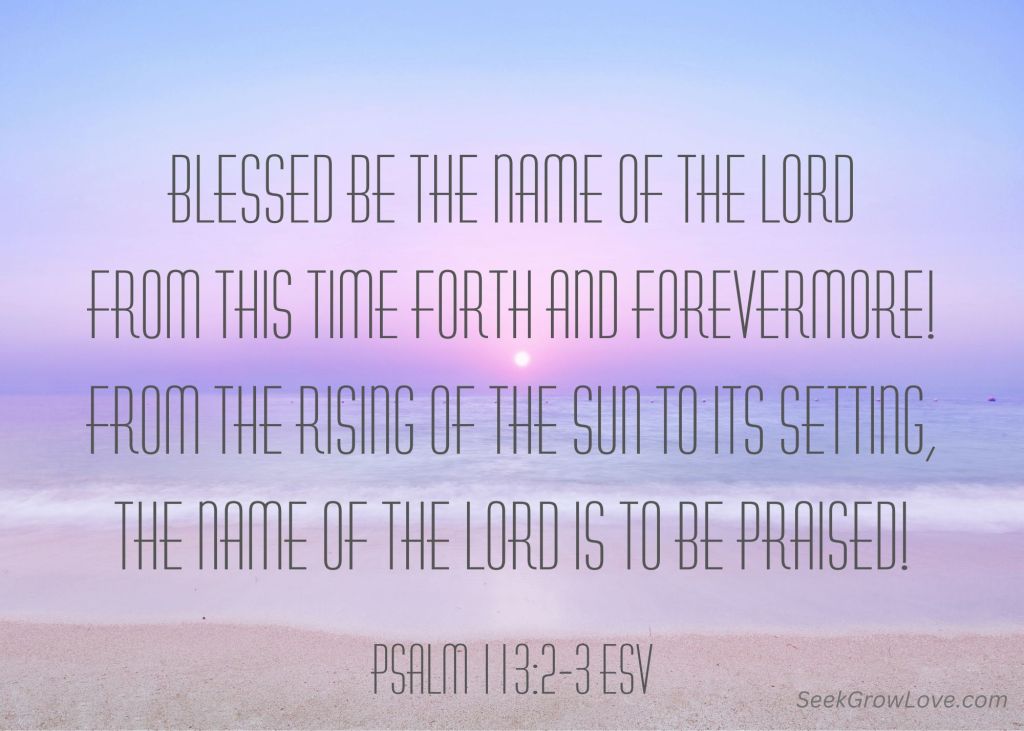
While reciting this Psalm during their Passover meal, did any of Jesus’ disciples connect his ministry to the words they were singing? It’s also poignant to think that despite his imminent betrayal and death, Jesus could recite this prayer of praise and thanksgiving from the Psalm. “Blessed be the name of the Lord from this time forth and for evermore! From the rising of the sun to its setting the name of the Lord is to be praised! The Lord is high above all nations, and his glory above the heavens!” 

When we are faced with trials, can we do the same as Jesus? These verses remind us that in all things, the Lord is worthy of continual praise. It does not instruct us to be thankful once. Rather, it is imploring us to offer thanks “forevermore.” God is unchanging and there will never be a time in which we cannot offer homage to Him. 

My daughter’s teacher has her students complete a daily task in their agendas. At the end of each school day, the students are tasked with reflecting on the day and writing down two positives that happened to them. The teacher is striving to enable a mindset of gratitude and positivity within her class.

Could we take on the same task in order to offer continual praise to God? At the end of each day, let’s take time to reflect on that day. What can we praise God for? Perhaps your day at work was rough. But could you thank God that you had a job to go to that will provide for your needs such as food and shelter? This week, I challenge you to find at least two things in your day for which you can offer God praise and thanksgiving.

~Jen Siderius

Jen Siderius is a member of the Fair Oaks Community Church of God in Virginia. She and her husband Dan live in Maryland, where she works as an elementary school media specialist. When she’s not busy being entertained by the antics of their 9-year-old daughter, she loves to read, run, knit, quilt and try new crafts.

Reflection Questions

  1. Where do you see Jesus upsetting social norms? What was his purpose in doing so? Where have you – and can you – follow Jesus’ example?
  2. How would you rank yourself in the thankfulness category? Do you daily praise God for what He has done and who He is? How can you work at increasing your spirit of thankfulness?
  3. What did you see about God in today’s reading that you will praise Him for? What is Jesus revealing about His Father and God that we can praise God for?