Overcome

Revelation 2

To him who OVERCOMES
“He who has an ear, let him hear what the Spirit says to the churches. To him who overcomes, I will grant to eat of the tree of life which is in the Paradise of God.”  Revelation 2:7
One of the phrases I would like you all to notice and underline when it repeats is this, “To him who overcomes”. This phrase refers to specific obstacles in Revelation 2 however this phrase could mean any obstacle in the way of your relationship with God. If you overcome your greatest fears and struggles and rely on Jesus, your relationship with God will thrive.
Jesse Allen

Tâmîym, ʼâbad, kâlâh and kârath

Psalm 37 22

            Today, we are in the middle of the week and we find ourselves in the middle of our Lectio Divina (Sacred Reading) of Psalm 37.* Today’s reading is a little more in-depth, so if you’re in a hurry you might wish to come back to this at a time later today when you can invest a few minutes into reading/praying.  My goal here is not just to give you a fish and feed you for a day but to teach you how to fish so you can learn to feed yourself for the rest of your life (and feed others).

            Remember, the purpose of Lectio is to draw us into God’s presence and rest through reading, meditating upon and praying with the Bible.  While the goal is not simply intellectual understanding, but relationship with God, it is still important that when we read and meditate we are doing so correctly.  We want to be as accurate as possible about the meaning of God’s Word.  We want to think about what it actually says and what it meant when it was written and what it means for us today.  It wouldn’t make much sense to spend a lot of time meditating upon something that was not correct.

            If you have internet access, there are some tools readily available which cost nothing and can help you.

            One tool is Bible Gateway.  I began working in a Christian bookstore when I was attending George Mason University back in 1982.  I became aware of a lot of different Bible translations that were available (beyond the King James).  I started building a library of various Bible translations and nearly 40 years later I have over 50 different translations on my bookshelves.  You can now get almost every one of those translations (and many more) on Bible Gateway.  Choose the text you wish to study, and choose which translations you wish to use and you can see a side by side comparison of the texts.  This can be helpful when you are studying a Biblical passage.  It can help you understand the nuances of meaning.  Some translations are more or less word for word, while others are more thought for thought.  There are also paraphrase versions which attempt to convey the meaning in modern contextual language.

            The second tool is Blue Letter Bible.  While the available translations are fewer than on Bible Gateway, BLB allows you to do a detailed analysis and word study of various words.  You can look up the original Hebrew/Aramaic or Greek words and see some of the various ways that word is used in the Bible and have a greater understanding of what the Bible was saying back when originally written and you bridge that into modern day language/ways of thinking and speaking.

            With that said, I’ve identified 4 key words that are used in today’s reading and give you a summary of the word meaning and usage in the Bible:

תָּמִים tâmîym, taw-meem’;  entire (literally, figuratively or morally); also   integrity, truth:—without blemish, complete, full, perfect, sincerely, sound, without spot, undefiled, upright, whole.

אָבַד ʼâbad, aw-bad’; to wander away, i.e. lose oneself; by implication to perish:—break, destroy(-uction), not escape, fail, lose, (cause to, make) perish, spend, be undone, utterly, be void of, have no way to flee.

כָּלָה kâlâh, kaw-law’; to end, to cease, be finished, perish, consume, destroy (utterly), be done, , expire, fail, faint, finish, fulfill, wholly reap, make clean riddance, spend, take away, waste.

כָּרַת kârath, kaw-rath’; to cut off, down or asunder, by implication, to destroy or consume; destroy, fail, lose, perish.

With that background in place, you are ready to proceed with today’s Lectio Divina reading of Psalm 37:18-22.

  1. Read.  Read through the passage slowly, at least 3 times:

18 The blameless (תָּמִים tâmîym, taw-meem’) spend their days under the Lord’s care,
and their inheritance will endure forever.
19 In times of disaster they will not wither;
in days of famine they will enjoy plenty.

20 But the wicked will perish (אָבַד ʼâbad, aw-bad’):
Though the Lord’s enemies are like the flowers of the field,
they will be consumed (כָּלָה kâlâh, kaw-law’), they will go up in smoke.

21 The wicked borrow and do not repay,
but the righteous give generously;
22 those the Lord blesses will inherit the land,
but those he curses will be destroyed (כָּרַת kârath, kaw-rath’)

  1. Meditate.  Choose a word or phrase from the text to  meditate upon/ think deeply about.

For me, I chose 3 words- perish, consumed, and destroyed.  Those who are wicked will perish, be consumed and destroyed.  The Hebrew abad contains the idea of wander away, lose oneself, have no way to flee, be destroyed.

            As I think about what this means I’m reminded of the story of Christopher McCandless whose story is recounted in the book “Into the Wild” (and later movie) written by Jon Krakauer.  Chris was just a few years younger than me and grew up just a few miles from me in Northern Virginia.  After college he decided to ditch everything and walk into the wilderness of Alaska and live off the land.  Unfortunately, he did almost no preparation and he lacked the minimal survival skills necessary for such an adventure.  He crossed through a small stream and found temporary shelter in an abandoned school bus.  Unfortunately, within a short time the stream swelled to an un-crossable raging torrent and Chris was essentially trapped.  He spent weeks and months unable to escape that spot and soon ran out of food and was forced to forage.  He ended up dying of poisoning from eating poisonous berries.

            I tell that brief story because it illustrates the meaning of abad, kalah and karath.  He wandered away and got lost, trapped and had nowhere to flee to and his own foolishness ultimately destroyed his life.  That’s what the Psalm says is happening or will happen to the wicked.  I know that sometimes people have trouble thinking that a loving God would punish or destroy people.  As I think about this Psalm, the greater nuance emerges – God doesn’t choose to punish anyone.  Ultimately we end up punishing ourselves when we wander off the path that God has given us to life.  It’s a matter of cause and effect.

A few weeks ago I went hiking in Zion National Park in Utah.  A gorgeous place.  It had paths and the signs on the paths warned “stay on the path- it is dangerous and life threatening if you leave the path.”  I stayed on the path, it was difficult at times, but I remained safe and returned alive.  Had I veered off the path and ended up falling down a steep embankment to my death, then I alone would have been responsible for my destruction, not the park rangers, or God.

            This Psalm is like the sign on the path: stick to the path or you’ll destroy yourself.  But if you stick to the path, you’ll be blessed with a beautiful inheritance God has planned for you.

            As I personalize this reading I have to ask myself.  When have I gotten off the path God told me to stay on?  Have I ever wandered and gotten lost?  Isaiah 53 says that I, like everyone else, am like a sheep that sometimes wanders away.  How has Jesus, the good shepherd, come searching for me when I’ve wandered astray?  How does the Gospel reveal God’s merciful love and grace that sends his son to seek and save me when I’m lost.  How am I called by Jesus to do this same work of seeking those who are lost and leading them back to the path?

            You might choose a different word or phrase upon which to reflect, but that is an example of how my deep reading of a short part of this text raises some important issues in my mind and heart.

  1.  Pray– I pray a prayer of gratitude to God for loving me enough to go looking for me when I get off the path.  I pray a prayer of confession to God, for I am still “prone to wander” off the path.  I recognize the important mission that I’ve been given by God to join the search for others who have gone off the path and the responsibility I have to point the people in my care- my family, my Church, my co-workers, my community, to the one who guides them back to the right path and helps them stay on the path, Jesus.  I invite you to bring to prayer whatever you’ve been meditating upon.
  2. Rest in God.  I’m so grateful to God for his mercy and love.  I’ve been lost, but now I’m safely in the arms of my loving God.  I invite you to rest in God too.

-Pastor Jeff Fletcher

*If you are unfamiliar with the Lectio Divina method of prayer/scripture study please refer back to the Sunday, August 11th  devotion.

Be Still

psalm 37 7a (2)

Happy Monday!

This week we are focusing on only 1 chapter, Psalm 37.  We are reading a few verses each day and we are using a Lectio Divina (Sacred Reading) format.  If you are unfamiliar with Lectio Divina go back and read Sunday’s devotion which gives the explanation.  Go ahead… I’ll wait!

Remember:

  1. Read
  2. Meditate
  3. Pray
  4. Rest in God

(Note, this does not lend itself to being on the go.  It is better when you have a few minutes to sit and quietly read, reflect and pray).

Psalm 37:5-11

5 Commit your way to the Lord;

trust in him and he will do this:

6 He will make your righteous reward shine like the dawn,

your vindication like the noonday sun.

7 Be still before the Lord

and wait patiently for him;

do not fret when people succeed in their ways,

when they carry out their wicked schemes.

8 Refrain from anger and turn from wrath;

do not fret—it leads only to evil.

9 For those who are evil will be destroyed,

but those who hope in the Lord will inherit the land.

10 A little while, and the wicked will be no more;

though you look for them, they will not be found.

11 But the meek will inherit the land

and enjoy peace and prosperity.

  1. Read through this slowly, several times. (at least 3)
  2. Choose a word or phrase that especially speaks to you.  Spend some time chewing over that word or phrase.  I chose “be still before the Lord and wait patiently for him.”  What does it mean for me to “be still before the Lord?”  Is this talking about my body?  My mind?  My heart?  Is there any area of my life about which I’m feeling restless or disturbed?  What is causing that restlessness?  Am I having trouble being patient about something?  Can I name what that is?  Why might I be having trouble being patient about this particular issue?  Am I habitually impatient or is this unusual for me? Wait!  I’m still not being still.  Breathe.  Let go of my thoughts and simply “be still.”
  3. Pray.  Bring whatever has arisen to God in prayer.  Have a conversation with God as you would with any other good friend or loved one.  Trust that whatever you bring to God, God will hear and will understand.
  4. Rest in God.  After you pray, simply release whatever has caused you to be “un-still” and rest in God’s love for you.

(Note: verse 11 is one that Jesus himself quoted in his Sermon on the Mt.  You might want to reflect on this verse.  What does it mean to be meek?  What does it mean to inherit the land, or earth as Jesus phrased it in Matthew 5:5?  What does your understanding of your future inheritance look like?  Here it seems that we are promised earth or land as inheritance as opposed to heaven.  How does a future eternity on earth sound as a hoped for reward?)

There are many fruitful issues that could emerge with each verse.  Can you see how Lectio Divina as a way of reading the Bible can really open up a Bible verse and immerse you in the text and bring you into conversation with God?  If you practice these skills every day this week you will have in your spiritual toolbox a great resource for growing in your relationship with God.

Pastor Jeff Fletcher

Different – Like Jesus

Mark6BellaPic

Mark 6


Wow! It’s now been a full week since Fuel ended, and I’m sure that many of you who attended are, like me, missing your friends, your classes, the sessions, and the overall atmosphere. But hopefully, we have been able to take what we learned that week and apply it to the way we live our everyday lives. How to be (drum roll, please)…DIFFERENT! We can see many examples of how to be different and serve the way Jesus served in Mark chapter 6. I think of this chapter as a sort of series of steps telling us how we are meant to serve.

So Jesus starts this chapter off with saying, “A prophet is not without honor except in his own hometown and among his own relatives and in his own household.” (Mark 6:4) The King James version actually says, “in his own country.” So in essence, he’s telling us, “Hey, I know you like your friends, your family, your home, and it’s easy to feel comfortable there, but I need you to GO OUT and share the truth with the world.” It is not God’s will for us to stay confined to our own little nook of the world. We have to go love everybody, everywhere. Don’t be afraid to venture outside your comfort zone, and love people there.

The next main point Jesus gets to is that when you stop in a town to share the truth with people, they might not accept it; they may simply say “no”. In that case, our job is to “shake the dust off our feet” (Mark 6:11), and move on. Because what happens when we stay in one place, working on bringing the same person to the truth for too long? We miss out on bringing so many other people to the truth! If someone is not willing to accept the truth and live for God, we have to know that it’s time to move on and find people who are. Because our mission is to get as many people into the Kingdom as possible.

After the sad and brutal story of the death of John the Baptist, Jesus told the disciples to “Come away by yourselves to a secluded place and rest for a while.” (Mark 6:31) In order to help other people build a relationship with God, we need to keep ours strong. Luke 5:16, one of the memory verses from last week, says “But Jesus Himself would often slip away to the wilderness and pray.” So one important step we have to take in our lives is to take the time to go somewhere by ourselves and focus on our own spiritual health, so that we may be better equipped to go out and make disciples.

In verses 33-44, we read about how Jesus fed five thousand people with five loaves of bread and two fish. It says in verse 34 that Jesus saw them and felt compassion for them. But he didn’t just push the feeling away and continue on; he acted on his compassion. He did something. It may seem impossible to do what Jesus did, but God provides you with the means to do what you are called to do. And it’s not impossible by the way – if God thinks that you should feed five thousand people with a couple of tacos and a strawberry shake, you will feed five thousand people with a couple of tacos and a strawberry shake.

Next we come to Jesus walking on the water. His disciples were astonished when he climbed in the boat all nonchalant after walking out to the middle of the sea to calm the winds for them. Why were they so flabbergasted? I mean, they just witnessed him feed five thousand people with five loaves and two fish! Well, in verse 52 we read that they “had not gained any insight from the incident of the loaves, but their heart was hardened.” Don’t let your heart be hardened. Open your eyes to the things God is doing all around you, and let it affect you. Let it change your mindset, your behavior, the very way you live your life. Because that’s why God let Jesus do these crazy things, so that we could see His power and have faith in Him. Later on, in verses 53-56, we see how the people of Gennesaret recognize Jesus and flock to him, assuming that he can heal them, because they know he has before. Flock to Jesus. Know his Father’s power. Trust in Him. Let Him make you different.


-Isabella Osborn


A Royal Mess

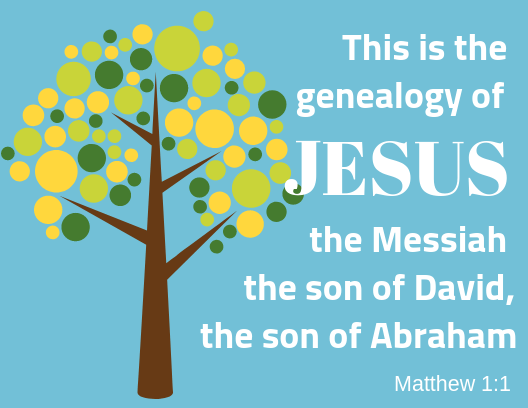
matt 1 1

Day 1 of your new Bible reading. You are psyched! You are committed. You brew a cup of coffee, clean off the kitchen table, and pull out a new set of highlighters.   You grab your large-margined Bible and you open up to your first reading:  Matthew 1. This is it. Your moment of great revelation, and then…you are instantly deflated. Genealogy. Blah. Wait…No…You are committed to do your reading.  You have new highlighters after all! Okay. Here we go. A couple verses down, and…still nothing worth highlighting. “Maybe I will just skim this,” you say to yourself, feeling a compromise is essential to keep up your determination.  The sea of names continues. Sigh. “I think I got the gist, I’ll just go to the end.” Although you made it through Chapter 1, you feel a bit defeated. No highlights; no underlines. You have made a royal mess of your reading.


So what is the significance of Matthew 1 anyways? Why not just hop into the Christmas story?  The answer: context. This genealogy of Jesus through his earthly father, Joseph, is to establish the pedigree pointing to Jesus as a descendant of the ruling class of Israel.  God’s so purposely positioned Jesus that there should have been no doubt remaining that Jesus is the Messiah or “The Anointed One”, the one who would reestablish the throne of David.  A fact made instantly clear upon the arrival of the Magi and Herod’s petitioning to and response from the scribes (Matt 2:1-6). As much as God was at work in these plans, He did so in spite of many actions taken by those who make up the family tree.


How did the ancestors of Jesus depart from the ways of God? A few quick examples. Abraham laughed at God. Jacob, and subsequently his son, Judah, both betrayed a brother.  David, God’s chosen King, is mentioned alongside his mistress (later turned wife), Bathsheba, and the man he murdered, Uriah. Among the other names are hidden even more wayward actions (idolatry, stealing, lying, etc.), culminating in Jeconiah, who did evil in the sight of the Lord (2 Kings 24:9), which leads to a curse that cuts off the line of David, seemingly forever (Jer 22:30).


If you only looked at part of their story, collectively, it would seem like a pretty hopeless lot.  Thankfully, many of the these men and women wrestled with, fought for, and maintained their relationship with God.  In the midst of sin, reputation, or nurture, they connected, repented, and praised God. They were a royal mess, a line of sinners seeking God and putting their hope in his promise of redemption and restoration.  It is no surprise that we find many of their names in Hebrews 11, among those who are waiting to receive their promise (v. 39,40) of a hope and heritage found in Jesus Christ.

We are equally “messed-up” and have fallen short of the standards set by our King (Rom 3:23). When we struggle with sin, our history, or circumstance, it makes us feel unworthy of the faith and hope we have. Don’t give in.  Remain Psyched. Wrestle. Fight. Maintain. You may be a mess, but you are a royal mess, an heir according to the promise, directly tracing your spiritual heritage (the only one that matters) to Jesus Christ.(1 Pet 2:9; Amos 9:11) Having these roots means, we receive a special connection to God through His Holy Spirit (John 14:16,17) and are covered by grace when we miss the mark (Eph 2:8,9).  Today, spend some time examining the stories behind these names a bit more closely, but also look at your own faith story. Whether you relationship is God is slightly disharmonious, somewhat distant, or completely disconnected, you are not disowned; your heritage is Jesus Christ. He will restore the throne of David, and He will restore any mess appealed in His name.

-Aaron Winner

God’s Party

Luke 15 32

Thursday, November 22, 2018  Thanksgiving USA

Luke 15:32

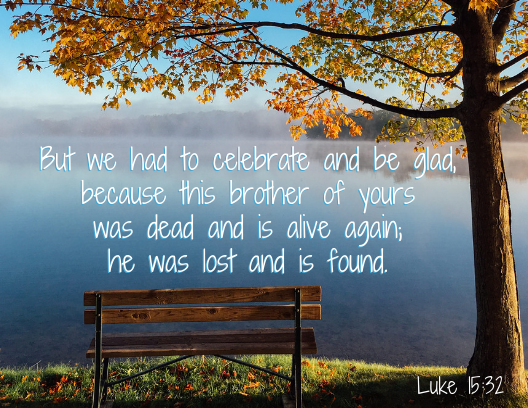
“But we had to celebrate and be glad, because this brother of yours was dead and is alive again; he was lost and is found.’”

Some people envision God to be somber or angry and punishing. I love this story Jesus told. We often refer to it as the Prodigal Son, with the focus on the bad boy who turned his life around. But I think it has more to do with showing us how much our Father Loves us, and how much joy it brings to him to be in relationship with us. Jesus came to show those whose view of God was somber and dutiful that God is first and foremost about relationship.

God throws a party when we respond to his offer of relationship. Shouldn’t we?

-Jeff Fletcher

You Are Not Alone

matt 4 4 (2)

I just returned from FUEL2018 “Mission” – a great event for youth which brought together students and staff from many states and Canada.  It was better than a week of vacation or band camp or soccer camp or working that good old summer job.    And what made it so powerful was our connection through God’s Word.

I enjoyed reminiscing about a missions trip I had taken with other staff members years ago – a trip in which our mission was to teach about God, His Word, His Son and His Coming Kingdom.  I enjoyed the worship music which helped us praise our Creator (which we read about in Genesis) and remember the sacrifice of His Son, our Savior (as recorded in the gospels).  The general session teachings, classes, workshops and family group times brought Godly men and women speaking God’s Word and how it had impacted them and those they knew.  They spoke wisdom from the Scriptures on who God is, what He desires from His children, who His Son is and how to grow a personal relationship with Him.

And, then we all went home.

Perhaps in some small way we can feel the emotional let-down of the disciples as they watched Jesus ascend into heaven and then asked themselves – what next?  They had been so close to God’s representative – his own Son – and now they were separated?  How would they continue learning, growing, acting in his name – without his bodily presence and audible words there to guide the way.

So, too, we can feel a little lost and let-down upon leaving such a spiritually pumped up place as FUEL.  But, remember, you are not alone!

Stick close to your Christian brothers and sisters and mentors.  Get into church this morning – and throughout the year!  Listen well to God’s Words through your pastor and SS teacher and worship leader and youth leader.  Ask questions, look for connections, serve the church body, talk to the lonely, encourage the weak, invite a friend, share what inspired you at FUEL, and then make an opportunity to meet up with some faithful followers sometime this week to encourage and strengthen one another.  In a section sometimes titled “Call to Persevere” the writer of Hebrews gives these directions: “ And let us consider how we may spur one another on toward love and good deeds, not giving up meeting together, as some are in the habit of doing, but encouraging one another—and all the more as you see the Day approaching.” (Hebrews 10:24,25).  Don’t try being a lone-ranger Christian.  You need the body of believers – and they need you!

And, just as you wouldn’t dream of not eating again until you were back on Manchester’s campus next July, don’t waste away from a lack of God’s Word!  Keep serving yourself daily portions of God’s Word – for this is your source of spiritual food and nourishment.  You are not going home alone when you are going home with God’s Word.  It is here He reveals himself, His love for you, His precious Son, His plan for the ages, His goals and dreams for you, and the Mission He has given you.  It is here he shares all truth and how to be wise against deception and evil.  You can not protect yourself from falling for false worldly Gods if you do not know the true God in His Word.  It is here you learn of His all-mighty power, holiness, wisdom, presence, mercy, forgiveness, as well as His fatherly (good) discipline when needed to help you stay where He wants to bless you.

This blog/email list of daily devotions is one way we want to encourage you to stay in God’s Word every day.  God’s Words are the Best Words.  Every week you will read daily devotions written by someone in our FUEL family who is passionate about God – and YOU – and wants to help keep you connected to Him through a deeper understanding of His Word.  Thank you to Aaron Winner who wrote during FUEL on the MISSION we have!  The week before I wrote on an overview of the Old Testament, so this week we will continue on with an overview of the New Testament.  So, come back tomorrow ready to jump into the gospels!  You can be thinking about . . . what do you most appreciate about Jesus?   What is your favorite miracle?  Favorite parable?  See you tomorrow!

You are Not Alone,

Marcia Railton

Children of God – Forgive

ephesians 4 32

Happy Friday! I am ready for the weekend, how about you? It has been a long week for me, mostly all good things, just incredibly busy and each of my daycare kids have been extremely busy too, making for some difficult days. This week had more meltdowns than usual, and some new behavior issues popping up, but in that I was seeing something that amazed me every single day. The forgiveness that many children have, and are willing to freely give to those around them. In my classroom, when a child does something that bothers, or harms another child, they must apologize. We do not force the child who was wronged to forgive them, we say that they can acknowledge the apology by saying thank you, and they can talk about how the two of them may move forward from the outburst. More often than not though, the children will say, “It’s okay, I forgive you.” Then they will offer a hug, and continue playing, as if nothing ever happened.


This is an act that always makes me wonder why it becomes harder for us to let go of grudges when we get older, or why it is so much harder for us to move on from something that someone has done to us, even if they have sincerely offered up their apology. These children will hit, or take a toy, or scream at their friend, and then apologies happen, and forgiveness comes to them easily and naturally.  Their forgiveness seems to be endless, then they quickly move on from the issue. When did we lose this focus? When did many of us decide that holding grudges is something better than letting go? I think many of us should take a step back and think about how it would feel for us to let something go, and give forgiveness and pray for those that harm us. The world around us might be a little different if we shifted our mentalities.


Some verses today about forgiving:


Matthew 18:21-22 “Then Peter came up and said to him, “Lord, how often will my brother sin against me, and I forgive him? As many as seven times?” Jesus said to him, “I do not say to you seven times, but seventy times seven.’”


Matthew 6:14-15 “For if you forgive others their trespasses, your heavenly Father will also forgive you, but if you do not forgive others their trespasses, neither will your Father forgive your trespasses.”


Ephesians 4:32 “Be kind to one another, tenderhearted, forgiving one another, as God in Christ forgave you.”


1 Peter 3:9 “Do not repay evil for evil or reviling for reviling, but on the contrary, bless, for to this you were called, that you may obtain a blessing.”


All of these verses talk about needing to be able to forgive those, because God has forgiven us. We can again look to children to see what their example is. There are definitely times when children will hold grudges against those that have wronged them, however it is often that children are extremely quick to forgive their friends, neighbors, teachers, siblings, parents, etc. Jesus tells us to be more like the little children, and this week we have been covering the different aspects of allowing our faith to become more child-like and the different components that entails. Listening, trusting, seeking comfort, loving, learning, and today is forgiving like a child.


Today I challenge you to forgive someone who wrongs you; let go of the hurt that they may have intentionally or unintentionally inflicted upon you. Remember that we are all sinners and God forgives us for our sins against him, over and over, and so we should forgive those around us. Try to be more like the children, and move on quickly from a dispute that is not constructive to either party involved, and seek first God and a relationship with him and his son Jesus.


A song for today is “Forgiveness” by Matthew West. https://www.youtube.com/watch?v=h1Lu5udXEZI


~Jana Swanson

Matthew West – Forgiveness (Lyrics)

Children of God – LOVE

romans 12 9 10

Today we are going to talk about loving like a child. Throughout the Bible we, as Christians, are called to love. Love your neighbor as yourself, love your friends, family, pray for your enemies, love the Lord your God with all your mind, all your heart and all your strength. If you grew up in the church you were probably taught that God IS love, and we learn to love from him, but did you ever stop to think about how children love us? Again, we can really take a page out of their book to see how we can better love others, and how we can better love our one True God. I am absolutely not saying children are perfect at loving, I mean, how many times have you seen a three year old hit their friend for no reason? I see it many times a day, and it surprises me how quickly they own up to it as well.


In my class I have one little girl who has formed an attachment to me; her face lights up when I walk into the room and she never wants to leave my side. If I leave before she gets picked up, she cries because she does not want me to leave. Through her, I have seen how to love other people, even better. This girl is so excited every morning to show me something new, or to tell me something that she did with her parents the night before. Think about it, when was the last time you were excited to tell God about what was going on in your life. You can justify it, to yourself; “Oh God already knows what is going on in my life, he’s always there anyway.” But here’s the thing, God may already know what is going on in your life, but he wants to build a relationship with you, one that is a two way street, one where you tell him about your good days and your hard days. A relationship where you can share the things you are excited about and ask for guidance in the times where you are the most unsure. God calls us to love and build connections and relationships; a lot of children are pretty good at this.


Somehow children are good at picking up on the emotions of those around them. They tend to notice when someone is sad, or angry, or when they are happy and having a good day.  If you pay attention, many children will reach out and try to help you in the ways that they know how. They will offer to share their favorite food, or their favorite toy, or they will climb into your lap and ask you to read them a story in the cutest voice they can possibly muster. Do you share this kind of unconditional love to the people around you? Your friends, neighbors, acquaintances and even the people you don’t particularly get along with? If not, this may be an area to work on, I know it is something that I am striving to be better at.


Here are some verses talking more about love.

1 John 4:9-12 “This is how God showed his love among us: He sent his one and only Son into the world, that we might live through him. This is love: not that we loved God, but that he loved us and sent his Son as an atoning sacrifice for our sins. Dear friends, since God so loved us, we also ought to love one another. No one has ever seen God; but if we love one another, God lives in us and his love is made complete in us.”


Mark 12:30-31 “Love the Lord your God with all your heart and with all your soul and with all your mind and with all your strength. The second is this: Love your neighbor as yourself. There is no commandment greater than these.”


Proverbs 17:17 “A friend loves at all times.”


Romans 12:9-10 “Love must be sincere. Hate what is evil; cling to what is good. Be devoted to one another in love. Honor one another above yourselves.”


Jesus tells us to have faith like a child, let the children go to him. Are not all children of God? Having faith like a child is one of the ways we can truly find our faith. There are so many components to this act of having faith. There is listening, trusting, seeking comfort, wanting to learn, and today loving. I challenge you today to observe how any children in your life express their love for you, or their peers, or adults, or anyone they interact with. If you do not have children in your life, try to think about how you can love people more, and really work toward that unconditional love that we are called to as Jesus’ followers. Thank you for reading today, and here is a song to go along with today’s devotion.


“Hold Us Together” Matt Maher

https://www.youtube.com/watch?v=gd4dFXMuy-8


~Jana Swanson


Attachments area

Think of What God Will Think

2nd Thessalonians 1

2 Thessalonians 1 11 (1)

2nd Thessalonians is another letter from Paul. He speaks about thanking God that their faith and love is growing. They were being persecuted and had many trials, yet they persevered. They held on to their faith and did not turn away from God.


This passage also speaks about those who do not have a relationship with God. Verse 8 says: “He will punish those who do not know God and do not obey the gospel of our Lord Jesus.”  We need to make sure we are sharing God’s love and Jesus’s death to others. But wait you say, I am not a pastor or youth leader, how do I share that? You share that by living a life that is pleasing to God. Lead by example; you never know who is watching you. Speak up about what God has done in your life. Don’t be afraid of what people will think; think of what God will think. Honor Him in all you do.


Tomorrow we will look at 2nd Thessalonians 2.

Many blessings,

~The Ransom’s