

Old Testament: Deuteronomy 17 & 18
Poetry: Job 36
New Testament: Romans 4
Today, in Romans 4, Paul takes us way back to a patriarch of our faith – Abraham. Abraham was and continues to be a key figure in the grand scheme of the world. Three of the main religions in the world can trace their lineage back to the man himself. He was a special man whom God made special arrangements with a couple thousand years before Jesus was born. Abraham is the central focus all throughout Romans chapter 4 – pretty impressive for a man who lived 2,000 years before Paul wrote this letter. Abraham is the central focus, as Paul finds common ground in Abraham – for the Jews and Gentiles.
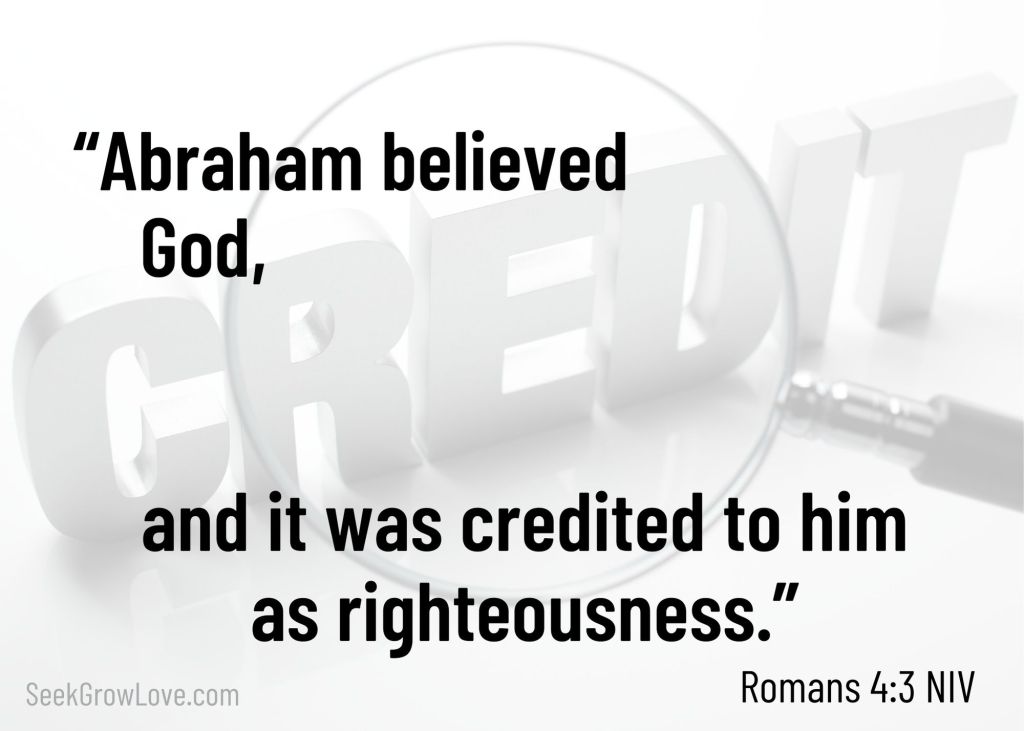
Specifically, Paul looks at how Abraham attained his status as righteous, as somehow, someway Abraham was justified (declared righteous) in the eyes of God. Was it through his works? Was it through some other means? Paul reveals to us that Abraham was not justified by his works; rather, he was justified by his belief/faith. Paul quotes Genesis 15:6 when he writes, “Abraham believed God, and it was counted to him as righteousness,” (Romans 4:3 ESV).
Context is key. What in the world was going on in Genesis 15? I’m glad you asked! To save you a bit of time, I’ll refresh your memory. In Genesis 15, Abraham had already left his home to travel to the land that God would show him. God then told Abraham, “Look toward heaven, and number the stars, if you are able to number them… so shall your offspring be,” (Genesis 15:5). Unfortunately for myself and most of you reading this, surrounding lights mute the starry sky at night. However, God told this to Abraham long before the fateful invention of the light bulb. If not too cloudy or humid, Abraham would have viewed a starry sky like many of us never have. I can only imagine the sight of a starry sky that is not infiltrated by the invention of the lightbulb.
The idea of Abraham’s descendants being as numerous as the stars of the sky is great and all except for the fact that Abraham is getting up there in age and has ZERO children! How in the world is an old man with no children supposed to have descendants as numerous as the stars in the sky?! If you are anything like me, then you would appreciate logic, reason, and common sense. This bold statement totally goes against sound logic, reason, and common sense. I get a bit uncomfortable reflecting on how I would respond in those circumstances. What would be your response if you were put in Abraham’s shoes? Abraham’s response was simple: “And he believed the LORD,” (Genesis 15:6). Boom! End of story. Abraham believed in God. And Abraham believed God. If God told him his descendants would be as numerous as the stars in the sky, then somehow, someway God would make his descendants as numerous as the stars in the sky. Because of Abraham’s belief, God “counted it to him as righteousness,” (Genesis 15:6).
That is the moral of the story here that Paul brings our attention to. We are justified by what we put our faith/belief in. We all put our belief in someone/something whether it be ourself, our spouse, our finances, our parents, our home, or God himself. You are justified if you put your faith in God. Abraham chose to put his faith in God, as he was “fully convinced that God was able to do what he had promised,” (Genesis 4:21). Because of this, Abraham was counted as righteous. You and I have that same offer today. Let me ask you, are you putting your faith in God?
-Kyle McClain
Reflection Questions
- What do you appreciate most about Abraham?
- What is the difference between believing in God and believing God? Where are you?
- Are you putting your faith in God?


 Seek Grow Love