I am excited to be back with you all again this year! We will be focused primarily on our Romans passages this week, but will pop back and forth between our others as well. Be sure to take time to continue to read the story of David, and enjoy the Psalms!
In Romans 5, we read about the abundance of grace God offers to us through the death of Jesus. Paul begins chapter 6 assuming the rigid Romans would now be attempting to “logically justify” their own fleshly desires, to which Paul gives them NO opportunity to misinterpret his message. In verses 1 and 15 Paul calls out “By NO means” are we to continue to live in our sinful nature! We are set free from whatever struggles we may face, and instead bound to a loving, faithful, and holy God that promises us an everlasting life with Him when we become slaves to righteousness.
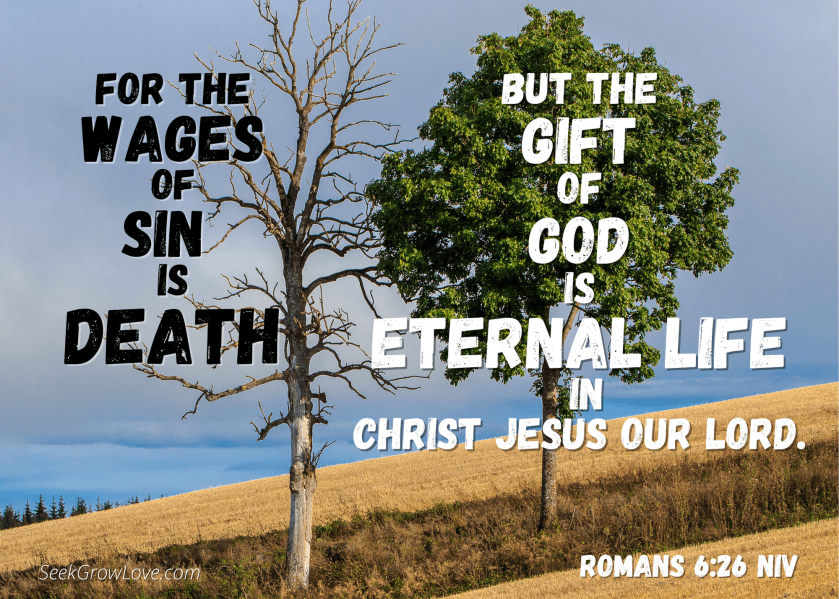
What’s more remarkable is that this ‘slavery to God’ does not fit the typical role of slavery. Slaves offered something to their masters – labor resulting in some profit. Their sacrifices brought about something of value and worth to their masters. In case you forgot, God needs no laborers. He needs no profit. There is nothing we could ever do that would give something to God He could not get Himself. There is no sacrifice we could offer that would bring more value or worth (see Psalms 50) to us in His eyes. AND YET, we are called to offer every part of ourselves as instruments of righteousness (v. 13). Why? Because we know the wages of sin is death, and we have been given a gift of eternal life (v.23) when we submit ourselves to the One who created us.
This simple truth of the gospel so easily loses its grandeur. Pause a moment here and reflect on this:
You are no longer bound to sin that leads to death.
You are free to accept the gift of eternal life.
Jesus Christ has indeed died to sin once for all, so we may reap the benefits of eternal life.
You are under God’s grace.
You too, may live a new life, my friend.
Reflection Questions:
Is there a sin in your life you are allowing to hold you captive? Confess it now, and experience freedom.
What practical way can you offer every part of yourself to God today?
Prayer:
Dear Father,
Thank you for being a great God and master who gives the incredible gift of grace through Your son Jesus. Thank you for making a way out so I no longer need to be a slave to sin. Help me walk in newness of life now and eternal life in Your Coming Kingdom.
An Italian Proverb states, “Hope is the last thing ever lost.”
As long as there is hope, we can muster up the strength to endure. But the loss of hope is perhaps the deadliest possible wound to our soul.
Our New Testament scripture says that “against all hope, Abraham in hope believed…”
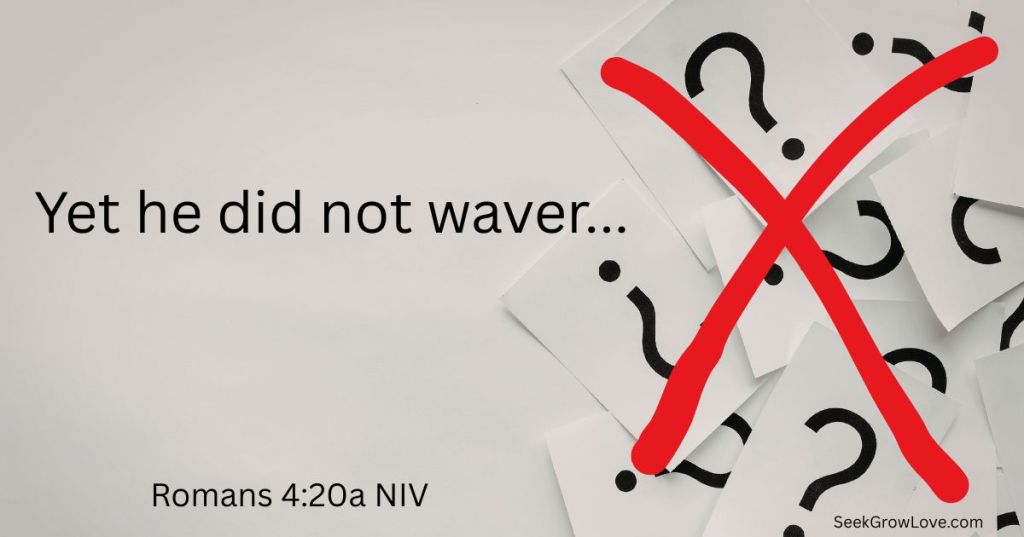
Even though it seemed impossible and it didn’t make sense, “…yet he did not waver through unbelief regarding the promise of God, but was strengthened in his faith and gave glory to God, being fully persuaded that God had power to do what he had promised.”
This word for hope, elpis in Greek, isn’t a superficial or flippant word like we might tease, “I hope a money tree starts growing in my yard” or “I hope all my favorite teams win the championships while I’m in the front row of every game.” This word elpis indicates true confidence and real expectation, without a doubt in one’s mind. How often do we possess that kind of hope?!
David’s faith in God did not waver when confronted with the Philistine giant, and Abraham’s faith did not waver even though there was no humanly way God’s promise could come true. How awesome that we serve a God not bound by the limits of humanity! Abraham’s belief and hope in God’s promises caused him to be “strengthened in his faith and [give] glory to God” rather than discouraged and straying from the faith.
I want to have a belief against all hope! I pray that we will not waver even when God’s way doesn’t make sense, because His way is higher than ours (Isaiah 55:8-9) and He is able to do more than we could even imagine (Ephesians 3:20).
Because of Abraham’s faith and hope, it was credited to him as righteousness (v. 22) – and the next verse indicates that the same righteousness extends to us, if we also choose Jesus!
We as believers must remain focused on our ultimate hope, the return of Jesus and eternal life in the Kingdom. Keep hoping beyond hope. Keep praying. Keep the faith. God is still all powerful! May it be said of us as it was of Abraham: “and yet they did not waver!”
Reflection questions:
What would your life look like if you truly embraced the concept of elpis?
In what specific ways might God be calling you to believe against all hope?
Prayer:
Help us, Lord, to have a deep faith and hope that is beyond all human understanding. May we follow you even when it doesn’t make sense.
Romans 14:10-13 So why do you condemn another believer? Why do you look down on another believer? Remember, we will all stand before the judgment seat of God. 11 For the Scriptures say, “‘As surely as I live,’ says the LORD, ‘every knee will bend to me, and every tongue will declare allegiance to God.’” 12 Yes, each of us will give a personal account to God. 13 So let’s stop condemning each other. Decide instead to live in such a way that you will not cause another believer to stumble and fall.
The ministry of strengthening individuals and the church is based on two main elements. We are instructed to encourage one another, and to build up one another. Note the importance of “the one anothers” in the instructions God gives us in His Word.
To love one another.
John 13:34-35(NLT) So now I am giving you a new commandment: Love each other. Just as I have loved you, you should love each other. 35 Your love for one another will prove to the world that you are my disciples.”
To welcome one another.
1 Corinthians 16:19-20(NLT) The churches here in the province of Asia send greetings in the Lord, as do Aquila and Priscilla and all the others who gather in their home for church meetings. 20 All the brothers and sisters here send greetings to you. Greet each other with a sacred kiss.
To have great affection and honor for one another.
Romans 12:10(NLT) Love each other with genuine affection, and take delight in honoring each other.
To pray earnestly for one another.
James 5:16(NLT) Confess your sins to each other and pray for each other so that you may be healed. The earnest prayer of a righteous person has great power and produces wonderful results.
To care for one another.
1 Corinthians 12:25(NLT) This makes for harmony among the members, so that all the members care for each other.
To accept one another
Romans 15:1b-9(NLT) We must not just please ourselves. 2 We should help others do what is right and build them up in the Lord. 3 For even Christ didn’t live to please himself. As the Scriptures say, “The insults of those who insult you, O God, have fallen on me.” 4 Such things were written in the Scriptures long ago to teach us. And the Scriptures give us hope and encouragement as we wait patiently for God’s promises to be fulfilled. 5 May God, who gives this patience and encouragement, help you live in complete harmony with each other, as is fitting for followers of Christ Jesus. 6 Then all of you can join together with one voice, giving praise and glory to God, the Father of our Lord Jesus Christ. 7 Therefore, accept each other just as Christ has accepted you so that God will be given glory. 8 Remember that Christ came as a servant to the Jews to show that God is true to the promises he made to their ancestors. 9 He also came so that the Gentiles might give glory to God for his mercies to them.
Have you also noticed the“one another’s” that God does not instruct us to do? For example, to chastise one another, humble one another, tear down one another, gossip about one another, or pressure one another.
This is hardly an exhaustive list, but do you see the theme of all these verses? Together we are the body of Christ, and those things that we do to strengthen the body are a group effort. Everyone has a responsibility for one another to do the things that only you can do. There is only one “you” in the church today, and God is counting on you. Love, care, welcome, prayer, and encouragement are all ministry to others. Don’t make the Christian walk of trust and faith too complicated for people. We need to become like the little child in Jesus’ teaching, where we hear the truth with simple hearts of believing. In the small and personal ministries of people to others in the church the true love of God in Christ becomes alive and evident.
Romans 16:25-27 Now all glory to God, who is able to make you strong, just as my Good News says. This message about Jesus Christ has revealed his plan for you Gentiles, a plan kept secret from the beginning of time. 26 But now as the prophets foretold and as the eternal God has commanded, this message is made known to all Gentiles everywhere, so that they too might believe and obey him. 27 All glory to the only wise God, through Jesus Christ, forever. Amen.
Thanks to God for revealing the sacred secret so that we as Gentiles can share in the promises made and kept by God.
Love in Christ – Tom Siderius
Reflection Questions
When have you fallen into the trap of condemning or looking down upon another believer? What is the problem with this? What would have been a better response and attitude on your part?
Make a list of “one anothers” that we are NOT to do if we are living according to God’s way. Which ones come too easy for you? How can you work towards stopping these “one anothers”?
What responsibility towards one another does God want to see YOU take part in today? How many different positive “one anothers” can you do today to build up the body of Christ and please God? Who benefits and how? Pray for God’s help in eliminating negative “one anothers” and focusing instead on seeing, doing, speaking, positive ones instead.
Read these chapters carefully with discernment from the spirit of Christ in you. They contain great and precious promises that we can claim as Christians. These chapters give us instruction in who is the church, who is Israel and how to live in true fellowship with God and our fellow believers. A whole book could be written on this section and not fulfill all that God intends for us to do and think.
Romans chapter 11 continues Paul’s appeal to his fellow Israelites to accept Christ. He sets in order the relationship of the nation of Israel in the Old Testament to the current relationship the church has with the Father. God meant for Israel to be a national witness of Him to demonstrate grace and love to all the world. If they had done the purpose they were called for the kingdom of God could have come when Messiah Jesus appeared in the world.
Romans 11:11-12(NLT) Did God’s people stumble and fall beyond recovery? Of course not! They were disobedient, so God made salvation available to the Gentiles. But he wanted his own people to become jealous and claim it for themselves. 12 Now if the Gentiles were enriched because the people of Israel turned down God’s offer of salvation, think how much greater a blessing the world will share when they finally accept it.
Their rejection of the law and then of Christ himself causes their national purpose to be postponed to a future time. God still has a special heart for those in Israel that loved God’s plan and were anticipating the coming of Christ and the establishment of the kingdom of God on the earth. God has never changed in His devoted relationship with all people. Those that truly seek Him with their hearts are rewarded for faith in every age and time. Those that trust in the one true God have a pathway to the future kingdom.
Romans 1:16-17(NLT) For I am not ashamed of this Good News about Christ. It is the power of God at work, saving everyone who believes—the Jew first and also the Gentile. 17 This Good News tells us how God makes us right in his sight. This is accomplished from start to finish by faith. As the Scriptures say, “It is through faith that a righteous person has life.”
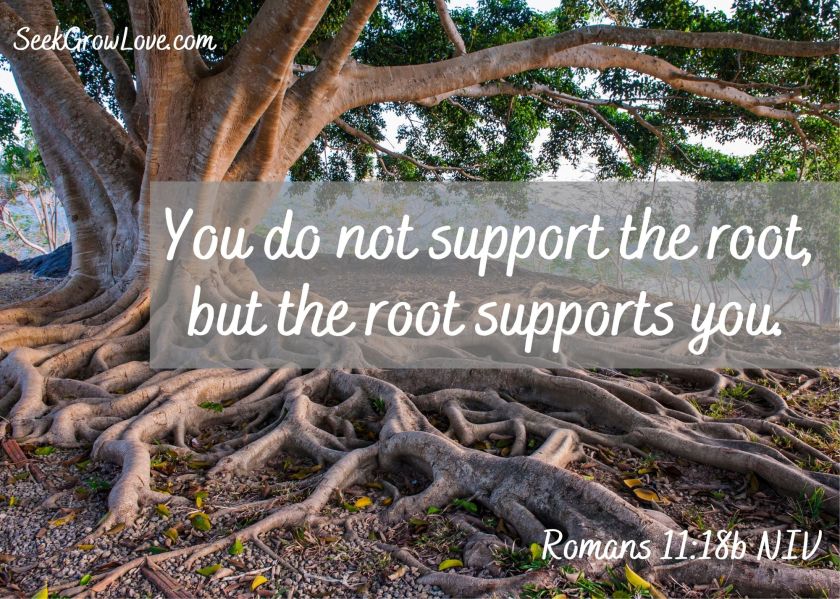
In chapter 11 God shows us the true position and attitude we should have with the Old Testament saints and the New Testament church. Paul writes by inspiration that we are part of the mighty tree of God built on the trunk that is Christ. It grows from the root of promises made to Abraham, but then the nation of Israel is cut down to a stump. Jesus is the new tree which grows from the root of promise to Abraham and patriarchs that continues until today.
Isaiah 11:1-5(NLT) Out of the stump of David’s family will grow a shoot—yes, a new Branch bearing fruit from the old root.
Romans 11:17-18(NLT) But some of these branches from Abraham’s tree—some of the people of Israel—have been broken off. And you Gentiles, who were branches from a wild olive tree, have been grafted in. So now you also receive the blessing God has promised Abraham and his children, sharing in the rich nourishment from the root of God’s special olive tree. 18 But you must not brag about being grafted in to replace the branches that were broken off. You are just a branch, not the root.
When Jesus is the new tree that grows from the stump of the nation of Israel, we the Gentiles are grafted onto the tree by God as it pleases Him. We are an unnatural branch and even come from a tree which is not really an olive tree. Look up “oleaster” on the internet to see what a poor branch we were before being grafted. We weren’t even good olive branches. God breaks us off the oleaster tree (a tree with no good fruit) and grafts us into the richness of the olive tree nation of Israel with Godly fruit. Then the promises made to Abraham, Isaac and Jacob become available to us also. This is a wonderful picture of the love that God has for us today joining us into His family.
Isaiah 11:10(NKJV) “And in that day there shall be a Root of Jesse, Who shall stand as a banner to the people; For the Gentiles shall seek Him, And His resting place shall be glorious.”
Does this section change your thoughts about Israel and the church?
Are you more thankful for all God has done for you and me?
In Romans chapters 12 and 13 Paul gives us great encouragement to walk in this new life that we have. Paul writes to instruct us how to please God and live with others.
Romans 12:1-2(NKJV) I beseech you therefore, brethren, by the mercies of God, that you present your bodies a living sacrifice, holy, acceptable to God, which is your reasonable service. 2 And do not be conformed to this world, but be transformed by the renewing of your mind, that you may prove what is that good and acceptable and perfect will of God.
God wills us to present our lives as a sacrifice of praise to Him. We are not to be “stamped” into conformity with the world but to be “metamorphosed” into the Christ in us by changing our minds to hear the Word of God. When we put the Word into our minds and hearts and act on it, we will be changed from the death and destruction of this world into people that are children of God with power to do good.
Romans 13:8-10 Owe nothing to anyone—except for your obligation to love one another. If you love your neighbor, you will fulfill the requirements of God’s law. 9 For the commandments say, “You must not commit adultery. You must not murder. You must not steal. You must not covet.” These—and other such commandments—are summed up in this one commandment: “Love your neighbor as yourself.” 10 Love does no wrong to others, so love fulfills the requirements of God’s law.
How does Jesus fulfill all the requirements of the Mosaic Law?
He did not do all the regulations of the Pharisees and scribes. Rather Jesus points us to the righteous life-giving purposes of God. When he loves God and is obedient to all God asked him to do Jesus is fulfilling God’s purpose for him. That is acting in God’s true love. When we are obedient to God and act in true love to Him and others, we also walk in the true purpose God has called us to live by.
Do we have to do the law of Moses today?
What happens when we do not love others like Christ did?
The book of Romans has been called the Magna Carta of the Word by many writers when they describe the freedoms that God shows us in its pages. Romans 8 is the start of a transition from the doctrine of salvation that is presented in Chapters 1-7. Chapter 8 is about walking in the spirit and what true fellowship with God is based on. Chapter 9 moves to a section that is concerned with Israel and their relationship to the church and salvation in Christ.
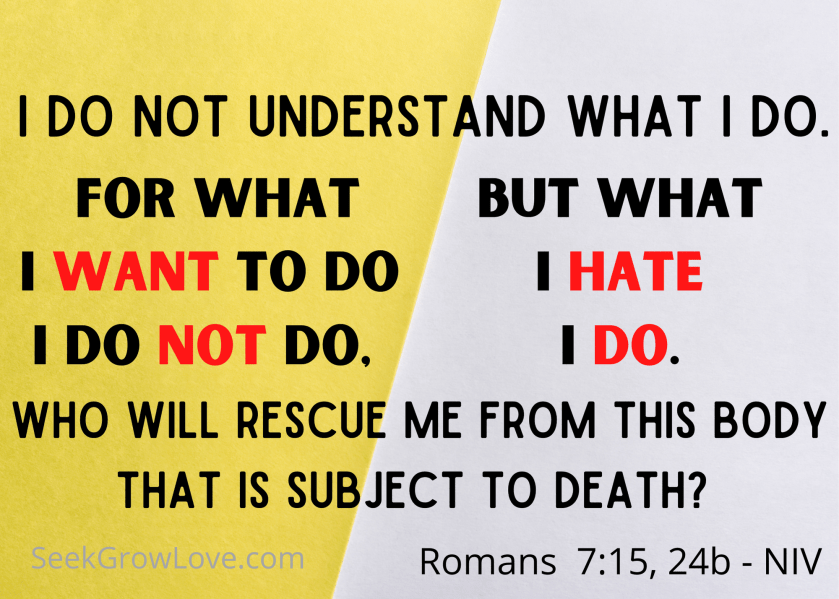
Chapter 7 ends with these verses where Paul tells us of his frustration with his walk of believing Romans 7:21-25. I have discovered this principle of life—that when I want to do what is right, I inevitably do what is wrong. 22 I love God’s law with all my heart. 23 But there is another power within me that is at war with my mind. This power makes me a slave to the sin that is still within me. 24 Oh, what a miserable person I am! Who will free me from this life that is dominated by sin and death? 25 Thank God! The answer is in Jesus Christ our Lord. So, you see how it is: In my mind I really want to obey God’s law, but because of my sinful nature I am a slave to sin.
Paul has trouble with his Christian Walk???
But then Romans 8 begins with this contrast of truth about who we really are in Christ:
Romans 8:1-4(NLT) So now there is no condemnation for those who belong to Christ Jesus. 2 And because you belong to him, the power of the life-giving Spirit has freed you from the power of sin that leads to death. 3 The law of Moses was unable to save us because of the weakness of our sinful nature. So God did what the law could not do. He sent his own Son in a body like the bodies we sinners have. And in that body God declared an end to sin’s control over us by giving his Son as a sacrifice for our sins. 4 He did this so that the just requirement of the law would be fully satisfied for us, who no longer follow our sinful nature but instead follow the Spirit.
The transition that we are being taught by Paul is that when we walk in fellowship with God, then we are able to overcome our sin nature. We will be without condemnation when we are guided by the spirit of God that He has given us. Our spiritual nature of Christ in us gives us the power and ability to do the will of God and do good in this world.
We have Christ in us when we are born again by God’s spirit but our daily walk with God is one of obedience to fellowship with Him, or disobedience to living without God’s fellowship. Christ walked in perfect fellowship with God and because he always did the Father’s will, he was not condemned by the law.
What are the ways we can grow in our ability to be in fellowship with God and His Son?
Romans 8:5-6(NLT) Those who are dominated by the sinful nature think about sinful things, but those who are controlled by the Holy Spirit think about things that please the Spirit. 6 So letting your sinful nature control your mind leads to death. But letting the Spirit control your mind leads to life and peace.
The Old Testament law really is a law of life, but the Pharisees and scribes had turned it into a law to control people politically and physically. Look sometime at the undoable complexity of the rulemaking in the Talmud and Mishnah. Those regulations are only to control people from a human standpoint. Jesus Christ does all of God’s intentions for the true interpretation of the law of Moses. He is judged righteous by God because of his obedience. God gives to us the righteousness of Christ when we confess him as lord and savior.
Romans 10:9-13(NLT) If you openly declare that Jesus is Lord and believe in your heart that God raised him from the dead, you will be saved. 10 For it is by believing in your heart that you are made right with God, and it is by openly declaring your faith that you are saved. 11 As the Scriptures tell us, “Anyone who trusts in him will never be disgraced.” 12 Jew and Gentile are the same in this respect. They have the same Lord, who gives generously to all who call on him. 13 For “Everyone who calls on the name of the LORD will be saved.”
Our salvation is received by grace from God and is not dependent on our works or actions before that point. We cannot earn our salvation, but we receive it by trust that Christ is what we need in our lives. To confess him as lord is to say fully in our hearts that we cannot do this ourselves but will follow and obey him. Many denominations have reduced this as a simple confession of “Jesus is Lord”, but to truly say this declaration it means that I understand the complete futility and incompetence of my own efforts. I need the righteousness that comes only from God in Christ to overcome the sinful person who is me.
What righteous thing have you done that will impress God with your goodness?
Before or after the point of your salvation?
Grace from God is the only way to fellowship with Him. We can approach the throne of grace because the righteous son of God is there to advocate for us. God sees us with the righteousness of the Christ in us and then we are able to have fellowship with a righteous God. By our own efforts we fall completely short of this. That is why we are able to walk with no condemnation from the law of Moses or the law of slavery to sin that we are delivered from.
Why do we need Christ’s intercession with God on our behalf?
Have a victorious day today walking in fellowship with God with Christ beside you.
Romans 8:38-39(NLT) And I am convinced that nothing can ever separate us from God’s love. Neither death nor life, neither angels nor demons, neither our fears for today nor our worries about tomorrow—not even the powers of hell can separate us from God’s love. 39 No power in the sky above or in the earth below—indeed, nothing in all creation will ever be able to separate us from the love of God that is revealed in Christ Jesus our Lord.
Only God’s love can change us and this fallen world. Thanks be to our God that He truly loves us so much to save us and take care of us each and every day.
Romans 5:1 “Therefore, having been justified by faith, we have peace with God through our Lord Jesus Christ,” (NKJV)
Devotion by Merry Peterson (Canada)
In the part of Ontario where I live there is a museum called ‘Ripley’s Believe It or Not’. Inside there are lots of strange and unusual items and displays about occurrences that are most, well, quite frankly unusual! The sign says it all – believe it – or not. Some things in that museum I find really hard to believe.
Faith is really about belief. Our belief that God is who He says He is, and will do what He says He will do. That’s the tenet of having faith – those beliefs about God. His existence as the supreme ruler of the universe and that His declarations of what He will do He follows through on.
In the previous chapter we see that Abraham was justified by his faith even though the whole salvation plan through Jesus dying on the cross for our justification hadn’t happened yet in his time. It was Abraham’s belief that God was in control and able to do what He said He would do that brought him justification.
We as Christians have received justification through Christ’s sacrifice because we live in a different time frame than Abraham. Christ, the promised savior that God declared would become the sacrifice for sin has indeed died, and risen again, and our justification comes through that fulfilled promise.
Notice that the fulfilled promise brings peace. We have peace with God through Christ. We have peace knowing that our sin is covered by Jesus’ blood, that we are no longer God’s enemies because of our sin. The blood of Christ washes away the debt of our sin. We become in good standing with God. How is this achieved – by our belief that God is in control and follows through on his promises. He said that Jesus would be the once for all atoning sacrifice for mankind bringing us justification with Himself. We believe it!
For Reflection:
Do you have friends or family members who have a hard time with faith?
When did you first start to have faith and believe?
Was there something or someone who helped you truly believe?
Are there ways that you could help guide another person to belief?
Have you ever wondered what makes Christian fellowship oh so sweet? Paul in this passage has expressed his earnest desire to be among his fellow brothers and sisters in Christ. His heart aches to be present with them, instead he finds himself writing a letter to them. He states in Romans chapter 1, verse 12 so “that I may be encouraged together with you by the mutual faith”. What he is expressing is his desire for the encouragement that comes from fellowshipping with one another.
When we get together as Christians to worship, sing, hang out together, share a meal, or other activities where we truly interact is when fellowship is sweetest. For an extended period of time I lived on the west coast. Let me tell you it is a very long way away from most of our churches in our conference of churches. I loved our 2 local congregations but it was ever so sweet when I would get to attend a camp or conference activity with other like-minded believers back east. I always found it encouraging and always had the opportunity to encourage and minister to others as we fellowshipped together. It was rejuvenating. The Apostle Paul is longing for that same rejuvenating fellowship.
Notice he mentions by mutual faith – that is why it is so important that we should fellowship together as believers. In Proverbs 27:17 we read “As iron sharpens iron, So a man sharpens the countenance of his friend.” To sharpen iron it must be rubbed against another piece of iron. This picture reminds us that by fellowshipping together – sometimes literally rubbing elbows – we are strengthening and encouraging one another providing the most mutual benefit. That is why Paul in other writing mentions not to forget the assembling of ourselves together – so we don’t lose the mutual benefit of encouraging one another. In our technological age of on-line church and digital meeting spaces let’s not forget what the Apostle Paul really yearned for, and felt was most beneficial – fellowship with other Christian believers. Let’s remember that meeting together is for mutual benefit in the faith – uplifting, encouraging, and helping to rejuvenate our brothers and sisters in the faith so they too can have joy for the journey.
For Reflection:
How can I be more diligent in taking part in opportunities to fellowship with other believers?
Have I taken this sweet, refreshing gift for granted that Paul longed for?
Last Friday marked one year since my father lost his battle with a terrible neurodegenerative illness. My sisters and I had helplessly watched him decline for over a decade, advocating intensely during that time to help him get the complex care he desperately needed while grieving the slow waning of our once-healthy father. Then, three days after Easter, our dad succumbed to his illness and was finally able to rest from this broken world.
We sisters all shared a lot of our fond memories of our dad at his memorial service: his love for the color yellow, his affinity for hiking in nature, his proclivity to play practical jokes on unsuspecting coworkers and family members, his devotion to his daughters. As I remembered his life, I also considered what I would want written in my epitaph. What do I want people to say about me at my memorial service? What kind of legacy do I hope to leave? While considering my own funeral might sound a bit morbid, it is important to remember that we are mortal, our actions in this lifetime can have consequences (for the good or the bad), and we need to be focused on our mission for Christ.
Perhaps, like me, you tend to skip over chapters like Romans 16, in which Paul is just thanking and saying hello to some random people with difficult-to-pronounce names, much like we might skip over the Acknowledgements section of a book. However, I encourage you to read it again, focusing on how all of these people were important to Paul and his work in some way. They all left a legacy, built a foundation for the early church. Paul didn’t complete his great missionary journeys alone; there were countless people supporting him in various ways the whole time. Some of the people were mentioned elsewhere in scripture; some of the others we have never heard of before, but they were all instrumental in the ministry work that Paul was doing, so he wanted to thank them publicly. (This is a good reminder to me that we need each other for help and encouragement, and we should offer gratitude to those people who have made a difference in our lives, especially those who encourage us in the ministry.) This chapter is a testament to the devotion of the early believers who helped spread the message of Jesus so we can all be believers today! And even though these are just names to us now, they were real people doing real work for the Kingdom, and their names are still being read thousands of years later. What a great legacy!
As followers of Jesus, we also have a hope beyond the grave. This life is not all that there is! We have a hope for resurrection and eternal life in the Kingdom with God and Jesus, and we are called to share that hope with others during our lives. Take another peek at the poetry reading for today. The explanation under the heading of Psalm 45 states that it was a wedding song, but many scholars also believe that it actually has some parallels to our Messiah and the hope of the coming Kingdom, the wedding feast of the Lamb (Jesus) with his Bride (the Church). What comparisons do you notice between the poem and the coming Kingdom?
So, let’s keep living with an eternal perspective, focusing on the work God has called us to do, leaving a legacy for Him by contributing to the work of His Church.
-Rachel Cain
Reflection questions:
-Who has been an encouragement and support to you as you seek out and pursue the work God has for you? How can you thank them?
-What do you hope is written in your epitaph? (What kind of legacy do you want to leave?) What can you do this week to further develop or strengthen your legacy?
“Do not be conformed to this world, but be transformed by the renewal of your mind…”-Romans 12:2a (ESV)
Pleeeeease! Can you hear a child begging their parents for something. Maybe for a treat, or a toy, or to stay up later?
Romans 12 begins with Paul begging us to follow his advice. Different versions use appeal, request, plead, urge, or beseech. These words all tell us one thing: that it is our choice.
So, who is Paul begging and what is he asking of them? He is speaking to his brothers in Christ, and that includes all Christians then and now. He is asking us to live a life worthy of claiming the name of Jesus Christ. He asks us to “present our bodies as a living sacrifice, holy and acceptable to God”. Then he tells us this is our “spiritual worship”, or our “spiritual service of worship”, or our “true and proper worship”, or our “reasonable service”. In other words, it is reasonable for us to live as God desires us to because He has done so much for us (“by the mercies of God…”). True worship involves all of us – our heart, soul, strength, and mind (Luke 10:27).
One of my frequently used phrases is, “What does that look like?”. Well, fortunately, Paul tells us in the very next verse, “Do not be conformed to this world, but be transformed by the renewal of your mind”. Conform means to be in agreement with, or to adopt the form of those around you. Transform means to change in character or to change the appearance of. Both are verbs – action words. Both of them require us to change. This is what Paul is pleading with us about – we will either be conformed by the world or we will be transformed to be holy and acceptable to God. Our world was created perfect but sin corrupted it. Until Jesus returns to restore it to perfection, we must live in it. We are warned several times in Scripture not to love the world, become like the world, think like the world.
It sounds like an easy choice, and it is. The hard part is choosing it every minute of every day. Choosing to live it with our whole body – heart, soul, strength, and mind. Every time we make a choice about our attitudes, actions, words, thoughts, etc. This requires humility and being humble requires us to let go of our pride, arrogance, and egos. Not so easy.
Paul then goes on to warn us not to think of ourselves more highly than we ought. Sounds like more humility.
This chapter is full of godly advice; here are just some pieces of that advice. Believe God has given you a gift, figure out what yours is, use it. A healthy body (church) needs every member to be using their gifts. Genuinely love one another. Be constant in prayer. Hate evil. Contribute to the needs of the body. Show hospitality. Live in harmony with one another. Do not be haughty. If possible, live peaceably with all. Never avenge yourself.
Chapter 12 concludes with this, “Do not be overcome by evil, but overcome evil with good.”. This brings us full circle. The world is evil; if we are conformed to the world, we will be overcome by evil. If we choose to be transformed, we will be able to overcome evil with good.
Amy Blanchard
Reflection Questions
What of the world draws you toward conforming? Maybe it’s always wanting your way, viewing yourself as right all the time, or not determining what is evil so you can detest it. Maybe it’s good things like family, showing hospitality, or volunteering. Be aware of what messages are out there trying to turn your attention away from God. Family, showing hospitality, and volunteering are good; but the place you give them shouldn’t be ahead of God.
Transformation begins in your mind. Paul says that it happens by the renewal of our minds. What changes do you need to make to renew your mind? It is our will to make the choice to be transformed, but God does the transforming. We need to humble ourselves and let Him. We are told that then we will be able to know God’s will.
“And we know that for those who love God all things work together for good, for those who are called according to his purpose.” – Romans 8:28 (ESV)
Of all the books of the Bible, Romans is my favorite. Chapter 8 may very well be my favorite chapter in the book for many reasons. It starts with the declaration that there is no condemnation for those who are in Christ Jesus, and it ends with the encouraging reassurance that there is nothing in all of creation that can separate us from the love of God. In between, however, is a great life verse that provides comfort and hope regardless of your situation or circumstance.
Romans 8:28 says, “And we know that for those who love God all things work together for good, forthose who are called according to his purpose.”
It is just as important to understand what is not said as it is to understand what is said. Paul does not say that all things are good but rather all things work together for good. It is often a matter of time and/or a change of perspective to see that the bad things that happen end up working for your good. I can speak specifically to that being the case. My salvation story depends on it.
On Easter Sunday in 1995 I was invited to come to church and help the men cook breakfast for the congregation. It was a tradition that had been going for a while and continues to this day at Pine Grove Bible Church. I was not a member or even a Christian at that time but as a former short order cook and someone who enjoys hanging around with other guys I agreed to come and help.
As a result of me driving in early to help cook, we had two vehicles at church and then two vehicles at my in-laws as we celebrated Easter dinner. When it was time to leave, my wife Amy and our two children were going to get in the car she was driving and I would get in mine to head home. I asked my almost 7-year-old son David if he wanted to ride with me and he said no. I told him we could beat mom home and he could ride in the front seat (this was pre-airbag times) and so he agreed to hop in with me. This was not a common occurrence as he often would sit in the middle of the back seat loosely buckled and leaning forward between the front bucket seats to entertain his incredibly crabby sister. As fate would have it, we made a stoplight that Amy and Stephanie did not, so we did indeed arrive home first.
I was busy unpacking the leftovers and Easter baskets (at that point we had the only two grandchildren, so it was always a bonanza for them) when I noticed a message blinking on the answering machine. It was Amy, calling from someone’s cell phone (very few people had them back then) letting me know that she had been in an accident and the car had flipped and she was very shaken up. I couldn’t hear Stephanie crying in the background (if any of you reading this were around at that time you know that she was always crying in the background) so I grabbed David and raced back to the accident site.
When I got there, I saw her mangled car in the ditch on its side facing the wrong way. I recall heading to the squad car and then desperately clinging to my 18-month-old daughter as tears ran down my face. I came to find out that a car traveling in the opposite direction had a blowout, lost control, and ended up hitting them almost head on. Thankfully, Amy was able to turn quickly enough to have the car hit her by the driver door, slide down the side to the rear wheel well where it caused the car to flip 180 degrees over and backwards. It was an Easter miracle that neither Amy nor Stephanie was seriously injured.
The accident was not good, in fact it was bad, very bad, as Amy still suffers neck pain as a result. But, given the ability to look back, I can honestly say that it worked for the good. I was working in a sales job where I was gone most nights and the realization that what mattered most to me could have been lost in the blink of an eye caused me to quit that job that next week. Wanting to spend more time with my family caused me to start attending church and Wednesday night Bible study and eventually I gave my life to Christ.
Now, nearly 29 years removed from that horrible accident I can see God’s hand working through all things, even accidents, for the good of those He has called according to his purposes. Trust in His timing, God is good!
Todd Blanchard
Reflection Questions
1. Can you identify a specific time in your life that seemed devastating at the time (i.e. job loss, death, relationship ending) but now you can see how it shaped you into who you are today?
2. Who do you know that is going through a tough time that you can share your story with?
3. How can you remind yourself to trust in God’s timing for your life?