In Need of a Shepherd

OLD TESTAMENT: EXODUS 2

POETRY: PSALM 23

NEW TESTAMENT: MATTHEW 18:21-35

The hot, dry desert sun beat down on the reddened backs of the laborers, scars crisscrossing their backs from where the whips had cracked. Generations after generations of Israelites had born and died as outcasts and slaves in Egypt, living as foreigners and aliens in a pagan land. They had been the victims of genocide, their babies torn from their arms and murdered. The only sin the Israelites had done to the Egyptians was existing and multiplying. It was the Egyptians’ fear that caused them to mistreat the Israelites and make their lives bitter. 

Yesterday, we considered how we were like sheep that had gone astray. The theme of sheep and shepherds runs deep throughout the Bible. Abel was the first shepherd and his sacrifice was the one that God preferred. Noah, Abraham, and Isaac all were wealthy with livestock, but the next patriarch who is described primarily as a shepherd is Jacob. He builds his wealth through gathering up the speckled and spotted sheep of Laban. These vast herds of sheep followed his family to Egypt where the Israelites settled in the land of Goshen nestled in the Nile Delta. Shepherds were detestable to the Egyptians at that time. The Nile Delta was actually the best in the land for their family. 
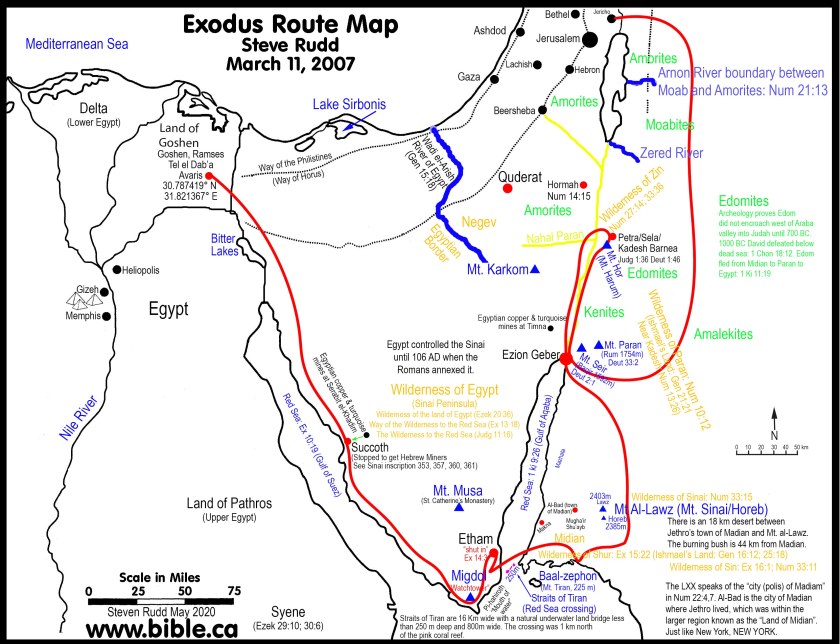
Jacob’s family lived in peace and grew to be a mighty numerous nation. After years and years in the land, the Egyptians turned against them and began to subjugate the Israelites with forced labor. “The Israelites groaned because of their difficult labor, they cried out, and their cry for help because of the difficult labor ascended to God. God heard their groaning, and God remembered his covenant with Abraham, with Isaac, and with Jacob. God saw the Israelites, and God knew” (Exodus 2:23-25). 

The Israelite people needed a shepherd. They needed someone who would come and deliver the people from the misery of their Egyptian enslavement to a better life. During this time, I’m sure that they dealt with doubt. They may even have dealt with unbelief, feeling that nothing would ever change in their lives. 

But, they had the truth of the promise of the covenant of God to fall back on. Abraham was told in Genesis 15:13-16 that his descendants would be foreigners and aliens, enslaved and oppressed, for 400 years. God ended this prophecy by saying, “However, I will judge the nation they serve, and afterward they will go out with many possessions.” 

In Exodus 2, we read that God saw and knew the Israelites’ groaning and misery. At that moment, he was setting in motion a plan to deliver his people and bring to pass the deliverance of them to the promised land of Abraham, Isaac, and Jacob. 

That plan would be fulfilled with none other than a shepherd boy (or old man- since Moses was close to 80 at the time). Moses was away finding a lost sheep when he encountered God in the burning bush. A type of our savior, he went to rescue the Israelites and save them from their enslavement. 

Moses would go from being a shepherd in the land of Midian to a shepherd of God’s people. 

~ Cayce Fletcher

Cayce writes about discipleship, productivity, and homemaking at her blog https://amorebeautifullifecollective. You can find her latest post on cultivating good habits here. You can also listen to A More Beautiful Life Collective Podcast on Apple Podcasts, Spotify, YouTube, or wherever you listen to podcasts. 

REFLECTION QUESTIONS

  1. Why are sheep and shepherds such an important and repetitive theme throughout the Bible? What is God trying to teach us about ourselves by using this pattern? 
  2. Abraham was told the prophecy that his people would live in enslavement and oppression through no fault of their own. We read about the effects of this enslavement in our scripture today. How do you make sense of suffering in light of the sovereignty of God?
  3. Read John 10:11-18. In John 10:11,  Jesus says, “I am the good shepherd.” How is Jesus a good shepherd to us? 

SGLCalendar2024DOWNLOAD

We all like sheep have gone astray

OLD TESTAMENT: EXODUS 1

POETRY: PSALM 23

NEW TESTAMENT: MATTHEW 18:1-20

Earlier this year, my husband and I went to visit a sheep dairy farm (yes – that’s a thing!) near our house. We spun wool, petted the sheep, and ate some cheese. One of my son’s favorite parts was watching the sheep dogs herd the sheep, seeing all the twists and turns they took into the corral. 

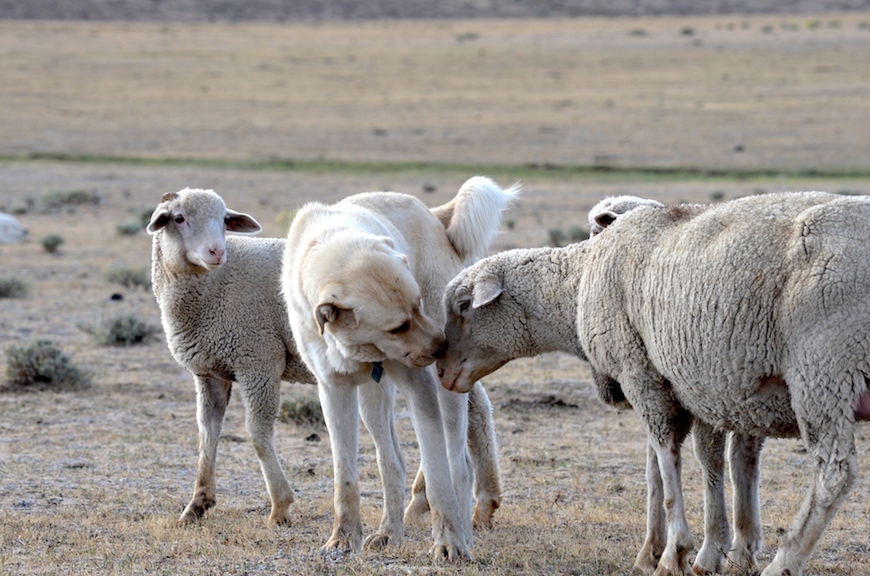
What I didn’t realize is that when you want to get sheep, you really need two different types of dogs. You need a herding dog, like a Border Collie, Corgi, or Australian Shepherd, and you need a guardian dog, like a Great Pyrenees. The herding dog lives with the owner of the sheep and learns how to work the sheep. The guardian dog lives with the sheep. The sheep become part of its pack and for good reason. Sheep are easily hunted down by coyotes, (sometimes) bears, and even stray dogs. 

guardian dog
Guardian dog with his ‘pack’

Growing up, my grandfather had a herd of goats – similar in temperament to sheep – that were attacked by a pack of stray dogs. Out of the 40 in his pack, there were only a few left, who dealt with shock (a sometimes fatal aftereffect). The common saying in circles of sheep owners is that sheep are always looking for a reason to die. Whether that’s escaping from a fence, getting sick from their food, or predators, it takes a watchful eye – from a guardian dog or a shepherd – to care for these wooly beasts. 

This week, we will dwell on Psalm 23, a beautiful passage that describes how the Lord is our shepherd. The undercurrent of the passage is the resounding hope that we have in the good that God has in store for us despite the dangers that we face in our everyday lives. Some of the dangers, the dark places of the valley, are made up of sickness and the brokenness of the world. But, some of the dangers are caused by our own tendencies to wander off the path that God has laid for us. 

Our passage in Matthew contains the parable of the Lost Sheep. In this parable, Jesus emphasizes how there is much rejoicing in heaven when one lost sheep is found. The sheep had wandered away, looking for some way to die out of the watchful eye of the shepherd, but the shepherd wandered through that valley of the shadow of death and brought the sheep back to the flock. 

We are that sheep who wanders. And God, in his grace, has brought us back. How has this happened? Isaiah 53:8 says, “We all, like sheep, have gone astray, each of us has turned to our own way; and the LORD has laid on him the iniquity of us all.” This prophecy speaks to the role Christ would play in our salvation because God has saved us by placing our sins onto Christ. 

God is the Redeemer. He brings salvation to his people. We will see this ring true in our reading from Exodus this week. You may feel like your life is bitter and full of groaning under the weight of your sin, but God is a good shepherd. He will rescue you if you trust in him. 

~ Cayce Fletcher

Cayce writes about discipleship, productivity, and homemaking at her blog https://amorebeautifullifecollective. You can find her latest post on celebrating the Christian year here. You can also listen to A More Beautiful Life Collective Podcast on Apple Podcasts, Spotify, YouTube, or wherever you listen to podcasts. 

REFLECTION QUESTIONS

  1. What are some similarities between ourselves and sheep?  
  2. What is the point of the parable of the lost sheep? Do you rejoice when another one who was ‘lost’ is found again? 
  3. Can you think of a time when you felt bitter over your life circumstances? Did you handle that season with faith or doubt? 

SGLCalendar2024DOWNLOAD

Numbers 23-24, Luke 2

We’ve seen Israel’s unfaithfulness to God because of their lack of ability to trust God over the previous chapters. Even so, God still provides for the Israelites. He still shows up for them and helps them to overcome their obstacles, the battles that they face. In Numbers 21, Israel faces the Amorites, one of the desert peoples who tried to stand up against them. They defeated them and the surrounding peoples and dwelt in their cities with the help of God. 

After living in the land of the Amorites, they left that area and traveled to Moab, whose king was Balak. Balak was terrified of the Israelites, because of their previous victories and phoned help in the form of Balaam, a diviner from a land 400 miles away from Moab. Balak the Moabite wanted Balaam the diviner to put a curse on the Israelite people, and so Balaam traveled to meet Balak (despite God’s repeated warnings). Numbers 23-24 details the oracles that Balaam gives about the Israelite people. In each oracle, Balaam speaks exactly what God wants him to. Even though Balak asked for a curse, Balaam is not able to give one. Instead, he speaks truth, blessings, and good promises about the Israelites based on God’s faithfulness to them.  In fact, Balak gets so fed up with Balaam’s oracles that he summons him in Numbers 24:10-11 and tells him to go home without a reward! Balaam responds by saying, “Didn’t I tell you? If Balak were to give me his house full of silver and gold, I could not go against the Lord’s command, to do anything good or bad of my own will? I will say what the Lord says” (Numb. 24:13). The Spirit of God allowed Balaam to proclaim God’s truth. He proclaimed the good deeds God had done for the Israelites, and he proclaimed words that spoke blessings for the people. 

Interestingly, in Luke 2, we also read of proclamations and oracles. However, these proclamations are given by a very different kind of being on a very different occasion. In Luke 2, we read about the birth of Jesus. This account includes the shepherds greeted by the heavenly host who praised God after they sent the shepherds on the way to baby Jesus. These angels proclaim “good news of great joy that will be for all people: Today a Savior, who is Messiah the Lord, was born for you in the city of David” (Luke 2:10-11). The angels proclaimed the greatness of God. And, they proclaimed the good things that God was going to bring to his people, the Christ. 

We may not have a diviner proclaiming God’s promises to us. We may not have a heavenly host appear to us. But, we do have God’s word. In his word, we have proclamation after proclamation of the good things that God is giving us. We have promise after promise of what a life as a believer will lead to. When you are facing difficult times, where the end seems unclear and your feet feel unsteady, trust in the proclamations of God. What is he proclaiming over you today?

~ Cayce Fletcher

Read or listen to today’s Bible reading at Biblegateway.com: Job 1-2 and 2 Corinthians 2 .

“Go, Tell It on the Mountain”

Go, tell it on the mountain


“Go, Tell It on the Mountain” was first sung by slaves on American plantations during the 19th century.  The slaves could identify with a Messiah that was born in a lowly manger and lived a humble life.  They embraced the Savior’s promise of a better life for all who would follow him.  And so the slaves eagerly sang the Good News for all to hear.


Go, tell it on the mountain, over the hills and everywhere;

Go, tell it on the mountain that Jesus Christ is born.

While shepherds kept their watching o’er silent flock by night,

Behold throughout the heavens there shone a holy light.


Go, tell it on the mountain, over the hills and everywhere;

Go, tell it on the mountain that Jesus Christ is born.

The shepherds feared and trembled when, lo above the earth-

Rang out the angel chorus that hailed our Savior’s birth.


Go, tell it on the mountain, over the hills and everywhere;

Go, tell it on the mountain that Jesus Christ is born.

Down in a lowly manger our humble Christ was born,

And God sent us salvation that blessed Christmas morn.


The song tells the story of shepherds watching their sheep on the night Jesus was born.  A bright light startled the shepherds and an angel told the frightened shepherds the news of Jesus’ birth.  As soon as the angels left, the shepherds excitedly decided to go find Jesus.  “So they hurried off and found Mary and Joseph, and the baby, who was lying in the manger. When they had seen him, they spread the word concerning what had been told them about this child, and all who heard it were amazed at what the shepherds said to them. The shepherds returned, glorifying and praising God for all the things they had heard and seen, which was just as they had been told” (Luke 2:16-18, 20).

The shepherds were excited to see Jesus and they were eager to tell everyone they met about all they had heard and seen!  They were thrilled that the promised Messiah had finally come and they couldn’t contain their enthusiasm.  They were motivated and anxious to spread the Good News!  Consequently, others in turn learned of the Savior’s birth.

The angel’s announcement to the shepherds was not just good news for the shepherds, but “great joy for all the people” (Luke 2:10).  Are you doing your part to spread the good news to all people?  You must go and tell the gospel on your mountain, in your neighborhood, at your school, where you work and everywhere you go.

-Jill McClain

“While Shepherds Watched Their Flocks”

While shepherds watched

The theme for each of our devotions this week is based on a different Christmas carol.  Today, I would like for us to examine, “While Shepherds Watched Their Flocks”.


While shepherds watched their flocks by night,
All seated on the ground,
The angel of the Lord came down,
And glory shone around,

And glory shone around.

“Fear not!” said he; for mighty dread
Had seized their troubled minds,
“Glad tidings of great joy I bring
To you and all mankind,

To you and all mankind.

“To you, in David’s town this day,
Is born of David’s line,
The Savior who is Christ the Lord,
And this shall be the sign:

And this shall be the sign:

“The heavenly Babe you there shall find
To human view displayed,
All meanly wrapped in swathing bands,
And in a manger laid;
And in a manger laid.
“All glory be to God on high,
And to the earth be peace:
Good will henceforth from heav’n to men,
Begin and never cease,

Begin and never cease.”


“While Shepherds Watched Their Flocks” tells the story of the shepherds found in Luke 2:8-20.  At the time of Jesus’ birth shepherds were at the bottom of the social ladder.  They often lived for long periods of time, right in the same fields where they took care of the sheep; so most people looked down on them.  God could have announced the birth of his son to the most influential, rich and successful leaders of the time.  However, instead God chose to first tell the lowly shepherds. “But the angel said to them, ‘Do not be afraid. I bring you good news that will cause great joy for all the people.  Today in the town of David a Savior has been born to you; he is the Messiah, the Lord’” (Luke 2:10-11).  God sent his son for all people – for the rich and the poor, the leaders and the abandoned, the educated and the uneducated, the popular and the friendless.  God had his good news first delivered to the shepherds to demonstrate that the gospel is for all people.

The angels told the shepherds that baby Jesus was “born to you” (Luke 2:11).  Typically, we think that a baby is born to his parents.  But Jesus was a gift given to the shepherds, and each of us.  Jesus was born for us, to save us from our sins so that we may one day have eternal life.  Jesus is the ultimate Christmas gift, given to each of us.

When the angels left, the shepherds said, “’Let’s go to Bethlehem and see this thing that has happened, which the Lord has told us about.’ So they hurried off and found Mary and Joseph, and the baby, who was lying in the manger.  When they had seen him, they spread the word concerning what had been told them about this child.  The shepherds returned, glorifying and praising God for all the things they had heard and seen, which were just as they had been told” (Luke 2:15-17,20).  The shepherds heard the good news, they believed it, they told others the good news and they worshiped God. What about you?  Do you believe the gospel?  If so, are you telling others the good news?  And are you spending time worshiping and praising God for the wonderful gift that has been given to you?


-Jill McClain

The Boy who Changed – and Is Still Changing – the World

Luke 2

Luke 2 final

“Do not be afraid, for look, I proclaim to you good news of great joy that will be for all the people: today a savior, who is Messiah the Lord, was born for you in the city of David. This will be the sign for you: you will find a baby wrapped snugly in cloth and lying in a feeding trough.” Luke 2:10-12


Today, we are reading through Luke chapter 2 which contains one of the most popular accounts written in the Bible—which is the birth of the only begotten Son of God, Jesus Christ. Regardless of our religious affiliation or background, we are familiar with the story line. Mary and Joseph travel to Bethlehem to be registered under Caesar Augustus’s decree. While there, it comes time for Mary to give birth. Because there is no room in any inn, she must give birth in a stable.


For us, this narrative is important because it is the beginning of the story of a man who turned (and is still turning) the world upside down. We can skip forward and see how much of an impact Jesus had on so many, and we can also see how he works in our lives today.


But imagine being in the shoes of Mary, Joseph, and even the shepherds. They weren’t able to skip ahead, they had to live it out. For Mary and Joseph, they had to trust in God that he would see them through. They had to have strong enough faith that God would do what he said he would do. For the shepherds, imagine going from a normal day to having an angel tell you that the Son of God has been born. The Messiah is here! It is even written that they were terrified (Luke 2:9).


Why does this matter? I just think it’s important for us to realize that these heroes we read about in the Bible were more than just characters. They were real people. They didn’t get the luxury of knowing what was written on the next page. They had fears, and they weren’t perfect. They had to trust in God and his purpose. They had to believe that God was going to hold their hand through everything. Imagine the trust! Imagine the faith!


So as you read today, place yourself in their shoes. Because if we can understand what Mary and Joseph went through, maybe we can learn to emulate their faith in our own lives.


-Leslie Jones


Included:Luke 2-3


May 14, 2017

The feeling of exclusion is one of the worst feelings I have ever felt. It’s the classic “I get picked last at recess” feeling. It is also the feeling we get when we find out someone that we normally do stuff with is doing something without us, and they post it on social media. Feeling excluded can often trigger us to feel unwanted or worthless, but I am here to tell you that is not the case.

May I turn your attention to Luke 2:30-32 and Luke 3:6-9? These verses talk about the salvation of God. One interesting fact about the salvation of God is what is said in verse 32 “A light of revelation to the Gentiles,”. This phrase is talking about how Jesus will reach out in his ministry and include the Gentile people in salvation. This concept is hinted upon in verse 10 as well when the angel that scared the shepherds says, “I bring you good news of great joy which will be for all people”. The word “all” in verse ten and the phrase, “Presence of all peoples” leads me to believe that everyone will be included, not just the “people of God” at that time who were the Jews. Also, this idea is found in Luke 3:6 when it says “all flesh” which includes the Gentile, or non-jew, in salvation.

How can this be, that all people, can now be included in salvation? Well, I think that John the Baptist explains this very well in the next chapter. In Luke 3:7 John starts to rebuke those who are coming to be baptized only for the sake of looking good in front of others and not actually because they care about being saved. He continues and spurs them to change by telling them to bear fruit “worthy of repentance”. Not claiming that they are a part of the Jewish faith, that no longer matters because everyone is included now as long as they bear fruit. He also tells them the consequence of not bearing fruit, which is being chopped down and throw into the fire.

How can we accept the offer and become included in the salvation that Jesus brings? We change our lives and actions to reflect that of Jesus’. Since Jesus was the Light to the Gentiles, it no longer matters if you were a Jew by heritage to be a part of the people of God. Sometimes I feel that we think the same way the Jews did, “Well, I have the title of Christian so that must make me one, right?” According to John the Baptist in these verses, it does not. But those who bear good fruit, of the spirit of God, will not be thrown into the fire and will have salvation. So the next time you’re feeling excluded remember that Jesus wants you to be included in the people of God.

-Jesse Allen