
John 7-8
Devotion by JJ Fletcher (Minnesota)
Freedom. An idea. A goal. A buzzword? During election cycles, we hear candidates speak about freedoms that the other side of the political spectrum is trampling or encroaching on. Those of us who live in the United States enjoy many freedoms that are not experienced in other parts of the world. While there are some exceptions, we enjoy freedom of speech and expression. We enjoy the freedom of expressing our beliefs and following whichever faith tradition we choose (or we can choose not to believe in anything in particular).
We have to follow the laws of the land, but we don’t typically have to worry about occupying forces that try to control our populace. On the flip side, the incarceration rate in the U.S. is the highest of any independent country with democratic ideals, and it has the most incarcerated people of any nation. While the U.S. has eliminated slavery, there is still an issue with human trafficking, and there are nations that still have forms of forced labor practices.
The Israelites had a history of slavery and occupation. They were in Egypt for over 400 years, around half of that being enslaved to the Egyptians. Throughout their history, there were other occupations, including the Roman occupation that existed at the time of Jesus’ ministry.
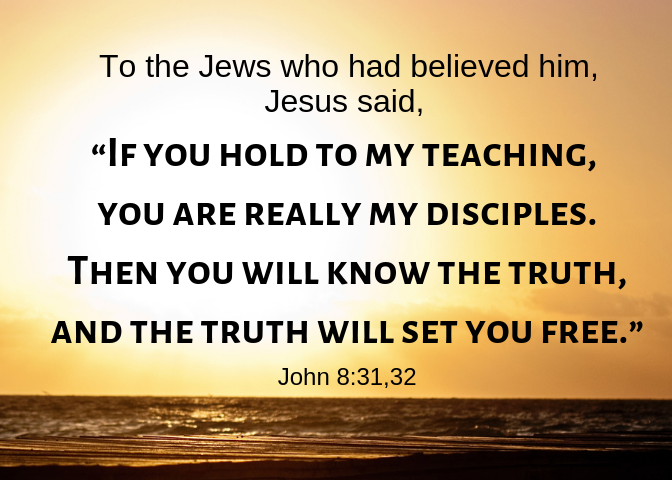
In John 8:32, Jesus said to those who believed in him, “You will know the truth, and the truth will set you free”. Though they lived under occupation, the Jews were not enslaved, and this pronouncement from Jesus befuddled them. They didn’t know slavery, so how or why would they need to be set free?
Jesus is, of course, speaking of the enslaving forces of sin. Whoever practices sin is a slave to it. The Apostle Paul writes that the wages of sin are death. So, this enslavement that Jesus speaks of is that sin that leads to death. The Mosaic Law highlighted sin, made sin apparent in the lives of those under it, but the law did not eliminate sin. The law did not remove temptation and the desire to sin. Jesus, on the other hand, suggests that his teaching holds the keys to throwing off the shackles of sin and death. “If you abide in my word, you are truly my disciples and you will know the truth, and the truth will set you free”. In verse 36, Jesus says, “If the Son has set you free, then you are free indeed”. Jesus’ teachings were/are powerful and are important to follow, but we also need to remember his place as the lamb who was slain to liberate the captives of sin. Our ability to obey Jesus doesn’t free us from sin, but our allegiance to Jesus and his words can give us victory in our daily battles with sin. Jesus paid the price and gives us victory over sin through the New Covenant that is sealed by his blood. While we suffer and struggle with sin, we should not feel enslaved to it because Jesus has already liberated us from the penalty of sin. A great reminder from John later in chapter 14: Jesus is the way, the truth, and the life.
Reflection Questions:
1. Do you ever feel enslaved to sin? Do you question why you still feel inclined to sin, even though Jesus has brought forgiveness to you?
2. What can you do to deal with temptation? Do we sometimes set ourselves up to sin by not being careful about the situations we allow ourselves to be in?
3. Is it encouraging to know that Jesus has given liberation from sin and death, even if we are still experiencing the effects of them? How does this frame how you approach sin? We don’t need to defeat sin; we need to submit to the one who did. How can you take that approach day by day?

 Seek Grow Love