Beware: Poison! (II Samuel 12-13)

Friday, October 21

oct-21-pic

Nathaniel Johnson

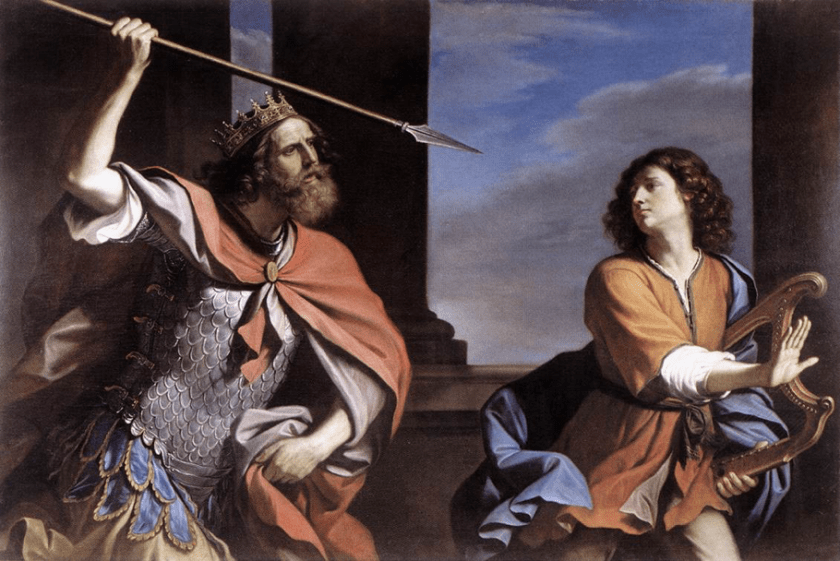
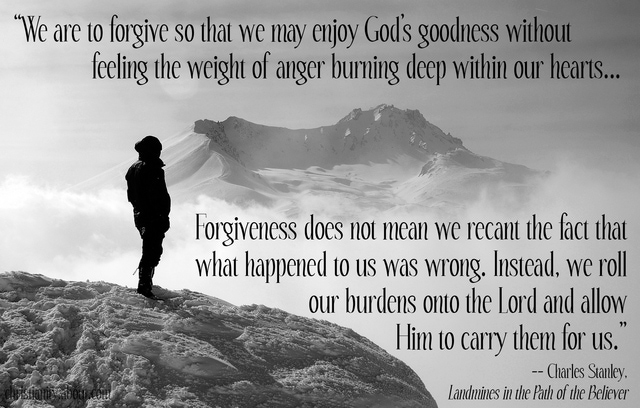
In the Garden of Eden, Adam and Eve were tempted to eat of the one forbidden fruit. In David’s kingdom, he was tempted to take Bathsheba as his own wife, even though she was already married. David’s son Amnon, was tempted to take his sister Tamar for himself, even though that is disgraceful. The sin that started with Adam found its way to king David, a man after God’s own heart, and on to his son Amnon. Like father, like son, they both went after the forbidden fruit. How silly of Amnon to not listen to Tamar! He could have been free of guilt had he only asked David to give him Tamar as his wife, but he couldn’t resist the temptation. The sin that Amnon commits spreads like a virus to his brother Absalom. Absalom handles this fairly well at first. He started to take care of his sister and let her live in his household. He also didn’t lash out at his brother. In fact, he didn’t say a single word to Amnon. But, he made one crucial mistake in dealing with his brother. He didn’t forgive him. I know it’s hard to imagine being in this situation and it’s even harder to be able to imagine being able to forgive someone for that. As Alan Cain once said, “Unforgiveness is the poison we drink thinking that it will harm someone else.” Absalom thought that by harboring this bitterness in his heart, he could pay back Amnon for what he did to Tamar. He was wrong. When the bitterness in his heart boiled over, he struck out and killed his brother. As a result, he not only hurt himself, but left an emptiness in his father’s life by running away in shame. When we sin, the worst thing we can do is duck our heads and run away. Just as David still wanted to see his son Absalom after he had sinned, our Heavenly Father wants to see us when we take a bite of that forbidden fruit. Through Jesus, God will always welcome us back with open arms as long as we come for forgiveness.

Intentional Kindness (II Samuel 8-11)

Thursday, October 20

i-corin-13-4-pic

Nathaniel Johnson

We all know that kindness is a trait that we should strive for as followers of Christ. Certainly kindness follows from serving others. In chapter nine, David shows a great act of kindness to a man that did nothing to deserve it. Sometimes, we think that kindness is responding positively when we see something. Like when you see a man struggling to carry a bunch of stuff and you offer to help him out and then go the extra mile with him and carry it for him (Matthew 5:41).  That’s a great way to show kindness, but what we see David doing here for Mephibosheth is very different. David didn’t know that Mephibosheth existed until he sought him out. Sometimes, to show God’s love, we have to intentionally look for situations where we can improve someone’s life. David did his research. He asked Ziba if there was anyone that he could show kindness to. For us to be as kind as King David, we also have to do our research. Maybe for you to show the kindness of a king is to volunteer and you, too, need to do your research. Find a cause that you can show kindness to. Do your research, and then hold nothing back, just like King David.

The King is Coming (II Samuel 4-7)

Wednesday, October 19th

2-samuel-7-28-pic

Nathaniel Johnson

What is going on? Why was a man struck down for trying to keep the ark from falling? It may seem odd to us that the God of Mercy gave Uzzah only one chance here. I’m sure he had the best of intentions but we know that God’s judgement is just (1 Thessalonians 1:5). I think there’s good reason that’s about to be revealed in chapter 7. Even though Uzzah died, we need to remember that we serve a God who has power over death and that death is not the end. One chapter after Uzzah was struck down, God makes an interesting promise to David. He promises that David’s offspring will be the son of God, he will be punished by the rod of men and that his kingdom will endure forever. Does that sound like any one we know? God is telling David about the coming of Jesus. The same man who came and broke the power of death. He died and lived again. Just as Jesus did, so will we and Uzzah because all will stand before the Judge (2 Corinthians 5:10). David sums this all up perfectly in verse 28: “O Sovereign Lord, You are God! Your words are trustworthy.” Rejoice, for God’s words are trustworthy! Jesus came once and he will come again!

Your Enemy Dies – So You . . . ? (II Samuel 1-3)

Tuesday, October 18th

mt5-44-pic

Nathaniel Johnson

Now that Saul is dead, there’s nothing in the way to stop David from being anointed as the King of Israel. You’d think that this would be a time of celebration for David; he’s finally free from the threat of Saul! But when David hears that Saul fell in battle, we see the opposite of celebration. David and his whole camp fasted and mourned all day. It would be one thing if David was just sad about his friend Jonathan dying, but he also wrote his song about Saul, a man who tried to kill him. How many other people do you know that would praise their enemies? I can think of at least one: Jesus. Jesus said to “love your enemies and pray for those who persecute you” (Matthew 5:44).

David is certainly living out a Christlike virtue here and we should strive to do the same. It can be really easy to be happy when we see our school bully get in trouble with a teacher. But that’s not how David would react and that’s not how Jesus says we should act. We should wish the best on our close friends and our enemies and pray for them daily, because if we do, we will “be sons of [our] Father who is in heaven.” (Matthew 5:44)

Seeking Answers (I Samuel 28-31)

Monday, October 17th

ps-46-10-pic

By Nathaniel Johnson

For Saul, his main method of communicating with God, was through Samuel, the prophet. Unluckily for Saul, Samuel died and the Lord stopped supporting him. When Saul saw the army that he was supposed to fight, he got scared. He was so afraid of the army that he tried to ask God for help and that’s a great first step! But when Saul didn’t get an answer right away, he went looking for another way to get help. That’s where he went wrong. He went to Endor to ask the Ewoks for help. Just kidding, but he did go to Endor to see a medium. When he finally got the medium to bring Samuel up from the grave, Samuel was not happy. He reprimanded Saul for disturbing him and only brought bad news. Saul and Israel would be handed over to the Philistines. That’s the worst kind of news possible. Saul was going to die.

For David, his way of talking to God was by wearing the Ephod and following the proper ceremonies. When David came back to his city and found his wives and people missing, he was as distraught as any of us would be. He and all his men “wept until they had no strength left to weep.” The men who were with David wanted to stone him but he remained calm and found strength in God. He asked God what he should do and then he listened. He heard God’s answer and then acted upon it.

For us, we have Jesus, which means we can talk to God through prayer (1 Timothy 2:5). If we don’t get an answer from God right away like Saul, we shouldn’t go and seek answers from the wrong sources. All that led Saul to was death. We should be like David. He wept and then he “found strength in the Lord his God.” We should not let our emotions cause us to run off and take matters into our own hands before we consult with God. “Be still and know that I am God” (Psalm 46:10). If we don’t get an answer to our prayer immediately, like Saul, we should be still like David and wait for direction from the Lord.

The Choice is Yours: Honor or Shame (I Samuel 25-27)

Sunday, October 16

prov-3-3-pic

By Nathaniel Johnson

When we read the story of Abigail and Nabal, it should be obvious that Abigail is our good example and Nabal is our bad example. Nabal’s first mistake was insulting David. When he said “Who is this David,” he didn’t mean that he didn’t know who David was. After all, “Saul has slain his thousands, and David his tens of thousands” (1 Samuel 18:7). Of course Nabal knew who David was, but he chose to be rude and disregard the help that David had given him throughout his life. Nabal’s second mistake was his greed. Even though he owned thousands of animals, he couldn’t spare any food out of his wealth for David’s men.

Abigail on the other hand, dealt with the situation that her husband created with wisdom. Abigail goes through a series of five steps that we all should follow to act with wisdom. First, she recognized that David was a holy man, a man of God (Proverbs 9:10). Then she took steps to avoid bloodshed (Proverbs 14:16). That is, she gathered food for David’s men. When she set out to find David, she didn’t tell her husband Nabal. She decided to keep the matter quiet until it was resolved (Proverbs 29:11). Once she got to David, she offered her gift and held nothing back (Proverbs 10:5). After she had taken all of these wise actions, she was rewarded by David and was taken in as his wife. “The wise shall inherit honor, but fools he holds up to shame” (Proverbs 3:35). If we act with the same wisdom as Abigail, we too will receive honor. But if we act rash, rude and selfish, we will get nothing but shame.

(Our writer this week is Nathaniel Johnson.  Thank you to Nathaniel and to Kayla Tullis who introduces Nathaniel for us.  Kayla writes: “Nathaniel Johnson, a 20-year-old born and raised in Minnesota, is currently a student at St. Scholastica with the ambition of one day teaching mathematics. Nathaniel has been a member of Pine Grove Bible Church for years. You may recognize him during worship services playing the bass guitar. He enjoys the outdoors, Nordic skiing, anime and much more. Nathaniel has a heart for God and is looking forward to growing with you each day through the FUEL devotions.”)

Awful Choices (I Samuel 21-24)

Saturday, October 15th

terr-sat

by:Terrence Raper

In the chapters we read today, the violence between Saul & David continues to increase. There are a lot of lives taken by both sides out of vengeance and fear. We have a term for all this extra violence “casualties of war”. What a strange way of putting it. As strange as “friendly fire”.


Back to David and Saul. Both of these men were ordained as king at some point. We know that David was ultimately the true king, and a man after God’s own heart. However, there had to be behavior during these chapters that even David was ashamed about. I have really been struggling to add some positive takeaways from these chapters in 1 Samuel. I feel like it is important as a historical account of what happened, but I would really be reaching to make a connection our personal experiences in 2016.

I do think it is important for us to consider the way in which we go about achieving our goals. It is easy to look at Saul, and even David in these chapters, and realize that they made some awful choices out of necessity, or desperation. We have heard the term “the means justify the ends”. I believe this to be helpful for those people who are driven, and don’t want to be bothered with caring for others on the path to conquering their goals. However for Jesus followers, we know how important people are to God. God cares about how we treat others. So as followers of Jesus, and a people obedient to God-we must adopt a more Gandhi-esque approach. Gandhi taught the means must express the end that we desire.

(By the way the Gandhi (1982) movie is certified fresh at 88% on rotten tomatoes… I haven’t seen it.)


A Quick Fix? (I Samuel 18-20)

Friday, October 14th

terr fri.png

By: Terrence Raper

I guess this should make me feel bad, but in a lot of ways I identify with Saul throughout most of these last chapters of 1 Samuel. We don’t lead very parallel lives. That is to say, there isn’t a whole lot of killing and foreskin collecting  in my life(actually none, in case you were worried). However I feel like Saul’s story in these chapters is a desperate one. He is a man who was ordained king, and for a brief time was on top of the world. Saul even had favor with God for a short time. However he disobeyed God, and continued down that path.

In Saul’s disobedience, he kept looking for a quick fix. So as he has lost favor with God, and Samuel has ordained someone else as king, Saul thinks he can fix this, just by killing the future king. He continues to make poor decisions, and soon his family is involved. Saul is making a huge mess of everything. I can relate to this. I have had times in my life when I went against what God wanted for me. Because of my disobedience I began to suffer in some way, and instead of repenting and changing my behavior-I looked for a quick fix. A way out of the discomfort without confession.

We can make a huge mess if we decide to go our own route after we have sinned. God has so much better planned for us in our lives, than running from him, and feeling awful. We may have to go through the pain of confessing, or coming clean with God and others. However the reconciliation will free us from the feelings of desperation. And it will eventually repair our sin and relationships.

Anointing (I Samuel 16-17)

Thursday, October 13th

1-sam-16-7-pic

By Terrence Raper

Saul has some good moments, but eventually fails to follow God. Samuel is tasked with secretly anointing a new king behind Saul’s back. This process for choosing the next king laid out in this chapter has always been interesting to me. God tells Samuel it’s going to be one of Jesse’s sons, and God speaks to Samuel as each one passes by. I can remember God talking to people in the Bible, and I can remember examples of people casting lots. In Chapter 16 it seems like Samuel is doing both in real time. That just stuck out to me.

Samuel’s connection to God in this moment of choosing the next king, reminds me a lot of Paul’s final instructions in 1 Thessalonians 5:17. Paul tells them to “pray continually”- Which was “pray without ceasing” in the King James, the original way I heard the scripture. I have always thought of Paul’s instruction in terms of literal and nonliteral. I believe Paul was asking the Thessalonians to be faithful, and prayerful: reminding them it is important to submit to God in all things.I also think Paul was talking about a mindfulness. I don’t mean mindfulness in a new age kind of way. I think Paul was asking them to think of everything in terms of Godly wisdom. I believe this to be a step in the process of obedience to God between belief and actions.
So Saul heard the voice of God in real time. This is not impossible, but it hasn’t been a part of my experience of God. I have had to begrudgingly ask myself what truths do I know about God, and in turn how would God like me to act, react, respond in this scenario. What does Godly wisdom tell me about this scenario?

Strive for Excellence (I Samuel 14-15)

Wednesday, October 12th

galatians-6-9-pic

by:Terrence Raper

Jonathan and his armor-bearer are riding a pretty incredible high in Chapter 14. God has clearly given them victory over 20 men, and He continues to allow them to prosper. Jonathan knows all of this prosperity is coming from God. Evidently he didn’t know the entire promise that his dad had made to make the victory possible, at least that is his story.

I find it hard to believe (even by Old Testament standards) that Jonathan didn’t know of the covenant Saul had made. In my opinion, Jonathan knew the details of the promise his dad had made with God. Jonathan was just acting like most of us would have acted after such a hugely successful day. I feel like we have all fallen victim to this in some way. We have a good run, or a big win and it changes the way we act. Sometimes humble people become conceited. Some hard working people decide to ease up and take a little break from the hard work. Sometimes we begin to overestimate ourselves and make lazy choices. Anyone who has ever taken a long break from exercising understands this let down. The moment you step back onto a treadmill for the first time in months, and you see how much you have regressed.

Life is long. We will have extreme highs –  and lows. Sometimes the lows will immediately follow the highs, and conversely. I think what Paul was trying to teach us in Galatians 6:9 is to calibrate our effort. Galatians 6:9 doesn’t assume that someone could live an entirely obedient life. I think it teaches us to continue to strive for excellence at all times. Even when we feel worthless, or when we feel like we are on top of the world. We must not grow tired of trying to do what is best in all situations.

Jonathan grew complacent. Saul grew complacent. God had to continue to remind them of the favor he had shown them. Being mindful of our blessing is not for God’s benefit. Continuing to know how well the divine has treated us, and of the gift of Jesus, should give us fuel for doing good.