Anticipation. It’s the worst. But it’s also the best. On one hand, being hopeful and excited about an upcoming event can be agonizing. On the other, you can feel joy and peace in the waiting.
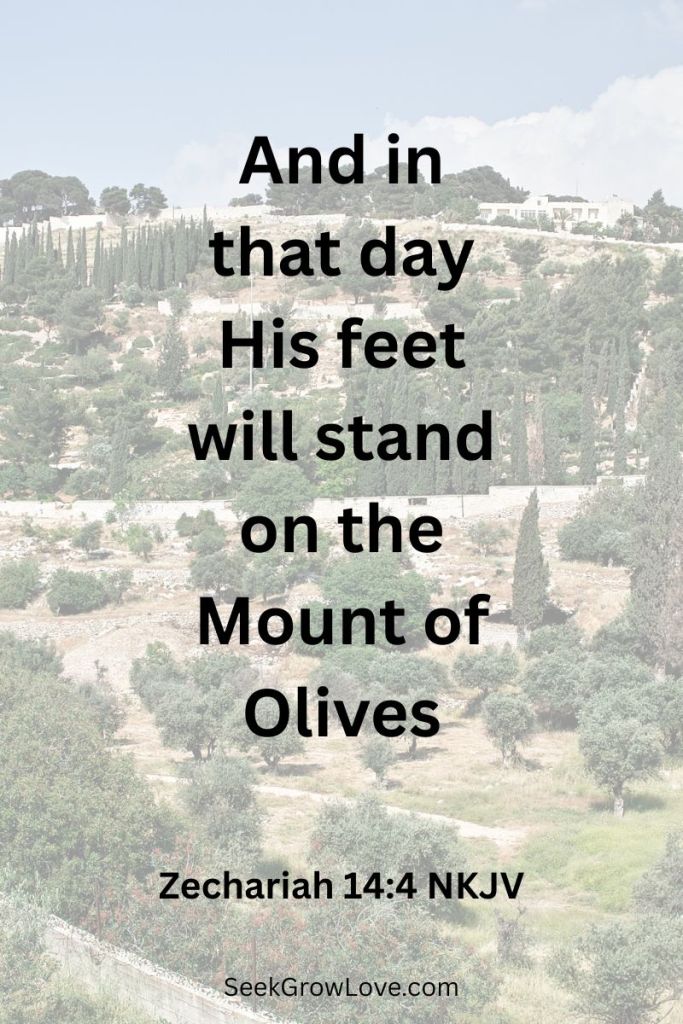
The end of the book of Zechariah paints a vibrant picture for us of the return of Jesus. It tells us what it will look like – his feet on the Mount of Olives, the mountain split into two, his light illuminating all the earth, living waters flowing. But, the book doesn’t reveal a crucial part – the when. No one knows the day or the hour of Jesus’ return, and if you are anything like me, this can drive you a little crazy. I’m filled with so much awe and wonder when I read these verses and meditate on what is to come. But I can’t escape wondering about the when.
However, I do not want to be anxious about it. I don’t want to focus so much on the when that I neglect two other vital pieces – the who and the why.
See, when Jesus comes back, I want to be ready for him. Every day I want to know him more, love him more deeply and live more like he did. This is how I prepare. And, I want to be sure that those I love are found the same when he comes back. That is my calling. That is the who.
And the why? Because God loved us, He sent his son to save us. In focusing on that truth I can live each day trusting God that His timing is best. I don’t need to worry about when. I just need to do my part – preparing, praying, loving and serving. Because He loves me, and I can rest easily in that, waiting for His perfect timing.
Reflection Questions:
How do you handle anticipation?
Who is your “who?”
What is one way today that you can focus on the “why?”
When was the last time you were faced with the question of readiness? Ready to make a career change, get married, have a baby, retire, begin a new ministry? When, if ever, are we 100% ready? If we’re honest, I’d say almost never. We can make the decision, though, to prepare ourselves and make progress every day towards that next step. Will we make mistakes? Yes. Will we stumble? Of course. But, if we commit our hearts, relying on God to guide us in the journey, we can trust that He will equip us for all we need. Like Paul reminds us in Romans, God works for the good of us in all things, as long as we are living for His purposes.
So today brings us again to Zechariah, and a similar question he asks the Israelites on behalf of God. He asks them if they are ready to be the kind of people ready to receive God’s Kingdom. The Lord says, “These are the things you are to do: Speak the truth to each other, and render true and sound judgment in your courts; do not plot evil against each other, and do not love to swear falsely…” (Zech 8:16-17)
Like asking ourselves if we are ready for the next step in this earthly life, Zechariah’s question is one we can ask ourselves today regarding our Kingdom life. Are we ready to be the kind of people ready to receive God’s new Kingdom here on earth? Our hearts should be thankful for His guidance and pure in our intentions, desiring to obey God’s word and striving to be the kind of people He calls us to be.
Reflection Questions:
Are you ready to be ready for the Kingdom to come? Check your heart.
What can you do today to become more ready than you were yesterday?
We spent yesterday with Haggai urging the Israelites to obey God with a pure heart and focus on His coming Kingdom. Zechariah, another minor prophet, does something similar, encouraging the Israelites to rebuild the temple.
Here again, the Israelites are discouraged. Zechariah challenges them to not be like their ancestors, rebellious and disobedient. He reminds them that if they turn back to God, He will be with them. “Return to me,’ declares the Lord Almighty, ‘and I will return to you,’ says the Lord Almighty.” (Zech. 1:3)
Zechariah has a series of God-brought nighttime visions, solidifying His promises to restore and protect His people and the city of Jerusalem, and to bring the promise of the Messiah to fruition.
Today, visions and dreams from God are far less common, or even do not occur at all, depending on one’s interpretation of the Word. We can’t expect God to give us clear visions while we sleep, but what we can do is remember that He left us his Word, which is 66 books of His goodness, His plans and His promises. Within these pages you’ll find the assurance that God is with us, that He promises to never leave us. He urges us to return to Him, and there we will find Him. Just like Zechariah encouraged the Israelites, so God encourages us.
Reflection Questions:
Have you ever experienced a vision? Or, recall a time when Scripture spoke to you so strongly that it was as a vision.
Has there been a time in your life where you rebelled or were disobedient? What happened when you returned back to God?
What is your favorite promise from God? Reflect on that today.
Haggai is a short, two chapter book, but it packs a lot. Haggai was a minor prophet who urged the Israelites to do four things – reflect on their priorities, work in hope during hard circumstances, be humble and pure in their intentions and actions, and remain faithful for the coming kingdom.
Have you ever been in the midst of tackling a massive project? Perhaps a work, home improvement or church project? Sometimes these endeavors can feel so tedious, can’t they? Like you will never ever be done with the task and the finished product is hard to even fathom, a pinprick of light at the end of a long tunnel. In the midst of it all you’re likely very weary. You’re even considering taking some shortcuts just to get the thing done! If you’re solely relying on your human limits, you’re not seeing past the long days to the end result, which sounded so promising in earlier days.
The Israelites felt the same. Before they even began rebuilding the temple, they weren’t focusing on what God wanted from them, instead zeroing in on selfish endeavors. When they decided to rebuild, with Haggai’s prompting, it was a major undertaking. They felt like their efforts were fruitless and the days were difficult. They gave little effort to what they were told God wanted for them. They weren’t choosing to humbly submit to God and make the daily choice of obedience to Him. They just didn’t feel His vision anymore.
What Haggai is driving at is this – God has so much for us. But we need to do our part, too. Furthermore, our choices really do matter. Our heart matters. God doesn’t just want us to blindly “do,” He wants us to want to obey His word. That’s how His work is done in the world. We are His hands & feet, working in humility and obedience to our Father to establish His perfect Kingdom.
Reflection questions:
What are you doing for God right now, or what is He calling you to do? What is your attitude about it?
What is one way that you can recast your vision for what God has in store? What can you do today to be obedient to Him?
Today our reading is from Psalm 137 and Ezra 4-6. I will start with Psalm 137 because it shows the depth of depression that the Jewish people were feeling after being taken into captivity. Imagine a foreign country coming in and destroying your homeland, with thousands killed and thousands exiled to foreign lands. Psalm 137:1 says: “By the rivers of Babylon, there we sat down and wept.” They also desire to see justice on the Babylonians.
As Ezra 3 ended it seemed like things were going well for the Jews. The foundation had been laid and there was great rejoicing. Then the enemies of the Jews who wanted to stop what they were doing started causing trouble. First they asked if they could join them because they were also seeking their God. Of course, this was a lie, they wanted to find a way to stop them by whatever means they could. But the heads of the households of Judah and Benjamin refused this offer. The people of the land scared them into stopping the project. During the reign of Ahasuerus and Artaxerxes the rebuilding was put on hold because the enemies convinced those kings that the Jewish people would rebel against them if they allowed them to build their temple.
It was stopped until the second year of the reign of King Darius. In Ezra 5, the prophets Haggai and Zechariah enter the picture. Two men, Zerubbabel and Jeshua, answered the call and started to rebuild the temple in Jerusalem. Tattenai, the governor of the province, asked by whose authority were they rebuilding the temple. The Jewish people said they were going to keep on building until they heard from King Darius. They continued to do the work under the watchful eye of God, who was with them during this time. When asked who gave them the authority to rebuild, they said, Ezra 5:11b-12 “We are the servants of the God of heaven and earth, and are rebuilding the temple that was built many years ago, which a great king of Israel built and finished. But because our fathers had provoked the God of heaven to wrath, He gave them into the hand of Nebuchadnezzar king of Babylon, the Chaldean, who destroyed this temple and deported the people to Babylon.”
King Darius found the scroll from King Cyrus in Ecbatana and sent this decree in Ezra 6:7 “Leave this work on the house of God alone; let the governor of the Jews and the elders of the Jews rebuild this temple of God on its site.” And it will be paid by the royal treasury. Ezra 6:12 says: “May the God who has caused His name to dwell there overthrow any king or people who attempts to change it, so as to destroy this house of God in Jerusalem. I, Darius, have issued this decree, let it be carried out with all diligence!”They finished in the sixth year of the reign of King Darius. The Jewish people had not celebrated the Passover feast for around 70 years but they celebrated this event once again when the completion of the work was done on the second temple. Ezra 6:21 “The sons of Israel who returned from exile and all those who had separated themselves from the impurity of the nations of the land to join them, to seek the LORD God of Israel, ate the Passover.”
Jeremiah 29:13 has always been one of my favorite verse: And you will seek Me and find Me when you search for Me with all your heart.” This verse was written during the time of the exiles but it is still relevant for us today. If you ever played Hide and Seek as a kid, the game wasn’t a lot of fun if the one searching leaves, causing the person in hiding to keep waiting. When we seek God, we never want to give up and walk away. We must continually seek Him, and we will find him when we search with our whole heart! He tells us that and we know his promises are sure.
Reflection Questions
Have you ever faced outside opposition when you were working on a project for God? What does it take to continue serving God when others want you to stop?
What did the ‘God seekers’ do right?
Do you seek God with your whole heart? Is there a part of your heart that is not committed to seeking God? Are there times when you give up the search?
Isaiah 14:24 says: The Lord Almighty has sworn, “Surely, as I have planned, so it will be, and as I have purposed, so it will happen.”
In the first chapter of Ezra it says that God stirred the heart of King Cyrus to fulfill a prophecy of Jeremiah that they would be exiled for seventy years and after this time they would be allowed to return to Jerusalem. See Jeremiah 25:11-12, 29:10.
In Isaiah 44-45, it names King Cyrus over a century before he was born. It is amazing to see how God chooses to work, here he is using a pagan king to fulfill his prophesies. King Cyrus sent out a proclamation that “the Lord, the God of heaven” had appointed him to rebuild His house in Jerusalem. Ezra Chapter 1 v.3 says “Whoever there is among you of all His people, may his God be with him! Go up to Jerusalem which is in Judah and rebuild the house of the Lord, the God of Israel; He is the God who is in Jerusalem.”
Then, he told all the survivors to support them with silver, gold, or other valuables. Everyone had a part in the rebuilding of the temple even if they were not actually doing the building. We all have a part in ministry, it may be supporting those that are doing the work, but that is an important and much needed part of any ministry. King Cyrus also brought back the vessels from the first temple that Nebuchadnezzar had taken and restored them to their rightful place.
These people had been taken into captivity when Babylon had taken over, now they are given a chance to return and chapter 2 lists the people and the families that they represent who came back. In 2:68-69a “Some of the heads of fathers’ households, when they arrived at the house of the Lord which is in Jerusalem, offered willingly for the house of God to erect it on its site. According to their ability they gave to the treasury…” The identity of the Jewish people as the people of God was tied up in the temple, where the presence of the Lord dwelt. The Jewish people were devastated by the destruction of the first temple in 586 BC. They were filled with despair and a loss of hope. With the chance to rebuild the temple, the people gained some of their hope back. Their national pride began to come back. In the seventh month after the return, the Levites built an altar to God so that they could offer burnt offerings on it. This was important to them to show obedience to the Law of Moses. It was also an important act of worship to God. They were terrified of the people around them, and they wanted the protection of God to surround them. They reinstated the offerings and the festivals even before the foundation for the temple had been laid, because they wanted to restore their worship to God. The people were excited to build the temple again, to have a place where God would dwell, and where they could go to worship Him.
When the foundation was laid, it says in chap 3 v. 10b-11a “they praised the Lord according to the directions of King David of Israel.” “And they sang, praising and giving thanks to the Lord, saying, ’God He is good, for His lovingkindness is upon Israel forever.” They shouted and wept in celebration and it says it was heard far away.
Just as God used people in the Old and New Testament to carry out his purposes, he also uses us for His purpose. Ephesians 2:10 “For we are His workmanship, created in Christ Jesus for good works, which God prepared beforehand so that we would walk in them.” Also, Philippians 2:13 “For it is God who is at work in you, both to desire and to work for His good pleasure.” God is working with us and using us to bring about his promises. We can rest in the knowledge that whatever He has planned for us to do, he will give us the means to fulfill it.
Questions for Reflection:
Describe the thoughts and feelings the Jews may have felt as they heard King Cyrus’ proclamation of Ezra 1:2-4. And, also, as they entered Jerusalem?
In what ways have you been a part of a ministry planned by God and much larger than yourself?
“We can rest in the knowledge that whatever He has planned for us to do, he will give us the means to fulfill it.” – How have you already seen this to be true in your own life? What might God have prepared for you to do next? How has He already prepared you for it? What means are being put in place?
The final chapters of Daniel give us a peek into the future. It also gives us a look at how things exist in the spiritual realm. In Daniel chapter 10, Daniel was given a great vision about the future – a future filled with great conflict. The vision was so terrible that Daniel refused to eat (choice foods) or bathe (“use lotions”) for a full three weeks! As Daniel pondered the meaning of the vision, God was already at work “behind the scenes” (within the spiritual realms).
After a few weeks of giving his whole devotion and confusion to God, Daniel gazed across the Tigris River and saw a man clothed in linen, with a fine belt of gold around his waist (Daniel 10:4-5). Daniel quickly realized this was no ordinary man – this was a man who looked like beryl (a green gemstone) with a face like lightning. His eyes were like flames and his arms and legs beamed like bronze. His voice was very loud (Dan. 10:5-6). Daniel, recognizing this man as an angel sent from God was overcome with fear and fainted! How would you react if you saw an actual angel?
The angel was not there to frighten Daniel, but to encourage him. The angel touched Daniel and woke him up with gentle words of encouragement and affirmation. The angel informed Daniel that he had been sent to him by God – and a reminder that God greatly loved him. God was pleased that Daniel was a man who devoted his heart to understanding. He was a man who humbled himself before God (Daniel 12:11-12). As a result, God sent this angel to give Daniel a special message – and a gift of encouragement.
Many times we pray to God and wonder if He will answer us. Sometimes, we can feel so small that we wonder if God even hears our prayers. Daniel must have felt that way as he struggled for three weeks without choice food and wine. Where was God? Would God give him understanding of the terrible vision? We often struggle when it seems that God has not heard or answered our prayers.
But the angel allowed us to take a “sneak peak behind the scenes”. From the moment Daniel began to pray – on the very first day of prayer – God had heard him and sent out the angel on this important mission to meet with Daniel. Why the delay? The Angel explains that as he went forth from God, he was attacked and battled with the “prince of the kingdom of Persia” (Dan. 10:13). This spiritual battle between the angel and demonic wickedness lasted for 21 days and was only broken by the appearance of the arch-angel Michael (Daniel 10:12-14). What a battle!
In the book of Ephesians, Paul encourages us to “be strong in the Lord and in the strength of His might” and to equip ourselves with the full armor of God (Ephesians 6:10-11). By preparing for spiritual “battle” we have the advantage to defeat wickedness. Paul explains that “we do not wrestle against flesh and blood, but against the rulers, against the authorities…” (like the prince over Persia who fought against the angel) “…against the cosmic powers over this present darkness, against the spiritual forces of evil in the heavenly places” (Ephesians 6:12).
Believe it or not, there actually is an unseen, spiritual world. It is the heavenly world of our God and all spiritual forces – good and evil. Just like Daniel, we often seek God for comfort, guidance, and an answer to our prayers. Sometimes, we need to keep praying. And keep hanging in there – because the battle can be long. Through our faithfulness and endurance, God can ultimately demonstrate His grace and truth. Put on the full armor and stand firm!
Questions for Discussion:
Why do you think God allowed the angel to be detained by the spirit over Persia?
We cannot see the spiritual realm, but we are impacted by what goes on there. How can our full armor of God make an impact in the “heavenly places”?
One of the most important Christian disciplines is learning how to pray and to keep praying. For some of us, we learned to pray almost before we learned to walk! For others, we learned about the discipline of prayer later in life after we decided to follow Jesus. Prayer is an incredibly important part of our Christian lives. To pray, or “entreat or implore” (fancy words for asking for something or giving God thanks) is necessary for any Christian. God wants to enjoy a special relationship with you. Praying allows you to express your desires, your faith, your devotion, and love to God. Jesus even took time to teach his disciples how to pray (Matthew 6:5-15).
Daniel understood the importance of prayer. Time and again God had strongly supported Daniel during his captivity in Babylon under several kings. Through it all, God had given Daniel special insight in which to interpret dreams and speak truth to powerful people. In Daniel chapter 9, we see Daniel praying for the people of Judah and for answers about his dreams – which were a series of confusing dreams full of monsters and beasts!
Daniel is also praying for Judah, his homeland with Jerusalem as its capital. For many years, Judah was held in captivity by the Babylonians, Medo-Persians, and Chaldeans. All this time, God faithfully protected Daniel and blessed him. Now, after many years of captivity, Daniel understood that the time was approaching when God would restore the people of Judah to their homeland. Daniel intercedes for his people by praying to God. In his prayer he confesses the sin of Judah to God, declares that only God is righteous, and agrees that they deserve the punishment put upon the nation. But Daniel also thanks God for being a God of mercy. Daniel understood that the punishments of God only come after we reject His mercy. Daniel believed in God’s word and looked forward to the day when God would rescue His people.
However, as he is praying, he is surprised when the angel Gabriel arrives bringing a special message from God (Daniel 9:20-23). The angel declares to Daniel that from the moment he began to pray, the word went forth from God to deliver a special message. The special word from God to Daniel? You are greatly loved (Dan. 9:23). God would declare the interpretation of the dreams, but before anything else, God desired to express His love.
When we pray to God, we often ask God to help us with something, to bless someone else, to bring deliverance or to confess our sins. Whatever the reasons for you to pray to God, the most important thing to realize, whatever the answer to prayer might be, is that God loves you. He loves you because of who you are and for your faithfulness to Him. The message throughout the entire Old Testament can be shortened down to this: God wants you to love him and obey him. We might not get a special visitation by Gabriel, be we can be assured that God hears our prayers, acknowledges our prayers, and lovingly acts upon them.
Questions for Discussion:
Why was Daniel praying to God? What was he looking forward to?
What types of things do you believe occur in the “spiritual realms” when you pray to God?
Why is it important for God to express His love for Daniel before getting into the interpretation of his dreams?
Have you ever heard someone say “I see the writing on the wall…”?
Sometimes the truth of a situation can be so obvious and plain that we can do nothing but accept it as reality. After the reign of the Babylonian king Nebuchadnezzar, his son Belshazzar took the Babylonian throne (Daniel 5:1-2). As a son, he no doubt saw the amazing transformation of his father from a king who worshipped gods of gold and silver to a devoted worshipper of the one True Living God (Daniel 4). But he failed to acknowledge God as the source of his wealth and power. Instead, Belshazzar gave praise and thanksgiving to the old gods of his father Nebuchadnezzar (Daniel 5:4). As a consequence, The One True Living God (our God Yahweh) decided to destroy the Babylonian empire because of the sinfulness of its leader, King Belshazzar.
What Belshazzar needed to read was “the writing on the wall”. Daniel tells us that the “fingers of a human hand appeared and wrote on the plaster of the wall of the king’s palace” (Daniel 5:5). The king was terrified and pleaded for someone to help him understand the writing that had appeared on the wall. Once again, Daniel was brought before the king to interpret the strange message – Mene, Mene, Tekel, Peres.
As we have seen, Daniel was a devoted follower of the One True Living God. All the days of his captivity in Babylon, Daniel had been richly blessed by God. Daniel was able to read the writing on the wall. He delivered the terrible message that Belshazzar would be brought to an end, that he had been found guilty of sin, and that his kingdom would fall to his enemies. Stunned by the message, Belshazzar rewarded Daniel for his honesty and skill in deciphering the message. That very night, the king would be killed by the enemies of Babylon, the Medes and Persians.
It is difficult to face the truth of sin in our lives. Each of us, like Belshazzar, has been “weighed in the balances and found wanting” (Daniel 5:27). Each of us has been found guilty by God because of the sin that is in each of us. His word says that each of us has sinned and fallen far short of God’s glorious, holy standards (Romans 3:23). Like Belshazzar, we deserve to suffer the consequence of that sin (Romans 6:23). But God desires to offer His grace to each of us. He wants to forgive us of our sin and restore us to a right relationship. He gave us this chance by delivering up His only Son to be the “atoning sacrifice” to take away our sin (Romans 3:25). Though we deserve spiritual and eternal separation from God, He graciously offers to us a path of salvation. Some believe that Nebuchadnezzar may have submitted himself to the one True God. This new faith in God could have resulted in his redemption. God himself refers to Nebuchadnezzar three times as his “servant” (Jeremiah 25:9, 27:6, and 43:10). Perhaps, just maybe he was a recipient of God’s amazing grace.
The message is so clear and is freely given to each of us. It is as if He wrote the message clearly upon the walls of our hearts and minds (Ezekiel 36:27-28). The message of grace, freely given by God, to offer us salvation and adoption into His family – through faith (Ephesians 2:8). This very moment, will you read the “writing on the wall” and place your faith in the Son of God, for the forgiveness of sin?
Questions for Discussion:
Why did God continue to bless Daniel during the reign of three different kings?
Why do you suppose Belshazzar fully accepted Daniel’s interpretation of the writing on the wall?
Daniel consistently stood for God despite dangerous opposition. How can you faithfully submit to God in your situations?
Part of walking with God involves making choices. Sometimes, these choices are very hard when you must decide between what you know is right and what is comfortable or easy. Often, through the power of His Holy Spirit, we often know what we need to do to please God (John 16:13). However, we live in a world that is against everything that God desires for His people (1 John 2:15-16). How do we continue to please God in compromising situations that challenge our devotion to our Father in heaven?
Often the land of the Bible found itself in conflict. When Daniel was a young man, Judah, the southern kingdom of the Hebrew people, was struggling under the leadership of King Jehoiakim. Judah had denied God and allowed foreign nations to pollute their devotion to God. Judah began to welcome idol worship (false gods) and began to lose faith and obedience to God. As punishment, God allowed the kingdom of Babylon to destroy Judah and enslave the people. The Babylonian King Nebuchadnezzar believed in integrating conquered nations into the Babylonian empire. He ordered that some of the more cultured Judean youths be captured and moved to his own palace in the city of Babylon. There they would be assimilated into Babylonian culture. Among these were Daniel, Hananiah, Mishael, and Azariah, all of the tribe of Judah (Daniel 1:6).
Daniel and his friends were boys who dared to worship and follow God despite the culture they lived in. Even before they were captured by the Babylonians, Daniel and his friends resisted the cultural changes and influence of the Judean culture. Instead of bowing to foreign gods and worshipping idols, they chose to submit and follow the one true God. When their kingdom was punished and destroyed and they found themselves being hauled off to Babylon, they relied on the God who had always sustained them (Psalm 55:22).
In order to begin assimilating the captured youths into Babylonian society, Daniel and his friends were ordered to eat the king’s food and drink his wine (Daniel 1:5). Many times in the ancient world, the food that a king ate was food that had been offered to pagan gods. These foods would violate God’s law (Lev 1:1). Daniel resolved (“purposed in his heart” – Proverbs 4:23) that he would not compromise his devotion to God. As a result, God ensured that Daniel would receive favorable treatment among the heathen leaders of Babylon.
Daniel and his friends grew in influence, knowledge, and even physical fitness. They had clearly become the favorites of Nebuchadnezzar (Dan. 1:20). God had recognized their faithfulness and their obedience to His word. He blessed them with learning and skill in literature and wisdom (1:17). Instead of bending their beliefs to impress their new masters, Daniel and his friends continued to remain devoted and obedient to God.
Daniel’s friends (now renamed Belteshazzar, Shadrach, Meshach, and Abednago) would once again be thrown into a situation in which they were forced to choose to obey God or Nebuchadnezzar. Challenged to bow down and worship a golden image of Nebuchadnezzar, Daniel’s friends choose to obey God (Daniel 3:17-18). They understand that this choice could result in their deaths, but they had resolved long before to honor God – no matter what the cost. As they were thrown into the fiery furnace, God demonstrated his faithfulness as no one was consumed by the flame. In fact, in the midst of the struggle, God sent His angel to walk with them – inside the flames (Daniel 3:25-27). We are never truly alone. Amid our own “fiery furnace”, God faithfully cares for us.
As Daniel teaches us, obeying God and being devoted to Him is much easier when we decide in advance to obey Him. As Daniel resolved to follow God, we too should resolve to follow God whenever compromising situations come along. It is not easy to remain faithful to God in every situation. Jesus promised to give us a “Helper” to help us live lives of devotion to God (John 15:26; 16:7). Through the power of the Holy Spirit, which is given to each of us who believe, God will help us to overcome sticky situations. It may not “feel” good at the time, but ultimately God will walk with us because of our obedience. Just as he walked with and helped Daniel, God will walk with and strengthen you. Resolve in your own heart to follow God today!
Questions for Discussion:
Have you “resolved” in your own heart to follow God in every situation?
Who is the Helper promised by Jesus? Do you rely on God’s power to sustain you during sticky situations?
Besides rewarding Daniel for his faithfulness, what other motives would God have to reward those who are faithful?






 Seek Grow Love