I’m not sure when contentment became a dirty word to so many people. We now equate it with a lack of drive or sometimes even laziness. We liken it to “settling.” The definition of contentment is actually a state of happiness or satisfaction. But we live in a world where bigger is better, and newer is better, and we can always achieve more if we just work a little harder for it.
For a little while I went through a faze where I looked on Zillow a lot. I got it into my head that we could potentially get a bigger or nicer house and therefore we should at least look. I just wanted to see what was out there that might be in our potential price range. And then I was looking at things slightly above that, because honestly we could probably make that work too.
You can see where this is going. It’s a slippery slope, and soon you’re borrowing more money than you should and all because you weren’t content with what you have. I deleted the app and fell in love with my home all over again. Contentment is something intentional, and it’s most definitely not settling. It’s looking at your blessings and recognizing them as such. It’s being thankful to your heavenly father for where you are, when you are, who you are, and who you are with.
These last chapters of 1 Timothy are a mix of advice from Paul on how to live, both for Timothy and for the people he’s ministering to. There’s a good deal in there about working hard so that we can take care of ourselves and take care of others. We are also called to not be so focused on money that we are neglecting our true purpose in ministry. Do good, be rich in good deeds, and be generous. Rather than focusing on our wealth and what we have or don’t have, we should be focused on how to serve others with our blessings.
1 Timothy 6:6-7 “But godliness with contentment is great gain. For we brought nothing into the world, and we can take nothing out of it.”
This is the true idea behind contentment. We can be ambitious in our careers and are encouraged to do well financially if that is where we are called. But we have to be wary of what’s actually driving us. If having wealth and status is our motivation, then we will never be in a “state of happiness or satisfaction.” We will never be content.
1 Timothy 6:9 “Those who want to get rich fall into temptation and a trap and into many foolish and harmful desires that plunge people into ruin and destruction.”
But if we are guided by an ambition to serve the Lord, then we can truly practice contentment. Paul describes these people as those who “will lay up treasure for themselves as a firm foundation for the coming age, so that they may take hold of the life that is truly life.” I love how that is phrased. “Life that is truly life.” And living a life that is truly life? Definitely not settling.
Reflection questions:
Where do you find yourselves in a state of discontent? Is it distracting you from God’s purpose for you? We have a lot of areas where discontentment can sprout up like a weed and make our lives more difficult and less full of the peace and joy that God longs for us to experience. Some common ones to watch out for: our physical appearance, financial status, possessions, our home, our relationships, our jobs. Is there a distracting discontentment in your life that is robbing you of peace?
How can you look at that area of your life and find the blessings? What sort of habits can you set for yourself so that you can better practice contentment? How can you take your blessings and offer them as a pleasing sacrifice to God?
Prayer:
My prayer for you is that you recognize God working in your life as it is now, and see the blessings he has given to you. I pray for discernment to see areas where you can grow and where he can further bless you and that your efforts be put there. I pray that you long to reach the goals HE has for you, rather than the goals you have for yourself, and that you live a life that is truly life.
There was a time when I didn’t think very much of Paul. It was as a teenager reading his instructions to Timothy here in Chapter 2. I had faith, though, that God was speaking through this man, and SURELY there was something here that I just wasn’t understanding correctly. It wouldn’t be the first or last time that I had to look at a scripture passage and throw up my hands, admitting that I just didn’t have an answer.
I’ve gone back and forth, looking at explanations and trying to get insight on what exactly was happening at this church. I got the impression that the women there were not behaving the way they should be. Admittedly, some scholars use Chapter 2 as absolute reasoning for why women should not be leaders in the church. Obviously, this doesn’t sit well with me, being a female church leader. Many say that it’s specifically addressing a problem within that church, where women were using wealth, fashion, and beauty to loudly and boldly repeat false teachings that they didn’t fully understand, and it was turning others away. Also, some translations point not to Paul refusing to give women authority over men, but rather specifically not giving them authority over their husbands. I heartily agree here, as that would cause disharmony within a balanced marriage that is seeking to honor Christ.
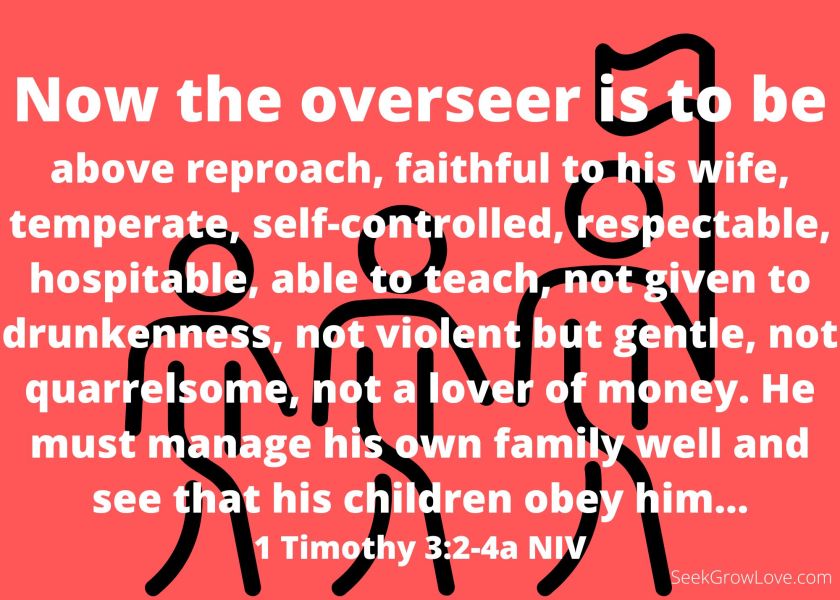
Looking into the whole of scripture, we actually do see female leaders throughout the Old and New Testaments. Those female leaders had wisdom, were full of grace and mercy, and were servant leaders as we are all called to be. They strove toward truth and righteousness, and they were held up for those qualities. We see many of those qualities listed here in the first chapters of Timothy, giving us a wonderful outline of what a good leader looks like.
We are to worship and pray together without anger. We are to focus more on our actions than our appearances. We are to be faithful to our spouses and full of self-control, managing our lives, money, and families in a way that honors God. We are all to be worthy of respect.
That’s a lot to place on an imperfect human being. We hear about scandals with our leaders all the time. They make for sensational news. But this is not what we want to see in anyone, especially in our church leaders who are to be leading others to Christ.
Stepping up as a leader in our church means greater accountability. James 3:1 warns us about this: “Not many of you should become teachers, my fellow believers, because you know that we who teach will be judged more strictly.”
How many people have turned away from Christ because of the actions of those in his church? Too many.
Reflection Questions:
Are you a sort of leader in your church? Even if you don’t have a named role, are there those who would follow your example? Have you ever thought deeply about what kind of responsibility that is? People are looking to you and your example when you proclaim yourself to be a Christ follower. Are you following his example in your words and actions?
Go through Paul’s list of qualifications of a good leader. Where do you hold up to the standard, and where could you use improvement? How could you do better to be a good example for others, someone others would respect and want to follow.
Prayer:
My prayer is that we all take to heart the fact that we are representing Christ when we call ourselves Christians. Pray that God opens your eyes to where you can be a better example to others and that you lead those around you closer to a relationship with him.
When I’m writing these, I find a section or verse that stands out to me. Today, 1 Timothy 6:11-16 particularly stood out. I would encourage you all to reread it before reading this article.
Whenever I read this I can’t help but hear a rallying voice, the type of speech given in a movie right before they enter the final battle for the fate of the universe or something equally important. It just strikes me in that way. In a way, that’s what this section is. It’s written from a leader of the church to a member. Like how a leader tells his troops an inspiring thing before the battle. For Timothy and us, every day is a battle. Paul in verse 12 writes: “Fight the good fight of the faith.” Sounds pretty similar to me. So, let’s look at this through the lens of an inspiring speech given to us in our daily battles. I’m gonna go through two verses here.
Do your best here to think about this in an inspiring way. If you’re feeling ambitious, you could even speak it aloud. If you’re having trouble imagining it think about an actor in an intense scene, and try to channel that energy. Verse 11 reads: “But you, man of God, flee from all this, and pursue righteousness, godliness, faith, love, endurance and gentleness.” Right here, Paul is writing about what we are to do. He calls us to pursue righteousness, godliness, faith, and love. These are pretty straightforward things, but we all have room to improve on all accounts, so read each with the gravity they deserve.
In verse 16, Paul is talking about God here: “who alone is immortal and who lives in unapproachable light, whom no one has seen or can see. To him be honor and might forever. Amen.” In the idea of a rallying speech, I think this is the best way to end one for a Christian. It’s giving God the glory; it just feels right. We learn in the Lord’s Prayer that a fair portion of our prayers should be giving glory and praise to God. So, in this case, it seems right too. I also like that this verse ends with ‘amen’.
Let me close this out with a challenge. On days when you’re maybe a bit tired and are reading your Bible, envision in your mind it as a speech, an inspiring one. It might not work for every verse, but maybe it’ll give you the energy to focus a bit more on what you’re reading.
-Philip Kirkpatrick
Reflection Questions
What do you think Paul was preparing Timothy for? What battles are you facing? How can Paul’s words motivate and inspire you to fight the good fight of the faith? What would that look like for you?
My name is Philip Kirkpatrick. I’m 17, live in Minnesota, and attend Pine Grove Bible Church. Some of you may have met me before and some of you may have no idea who I am. I share this for two reasons, the first is to give those who don’t know me a little bit of background on who’s writing, and the second is because it relates to what I’m writing about. As I was reading 1 Timothy 4, one of the verses stuck out to me. That is verse 12, the NIV version states:
‘Don’t let anyone look down on you because you are young, but set an example for the believers in speech, in conduct, in love, in faith and in purity.’
Considering my age and youthfulness, this verse stuck out to me. Reading it over, it seems pretty straightforward to me. I’m going to break this up into two parts. The first part simply states that just because of someone’s young age, it doesn’t mean they should be looked down on. Looking back now, I can think of times that I surprised my parents by having an answer they didn’t expect me to get, or knowing a big word and casually dropping it in the middle of a sentence. Even today I find myself surprised at times by those younger than me when they find answers I didn’t expect or know things that I don’t. Something to keep in mind here is that just because someone is young doesn’t mean that person doesn’t have good ideas.
This also plays into something called a logical fallacy. A logical fallacy is an illogical argument in its simplest form. In this case, it’s an Ad Hominem fallacy. This logical fallacy can be used to state that someone who may typically not have good ideas, someone young and inexperienced in this case, can’t come up with good ideas. The Ad Hominem Fallacy in other words; it is an attack against the person, not the argument or idea they are proposing. So in the case of someone young, it’s saying you can’t dismiss it simply due to age.
The second part of this verse here tells us that we should set an example for others in 5 ways: speech, conduct, love, faith, and purity. I’m not going to dig into all those and explain them all. Overall it can be defined by how we act. We should act in a manner befitting a Christian.
To the younger: set an example to the older on how to act.
To the older: set an example to the younger on how to act.
And to all, don’t look down on someone because of their age, listen, and consider what they have to say.
-Philip Kirkpatrick
Reflection Questions
When have you taken notice of a good example set by someone young? Have you ever been guilty of looking down on someone just because of their age?
Consider each of the ways we are to set an example for believers: in speech, in conduct, in love, in faith and in purity. Think of times when you set an example in each of these areas. Are you strongest in one of those areas? Which ones could you work on more this week?
Have you ever felt like you don’t know what to do in life? You feel like you need a book of instructions to take with you everywhere you go? Well, there may not be any instruction manuals available, but the Bible as our guide is. In 1 Timothy chapter 2, Paul lists these sets of rules that we should live by, either through worship, or living through daily life.
In 1 Timothy 2, it states: “8 Therefore I want the men everywhere to pray, lifting up holy hands without anger or disputing. 9 I also want the women to dress modestly, with decency and propriety, adorning themselves, not with elaborate hairstyles or gold or pearls or expensive clothes, 10 but with good deeds, appropriate for women who profess to worship God.”
Paul says that God wants us to live peaceably with all people, making prayer and petitions, and thanksgiving amongst everyone, as it pleases Him. He also mentions that God doesn’t want people to be flashy in their worship to Him. In verse 9 he states that he wants women to dress modestly and adorn themselves with good deeds rather than gold or pearls. When we dress for worship, we should dress with good intentions and be pleasing in God’s sight. Also in worship, we should pray for each other. Our family, our friends, church friends, even the people you dislike the most. The point is, even if you feel that you think you’re not going to have an easy life, just remember that you have an incredible book of life to guide you through the tough times, and that these simple rules are things that we should live by. Praying for people and dressing modestly may seem difficult at times, but with God, anything is possible.
-Hannah Bormes
Reflection Questions
What rules for life do you find in 1 Timothy 2 that you want to live by better and better?
Can you think of a time of anger and disputing when it would have been better to lift up holy hands in prayer? How can you use this method next time?
Why do you think Paul addressed modesty? Do you think it should be addressed today – if so, how?
The 2024 Summer Olympics has just been completed in Paris. During the two weeks of competition, there were 32 sports and 329 events across 48 disciplines. Around 10,500 athletes from 206 National Olympic Committees competed. Among those athletes, several shared their Christian witness with the media.
Hezley Rivera, Women’s Gymnastics, was asked how she made the 2024 team. Her first response was to give God credit for her success. Later she posted Philippians 4:13 on her Instagram account under pictures of her with the Olympian team. In a recent interview, she said, “I’m just enjoying the journey and the process, and I’m so blessed, and I thank God every day.” Hezley won a team Olympic gold medal on July 30th in Paris.
Sydney McLaughlin-Levrone, who competes in the Women’s 400 Hurdles, shared her personal testimony in her memoir, Far Beyond Gold: Running from Fear to Faith. Her perspective changed from gaging her worth by a perfect run, to being balanced spiritually in her personal life as well as her sport. In January, Sydney told “Women’s Running” this– “My life wasn’t about me. It was about showing the world God’s power, wisdom, kindness, love, and forgiveness.”
McLaughlin-Levrone won her second consecutive Olympic gold medal in the 400-meter hurdles on Aug. 8th, posting another world record time at 50.37. As the only woman to win the event in two consecutive Olympic Games, she said, “Just grateful for all that has been taking place. God has been good to me.”
In our reading of I Timothy 1 today, Paul begins his letter to Timothy, his son in the faith, by urging him to stay in Ephesus, even though the work might be difficult. The Ephesians needed to hear God’s truth, and Timothy had been called by God to deliver that truth to them. Then, in a way to encourage Timothy to stay strong, Paul shared HIS PERSONAL TESTIMONY.
“I thank Christ Jesus our Lord, who has given me strength, that he considered me trustworthy, appointing me to his service. 13 Even though I was once a blasphemer and a persecutor and a violent man, I was shown mercy because I acted in ignorance and unbelief. 14 The grace of our Lord was poured out on me abundantly, along with the faith and love that are in Christ Jesus.
15 Here is a trustworthy saying that deserves full acceptance: Christ Jesus came into the world to save sinners—of whom I am the worst. 16 But for that very reason I was shown mercy so that in me, the worst of sinners, Christ Jesus might display his immense patience as an example for those who would believe in him and receive eternal life. 17 Now to the King eternal, immortal, invisible, the only God, be honor and glory for ever and ever. Amen.” I Timothy 1:12-17
What a plain, powerful testimony Paul shared with Timothy. Paul’s past persecution of Christians didn’t make him ineligible to serve God. Mercy and grace were given to him on the road to Damascus. He claims to be the worst of sinners, but Jesus saw the potential in Paul to be a mighty missionary for him. And in verse 17, his one sentence prayer expresses his highest allegiance and worship to Almighty God.
These heartfelt words were meant to encourage Timothy, who might have felt unworthy to deal with the challenges at Ephesus.
Paul had a moving testimony, the Olympians above have shared their testimonies. What is your testimony?
Amy Blanchard, the Christian Education Director for the Pine Grove Bible Church, Brooklyn Park, MN developed a plan for willing adults in the church to share their testimonies with the high school and young adult Sunday School classes. The testimony sharing time takes place every few years over a period of several months—that way each young person growing up in the church eventually hears the Pine Grove members’ stories of their personal calls to follow Jesus.
Her goals, (in her own words) are as follows;
“To allow kids to meet/get to know others in our church and hear their stories and see how they can relate to them (and for you to see how you can relate to our kids)
To open the door for the kids to hear that there are many times and ways one can come to the Lord
So our kids can hear how others influence us and see that we, in turn, influence others
To allow us to share our testimonies – we all have a story. Sharing our personal story helps us to, ‘…have a full understanding of every good thing we have in Christ.’ “
What a tremendous way to hear conversion experiences, and to show by example that everyone has a story that needs to be told –not only to our brothers and sisters in Christ, but with those we interact with each day.
Paul shared his personal testimony with Timothy to strengthen and embolden him. But it also encourages us to think about our “call to Christ” and how our lives can impact those around us.
I Peter 3:15 says, “Always be prepared to give an answer to everyone who asks you to give the reason for the hope that you have. Do this with gentleness and respect.”
What is your personal testimony? Pray for opportunities to share it, and you will be blessed in ways you never could have imagined.
-Paula Kirkpatrick
Reflection Questions
Do you have a personal testimony? If the answer is no, why not?
Has someone ever encouraged you with their personal testimony? Have you later told them how it impacted your life?
In 2022 a record was set as Americans lost more than 60 billion dollars in casinos and online betting. American’s spend about 100 billion dollars a year buying lottery tickets. I read a news article today that said as much as 200 Billion dollars in Covid relief money was stolen by fraud during the Covid paycheck relief program. Over the next few months and years there will be trials as those who have been arrested and charged with fraud will have to face the consequences of their actions.
What is the motivation for people to get rich by any means, including gambling, stealing and other types of fraud. Does having more money make you happier? A number of studies have been conducted in recent years to determine if there is a correlation between how much money one makes and their level of happiness. One 2010 study by economist Daniel Kahneman found that after a certain amount of having basic financial needs met, having more money doesn’t improve your level of happiness. The amount he found at the time was $75,000. A more recent study found that making more money can have a slight affect on happiness, but really not enough to make a significant difference. That researcher, Matthew Killingsworth from the Wharton Business School found that up to a certain amount your happiness might increase, but that your life is much better spent focusing your attention on other things to really improve your sense of well-being. He says: “people probably overemphasize money when they think about how well their life is going.”
The reward of short term happiness one might feel for having more money by winning the lottery, hitting the jackpot, or ripping off the Government by fraud, or even by wearing yourself out at work or working multiple side jobs to make more money isn’t worth the negative consequences of those behaviors. The negative outcomes more than offset any happiness gains one might have by having more money.
I love how psychologists, economists and other highly educated people are finally getting around to proving what God’s word has been saying for thousands of years.
In today’s reading in Timothy Paul warns: “But godliness with contentment is great gain. For we brought nothing into the world, and we can take nothing out of it. But if we have food and clothing, we will be content with that. Those who want to get rich fall into temptation and a trap and into many foolish and harmful desires that plunge people into ruin and destruction. For the love of money is a root of all kinds of evil. Some people, eager for money, have wandered from the faith and pierced themselves with many griefs. (1 Timothy 6:6-10)
Paul contrasts the benefits of godliness with contentment with basic food and clothing vs. the risks and consequences of those who desire to get rich due to their love of money. Love of money and pursuit of riches are a trap that are destructive to people’s lives. The love of money leads to all kinds of evil behavior and is a cause of some believers wandering away from their faith in God.
This week we’ve talked about different things that cause us to abandon faith in God including fear in the case of Jehoshaphat or pride in the case of Uzziah. Here Paul warns that plain old greed can lead you away from faith in Jesus Christ.
What is the solution. Learn to be content. This corresponds with what John the Baptizer said in Luke 3:14 when soldiers came to him: “Soldiers asked, ‘What about us? What should we do?’ He answered, ‘Don’t cheat or harass anyone, and be satisfied with your pay.’”
Jesus was pretty smart and gave some great wisdom about money in Matthew 6:24-33
“No one can serve two masters. Either you will hate the one and love the other, or you will be devoted to the one and despise the other. You cannot serve both God and money.”
“Therefore I tell you, do not worry about your life, what you will eat or drink; or about your body, what you will wear. Is not life more than food, and the body more than clothes? Look at the birds of the air; they do not sow or reap or store away in barns, and yet your heavenly Father feeds them. Are you not much more valuable than they? Can any one of you by worrying add a single hour to your life?”
“And why do you worry about clothes? See how the flowers of the field grow. They do not labor or spin. Yet I tell you that not even Solomon in all his splendor was dressed like one of these. If that is how God clothes the grass of the field, which is here today and tomorrow is thrown into the fire, will he not much more clothe you—you of little faith? So do not worry, saying, ‘What shall we eat?’ or ‘What shall we drink?’ or ‘What shall we wear?’ For the pagans run after all these things, and your heavenly Father knows that you need them. But seek first his kingdom and his righteousness, and all these things will be given to you as well.”
I know that many who are reading this today are young people, perhaps in college or just beginning careers. It’s natural to want to make enough money to meet your basic living needs- for food, shelter, clothing, healthcare and to give to help those in need. Proverbs 30:8-9 offers this simple but wise prayer:
“give me neither poverty nor riches;
feed me with the food that is needful for me,
lest I be full and deny you
and say, “Who is the Lord?”
or lest I be poor and steal
and profane the name of my God.”
Lord, provide me with my basic needs so that I won’t be tempted to steal food to stay alive, but also please don’t give me too much so that I might be tempted to forget you. In our striving for the happiness that we think wealth will gain for us, we may so badly wreck our priorities that it completely derails our faith. If we value money too much, we might not be tempted to steal, but we may be tempted to steal from God by choosing to work on Sundays instead of going to Church. Or working so hard the other 6 days a week that Sunday is our only day to sleep in or do work around the house and so we can’t make time for God or Church.
A life spent chasing after riches will likely leave you spiritually poor. So budget your time and your priorities wisely and don’t make financial wealth the primary driver of your happiness and meaning.
-Jeff Fletcher
Reflection Questions
How much money do you think it would take to make you happy?
How can the love of money tempt you to wander away from your commitment to Jesus Christ?
What should Christians’ attitude be about gambling? The Bible doesn’t explicitly condemn gambling, but can gambling be participated in without greed/love of money? How would you answer that question to someone who asked you if it is okay for Christians to gamble?
I love baseball.(If you don’t please hang in there, you’ll still see the value in this illustration) I used to play baseball all the time when I was a child. I went to my first professional baseball game with my Dad when I was just 5 years old- the Seattle Pilots were playing the Washington Senators. (Fun fact, neither of those teams exist anymore and if you do some detective work you can figure out what year this was as the Seattle Pilots only existed for 1 season). I say this because today is the 2023 baseball All-Star game.
When I first discovered baseball, the Washington Senators were the closest team to my Virginia home and my Dad brought me to several games. So I became a Senators fan. But then disaster struck and the unthinkable happened, the owner of the Senators moved the whole team away from Washington to Texas. No more Senators. What would I do with my baseball loyalty? The next closest team was the Baltimore Orioles so we began going to Orioles games and I became a big Orioles fan. This was easy to do because in the 1970’s the Orioles were the best team in baseball. They were in 4 World Series from 1969-1979 and had some of the best players in baseball. They were fun to watch and they won a lot.
Time went on. I moved away from home to attend college and got busy, got married, had children, and moved overseas for a while, I still watched baseball but didn’t have a lot of time to be a fan or follow my team closely or go to many games. During this time the Orioles sadly went from being one of the best teams to one of the worst. They became harder to get excited about. My Orioles fandom began to waiver. Then, a miracle happened. The Montreal Expos moved to Washington DC and became the Washington Nationals. After more than 30 years, DC had a baseball team again. Not long after, I moved back to Virginia to pastor a church and work as a hospital chaplain. Now there were 2 baseball teams nearby, the Nationals and the Orioles and I could watch both games on local tv. I began to follow both. The Nationals kept getting better and better, the Orioles kept getting worse. So by the late 2010’s I was pretty much a Nationals fan and looked upon the Orioles with pity. And then the Nationals had their miracle season and won the World Series in 2019. Life was truly great! And then Covid happened. Even baseball got canceled for most of 2020. After the Covid shortened year the Nationals franchise collapsed and they got rid of all their great players like Max Scherzer and Juan Soto. Meanwhile, the Orioles went through a rebuild and suddenly they were a really good team again, the tables were turned and they were fun to watch while the Nationals were the team to be pitied. As of now, I find myself watching more Orioles games than Nationals. I’m still a Nationals fan, but very half-hearted on most days.
Sorry, that’s a long set up and if you’re not a baseball fan, thank you for hanging in there with me. The point is that my baseball loyalty has gone through periods of waxing and waning, with shifting loyalties. When you have no options, you have to stay with your team through thick and thin, the good times and bad times. (I know some of you are football fans who follow the Lions or the Browns so you’ve had to stay loyal to terrible teams for 50 years… good for you). When you have options- Orioles and Nationals, the temptation is greater to pay more attention to the winner, the more successful team.
What does this have to do with today’s readings? 1 Timothy 4:1 says: “The Spirit clearly says that in later times some will abandon the faith…”. Paul is here warning Timothy that even as followers of Jesus, there is the danger of letting go of our allegiance to Jesus Christ as our Lord. This rarely happens in an instant. Just like with my baseball fandom, where I slowly, gradually shifted my loyalty from the Orioles to the Nationals, it didn’t happen instantly. It was a process that I didn’t really even notice happening, but little by little I found myself caring less about my fan commitment to one team and more to another. Now, in the big picture, baseball doesn’t matter and it makes little difference to my life if I’m an Orioles fan or a Nationals fan (but if I ever cheer for the Yankees, put me in a home because I’ve lost my mind.)
But the danger of losing our loyalty to God our Father and Jesus Christ our savior and the Kingdom of God as being first in our hearts has eternal consequences. I’ve been around long enough to see Paul’s warnings to Timothy actually happen to people I know. I’ve seen students who attended FUEL faithfully, know their Bible, do Bible quizzing, and excel at their knowledge of the scriptures abandon their faith. I’ve even known people who served as leaders of the church, even a few pastors who went from preaching and teaching God’s word every week to walking away from their faith in Jesus Christ.
Sadly, I’ve experienced it even in my own family, people who I love the most, reject the faith of God’s Word. For most, this didn’t happen overnight. A thousand little decisions over time happened until one day they realized that they no longer loved or followed or even believed in God or God’s word or Jesus’ way. Maybe it was making moral compromises and they could no longer sustain the cognitive dissonance of saying one thing but doing another. Maybe it was adopting a worldly ideology of the meaning of persons or identity and finding it incompatible with God’s word and then choosing to reject God’s word instead of their worldly ideology. Maybe it was because they grew bored with God and became captivated by the shining idols of the world.
The Fastest growing religious segment in the United States over the past 20 years is the “Nones”. People who say they have no religious loyalty or affiliation. This is heartbreaking.
Paul warned that people would abandon the faith in large numbers. We see it happening today. I don’t want it to happen to you or any of the people I care about.
Here are a few suggestions I would offer to help you avoid joining the ranks of those who are abandoning the faith.
Remember, no one is immune: “So those who think they are standing need to watch out or else they may fall.” -1 Corinthians 10:12. Never assume that “it could never happen to me.” It can happen to anyone.
“Fix your eyes on Jesus”. Hebrews 12:2. Jesus started his ministry with the words “Follow Me”. Later he said, “I am the way”. If you want to get where you want to go, you need to keep your eyes steady on the one who knows the way and how to get there, Jesus.
“These things happened to them as examples and were written down as warnings for us, on whom the culmination of the ages has come.” 1 Corinthians 10:11. Pay attention to the examples of how it happened in Israel. Remember all these Old Testament passages we are reading, including this week’s stories in 2 Chronicles of how even good people like King Jehoshaphat can make compromises that lead them and their people away from God. Read the Bible and learn from their examples of what NOT to do to stay faithful.
Don’t give up on going to Church. “Let us hold unswervingly to the hope we profess, for he who promised is faithful. And let us consider how we may spur one another on toward love and good deeds, not giving up meeting together, as some are in the habit of doing, but encouraging one another—and all the more as you see the Day approaching.” Hebrews 10:23-25. The church is not perfect, I get it. Christians aren’t perfect, I get it. Sermons can be boring at times, I get it. Other options for how we spend our time on the weekends can be very attractive, I get it. But don’t give up on Church. Don’t give up meeting with other believers. We need others to help us stay faithful to God and not abandon our faith.
Don’t adjust your faith and beliefs to accommodate the values of the world. “You adulterous people! Do you not know that friendship with the world is enmity with God? Therefore whoever wishes to be a friend of the world makes himself an enemy of God.” James 4:4. As the world is moving further away from a Biblical worldview and God honoring teachings we cannot follow the world, because the world will move us away from loyalty and faithfulness to God.
Who will get my ultimate loyalty, the Nationals or the Orioles? Who cares? In the scope of eternity it doesn’t matter. Who will get YOUR ultimate loyalty, Jesus Christ or The World? That matters more that ANYTHING. Don’t abandon your faith.
-Jeff Fletcher
Reflection Questions
Why do you think, especially among people under 30, so many are abandoning their faith?
What is the biggest temptation/danger area in your life that could lead you toward abandoning your faith?
What positive steps will you begin to take TODAY to make sure that you continue to follow Jesus faithfully?
Today I want to break down a single verse in praise to God and consider what Paul was getting at:
“Now to the King eternal, immortal, invisible, the only God, be honor and glory forever and ever. Amen.” (1 Timothy 1:17)
We are quite ready to think of God as a king, since we are so familiar with the language of God’s kingdom from the Old Testament, but God is rarely called “king” in the New Testament. I see Matthew 5:35, here, 1 Timothy 6:15, and Revelation 15:3. The fact that Paul is choosing to use this language at all probably means he is doing something special, trying to point to attributes of God he feels the Ephesians should be dwelling on.
You may recall that New Testament Greek has no word meaning “eternity.” But that concept has been put into English translations where people thought it sounded right. It has been suggested that the history of these insertions was aided by some unhelpful translations of the Greek in Jerome’s Vulgate Latin (back in the fourth century), affecting how later versions were produced. (For example, Revelation 10:6 has a phrase which in the Vulgate is something like “there will be no more time” rather than “there will be no more delay”.) So, the first words of praise in 1 Timothy 1:17 are more like “Now to the King of the ages.”
It has been pointed out before that when the Bible begins it never tries to explain who God is, it assumes the existence of God. There is no great effort put in to describe God as “eternal” in the sense philosophy attaches to that word. It seems obvious that God is beyond the scope of the universe God created, and we accept that God is beyond our understanding. Romans 16:26 is a text with a similar sort of feel.
The next term used to describe God is given in the NASB as “immortal.” In 1 Corinthians 15:53 Paul uses two images to describe how our frail bodies will change with resurrection. In the NASB it says we need to “put on the imperishable” and “put on immortality”. Another way to express those ideas might be to put on “incorruption” (the inability to decay) and “immortality” (the inability to die). The term Paul used in 1 Timothy 1:17 was the one for incorruption or imperishability. Paul referred to God this way one other time, in Romans 1:23. When Paul returned to praising God in 1 Timothy 6:16 he used the other term from 1 Corinthians 15:53, and described God as “immortal,” so the letter does use both words. I guess the NASB put the wrong word in chapter one because they wanted to have a more commonly understood term.
The third term applied to God is “invisible.” The Greek term itself simply takes the word for “visible” and puts “a” at the start to negate it. This kind of word construction happens a lot with terms we are familiar with, like “amoral,” or “agnostic” (“not knowing”). With this word the meaning is a bit ambiguous, maybe saying “invisible,” maybe saying “unseen.” This is another case where Paul returns to the topic in 1 Timothy 6:16. The word is used just a few other places in the New Testament: Romans 1:20, Colossians 1:15 and 16, and Hebrews 11:27.
The fourth point Paul makes is that God is the only God. This is classic Jewish theology, basic day-one stuff. Abraham understood this, Moses stated this clearly in Deuteronomy 6:4. The language Paul uses to describe it I could transliterate in English letters as “mono Theo” – “one God,” close to how monotheism gets its name. For similar language elsewhere in the New Testament you could look at John 5:44, 17:3; Romans 16:27; Jude 4. Of course, other passages of scripture establish that God is the only God, just with different words.
By the way, if you are using a translation that has the phrase “only wise God” and wondered about that, I checked on it in my book that tries to track all the differences in the Greek manuscripts for the New Testament. The committee that produced the book figured that difference pretty certainly got into the text for the King James Version (and thus all the translations that follow from it) by way of a copyist who was remembering the phrasing in Romans 16:27. There are manuscripts from too many lines of transmission without the extra word to think that it was originally in 1 Timothy 1:17. But it is still obviously a legitimate way that Paul wrote about God so there is nothing wrong with the phrase.
The fact that Paul called for “honor” to be given to God brings up John 5:23, where we are told that those who do not honor the son do not honor the Father who sent him. It also brings up John 8:49, where Jesus says that he honors his Father.
That God receives “glory” brings up Romans 16:27, where Paul calls for God to receive glory – and that glory was to come to God through Jesus Christ. Also Philippians 2:11, “that every tongue will confess that Jesus Christ is Lord, to the glory of God the Father.”
The phrase given as “forever and ever” is more like “to the ages of the ages” – as there was no word for eternity to use so this is casting the intention far into the future.
“Amen” – “truly,” or “so be it.” Please be careful what you say Amen to, because it is supposed to mean you are agreeing, and that is supposed to matter.
I suspect that Paul thought his audience would be familiar with a lot of scripture, so it may be necessary to follow up on some of the references I listed to get all the meanings he intended them to see. Particularly it may be necessary to read part of chapter six before everything ties together, as I suspect Paul intentionally linked these two parts to each other.
The single verse we have examined is a prayer, seeking to exalt God. I can’t be sure whether breaking it down this way has caused you to gain insights, but I figure it was worth a try once. Now please put it back together again and take the time to pray Paul’s prayer. Give it time and heart. It’s short, you can say it more than once if you choose. You don’t have to use the words your Bible version offered, you have enough words to choose from now to put it in the terms that make sense to you. And if it strikes a chord with you, maybe you will even choose to memorize it. Amen.
Reflection Questions
Why do you think Paul put a prayer into the middle of his letter to Timothy?
Why do you think Paul emphasized, in his prayer, that God was the King?
How often do you pray to God with just praise? How often with prayers that are not your own words? Have you had experiences of prayer in the past that you look back on with great joy, but that you just haven’t taken the opportunity / effort / whatever to put back into your life recently?
Paul had asked one of his best supporters, Timothy (Philippians 2:19-22), to stay at Ephesus and address false teaching (1 Timothy 1:3-7). In 6:20-21 Paul warns against “the opposing arguments of what is falsely called ‘knowledge’ – which some have professed and thus gone astray from the faith.” (NASB). By writing of “knowledge” (gnosis in Greek) this way Paul suggests the presence of “gnostic” thought in Ephesus. “Gnosticism” covers a range of belief systems from the early centuries of the Christian era and grasping all of that history isn’t the point here, but I will mention some possible links to a gnostic group later.
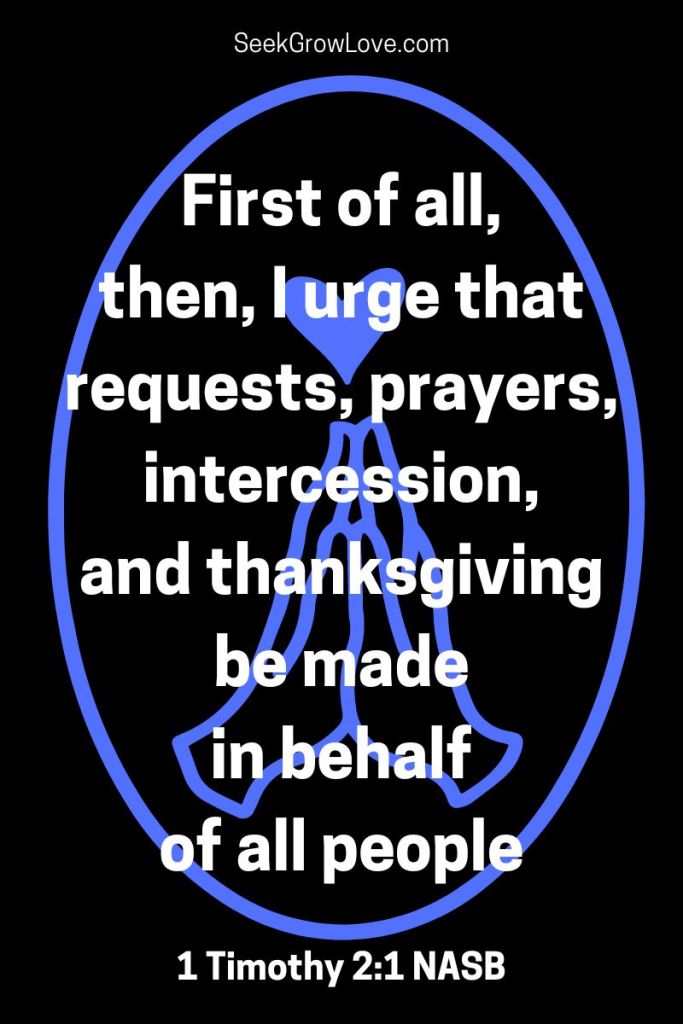
The chapter begins with a support for prayer, highlighting its benefits for good order. The Jews had an exemption from sacrificing for the emperors and gave prayer for the emperors. The Romans accepted this compromise in part because they knew the strength of the Jewish conviction in their one God, and the risk of rebellion if they rejected it. For a time Christians were accepted under that compromise by the Romans, being seen as a category of Jewish believers. But Paul was not necessarily speaking of the compromise at all, but just of the benefits of prayer itself.
Paul goes on to state that he wants all to know the truth: “For there is one God, and one mediator also between God and men, the man Christ Jesus, who gave Himself as a ransom for all, the testimony given at the proper time.” (verses 5-6). The fact of Jesus being a mediator between God and humanity doesn’t come up often – the word for mediator only shows up six times in the New Testament, here, in Galatians 3, and in Hebrews 8, 9 and 12. Mediation is relevant for Jesus in his position as High Priest, one of the three tasks tied to being the Christ / Messiah, the anointed one. Once a year the High Priest would enter the Holy of Holies (where the Ark of the Covenant was) and pray on behalf of the nation. This text in 1 Timothy addresses how Jesus is also the ransom, the sacrifice, which permitted the High Priest to enter the Holy of Holies. The High Priest did not perform a sacrifice inside that room, he brought in blood from a sacrifice of a lamb that had taken place outside the room, and sprinkled it in the room. And so Jesus, our High Priest, is able to enter the true Holy of Holies in heaven and remain there – not one day but perpetually – based on having provided his own blood as the lamb (Revelation 5:9; Hebrews 10:11-25).
I also see Jesus as a proper mediator in how he understands the perspectives of both sides – he is the one sinless human being (1 Peter 2:22), better fit than anyone else to speak for God’s concerns (and, of course, God’s chosen representative as the Christ), but he is a human who suffered temptations as we do (Hebrews 4:15).
The later part of the chapter may explain why Paul was giving a brief explanation of the true faith – I would suggest he made his statement when he did in contrast to the teachings being presented by those he was having issues with in Ephesus. Sometimes people have argued about whether these statements should be taken as universal to all churches. I do not see them as universal, nor do I see them as restricting all women in Ephesus, because of inconsistencies this would create and because of an alternate explanation I perceive. But first the inconsistencies.
Some translations say “teach or have authority” in verse 12, but texts like 1 Corinthians 11 show that Paul accepted women as teachers (and he named various female co-workers in his letters, such as the well-known Priscilla, Phoebe, etc.). It seems better from the Greek to see this phrase as “teach with authority” which means it is not two issues but one, guided by whatever type of authority we are dealing with – because this is not the normal word for “authority” in the New Testament. The Greek word used in 1 Timothy 2:12 for “authority” only appears here in the Bible, telling us little, but its extrabiblical uses suggest it is more like a kind of stolen authority which Paul would not wish any Christian (male or female) to obtain. The reason that this passage links it to women will be made more clear shortly. The text says that Adam was created before Eve but does not state why this is significant – many have suggested this should relate to some greater authority for Adam due to being made first, an authority extending to men in general. But this is not discussed elsewhere in the Bible, and commonly greater responsibility results in greater punishment upon failure, not a continuation of such responsibility after failure. Next, the text says that Adam was not “deceived”, which has sometimes been thought to mean (in supposed context of Paul’s point) that Adam handled the truth about the tree better than Eve so men were to be able to handle the truth better than women. But both Adam and Eve sinned regarding the tree, and most texts about this Bible event refer to Adam, not Eve, as key to the punishment of humanity for sin (even if they are only using his name symbolically because he was the first human). And lastly, verse 15, in some readings, makes it sound like a woman’s salvation depends on bearing children rather than upon her relationship with Jesus. This seems to be a complete absurdity, particularly considering Paul’s stated support for Christians remaining unmarried (1 Corinthians 7:8).
Now to a proposed alternative, that there were female teachers in Ephesus advocating for a gnostic sect who had infiltrated the church. Such sects cover a range of ground, but they included those who claimed that the physical universe in which we live was created by accident as an off-shoot from the powers of a purely spiritual being too different from us to even interact with us or to create matter. They would propose that this far away being self-generated a lesser spirit (like a plant gives off fruit) which in turn generated a lesser spirit, and so on (some versions went through hundreds of levels, possibly mocked as the “endless genealogies” of 1 Timothy 1:4). Eventually the story would arrive at a being that was weak / foolish enough to produce matter rather than spirit, and that being created our universe. The result was the trapping of fragments of spirit in matter – souls stuck in bodies – which needed to be retrieved to re-merge with the higher beings. Thus one of the higher spirit beings gets sent to provide the necessary knowledge to these fragments (which are unaware of their own origins) for them to escape their reality.
It was popular in some gnostic circles to steal the writings of other groups, Jewish, Christian, Zoroastrian, philosophy, etc., and rewrite it to present the beliefs of the gnostic group. The Genesis account of the tree of knowledge of good and evil was popular to twist, given the tree’s name. One particular group we know of presented that tree as a positive thing to eat from to gain understanding, and described the snake as a heroic spirit-being who came to convince Eve to eat from it. They described the God of the Old Testament as the creator of the physical universe who was blocking information about higher reality from the creation. Eve was presented as having been the original human (not Adam) and, since the snake supposedly told truth, she was also specifically not deceived. This type of switch in Eve’s origin story also plays into the fact with some gnostic groups of favoring priestess figures over priests.
You can see how what Paul says in verses 13 and 14 may be a repudiation of teachings by people in Ephesus who supported gnostics. Paul is asserting truth from Genesis. Adam was created first. Adam was not deceived by God about the tree, Eve was deceived by the serpent.
Verse 15 caps things off – among gnostics there were two views on sexuality. Some groups said that they should be celibate to avoid physical attachments, since their goal was to leave the world behind as spirits. Some groups said that since they were going to leave their bodies behind it didn’t matter what they did with them at all. But all gnostics agreed on one thing as being an unforgiveable sin – to have a child. They saw having a child as trapping a fragment of “soul” in flesh within the creation. I see verse 15 as offering reassurance to women who had been told they were not allowed to have children that doing so was fine. What actually mattered was continuing in faith, love, and sanctity with self-restraint.
I can’t demonstrate that the particular gnostic group I discussed was active in Ephesus – I can’t even demonstrate that the writing I was discussing about Genesis 3 had already been written at that point – but the details do seem to match together pretty well. If my proposed alternative were certainly incorrect, the inconsistencies I am concerned with would continue to concern me. And, of course, the ministry of the many women who worked alongside Paul would continue to be notable and compelling.
Lord, thank you for the opportunity to write these devotions. It has been difficult, but it has been useful to me as a demonstration that I can still be of use. I pray that I have not offended unnecessarily by anything I wrote, and that I have not mislead anyone or made an error in emphasis that would put them on the wrong course. I know that you are able to guide what people perceive in my words by your Spirit to take them where they actually need to go, and so now that my part is finished I entrust the next steps to you. Not that I did not rely on you to have been helping me along the way already. Please forgive my pride whenever I thought I was writing well, I was only writing about your words in the first place. Thank you for taking care of me, and for letting me know that you do. In the name of your son Jesus I pray these things, Amen.
-Daniel Smead
Questions:
Do you make a practice of praying for worldly leaders? Do you pray only for your own leaders, or also for the leaders of other areas? Do you expect these prayers to matter?
What do you think of 1 Timothy 2:5-6 as a possible stand-in for John 3:16? John 3:16 has a ring to it, but I wonder if these verses would be more likely to get people looking for the details they need. Sometimes the idea of “believing in him” sounds vague, without the context. Saying there is “testimony” might remind people to find out what the testimony said. Of course no one is meant to be a Christian without context. What do you think is your “key” verse or verses for your faith at the moment?
Verse 8 says, after Paul’s statement about faith and truth, that he wants prayer everywhere “without wrath and dissension” – do you think this might be another reference to the unity of the believers being a testimony to the world? Does prayer with wrath and dissension sound appealing?
The fact that Paul kept saying what he wanted from the believers may suggest that he wasn’t always getting it from them, or that he was warning them, or that he was aware how many other people would read his letters. It really isn’t clear. Which do you think is the most likely situation? How often do you read something Paul said to do and think about applying it directly to yourself? How often do you read something Paul said to do and object to the idea of applying it to yourself? How much of that is based on you thinking your circumstances are different now?







 Seek Grow Love