“Now” that David’s living in Jerusalem. He wanted to return the ark of the covenant there. He said to all the assembly of Israel, “If it seems good to you, and if it is of the LORD our God, … let us bring back the ark of our God back to us.” (13:2,3) David had good intentions of bringing the ark back, but he did not actually inquire of God or do it according to His instructions. He gathered all Israel together to bring the ark of God up from Kirjath Jearim. He had it put on a new cart. “All Israel played music before God with all their might with singing, on harps, stringed instruments, tambourines, cymbals, and trumpets.” (13:8) He had such good intentions, but once Uzza held the ark when the oxen stumbled and he died, David became angry and was afraid. He took it aside to the house of Obed-Edom and left it.
We lived in the village right behind Kirjath Jearim. In fact, for 20 years we could look out our living room/kitchen windows and see it! Also, one can see in the picture modern houses built around the ancient site. There is a Catholic church over the ruins, which is the case for other sites in Israel. And one can see the main road, which is still the modern-day ridge route they would have traveled on to avoid the deep cutting valleys.
Even though David had good intentions, afterwards he sought God for instruction, which encourages us to do the same. Not long after the Philistines attacked near Jerusalem, it says, “David inquired of God” if he should go against them. (14:10) Again, he inquired of God if to attack them, and God told him to send an ambush around them and succeeded. (14:16) “So David did as God commanded him, and they drove back the army of the Philistines from Gibeon as far as Gezer (could include pictures of them too😉). Then the fame of David went out into all lands, and the LORD brought the fear of him upon all the nations.” (14:16,17) This account of David is so encouraging though he had good intentions and yet failed to seek God, he corrected himself immediately and sought God’s counsel if he should attack the Philistines. We can learn from David and do likewise! “Be zealous for the fear of the LORD all the day.” (Proverbs 23:17) In wrap up, it is interesting to note once again another Proverbs that talks about a child, which has a Hebrew word meaning more “youth.” “Do not withhold corrections from a child (YOUTH), for if you beat him with a rod, he will not die.” (Proverbs 23:13) Children and youth both need lots of training and correction, but the end results are so rewarding. Reach out to children nearby you or related to you and encourage and lovingly correct them. Many may be going back to camp this summer, which is a special time for them. Many times, they have good intentions and yet need directed in God’s ways. 😊
After the death of King Saul, Israel came together at Hebron to anoint David king. God took him from being a shepherd of sheep to shepherd people. “You shall shepherd My people Israel and be ruler over My people Israel.” (11:2) Think about that, now adays it is a matter of degrees one has from LOTS of insidestudy. With David it was after LOTS of outside hours of watching the sheep (and years on the run from King Saul). For the first 7 years he reigned as king from Hebron. Then he wanted to move to Jerusalem, but the people rejected him there, so he fought against them. After David built the city up, and still to this day it is called, “The City of David” in that area by the temple. “So David went on and became great, and the LORD of hosts was with him.” (11:9) Below is a picture our son took with a drone of the City of David. (My husband knew what shots he wanted, but our son knew how to get them as a teenage tech). 😊 They made a great team, while it was still possible to fly in Jerusalem.
My biblical geography teacher of a husband likes to point out the parallels with David, anointed as messiah and king of Israel with Jesus, also anointed as messiah by God and king of Israel. Both lived lowly lives in the beginning though they were kings! Some of David’s mighty men even hid themselves in the cave of Adullam. And guess what?! Those caves are still there today and called by the same name! The students that came for our semester program would sometimes camp out there or have a bonfire there depending on our schedule. (Drone shot from our son😉) “The LORD brought about a great victory.” (11:14) God caused David and his men to prosper against their enemies. “By humility and the fear of the LORD are riches and honor and life.” (Prov. 22:4)
Further looking into Proverbs, it is interesting to note that the popular verse, “Train up a child (youth) in the way he should go, and when he is old, he will not depart from it,” (22:6) means more “youth” in Hebrew, like David was this age when he killed Goliath. Also, “Foolishness is bound up in the heart of a child (YOUTH); the rod of discipline will drive it far from him.” (22:15) So, to end on a happy note this “youth” son that took many of our drone pictures in Israel was granted permission today from the Israeli army to come and visit us for a month!! So exciting! 😊
The Philistines fought against Israel on Mount Gilboa. King Saul and his sons were also fighting against them. They fell slain in battle there. It says that “Saul died for his unfaithfulness which he had committed against the LORD, because he didn’t keep the word of the LORD.” (10:13) He consulted a medium for guidance, “but he did not inquire of the LORD; therefore, He killed him, and turned the kingdom over to David.” (10:14) It is so important to ask God for guidance, first and foremost. We so often ask others or search online for answers, which can be okay, but mainly we need to seek and ask God. It had been almost 9 years since Saul’s disobedience and rejection by God as king, yet he was still ruling for years, until it says that God killed him through the Philistines, and FINALLY the kingdom was turned over to David… as they mourn for King Saul.
Here is a modern aerial (drone) view of Mount Gilboa taken by our homeschooled high school son that was with my husband on a field trip. It is a mountain range, not one individual mountain. And guess what? It still has the same name today! In fact, by it you can see a manmade “snow” slope to go sledding on throughout the year. 😊
Proverbs 21:1 follows the two chapters in Chronicles perfectly! “The king’s heart is in the hand of the LORD, like the rivers of water, He turns it wherever He wishes.” And not just his heart but his whole life, as we just read that He can even kill the king. “To do righteousness and justice is more acceptable to the LORD than sacrifice.” (21:3) “There is no wisdom or understanding or counsel against the LORD.” (21:30)
Another Proverbs I wrote “sp” for speech by it helped me a lot during a rough time in my life. “Whoever guards his mouth and tongue keeps his soul from troubles.” (21:23) There were troubles brewing in my life, but it really helped to GUARD my mouth and tongue like a security guard standing by the opening of my mouth watching what I was going to say. In Israel, there are security guards everywhere. Most malls have a grocery store in them, but before buying milk in the mall’s grocery store, I would need to pass by three security guards! Thus, it is good for our words to be guarded at the exit of our mouth to make sure they are fitting! It is a good exercise today to picture a security guard by our mouths and tongues to make sure what we say is appropriate and pleasing to God.
Shalom y’all. 😊 I was born and raised in small town Indiana, then lived in Israel for 25 years, now I am back in the States in the South. So, I will add some pictures and thoughts about Israel in each devotional this week to help give you a taste of it over there. This year I have been reading through the Chronological Bible for my personal Bible reading and really enjoying it. In various ways, reading through the Bible is a great experience even though some parts are slower. 😊 It is interesting to note that the Hebrew Old Testament is arranged in a slightly different order than in English. In my Hebrew/English Bible the Old Testament ends with 1 and 2 Chronicles as a final summary of the Old Testament.
Although 1 Chronicles 7 & 8 are FILLED with Hebrew names and cities, it is amazing how familiar those names are to native Israelis. Many people are still called those names today, especially religious Jews. AND many of those cities are STILL called that TODAY. At some places, the ancient ruins of the city are beside the modern one, sharing the SAME NAME! Also, amazing that we still have this record of people and places from about 2,800 years ago. God’s Word has been preserved through all these years and one can still see the numerous same locations in Israel today. Israel is a wonderful country and testifies of real places and a real God and Messiah Jesus. See the green patch towards the bottom of our picture, that’s ancient Shechem with the modern city built around it. It is listed among the many cities in 1 Chronicles 7 and 8 and is STILL an actual city in Israel today! Some ancient cities are only in ruins, but the name remains the same.
Over the years, it has been a great benefit to read the book of Proverbs and focus on a certain topic while reading it and marking that topic with a few letters, like shown in picture. So many good nuggets of wisdom to meditate on! Something interesting is that many times a “child” is mentioned it’s often referring to a “youth” in Hebrew. “Even a youth is known by his actions” (Proverbs 20:11) is how it translates into English, same word used for David when he killed Goliath. I encourage you the next time when you read the book of Proverbs to pick a topic that interests you or that you would like more wisdom in and initial each verse that applies. Sometimes I have even made a list in a notebook of those verses and then meditated on them, and it has really helped me in that area that I needed more wisdom about. “The hearing ear and the seeing eye, the LORD has made them both.” (Proverbs 20:12)
The book of wisdom says, “Death and life are in the power of the tongue, and those who love it will eat its fruit.” (Proverbs 18:21). I understand this scripture to mean that we have the power to speak words to others unto life or words unto death, so we should choose our words carefully. If we love to talk, we better make sure our speech represents who we are because we become what we speak (eat your words). Our words are death and life to our own bodies.
I keep coming back to the issue of the heart. I know we need to have a heart for God if we desire to be with him and his son in the Kingdom of God. But how do we really know if we have a heart for God? The heart can be seen in the things we do that correspond with Jesus’ commandments (love) that we must do to enter in. Works are fruit but works can be deceiving if the heart behind the works is not motivated by love. Mathew 7:15 – 23 says:
15 “Beware of the false prophets, who come to you in sheep’s clothing, but inwardly are ravenous wolves. 16 You will know them by their fruits. Grapes are not gathered from thorn bushes nor figs from thistles, are they? 17 So every good tree bears good fruit, but the bad tree bears bad fruit. 18 A good tree cannot produce bad fruit, nor can a bad tree produce good fruit. 19 Every tree that does not bear good fruit is cut down and thrown into the fire. 20 So then, you will know them by their fruits.
21 “Not everyone who says to Me, ‘Lord, Lord,’ will enter the kingdom of heaven, but he who does the will of My Father who is in heaven will enter. 22 Many will say to Me on that day, ‘Lord, Lord, did we not prophesy in Your name, and in Your name cast out demons, and in Your name perform many miracles?’ 23 And then I will declare to them, ‘I never knew you; depart from Me, you who practice lawlessness.’
The people speaking to Jesus in this passage are shocked that Jesus doesn’t know them. The works mentioned in this passage do outwardly appear to be good fruit. Fruit can look good on the outside but can be rotten on the inside.
It can be difficult to identify bad fruit sometimes. If you really want to know if you’re producing good fruit or not, there is one particular fruit that’s pretty transparent, at least to the people we’re around the most. Our words are a good indication of what’s in our hearts.
Here’s a similar passage from Luke’s perspective in Luke 6:43-47:
43 For there is no good tree which produces bad fruit, nor, on the other hand, a bad tree which produces good fruit. 44 For each tree is known by its own fruit. For men do not gather figs from thorns, nor do they pick grapes from a briar bush. 45 The good man out of the good treasure of his heart brings forth what is good; and the evil man out of the evil treasure brings forth what is evil; for his mouth speaks from that which fills his heart.
46 “Why do you call Me, ‘Lord, Lord,’ and do not do what I say? 47 Everyone who comes to Me and hears My words and acts on them, I will show you whom he is like:
Jesus has a little more to say about the mouth in Mathew 12:30-37:
30“He who is not with Me is against Me; and he who does not gather with Me scatters.
31“Therefore I say to you, any sin and blasphemy shall be forgiven people, but blasphemy against the Spirit shall not be forgiven. 32“Whoever speaks a word against the Son of Man, it shall be forgiven him; but whoever speaks against the Holy Spirit, it shall not be forgiven him, either in this age or in the age to come.
33“Either make the tree good and its fruit good, or make the tree bad and its fruit bad; for the tree is known by its fruit. 34“You brood of vipers, how can you, being evil, speak what is good? For the mouth speaks out of that which fills the heart. 35“The good man brings out of his good treasure what is good; and the evil man brings out of his evil treasure what is evil. 36“But I tell you that every careless word that people speak, they shall give an accounting for it in the day of judgment. 37“For by your words you will be justified, and by your words you will be condemned.”
James gives us even more clarity about the power of our speech in chapter 3:5-12:
5 So also the tongue is a small part of the body, and yet it boasts of great things. See how great a forest is set aflame by such a small fire! 6 And the tongue is a fire, the very world of unrighteousness; the tongue is set among our body’s parts as that which defiles the whole body and sets on fire the course of our life, and is set on fire by hell. 7 For every species of beasts and birds, of reptiles and creatures of the sea, is tamed and has been tamed by the human race. 8 But no one among mankind can tame the tongue; it is a restless evil, full of deadly poison. 9 With it we bless our Lord and Father, and with it we curse people, who have been made in the likeness of God; 10 from the same mouth come both blessing and cursing. My brothers and sisters, these things should not be this way. 11 Does a spring send out from the same opening both fresh and bitter water? 12 Can a fig tree, my brothers and sisters, bear olives, or a vine bear figs? Nor can salt water produce fresh.
Are you noticing as I am that some of the scariest, most convicting verses in the bible for a supposed Christian regard our speech? We must tame our tongue. To tame the tongue we must change our hearts.
By examining our own words, we can tell if we have a heart for God or not. I think it’s a really good indication about our destiny too. If you really want to know if you are producing good fruity speech, ask those who are closest to you how they perceive your speech towards them. If they aren’t on the receiving end of your good fruity speech, that’s not good. Be prepared with your response. If you don’t like what you hear, how will you respond? Choose your words wisely.
If you know you will have trouble responding with good fruit, prune your speech! You might find it helpful to practice not saying anything at all. Proverbs is chock-full of verses that tell us that there is wisdom in keeping our mouths closed. Even a silent fool is considered wise if he keeps his mouth shut. We can use that silent time to pray for wisdom and words of life and in the meantime, practice our sacrifice of praise to God, which is the fruit of our lips that give thanks to his name.
-Juliet Taylor
Today’s Bible reading passages can be read or listened to at BibleGateway here – 1 Chronicles 3-4 and Proverbs 18
…the exact truth about the things you have been taught.
1 Chronicles 1-6
The very last class of my undergraduate education taught me something I’ve remembered for years. I was finishing up my minor and taking my last sociology class. I made a statement during a class presentation that earned me a grade that pushed me into a new academic rank that I thought was impossible to achieve. The presentation was on being a voice for change in society. “If we want to bring about societal change, we need to make some noise!”
I’m going to sound a tad irreverent here. I used to cringe every time a modern agent of societal change preached “Fact-check!” My disdain from the message grew with each passing day that the seemingly one-sided social sermon that I immersed myself in on an almost daily basis, was made light. The noise was bringing change but to me, it was not warranted change.
At first, noise is all I ever allowed myself to hear from the opposing side’s communication. My mind went straight to the need for taking the stick out of the opposing side’s eye. There may have been a beam in there too.
I had to turn off the noise and get myself immersed in something else because I wasn’t helping the situation. I was supposed to be the light that brought change, not the opposing societal view. Right around this time, I started digging into the various things Jesus was called. In the quiet I reacquainted myself with The Light of the World.
Through my continued immersion in the word, I did something I had rarely done. I actually took the time to read the genealogies of Jesus, the boring stuff, in the beginning chapters of Mathew and Luke. It dawned on me.
In the quiet, I realized that the words so often skipped over were God’s fact-checks! Through these, he made certain we knew who the Messiah was, the one who would bring about the right change. It was all in there waiting to be discovered. The Messiah is exactly who God said he’d be and exactly who Jesus said he was. There are facts that lead to him in the genealogies, the lineages, the “begats”, the “in the lands of-s”, the “in the times of-s”, through the recordings of kings of kingdoms, in the astronomical signs of the times, etc. All fact-checks leading to Jesus Messiah.
The genealogies of Jesus were written by eyewitnesses of his ministry. I love the beginning of Luke:
“Since many have undertaken to compile an account of the things accomplished among us, 2 just as they were handed down to us by those who from the beginning were eyewitnesses and servants of the word, 3 it seemed fitting to me as well, having investigated everything carefully from the beginning, to write it out for you in an orderly sequence, most excellent Theophilus; 4 so that you may know the exact truth about the things you have been taught.” -Luke 1:1-4
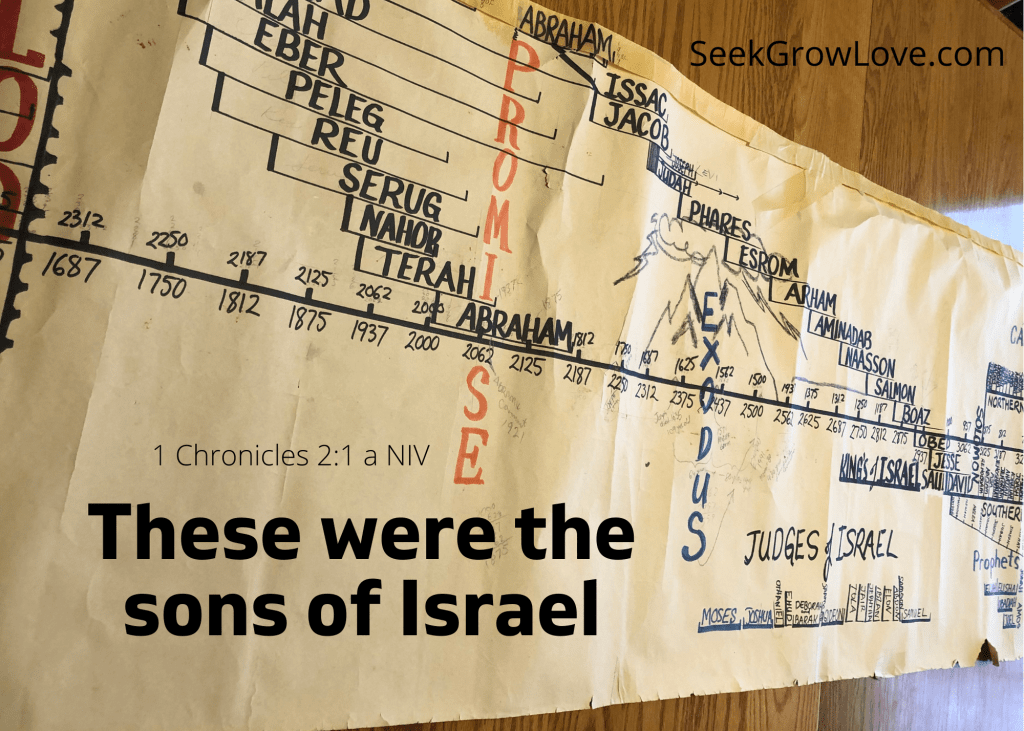
I took a little more time today reading through the genealogies recorded in 1 Chronicles chapters 1 – 6. They’re fact-checks. They can help us to be prepared with an answer to anyone who questions our faith.
Through this experience, I have begun to listen to the opposing side before opposing them completely. I have come to value the opposing side’s pleas for fact-checking. They are right. We need truth. But we need to fact-check society as a whole – all sides.
I’m still a bit put off by the societal noise and social pressures of our time. Although it may be true that making noise may lead to societal change, it may not be what God wants for us. There were times when Jesus spoke softly and times when Jesus rebuked. There were times when Jesus was offensive and there were times when Jesus remained silent. He always did whatever he heard from his father. If I’m going to be the light of the world like Jesus, desiring to cause societal change, I need to hear Jesus and heed his statements. I need to do it his way. His way is often the unpopular way but it is the only way that’s going to bring about change that matters.
-Juliet Taylor
Today’s Bible reading passages can be read or listened to at BibleGateway here – 1 Chronicles 1-2 and Proverbs 17
Life is fleeting. We’re all passing through this age like the grass of the field. Today we live. God holds tomorrow.
As I’ve finished the last three chapters of the book of 2nd Kings and read another chapter in Proverbs, I’ve thought about our time in this age. This age is short compared to eternity. What we do in it matters.
The lives of the final kings of Judah mattered and were recorded for us all to see. We know what each of those last 5 kings was forever known for. They can be summed up into two basic categories. A good king and evil kings.
All but one of the last 5 kings of Judah were known for doing evil in the sight of Yahweh. If we included the whole lot of the kings of Judah and Israel to this list, there wouldn’t be a significant pendulum swing in the opposing direction towards Yahweh God.
When we come to the end of our earthly lives, what will we be known for? Will we be known for doing good or evil in the sight of God through Jesus Messiah?
The good kings, like Josiah were known for their hearts and humility, practicing obedience to God’s Law. Good kings did stumble but when they repented, they renewed their status with God.
If we want to be known for doing good in our day and age, similar qualifications apply. Good disciples of Jesus will be known for their hearts and humility, practicing obedience to the Law of Christ (aka producing fruit).
The whole law can be summed up with one word. Love. Our “goodness” can be measured to the extent that we love as Christ loved. How did he love? He loved his God and served him alone with all of his heart, with all of his soul, with all of his mind, and with all of his strength. He loved his neighbor to the point of death on the cross.
When I come to the end of my life, I want to be known as a good disciple of Jesus Messiah. I want to hear my master say, “Well done, good and faithful servant!” If this is my heart, my life will reflect that.
-Juliet Taylor
Today’s Bible reading passage can be read or listened to at BibleGateway here – 2 Kings 23-25 and Proverbs 16
There seems to be a persistent theme when it comes to the kings of God’s people. There were kings who served Yahweh their God and kings who served false gods. In 2 Kings chapters 21-22, we are told a tale of two kings. The first king, Manasseh, king over Judah, did evil in the sight of Yahweh God.
Wait a minute. Didn’t we just read about a similar situation a few chapters ago? Why does history repeat itself so often? Did the people learn nothing about what it meant to follow God (or not) from their forefathers? Did they not just witness their sister kingdom of Israel being starved and then carried away into captivity because they would not listen? Or was that too far in the past to grasp? Even if their memories faded, the people of the kingdom of Judah were living out a miracle of God through the reign of Hezekiah. His consequence to following God brought his people life. Not just any life, but an abundant and prosperous life. Why wouldn’t future generations mirror his ways and follow after his God? There must be more to it than knowledge of a history of consequences.
So what is it that makes a person (or a people) choose to follow God?
Romans 10:17 says that faith comes through hearing, and hearing by the word of God. The kingdoms of God should have known the words of God. They were God’s chosen people who were given the Law of Moses. Many were taught the word of God through people close to them, such as their parents, priests, and sometimes prophets, and through repeated practice of those laws in their daily lives. God supplied them with everything they needed to do right before him. Yet we see kingdoms rise and kingdoms fall. Some kings chose to serve God, while others chose to serve other gods.
I consider myself privileged to have been brought up in a household that taught me about my God and his son from as early as I can remember. Others in our faith didn’t have this advantage. They had to hear the word from someone perhaps not as close to them later in life or discover God through his word for themselves. These types of people are my favorite people. To have such a passion for truth that they’d seek God diligently despite their lack of a foundation in the word (or despite their lack of a foundation in the one true God) amazes me. Many of these truth seekers are doing so in the face of great persecution. This is praiseworthy.
Some “good” kings of Israel or Judah appear to have been brought up in the word of God. I believe this type of upbringing was vital to their success as a God follower, even if at times they stumbled. A good upbringing, however, is not always enough.
King Hezekiah was a God follower, an amazing pray-er, and likely a good teacher of the word of God. Yet his son Manasseh chose not to walk in the ways of his father and instead chose to do evil in the sight of God – a lot of evil. It appears that Manasseh was born during the last few years of Hezekiah’s life (the 15 extra years God miraculously granted him). It is possible that he didn’t gain a firm foundation in the word from his father before his death. After all, he was only about 12 years of age when he began his reign as king. However, we all know another 12-year-old that was always about his father’s business, so I can’t give Manasseh too much slack with a father like Hezekiah.He must have heeded his father’s words in some way, as he knew to eventually repent of his evil ways before his God. If Hezekiah had been alive to see it, I’d imagine he’d be overjoyed to see his son repent and follow after the one true God. Thank God for repentance – as there’s time for it. Manasseh’s predecessor and son, Amon, did evil in the sight of God and reigned for only 2 short years. He was actually murdered by his servants. The word doesn’t give us much indication as to why but perhaps some of the people wanted to continue with Manasseh’s later reformed ways.
Finally we come to another “good” king of Judah, Josiah, Amon’s son. Josiah’s reign began when he was only 8 years old. Based on his father’s and the majority of his grandfather’s, evil behavior, I can’t imagine that he was taught much good. Perhaps the people around him experienced a taste of the good life that came at the end of Manasseh’s reign with his repentance and instilled some good practices in Josiah. But I can’t be certain that anything was taught to Josiah regarding the word of God. The high priest of the time actually found the book of the Law some 18 years into Josiah’s reign. I’m guessing that the last one to read or hear it was Hezekiah, almost a century earlier!
When Josiah heard the word of God for the first time in his life, he tore his clothes and he wept because he knew his fathers and his people had forsaken Yahweh God. He felt guilt and knew what his kingdom deserved. He immediately sought Yahweh on behalf of himself and his people. He found a prophetess, Huldah, who spoke to him concerning God’s judgment. We see that the nation of Judah was guilty but because of Josiah’s response to hearing God’s word, they were shown mercy.
It is Josiah’s response to hearing the word of God that answers my former question. What is it that makes a person (or a people) choose to follow God?
It’s their heart and humility before the LORD.
2 Kings 22:18-20
18 But to the king of Judah who sent you to inquire of the Lord, this is what you shall say to him: “This is what the Lord, the God of Israel says: ‘Regarding the words which you have heard, 19 since your heart was tender and you humbled yourself before the Lord when you heard what I spoke against this place and against its inhabitants, that they would become an object of horror and a curse, and you have torn your clothes and wept before Me, I have indeed heard you,’ declares the Lord.” 20 Therefore, behold, I am going to gather you to your fathers, and you will be gathered to your grave in peace, and your eyes will not look at all the devastation that I am going to bring on this place.’” So they brought back word to the king.
Josiah is likened to me as those truth seekers who didn’t have a biblical advantage as part of their upbringing. Josiah goes on to be one of the greatest kings of Judah of all times. It didn’t take him years of study in the ways of God to choose to follow God once he heard his words. All it took was his humble heart.
I am currently discipling my two young boys in an effort to steer their hearts towards God. I want to do everything in my power to raise up children in the ways of the Lord so that when they must choose on their own, they’ll choose him continually, even after a stumble. It can be discouraging to think that despite their advantage, they may still fail. I can’t make them have a heart for God. They have to want him on their own. That the words of our God and his son would be written on their hearts continually is my prayer for them.
It is astounding to me that there are Josiahs out there who’ve never even heard the word of God, but once they do, their hearts will immediately be for him. Oh how I long for a heart like that. Let’s pray for each other’s hearts.
-Juliet Taylor
Today’s Bible reading passages can be read or listened to at BibleGateway here – 2 Kings 21-22 and Proverbs 15
In our previous readings, there were examples of two choices that could be made when faced with trouble. One could follow the one true God or follow their own god. Hezekiah was the king of Judah who chose to follow God, and we should too. However, Hezekiah was not exempt from later circumstances with choices to be made. The choice to follow God or not was – and is – ongoing.
At the end of Chapter 18, we see that Hezekiah stumbled. He accepted defeat from the Assyrian army after years of conquering and standing strong with his God. He gave the king of Assyria what belonged to his God (gold from the temple of Yahweh). Even after meeting their demands, it was not enough. The enemy desired everything of Hezekiah and his people. He desired their worship.
The king of Assyria sent armies to Jerusalem and surrounded it. The leader of the army told the people to accept defeat because their God would not deliver them from the king of Assyria. He went on to offer the people great things such as a land full of plentiful good food and drink. It could be theirs if only they would forsake their God.
This time (it was over the course of a few repeated circumstances with the same choice – following God), Hezekiah made the right choice. He prayed. He proclaimed the majesty of his God and asked that all would know that Yahweh alone was God. What a prayer. And then what a response from God! What an outcome! Yahweh heard and delivered.
Yet again, God prospered Hezekiah. While all the cities around him, even the northern kingdom of Israel, had been desolated and the people carried away into exile, God did great things in Jerusalem under King Hezekiah. The great things (good food and drink) that were offered to the people of Judah if they would just forsake their God and follow the king of Assyria became abundant in Jerusalem and a remnant was spared for years when they chose to follow God. Remarkable!
It is clear to me that Yahweh God alone wants our worship. He wants our hearts. When we are faced with a choice to follow him or not, he rewards those who choose him.
The people in Hezekiah’s kingdom were seeing defeat all around them. They knew what taking a stand against the king of Assyria might mean for them. The northern kingdom had starved to the point of eating their own dead children before they accepted defeat (as we read in other places, the king of Israel was told by God to surrender. Instead, he allowed his people to die). For Hezekiah’s people, having the temptation of a land full of food and drink dangling above them would have been hard to resist. Yet they did resist. In the face of temptation, they listened to their king and remained silent.
I thought about Jesus when I read this passage and how he was led by the spirit to be tempted when he was hungry. The very last thing he was tempted with was being placed on a high mountain (maybe like the Asherah?) and given a choice to have all that he saw from that high place if he only worshipped the devil. Jesus said “Go, Satan! For it is written, ‘You shall worship Yahweh your God, and serve him only.’”
If our Lord Jesus was not exempt from temptation in his time of need, neither should we expect to be. We all have a choice to make. Will we serve God in our times of trouble? Will we serve God when tempted with pleasure or even with our basic needs? Know what Yahweh has done for his people when they choose him. “Have you not heard?” (2 Kings 19:25). In our time, he has supplied every need through our Lord Jesus Christ. Choose him! He has already won. If we follow him, we’ve won too. Pray like Hezekiah. Command the enemy to flee like Jesus. When difficult circumstances arise again, keep choosing God. Tell Satan to Go!
-Juliet Taylor
Today’s Bible reading passages can be read or listened to at BibleGateway here – 2 Kings 19-20 and Proverbs 14
There seems to be a persistent theme when it comes to the kings of God’s people. There were kings who served Yahweh their God and kings who served false gods. In 2 Kings 17-18, we are told a tale of two kings. The first king, Hoshea, king over Israel in Samaria, did evil in the sight of Yahweh God. During Hoshea’s reign, the king of Assyria came up against him. Instead of relying on Yahweh for help in the time of trouble, Hoshea sought the help of foreign aid and made foreign gods.
He set pillars up and Asherim (wooden symbols of a female deity) on every high hill and under every green tree. He served Idols and worshiped stars. He made the people pass through the fire (sacrificed them to gods) and practiced divination and enchantments.
Over and over again, Yahweh God tells Israel to turn from their evil ways and keep his commandments and statutes, but they would not listen. They became stiff-necked and vain and did what Yahweh God commanded them not to do under Hoshea’s leadership. They put their trust in other gods and did not fear the one true God. The next and last king of Israel did accordingly. As a result, Israel was carried away into exile. God removed them from his sight.
Then there was Hezekiah, king over Judah. He did right in the sight of Yahweh. He removed pillars and cut down the Asherah. He trusted in Yahweh God and clung to him. He kept his commandments. Yahweh was with him and wherever he went he prospered. While all the nations surrounding him were taken into captivity, Hezekiah not only withstood the forces against him, but conquered them because he put his trust in Yahweh God, listened to his commandments, and removed the false gods from his kingdom.
In our times of trouble, will we despise the word of God and serve little self-made gods like Hoshea, or will we destroy the Asherah of our lives and serve the one true God like Hezekiah? We are told by our Lord Jesus that we will have trouble in this life but to take courage because he has overcome the world. In response to trouble, we have two choices to make that can lead to two very different outcomes. We can create and rely on our own Asherah or destroy it and rely on Yahweh God alone through his son Jesus Messiah.
We don’t live in a day and age when most people are physically making objects out of wood to worship or sacrificing their children to other gods. We may however worship and sacrifice to other “gods” that we’ve made priority in our lives over Yahweh God. If we’re not careful, we may find ourselves making our personal lives our priority. We can pursue a self-indulgent lifestyle that involves making ourselves happy, making ourselves financially secure, and making ourselves feel safe. We can sacrifice our time, energy, and focus on all things not God. We’ve got to stop doing this if our desire is to serve the one true God.
Idols can be hidden. There was a time when God ordained the bronze serpent in the wilderness as a symbol of the coming Messiah. It was to be held high for all Israel to look upon and live in the face of death. Yet, we find in 2 Kings that Hezekiah destroys it. Why? Because it had become a symbol of worship beyond what God intended for it to be. What once represented the Messiah who brings life became idol worship.
Have we set up idols of influence in our lives “on every high hill and under every green tree” without even realizing it? Have we become stiff-necked and vain with our priorities and done the very thing God commands us not to do? If we have, there’s hope! Thank God we have repentance and forgiveness through our Lord Jesus Messiah. Identify the Asherah in your life, repent, destroy it, and rely on God.
-Juliet Taylor
Hello brothers and sisters in Christ! I am thankful for this opportunity to write. I am a Biblical Unitarian and have been for life (although I didn’t know we had a name until recently). I grew up attending fellowship based off of the teachings of the Way International Ministries. There were some years I spent listening to church online from Living Hope International Ministries, until I found a local church that believed like me. I currently attend Higher Ground Church, now affiliated with The Church of God General Conference. I’ve been with my home church for about 14 years and attend with my husband and two boys. We love Yahweh God, his son Jesus Messiah, and long to be with them in the Kingdom of God. Love to all and God Bless! -Juliet
Today’s Bible reading passages can be read or listened to at BibleGateway here – 2 Kings 17-18 and Proverbs 13









 Seek Grow Love