
Making a Different People : Blessings and Curses

Leviticus 26-27

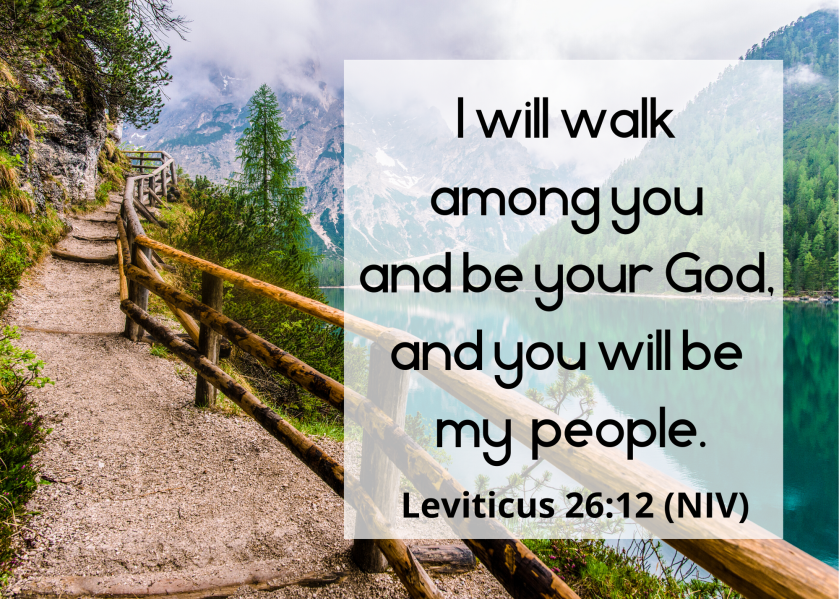
Leviticus 26 12 NIV
Chapters 26 and 27 of Leviticus makes it seem like the book ends twice. While the valuations of 27 help us understand tithes and how giving to the Lord means more than money, indeed EVERYTHING we have, it seems like 26 was the “original” ending. The author, editors, and priests who God inspired to write and work in this text ended, first, with a powerful section on blessing and curses.(See note below)
The narrative of the Exodus, that is, God crushing the Egyptians and their gods, leading his people out to worship him, and then bringing them into the promised land, is the climax of the Torah, and arguably the CENTRAL NARRATIVE of the Old Testament. That is why God has repeated something over and over and over again. I hope you caught it, as I noted that when something is repeated, God wants you to pay attention. Here it is in 26:13 “I am the LORD your God, who brought you out of the land of Egypt so that you would not be their slaves, and I broke the bars of your yoke and made you walk erect.” Think about how many times you have heard something like this in the commands of Leviticus. God keeps grounding his commands in the beautiful reality that he has brought this people, the children of Abraham, Isaac and Jacob, out of the land of Egypt. He has redeemed them from slavery. Because he has done that, he wants them to walk in a way that is different and better than the nations around them. If they don’t walk that way but turn away, then he will allow the trouble of this world to overtake them, in order that they might cry out to him. However, if they do obey, then he will give them unending blessings and he promises, “I will also walk among you and be your God, and you shall be My people.” (26:12)
I hope you see the parallel to our lives as we follow Christ. The CENTRAL NARRATIVE of creation is the Exodus led by Jesus, who broke us all out of the bondage and slavery to sin and has set us free. As Jesus brings us into the Canaan of the Kingdom of God, not just the future Kingdom on the Earth, but the present rule and reign of God, he looks to us and says, “there is a better way to live.” He gives us a holy way of life, grounded in his love and his sacrifice. But, better than before, we are able to become changed from the inside out because of the power of God flowing through us. No longer must we simply keep outward laws and regulations, but our hearts can become pure. God can change our desires and our destiny.  We are able to become children of Abraham, Isaac, and Jacob and heirs according to the promise of God. If we follow the way of God, through the power of the Spirit of God, all the while redeemed through the Son of God, then one day we will see God. The metaphor of Leviticus, God saying “I will also walk among you” will become reality. We will be in the full, unmitigated glorious presence of God, in the Land of Promise, His Kingdom.
May you, my brothers and sisters, become a different people.
May the principles and practices of Leviticus shape you into a holy people.
May the mercy and justice of God be made evident to you in all of scripture, and especially in Leviticus.
May the blood of Jesus, a perfect lamb, without spot or blemish, cover you, redeem you, cleanse you of all sins.
May God, my brothers and sisters, bless you!
Jake Ballard
————————————
Note : To be fair, this is a hunch, not a statement of fact or even a solid belief. If you disagree and believe that Moses, or whoever authored this book, wrote it this way on purpose as directed by God, then that is certainly an acceptable view. I just want to point out the fun, interesting quirks of books. This is similar to how John 20:30-31 is a good ending to the book, as well as John 21:24-25. Just some fun food for thought, but not the focus of the devotion. Keep reading above.
————————————
(Jake Ballard is Pastor at Timberland Bible Church in South Bend, IN. He lives in the Michiana Area with his wife, daughter, and in the summer, two more little ones. If you’d like to say hi you can find him on Facebook at https://www.facebook.com/jacob.ballard.336  You can also hear more teachings at https://www.youtube.com/channel/UCs_awyI1LyPZ4QEZVN7HqKQ  If you want to have an interesting conversation with him, just say “I don’t like the ninth guy in a blue police box.” God bless!)
Today’s Bible reading can be read or listened to at https://www.biblegateway.com/passage/?search=Leviticus+26-27&version=NIV
We made it through the book of Leviticus and learned about God on the way.
Keep reading!  Tomorrow we begin the book of Numbers (chapters 1 & 2) as we continue on our 2020 Chronological Bible Reading Plan

Making A Different People : Atonement, Sacrifice, Sexual Relations

Leviticus 16-18

Leviticus 18 3 4 NIV
As we move through Leviticus, it’s important to remember two things.
— First, for the Israelites, God was and is creating a different kind of people; a people who stand out in the world. They were to look different than the nations around them. We will see this more clearly today.
— Second, for us, God is showing us what he likes and wants from his people in principle and practice. We need to see what God likes and wants, and what commands are required from the principles found in the text. Christ covers the commands, and yet reinstates certain patterns of holy behavior.
Having these ideas in mind with help make sense of Leviticus 16, 17 and 18.
Starting at the end, the laws of Leviticus 18 are all about sexual relations. In our Victorian and yet hyper-sexualized society, each of these commands are important. No one command had precedent in the ancient Jewish community. For example, Leviticus 18:22 was just as bad in the eyes of God as Leviticus 18:23. It wasn’t that 22 was LESS serious or MORE serious, all of these actions would bring defilement on those who practiced them.
But it’s neither of these passages that we are focusing on today. Read Leviticus 18:1-5, or go back and read it again. God, when giving these commands to Israel, is trying to make a people that are different than the Egyptians and the Canaanites. He want a people who will walk in his commands and his statutes. God has unending, infinite wisdom; therefore, God’s ways of living are better than mere human ways. Therefore, when he is saying “Live my way, not the Egyptian way or the Canaanite way”, he is saying “Live the best way possible.”
God doesn’t want you to settle for a second class life. All the sexual gratification in the world doesn’t hold a candle to the joy of living life in accord with God’s commands. All these ancient prohibitions for sex are teaching us that we need to be careful to not allow sex to control our lives. Our sexual orientation, our gender identity, our gender expression, are all to be in accord with God’s commands throughout scripture and must be submitted to God. God wants you to be righteous in your sexual life because it is better for you and everyone around you.
The way you can become holy has also changed from the time of Leviticus 16. God’s best life for us is no longer in animal sacrifices, but in allowing Christ to be our atonement. The blood of Christ cleanses us from sin. Christ brings us before the mercy seat in his sacrifice, and he also goes out from the community as the scapegoat, carrying our sin far away.
Today can become your day of atonement. If you trust in the sacrifice of Jesus and call him your savior and lord then you can read Leviticus 16:30 in a powerful new way : “for it is on this day that atonement shall be made for you to cleanse you; you will be clean from all your sins before the Lord.” This day can be today, and Christ can make you clean from all your sins.
Jake Ballard
Today’s Bible reading can be read or listened to at https://www.biblegateway.com/passage/?search=Leviticus+16-18&version=NIV
Tomorrow’s Bible reading will be Leviticus 19-21 on our 2020 Chronological Bible Reading Plan

Making a Different People: Healing and Uncleanness

Leviticus 14-15

Leviticus 14 2 NIV
Leviticus 14 and 15 have many rules about how to stay ritually clean and become clean, even after something that would make a person ritually unclean, like leprosy or bodily discharges. While this is, again, good but weird, we get the REASON for all these rules in Leviticus 15:31.  “Thus you shall keep the sons of Israel separated from their uncleanness, so that they will not die in their uncleanness by their defiling My tabernacle that is among them.”(NASB) Another paraphrase, the Easy-to-Read Version, puts it this way: “So you must warn the Israelites about being unclean. If you don’t warn the people, they might make my Holy Tent unclean. And then they would have to die!” God didn’t want disease, discharge, sickness, and other things that could be damaging to the community to come into the tabernacle or the temple, where everyone would gather. The community was being protected by God by keeping these rules. If someone ignored these rules and put the community in jeopardy, they would have to die.
But there was also MERCY in these rules. Though the leper may be called unclean, there was a process where they could be made clean again. Though these bodily discharges COULD be bad, there was a process for being made clean again. A person was not neglected by the community forever; there was always a way back in.
Today, that way back into the community of God, to become clean before him, is Jesus. And Jesus is better than the rules of the law. Here, the sickness had to end, the disease had to stop; only then could one be made clean and come before God in honor and with sacrifices. However, Jesus himself takes away the diseases, he makes us clean. This is why the story in Luke 8:42-48 is so powerful. A woman, who was ritually unclean because of her bleeding, believed Jesus could heal her. She risked everything to simply touch his coat. Every person in that crowd, and Jesus himself, became ritually unclean because of the law in this part of Leviticus. But Jesus was not concerned about his cleanness, but about the woman’s healing. Praise God that we have a healer, a priest, who can not only make us clean and allow us into the community, but can take away our diseases and give life to our bodies!
Jake Ballard
Today’s Bible reading can be read or listened to at https://www.biblegateway.com/passage/?search=Leviticus+14-15&version=NIV
Tomorrow’s reading will be Leviticus 16-18 as we continue on our 2020 Chronological Bible Reading Plan

Making A Different People: Food, Leprosy, And Caring for our Bodies

Leviticus 11-13

Leviticus 11 45 NIV

So far in the book of Leviticus, we have been reading laws that are about sacrifices and how to remove guilt, show thanksgiving, or just sacrifice to sacrifice. These laws and the story of forgiveness have been weird but good. (You were thinking the Bible was weird, I’m giving you permission to say it. Still, God’s word is good.)
In chapters 11-13, we move into different kinds of laws. As John said in his recent posts, Christ has covered these laws. We don’t have to think about sacrifices or food laws or laws of uncleanness. Why worry about them? I will always remember what Bob Jones shared with me at the Bible College: the Old Testament shows us what God likes. By giving these law, God was making a different people, a people who would do what he liked. We are not required to keep the laws, but something in them, in principle or practice, is a thing God wanted his people to know at the time. When we read these texts, the principles and practices we see should effect our own walk today. So let’s see if a principle can lead us to a practice today.
The Principle : Our bodies are important and we MUST CARE for them.
In Leviticus 11, we see what constitutes clean versus unclean food. There are many theories as to why God labelled some food clean or unclean. Many point to the potential serious food borne illnesses that could be found in uncooked pork, or how vultures and lobsters (both prohibited animals) are scavengers and may become infected through infected food they eat. But I think more importantly, God wanted to make a population of people who understood that their bodies were important and not everything should go in it. They don’t eat just any kind of food, they don’t drink just any kind of drink, they don’t allow just anything to enter their bodies. Connect this to the discussion to disease in Leviticus 13, and we begin to see the principle emerge: we are given one body, and it is serious enough that to protect the most bodies, some may have to be put outside the camp. Though we could talk about the heartbreaking situation it is to have a serious skin disease and to become unclean, it is also true that the bodies we are given are not replaceable. These bodies are IMPORTANT and we MUST care for them. We must make sure our diseases are treated. We must make sure what goes in them is thoughtfully considered. Anything less is missing the fact that we are only given one body.
The Practice : Take Care of yourself in food and health
Though today you can eat shrimp, crab, and lobster (and boy are they good), the question we must ask is, “Is this going into my body to help me?” We are allowed to eat shrimp scampi; is it wise to consume a diet rich in fatty foods? We are allowed to drink soda; is sugar water the best way to care for our own body? This is not a condemnation of any, and far be it from me to fat shame. In America, we are over-blessed, and that means we have TOO much food, TOO many good things. In our diets we need to ask, “Is this food caring for my body?” Beyond food, this is true of alcohol. Whether you believe any alcohol is acceptable or not (and there are good arguments for and against consumption), over consumption is always wrong. Illicit drugs are always detrimental to our health. Ignoring the signs of illness and avoiding the doctor based on some misplaced pride also avoids caring for the body in which you have been placed.
God was and is teaching his people that our bodies are important and we must care for them. In doing so, God was and is creating a different kind of people; a people who stand out in the world.
Jake Ballard
Today’s Bible reading can be read or listened to at https://www.biblegateway.com/passage/?search=Leviticus+11-13&version=NIV
Tomorrow’s Bible reading will be Leviticus 14-15 as we continue the 2020 Chronological Bible Reading Plan

Who Have You Been With?

Exodus 33-35

Exodus 34 29b NIV

After Moses destroys the idol he gets another opportunity to be in the presence of God. He actually was able to see the glory of God pass by.

And we see God’s description by his own account.

“The Lord, the Lord, the compassionate and gracious God, slow to anger, abounding in love and faithfulness, maintaining love to thousands, and forgiving wickedness, rebellion and sin. Yet he does not leave the guilty unpunished; he punishes the children and their children for the sin of the parents to the third and fourth generation.”

But what stuck out to me is how Moses changed after being in the presence of God. His face was so radiant it scared the others.

It’s easier than we might think for people to know where we’ve been or what we’ve been doing.

Many can tell you of my interest in chocolate. It started at a young age. My parents tell me of a story of when I was little and I snuck a piece of cake. My face was full of chocolate icing. I was approached about if I took a piece of cake and I straight faced lied – “I did not take the cake”. Despite my insistence, my parents knew where I had been and what I was up to.

Maybe it’s the icing on your face, the ticket-stub that falls out of your pocket, maybe it’s your extensive knowledge of a certain sport, or your church name printed on your shirt, but there are clues that tell others where you have been, who you were with, or what you’ve been up to.

Over time people notice deeper things as well. Because the truth is, whether we are aware of it or not, what and who we spend our time with changes us. Whatever you spend your time looking at, meditating on, and thinking about is what you will slowly, but surely, become. And people pick up on it.

So let me ask the question, “What have you been doing?”

“Who or what has left a mark on you?”

“What do you reflect in your character?”

And more specifically, if it is easier than we might think for people to tell where we’ve been, would anyone think you’ve been with God?

Do you show signs of having been in contact with him and his Word?
John Wincapaw
Today’s Bible reading can be read or listened to at https://www.biblegateway.com/passage/?search=exodus+33-35&version=NIV
Tomorrow’s reading will be Exodus 36-38 as we continue the 2020 Chronological Bible Reading Plan (1) (1)

Remember

Exodus 28-29

Exodus 29 42b NIV

I’ve been a pastor for 35 years.  I’ve pastored local congregations.  I’ve served on the mission field in a different country.  I’ve served as a hospice chaplain with people who have been diagnosed with life ending diseases and as a hospital chaplain with people who are very sick, or having surgery, or recovering from surgery or recovering from pneumonia, or have attempted suicide or are struggling with mental health issues and need extra support.  I preach each week to people in the nursing home and those who are suffering from Alzheimers and other forms of dementia.  I’ve stood at the bedside and prayed with families whose loved one is about to die or who has already died.  I’ve prayed blessings over newborn babies and people over 100 and everywhere in between.

The one common need I find over and over again is the need of the person going through crisis to know that God is with them.  Everyone goes through challenges and difficulties, losses and pains in life.  It’s not a question of, “Will bad things happen?”  or even, “Why do bad things happen?”, it’s more a case of, “When bad things happen what resources do you have to draw from to help you get through it?”

As God’s people, Israel was being transformed from slaves to the people of God who were to be a light to all nations, they were going to face many challenges on that journey of transformation.  They had a desert to cross.  They had numerous enemies to face who all wanted to prevent them from reaching the promised land, and once they arrived in the land, there were enemies who wanted to take the land away from them and turn their hearts away from undivided loyalty to God.

To get through these challenges Israel needed regular assurance that God knew them and that God was with them.  If you’ve been a Christian for most of your life, it is likely that you know these things already.  You know that God knows you by name, that before He formed you in your mother’s womb he knew you.  You know Jesus’ promise that he will be with you always, to the end of the age, right?  There’s no way you would ever forget that God knows you and that Jesus is with you, right?  (More about that in a minute).

The people of Israel were spiritual babies.  They were just starting to learn about who this God is and to get used to the idea that God would stay with them and not abandon them.  They needed a lot of reminders.  So, in addition to having a tent of meeting constructed in their midst (see yesterday’s devotion) they needed to know that they had representatives who would go before God regularly on their behalf.  So God set aside a group of men who would serve as priests.  They had a special calling and were set apart or consecrated to do the work of a priest.

Today’s reading describes the various pieces of clothing that the priests wore and the purpose of each item- ephod, breast piece, robe, tunic, turban, urim and thummin, gold plate, sashes etc…  of all of these descriptions in Exodus 28 one in particular stands out: “Engrave the names of the sons of Israel on the two stones the way a gem cutter engraves a seal. Then mount the stones in gold filigree settings and fasten them on the shoulder pieces of the ephod as memorial stones for the sons of Israel. Aaron is to bear the names on his shoulders as a memorial before the Lord. (11-12).  So when the priest went before God, he went bearing the names of the sons or tribes of Israel.  This was a reminder that they were there on behalf of the entire people of God.  The message for the people was that the priests would bear on their bodies a constant reminder to God of His beloved people.

We might ask the question,” if God is perfect and all knowing, why would he need such a reminder? ” I would say that the reminder wasn’t for God as much as it was for the people to have the assurance that they were being constantly brought before God.  Prayer works the same way for us.  When someone prays to God  on our behalf, they aren’t exactly bringing new information to God’s attention.  God knows our needs before we ask.  One of the benefits of intercessory prayer is to remind us that we are not alone in the midst of our needs.  When I was first diagnosed with cancer and underwent surgery and radiation lots of people were praying for me.  It brought me great comfort and encouragement to be reminded regularly that people were remembering me before God’s throne.

In Exodus 29 it provides a description of the rituals that were used to consecrate or set apart the priests for their duties of bringing the people before God.  Notice how the consecration involved sacrifices and blood.  In order for the priests to go before God on behalf of the people, their sin and guilt had to be covered over by blood.  In fact, every day, morning and night, a lamb was to be sacrificed to God. “For the generations to come this burnt offering is to be made regularly at the entrance to the tent of meeting, before the Lord. There I will meet you and speak to you;  there also I will meet with the Israelites, and the place will be consecrated by my glory.” (42-43)

This served as a constant reminder that God was holy and sinless, and that human beings are sinful and needed to be cleansed and forgiven of their guilt in order to come near to God’s presence.  As a result: “Then I will dwell among the Israelites and be their God.  They will know that I am the Lord their God, who brought them out of Egypt so that I might dwell among them. I am the Lord their God.” (45-46)  These daily sacrifices served as a constant assurance to God’s people that He was their God and that He was with them.

As Christians, we are not required to sacrifice a lamb day and night in order to be assured that God is with us.  Jesus is the lamb of God who takes away the sins of the world.  He, as the high priest and the sacrificial lamb, went into the most holy place with his own blood and offered a sacrifice that covers over all of our sins once and for all. (Once you read the book of Exodus, the book of Hebrews in the New Testament is much easier to understand… check it out).  When Jesus was first prophesied in Isaiah 7 it was said that he would be a sign that God is with us (Immanuel means God is with us).  In the name of Jesus we can be assured that God is with us – not because we are perfect or sinless, we are no more sinless than the nation of Israel was, but we have been made holy by the blood of Jesus.

Earlier I asked the question: “There’s no way you would ever forget that God knows you and that Jesus is with you, right?”  That fact is, we all have times when we forget that God knows us and that Jesus is with us.  This is a danger when everything is going well in our lives- when we are busy enjoying the blessings that God gives us and are on a roll, we can get so caught up in enjoying the gifts that we forget to worship the one who gives them to us, God.  It is also a danger when things are tough and we are hurting and feel all alone or worry that God isn’t answering our prayers.  When we go through spiritual depression or the dark night of the soul we can forget that the Lord promised never to leave us.  We need constant reminders, in the good times and the bad times.  That’s why we need to gather regularly with other believers to find encouragement and strength, so we don’t forget.  That’s why we need to regularly break bread and drink the cup at communion, to help us remember.  You and I need ongoing reminders that God is with us, that God remembers us.  We need to know others are bringing our names before God in difficult times, and we need to remember to bring others before God during their difficult times.  We may not have to wear ephods and robes and rub lamb’s blood on us, but as Christians we are all priests and we all need to go before God regularly on behalf of each other and behalf of people in the world, in the name of Jesus.  Don’t forget to remember, God is with us and God will never forget you.

Jeff Fletcher


Today’s Bible reading can be read at https://www.biblegateway.com/passage/?search=exodus+28-29&version=NIV


Tomorrow’s Bible reading will be Exodus 30-32 as we continue the 2020 Chronological Bible Reading Plan (1) (1)
Joseph Reveals Himself

Genesis 43-45

Genesis 45 7 NIV

I think that after one day you understand how this set of devotions will work. They are casual, informal and straight to the point. With that, let’s pick up where we left off.


It is interesting in verse 8, that Judah is the one to bear responsibility for retrieving food. Reuben is the first-born of Israel and would be the de facto leader of the brothers, yet it is Judah who shoulders the burden of protecting his half-brother Benjamin on the journey back to Egypt. In times when it seems like someone is meant to be a leader, there is actually a gap to be filled. There are times when a gap is created when a leader fails to step up. Men fail. That is what we do. But there is always someone to fill that gap, even if that person never thought they were suited for that position. Where can I fill the gaps?


The steward who greets the sons of Israel is only a side character in this story, yet he is performing the duties that Jesus later commanded all of us to take on. In verse 24, it says that the steward provided water to wash their feet. Jesus took it a step further and washed feet himself. This side character was more powerful than a servant, yet he still performed some duties of the servant. Jesus has more authority even than this steward, and yet he lowered himself even further than the steward. This is true humility. We need to be willing to serve and be the side character.


Joseph is really quite crafty. First he develops this plot that will ensure that he is able to see his younger brother. He accuses the sons of Israel of spying on the land and learns of his younger brothers existence and then threatens the brothers so that they must bring Benjamin with them if they ever return. Yet Joseph knows that they must return. Joseph controls all of the grain in the region. The brothers must return. He even returns their money to guarantee two things. One is that they will have the money to purchase more grain in the future. The other is to entrap them in another of his schemes, that he might pay them back for their injustice to him or that he might force them to leave Benjamin with him. This idea comes up again at the end of chapter 44. When his brothers do return, he treats them to a feast to the brothers great confusion (see verse 33). They thought they were under suspicion of being spies, yet here they are being treated to a feast by the man who is second only to the Pharaoh of the most powerful civilization on the planet. That is quite a turn of events. But Joseph is not done playing with them yet. He plants his personal belongings in Benjamin’s bag. This is starting to look like the diabolical plot of an evil mastermind. In doing this, he will be able to reduce his brothers to groveling at his feet and will have also created a scenario where his only brother Benjamin must stay in Egypt.


Fortunately, Joseph is not an evil mastermind. He is just a cunning brother who longs to be with his family. Verse 1 of chapter 45 reveals this. In the end, all of his scheming only resulted in prolonging his isolation from his family. If he had revealed himself the first time that his brothers had come for food, he may have experienced the same outcome where his father’s entire household would move to Goshen and live with him. But then again, Joseph must have been afraid when he first saw his brothers. Remember, the last time he saw them, they were busy throwing him into pits (don’t worry, there wasn’t any water in it) and selling him into slavery. If you were in Joseph’s situation and were half as cunning as him, would you have acted the same?


Nathaniel Johnson


Today’s Bible reading can be read or listened to at https://www.biblegateway.com/passage/?search=Genesis+43-45&version=NIV


Tomorrow’s reading will be Genesis 46-47 as we continue on the 2020 Chronological Bible Reading Plan
Persevering

Genesis 38-40

Genesis 39 21 NIV

Today is sadly, at least for me, my last day of writing devotions for this week. I have been super blessed to do this. It really makes me work the text and find the spiritual implication of the scripture. I love studying God’s word like that. I hope you guys have been getting as much from the devotions as I have.

We are going to set up camp in Genesis 39 and talk some more about Joseph. Definitely read Genesis 39: 1. because it is awesome, 2. because it will fill in all the details that I miss. We are picking up the story with Joseph in Egypt thriving as a slave in Potiphar’s house. It says in verse 3 “His master saw that the LORD was with him and that the LORD caused all that he did to succeed at his hands.”. Notice Joseph’s perseverance in this situation. He is sold into slavery by his own brothers and now adjusting to life as a slave he is still applying himself and trying. It is so rare to find perseverance like that anymore. I can only imagine Joseph’s mindset here but I feel like being a slave of one of Pharaoh’s officials and becoming his right-hand man would not be the worst job to have as a slave.

Joseph had gained Potiphar’s trust so completely that it says that he concerned himself with nothing but what food he ate. I wish I could say all my employers have trusted me like that but that totally wouldn’t be true. Unfortunately, the story is about to get a little more difficult for Joseph.

Potiphar’s wife had taken a liking to Joseph and tried to make him lie with her. I want to zoom in on Joseph’s response. He tells her no, that he wouldn’t do it. The reason he cites in verse 9 is that his master has held back nothing but her and, “How then can I do this great wickedness and sin against God?”. He ultimately bases his choice on “I owe Potiphar” but “I couldn’t do this to God”. His morality, decisions and actions are guided by his devotion to God. God was the thing that guided everything for Joseph.

This heroic display of devotion to God wouldn’t be the last. In verse 10 it says that she asked him day after day to lie with her and Joseph refused. She seems to be determined because despite all of Joseph’s no’s, one day she got ahold of his garment and refused to let go. Joseph fled away to avoid the sin. She lied to the men of her household and Potiphar and told them he tried to rape her.

Joseph for this deed of righteousness and obedience was repaid with prison. For obedience through a testing and trial the immediate consequence of his amazing self-control was being sent to prison. Joseph must have felt like God’s whipping boy at that point. I would have felt like, “I was put on this Earth to be destroyed” if I were in Joseph’s shoes.

God rewards Joseph’s obedience and gives him favor with the prison keeper who puts him over all the other prisoners. God rewarded his obedience, suffering, righteousness, love, devotion, and endurance to and for Him. God didn’t abandon Joseph. Joseph went through many things much harder than probably any of us have ever or will ever go through. They were hard, made him uncomfortable, he suffered but he persevered. Pain, difficult things, sufferings are not the end of the world. Being comfortable in life is not the most important thing. Joseph’s happiness wasn’t his main concern. His love for God was paramount.

James 1.2-4 says “Count it all joy, my brothers, when you meet trials of various kinds, for you know that the testing of your faith produces steadfastness. And let steadfastness have its full effect, that you may be perfect and complete, lacking in nothing.”

James says to count it as joy when we encounter trials. As JOY. The trials, the suffering, the pain, the putting off of our desires, the obedience, the perseverance. James says it is making us perfect and complete. I want to be perfect and complete in what actually matters. The perfect and complete that James is talking about is in our love and devotion for God. I want to be perfect and complete in that.

In verse 12 James says that the man who endures under trial is blessed because he will receive the crown of life. We will receive the Crown of Life. Can you imagine Jesus placing a crown on your head at your judgement? Just imagine what that would feel like. The King placing the crown of life on your head.

Everything can wait. Think about what that would feel like.

In the next part of the verse it says that God has promised this to those who love Him. So let your perseverance, your suffering, your pain and obedience make that LOVE perfect and complete.

Dan Wall


Dan is a graduate of Atlanta Bible College and SUNY Maritime College. He recently completed an internship at Guthrie Grove Church of God and is hoping to become the pastor of a church one day, LORD willing. If you would like to contact him you can reach him via text or call at 631-576-5099 or via email danielaaronwall@gmail.com.


Today’s reading was Genesis 38-40 and can be read or listened to at https://www.biblegateway.com/passage/?search=Genesis+38-40&version=NIV


Tomorrow’s reading will be Genesis 41-42 as we carry on with the 2020 Chronological Bible Reading Plan

Jealousy

Genesis 35-37

Genesis 37 4 NIV

We are finally off Jacob!! I think I am super excited to not have to write about him anymore. Haha. Today we are going to start on the beginning of the story of Joseph and I am pretty pumped for Joseph. He is a really awesome character of the Bible. There are a ton of lessons that you can learn from his life.

Have you ever caught yourself being jealous of another person? It may not even be their whole life but just like parts of. I know I totally have areas where I’m jealous. My personal areas are intelligence, athletic abilities, leadership style, their writing ability or musical talent.  Here is the thing I like about me. I do. I think God made me great and I think through God’s grace and patience he is continually making me better in the characteristics that he will use to build his kingdom. You are great too and God made you with the strengths that you have for a reason; to build his kingdom and glorify him. Yet, 99% of us still have issues with jealousy and the other 1% have pride problems. Hahaha.

Let’s get started on Joseph though. The first mention we have of Joseph is Genesis 37 and it starts out with his dreams. You definitely should go read this chapter. It will help out tremendously with understanding this devotion. Joseph was the last born of Jacob’s children and because of that Jacob loved him more than his other sons. To demonstrate his love for his son Jacob gave him a robe of many colors. His brothers noticed that their father loved Joseph and hated him because of it.

When Joseph was older he had a dream that said that his brothers will bow down to him. Remember, Joseph was the younger brother. After a half second of contemplation you would totally understand why Joseph’s older brothers would not be blessed by this dream. This made them hate him even more. Then another night he had a dream that his whole family including his mother and father would bow down before him. In verse 11 it says “And his brothers were jealous of him…”.

I can empathize with his brothers at this point. I have totally been jealous of some people that I have seen being used by God. I don’t think this is the worst thing in the world. I just want to be able to glorify God like they are and that is not a terrible thing to want. What Joseph’s brothers choose to do next is definitely not good.

Joseph’s brothers sold him into slavery when he was out in the field one day and then lied to their father and said that he had been killed by a wild animal.

Now, why do you think that his brothers did that? I am going to make a huge leap and say they were probably jealous. I know I am way out there on this one.

They were jealous of him for something small back in the beginning of the chapter and now their jealousy grew and grew and grew until they were selling their brother into slavery. They let it build and simmer under the surface until they did something crazy and harsh. I will go out on a limb here and say that if you were to tell the brothers that they would sell their brother into slavery at the beginning of chapter they would have called you a liar.

Have you ever noticed that if you are jealous of someone, you have a hard time being friends with them? Maybe there is a little extra hostility in your voice that you didn’t intend or you secretly wish they would make a mistake or some sort of small harm would derail them.

I don’t think that what happened to Joseph’s brothers was all of a sudden. They had been jealous of Joseph for a while and because they didn’t resolve this jealousy, they did something that they would come to regret. Love leaves no room for jealousy. It is impossible to love God, love people and be jealous of them. These feelings of envy and jealousy when unkept turn into anger. That is why it is impossible to love someone and be jealous of them.

So how do we keep jealousy from building into anger like what happened to Joseph’s brothers? None of us want unkept jealousy that will ruin our joy and make us do things that we don’t want to do. I am not the authority on this but I can tell what has worked for me. I have found it to be really hard to compliment people I was jealous of. So, I went ahead and complimented them and bragged about them and became a supporter of them. I would tell other people how great I thought they were and it did something weird in my heart. I was no longer jealous of them but I was happy for them and rooting for them.

Another thing that you will need to do is find your strengths, the good things about how God made you, and talk yourself up. Remind yourself that you are made in the image of the maker of heaven and earth and all good things dwells inside of you. If you need help finding your strengths ask a friend what they are and then ask God to help you find your value and worth in Him.

I do all of these things on a semi-regular basis. Let’s keep an eye on that jealousy and remind ourselves of who we are in God, so that we can stay joyful and love others.


Daniel Wall


Today’s Bible passage can be read or listened to at https://www.biblegateway.com/passage/?search=Genesis+35-37&version=NIV


Tomorrow’s reading will be Genesis 38-40 on our 2020 Chronological Bible Reading Plan


Forgiveness

Genesis 32-34

Genesis 33 4 NIV

Today we are going to look at what happened when Jacob and Esau finally meet again. If you remember the last time the two brothers were together was back in Genesis 27. Whatever city they were in it definitely wasn’t Philadelphia, the city of brotherly love. Jacob’s mother actually has to tell Jacob to run away to another land because Esau, his brother, is trying to kill him. Probably Esau rightfully felt these things because Jacob stole his father’s blessing from him and also extorted his birthright. I could imagine having a little bit of hostility towards a brother who did these things to me as well. Luckily, Jacob’s mama gets involved and sends him away to her brother where he was able to get married and prosper.

I can’t imagine the hostility that lay between these two brothers. Some of us are slightly more dramatically than others of us but we have heard people use phrases like, “They ruined my life”. Now I’m not saying that they didn’t but they probably didn’t do it like Jacob did to Esau. Jacob literally took away Esau’s inheritance from him for a bowl of soup. That better have been like some lobster bisque. On top of that while Esau was out hunting for an animal to make his father a nice stew Jacob and his mother went the easy route and took one of the animals from the flock and made their father a stew and stole Esau’s birthright. I couldn’t imagine doing all the work of hunting an animal just to see that your brother took one from the herd and used it to steal your birthright. Talk about adding insult to injury.

Imagine having all that happen and how you would feel if you ever saw your brother again. I am not sure about you but I would be expecting the best apology in the world. I’m not really sure what all would be included in that apology but at the very least I’m thinking something like a sky writing plane writing, “I’m sorry. You are awesome.” Maybe then I could possibly forgive them if they included like season passes to my favorite ski mountain. Let’s take a look at how the incident actually plays out in the Bible. You should go read the entire chapter of Genesis 33 but since I cannot put the entire chapter in this devotion. I will settle for one verse.


Genesis 33.4 “But Esau ran to meet him and embraced him and fell on his neck and kissed him, and they wept.”


Esau had twenty years to stew over how wrong Jacob had done him but instead of holding in all that hostility, anger and rage he chose to do something absolutely crazy. HE FORGAVE HIM. His reaction to seeing his brother is profound. He didn’t even just walk up and shake his hand. It says he ran to him, like children would when they see their father coming home from work. He embraced him, fell on him and kissed him. That’s love and forgiveness and all the stuff I want in my life.

I have things in my life that are as small as people have told lies about me and have said negative things about my character that I have a hard time letting go of and forgiving them for. But Esau, literally the leader of a non-Israelite nation, had way more forgiveness than I do.

Colossians 3.13 says, “bearing with one another and, if one has a complaint against another, forgiving each other; as the Lord has forgiven you, so you also must forgive.” This verse can seem kind of abstract and not practical. For me personally, when I see an example of how this is played out in real life like what happened with Jacob and Esau it raises the bar. It shows me my failure to fully attain to the level of Christianity that I want to be at; which is to live like Christ.

So how do you forgive somebody after something like what happened to Esau. I don’t think it is in our nature to. I think we need to bring it to God. I know that there are things that I wasn’t ready to forgive people for, my heart isn’t ready for and it still clings to the hurt. I think the only way to handle those types of situations is to bring it to God in prayer and ask something like, “God, please help me forgive this person and love them despite what they did to me.” Sometimes we just need to release that charge against them in our minds and tell ourselves, “I am not going to hold that against them.”

I hope that this helps any of you that are struggling in this way. I hope that we can all release that resentment we have and forgive each other fully.


Daniel Wall


To read or listen to today’s Bible reading you can check out Bible Gateway at https://www.biblegateway.com/passage/?search=Genesis+32-24&version=NIV

Tomorrow’s reading will be Genesis 35-37 in our 2020 Chronological Bible Reading Plan