What is It Really Worth?

Old Testament: Numbers 33 & 34

Poetry: Job 23

New Testament: Mark 8

What is the most you have ever paid for something? What is the most you have ever gotten from selling something? We value our things and we value our money. It seems that prices keep going up and up on everything that we need. Yet when we sell something it seems the price is never quite as high as we would like it to be. When we buy or sell we must ask ourselves, “What is this really worth to me?” That question will help us decide if we want to buy or sell at the price offered.

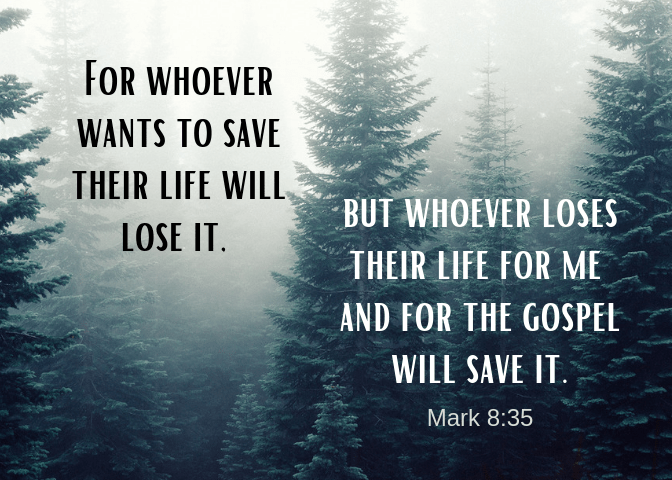
Jesus asks His followers to place value on what may be the single most valuable thing we have, our life and the choices we make in it. In Mark 8:31 Jesus teaches that He, “must suffer many things and be rejected … and be killed, and after three days rise again.” In the verses that follow He tells Peter that Peter had not set his mind on God’s interests, but his own. Then Jesus tells us, “If anyone wishes to come after Me, he must deny himself, and take up his cross and follow Me.” (Mark 8:34) Jesus is saying that we must place a value on being His follower. We must also place a value on following our own desires. We must decide which is of greater value to us. If our desires win and we choose to seek the things of this life and avoid the suffering of following Jesus it is a steep price to pay. Jesus says, “whoever wishes to save his life will lose it, but whoever loses his life for My sake and the gospel’s will save it.” (Mark 8:35) Proverbs puts it this way, “There is a way which seems right to a man, but its end is the way of death.” (Proverbs 14:12, Proverbs 16:25)

I leave you with the 2 questions that Jesus asked His disciples in verses 36 and 37, “For what does it profit a man to gain the whole world, and forfeit his soul? For what will a man give in exchange for his soul?”

-Bill Dunn

(originally posted May 10, 2017 for SGL)

Reflection Questions

  1. What did Jesus call Peter when he called him out for having in mind the things of men instead of the things of God? How often do you find yourself in the same mindset? How can we work at being more intentionally focused on the things/interests of God?
  2. Who have you seen deny themself, take up their cross and follow Jesus? What did it look like? What does it look like when you deny yourself and take up your cross to follow Jesus?
  3. What might it look like for you to “lose your life” for Jesus and the gospel?
  4. Is there anything more valuable to you than your soul? Are your life choices and daily decisions aligning with what you say you value most?

The Answer

Old Testament: Numbers 25 & 26

Poetry: Job 19

New Testament: Mark 4:26-41

A teacher poses a challenging question in his class.  Most students begin to ponder, some begin to turn and whisper, some cross their fingers and hope they are not asked to contribute.  Not a single hand goes in the air.  The teacher repeats the question; this time, he says it in a different way.  It doesn’t help.  Thoughts become more frantic.  Anxiety increases.  Some students begin to avoid eye contact.  At the moment that it seems that the teacher will start combing the class for a response, a lone hand ascends into the air.  It is that kid who knows everything. Thank you, that kid who knows everything! The teacher calls on her, and you are saved from having to answer the question.  All’s right with the world; you now can rest easy.

I have seen this scenario played out many times as both a student and a teacher.   No matter how difficult the question, it seems there is always one person in our lives who is prepared to answer it.  Whether it is at school, in your family, your circles of friends, or your work, there is always that one person (who very well may be you) that you turn to that has the experience, knowledge, or wisdom it takes to figure out life’s most difficult questions.

A passage in today’s text is like “that kid who knows everything.”  It  is the all-encompassing answer that holds God’s key and fundamental truth in which we can fix our hope. It stops us from over-thinking, stifles our anxiety, and helps us to take on, not avoid challenging situations, like:

  • When you are having trouble making sense of the world around you
  • When you feel like your prayers are not being answered
  • When you seek  “the reason” THIS is happening to YOU
  • When you lose someone or something you dearly love
  • When justice cannot be found
  • When we lose our health or happiness
  • When we face many other examples from Job 19:7-20

This is Job’s answer and ours:

Job 19:25-27 – “I know that my redeemer lives, and that in the end he will stand on the earth. And after my skin has been destroyed, yet in my flesh I will see God; I myself will see him  with my own eyes—I, and not another. How my heart yearns within me!”


It is not resignation.  It is not a cop-out.  It does not mean you stop seeking, studying, or pursuing.  It is the assurance and peace which you can rest in and be guided in while you are waiting.

-Aaron Winner

(Originally posted December 18, 2016)

Reflection Questions

  1. What are some of the hard questions Job was wrestling with? What hard questions do you have?
  2. What was Job’s “that kid who knows everything” answer in Job 19? What is the definition of redeemer? Do you have one – who lives? How do you know?
  3. What is your hope for the future? How does this give you peace today?

God’s Guidance System

Old Testament: Numbers 9

Poetry: Job 8

New Testament: Acts 22

My college kids and I just completed a 2100 mile spring break trip with Apple Maps guiding the way – telling us when to turn, when to go straight and when to reroute. The Israelites preparing to set out into the wilderness missed out on this modern technology, but they had something so much better.

They had been camped out in the region of Sinai and it had now been two years since they had left Egypt. During this time they were learning God’s commands and learning what happens when you break them. Also, the tabernacle was being built and furnished and set up so God would have a dwelling amongst them, even during their coming travels to the Promised Land.

But, without maps (print or digital) how would they know where to go? I enjoyed what Kyle McClain had to say about their direction system in his March 4, 2021 devotion for SeekGrowLove, so I will share that here:

“Truth be told, there are a ton of events recorded in the Bible that would be flat out awesome to see firsthand!  Of all the awesome things to see, Numbers chapter 9 records one of the top 10 things that I would have liked to have witnessed firsthand – maybe top 5.  That awesome thing recorded is the pillar of fire that guided the Israelites where to go at night.  During the day, a pillar of cloud guided them, but at night it had the appearance of fire.  How cool would it be to see the pillar of fire in the sky at night?!  I would say top 10 throughout the whole Bible!  Our God is incredible, and he is capable of some awesome feats.

I don’t think many of us are going to be led by a pillar of cloud or fire.  However, similar to the Israelites, we can and should still be guided by God.  There’s a very good chance that the guidance that God provides you will not be as obvious as the pillar of cloud or fire.  Therefore, we really need to be in tune with God and keep our eyes, ears, heart, and mind open to His guidance.  There are a number of ways in which God can lead us, so we should be ready at all times.  If we are actively seeking God’s guidance, then we are much more likely to see it.  That has to do with our Reticular Activating System in our brains.  If you don’t know what that is, then look it up on Google or YouTube.  You’ll be amazed.

 I would encourage you all to pray to God to help you become susceptible to God’s guidance.  You may be surprised with all the ways that God attempts to guide you.”

Also in Numbers 9 we see Moses setting a great example of what to do when we are unsure of how to proceed and don’t know what God wants us to say or do. Some Israelites asked Moses if they were able to celebrate the Passover because they were unclean at the time (had recent contact with a dead body). Moses wasn’t sure. God hadn’t told him, yet. Instead of making up something on the spot that sounded smart at the time, Moses said, “Wait until I find out what the LORD commands concerning you” (Numbers 9:8). And God rewarded Moses’ wisdom by giving His answer.

What do you do when you don’t know where to go or when to go and when to stay? Seek direction from the Lord! When you don’t know the answer, like Moses, wait until you find out from the Lord. And what do you do as you wait? I do not recall any time I have received direction from God while I am watching the latest tv show or scrolling on my phone. However, I have lost count of the number of times I have received God’s direction while reading from His Word. His answers are there for your life, too. Faithfully stay in His Word, following His guidance system.

-Marcia Railton and Kyle McClain

Reflection Questions

  1. What do you do when you don’t know where or when God wants you to go or stay or say or do?
  2. When have you received God’s direction in your life? Did you follow it?
  3. What do we also learn from Paul in our Acts reading today about following God’s direction?

Treasures and Worry

Old Testament: Genesis 13 & 14

Poetry: Psalm 4

*New Testament: Matthew 6:19-34

Treasures and worry – those two things go hand and hand so often. No matter how much treasure or money one has or doesn’t have it is common to grow anxious about getting more or protecting or hoarding what one already has. And I am guessing it isn’t just a modern problem, as Jesus so wisely blends his teaching on these two topics in the second half of Matthew 6. 

Today’s passage has so much wisdom! Make sure you read it for yourself – even multiple times – it is short. Jesus begins this section (Matthew 6:19-34) by warning about storing up wealth here on earth where all sorts of uncertainty can steal it away in a jiffy (and that was even before the stock market). He asks us to examine what we hold dear, “For where your treasure is, there your heart will be also” (6:21). And your heart can’t love and treasure both God and money. You have to choose which you will serve. Which will you go after? Which will you give your life to? 

It is recorded that immediately after saying, “You cannot serve both God and money.” Jesus said, “Therefore, I tell you, do not worry about your life…” Do you notice the correlation? If you choose to serve money – be prepared for the worry that goes along with that – do you have enough, will it buy what you want, will you look good enough, will it run out, what will you do if or when it does? But, if you choose to be wholeheartedly devoted to serving a great big God and keeping His first things first in your life, the rest of the worries of life practically dissolve as you put your trust in the One who cares for the birds of the air and the lilies of the field and loves you so much more. What comfort and peace comes to replace the worry and striving when we know that God knows what we need and He is the best at providing that and more when we seek Him first. 

Right now, we are half way into an anti-worry/money experiment at our house. About a year and a half ago my husband decided it was a good time to start looking for a new job. I was working hard at giving him my full support. And yet…there was a little cloud of uncertainty as to if this was the right timing – because anyone serving money would be quick to say it didn’t make any sense to change jobs then. At the time his current employer was an educational institution which generously paid out very healthy tuition benefits to the school of choice for our college age kids. It was a pretty good deal we had already benefitted from for several semesters and many college bills. But, we still had two in college and weren’t sure how in the world we would make up all the thousands and thousands of dollars we would not receive for their college bills for the next three years, while also not wanting them to graduate deep in debt. 

The unknown can be hard! Of course we want to provide for our kids and be wise with our finances and sometimes it’s hard to know what that should look like. But while wrestling with this decision: pursue a new job now or wait – a light-bulb moment gave me peace. My light-bulb said, “Marcia, you have been trusting (insert name of husband’s employer) to pay those college bills, but don’t you know that God can be trusted much much more?” And with that came peace, not all the answers of where the money was going to come from – but peace that my God was indeed much bigger than anything or anyone else I could put my trust in – and He knows what I need and He can provide it in ways I never would have thought of. 

So, we are half-way in. We had three years of college bills left and now we have just 1 ½ years. My husband DID start a new job and it has been a great change for us all! He likes his new employer and responsibilities a lot. And, he is able to work from home and my daycare kids and I love that! I have found I also enjoy tutoring and teaching sewing lessons and the people that has brought into my life, which I probably never would have thought to try if I hadn’t been searching for ideas to contribute a little bit more. And those college bills, they are getting paid. We aren’t even always sure how, but the money is there over and over again. Ask me again in 1 ½ years and I am sure I will have even more examples of God’s overwhelming faithfulness. 

Our Father loves to prove Himself true and reliable, but we will never know it and see it and experience it for ourselves if we keep serving and trusting in our man-made treasures and pleasures.

Keep Him first! He is big enough to provide what you need and more and He also knows what you don’t need. Keep your eyes on Him, His righteousness and His Kingdom. You don’t need a fast buck or a larger bank account. You need eternal life and your treasures on earth can’t buy that. Release your worry and grow in your trust in the God who creates, sustains, and makes all things new. 

-Marcia Railton

Reflection Questions

  1. Every life serves something or someone, sometimes self. Who or what are you trying to serve? Are there any instances where you are missing the mark or competing with mixed loyalties or masters? What corrections can you make? Will you? Why or why not?
  2. How has God shown Himself faithful in providing?
  3. How can you focus on God, His Kingdom and His righteousness? If you do that well, will this help you worry less? 

Looking for some more help on overcoming worry (especially over money)? I found very helpful a UPS driver illustration Rick McClain shared in a SeekGrowLove devotion in 2021 and have brought it to mind many times since. You can read it here. 

Abundantly Pardoned

Old Testament Reading: Isaiah 55-56

Poetry Reading: Psalm 86

New Testament: Book of James Intro – found below

Today’s Old Testament reading of Isaiah 55-56 is another encouraging message for those who reflect and return to God. Along with instructions to listen carefully, incline ears, and come to Him, we also read terms like mercy, compassion, and the phrase “abundantly pardon”.  People who return to God ( a daily need it seems!) are not just scraping by in a free trial period or conditional agreement. They are abundantly pardoned. The preceding chapters told us how (and through whom) that works, and it is not through anything we do. We are unworthy, but when we seek Him, we are recipients of abundant love, provision, and pardon in ways we far too often take for granted.

Some of my favorite passages in the Bible are the ones that remind me that God’s ways are perfect, and He has a plan and understanding that is superior to mine.  One example is Proverbs 16:9, and another is right here in Isaiah 55:9: 

For My thoughts are not your thoughts,

Nor are your ways My ways,” declares the Lord.

For as the heavens are higher than the earth,

So are My ways higher than your ways

And My thoughts than your thoughts.”

 New American Standard Bible (La Habra, CA: The Lockman Foundation, 2020), Is 55:9.

 I don’t know how you feel, but I read this and I say…..thank goodness!

As I was reading along in Isaiah 55 the reference to the plants stood out to me in verse 13. I really enjoy plants….learning about them, looking at them, growing them, sometimes killing them, watching perennials spread and annuals do their thing, seeing flowers turn into fruits, milkweed attract monarchs, learning about their medicinal and nutritional uses, smelling them. Pretty much, God’s creation of plants and nature are good things for us all around! (In fact, I learned a new term at work recently from a colleague who works with me with our pediatric patients who all need more time outside it seems, and if you haven’t heard of “forest bathing”…..it’s a thing!)  But, back to verse 13.  I was familiar with juniper, but wanted a reminder what the myrtle plant was that was going to replace stinging nettle.

And while I learned myrtle is apparently a lovely, fragrant, evergreen shrub, I also learned that it is quite Biblically significant. It is referenced as a choice plant according to Isaiah 41 and included in Zechariah’s prophecy. Interestingly, it also pops up in the book of Esther since her Hebrew name (instead of the Persian one), Hadassah, is the feminine form of the word “hadas” or “myrtle”.  Jews and Christians celebrating the Feast of Booths often use myrtle in their sukkots and celebrations. In fact, that is coming up next week so myrtle of the world is undoubtedly getting ready to make some appearances!

But, whether or not you ever see or grow myrtle, the message of a beautiful, fragrant, fertile, eternal hope God has in store for you is one to keep alive no matter what!

Isaiah 56 continues to call God’s people to a pursuit of righteousness and obedience and shares the promise with those of us who may not be biological descendants of Jacob.

-Jennifer Hall

Reflection Questions:

1. Consider the abundant, complete, and perfect pardoning you have received regardless of the gunk in your life. Have you allowed God to share that forgiveness and hope?

2. What is hard about sharing forgiveness and mercy toward others as we are called to do as followers of Jesus? How can you extend abundant pardon toward another today?

3. As you reflect on God’s ways being higher than yours, how can you better trust and rely on Him to plan your steps and make sense of this world even when you don’t get it?

Book of James Introduction

The Book of James was written by a man named James, who was probably the brother of Jesus (Matthew 13:55) and the leader of the Jerusalem church (Acts 15:13).  The book was written to the Jews who were scattered among the nations.  These Jews were obviously persecuted based on the way James started chapter 1.  These may have been Jews who were part of the Jerusalem church that were scattered after Stephen’s martyrdom (Acts 8:1). 

The main point of the book is to encourage the reader to actively live faithfully for God.  This can be summed up by looking at a couple of verses:

James 1:21 – Therefore, get rid of all moral filth and the evil that is so prevalent and humbly accept the word planted in you, which can save you.

James 1:22 – Do not merely listen to the word, and so deceive yourselves.  Do what it says.

James 2:17 – …faith by itself, if it is not accompanied by action, is dead.

James 4:17 – Anyone, then, who knows the good he ought to do and doesn’t do it, sins.

Here are some interesting verses about the author:

  • Acts 12:17 –  After Peter was rescued from prison, he told his friends to tell James and the other brothers and sisters…
  • Acts 15:13 – James was an important member of the council that met in Jerusalem
  • Acts 21:18 – Paul went to see James after Paul’s last missionary journey to give James a detailed report of his missionary journeys
  • 1 Corinthians 15:7 – Jesus appeared to James, then to all the apostles
  • Galatians 1:19 – Paul went to see James on his first trip to Jerusalem after his conversion
  • Galatians 2:9 – Paul called James a pillar of the church
  • Jude 1:1 – Jude identified himself as the brother of James

As you read the book of James, consider how it applies to you:  How do you react during trials?  How do you treat those who are less fortunate than yourself?  How do you speak?  Do you resist the devil and draw near to God?  Are your prayers powerful and effective?

I’ll close with James 5:20, “remember this: Whoever turns a sinner from the error of his ways will save him from death and cover over a multitude of sins.”

–Steve Mattison

Thirsty

Old Testament: Job 25-27

Poetry: Psalm 42

New Testament: Titus Introduction, below


“As the deer pants for the water brooks,
So my soul pants for You, O God.
My soul thirsts for God, for the living God;
When shall I come and appear before God;”

Psalm 42 starts off with a piece of beautiful imagery.  The writer of the Psalm compares himself to a deer who is thirsting for water.  Deer – like all living creatures – need water to survive.  However, deer may use the plants they eat as a supplement to the water they need, in order to lessen the amount of times they need to find a water source.  Most deer need to drink water daily, especially if they have been running around lots.  By the time a deer chooses to look for water, it is extremely thirsty.


In the comparison of the desire for God and a deer panting for water, we see a deep longing.  To want God as extremely as a deer wants water is incredible.  The author, by writing this, admits that he cannot live without God, just as a deer cannot live without water.  He is not saying that he would like to follow God some of the time when it is convenient, but instead is saying that he needs God every single day of his life.  Do you realize and accept that you need God every moment of your life to survive?  Are you looking for Him in your life as eagerly as a deer searching for a singular water source to get it through the day?


Further on in the Psalm, the author says, “Why are you in despair, O my soul?  And why have you become disturbed within me?  Hope in God, for I shall again praise Him  For the help of His presence.”  He explains that he thirsts for God because of the help of His presence.  The author acknowledges that hoping in God is like a deer being refreshed with a drink of water.  Are you seeking after God and hoping in Him like a deer panting for the water?

-Kaitlyn Hamilton

Reflection Questions

  1. Do you find yourself longing for God everyday?
  2. When you are thirsty for more of God what do you do, where do you go, what quenches your thirst?
  3. What do you do when your soul is in despair? Where do you find hope?
  4. How can you share God with someone who is thirsty?

Titus Introduction

Paul wrote the book of Titus to his mentee, Titus, Paul’s “true son in our common faith,” whom Paul had left in Crete to strengthen the new churches there and to appoint elders in every town.  Paul detailed the qualifications of an elder in Titus 1:5-9.

Paul reminded all Christians to say “No” to ungodliness and worldly passions, and to live self-controlled, upright, and godly lives while we wait for Jesus’ return (which Paul also called our blessed hope).  Paul also told Titus to remind the people to be subject to rulers and authorities, to be obedient, to be ready to do whatever is good, etc.

Finally, in Titus 3:9-11, Paul pointed out that Christians should have unity, where he said, “But avoid foolish controversies and genealogies and arguments and quarrels about the law, because these are unprofitable and useless.   Warn a divisive person once, and then warn him a second time.  After that, have nothing to do with him.  You may be sure that such a man is warped and sinful; he is self-condemned.”

-Steve Mattison

The Illusion of Control

*Old Testament: Job 7 & 8

*Poetry: Psalm 34

*New Testament: John 14

It is not unusual for me to carry around a Ziploc bag full of fruits and vegetables as I meander across the cafeteria crunching through school lunch. A few years ago, I made changes for the sake of my health, improving my diet and exercising regularly.  I dropped some weight, I felt better, and I was healthier in my late 30s than in the whole of my 20s.  I had finally mastered my body once and for all; however, this control was an illusion.

Early this summer I experienced significant changes to my health.  My heart was beating out of control.  I went from marathon running to huffing and puffing up the short flight of stairs at my house.  I was sweaty, panicked, and dropping pounds no matter what I ate. I was heading, as I now know, full-throttle into a thyroid storm and quickly losing the gains that I had worked so hard to maintain. It was then I was given this sobering reminder: I’m not in control; not even a little bit.

Throughout the course of this week, my goal is to focus on trusting God’s plan.  The rain equally falls on the just and the unjust, but we often fix our gaze on our wet shoes in the puddles and mud. This is where we find Job in Chapter 7.  He ponders the calamities that befall him, and even torment him in his sleep.  He is looking for a reason that God has placed him in this circumstance and even “targeted” him (v.20), removing his wealth, health, and happiness.  In what looks like an ironic spin of Psalm 8, Job asks “What is mankind, that you make so much of them? That you give them so much attention?”  It is a fair question.  Why would God place so much attention on my life, seemingly ruining it, especially when I have put in so much time, effort, and energy into making something good?

We find our focus in the lens of eternity. When we surrender our lives to Christ, our possessions, our status, our health, and the whole of our lives are assets of the Gospel message.  There is profound peace in the perfect plan of our Heavenly Father, but it requires us to relax the white knuckle grip we have over the course of our life.  We must surrender in faith, fully trusting that our storm, our season, our suffering is for the glory of God.   Psalm 34 states when we seek the Lord, our fears are quelled (v. 4) and in His time, he will deliver us (v. 6, 17, 19, & 22). While it is hard not to let our hearts be troubled (John 14:1), God is still good in our struggle, and for many of us, more present to taste and see it, when we are broken, poor, ill, hungry, or in peril.

When things seem out of control, we have to realize they were never in our hands.  Thinking we have the power to redeem or fix our struggle alone means we are intoxicated with our own glory, one that will ultimately fail.  Conversely, if we hand our lives over to Christ, declaring our lives are forfeit for His glory in faith, God will use us in a way that will infinitely diminish what we can accomplish by ourselves.  Thank God, I am not in control, and His perfect will can redeem us all.

“I will extol the Lord at all times; his praise will always be on my lips. I will glory in the Lord; let the afflicted hear and rejoice.” – Psalm 34:1-2

-Aaron Winner

Reflection Questions

  1. What do you think and feel when you hear you are not in control?
  2. What evidence do you have to prove you are, or are not, in control?
  3. How can you bring glory to God, even if your feet are in (or have been in) a muddy puddle?

Preparing Your Heart: Acceptance

*Theme Week – Jesus: Mark 15

Old Testament Reading: Joshua 5 & 6

Psalms Reading: Psalm 97

Jesus is dead and sealed in a tomb. And Barabbas is free. 

Can you imagine waking up on the day after you were to die a deservedly horrific and public death? Waking up free? The sun is shining. Birds sing. Life continues around you. You should be dead, but you’re not. 

Mark’s account of our Messiah’s death here mentions the centurion standing guard over Jesus. This Roman witnesses something he probably didn’t know much about. Even those raised with the prophecies of the savior didn’t comprehend what was happening. But this Roman soldier sees all that happened during Jesus’ death and he says, “Surely this man was the Son of God!”

I wonder what he did with that information. I wonder what you will do with it. 

Upon Jesus’ death, the heavy curtain separating God’s presence from the rest of the world was torn in two. You are no longer separated from our heavenly father. Christ is now your way to Him. And Christ was the only sacrifice significant enough to truly allow salvation. 

It’s Saturday. Barabbas is guilty but free. The centurion is ignorant of God’s plan but knows exactly who Jesus is. And Jesus is innocent but dead. 

Where are you this day? The way to God is now open. You are free. You know who Jesus Christ is. And better still, you know what happens next. So what will you do with this information?

Take some time with me today to prepare yourself by opening your heart and accepting the gift that has been given. Ask yourself:

How am I like Barrabas? I’m living today, and can be free from my sin, but am I behaving like someone who has been given another chance? 

How can I better know Jesus Christ, the Son of God? Am I spending enough time in Scripture? 

My way to God is clear, but am I seeking Him? How can I do a better job of recognizing God and acknowledging Him in everything?

Have I truly accepted the gift of salvation? And am I showing that in my words and actions and choices?

My prayer for us today is that we recognize Jesus’ crucifixion for what it was: a sacrifice that was made so that we can live free of sin, so that we could be reunited again with our God. Reflect on this today, and accept the gift that has been given. He’s in the tomb and we are not. Today we remember the sacrifice. Tomorrow we celebrate!

Jenn Haynes

(Editor’s Note: Jenn has done a great job this week preparing us for a celebration of the Resurrection! If you haven’t yet had a chance to attend or view a Good Friday service of reflection you might also find benefit in that. Here is a link to one that 3 churches in northern Indiana did last night which was set up as a memorial Celebration of Life service after the death of Jesus.)

God’s Restoration

Old Testament: Numbers 31-33

Psalms Reading: Psalms 74

New Testament: 2 Corinthians 11

My Bible notes explain that Psalm 74 is from the time of the exile, after the nation of Israel had been destroyed and the temple left in ruins and the promised land completely ravished. The first half of the Psalm is a recounting of how the sanctuary of the Almighty was decimated by the enemy. The second half of the Psalm is a cry out to God to do something about it. Verse 12 is the pivot point between the two halves. 

As I read Psalm 74, my inner first-born older-sister voice says something like, “Well, what do you expect? Your insolent behavior was basically an invitation to the enemy to come and wreak havoc. You opened the door to the temple wide open with your disobedience. And now you realize your mistake and want God to fix it???”

As if I never did anything foolish. Not once have I been disobedient. And I never have had to deal with the consequences of my poor choices. Nor have I ever asked God to come to my rescue and defend me when I got in over my head. Nope, not at all. Not me.

Maybe this Psalm hits a little too close to home. Because there have been so many times when my disobedience has left me on my knees. I said something that shouldn’t have been said; I ignored God’s voice telling me to walk the other way; I refused to forgive; I thought too highly of myself. And when I realized what I got myself into, the only thing I could think of doing was crying out to God for help.

While God fully desires us to be obedient, he knows our human nature and capability to mess things up from time to time. He wants us to call out to Him. He longs for us to recognize our need for Him. So even when we open the door of our hearts to something less than God’s best and our lives are turned inside out and upside down, He will come and restore us to who we are meant to be.

Thank you God, for being full of mercy and grace and hearing me when I call out. Thank you God, for not turning your back on me when my mess is a result of my foolishness. Thank you God, for loving me unconditionally, that even though I may have to suffer the consequences of my actions, you redeem me.

-Bethany Ligon

Reflection Questions

  1. When has your disobedience caused the need for restoration?
  2. Is there an area of your life that you have already experienced God’s restoration? What did it look like when it was in ruins? What does restoration look/feel like?
  3. What has God revealed about Himself in today’s Bible reading?

To Be Near God

Old Testament Reading: Numbers 28-30

Psalms Reading: Psalm 73

New Testament Reading: 2 Corinthians 10

What is the longest that you have prayed for something? A couple of days? A few weeks? Multiple months? Several years? Maybe a decade or two? 

For me, I prayed for something for over ten years. The words may not have been on my lips each day or recorded in my journal on a regular basis, but it was in my heart for a very long time. There were times when I looked around and wondered why God wasn’t answering this prayer. Why did he seem to be responding to others before me? Why did it appear that even nonbelievers were ‘living their best life’ and here I was, trudging along, waiting for God to do something.

Eventually, I saw an answer to my prayer. It didn’t come in a way that I anticipated, but God answered. Hallelujah! 

I find myself in another long-term praying situation. Every once in a while I see a glimpse of what I hope for, but it doesn’t last for long. It’s frustrating. At times I feel powerless because nothing I seem to do makes any difference. At other times, I am jealous of others who have what appears to be what I am asking God for. 

As I read Psalm 73, I identify some with the author in his observations that life just doesn’t seem fair. But I have come to realize that when I am looking at ANYTHING other than God, my perspective, my attitude, my desires, become skewed.

When I am intentionally seeking after God, my confidence in His plan and timing grows; my heart’s desires change, my thoughts are transformed. I become spiritually stronger and sustained when I stop comparing my life to the world and start trusting that God has bigger and greater plans in store for my future. 

So for now, I will lift up my hands and reach out to my Father who will take hold and provide all that is needed while I wait for an answer. And even if that answer doesn’t make sense, doesn’t seem fair or doesn’t match my timeline, I can trust that His way is better than my way and He alone is enough.

-Bethany Ligon

Reflection Questions

  1. What is the Psalmist’s attitude and focus in the first half of Psalm 73? What is his attitude and focus in the second half? What is the turning point? What are your favorite verses in this Psalm?
  2. When does life seem unfair to you? What is your typical response? Even when the situation remains the same, how can your attitude and focus change?
  3. What do you learn of God and His characteristics in today’s Bible reading?