A Tale of Two Mountains

Old Testament: Isaiah 17 & 18

Poetry: Psalm 67

New Testament: Hebrews 12

     When I read Hebrews 12 I tend to think about how I’d like to see a painting of the Hebrew people gathered in front of Mount Sinai. Something that captures the atmosphere, with the darkness and smoke, the fire and the quaking ground. Maybe someday I will run across a painting like that hanging in a museum and I can marvel at the artist’s impression of the moment. I realize there is no point in my having such an artwork myself. First, I can’t imagine where my wife would let me hang it. Second, I’m not at all sure I would want to look at it for very long. If the painting was done well, I don’t think I would find it that pleasant to see. Impressive, yes. Happy-making, no.

     The scene with Mount Zion and the heavenly Jerusalem is quite a different story.  You might first think this was meant to illustrate the future kingdom, but recall the phrasing “You have come to” (v. 22), not ‘You will come to.’ The contrast we are being offered is between the tabernacle where it sat at Mount Sinai and the heavenly tabernacle set up by God. Notice that the description includes the heavenly Jerusalem, which we would not expect to be relevant to Jesus’ second coming (there is a thousand-year gap to consider before it comes to earth). We are also told about “the spirits of the righteous made perfect” – that they are perfected implies this is in the future, at the second coming (or after). But the mention of “spirits” helps bring to mind Revelation 6:9-11. There, in a vision, John hears those who had been slain speak from below the altar. This is a description of worship, contrasted with the worship at Mount Sinai. It is not literal, but a presentation of what is involved with the heavenly tabernacle as opposed to the earthly tabernacle.

     When my mind has tried to visualize this scene it tends not to work well. For one thing the scale is off, too many millions of angels are present. And my mind balks at a painting showing God, despite the number of painters who have tried to produce just that. I won’t bother telling you more about what my brain came up with, I don’t want to mess up your imaginations if you have a better grasp on this.

     Herb (my name for the author of Hebrews, for simplicity) is making another of his arguments for staying firm in the faith. He isn’t trying to get people to say how much nicer the Mount Zion scene is than the Mount Sinai scene, but how much firmer and authoritative the message of the Mount Zion scene is. It represents covenant 2.0, for which Jesus shed his blood. This is another ‘that was good but this is better’ argument. I’m not sure if Herb thought about it quite this way, but while people might have been warned against touching the old mountain, sinners looking at the new mountain would know better than to come anywhere near it. It had myriads of angels, for one thing (don’t forget the Bible reports of how even the presence of a single angel kept making people fall to the ground). And God is right there. When verse 29 says “our God is a consuming fire” the main reference may be Deuteronomy 4:24 or 9:3, etc., but we shouldn’t forget about what first set the tone: “The glory of the Lord rested on Mount Sinai, and the cloud covered it . . . and to the eyes of the sons of Israel the appearance of the glory of the Lord was like a consuming fire on the mountain top.” (Exodus 24:16-17). The people saw God as a consuming fire while God was concealed within a cloud, away on a mountain top. With God less concealed God is brighter, and this is the God who will replace the sun for the New Jerusalem (Revelation 21:23). Yes, potentially very scary to anyone who isn’t certain they are on the Lord’s side.

     Herb wanted the people to be fully committed in their decisions for Jesus. He wanted them to endure, not growing weary and losing heart (12:3). He wanted them to strive against sin (v. 4). He wanted them to continue in discipline so that they would be able to share in God’s holiness (v. 10). He wanted them to pursue peace with all men, to pursue sanctification, and one day see the Lord (v. 14). They were to be part of a kingdom that could not be shaken (which may pull in Daniel 2:44, drawing on another mountain reference), but the implication was that everything else would fall away.

     I wonder if Herb’s comparison of two mountains in chapter 12 may be behind his pattern of writing about the tabernacle and avoiding references to the temple in this book. It helped him tie the first covenant to Mount Sinai, and the second covenant to Mount Zion. The tabernacle later moved along with the people, and eventually Solomon built the temple at Mount Zion. But mentioning those facts could have complicated the analogy. If that is the case, well played, Herb. And I like your illustration.

     Lord, your worthiness for praise is obvious to the angels. Please help us Christians to understand you better. Help us show you an acceptable service with reverence and awe. You have allowed your son to die so that our hearts can be purified, and we could be closer to you. Help us not to lose track of the value and importance of your choice. Please let me serve you, and those you love. Amen.

-Daniel Smead

Reflection Questions

1.  Going through difficult experiences can increase our understanding – Hebrews 12:7 refers to having the peaceful fruit of righteousness. Are you prepared to accept support from fellow believers when you struggle in times of endurance? Are you prepared to support fellow believers when it is appropriate?

2.  Has a piece of art (painting, sculpture, music, etc.) helped you understand God better? Has a piece of art helped you grow as a person? Do you think God works through artistic beauty?

3.  How does it make you feel about God, knowing that He is preparing to set up a kingdom that cannot be shaken, and has invited you to be part of it?

A House for God

*Old Testament: 1 Chronicles 28 & 29

Poetry: Psalm 149

New Testament: 1 Thessalonians 4

     First Chronicles 28 and 29 relates the end of David’s time as king. Mostly it discusses an assembly where David laid out responsibilities his son Solomon would have for building God a temple and encouraged the people to join in that work with him. By gathering that assembly David was also making it clear that Solomon was the chosen heir – chosen by God. The line of succession had been contested before, and David called on all present to commit their loyalty to both God and Solomon (28:5; 29:24).

     David had desired to build God a dwelling place but was denied that role because he had shed blood. Joyfully for David, the time when he learned of his rejection was paired with learning about the promise of a special covenant with God. In the years that followed David stockpiled resources in preparation for the Temple to be constructed by his promised son. In 22:14 we read of huge amounts of gold and silver David stored up. In 29:4 we are told of additional sums he provided near the end of his reign. That was followed by him encouraging the people to offer their own commitments (6-9). They gave tons of gold and silver and brass and iron, along with precious stones. And “the people rejoiced because they had offered so willingly, for they made their offering to the Lord with a whole heart, and king David also rejoiced greatly.” (9). As David had said, this was not a temple “for man, but for the Lord God” and they were able to rejoice in the idea of giving to the project (1).

     I read some years ago about a study in which people of varying incomes were asked what they considered would be enough money for them to be content. There was a remarkable similarity in the answers given to the researchers, from those who made fairly little, on through those who made far more. People tended to want 15% more income than they currently had. Knowing this, of course, we can guess that very few people whose income increases become content – instead they adjust to their new circumstances and change their target for “contentment.” Of course we are not to view the world in that way, though we can all too easily become caught up in the distractions of worldly thinking. If we are seeking to store up for ourselves treasure in heaven, rather than on earth, we are less susceptible to such errors.

     I find it a matter of joy that the people of Israel in David’s time chose to join in setting up the Temple. They could have hesitated to give, and left matters to David and Solomon. They could have suggested that the vast amounts David had already collected would be enough for the task. (To try to put some numbers to this, we are told in 22:14 that David had collected 100,000 talents of gold. One calculation puts a talent at about 75 pounds, which would mean David had collected about 3,000 tons of gold. By a useful coincidence it is estimated that 750,000 pounds of gold were collected during the California Gold Rush, so a tenth of what David had gathered.) But the people still wanted to be involved with honoring God by contributing from their own wealth, which had itself come from God’s blessings (29:14, 16).

     (I find it interesting, as well, how God’s intentions may have been set up across the generations. David being a man of war could tie in with the extent of the nation’s wealth and how he prepared the way for Solomon. David was not accepted to build God a Temple, but he was freed to go forward in fighting against the enemies of God’s people and to help prepare a time of peace for Solomon. At the same time David’s victories brought in wealth that would enable the Temple to be funded to an incredible degree.)

        While David thought of the promises he had received in terms of Solomon, and prepared for his reign, we recognize a greater fulfillment in terms of another son, Jesus. Even in the text of these chapters there are hints at that, statements that “if” Solomon will serve God “with a whole heart” his descendants will continue to possess the land forever (28:8, 9). That kind of obedience was not available from Solomon, or any of the kings in David’s line who lived in Old Testament times. So while Solomon was able to fulfill the prophecy in one sense, building a house for God, it was destroyed after only a few hundred years. Another house waited to be built by a son yet to come.

     Lord, please help me not to be caught up in material concerns to the detriment of spiritual calls. Please let me have my daily bread so that I will not be distracted by wants, but please help me not let desires for more than I actually need get in the way of things that truly matter, like other people, and worshipping you. Help me to recognize how truly kind you are to me, and to give you credit and praise for your blessings to me and my family. Help me be willing to go out of my way for things that are important to you. Thank you for your care, Amen.

-Daniel Smead

Reflection Questions

  1. David and Solomon approached worship very grandly, perhaps more so than anyone today. What lessons might we be meant to take from the stories of the Temple?
  2. It may seem like an absurd amount of gold and silver was collected for use with the Temple construction, and we aren’t sure how all of it was used, but what impression do you think it would give to worship at a Temple where the walls were coated with gold? What if you knew that you, or your ancestor, contributed to building that Temple?
  3. Do you think it is harder to see yourself as receiving blessings from God when your income is from wages instead of through farming or spoils of battle?

Obedient – and Disobedient – Sons

Old Testament: 1 Samuel 3 & 4

Poetry: Proverbs 3

New Testament: Luke 22

Obedient and disobedient sons! We choose obedient, right?!  Eli had some disobedient sons that most seemed to know about, and God told that to Samuel. That they “made themselves vile and he did not restrain them.” (1 Samuel 3:13) But “Samuel grew, and the LORD was with him.” (3:19) After the Israelites were defeated in battle against the Philistines, they decided to bring the ark of the covenant to battle to save them from their enemies. However, the Israelites were defeated and the ark of the covenant taken away. Eli (98 years old) sat by the gate waiting for news, only to hear the bad report of his two sons dead and the ark captured causing him to fall over backwards breaking his neck and dying. What a tragedy.

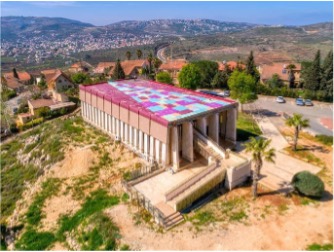
It’s still possible to see the ancient site of Shiloh today! They are excavating it. It’s interesting to know that the tabernacle resided here for 369 years (longer than the US has been a country) during the time of the Judges. This is where Hannah would’ve come to pray asking for a child, and where Samuel served, in the hill country of Jerusalem. (The tabernacle was longer in the hill country than in the desert!) In 1978, modern Israelis established a community here of Jews and now has 5,000 residents.  They built a synagogue for their place of worship, resembling the tabernacle which was there for so many years.

Also, interesting in the Proverbs of Solomon he exhorts his son, “Do not forget my law, but let your heart keep my commands, for length of days and long life and peace they will add to you. Let not mercy and truth forsake you; bind them around your neck, write them on the tablet of your heart, so find favor and high esteem in the sight of God and man.” (Proverbs 3:1-4) Most people quote the next verses 5 and 6, which are important, but I’ve for so long appreciated the verses prior and following those verses!


Do not be wise in your own eyes: fear the LORD and depart from evil. It will be health to your flesh, and strength to your bones.”  (3:7,8)

My son, do not despise the discipline of the LORD, nor detest His correction; Just as a father the son in whom he delights. Happy is the man who finds wisdom.” (3:11-13)

In the New Testament we can see the ultimate obedience of the Son of God in his time of difficulty in the face of death. “Father, if it is Your will, take this cup away from me; nevertheless, not my will, but Yours be done.” (Luke 22:42) Jesus was obedient until death.

-Stephanie Schlegel

Reflection Questions

  1. Are we struggling with any kind of disobedience that needs to be corrected today? It’s good to do a search and see if we need to be corrected and be willing to make that change.
  2. How can we teach the wisdom of Proverbs (and the rest of the Bible) to our children, grandchildren, and the children/youth and even adults of our church community? What happens when we don’t?
  3. What do we learn about the Heavenly Father in our Bible reading today? What do we learn about His Son Jesus?

I Love the LORD Because…

Old Testament: Judges 19 & 20

Poetry: Psalm 116

New Testament: Luke 16

As was discussed in two previous days’ devotions, Psalm 116 is another of the Hallel (literally, “Praise”) Psalms that are particularly associated with joyous events for Jews. They are prominent in the liturgies of the primary seasonal festivals such as Passover, and Psalm 116 is additionally part of the “Egyptian Hallel” subset of Hallel psalms. Psalm 116 does not make specific reference to Egypt, Passover, or the Exodus of Israel, but it is very straightforward to adapt its structure into a prayer of praise for the salvation of the nation of Israel. By connecting the psalm to that event, it is easily transformed into a pedagogical device that teaches the listener to acknowledge God for His grace toward Israel.

The Psalm is most naturally structured into three parts, but let us draw out the first two verses as an introductory dialogue (ellipsis of psalm text in bold):

I love the LORD. Why? Because He hears my voice, my supplications. Because He has inclined His ear to me. How should I respond? …. I shall call upon Him as long as I live.

The psalmist has provided a simple justification for the reader, all of us, to reverence and petition God: Because He hears me; the implication is that God answers those petitions. And because He hears me I should not fail to call on Him again and again.

Beginning in verse three, the psalmist builds upon the introductory dialogue to stretch and flesh out what could be the reason for calling on God and a more specific supplication: Cords of death wrap around me; the terror of the grave has come upon me; I found distress and sorrow. It is easy to see how this text was associated with Passover and the exodus: these words could be those of enslaved Israel, looking for deliverance from Egypt. Now look at verse four: Then I called upon the name of the LORD… “Save my life!” Taken in association with the enslavement in Egypt, these are the collective words of Israel, longing for deliverance, longing for God to “Hear my voice and incline His ear to me” (v 1). Verse four ends the first part of the psalm. 

The second part of the psalm does not begin with a description of the salvation desired by the writer (later usage: the nation of Israel), but instead utilizes another introductory statement: Gracious is the LORD .. our God is compassionate … the LORD has dealt bountifully with you. (vv 5-7). Only in verses 8-11 is the desired salvation described. The psalmist acknowledges God for who He is before getting to specifics about what He has done. Cast as part of the Hallel, we have Israel 1) acknowledging God as LORD and 2) thanking God for salvation from Egypt. To see a record of a similar acknowledgment, take a look at Exodus 15, a poem or song of adoration sung by Moses and the Israelites after passing through the sea.

Finally, beginning in verse 12, the psalmist builds out eight verses to answer the question What shall I render to the Lord? It is the question that must be asked after reflecting and acknowledging what He has done. And the answer, given in the text, is a catalog of options for worship and reverence toward God.

When the psalm is sectioned as outlined here, one can see how it was adapted for the celebration of Passover. It provides context (terrible circumstances, like Egypt) and a call for salvation, it identifies the LORD God as the agent of deliverance, and then provides options for adoration of God. Imagine sitting around a table, each member of a family saying or offering (perhaps competitively?) an option for active reverence: “I shall lift up the cup of salvation” (the mealtime allusion is especially apt in relation to Passover), “I shall pay my vows to the LORD” and “I’ll pay my vows in the presence of all His people.” The point is that the reverence, acknowledgment, and worship derive directly from the active role that God takes (took!) in deliverance from the circumstances of verse three.

Psalm 116 is a wonderful outline of one context for the why and what of thankfulness toward God: I may be in terrible circumstances, but the God that is gracious and compassionate can and will rescue me. In response, I bow to Him in reverence and worship, declaring my thankfulness to Him in the presence of others.

-Dan Siderius

Postscript

The Psalms, as poetry, always carry some underlying structure, though perhaps lost in the translation from Hebrew to English. One of the features of many psalms that I appreciate is doublet structure, in the form of question-and-answer. For example, Psalm 116:1:

Question: I love the LORD

Answer: Because He hears my voice

These doublets can be used to impart rhythm to the reading of certain psalms. One way to take advantage of the inherent rhythm is to speak the psalms antiphonally, where one person reads the first part of the doublet and a second person reads the response. Another option is to incorporate movement, by walking through the first half of the doublet, pausing, and then resuming with the second half. It can greatly liven the Psalms!
If you are interested in reading the Psalms whose translation purposefully retained rhythmic and melodic elements, I encourage you to use the Coverdale Psalter (e.g., Psalm 116: https://psalter.liturgical-calendar.com/en-emodeng/Coverdale/116) or its newer revision, the New Coverdale Psalter (available for viewing online: https://bcp2019.anglicanchurch.net/index.php/downloads-pdf/).

Reflection Questions

  1. How would you finish the sentence/poem/song which begins, “I love the LORD because…”? Think on it, write it down, share it with the LORD. Who else could benefit from hearing your testimony of why you love the LORD?
  2. What are some options for how you can respond to the LORD? Write them down as well. Some responses, perhaps some we do most often, are not very good responses – if your list includes any poor responses you can cross them out now. Put a star next to a response you will work on today.

How do you show up?

Old Testament Reading: Exodus 9 & 10
Psalms Reading: Psalm 33
New Testament Reading: Romans 3

I was struck by verses 3-5 of today’s reading in Psalm 33.

3 Sing to Him a new song;

Play skillfully with a shout of joy.

4 For the word of the Lord is upright,

And all His work is done in faithfulness.

5 He loves righteousness and justice;

The earth is full of the lovingkindness of the Lord. (NASB 1995)

Are we singing the same old song of praise to God? The thoughts that stirred in me when I read this passage were that we are on a journey of getting to know God and His word is His love letter to us. If we are open to it, He is gradually revealing the beauty of His character to us. His word is truly “alive and active” (Hebrews 4:12, NIV). 

Furthermore, verse 8 reminds us that we should fear Him and be standing in awe of Him!

8 Let all the earth fear the Lord;

Let all the inhabitants of the world stand in awe of Him. (NASB 1995)

If we think about everything God has done and who He is, can we even help but do that? Well, I do think about Moses though from the reading earlier in the week. He seemed to lose sight pretty quickly of the majesty of God and that was evident in the way he communicated with God. He was showing up on holy ground with filthy sandals. However, some self-reflection compels me that I sometimes show up with filthy sandals on and don’t always remember to render the reverence God is due.

The contrast between David and Moses keeps revisiting my mind and heart, so maybe that’s a message God really needs me to hear and maybe you do, too. How are you showing up before God? Are we signing a new song of praise that can only be fueled by an intentional quest of getting to know Him more intimately. Otherwise, we will keep singing the same old song in those same old dirty sandals.

-Kristy Cisneros

Reflection Questions:

  1. What are some new areas you can praise God in? 
  2. What new things have you learned about God’s character in this year’s reading so far that you could praise Him for?

Rest in Peace

Thursday, January 5, 2023

Old Testament Reading: Genesis 3 & 4

Psalms Reading: Psalm 4

New Testament Reading: Matthew 3

Cheese. If I had to pinpoint a single food that will assure tossing and turning, vivid dreams, and even a bit of snoring, all it takes is a serving size before bed and a restless night is almost guaranteed. Nevertheless, if cheese alone caused distress in my sleep, it simply would take some discipline in my diet to cure this issue. My resting is subjected to more interruptions. The rumblings of my mind often disturb the counting of sheep more than the rumblings in my gut. Thinking about the stresses of work, school, family or reliving the failings of my day can be the late night double feature playing inside my head. Without the perspective that comes from God, it is hard to find rest.

“Then the Lord said to Cain, “Why are you angry? Why is your face downcast? If you do what is right, will you not be accepted? But if you do not do what is right, sin is crouching at your door; it desires to have you, but you must rule over it.” Genesis 4:6-7

“Tremble and do not sin; when you are on your beds, search your hearts and be silent. Offer the sacrifices of the righteous and trust in the Lord.” Psalm 4: 4,5

Like Cain, the source of this restlessness often stems from some type of disconnection from God. We are hanging on to something that the eternal God has made clear is His area of reckoning.  Our past. Our future. Our sin. Our fear. Our stress. Our anger. All of these are the cheese that is gumming up the works of the rest we can find in God even when we are weak and heavy laden. Continually turning towards the issues provides anything but relief, further stalling your slumber.  Furthermore, sin is waiting outside our door when we choose to act without the “green light” of God’s will. Instead of searching your finite mind for an answer, humble yourself and seek the face of the infinite God. 

This works well beyond the confines of your covers. It can be found behind a steering wheel when you are driving away from another argument, sitting at a desk reminded of the endless list of things that you won’t get done today, or kneeling behind a closed door drowning in depression of loss. The solution is the same in all situations: worship God Almighty.  When we are reminded of who He is, we don’t have to hold the answer because He has readied one and is holding onto us. While it’s possible to receive revelation in these moments (James states that our God gives wisdom generously to all without finding fault), the answer we may receive is His presence into our mercy, fears, and shortcoming, which is the relief we so desperately need to quiet our minds and catch a few winks. The silence is not rejection or a stalling tactic. The silence is the peace that comes from trust in the Lord so you can rest in peace.

“In peace I will lie down and sleep, for you alone, Lord, make me dwell in safety.” Psalm 4:8

-Aaron Winner

Reflection Questions

  1. Where could your life use a little more peace? Where have you looked for it?
  2. What do we learn from the narrative of Cain and Abel regarding peace, and also the lack thereof? What do we learn from David’s example in Psalm 4?
  3. In your Bible reading today, what do you discover about God and his character? Thank Him for it.

Breaking Out Into Song

Revelation 15

Wednesday, November 30, 2022

Oddly enough, as I read through Revelation 15, I thought of so many Disney movies. No, not the fictional characters or the talking animals. Instead, the random break out in song no matter what else is going on or crazy circumstances that they are in. 

We are given the picture of the angels holding the plagues that would complete God’s wrath –  and then take a look to the left, a song breaks out and all those that were singing had harps that were given to them by God. Timing seems pretty odd with the upcoming events about to take place.

They are singing 2 songs – both redemption songs. One like the one that Moses sings after He had freed them from slavery in Egypt and the other a saving from death and destruction He provided through Christ. These songs are giving God glory and praise for what He has done. 

It doesn’t matter what is happening around them, the singers have reason to sing. They have been saved by an amazing conquering God. We too have reason to sing. It may seem weird to break out and sing at random moments but I think that is a glimpse of the kingdom. We will sing praises to the God that is worthy to be praised.

The angels are about to spread the plagues and the redeemed are singing to their God. 

Not to make light of these events foretold, but our world at times may feel like a plague is upon us. We still have reason to sing. Never miss an opportunity to sing praises to our God. Don’t let the distractions of this world get in the way of our ultimate purpose; to worship the one that sets us free. 

-John Wincapaw

Reflection Questions

  1. How can you practice giving God praise and glory even in the midst of scary, overwhelming or unknown circumstances? How can you bring glory to His name in the midst of your activities?
  2. How does music help us display our emotions?
  3. Create a short (or long) song of praise to God, using the song of Revelation 15 as inspiration. What do you praise Him for? Do you fear Him as well (Revelation 15:4)? Why?

A Hero Shot

Revelation 5

Sunday, November 20, 2022

I think that Revelation 5 sets up a “hero shot” for us, as a film director might express it. A moment when we really get to be happy with who the main characters of the story are. I don’t expect us so much to explain all the details as to take it in as an image. We are allowed to see Jesus exalted, set apart for how great and powerful and significant he is.

Chapter four has already laid out the main setting, with God in heaven in the midst of thunders and voices, adored and honored by beasts and elders. The start of chapter five focuses in on the hand of the one in the throne (God, of course) – John sees in God’s hand a book covered in writing and sealed with seven seals. Maybe the book was always there and is only just now noticed. Or maybe the book has just emerged, as a gift or challenge or whatever role it takes. And the question is ‘who can open this book,’ and some time must pass because the answer comes back that no one can. No one anywhere is found capable of that act. And in his vision John understands the importance for this book which is being offered by God to be able to be opened, because he weeps.

But John is then told by one of the 24 elders not to weep, because the Lion of the tribe of Judah, the Root of David (two descriptions of Jesus as the Messiah) had prevailed, and would be able to open the book and its seals. (The seven seals themselves are finished being opened by chapter 8, and of course we could view that as setting off the further sequences of the seven trumpets and bowls, but notice that the book itself may be seen as a separate issue which involves a larger scope of God’s intentions.) But John is not shown a lion, but a lamb looking like it had been slain. The one who died for us, alive again and forevermore, victorious, ruling and serving.

He took the book, and the beasts and elders took up a new song proclaiming his worthiness. The lamb redeemed us to God, by his blood, out of every kindred, and tongue, and people, and nation. He is worthy to receive power, and riches, and wisdom, and strength, and honour, and glory, and blessings.

The scene described in this chapter shows us human history in the balance. It shows God providing the right weight to allow things to swing to our redemption. There may be no literal moment in history that this scene matches to, but the scene John describes allows us to see what God has done for us, and to praise Him for it. And it allows us to honour Jesus for what he has done for us. And of course they both continue to work for us. On our own we would never have been able to change the world to what it needs to be. God loved us so much that He gave us what we needed to save our lives, and to reshape our world.

Lord, thank you for your awesomeness. Thank you for allowing us the blessing of seeing some portion of your glory, in your creation, in the scripture, in the blessing of your Spirit in my life, in the work of your Church. Please allow our trust in you to continue to grow. Let us raise our hearts and our words in praise to your name and the name of your Son. Thank you for so carefully preparing and guiding Jesus that he could do what he has done for our lives, and for this world. Amen.

-Daniel Smead

Reflection Questions

  1. What do we learn about God in Revelation 4 & 5? What do we learn about Jesus? What are their similarities and differences?
  2. What is your favorite part of Revelation 5? Why?
  3. What do you praise God for? Tell Him – and others. How will you honor Jesus for what he has done for you and the world?