God’s Truth and Way – Not Ours

Deuteronomy 11-13

Chapter 12 is the beginning of a new set of comprehensive laws that take up the bulk of the book of Deuteronomy.  Today we read about the specific ways in which God desired His people to worship. He called them to worship in His good and perfect way, not in the ways of the surrounding nations. The Israelites were instructed to destroy any false altars and worship only where God had chosen. This was about doing what was right in God’s eyes, rather than every man acting on his own whims or false morals.

You shall not worship the Lord your God in that way. But you shall seek the place that the Lord your God will choose out of all your tribes to put his name and make his habitation there. There you shall go. – Deut 12:4-5

You shall not do according to all that we are doing here today, everyone doing whatever is right in his own eyes, for you have not as yet come to the rest and to the inheritance that the Lord your God is giving you. – Deut 12:8

Chapter 13 issues a strong warning against abandoning their commitment to the one true God for a false god. It is warned that there will be false prophets and dreamers who can perform signs or wonders, but that they must not fall for such tricks and deception. It is even warned that if your family member whispers to you suggesting that you serve other gods, you must not listen to them. In fact they were instructed to kill them. Fortunately for us, such violence is no longer expected in these cases, however, discernment and steadfast loyalty to our Creator are expected of us. In today’s age, we are instructed to be aware of false prophets, and even false messiahs, as Jesus warns in Matthew,

Then if anyone says to you, “Look, here is the Christ!” or “There he is!” do not believe it. For false christs and false prophets will arise and perform great signs and wonders, so as to lead astray, if possible, even the elect. – Matt 24:24

Today, we may not have physical altars to tear down or false priests to execute, but our hearts can easily become divided. We are tempted to blend worldly influences with our worship, allowing distractions, personal desires, or cultural norms to shape our devotion rather than the truth of God’s word. In a world full of voices claiming to speak truth, it is imperative that we remain anchored in scripture. Even generally positive things, such as success, relationships, or even religious experiences, can become idols if they pull our hearts away from God. True devotion means prioritizing Him above all else, not in the ways we see fit, but in the ways He has commanded us.

-Isabella Osborn

Reflection Questions:

  1. Are there any influences in your life—cultural, personal, or societal—that may be shaping your faith or outlook in ways that are not aligned with God’s Word?
  2. How can you actively practice discernment in recognizing false teachings or influences that lead you away from total devotion to God?
  3. In what ways can you ensure that your worship and daily life reflect God’s truth, rather than personal preferences or societal norms?

Choose God

Deuteronomy 8-10

We all know the Israelites had their share of ups and downs, more often than not due to their own iffy decision making. This is where God makes it indisputably clear that He’s not cool with that. He never has been, and though they made a narrow escape from His righteous wrath once, they have to make a change. Moses reminds them of the abundance of evidence they have of God’s provision. They have no reason to doubt His guidance, or His love. They need only obey the very simple, very clear instructions laid out before them, and they will thrive in the Promised Land. Moses is really leaving no room for misunderstanding; if they remember what the LORD has done for them and follow His commandments, blessings will flow. If not, destruction awaits them. (Deut 8:6-20)

It is also made abundantly clear that any blessings they have previously received were by no means owed to them, that the great nations God delivered into their hands were not because of their own righteousness, but rather because of the rival nations’ wickedness. God had a covenant to keep with the Israelites, and He chose to blot out some evil along the way. 

 It is not because of your righteousness or the uprightness of your heart that you are going in to take possession of their land, but it is because of the wickedness of these nations that the Lord your God is driving them out from before you, and in order to confirm the oath which the Lord swore to your fathers, to Abraham, Isaac, and Jacob. – Deut 9:5

Chapter 10 expresses that God desperately wants the wholehearted devotion of His people. No other being is worthy of our praise. We cannot divide our allegiance between God and the things of this world that compete for our loyalty; Yahweh’s unmatchable greatness demands our reverence.

You shall fear the Lord your God; you shall serve Him, and cling to Him, and you shall swear by His name. He is your glory and He is your God, who has done these great and awesome things for you which your eyes have seen. – Deut 10:20

Just as the Israelites had to be repeatedly reminded of God’s provision and grace, it is of such importance that we remind ourselves (and each other) on a regular basis that even though we haven’t (and can never) earn such a reward, we serve a God who has endlessly displayed His immense love for us and His perfect plan for us. It is not by our own righteousness that we are saved, but we are saved nonetheless. And furthermore, we are loved beyond all comprehension. Who else is worthy of our praise? Who else is worthy of our life-long commitment? Even in today’s world, there are so many things competing for our attention and fealty. We must make the same decision the Israelites were faced with in today’s reading, the daily decision to choose God over all else. Although we don’t deserve His love, He is the only thing that deserves ours. 

-Isabella Osborn

Reflection Questions:

  1. How has God provided for you in ways that you may have overlooked or taken for granted? Take a moment to reflect on His faithfulness in your life.
  2. In what areas of your life are you tempted to divide your loyalty between God and the things of this world? How can you realign your heart to give Him your full devotion?
  3. If our blessings are not earned, but given by God’s grace, how should that shape your perspective on gratitude, humility, and obedience in your daily walk with Him?

Listen – and Act Accordingly

Deuteronomy 5-7

These 3 chapters continue to reiterate the importance of REMEMBERING. Moses is addressing the new generation of Israel, preparing their hearts to enter the long-awaited Promised Land. We read in chapter 5 the repeated Ten Commandments, and Moses’ encouragement to follow these laws that bring life and blessing, “that you may live long in the land that you shall possess.” The Israelites are repeatedly reminded throughout these chapters that these laws are meant to serve them for generations to come; Moses emphasizes over and over again the cruciality of ensuring that their children and their children’s children not forget the foundation provided to their ancestors via these laws. 

Chapter 6 is home to one of the most well-known prayers in the Bible, the Shema Yisrael, which has remained embedded in Jewish culture to this day. Ancient Jews combined Deuteronomy 6:4-5 with other Torah passages (Deut. 11:13-21; Num. 15:37-41), reciting the words every morning and every evening. This prayer became ingrained in Jewish tradition, and was widely practiced in the Second Temple Period. Jesus declared it the greatest commandment in the Torah in Mark 12:29-31. 

“The most important one,” answered Jesus, “is this: ‘Hear, O Israel: The Lord our God, the Lord is one. Love the Lord your God with all your heart and with all your soul and with all your mind and with all your strength.’ The second is this: ‘Love your neighbor as yourself.’ There is no commandment greater than these.” – Mark 12:29-31

Many of us memorized these verses at a young age. What gives this prayer such immense significance? Well, to the Jews at the time (and through history), it is a pledge of allegiance to God, emphasizing three main ideas:

  • Monotheism: The Shema asserts that there is only one true God, distinguishing Israelite faith from the surrounding polytheistic religions of the ancient world. (Deut 6:4)
  • Covenantal Relationship: The Shema affirms Israel’s special relationship with God, requiring wholehearted love and devotion. (Deut 6:5)
  • Daily + Generational Remembrance: It is recited morning and evening, reinforcing a life centered on God’s commandments, and ensuring that it is passed down to future generations. (Deut 6:6-9)

These truths remain relevant to us today, and this prayer is a beautiful, concise way to remind ourselves what Moses stressed throughout these passages. 

Something interesting about the opening line of the Shema, “Hear, O Israel,” is that in Hebrew, “hear,” or “shema,” does not only mean to listen. It means to listen and then act accordingly. It is directly tied to action. And the word “love,” or “ahavah,” similarly means to act in love. It’s more than just a feeling; it’s active obedience and loyalty. It’s a call for the Israelites to be faithful to their covenant with Yahweh. We, too, have a covenant with Yahweh, a renewed covenant with new laws and a new Promised Land. But as Jesus clarified, this command remains true, and we must make the active decision to live out the Shema each and every day. 

-Isabella Osborn

Reflection Questions:

  1. What are some practical ways you can incorporate Scripture into your daily life to ensure that you keep them on your heart, as to better remember and live by God’s Word?
  2. The Shema calls us to love God with everything we are. How can you intentionally cultivate a deeper love for Him in your daily life?
  3. Just as Israel was called to pass down God’s truths, we are called to disciple others. Who are you investing in spiritually? How can you be intentional about sharing your faith—whether with your family, friends, or community?

Test Your Memory

DEUTERONOMY 3-4

“Deuteronomy” is derived from the Greek word deuteronomion, meaning “a second law.” This whole book is meant to be a second edition of God’s laws, compiled of commandments received at Mount Sinai as well as a few additional ones. The first four chapters of Deuteronomy set the stage for these laws by providing reminders of why the Israelites serve the God of Abraham, and the importance of keeping His statutes. 

Moses begins this book emphasizing to his people the importance of remembering. He reminds them of the many instances in which God delivered them from their enemies and gave them new lands. As we read yesterday and continue to read today, chapters 1-3 serve as a brief overview of Israel’s recent happenings. In chapter 4, Moses switches gears and opens the book with a call to remembrance, and a command to obey. (Deut 4:1-5, 4:9-10, 4:14, 4:23, 4:30) 

Only be careful for yourself and watch over your soul diligently, so that you do not forget the things which your eyes have seen and they do not depart from your heart all the days of your life; but make them known to your sons and your grandsons. – Deut 4:9

Moses is reiterating that the laws provided previously in Exodus weren’t just a temporary set of guidelines or a mere suggestion; they were meant to be kept. These laws are the foundation upon which God’s chosen people will be set apart, unique from the rest of the world. (Deuteronomy 4:5-8, 4:32-40)

So keep and do them, for that is your wisdom and your understanding in the sight of the peoples who will hear all these statutes and say, ‘Surely this great nation is a wise and understanding people.’ For what great nation is there that has a god so near to it as is the Lord our God whenever we call on Him? Or what great nation is there that has statutes and judgments as righteous as this whole Law which I am setting before you today? – Deut 4:6-8

Israel’s obedience and devotion to the statutes of the LORD serve a larger purpose. Not only will these laws keep Israel on the right track in terms of their own safety and wellbeing, but they will also distinguish God’s people from the rest of humanity as a righteous and wise nation. Ultimately, despite many roadblocks and failures, these laws will sustain Israel for 400 years, allowing them to become the nation from which the Messiah is born (as prophesied later in Deuteronomy 18:15-19).

Moses makes it abundantly clear to his people that God will not forget His covenant with them, therefore it is crucial that they do not forget either. He warns them that they will stray, but that they serve a merciful God, a loving Father who patiently waits for His children to return to Him. (Deut 4:25-31)

For the Lord your God is a compassionate God; He will not abandon you nor destroy you, nor forget the covenant with your fathers which He swore to them. – Deut 4:31

Though Christ has since set a new system in place, consisting of new laws under the new covenant, the main ideas that Moses expressed in these scriptures remain true for us today. First, we must remember God’s promise to one day restore the earth (Gen 3:19), as well as the commands His Son gave generations later under the new covenant. Second, God’s commands are not meant to needlessly restrict us, but to guide us into a life of blessing and purpose. When we obey, we reflect His wisdom and goodness to the world around us. And lastly, that God knows we live in a broken world; He sees our darkest desires and our biggest downfalls. But even when we stray from His ways, He waits for us to return to Him, arms open and heart yearning to pull us into His loving embrace. 

-Isabella Osborn

Reflection Questions:

  1. How can you actively remind yourself (and others) of God’s goodness, His commands, and His promises?
  2. Moses emphasized that God’s laws were meant to set Israel apart—how does living according to God’s principles set you apart in today’s world?
  3. How does knowing that God patiently waits for us to return to Him impact the way you approach repentance and restoration in your relationship with Him? How can this truth shape the way you view both your own failures and those of others?

Looking Back and Looking Ahead

Deuteronomy 1-2

A time of reflection and recap of events as the Israelites prepare to enter the Promised Land. “For the LORD your God has blessed you in all the work of your hands. He knows your going through this great wilderness. These forty years the LORD your God has been with you. You have lacked nothing. (2:7) They’ve LACKED NOTHING?! They probably didn’t agree with that, but it shows how God provided for them the basics, which is ample for a person. He literally gave them their daily bread.

Moses reminded them, “The LORD your God who goes before you will Himself fight for you, just as He did for you in Egypt before your eyes,and in the wilderness, where you have seen how the LORD your God carried you, as a man carries his son, all the way that you went until you came to this place. Yet in spite of this word you did not believe the LORD your God.” (1:30-32)

It’s amazing that we can do the same thing like the Israelites at times, cry out to get out of a difficult situation (Egypt), then afterwards when we’re out we complain again. But if they would’ve trusted that God would fight for them they could’ve been spared the long difficult 40 years. The wilderness was the ONLY way to get to the Promised Land, and their lack of trust made it even harder (and longer).

Not one of these men of this evil generation shall see the good land that I swore to give to your fathers, except Caleband Joshua who wholly followed the LORD.” (1:35) Even Moses wasn’t allowed to enter as the LORD was angry with him too (or, had been angry and was following through with consequences).

Despite failures and difficulties Moses pressed on with the people until his departure. This reminds me of parenting! It’s difficult and rewarding! One of my main parenting verses that encouraged me over the years, besides Deut. 6:4-7, is 1 Peter 4:12,

Above all, keep loving one another earnestly, since love covers a multitude of sins.

– Shalom y’all, Stephanie Schlegel 🙂

            (From Israel and Tennessee:)

REFLECTION QUESTIONS

1. Have you had to endure a difficult situation for years? How did God sustain you through it?

2. Is there an issue you’re dealing with that if you’d wholly trust God, the situation would be better? Are you taking matters into your own hands or trusting God with it?

3. Reflect over this last month how God’s provided for you and thank Him for it!

4. How does looking back better prepare the Israelites for looking ahead? How can it benefit you?

Places of Refuge

Numbers 34-36

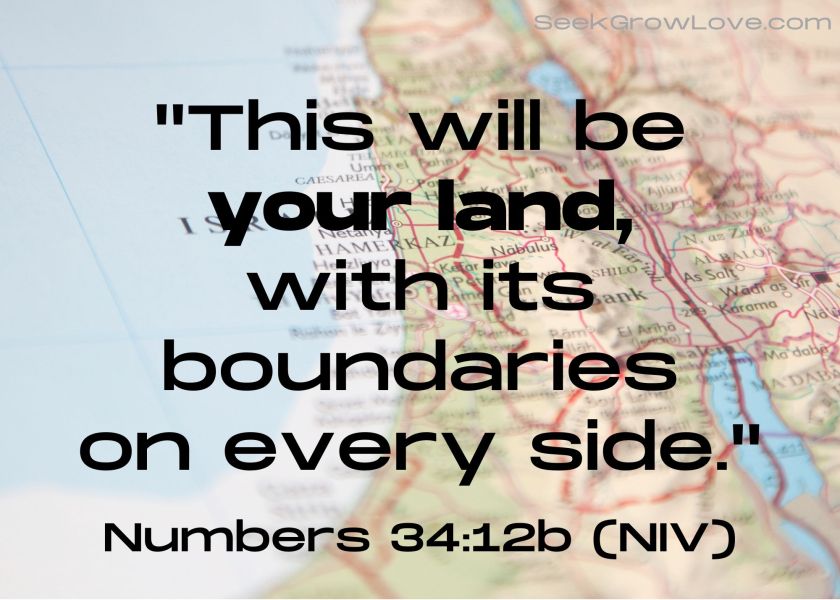
Want to see a map of the borders of the Promised Land?! My husband, Bill Schlegel, wrote the Satellite Bible Atlas (available on Amazon). It’s filled with real photographed maps that he’s added the sites and commentary to.  (Sounds like the way I’m doing these devotionals, but he’s much more articulate;). You can go further in depth to your Bible readings with this atlas to help, especially in the upcoming books of the judges and kings. 🙂 He wrote it for the students to use on field trips and classes in Israel.

In the midst of defining the border, God appointed cities for refuge for within. “These six cities shall be for refuge for the people of Israel, and for the stranger and for the sojourner among them, that anyone who kills any person without intent may flee there. (35:15)  Those must’ve been interesting cities with innocent and guilty persons awaiting judgment. Some probably took advantage of them and for others they found refuge they needed .

Nowadays our homes can be a place of refuge. As a mother of five I can testify to that, receiving family members after long days of work, sporting events, school, and other hard tasks. It’s comforting to find refuge in one’s home and provide that for others too looking for peace.

A hammer can build things up and it can tear things down. “The wisest of women builds her house, but folly with her own hands tears it down.”  Proverbs 14:1 It’s important we use our tools to build and help others rather than tear them down.

Another place we can greatly find refuge is in God. “The name of the LORD is a strong tower;  the righteous man runs into it and is safe.” Proverbs 18:10 Especially after coming to the one God faith this verse means so much more to me. His personal name YHVH/LORD is strong and stable, mentioned some 6,828x in the Old Testament. That’s one out of every four verses making it 25% of the time. It’s powerful just seeing it so many times. Reading the Bible on a regular basis helps one to refocus and gain strength and peace. We can take refuge in God and His Word.

-Stephanie Schlegel

REFLECTION QUESTIONS

1. Where do you find refuge on a daily basis? How has it brought you relief?

2. Is your home a place of refuge for others? Maybe there’s a hurting person you can invite over this weekend to share a meal or coffee with?

3. Is the name of the LORD/YHVH a strong tower for you? What’s a way that could improve that even more?

Lessons from a 3,400 year old Travel Journal

Numbers 31-33 

Misunderstandings! Ever been misunderstood and frustrated?! It’s what happened to Moses and the people he led. The LORD told Moses to take vengeance on Midian. Among them Balaam was also killed with the sword, but the women were kept alive. This upset Moses! The women through Balaam’s counsel caused the Israelites to sin in baal worship. … Moses worked out a solution.

Then two of the tribes wanted to settle east of the Jordan River with their abundant livestock. This upset Moses again! How could their brothers go to war while they sat there?! After a lengthy response he heard their intended promise to cross over with them to help them fight and after return to their livestock and cities.

It can be frustrating to be misunderstood. That’s why it’s important to listen and be patient with others. “Know this, my beloved brothers: let every person be quick to hear, slow to speak, slow to anger; for the anger of man does not produce the righteousness of God.” James 1:19

Lastly, let’s not skip over the AMAZING travel journal of chapter 33, and like my Bible geography teacher/husband would say, “It shows these are real places and a real God.” Many of these places are still called that to this day, and it’s from some 3,400 years ago! Pictured above on the left is an aerial view of the Jerusalem/Jericho area looking to the north of Israel with snow capped Mount Hermon on the northern tip.  Did you know that there’s a ski resort up there with 14 ski runs and 5 chair lifts?! YES! One winter on the same weekend one of our boys was skiing up there with friends while the other was snorkeling in the Red Sea (on the southern tip)! Don’t misunderstand Israel, it’s a BEAUTIFUL place! 🙂

-Stephanie Schlegel

REFLECTION QUESTIONS:

1. Do you get angry when you’re misunderstood? How can you be quicker to listen to the person before responding in words and anger?

2. How do you clarify yourself? In anger? With patience? Kindly? Today, try to respond better to a misunderstanding, and ask God’s help to do so.

3. Have you ever kept a travel journal of the places you’ve been? What would people think if they found it 3,400 years later?! :0

Holy Holidays

Numbers 28-30 

The biblical holidays are wonderful and believe me, I knew almost nothing about them growing up in Indiana until I lived in Israel. 🙂 I bite my tongue from saying, “Jewish” holidays as they are biblical holidays. So much meaning behind them, more so than most pagan based American holidays. One of the harder parts about leaving Israel was leaving the holidays.

In our passage today many sacrifices are named with the holidays, which no one is doing now. Also, the holidays were days of rest, set apart from other days. These holidays are still celebrated without sacrifices but with rest, stores close down!! I’m going to briefly give you a taste of these biblical holidays and how they’re celebrated today.

Shabbat: Late every Friday afternoon public transportation, sport games, and stores CEASE, yes, the MALL included, to usher in the shabbat a day of REST. Families eat a nice meal together having leftovers for the next day so no one has to cook/work.

Passover: Feast of Unleavened bread is the first month of the biblical year, which makes sense the new year starts in the spring with new growth blooming. It’s the oldest holiday still celebrated in the world, over 3,400 years! And it’s the BIGGEST holiday, (like Christmas is in America).

Feast of Weeks: Seven weeks after Passover the firstfruits are celebrated. Kids wear white and carry a small decorated basket of fruit to share with others.

Day of Blowing: People blow shofars (ram horns) throughout the day. It’s a warning to repent for the next 10 days before the Day of Atonement.

Day of Atonement: A day of repentance with fasting. The whole country SHUTS DOWN, no flights, vehicles on the highway, EVERYTHING is CLOSED… to REPENT. It’s quite amazing to experience such a national “holiday.”

Feast of Booths: A week long holiday of eating and sleeping in a booth outside. Kids often decorate them with paper chains and pictures.

God appointed these holidays for a reason and for our good. Take a moment to reflect on them. It’s hard to implement them in a society that doesn’t acknowledge them, but it’s still good to be aware of these biblical holidays and their meaning. Maybe the modern sacrifice would be to take time out and rest on these holidays and think about and thank God for what He has done. The first three have been fulfilled in the first coming of Jesus, and the last three with his second coming!

“For the Lord himself will descend from heaven with a cry of command, with the voice of an archangel, and with the sound of the trumpet of God.” 1 Thes. 4:16

-Stephanie Schlegel

REFLECTION QUESTIONS:

1. Which holiday do you like the best? Which one would you like to celebrate?

2. What’s one way your Shabbat rest day could be changed/improved to make it more restful?

3. A holiday of repentance and fasting?! Maybe pick a day within the next week that you could fast a meal and pray for forgiveness to God and others possibly offended.

Names

Numbers 26-27 

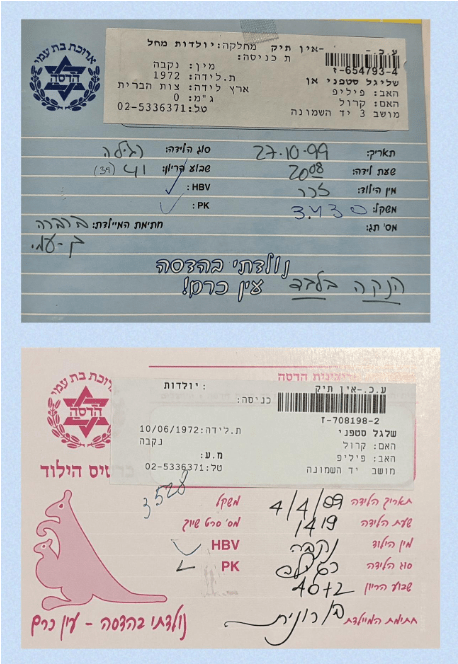
A census, a bunch of Hebrew names… seems difficult right?! More so in English, it’s easier in Hebrew, and the names have so much meaning! 🙂  When I first lived in Israel and learned Hebrew, names were difficult… Achinoam, Yonatan, Shaked! Hebrew names have meaning seen in the letters themselves, unlike English, so that makes it easier! It’s surprising how many adults I meet in America that don’t know what their name means.  In the Israeli hospitals where our children were born NO ONE ever asked what the new baby’s name was! The baby was identified by the mother’s first name and her mother and father. Then later named within 30 days after they were born according to their personality/character. They don’t measure the length of the baby either so as to not stretch it out after being curled up inside the womb.

Moses wasn’t allowed to lead these new people into the Promised Land. So he asked that God pick a new leader over the people. “Let the LORD, the God of the spirits of all flesh, appoint a man over the congregation who shall go out before them and come in before them, who shall lead them out and bring them in, that the congregation of the LORD may not be as sheep that have no shepherd.” (27:16,17)

The LORD chose Joshua, “a man in whom is the Spirit.”(27:18) Interestingly, the Hebrew name of Joshua is basically Jesus/Yeshua. They have the same meaning, the LORD saves. Like Joshua was chosen by God to lead the Israelites into the Promised Land, so Yeshua was chosen by God to lead all people into the Promised Kingdom to those who trust in him. Both were chosen to shepherd and lead the people.

“I am the good shepherd. The good shepherd lays down his life for the sheep.”  John 10:11

-Stephanie Schlegel

REFLECTION QUESTIONS

1. What does your name mean?! Have you seen any special connections in your name over your life span?

2. How can calling someone a bad name be hurtful? What effect does it have on people to call them a good name?!

3. What are we known for? Isn’t it a great compliment of Joshua that he was filled with the Spirit? May we be filled with the fullness of God and walk in His Spirit like Joshua did.

The LORD God: Past, Present & Future

Numbers 23-25 

Today’s chapters 23-25 (and 22) are like an action movie with a lot of suspense! Balak, King of Moab, looked out at the numerous Israelites camped nearby and was greatly afraid. He called upon a sorcerer to come and curse them, which God didn’t allow him to curse but blessed them! 

Interestingly, Balaam (sorcerer) was confronted three times to go, three times his donkey refused to proceed and was hit, and three times he built seven altars and sacrificed a bull and ram on each (21x). Not sure of the significance of the tresome repeats but does show the intensity of the situation!

The Spirit of God came upon Balaam and he blessed Israel three times. In the three different oracles a meaningful phrase struck me with each one.

  1. How can I curse whom God has not cursed? How can I denounce whom the LORD has not denounced?” (23:8)
  2. God is not man, that he should lie, or a son of man, that he should change his mind.”  (23:19)
  3. A star shall come out of Jacob, and a scepter shall rise out of Israel.” (24:17)

These biblical accounts are written in past, present, and future. God has not cursed or denounced the Israalites. God is not a man, nor past nor will be! Lastly, God will have a future dynasty in Israel.

This is not what Balak wanted to hear, but Balaam obeyed God’s command to only say what he was told to say. Unfortunately, he advised Balak further on how he could bring harm to Israel, and his advice unfortunately worked. The Israelite men were seduced by the foreign women to worship their gods, which brought great anger to the God of Israel. Sadly, more than 20,000 were killed in the plague as a result.

Do you have God’s number on speed dial? It’s easy to remember …Jeremiah 33:3

Call to me and I will answer you, and will tell you great and hidden things that you have not known.For thus says the LORD, the God of Israel.” 

He’s ALWAYS available, never sleeping anytime of the day.

-Stephanie Schlegel

REFLECTION QUESTIONS

1. Who do you call upon for help? Depends what kind of help we need, right?

2. What’s God’s “phone number?”  Do we go to the throne or phone when we need help?

3. Is there something today that you’re afraid of? What care needs to be cast upon Him today because He cares for you?