Our High Calling

Thursday – May 27, 2021

1 Kings 5-6, Acts 24

As Solomon’s reign continues, he begins to build the temple: the job promised to him by God through David. Solomon knows that this is his calling – and he wants to do it well. After David was told that he could not build the temple because of the blood shed on his hands, David amassed a treasure trove of building supplies for years. Even though temple building was not David’s calling, he still worked hard to make sure that he made Solomon’s task easier through his actions. 

One of the first actions that Solomon takes is to get the best lumber he could find. He goes to the king of Lebanon and asks for the cedars of Lebanon. Then, he began to build the temple – a process that lasted 7 years! 

Solomon knew that when God has called you to do something you make sure to do two things: (1) you give him the best of you first and (2) you complete the task assigned to you no matter how long it takes. Solomon didn’t let the difficulty of getting the cedars of Lebanon stop him from being sure to get the finest lumber. He also didn’t give up in the process of finishing the temple. He was committed to finishing the task he was assigned to well. 

In our lives, are you as committed as Solomon to completing the calling God has assigned to you well? We are God’s hands and feet in the world. Part of our testimony to the world is how well we complete our callings. “Let’s not grow weary of doing good” (Gal. 6:9). “Let’s finish the race we are running with endurance” (Heb. 12:1-2). 

~ Cayce Fletcher

Read or listen to today’s Bible reading at Biblegateway.com: Job 1-2 and 2 Corinthians 2 .

The Path to Life

Tuesday – May 25, 2021

1 Kings 1-2, Acts 22

1 Kings opens up with David’s final moments. His health begins to decline as turmoil grows in his kingdom. David’s sons had a history of defiance and wrongdoing, culminating in the story of Absalom’s revolt described in 2 Samuel 15. Absalom dies, and David mourns for him. In 1 Kings, we meet another of David’s sons, the next in line after Absalom – Adonijah. Adonijah is the heir apparent, the oldest surviving son. He begins to exalt himself in 1 Kings 1:5, saying “I will be king!” This Lion King-esque refrain has a darker tone to it. Adonijah was never truly promised the throne, and at the time he was saying this, his father was still alive. Instead of waiting for a peaceful transition of power, Adonijah seizes the moment of David’s weak health and begins amassing forces to take the kingdom by force. Adonijah’s greed for power leads to sin and death, as the revolt eventually spirals into his own demise. 

Adonijah walked down the path of foolishness. His rash actions were compounded by sinfulness and a total disregard for the law. He had to pay for all of his actions. But, in verse 6, there is an interesting statement: “But his father had never once reprimanded him by saying “Why do you act this way?” Adonijah did not commit these actions in a vacuum; he had a family, court, and religious leaders surrounding him. Who was speaking wisdom into Adonijah’s life? Encouraging him to make wise choices and reminding him of Absalom’s life – and what might happen if he doesn’t show patience in his potential ascension to the throne? David ‘never once reprimanded’ Adonijah, calling into question his wrong behavior. Instead, he allowed Adonijah to do what was right in his eyes. In doing so, Adonijah eventually walked towards his own death. David needed to provide guidance and discipline for Adonijah, and because of his refusal to do so, Adonijah caused turmoil and pain to himself and others. 

Discipline can seem like a scary thing. It’s definitely one of my least favorite parts of being a teacher. It’s complicated and sometimes painful to discipline others and be disciplined ourselves. But, discipline is a crucial part of being a disciple of Jesus. Hebrews 12:10-11 says, “10 [Our parents] disciplined us for a little while as they thought best; but God disciplines us for our good, in order that we may share in his holiness. 11 No discipline seems pleasant at the time, but painful. Later on, however, it produces a harvest of righteousness and peace for those who have been trained by it.” Discipline is such an important part of our sanctification. Essentially, discipline is the way that we call each other back to the way of righteousness and holiness. And, it’s the way that God calls us back to him. 

How have you experienced God’s discipline in your life – through his hand or those of your parents or church leaders? Remember, discipline can keep us from becoming an Adonijah, someone with no guardrails or guidelines for the right, wise way to live. Let’s pursue a righteous life together. 

~ Cayce Fletcher

Read or listen to today’s Bible reading at Biblegateway.com: Job 1-2 and 2 Corinthians 2 .

Victorious

May 24, 2021 – 2 Samuel 23-24, Acts 21

When David came to power, he had his work cut out for him. Part of his legacy was fulfilling the calling that God gave to the Israelites when they first came to the Promised Land. He was charged with taking the land. He was supposed to be strong and courageous, and over his lifetime, he proved to be a man of strong military prowess who doubled the size of the kingdom of Israel. 2 Samuel 23 describes the men who helped David make that happen. These are his mighty men, the elite warriors who single handedly won battles against the Philistines with God’s help. One warrior killed 800 men at one time with a spear. Another group broke into an enemy stronghold just to get a cup of water for David. Repeatedly, these men are described as strong, fearless. They ‘stood their ground’ against their enemies. When they faced them this way, ‘the Lord brought about a great victory’ against their enemies. 

In Acts 21, Paul is facing strong and terrifying enemies. In fact, he is told what would happen to him by a prophet in verses 11-12 when the prophet describes how he would be tied up and delivered to the Romans in Jerusalem. The people are begging him not to go to Jerusalem, weeping for the bitter end that they knew would come to Paul if he decided to go to the city. Paul shows his determination and willingness to follow Jesus no matter what when he replies: “What are you doing, weeping and breaking my heart? For I am ready not only to be bound but also to die in Jerusalem for the name of the Lord Jesus.” What a mighty and fearless response! Paul may have not been marching into a war with spears and swords, but he knew the spiritual battle he was facing that would have real – and very dire – implications for his health and well-being. But, it didn’t matter – he would do anything for the name of Jesus. 

We need to face our everyday battles with the same determination and strength, resting in the knowledge that God will bring about the victory if we stand our ground. We need to be strong and courageous, because God is right there with us in our battles. We will emerge victorious!

~ Cayce Fletcher

Read or listen to today’s Bible reading at Biblegateway.com: Job 1-2 and 2 Corinthians 2 .

Sunday – May 23, 2021

2 Samuel 21-22, Acts 20

In today’s Old Testament reading, 2 Samuel 21-22, we see David, a victorious king and man broken by sin, dealing with the legacies of previous leaders of Israel and the political unrest they left behind. In addition to this, we see fall out with the Canaanite peoples, who had remained in the promised land for a thousand years after Joshua and the Israelites were told to conquer it. The last few chapters of 2 Samuel function as an appendix; they list stories that occurred during David’s reign, in non-chronological order. 

In 2 Samuel 21, we find a brutal story that involves betrayal, sacrifice, and tragedy.  Earlier in David’s reign, there was a famine that lasted 3 years. David responds to this famine, recognizing it as discipline from God, by going to God in prayer. The reason God gave for the famine is because of Saul’s, the previous king, slaying of the Gibeonites – a people the Israelites had made a treaty with (Josh. 9:15-20). David goes to rectify the situation, and so the Gibeonites ask for seven of Saul’s male descendents to punish for Saul’s decisions. 

The seven descendents were handed over and killed. Heartbreakingly, Rizpah, the mother of two of the sons, goes to the place where her sons were killed and protected their bodies from the elements and birds from April to October. four months of a day-in-day-out vigil, through heat, cold, rain, and sun. Finally, David heard about what Rizpah had done, her love and dedication to her sons, and because of her actions, he decided to honor the memories of Saul and Jonathan – and Rizpah’s sons – by burying them in their family’s tomb. After all of this, the famine stops in the land. 

This story is hard to read, but it shows an important truth: Our legacy is determined by the small, everyday actions of our lives. Those small everyday actions build up into something that can make a profound impact on the lives of those that come after us. 

Because of Saul’s actions and his failure to consistently follow the law, he devastated the lives of both the Gibeonites and his own family. His legacy left a ripple effect of destruction that led to a famine in the entire land of Israel. That legacy of destruction was only stopped when another woman consistently showed love instead of violence, for both her sons and for God. Because of her actions, God answered the prayer for the land. 

What type of legacy are you building? How are you daily and consistently building up a legacy that honors God and provides hope and help to those around you?

~ Cayce Fletcher

Read or listen to today’s Bible reading at Biblegateway.com: Job 1-2 and 2 Corinthians 2 .

Positive Reactions to Negative Events

1 Samuel 29-31

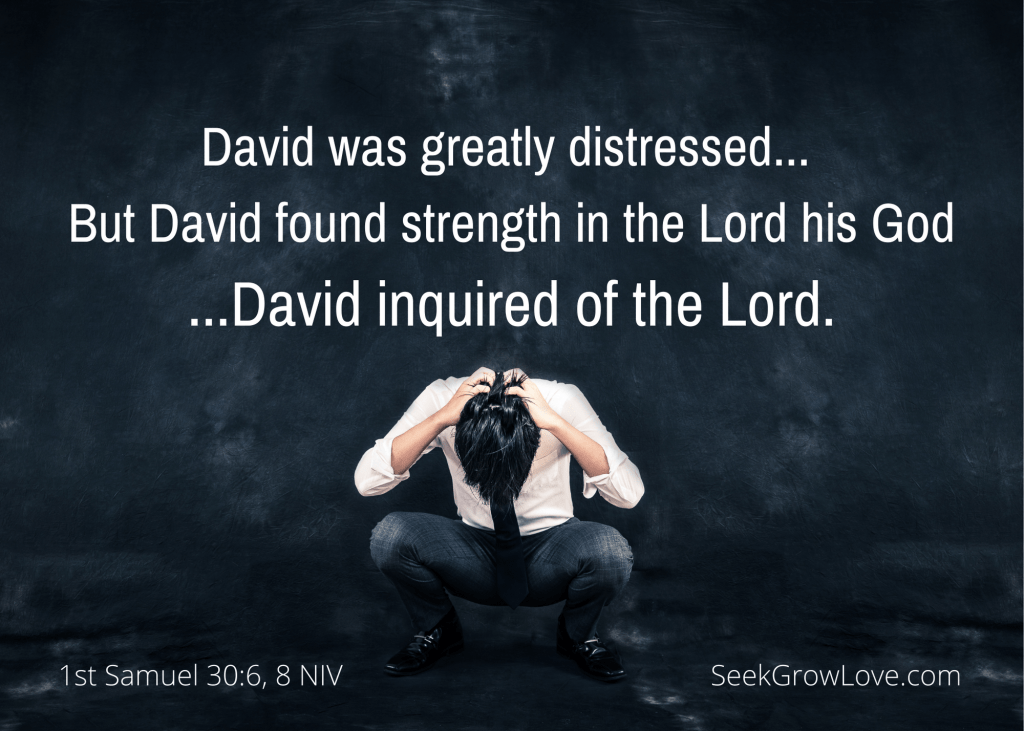
Today’s Old Testament passage continues the story of David and his men while they were living with the Philistines away from Saul. In 1 Samuel 29, David is about to go fight with the Philistines, but several of the Philistine leaders are worried that David is still loyal to Saul and will turn against the Philistines in battle. So David and his men are sent back to their home, Ziklag. Unfortunately, “When David and his men reached Ziklag, they found it destroyed by fire and their wives and sons and daughters taken captive” (NIV, 1 Samuel 30:3). This event alone would be quite devastating to David, but in addition, some of David’s men were then considering turning on him and stoning him based upon the recent misfortune. 

This rough series of events would be hard to get through alone, but verse six states that “David found strength in the LORD his God” (1 Samuel 30:6). His positive reaction to these negative events can be used as an example. Instead of immediately taking revenge on the Amalekites for destroying his home and taking his family and friends, he decides to ask God first. David’s initial response can be used in many situations to choose the wisest action instead of simply reacting in the first imaginable way that is likely unwise. 

After God responds, David and some of his men successfully chase down the Amalekites and get everything back that was stolen. Although they retrieved all their possessions again, some of the men weren’t willing to give back part of the goods to those that didn’t participate in the raid. However, David’s response to this situation is again a positive example that can be applied to many other situations, even today. David disagreed with those men and instead insisted that even those that didn’t participate should receive part of the plunder. He argued that what they had received had actually come from the LORD, not from those that had actually participated in the fight. Further, David didn’t just divide up the plunder between him and his men, he also then gave gifts to others that had been kind to them in the past. As one people united with a common goal to serve and follow God, it is important to remember to share the possessions that have graciously been given by God.

-1st time Devotion Writer who Preferred being Anonymous

Today’s Bible reading passage can be read or listened to at BibleGateway here – 1st Samuel 29-31 and Acts 9

The Birth of the Messiah

Matthew 1 and Luke 2:1-38

The coming of the Messiah is one of the greatest desires of pious Jewish people. The desire for the Messiah to come is encapsulated in modern times by a statement of the 12th century Jewish teacher, Moses ben Maimon (Rambam): “I believe in perfect faith in the coming of the Messiah”. By the promise of God, the Messiah would be a descendant of King David.

Two Gospels, Matthew and Luke, record the birth of the Messiah (in Greek translation, “Christ”). As we saw in Luke 1, the birth of Messiah was proceeded by a visit from the angel Gabriel to a Jewish maiden, Mary (Miriam in Hebrew) in the Galilean town of Nazareth. Gabriel announced to Mary that her child would be the one to inherit the throne of David. Like Solomon, he would be called the Son of God. After the child was born, Mary was to name him Jesus, which is in Hebrew, Yeshua or Joshua, which means “Yahweh saves”.

The child was given this name on the day of his circumcision, the eighth day after his birth. The name Jesus is the name of the human being, the “man Christ Jesus”. “Jesus” is never the name of a pre-human divine being.

Matthew begins his Gospel by describing the genealogy, or in Greek the genesis or beginning or origin of Jesus the Messiah. Matthew traces Jesus’s origin especially to David and Abraham.

God had promised to Abraham that he would have many descendants, and that his descendants would inherit the Land of Canaan, that kings would come from him, and that he and his descendant(s) would be a blessing to all peoples on earth. God’s plan of redemption for the world was to come through a physical descendant of Abraham.

Some 800 years after Abraham, and 1000 years before Jesus was born, God chose a descendant of Abraham, David, and established the only perpetual divinely ordained monarchy on earth. God promised that one of David’s descendants would rule forever over God’s ordained monarchy. The genealogy of Jesus as recorded in Matthew’s Gospel declares that Jesus is descendent of Abraham and David in whom God fulfills His promise.

The birth of the Messiah Jesus was accompanied with miraculous signs that were evidence that Jesus is indeed the Messiah of God. Somewhat parallel to the first man Adam, who had no earthly father but whom God formed from the dust, the “second Adam” Jesus was formed by direct divine activity. Angelic beings appeared both before and after Jesus’s birth, to announce the coming of this divinely appointed human king.

Jesus’ mother came to the temple 40 days after Jesus’ birth for purification according to the Law of Moses (Luke 2:22, Lev. 12:2-6). His parents brought the baby Jesus along. There was a righteous man in Jerusalem, Simeon, to whom God revealed that he “would not see death until he had seen the LORD’s Messiah. Simeon took Jesus up in his arms and uttered a blessing and praise. He knew the child Jesus was the fulfillment of God’s promise to both Abraham and David:

“A light for revelation to the Gentiles, and glory for your people Israel” (Luke 2:32).

-Bill Schlegel

Bill Schlegel is the author of the Satellite Bible Atlas and general editor of the One God Report podcast.

Bethlehem in Judah

Today’s Bible passage can be read or listened to at BibleGateway here – Matthew 1 & Luke 2:1-38

Tomorrow we will read the rest of Luke 2 and Matthew 2 as we SeekGrowLove and follow along on our 2020 Chronological Bible Reading Plan. Print your own copy, read along and finish out the year 2020 strong!

How to Banish Your Fear

Psalm 56

Psalm 56 3 NIV

Like Psalm 34, which we highlighted yesterday, Psalm 56 for today was also written when the Philistines had seized David in Gath.  And just like yesterday’s psalm, this one starts with David begging God for help.

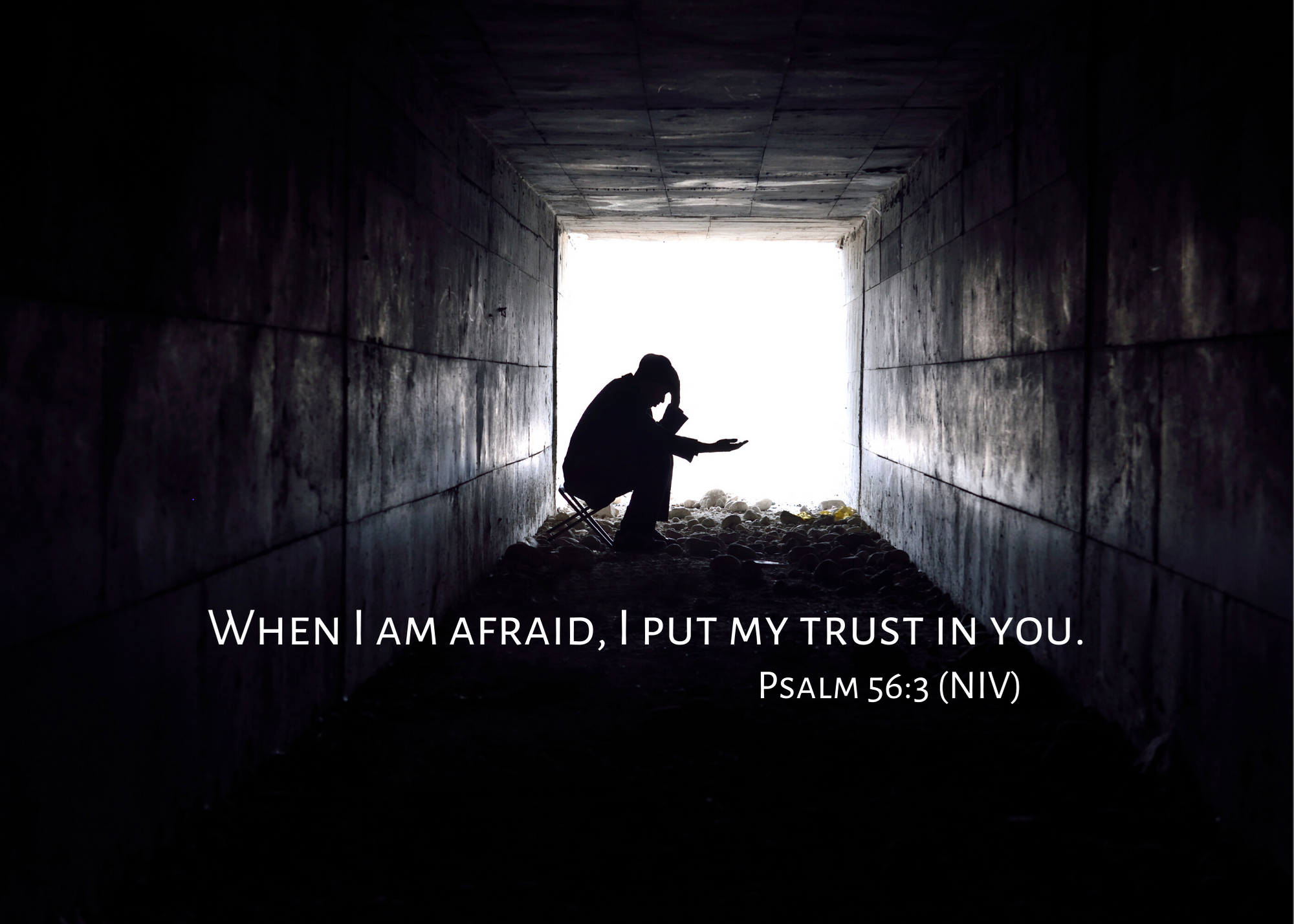
Then, in verses 3 and 4, David says this, “When I am afraid, I will trust in you.  In God, whose word I praise, in God I trust; I will not be afraid. What can mortal man do to me?”

I see a pattern here that David liked to repeat:

  1. He acknowledged his fear, “When I am afraid.”  Fear is a natural reaction when in danger – either real or perceived.

  2. David then made a deliberate decision to trust God.  This is not a normal reaction, it is an intentional decision, flying in the face of the natural fear.

  3. David praised God for delivering him – before he had been delivered.  (In this case, David praised God’s word, but often, he just praised God.)  When David did this, he was stepping out on faith, believing God would answer his prayers.

  4. Finally, in the assurance God would help him, David banished his fear, “I will not be afraid.”.  Notice he chose to not fear what mortal man could do to him.

This reminds me of Jesus’ words in Matthew 10:28, “Don’t be afraid of those who want to kill your body; they cannot touch your soul.  Fear only God, who can destroy both soul and body in hell.”

This is a pattern I have also tried to follow in my own life.  Many times, I have cried out to God, confessing my fear. I have then made a deliberate decision to trust that whatever God has for me is best, whether I know it (or like it) or not.  Then praise God for his promise that all things work together for my good – because I love God. Finally, with God’s help, I let Him lift my burden off my shoulders, whether it is fear, or whatever else it is.

With the fears swirling around now, whether Covid-19, or unemployment, or difficulty finding what you want at the grocery store, or …  You have a choice. You can succumb to fear, or you can follow David’s example.

I challenge you to try this pattern with whatever makes you fearful today.  Then you can say, like David wrote in yesterday’s reading from Psalm 34:8, “Taste and see that the Lord is good; blessed is the man who takes refuge in him.” And from today’s reading in 56:11, “In God I trust; I will not be afraid.  What can man do to me?”


–Steve Mattison
Today’s Bible reading, Psalm 56,120, and 140-142 can be read or listened to at https://www.biblegateway.com/passage/?search=Psalm+56%2C+120%2C+140-142&version=NIV
Tomorrow we return to 1st Samuel (chapters 25-27) to read of the next events in David’s life as we continue the 2020 Chronological Bible Reading Plan

Becoming a People after God’s Own Heart

1 Samuel 18-20; Psalm 11 & 59

Psalm 11 1 7 NIV

Today’s reading, found in 1 Samuel chapters 18 through 20, highlights how far Saul has fallen from his successes of chapter 14.  (Remember from chapter 15, that Saul had deliberately disobeyed a direct command from God, and things have been going from bad to worse for him since.

In 18:10-11, we read, “The very next day a tormenting spirit from God overwhelmed Saul, and he began to rave in his house like a madman.  David was playing the harp, as he did each day. But Saul had a spear in his hand, and he suddenly hurled it at David, intending to pin him to the wall.  But David escaped him twice.”

Once Saul decided to abandon God, God not only abandoned Saul, God tormented Saul.  This should be a lesson to us – never disobey God – there are always negative consequences.

Saul became jealous of David, after David had killed Goliath, because the women of Israel sang this song, “Saul has killed his thousands, and David his ten thousands.”  As a result of his jealousy, Saul tried to kill David with his spear in 18:11 and again in 19:10. Saul also tried to kill David by having the Philistines kill him in 18:17, 21, 25.   In 19:1, Saul urged his servants and his son Jonathan to assassinate David. In 19:15, Saul ordered his men to bring David (and his bed) to Saul to be killed, when Saul thought David was sick in bed.  In 19:20, 21 and 22 Saul unsuccessfully sent troops to get David three times.

In 20:30, Saul boiled with rage at his own son, Jonathan, who was friends with David, and in 20:33, Saul hurled his spear at Jonathan, intending to kill him.

So much for Saul, what about David?

If you were David, how would you react?  What would you do?

Remember that Samuel had anointed David in chapter 16, and declared that David would be the next king over Israel.  So what did David do? He wrote some songs about this. Let’s see what he said in those songs…

David wrote Psalm 59 when Saul sent his soldiers to watch David’s house in order to kill him.  This psalm starts out, “Rescue me from my enemies, O God. Protect me from those who have come to destroy me.  Rescue me from these criminals; save me from these murderers. They have set an ambush for me…”. This makes sense.  David was in trouble, so he cried out to God for help. David continues in verse 9, “You are my strength; I wait for you to rescue me, for you, O God, are my fortress.”

Then an astounding thing happens.  David starts praising God – in advance of God’s rescuing him.  Psalm 59 ends with, “But as for me, I will sing about your power.  Each morning, I will sing with joy about your unfailing love. For you have been my refuge, a place of safety when I am in distress.  O my strength, to you I sing praises, for you, O God, are my refuge, the God who shows me unfailing love.”

David, the man after God’s own heart was actually praising God when he was literally afraid for his life.  This shows his great faith that God will indeed rescue him. Maybe this is one of the reasons he was called a “man after God’s own heart.”

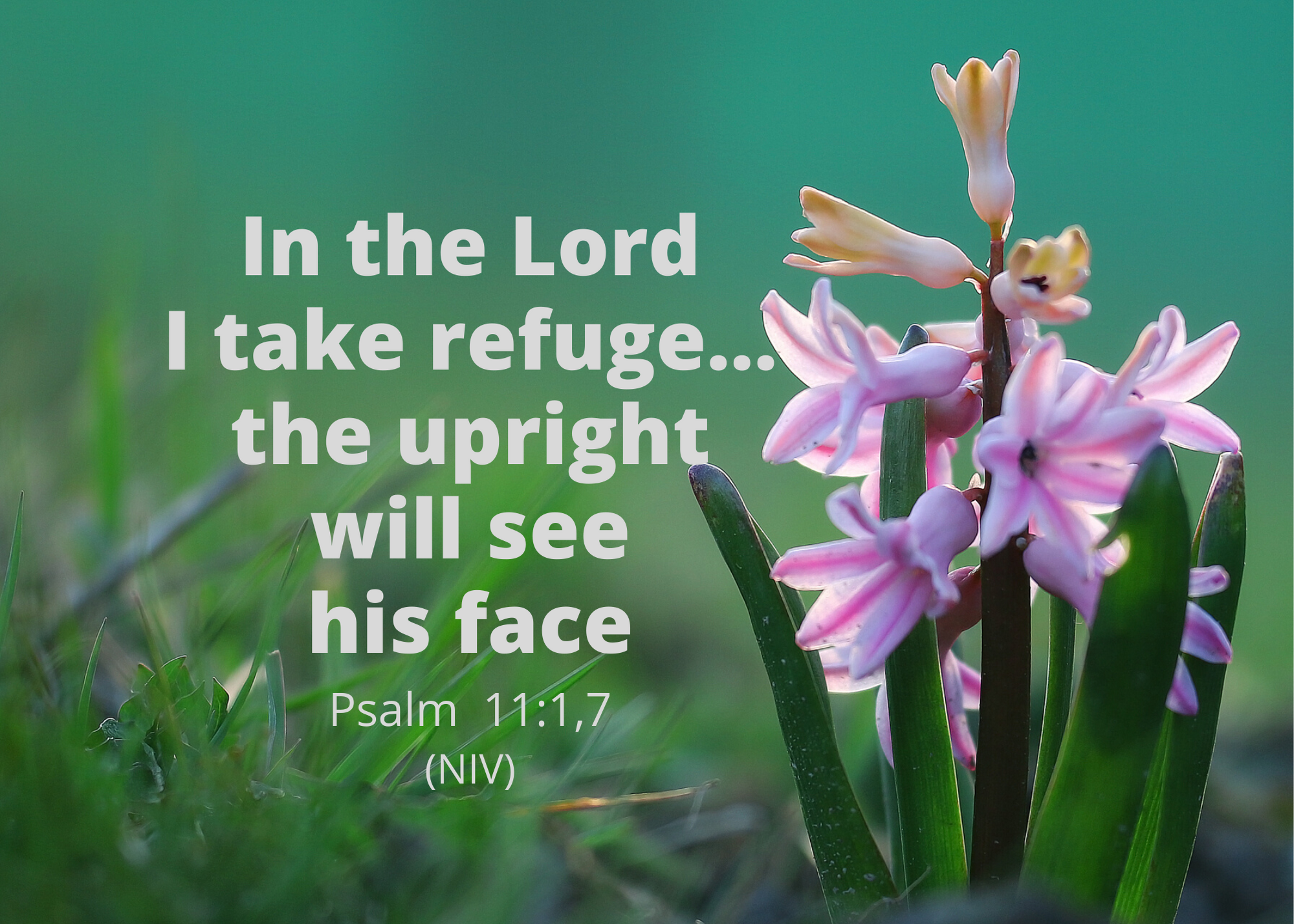
Psalm 11, the other chapter from today’s reading also shows David’s faith through difficulty.  It starts out, “I trust in the Lord for protection…”, and ends with “For the righteous Lord loves justice.  The virtuous will see his face.”

I believe David’s response is a good example for us.  When times are tough, it’s natural to cry out to God for help.  We need to move on from just asking for help, and follow David’s example to also have faith and praise God, even before the answer comes.  And in the process, we, too, may become people after God’s own heart.

–Steve Mattison
And, of course – it’s a great day to celebrate a risen Savior (as is everyday) so enjoy some time reading from the gospels as well.  Matthew 28, Mark 16, Luke 24, and/or John 20-21 provide some exciting reading for the day.  He is Risen!
Tomorrow’s reading will be 1st Samuel 21-24 as we continue our journey into God’s Word on the 2020 Chronological Bible Reading Plan

Lessons from the Wilderness: David

Wilderness Wandering Lesson #3: When the desires of our heart lead us away from God, true repentance leads us back.

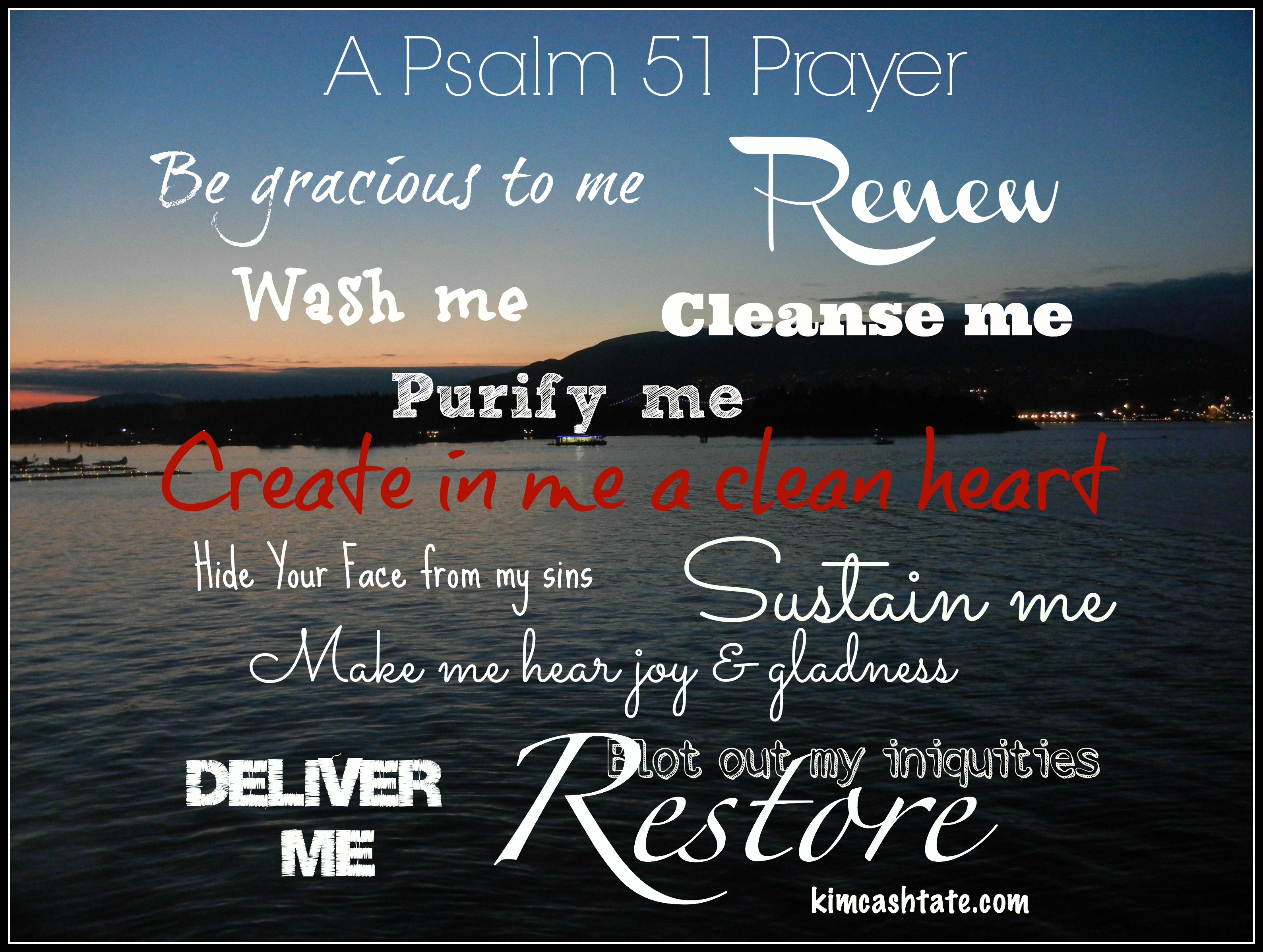
Psalm-51-Prayer.jpg

At the heart of our lessons from the Israelites and Elijah is a focus on trust. We need to trust that God knows best for us and will lead us in the right direction as the Israelites learned. And, we need to trust that God will provide and protect us according to his will like Elijah learned. Elijah, in our previous lesson, was not lead into a wilderness season by any failing on his part. Instead, the wilderness for him was because of circumstances outside of his control. By looking to God and remembering those past successes with God, he was able to overcome trying circumstances.

The wilderness story that we will look at today also concerns a man that could remember past successes with God. In his story, he had stood against giants, mad kings, had been through the wilderness once and overcame it. David was a “man after God’s own heart” (1 Sam. 13:14). We see in the book of 1 Samuel David’s victories. He was blessed by God, and because of this blessing, he was able to overcome his enemies. The book of 2 Samuel then describes what happened to David after he overcame these things and became King of Israel. During the first 10 chapters, David is set on the throne and receives the Davidic covenant, where he is told that Jesus will come from his lineage. If David could have just stayed in these moments where his focus was on God, he would have dwelt securely in the land and set up his children to do the same.

Instead, we see David drifting down a path that led him to devastation in 2 Sam. 11. In this chapter, we see the story where David, without questioning his actions for how they would reflect God, sleeps with Bathsheba and sends her husband to her death. After this, David is told that he would lose the baby Bathsheba just bore and that his house would be destroyed. David’s actions here lead toward the hurt that he faced with his son Absalom in 2 Sam. 14-15. The first sin that we see in these chapter 11, lusting after Bathsheba, began the sin cycle that led David into a wilderness period that was a time of intense pain that David never really got over.

So how did David get to this point? During this time, he had stayed back at his palace idle instead of going with his armies to fight in the wars he wanted them to engage in. At this moment, his desires began to be misaligned from the desires of God. And from here, his actions lead him away from God.

We see some of David’s reactions in 2 Samuel as he mourns his son and repents of his sin. But, at this time, we don’t see his feelings about this time in the wilderness. In Psalm 38, a psalm written by David, we see the danger that comes from drifting too far from God. We see the desperation in David’s voice as he says, “There is no health in my body because of Your indignation; there is no strength in my bones because of my sin. For my sins have flooded over my head; they are a burden too heavy for me to bear. My wounds are foul and festering because of my foolishness” (Ps. 38:3-5). Because of David’s sin, he had to experience terrible pain, a trying wilderness experience. We can look back at the lessons of the Israelites to realize this time in the wilderness was for purification, but still, if David had aligned the desires of his heart with the desires and character of God, he could have saved himself from this pain.

ps. 51

The wilderness is not always caused by our sin, as we’ve seen. But, at times, it is. And during these times, we can look to David’s example to see how to overcome those moments in the wilderness that were caused by our sin. Psalm 38 is an example of a penitential psalm, that shows both David’s true repentance and his desire for God in his life. Psalm 51 is another example of David writing in repentance. He says, “Be gracious to me God, according to your faithful love; according to Your abundant compassion, blot away my rebellion. Wash away my guilt and cleanse me from my sin. For I am conscious of my rebellion, and my sin is always before me. Against You – You alone – I have sinned and done this evil in Your sight. So you are right when you pass sentence. You are blameless when You judge” (Ps. 51:1-4). In this psalm and the other psalms, we see how David takes responsibility for his sin and also recognized what is required from him if he sins. He needs to be purified with a new heart that reflects the desires of God to be placed within him. This is key to accomplishing what David asks God in v. 12: “Restore the Joy of Your salvation to me and give me a willing spirit.” When we are in a wilderness of cause by our sin, we may be tempted to harden our hearts in anger against God. But, that is the path that leads us away from God and further into the wilderness. When we truly repent, we can receive back the true joy that comes from the salvation of God. After we have made it through the wilderness, we can use this time to bring others back to God (v. 13). If you are in this time today, choose the right path and come back to God. It may be painful to soften your heart and feel the weight of your sin, but that will lead you towards the true joy that comes from God.

~ Cayce Fletcher

In His Word – with the Poets

psalm 119 103

This week we are looking into the importance of God’s Word as well as some of the goodies we are rewarded with when we open the book.  First, we had an overview of the 5 books of Law.  Yesterday we considered the 12 books of History, so today we are up to the 5 books of Poetry.

When I was a school kid eating up my history classes, I was yawning during my poetry course.  And, I still haven’t matured enough to really enjoy a ‘good book of poetry’ whatever that means.  However, I truly love opening up my Bible to these inspired books of poetry.  So many times when I reach for my Bible – it is to the books of Poetry that I go, and I am not disappointed.

Often when reading the books of law and history you get the facts of the events.  And from there you can piece together the likely thoughts or emotions of the characters and what their relationship with God was like at the time.  But, in many of the books of poetry you get the poet’s raw emotion: disappointment, anger, depression, elation, thankfulness, etc… And, through it all – God is there.  Along with the poet’s emotion, you get to read of his personal testimony of God’s faithfulness.  Psalm 13 is one short example – it starts out with quite a bit of pain and anguish and questions for God – but it ends with a beautiful statement of God’s unfailing love and goodness.

I really appreciated Andrew Cheatwood’s devotions two weeks ago when he wrote candidly about his struggle with spiritual depression and the help he found in the Psalms.  I applaud his wisdom in looking to God’s Word.

Here’s a brief overview of the 5 books of Poetry

JOB – Suffering, But Still Trusting

Satan attacks Job.  He loses everything except his trust in God – and that is enough.  He prospers again, even more than before.

PSALMS – Jewish Songbook

Songs, prayers and praises to God in poetry.  The longest book of the Bible, mostly written by David.  Psalm 119 is the longest chapter in the Bible – all about the greatness of the Word of God

PROVERBS – Wisdom!

Wise King Solomon shares his wisdom on many matters: work, money, temptation, discipline, etc…These 31 chapters can be read one chapter a day every month and you will find yourself a wiser person.

ECCLESIASTES – Search for the Meaning of Life

Solomon found pleasures, riches, and fame don’t satisfy.  Instead, revere God, follow Him and let God be God

SONG OF SOLOMON – Love Songs

Poems by Solomon celebrating the beauty of married love, also called Song of Songs


Which is your favorite book of Poetry?  Go ahead – read some God-inspired poetry today!

Marcia Railton