Lessons from the Wilderness: Jesus

Wilderness Wandering Lesson #4: God’s word sustains us when we are depleted by the trials of the wilderness.

god's word does.

This week, as we’ve been thinking about our wilderness wanderings, we’ve primarily looked through the lessons from the Old Testament. Today though, we’re going to turn to the New Testament to see an example of a wilderness experience that can teach us a lot about how to make sure this experience makes us and doesn’t break us.

In Matthew 4, Jesus is tempted in the desert by the Devil for 40 days and 40 nights before he begins his ministry. This is a familiar story that shows the humanity of Jesus and how he can relate to us, but today, I want to focus on where Jesus was tempted. It says in verse 1 that “Jesus was led up by the Spirit into the wilderness to be tempted by the Devil.” In our time thinking about the wilderness, we’ve focused on the types of wilderness experiences we may have and how God’s faithful love can sustain us. As we look at Jesus’ experience, we can see how to survive and thrive in the wilderness.  

The first lesson we can glean from this passage is that sometimes, as is the case with the Israelites and Elijah, we are led into the wilderness by God. Jesus was led into the wilderness by the Spirit where he fasted 40 days and 40 nights. At this point, Jesus had not begun his ministry, so this time could have been for testing and strengthening Jesus’ faith and dependence on God so that we could learn from it. By asking ourselves during each wilderness experience “What can I learn from this? How can I grow?”, we can better face the times in wilderness with palms held open instead of allowing bitterness to grow in us.

The second lesson we can learn from Jesus’ time in the wilderness is that God’s word is crucial for surviving in the wilderness. In the wilderness, Jesus had to face physical hunger, thirst, and exhaustion. He also was probably emotionally drained in this time as well. This may sound like a description of ourselves when we go through times in the wilderness. How often in these times where we are sad, lonely, depressed and drained – how often do we pause in these moments and stop the spiral of depression and wandering by saturating ourselves in God’s word? By looking at Jesus’ example, we can see how we can stop temptations in their tracks by responding with God’s word, more specifically by aligning our actions with God’s word.

The last lesson that I want us to focus on today is looking at when this wilderness experience took place. Though Jesus had not begun his ministry yet, in the previous chapter, he had just gotten baptized. All too often, we think that if we have committed our life to God that things will go well, that we’ll never have to experience trials or periods of suffering. But, we can look at Jesus’ life to see that this is simply not that case. Aside from Jesus’ experience on the cross, we can look at the beginning of his ministry as well to see that as these periods will happened to him, they will happen to us.

Jesus survived in the wilderness, and he thrived in the wilderness. I’m not sure what Jesus gained spiritually or emotionally in the wilderness, but I know what I can learn from his experience there. In the wilderness, Jesus was able to overcome temptation and suffering, including not only physical trials – but also spiritual trials – through God’s word. God’s word sustained Jesus and allowed this time to be a springboard into Jesus’ ministry instead of something that would have crippled his ministry. Now, we can look at this story and lessen the impact of what Jesus was able to do because Jesus was the son of God. But, Jesus was capable of growth and change, as seen in Luke 2:52. This is what makes him the perfect mediator for us. So, as we close this lesson today, I want to leave you with the words of Jesus as he readied his disciples for the trials they would face during the days leading up to the crucifixion: “I have told you these things so that in Me you may have peace. You will have suffering in this world. Be courageous! I have conquered the world” (John 16:33). With Jesus, we can conquer the world, including all our days of wilderness wanderings.

~ Cayce Fletcher

spurgeon quote

Lessons from the Wilderness: David

Wilderness Wandering Lesson #3: When the desires of our heart lead us away from God, true repentance leads us back.

Psalm-51-Prayer.jpg

At the heart of our lessons from the Israelites and Elijah is a focus on trust. We need to trust that God knows best for us and will lead us in the right direction as the Israelites learned. And, we need to trust that God will provide and protect us according to his will like Elijah learned. Elijah, in our previous lesson, was not lead into a wilderness season by any failing on his part. Instead, the wilderness for him was because of circumstances outside of his control. By looking to God and remembering those past successes with God, he was able to overcome trying circumstances.

The wilderness story that we will look at today also concerns a man that could remember past successes with God. In his story, he had stood against giants, mad kings, had been through the wilderness once and overcame it. David was a “man after God’s own heart” (1 Sam. 13:14). We see in the book of 1 Samuel David’s victories. He was blessed by God, and because of this blessing, he was able to overcome his enemies. The book of 2 Samuel then describes what happened to David after he overcame these things and became King of Israel. During the first 10 chapters, David is set on the throne and receives the Davidic covenant, where he is told that Jesus will come from his lineage. If David could have just stayed in these moments where his focus was on God, he would have dwelt securely in the land and set up his children to do the same.

Instead, we see David drifting down a path that led him to devastation in 2 Sam. 11. In this chapter, we see the story where David, without questioning his actions for how they would reflect God, sleeps with Bathsheba and sends her husband to her death. After this, David is told that he would lose the baby Bathsheba just bore and that his house would be destroyed. David’s actions here lead toward the hurt that he faced with his son Absalom in 2 Sam. 14-15. The first sin that we see in these chapter 11, lusting after Bathsheba, began the sin cycle that led David into a wilderness period that was a time of intense pain that David never really got over.

So how did David get to this point? During this time, he had stayed back at his palace idle instead of going with his armies to fight in the wars he wanted them to engage in. At this moment, his desires began to be misaligned from the desires of God. And from here, his actions lead him away from God.

We see some of David’s reactions in 2 Samuel as he mourns his son and repents of his sin. But, at this time, we don’t see his feelings about this time in the wilderness. In Psalm 38, a psalm written by David, we see the danger that comes from drifting too far from God. We see the desperation in David’s voice as he says, “There is no health in my body because of Your indignation; there is no strength in my bones because of my sin. For my sins have flooded over my head; they are a burden too heavy for me to bear. My wounds are foul and festering because of my foolishness” (Ps. 38:3-5). Because of David’s sin, he had to experience terrible pain, a trying wilderness experience. We can look back at the lessons of the Israelites to realize this time in the wilderness was for purification, but still, if David had aligned the desires of his heart with the desires and character of God, he could have saved himself from this pain.

ps. 51

The wilderness is not always caused by our sin, as we’ve seen. But, at times, it is. And during these times, we can look to David’s example to see how to overcome those moments in the wilderness that were caused by our sin. Psalm 38 is an example of a penitential psalm, that shows both David’s true repentance and his desire for God in his life. Psalm 51 is another example of David writing in repentance. He says, “Be gracious to me God, according to your faithful love; according to Your abundant compassion, blot away my rebellion. Wash away my guilt and cleanse me from my sin. For I am conscious of my rebellion, and my sin is always before me. Against You – You alone – I have sinned and done this evil in Your sight. So you are right when you pass sentence. You are blameless when You judge” (Ps. 51:1-4). In this psalm and the other psalms, we see how David takes responsibility for his sin and also recognized what is required from him if he sins. He needs to be purified with a new heart that reflects the desires of God to be placed within him. This is key to accomplishing what David asks God in v. 12: “Restore the Joy of Your salvation to me and give me a willing spirit.” When we are in a wilderness of cause by our sin, we may be tempted to harden our hearts in anger against God. But, that is the path that leads us away from God and further into the wilderness. When we truly repent, we can receive back the true joy that comes from the salvation of God. After we have made it through the wilderness, we can use this time to bring others back to God (v. 13). If you are in this time today, choose the right path and come back to God. It may be painful to soften your heart and feel the weight of your sin, but that will lead you towards the true joy that comes from God.

~ Cayce Fletcher

Lessons from the Wilderness: Elijah

Wilderness Wandering Lesson #2: Remembering past circumstances can help to steady our heart in the midst of our current despair.

This slideshow requires JavaScript.

It was at that moment though that the sky got a little cloudy and the wind started to pick up. We wanted to hike a little, so we to hike the trail towards the top of the mountain, with cattle lazily grazing along the rocky path. Quickly, the picturesque scene turned gray. We made it to the summit, but the mountain had clouded over, so much so that it was difficult to see straight in front of you. We quickly walked back down and waited out the fog in a small cafe, trying to warm up our hands with a coffee, before making our way to the tram.

That hike was beautiful and totally worth our short brush with the fog. But, what I’ve found is that our lives sometimes mirror that hike, but the fog can be much more dangerous. Sometimes, our lives are steady, and we exist in the happy medium of contentment and love. At other times though, our lives can be a stormy cycle of highs and lows, mountains and valleys. In our case, we were on a mountain, a mountain where we were elated. We had traveled far to get there and wanted to rest in the view and the glory. But, it was on this mountain that what we had traveled far to see and done a lot of work to do (including a 1 hour train ride and a flustered conversation in German) that we experienced a storm that clouded our experiences and made us doubt if it was really worth it.

Elijah the prophet experienced his own brush with the wilderness right after he experienced the high of his life. He was no stranger to the wilderness after relying on God’s provision in 1 Kings 17. In 1 Kings 18, he is able to testify to God’s glory and work as he goes through a showdown with the prophets of Baal. He actually gets to see the fire of Yahweh fall from heaven and rid the people of the prophets of Baal!

If we saw these things, we might be tempted to say that we would never doubt God. After seeing this, we might be elated, speechless, high on our mountaintop moment. But, for Elijah, the fog rolled in. In chapter 19, Jezebel sends word to Elijah that she was planning on killing him as soon as she could get her hands on him. Elijah panics and runs for his life into the wilderness. There, he lays down and prays for God to take his life (v. 4). Sometimes, our wilderness moments can lead us to places like this. Our vision can get cloudy if it’s focused on our circumstances that may stormy and volatile. And, in those moments, dark despair can set in, and we may think it would be better to just give up.

But then I recall all you have done, O LORD; I remember your wonderful deeds of long ago.If you are in that moment, remember that God does not leave Elijah there, and he doesn’t want to leave you there either. Instead, he says, “Get up and eat (v. 5). After Elijah eats twice, he goes on a journey forty days and forty nights to the mountain of God. There, Elijah waits, first through a great wind, then through an earthquake, and lastly through a fire. In each of these places, he does not hear God’s voice. Finally, he hears it in the soft whisper, as God asks him “What are you doing here Elijah?” (v. 13) Elijah responds by saying, “I have been very zealous for the Lord God of Hosts, but the Israelites have abandoned your covenant, torn down your altars, and killed your prophets with the sword. I alone am left, and they’re looking for me to take my life” (v. 14). Elijah feels this despair because he had forgotten what God just showed him. In the desert when he was hungry, God was there with provision. He had forgotten that in the showdown, God was there with provision. When we turn our eyes from God to focus on our fractured circumstances, it can lead us to doubt. But, one remedy for that doubt is not only to remember the character of God but also to remember how God has exhibited that character in previous actions of faithfulness. We can trust in him not only because of what we know from the Bible but also because of what we know from our own lives. So, if you are in a wilderness period in your life, pause and remember God’s past faithfulness instead of dwelling on your despair. These reminders can help us to remember that even in our darkest times, God will carry us through.

~ Cayce Fletcher

Lessons from the Wilderness: The Israelites

heb.Over the next few days, we’re going to look at four wilderness stories in the bible to learn a lesson about what the wilderness is and what it can teach us. The first Wilderness Wandering Lesson is this:
Wilderness Wandering Lesson #1: The faithful love of God is infinitely more secure than our fractured circumstances.

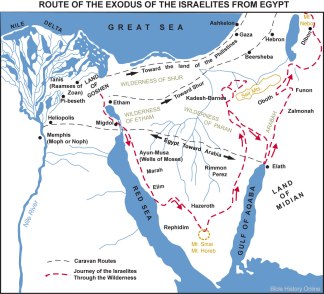
The most recognizable story of wilderness is that of the Israelites. After 400 years of servitude to the Egyptians, the Israelites kept crying out to God for the deliverance prophecied by Joseph in Gen. 50:25. That help came in the form of Moses, who was commissioned by God to lead the Israelites to the land of Canaan. So this so-called Promised land, part of the covenant promise that God made with Abraham in Gen. 12, was the Israelites’ destination. Even in the Israelites’ time in the wilderness, we can see two purposes in the wilderness. The wilderness in the first year was a time of purification and dependence. It is in the wilderness that the Israelites learned to trust God for direction (Fire and Cloud – Ex. 14) and sustenance (Manna and Water – Ex. 16). In Exodus 16, God even says, “I will test them to see whether or not they will follow my instructions” (v. 4). This testing was his goal for the first year the Israelites spent in the wilderness. Spent mostly at the base of Mt. Sinai, it was in this time that the Israelites received the ten commandments, built the tabernacle, and received the rest of the law (Ex. 15-Num. 10). Though there was difficulty in this time (think Golden Calf – Ex. 32), this time in the wilderness was also full of incredible closeness to God. It was during this time that the Israelites were able to witness the Shekinah glory of God descend on the tabernacle. And, during this time, the Israelites experienced the humbling dependence on God that came from relying on him.

Map-Route-Exodus-Israelites-Egypt

We can think of this first year in the wilderness as the training wheels period where God was showing the Israelites that relying on him was best. That trusting in him was the way to choose life and joy. In Numbers 10, the Israelites break camp and move towards the border of the Promised land. In Numbers 11, the cracks begin to show again as the Israelites complain more and more about hardship, food, and in the case of Aaron and Miriam, the power and relationship with God that Moses had. Based on the tendencies that we see in these chapters, we shouldn’t be as surprised as we generally are that the Israelites get to the border of the promised land and choose to go against God and refuse to take the land because of their fear (Num. 14). The Israelites chose not to go into the promised land because their trust in God was lacking. They didn’t think that God would do what he said he would. Instead, they based their decisions on their circumstances, which seemed too difficult to overcome. It’s this that ultimately angers God and leads towards his judgment against the Israelites: They would wander the wilderness for 40 years (one year for each day they spent scouting the wilderness). In the remaining chapters of Numbers, we see more instances of rebellion and provision as the Israelites do exactly as God says and wander the wilderness for 40 years. It is not until the book of Joshua, that we see the next generation of Israelites rise up and take the land just as God promised his people that they would.

These two tales are frequently told together, but they tell two very different stories of the wilderness. In the first, the Israelites seemed to have done nothing to be put in the wilderness, while in the second, the wilderness was a place of punishment for the past sin of the people. But, the purpose of each wilderness experience is the same. The wilderness is meant for purification and refinement, to make the people of God ‘holy, because [he] is holy’ (Lev. 19:2). Too often, I think we view the wilderness as a punishment, and because of that, we go back to asking God, “Why? Why am I here?” We may even sound like some of my high school students when they get called out, “Why? I wasn’t even doing anything!” (No matter what they are doing.) We need to stop viewing the wilderness as a place of punishment. It can be that place, as we’ve seen with the Israelites. But, more importantly, this time in the wilderness is where God is beckoning us back to him. It’s in this time that all of the Israelites first heard God’s word. It’s in this time that they felt the characteristics of God that Moses spoke in Numb. 14:18. In your wilderness wanderings, instead of focusing on the doubt – the questions of why you are in that experience – focus on who God is:

“The Lord is slow to anger and rich in faithful love, forgiving wrongdoing and rebellion. But He will not leave the guilty unpunished, bringing the consequences of the fathers’ wrongdoing on the children to the third and fourth generation.” (Numb. 14:18)

Rest on God’s faithful love, and in your time in the wilderness, don’t forget to remember who he is. When we trust in him, our circumstances don’t seem so challenging anymore.

~ Cayce Fletcher

The Purpose of the Wilderness

Deep calls to deep in the roar of your waterfalls; All your breakers and your billows have swept over me. Psalm 42_7 (1)If you are not in a wilderness period now, chances are you will probably experience a time like this in the future. It’s the moments where we are spiritually thirsty and hungry for God. It can be puzzling when we are in these moments because we begin to doubt and question God. If there was a word that could be used to define these moments, I would say that it would be “Why.” Why do I feel like this? Why am I in this desert? Why does God seem so far from me? Why won’t he return to me?

Though it can seem presumptuous to ask God these questions, we can find the psalmist asking these questions as well. In Psalm 42, the psalmist says, “Why am I so depressed? Why this turmoil within me?” (v. 5, 11) Later on, he writes, “I will say to God, my rock, Why have You forgotten me? Why must I go about in sorrow because of the enemy’s oppression?” (v. 9) It’s natural to question God during these moments, and even Jesus on the cross asked God, “Why have you forsaken me?” (Matt. 27:46). Sometimes, we know the purpose of the wilderness, as Jesus did when he asked God that question. Other times, we may not know in this life why we have to experience the things that we do.

In these times, it’s incredibly important to remind ourselves of two things: (1) we can trust that there is a purpose for the wilderness, and (2) in the wilderness, we can rely on the goodness of God to carry us through. As we think about the ‘why’ behind our wilderness wanderings, it’s first important to ask ourselves how we got to this point. Sometimes, our wilderness comes from forces outside of us, whether that’s circumstances, conflicts with others, or the adversary like we discussed yesterday. We can look at the examples of Elijah and Jesus to see wilderness experiences that were due to the fallenness of the world, not their own failings. Yet, at other times, the wilderness can be caused by our own actions, like in the case of the Israelites.

During these times, we have two options: We can turn toward God or away from him. It’s this choice that will determine whether or not the wilderness experience will help us to grow or to be destroyed. In this devotion, we won’t be able to come to a definitive answer of why bad things happen to good people. But, we can answer the real ‘why’ behind our wilderness experiences. During this time, we have the option to lean on God and learn what it means to walk hand in hand with him. To experience complete dependence on God. The wilderness may be difficult, but it’s also in these moments that we experience more deeply the salvation of God. Going back to the Psalmist words in Psalm 42, we see that our wilderness experiences can make our recognition of God’s love more real and vivid when, after asking why, he says:

mthermon1
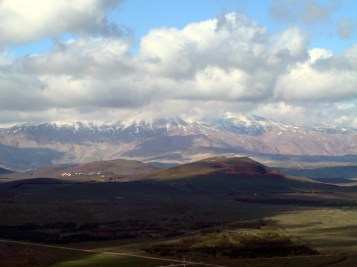
Mt. Hermon (2,814 m – 9,232 ft) on the northern border of Israel

“Put your hope in God, for I will still praise Him, my Savior and my God. I am deeply depressed, therefore I remember You from the land of Jordan and the peaks of Hermon, from Mount Mizar. Deep calls to deep in the roar of Your waterfalls; all Your breaks and Your billows have swept over me. The Lord will send His faithful love by day; His song will be with me in the night – a prayer to the God of my life” (v. 5-8).

We can pray to the God of our life. In these times in the wilderness, trust in your creator, and he will send his faithful love to you.

~ Cayce Fletcher

Wandering in the Wilderness

Text placeholderChristmastime can bring so much joy to our lives. It’s during this short period at the end of the year that we reconnect with family and friends and enjoy time spent resting from work and school. I think it’s so fitting to end our year reflecting on the importance of who Jesus is in our lives. As seen in the carols that Jill discussed last week, we spend the month of December reflecting on and resting in the truth of who Jesus is before moving into the new year with high hopes and resolutions.

Though it’s not a Christmas carol, I love the song “It’s the Most Wonderful Time of the Year,” partly because of Andy Wiliams’ voice and partly because I agree that Christmas is the most wonderful time because it is the “hap-, happiest time of the year.” However, some Christmases don’t always bring this cheer. Sometimes, in the midst of the crowds of happy faces and the busyness of the year, we can feel lost in the drift of the season. Feeling this way can make us feel lonely, upset, or isolated from those that we love, and crucially, it can also make us feel isolated from the voice of God. I like to call these times in our lives our ‘wilderness wanderings.’ It’s the moments when it seems like God isn’t near you, has ‘turned his face from you,’ and that feeling affects every part of your life. Though this can happen in the hustle and bustle of the Christmas season when we’ve forgotten to focus on God, it can also happen throughout the year, in the low points and in the high points.

Too often, I think we choose to focus on the high points of our relationship with God or on the ‘do’s and don’ts’ of our faith. Though our relationship with God can bring us blessings after blessings and should be the foundation of our faith and though a life that reflects a heart that loves God is incredibly important both for our relationship with God and the credibility of our witness to others, I think focusing on these moments of wilderness wanderings is crucial to fostering a life that honors God. Because, it can be hard to get back to those high points if we are crippled in the wilderness by doubt and sin. 1 Peter 5:8-9a says that “Your adversary the Devil is prowling around like a roaring lion, looking for anyone he can devour. Resist him and be firm in the faith.” If we lose ourselves in the wilderness and allow Satan to steal our joy, we can be destroyed in that wilderness.

So, this week, we’ll be looking through scripture to see what the purpose of the wilderness is and how to make it through. Words translated as wilderness “occur nearly 300 times in our Bible.”** By looking through some of these occurrences, we will gain the tools to understand the purpose of our own wildernesses. We’ll look at the wilderness experiences of the Israelites, Elijah, David, and Jesus to learn from their examples. And, at the heart of this, we’ll focus on the importance of joy, both at this time of the year and every other time. Don’t despair if you are going through a time in the wilderness. Have hope. And most importantly, have joy, because “the joy of the Lord is your strength!” (Neh. 8:10b)

joy to the world


~ Cayce Fletcher

** View this link for more information on wilderness in the Bible: http://www.environmentandsociety.org/exhibitions/wilderness/midbar-arabah-and-eremos-biblical-wilderness

Another Kind of Healing – When Pigs Fly

Mark 5:1-19

(But no one is stopping you from reading the whole chapter)

How many of you have ever seen a scary movie? I don’t recommend them. Being scared is not fun, but sometimes we can’t help being scared. Today we’re going to talk about something scary, but fear not! This devotion has a happy ending.

In this segment of Mark, we see Jesus healing another man, but this time, he is casting out demons. This wasn’t an ordinary casting out of demons either. This man that Jesus encountered had an unclean spirit that consisted of thousands of demons (5:9).  The man had been so out of his right mind that he was cast out of normal society and forced to live in a cave where people had tried to chain him up, but not even chains could hold this man down. He would scream and cut himself day and night (5:5). This man is clearly not okay. Yet Jesus still let the man seek him out.

Notice how Jesus is being approached by a man that can literally break chains, but he doesn’t seem to be worried. That is exactly how we should feel knowing that we have the God of Jesus on our side, too. The demons in this man fear Jesus and respect his authority. It says in verse 13 that Jesus “gave them permission.” They obey Jesus! Now the next part of the story is a little weird, but it is very important. The demons went into a herd of pigs and subsequently flew off a cliff. Okay, maybe they didn’t fly, but it’s still an odd thing for pigs to do.

This story is a little different from the story of the blind man that we looked at yesterday. The man who was healed in this story didn’t have a physical impairment; he was healed of a sickness of the mind. These kinds of sicknesses can be even scarier than the kind that affect us physically. One such mental sickness that has become very prominent lately is depression. I know firsthand just how many people suffer from depression these days, especially teenagers, so I want to share with you the story of when I saw pigs fly.

When I was younger, I had a close friend who suffered from severe depression and harmed herself in ways like the man that Jesus healed. Many times we think that self-harm is unique to our generation but this story really says otherwise. This was a really painful experience for me just by knowing that my friend was going through this. I urged my friend to talk to a trusted adult and to see a doctor because I knew that I was not qualified to counsel on this subject. However, there was one way that I was able to help. I offered my prayers. Prayer became a constant for me in this period of my life. I wanted nothing more than to see my friend freed of this demon, her depression. One day, I wanted to pray with my friend, so we went out to a park and sat together praying for hours. I remember my prayer: “God, I know that you have the power to cast out demons. Cast out this demon.” After repeating this many times, my friend looked up and I could see a difference in her eyes. Pigs flew, and her depression has never bothered her since then.

I don’t know whether an actual demon was involved in this story, but depression certainly acts like a demon, taking over your thoughts and actions. Whatever the cause of depression may be, our God is bigger and more powerful and there isn’t anything in this world that disobeys His command.

Don’t forget the ending of the story in Mark. After the man was healed, he wanted to follow Jesus, but he was turned down. Jesus told the man to go back to his family and testify to them. This is just like what we saw in John yesterday. After you are healed, Jesus wants you to make sure that the people you know can see that you really were healed.

Tomorrow I am going to go into the role that modern medicine plays into the healing that we can receive from God.
-Nathaniel Johnson


Life Gets Better

job 40_6-9

When You Break Down the Barriers


For the longest time, I never thought I would see the other side of my depression. Especially when I was in deepest. During that time, my girlfriend of 3 years dumped me, my pastor I’d grown up listening to and adored passed away, I was failing college, and I was in a job that made me so miserable the only way I felt better was writing lyrics about how I felt. It got so bad, I started thinking about how people in my life would feel if I’d never existed, or just faded away. Around that time though, those lyrics I had written finally came to have a purpose because God helped me find a band to join. It may have been a short lived adventure, but I cherish those days as the therapy it was for me. I bled out the unhealthy emotions that had begun to dwell within my heart through those lyrics until it wasn’t helping anymore.


In today’s devotional, we will conclude the book of Job. The story of Job is complex, beautiful, and I await to reread this book again to uncover more wisdom hidden within this book. We have reached Job 32, and are now meeting Elihu. I heavily encourage you take the time to read from Chapter 32 to the end, but I will hit the key verses that stuck out to me in understanding this story better. Elihu arrives to rebuke Job for his missteps in his arguments and intentions within the debate between Job and the three men of understanding. Elihu waited up until this point out of respect of age, and because the three friends had become discouraged in debating any further.

Elihu’s first acknowledgement of faultiness in Job’s mourning is shown in Job 33: 8-22.

Job 33: 8-22 NASB: “8 Surely you have spoken in my hearing, And I have heard the sound of your words: 9 ‘I am pure, without transgression; I am innocent and there is no guilt in me. 10 ‘Behold, He invents pretexts against me; He counts me as His enemy. 11 ‘He puts my feet in the stocks; He watches all my paths.’ 12 “Behold, let me tell you, you are not right in this, For God is greater than man. 13 “Why do you complain against Him That He does not give an account of all His doings? 14 “Indeed God speaks once, Or twice, yet no one notices it. 15 “In a dream, a vision of the night, When sound sleep falls on men, While they slumber in their beds, 16 Then He opens the ears of men, And seals their instruction, 17 That He may turn man aside from his conduct, And keep man from pride; 18 He keeps back his soul from the pit, And his life from passing over into Sheol. 19 “Man is also chastened with pain on his bed, And with unceasing complaint in his bones; 20 So that his life loathes bread, And his soul favorite food. 21 “His flesh wastes away from sight, And his bones which were not seen stick out. 22 “Then his soul draws near to the pit, And his life to those who bring death.”

Job may be a faithful follower of God, but he did make accusations that God was not on his side. Elihu points out these flaws on Job’s logic so Job may understand where he has faltered in his discussion. It is a great detail to point out because how often do we get paranoid, and start to wonder whether what God is planning is for our benefit? This is a common problem I ran into in my thought process while depressed.

If you aren’t convinced when reading through here that Elihu cares about Job, I have a couple verses to show his intent was for Job’s benefit. Job 33: 31-33 NASB: “Pay attention, O Job, listen to me; Then if you have anything to say, answer me; Speak for I desire to justify you. If not, listen to me; Keep silent, and I will teach you wisdom.” I didn’t notice his intentions as good to start out because all his other friends we read the speeches of are jaded and convinced Job is wicked. In further delving though, I found Elihu to be a great friend to Job. “Speak for I desire to justify you” is the phrase that opened my eyes once I looked into the Hebrew word justify originates from in this context. The Hebrew word is Tsadaq. In this context, it means “turn to righteousness.” Elihu cares deeply enough about Job to help him turn to righteousness.


Elihu next points out that Job’s pride has become a barrier between himself and God. This happens in Job 35. Job’s pride has caused him a lack of understanding towards man, especially ones he deems to be wicked. We see this iterated in Job 24. Elihu gives proof that God doesn’t ignore wrongs, and doesn’t just allow the wicked to roam free. You can find the evidence in Job 36: 5-33. An important detail we can take from this is to not generalize and judge our fellow man. We are to help them understand why we ask repentance of our sins. Sin separates us from YHWH, and YHWH doesn’t want to be separated from His creation.


In Job 37, Elihu concludes his speech by bringing the voice of God back into the attention of Job. Then, in Job 38-39, God asks Job if he knows all the grand, minute details that were put into this life. To make His point to Job, God then asks Job a question in Job 40:2 NASB: “‘Will the faultfinder contend with the Almighty? Let Him who reproves God answer it.’” Job’s passion and wisdom are clear throughout this book, but along the way, Job began to question God. Asking God a question and questioning God are different beasts. Job 40:4-5 NASB: “Behold, I am insignificant; what can I reply to Thee? I lay my hand on my mouth. Once I have spoken, and I will not answer; Even twice, and I will add no more.” This is how Job responds after YHWH shows Job the error of his ways. God then further speaks of His power, asking Job if he too, can do all these things. Job confesses that he is incapable of doing these things, admitting he didn’t understand the gravity of his proclamations, and repented. God is even merciful enough to extend forgiveness to Bildad, Zophar, and Eliphaz, if they choose to repent of the words they spoke against The Lord.


After all of this was completed, God restored Job’s fortunes. Job lived a blessed life with many children, and got to see his grandchildren. Job got through a time of trial and tribulation that I cannot begin to fathom the pain he must have gone through. He did not make it through by his own doing, but God’s doing. Personally, my spiritual depression did not cease until I repented. I may not have started the depression outright, but I set up barriers between myself and God over time. It was through repentance that God helped me tear down those walls, and help me rebuild my life. My challenge for you today is to take some time to look inward, and find what barriers you may have built up between yourself and God. Repent of them, and start to see how your perspective on life begins to be built on love.

My song suggestion for today is “Redeemed” by Big Daddy Weave.

https://www.youtube.com/watch?v=vSyLqbP8Z4I  


-Andrew Cheatwood

Perseverance through Tribulation


    Today, we return to the book of Job to further talk about depression. Job is being directly attacked by his own friends during a time frame when he is losing his health, his wife told him to curse God and die, his children have all died, and he has lost all his possessions he had. These are all things on their own that could cause depression within someone. Normally, these situations would cause problems internally, and someone who is depressed would tend to keep them to themselves. Job is blessed with wisdom though, and talks to his friends about his troubles. Instead of his friends trying to help him through it, they attack him on the grounds that they believe he clearly is wicked. The perseverance Job shows throughout the whole book is a testament of his faith in God.

That perseverance is one we should strive for on a day to day basis, whether going through trials and tribulation, or through times of blessing. There are times when he speaks of how he has been struck down from his status of respect in the community to one where people cannot bear to even look at him. In those moment, he is crying out to God, asking why it had happened. The moments that catch my eye though are when he is done mourning the trial, he returns to the debate with his friends on justice. In his responses to them, we see just how strong his faith is in YHWH, and the hope Job has stored in Him.   

Job 19: 25-27 NASB: “And as for me, my Redeemer lives, And at the last He will take His stand on the earth. Even after my skin is destroyed, yet from my flesh I shall see God; Whom I shall behold myself and not another. My heart faints within me.” The phrase ‘I know my Redeemer lives’ is one many Christians know because of the song Nicole C Mullins released in 2000. It is easy to read the English in this verse, and come to the conclusion that Job is saying Jesus lives, but contextually that doesn’t quite work. This is partly because Job is the oldest book in the Bible. Correct me if I’m wrong, but I noticed no mention of a coming Messiah in the book of Job. That is another reason I found this verse to be confusing for a time because we tend to use Redeemer as a title for Jesus. We use the term redeemer as one who is a deliverer from sin. A more appropriate translation for the Hebrew word “go’el” in this context is vindicator. Vindicator means one who delivers from affliction and wrong which is not due to sin. (I have Spiros Zodhiates to thank for this insight because of a note in my study bible.)

    Job 23: 17 NASB: “But I am not silenced by the darkness, Nor deep gloom which covers me.” This verse comes in the middle of his second to last rebuttal of his friend’s arguments. Before this verse Job speaks of how He longs to see God and beg his case for being upright and faithful. Once he says this, Job says that no one can change God, and that this trial must be part of God’s plan for him. He starts to show his awe, fear, and reverence of God just before this verse. I want to emphasize this verse because Job is stating that though he is confused, he will not be quiet. He will stay faithful, though he has been brought low. This verse shows Job’s character, and how through his faith he perseveres through the troubles in his life.   

    Clinging to our faith in YHWH is essential to pushing through the difficult times this life brings forth to us. God is our Vindicator, and He gave us our redeemer, Jesus, that we may have the opportunity to be forgiven of our sins. May we continue to push forward in this life with these ideas in mind, that we may not falter. Let us retain this knowledge in our hearts, and share it with those around us, that we may be faithful bondservants of YHWH.


((I apologize for the late send, and with no photo, our family is camping for the next several days and very limited wifi could cause delays this week.  -Marcia

Thank you for writing, Andrew!   Here’s a little about Andrew….

I’ve been a part of the Hedrick of God since about age 5. I thirsted for the Word, and the depths of knowledge held within it from a young age. Along the way, I was baptized with my dear brother, Zach. One of my first solid memories after baptism is from a year later, my grandpa passed away. I became depressed because I didn’t cry out to God, and God used my depression to help mold me. Through a decade of turmoil, the love of God, and a supportive church family, I’m now ready to put proper effort into the goals I believe I’ve been given.  My intentions are to use my story and the knowledge I obtain from God along the way as a teacher.


Let It All Out

job 16 4 5

When I first realized I had become depressed, I was in college. I had fallen ill the first week of second semester freshman year.During that time, I isolated myself from people, started gaming when I was awake, and was sleeping if I wasn’t gaming. I hadn’t realized how deep in the rabbit hole I fell until my vocal lessons teacher put the effort into getting ahold of me, and making sure I was okay. I didn’t understand what depression was because we never covered what mental illnesses are or their symptoms.

Once I’d returned home, mom and dad made sure that I started visiting a counselor. That was a life-changing experience for me. By that time, I had never opened up to anyone about how I felt inside. Truth be told I barely knew how I felt. The Christian counselor I went to helped me delve deeper into what was going on within myself. I was fortunate to have good comforters in my life during that time. The friends of Job who came to his side only tried to tear him down. In Job 16: 1-5, Job tells Bildad, Zophar, and Eliphaz that they’ve not helped comfort him in a time of pain. In fact, he goes as far as to tell them if they were in his shoes, he would be there for them, aiding them through their times of trouble. Job 16:6 (NASB): “If I speak, my pain is not lessened, and if I hold back, what has left me?” This verse shows one of the troubles of being depressed because simply just talking doesn’t help one work through depression.

Not letting any of the pain and darkness out creates more problems though.

Helping someone open up about their depression is a delicate task that requires sincerity, personal attention, and rebuilding the foundation of faith. If I hadn’t received help from a Christian counselor, it may have been years before I actually opened up to anyone.

Christian counselors aren’t the only outlet to getting through depression though. I believe it takes the effort of family and friends working with the depressed person as well, without pushing too hard. Depression isn’t the same for every person in the same way that no two people are the same. Also worth noting, if the depressed person isn’t willing to open up, or doesn’t feel ready, give them time. Depression doesn’t just spontaneously happen, it builds up over time, and it can take just as much time, if not more, to heal from it.

My challenge for everyone today is to think about the people close to you, and ask them how their life is really going. Don’t just ask them how they are, or what is up. Dig in deep, and build your relationship with a person in your life you may not express enough appreciation of having in your life.

My song suggestion for today is “Let it All Out” by Relient K. I suggest taking time to read the lyrics, and just absorb the story of breaking to be rebuilt.

https://www.youtube.com/watch?v=9rUtyfB6gVU

-Andrew Cheatwood