Lessons from the Wilderness: The Israelites

heb.Over the next few days, we’re going to look at four wilderness stories in the bible to learn a lesson about what the wilderness is and what it can teach us. The first Wilderness Wandering Lesson is this:
Wilderness Wandering Lesson #1: The faithful love of God is infinitely more secure than our fractured circumstances.

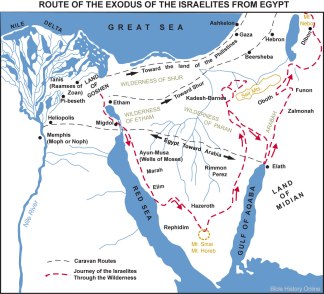
The most recognizable story of wilderness is that of the Israelites. After 400 years of servitude to the Egyptians, the Israelites kept crying out to God for the deliverance prophecied by Joseph in Gen. 50:25. That help came in the form of Moses, who was commissioned by God to lead the Israelites to the land of Canaan. So this so-called Promised land, part of the covenant promise that God made with Abraham in Gen. 12, was the Israelites’ destination. Even in the Israelites’ time in the wilderness, we can see two purposes in the wilderness. The wilderness in the first year was a time of purification and dependence. It is in the wilderness that the Israelites learned to trust God for direction (Fire and Cloud – Ex. 14) and sustenance (Manna and Water – Ex. 16). In Exodus 16, God even says, “I will test them to see whether or not they will follow my instructions” (v. 4). This testing was his goal for the first year the Israelites spent in the wilderness. Spent mostly at the base of Mt. Sinai, it was in this time that the Israelites received the ten commandments, built the tabernacle, and received the rest of the law (Ex. 15-Num. 10). Though there was difficulty in this time (think Golden Calf – Ex. 32), this time in the wilderness was also full of incredible closeness to God. It was during this time that the Israelites were able to witness the Shekinah glory of God descend on the tabernacle. And, during this time, the Israelites experienced the humbling dependence on God that came from relying on him.

Map-Route-Exodus-Israelites-Egypt

We can think of this first year in the wilderness as the training wheels period where God was showing the Israelites that relying on him was best. That trusting in him was the way to choose life and joy. In Numbers 10, the Israelites break camp and move towards the border of the Promised land. In Numbers 11, the cracks begin to show again as the Israelites complain more and more about hardship, food, and in the case of Aaron and Miriam, the power and relationship with God that Moses had. Based on the tendencies that we see in these chapters, we shouldn’t be as surprised as we generally are that the Israelites get to the border of the promised land and choose to go against God and refuse to take the land because of their fear (Num. 14). The Israelites chose not to go into the promised land because their trust in God was lacking. They didn’t think that God would do what he said he would. Instead, they based their decisions on their circumstances, which seemed too difficult to overcome. It’s this that ultimately angers God and leads towards his judgment against the Israelites: They would wander the wilderness for 40 years (one year for each day they spent scouting the wilderness). In the remaining chapters of Numbers, we see more instances of rebellion and provision as the Israelites do exactly as God says and wander the wilderness for 40 years. It is not until the book of Joshua, that we see the next generation of Israelites rise up and take the land just as God promised his people that they would.

These two tales are frequently told together, but they tell two very different stories of the wilderness. In the first, the Israelites seemed to have done nothing to be put in the wilderness, while in the second, the wilderness was a place of punishment for the past sin of the people. But, the purpose of each wilderness experience is the same. The wilderness is meant for purification and refinement, to make the people of God ‘holy, because [he] is holy’ (Lev. 19:2). Too often, I think we view the wilderness as a punishment, and because of that, we go back to asking God, “Why? Why am I here?” We may even sound like some of my high school students when they get called out, “Why? I wasn’t even doing anything!” (No matter what they are doing.) We need to stop viewing the wilderness as a place of punishment. It can be that place, as we’ve seen with the Israelites. But, more importantly, this time in the wilderness is where God is beckoning us back to him. It’s in this time that all of the Israelites first heard God’s word. It’s in this time that they felt the characteristics of God that Moses spoke in Numb. 14:18. In your wilderness wanderings, instead of focusing on the doubt – the questions of why you are in that experience – focus on who God is:

“The Lord is slow to anger and rich in faithful love, forgiving wrongdoing and rebellion. But He will not leave the guilty unpunished, bringing the consequences of the fathers’ wrongdoing on the children to the third and fourth generation.” (Numb. 14:18)

Rest on God’s faithful love, and in your time in the wilderness, don’t forget to remember who he is. When we trust in him, our circumstances don’t seem so challenging anymore.

~ Cayce Fletcher

The Purpose of the Wilderness

Deep calls to deep in the roar of your waterfalls; All your breakers and your billows have swept over me. Psalm 42_7 (1)If you are not in a wilderness period now, chances are you will probably experience a time like this in the future. It’s the moments where we are spiritually thirsty and hungry for God. It can be puzzling when we are in these moments because we begin to doubt and question God. If there was a word that could be used to define these moments, I would say that it would be “Why.” Why do I feel like this? Why am I in this desert? Why does God seem so far from me? Why won’t he return to me?

Though it can seem presumptuous to ask God these questions, we can find the psalmist asking these questions as well. In Psalm 42, the psalmist says, “Why am I so depressed? Why this turmoil within me?” (v. 5, 11) Later on, he writes, “I will say to God, my rock, Why have You forgotten me? Why must I go about in sorrow because of the enemy’s oppression?” (v. 9) It’s natural to question God during these moments, and even Jesus on the cross asked God, “Why have you forsaken me?” (Matt. 27:46). Sometimes, we know the purpose of the wilderness, as Jesus did when he asked God that question. Other times, we may not know in this life why we have to experience the things that we do.

In these times, it’s incredibly important to remind ourselves of two things: (1) we can trust that there is a purpose for the wilderness, and (2) in the wilderness, we can rely on the goodness of God to carry us through. As we think about the ‘why’ behind our wilderness wanderings, it’s first important to ask ourselves how we got to this point. Sometimes, our wilderness comes from forces outside of us, whether that’s circumstances, conflicts with others, or the adversary like we discussed yesterday. We can look at the examples of Elijah and Jesus to see wilderness experiences that were due to the fallenness of the world, not their own failings. Yet, at other times, the wilderness can be caused by our own actions, like in the case of the Israelites.

During these times, we have two options: We can turn toward God or away from him. It’s this choice that will determine whether or not the wilderness experience will help us to grow or to be destroyed. In this devotion, we won’t be able to come to a definitive answer of why bad things happen to good people. But, we can answer the real ‘why’ behind our wilderness experiences. During this time, we have the option to lean on God and learn what it means to walk hand in hand with him. To experience complete dependence on God. The wilderness may be difficult, but it’s also in these moments that we experience more deeply the salvation of God. Going back to the Psalmist words in Psalm 42, we see that our wilderness experiences can make our recognition of God’s love more real and vivid when, after asking why, he says:

mthermon1
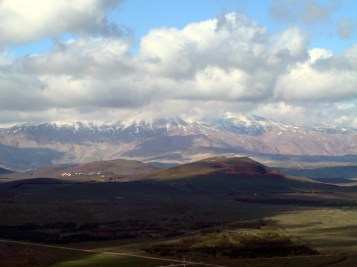
Mt. Hermon (2,814 m – 9,232 ft) on the northern border of Israel

“Put your hope in God, for I will still praise Him, my Savior and my God. I am deeply depressed, therefore I remember You from the land of Jordan and the peaks of Hermon, from Mount Mizar. Deep calls to deep in the roar of Your waterfalls; all Your breaks and Your billows have swept over me. The Lord will send His faithful love by day; His song will be with me in the night – a prayer to the God of my life” (v. 5-8).

We can pray to the God of our life. In these times in the wilderness, trust in your creator, and he will send his faithful love to you.

~ Cayce Fletcher

Keep Running His Race

Hebrews 12 1 (1)

Therefore, since we are surrounded by such a great cloud of witnesses, let us throw off everything that hinders and the sin that so easily entangles. And let us run with perseverance the race marked out for us, fixing our eyes on Jesus, the pioneer and perfecter of faith. For the joy set before him he endured the cross, scorning its shame, and sat down at the right hand of the throne of God. Consider him who endured such opposition from sinners, so that you will not grow weary and lose heart.
Hebrews 12:1‭-‬3 NIV
https://bible.com/bible/111/heb.12.1-3.NIV

Yesterday evening I was out for a run.  It was my second run of the day as I did a 3 mile run in the morning.  I was feeling pretty good early in the run so I made a decision to run for 10 miles. I have only ran that far one other time in my life, it was 10 years ago when I ran a half marathon.  I knew this was a big undertaking so I settled into a manageable pace and went for it.  This scripture immediately came to mind, as well as my grandmother.   Sadly, she is in hospice care and very close to the end of her life.  She is surrounded by family, but not her whole family.  We are 800 miles away, and as I was running it gave me the time to reflect on her life, and draw strength from it.
She is someone I would put in that cloud of great witnesses.  She has lived her life in a way that I know God is proud of.  She has faithfully served Him and his people since she was able. And it makes me want to do better.  During my run, I stumbled between 3 and 4 miles. I fell to the sidewalk like a ton of bricks.  At first I laughed because I thought it must have been funny to the passer by’s in cars.  Then I assessed the damage, a few scrapes and a really scuffed up corner on my phone. I decided to push on, but was considering calling it quits and heading home at that point.   But that scripture says to throw off everything that hinders us, and the sin (sidewalk) that so easily entangles us.  Yes my leg hurt, yes my hand hurt, but I wasn’t giving up.  I had made a commitment to go 10 miles. Fast forward to about 8 miles in, and I notice my left hamstring is feeling a little weird with every step. I slow my pace but it gets worse, at 8.5 it starts cramping up. I stop, stretch, walk a bit, then start again. Yet it only lets me go a few steps before it gives up.  My body has had enough, but I still have a mile to go.  I ended up walking that last mile, but I finished the 10.
In many ways I see a correlation between that 10 mile journey and the faith journey we take throughout life.  There are going to be setbacks, there are going to be times we stumble, or get hurt, and want to quit. There are going to be times we can’t or don’t move as fast as we planned.  But the important thing is to remember our commitment, to draw on the strength of others, to eliminate the things holding us back.
The race is already laid out before us, first set out by Jesus, then followed by so many others.  Let’s make sure to include ourselves in that faith list shall we?
Jerry Briggs

Keep Running Your Race

Gal 5 7

Galatians 5:7-10 New International Version (NIV)

7 You were running a good race. Who cut in on you to keep you from obeying the truth? 8 That kind of persuasion does not come from the one who calls you. 9 “A little yeast works through the whole batch of dough.” 10 I am confident in the Lord that you will take no other view. The one who is throwing you into confusion, whoever that may be, will have to pay the penalty.

Have you ever been having a good day, only to have something or someone happen, and totally change the day?  It’s easy to get beat down by life some days.  And it’s even easier to point the finger at other people or difficult circumstances when we let the things going on around us effect our relationships negatively.  I totally understand that sometimes life is difficult, and sometimes it’s unfair, but that’s not what I’m talking about here.  I’m talking about when we’re really finding our stride in our Christian walk, and then we let something knock us off the path.  That’s why I love the section of scripture in Galatians 5.  It leaves us with no excuses.

This section reminds us that we are responsible for our own faith. It isn’t our pastor’s, our parents’, or our friends’ responsibility. Those can all be great people that God uses to challenge us to grow, but we must be careful to follow God and the teachings of Jesus, not people. Notice too that even a little yeast works its way through the whole batch of dough.  Letting just a little thing bother us without dealing with it could have huge implications on our actions.  We also see that whoever is throwing us into confusion, has to pay a penalty.  We must therefore also pay attention to how we are influencing people.  Take a good look into your life and ask yourself, Am I letting someone throw me off my daily walk?  Am I throwing someone else off of theirs?  If the answer is yes, we have some changes to make.

-Jerry Briggs

Of Greater Worth than Gold

1 peter 1 7

In 1 Timothy 1:5 it says we must love with a sincere faith, which I think means an enduring faith. Our faith is going to be tested, which makes it stronger. In 1 Peter 1:7 it refers to our faith as more precious than gold, which is perishable. The word perishable makes me think of an apple, something that rots quickly and isn’t that important, but gold, that was a form of currency, very important. Also gold isn’t naturally perishable, nothing organic can destroy it, and chemical compounds cannot fully destroy gold. But compared to our faith, gold is meaningless and perishable. 1 Peter 1:7 also says our faith will be tested by fire. To have a strong faith we must go through hardships so we can come out stronger, and by keeping God’s word with us, we can make it through these struggles and have an enduring faith.

-Blair Simon

How to Have Peace Instead of Anxiety

phil 4 6 (1)

Philippians 4:6-7 “Do not be anxious about anything, but in every situation, by prayer and petition, with thanksgiving, present your requests to God. And the peace of God, which transcends, will guard your hearts and your minds in Christ Jesus.”

My grandma Kenney was widowed in 1946, with 11 children. This was before welfare or food stamps. She had to find a way to support herself and the children. Being a devout Catholic, Theresa found work at the church across the street. Her job was to do the laundry: the church housed 8-10 priests and had daily mass, she was responsible for their laundry and the alter linens. While to some this wasn’t important work she took it very seriously. The same pride she took in starching the alter linens, went into the priest’s boxer shorts!

I knew my grandmother when she was retired, yet she still attended mass as often as she could. Life had been hard, yet she trusted God and his word. She kept her iron and ironing board next to her chair. And on the ironing board was her Bible, and as she talked with visitors, her hand was always on the Bible. To the very end, she brought her needs to God and trusted He would always be there for her.

Take some time to reflect on a person of faith who you admire. Thank God for the example they have provided for you.

-Susan Johnson

Thrive

john 10 10

Life can be tough, and it can seem like we are facing an uphill climb every day. It can feel like we are going through the motions, and we are just trying to make it to the next weekend, day off, or vacation. We are going through life, and we are just surviving it. I don’t think we were meant to live this way. God wants to live in us and work through us, He wants to give us life. There is an abundance of life in Jesus Christ, one that brings joy, peace, patience, and kindness. We weren’t made to survive – we were made to Thrive.

What does it mean to thrive? When you Thrive in life, you prosper. You grow. You flourish.

Here’s some references of thriving in the Bible:

“I made you thrive like plants of the field. You grew up and matured and became very beautiful. ” -Ezekiel 16:7a

“Not that I speak from want, for I have learned to be content in whatever circumstances I am. I know how to get along with humble means, and I also know how to live in prosperity; in any and every circumstance I have learned the secret of being filled and going hungry, both of having abundance and suffering need. I can do all things through Him who strengthens me.”

-Philippians 4:11-13

“These things I have spoken to you, so that in Me you may have peace. In the world you have tribulation, but take courage; I have overcome the world.”

-John 16:33

“The thief comes only to steal and kill and destroy; I came that they may have life, and have it abundantly.” -John 10:10

God wants us to have an abundant life. He gives us courage and strength because His Son, Jesus Christ, overcome the world. We are called to thrive like plants in the field! We need to Thrive in our faith and Christian deeds. We need to root ourselves in Christ, and trust God’s plan for our lives. Even when times get tough, we should seek God and point others to God. We should let God be the gardener in our lives and THRIVE.

I don’t know where you are in your walk with Christ. But I do know that our Heavenly Father is calling you to Himself. God is constantly calling you to know Him and to make Him known. Start digging into God’s word and let Him show Himself to you.

Don’t just survive life – Thrive in it.

Brenan Dominguez

Stand Up For Christ

psalm 118 6

So far this week, we have discussed topics on having a Christ-centered life, God’s Will vs. our will, why it’s important to worship through singing, and that we all have a purpose. Today we will be discussing the importance of standing up for Christ.

In today’s society, topics such as religion and Christianity are shunned. Some people avoid speaking on the topics and others try to intimidate or harass those who do. This is known as persecution. Christians are being persecuted all over the world. Some even to the point of abuse or death. Christians are being persecuted for worshiping God, believing in Jesus Christ, reading the Bible, or even speaking or practicing the teaching of Christianity.

Do you ever feel uncomfortable mentioning topics about Christianity? Do you feel like you will be in trouble or scrutinized? Those are feelings and thoughts of fear.

“The LORD is for me; I will not fear; What can man do to me?” -Psalm 118:6

“I sought the LORD, and He answered me,

And delivered me from all my fears.”

-Psalm 34:4

We should not let fear overcome us. We should put our faith in God and He will take care of us. He will definitely take care of us if we are glorifying Him, sharing His Word, and standing up for His Son, Jesus Christ. God wants us to stand firm in our faith and proclaim the message of the Gospel.

“And Jesus came up and spoke to them, saying, “All authority has been given to Me in heaven and on earth. Go therefore and make disciples of all the nations, baptizing them in the name of the Father and the Son and the Holy Spirit, teaching them to observe all that I commanded you; and lo, I am with you always, even to the end of the age.” -Matthew 28:19

“Be on the alert, stand firm in the faith, act like men, be strong. Let all that you do be done in love.” -1 Corinthians 16:13-14

“Jesus said to him, “I am the way, and the truth, and the life; no one comes to the Father but through Me.” -John 14:6

By proclaiming the Gospel message and sharing our faith we are standing up for Christ. Jesus Christ is the way, the truth, and the life. No one goes to the Father except through Him. We need Jesus in our lives. We need to follow Him. We need Him as our friend.

We need to stand up for Him. I love the hymn titled “Stand Up, Stand Up for Jesus.”

The first verse sings “Stand Up, stand up for Jesus, Ye soldiers of the cross; Lift high His royal banner, It must not suffer loss; From victory unto victory His army shall He lead, Till every foe is vanquished and Christ is Lord indeed.”

The last verse ends with “To him that overcometh A crown of life shall be; He with the King of glory Shall reign eternally.”

Do you want to reign and live with Jesus Christ eternally in the Kingdom of God? I know I sure do!

We need to stand up for Christ now, so we can stand with Christ in His Father’s Kingdom which will be established on earth.

Today I encourage you to not fret, worry, or live in fear. God is for us. Jesus Christ died for us. And now we need to live for Him! Share the Gospel message, live a life that represents Jesus, and stand up for Christ!

-Brenan Dominguez

Devoured by a Lion

1 Peter 5 8

1 Peter 5

So far this week, we have looked at the physical healing of a blind man and the mental healing of a demon possessed man. Today we’re going to look at emotional healing.

Let’s start by looking at verse 8. It says that the Devil, our enemy, is hunting for someone to devour. How many of you have ever felt like you’ve been devoured? I’m sure none of you have ever been eaten by a lion, but I don’t think that’s what this verse is talking about. This verse is talking about being devoured by the world, by our obligations, by our worries. I know I have felt absolutely overwhelmed by my school work, pressures from my friend groups and parents. If you want to talk about being overwhelmed, just look at Jesus’ life.

In verse 5 it mentions the sufferings of Jesus. We know that Jesus had the burdens of the entire world placed on him. That puts our problems into perspective a little, doesn’t it? While we worry about who we’re going to eat lunch with tomorrow, He was worrying about being betrayed by one of his closest friends. While we worry if we’ll be able to play on our school’s basketball team, He was worrying about being sentenced to death by the world that he was supposed to save.

I don’t draw attention to this to diminish our feelings, but it is important to put things in a proper context and to humble ourselves. In verse 6, it says that we need to humble ourselves so that we can be exalted at the proper time. Sometimes it feels like we are being devoured for so long without receiving any help from our God. We think that no one knows how much we are suffering under the stress of our worries and we doubt that God cares. But God does care, and you are not alone. We need to be firm in our faith that God will heal all of us of our emotional pain (vs 9).

Here’s the beautiful part of this chapter: it feels like we must wait forever to receive emotional healing, but God promises us right here in verse 10 that He will personally restore, establish, strengthen and support us after we have suffered. He will heal us.

Today I’m going to leave you with some additional verses. Just read them and soak in all they promise.

Revelation 21:4

Psalm 147:3

John 14:27

Psalm 34:17-20

Matthew 11:28

Psalm 34:19


-Nathaniel Johnson

More Letters for You


2 peter 3 17

God’s Word has so much wisdom, teaching and blessing for us today.  We are not so different from the early church and the words that God gave the writers of the New Testament letters still very much apply to us today.  If God were to send a letter to you today –  which of His New Testament letters would he send to you?   Don’t forget to read God’s Mail to you today!

Today we will be looking at the 8 books called the General Epistles (or Letters) which make up the 4th division of New Testament books.   There is a lot of wisdom in these books.

Hebrews – Jesus is Better than…Anything!

It is unknown who wrote the book of Hebrews, though some suggest it may have been Paul.  It was written to remind and convince the Jewish Christians that Jesus is the Messiah.  It appears the Jewish Christians had already endured much persecution for their faith in Jesus – perhaps rejection by their Jewish family and friends who didn’t accept Jesus as the Messiah.  Some were rethinking their commitment to Jesus and were thinking of returning to their Jewish roots and Old Testament law.  The author of Hebrews was writing to show that Jesus is superior to the prophets, angels, Moses, the priests and the whole Old Testament law.  Jesus is the NEW high priest who made the ultimate, perfect sacrifice so we could enter a new and living covenant with God.  The book was written to encourage the Jewish Christians to not give up, to persevere in their new faith and to “hold unswervingly to the hope we profess for he who promised is faithful.” (10:23).

James – Faith in Action

This book was written by James, the brother of Jesus and a leader of the early church in Jerusalem.  The five short chapters that make up the book of James are sometimes compared to the Old Testament book of Proverbs because it contains so much wisdom.  In this letter, James teaches several short sermons on how to live a Christian life on a daily basis.  Over half of the verses contain a command or instruction for Christian brothers and sisters – such as “If any of you lacks wisdom he should ask God,” and, “Everyone should be quick to listen and slow to speak and slow to become angry.”  James stresses the importance of LIVING out your faith – with actions consistent with your Christian faith.  It is not enough to say you are a Christian and you love God and your neighbor.  You must DO it daily.  If Hebrews tells us WHY to become a Christian (because Jesus is better than…), then James is where we learn HOW to be a Christian.

1st & 2nd Peter – Stand Against Trouble

Written by Simon Peter, one of the disciple who, with his brother Andrew, left his nets to follow Jesus.  Peter was far from perfect (denied Jesus 3 times), but he would be the ROCK on which the church would be built – and we see that taking place in the book of Acts.  In 1st Peter he is writing to encourage the church that is being persecuted by the Roman Empire.  He writes, “Cast all your anxiety on him because he cares for you.  Be self-controlled and alert.  Your enemy the devil prowls around like a roaring lion looking for someone to devour.  Resist him, standing firm in the faith.”  (1 Peter 5:7,8).  We would be wise to remember and live by these words as well.

1st, 2nd & 3rd John – This is Love

Written by John, the disciple and close friend to Jesus who also wrote the gospel of John.  In the 5 chapters of 1st John, the word ‘love’ is used 35 times and it also reoccurs in the next two letters several times as well.  The “beloved disciple” John, writes of God’s love, and our love for God – as well as our love for our brothers and sisters.  John emphasizes that in order to love God we must obey his commands – which means loving others.

Jude – Beware of False Teachers

Written by Jude who identifies himself as James’ brother (perhaps making him also Jesus’ half-brother).  It would just about be quicker , and no doubt much better, to read Jude’s book of 24 verses than to read my overview.  He says he would have liked to write about salvation available to all believers, but instead he felt the need to warn the church of the importance of testing those in the church to see if they are saying or doing anything contrary to God’s Word.  He writes of immoral men using God’s grace as a license for follow their own evil desires.  He likens them to the residents of Sodom and Gomorrah, and says a similar fate awaits them.  He urges the church to remain true to their faith and to “snatch others from the fire” (verse 23).


God’s got a lot to say to you because He loves you and wants to see you in His Kingdom – more on that tomorrow!


Don’t Let it Sit Unread in Your Mailbox!

-Marcia Railton