
Isaiah 1-4
Regardless of your political ideas and loyalties, I believe we can all agree that the world is a mess right now. War and the threat of new wars are a daily reality. Mud-slinging goes back and forth between our politicians while important issues that they should be finding solutions to go unresolved and forgotten until the next election cycle. The soaring cost of buying a home or even purchasing groceries shows no sign of significant improvement. Anxiety and stress levels are high, causing many both inside and outside of the church to feel hopeless.
And yet, we have hope! Although there is quite a bit of reading material from the Bible today, I’m going to focus on just one verse that can bring all of us hope. In the NASB 1995, Isaiah 2:4 says:
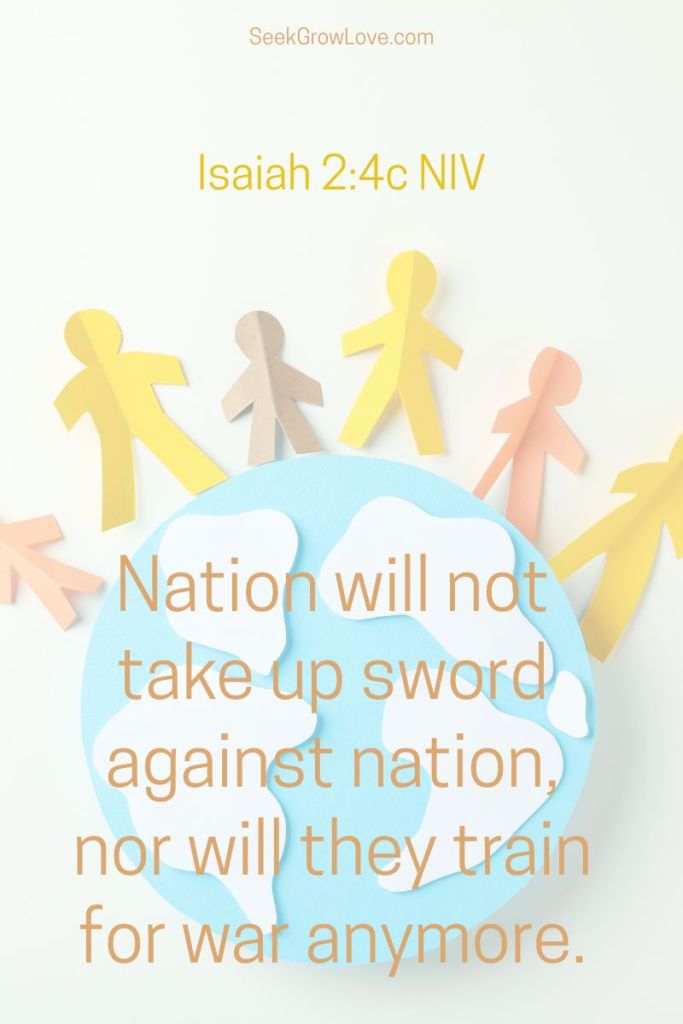
“And He will judge between the nations, And will render decisions for many peoples; And they will hammer their swords into plowshares and their spears into pruning hooks. Nation will not lift up sword against nations, And never again will they learn war.”
Imagine living in a time and place where God is our judge. Of course, he is already in our hearts, but the nations of our world don’t worship and obey him. Even the USA, with “In God We Trust” printed on our money, documents, and buildings, does not truly and wholly worship God.
Imagine no more need to create bigger and faster weapons. In verse four, by turning weapons into plowshares and pruning hooks, they are creating tools used for growth instead of destruction. Without war or the threat of war, more creativity and time could be devoted to feeding the hungry and easing each other’s burdens. No one would fear their loved ones becoming a casualty of war or going off to fight only to return as a different person because of their experiences.
I encourage you today, as we await God’s Kingdom, to seek out ways to bring good to the damaged world we live in. Regardless of the hate and dismay, help to cultivate life and renewal for your family, church, and community. Seek peace whenever possible and spread hope far and wide.
-Lacey Dunn
Reflection:
• What are ways that you can spread the hope of God’s peace to others in your family, church, school, work, community, etc…
• Take time to imagine what life will be like in God’s Kingdom. What does it look like, smell like, and feel like?
• Are you feeling hopeless? Who is someone you can talk to who can help restore your hope?

 Seek Grow Love