
*Joshua 23-24
*Psalms 38
*Acts 10
-Devotion by Jeremy Martin (TN)
Today’s readings have such important, landmark verses and concepts in them that we’ll be bouncing around in all of them. First, let’s talk about discipline. I grew up (many years ago) in an age that believed in physical discipline; in a time that folks believed that if you lacked proper direction then a firm impetus on the posterior would propel you properly towards the direction of righteousness. I was personally propelled towards righteousness on a number of occasions, but I have to confess that it was always deserved and always administered fairly. Even so, when I was younger I did my absolute best to avoid being punished: I shoved books down the back of my pants once, I remember hiding my father’s belts on at least one occasion, and I took long extended walks to the river hoping that the extra time would cause my offenses to be forgotten. It was rather silly, really, the foolishness of a selfish child. Thinking back to some of those instances really made the Psalms reading today resonate within me.
In our Psalms reading, it says in 38:1: “…O Yahweh, reprove me not in Your wrath, And discipline me not in Your burning anger. ” (LSB). This is David asking for a “cool off” time, for correction with justice rather than wrath which could destroy him; not an avoidance of punishment but temperance in it’s administration. In v3-8 he freely confesses his sin, and is asking God to correct him, but in a manner which allows growth. This sentiment is echoed beautifully in Jeremiah 10:24, when the prophet says “Discipline me, O Yahweh, but with justice; Not with Your anger, lest You bring me to nothing. ” (LSB). The purpose of discipline is to correct behavior, but know also that “the fear of the Lord is the beginning of wisdom” (Proverbs 9:10) is not an idle statement. If you believe that your heavenly Father loves you, you will understand that the expression of that love is to correct your behavior at times before you continue in a course that will lead you to destruction.
Hebrews 12:6 says “FOR THOSE WHOM THE LORD LOVES HE DISCIPLINES, AND HE FLOGS EVERY SON WHOM HE RECEIVES.” (LSB). It is the expectation that our heavenly Father will correct His children, in love, to prevent us from engaging in activities that will lead to our destruction. That’s just what a good dad does. The discipline of God can come in many forms; a painful conscience, an unrest in our soul when we know that we’ve done wrong, or even a more tangible and physical discipline. Is it going to always be comfortable, and in a manner that we prefer? Usually not. If we are NOT receiving that corrective discipline though, we should be very concerned and ask ourself “why?”. I’ve heard it said that God usually gently guides his children, but I can tell you truly that sometimes he picks them up by the throat and the short hairs (as in my case) until they listen. Do not run from, or dread, the life saving corrective discipline from our Father in heaven who loves you. Embrace it, and take to heart the lesson He is trying to teach.
When the Israelites, in our last chapters of Joshua reading this morning, are getting their last instructions and guidance from their leader Joshua before he dies they are reminded of all of the blessings that God has given them, and then warned of this very thing in Joshua 23 “…15 And it will be that just as all the good words which Yahweh your God spoke to you have come upon you, so Yahweh will bring upon you all the calamitous words, until He has destroyed you from off this good land which Yahweh your God has given you. 16 When you trespass against the covenant of Yahweh your God, which He commanded you, and go and serve other gods and bow down to them, then the anger of Yahweh will burn against you, and you will perish quickly from off the good land which He has given you.” (LSB).
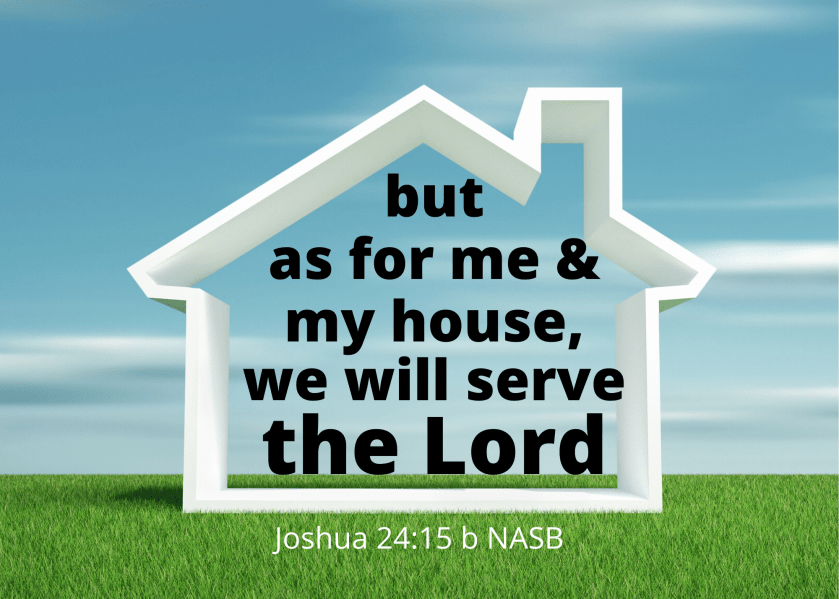
Then, Joshua tells the children of Israel that they have a choice, but clarifies his choice in one of the most beautiful (and most quoted) verses in the Bible, located in Joshua 24:15: “If it is evil in your sight to serve Yahweh, choose for yourselves today whom you will serve: whether the gods which your fathers served which were beyond the River or the gods of the Amorites in whose land you are living; but as for me and my house, we will serve Yahweh.” (LSB).
In our reading of Acts 10 today, there is a landmark moment, a fulfillment of prophecy so huge that to give it proper scale of importance this entire chapter should be in huge bold font with giant exclamation points at the beginning and the end of the chapter. Every time you turn to this section in the Bible, you should hear the trumpets of angels sounding in your head, it’s that important. For the first time in recorded history, in this chapter, salvation is offered to the gentiles! That’s the majority of us, unless you’ve got some remote biological link to Abraham. This is in a direct fulfillment of the prophecy in Isaiah 49:6 where it is written: “He says, ‘It is too small a thing that You should be My Servant To raise up the tribes of Jacob and to cause the preserved ones of Israel to return; I will also give You as a light of the nations So that My salvation may reach to the end of the earth.‘” (LSB).
I will point out something that most folks conveniently overlook. This guy Cornelius, in addition to being a gentile (a Roman centurion, specifically), was “a devout man and one who feared God with all his household, and gave many alms to the people and prayed to God continually” (Acts 10:2, LSB). He was a devout man, he practiced tzedakah (look it up, please!) and enacted God’s justice to the people, and prayed constantly. This is what got God’s attention, because God sees the heart of a man. This was not a random choice. In Acts 10:4 the angel of God says “Your prayers and alms have ascended as a memorial before God.” This is a guy who put his money where his mouth was, and his wallet where his heart was. We should emulate his actions to the best of our abilities, if we desire to please our God.
After the events detailed earlier in the chapter, Peter goes on to say at the beginning of what could be considered his 4th recorded sermon in Acts 10:34 “I most truly comprehend now that God is not one to show partiality, but in every nation the one who fears him and does righteousness is welcome to Him.” (LSB). He then finishes this sermon, as the holy spirit falls upon all those listening to his words, as the Jewish believers who came with him were astounded that gentiles had received the gift of the holy spirit, by asking “Can anyone refuse water for these to be baptized who have received the holy spirit just as we did?”
Today, with the overwhelming number of gentiles who profess to be Christians, we kind of take it for granted, but before THIS SPECIFIC MOMENT in history: salvation was for the Jewish people alone, the chosen people of God. This was the exact moment in time when God clarified for all humanity: it’s not who your father was (genealogically), but who your Father is (in your heart) that matters. This is what God has been saying from the beginning, in Deuteronomy 6:4-5, but now the gift of salvation is being offered up to all the nations, to all those who fear God and do righteousness (again, please go look up tzedakah for a clarification on this), to those who seek and accept the discipline of our Father.
REFLECTION QUESTIONS
Did you ever try to avoid being disciplined (by God or men), and what were the results?
Think of a time when you received divine discipline. What was the result?
Have your alms ascended as a memorial to God, or are they stacked up in your bank as a memorial to your own greed?
PRAYER
Father God, please discipline me gently and allow me to receive the instruction that is offered through it. Correct me when my course goes astray, and forgive me of my many shortcomings. Help me to reflect your love and character to all of Your creation. Thank you for all of the blessings, and especially for sending us Jesus and his words of instruction. In his name, Amen.


