

Old Testament: Genesis 45 & 46
Poetry: Psalm 20
*New Testament: Matthew 15
I have been involved in many food service jobs over the years, including food delivery. There was one particular food delivery job that I will never forget because of the absurdity involved with my employer. I had signed up to simply deliver food from restaurants for a company that was like a local GrubHub or UberEats. Things went along smoothly for the first month, until my employer got a wild idea: he wanted to deliver the local newspaper as well (he was nervous about losing business because of larger companies coming into town). For the second month, I was taking on a newspaper delivery route, as well as taking food orders when I could (sometimes working 12-hour days). It didn’t take long before I left that job because it wasn’t what I signed up for: my employer was adding requirements to the job that were not agreed upon from the beginning.
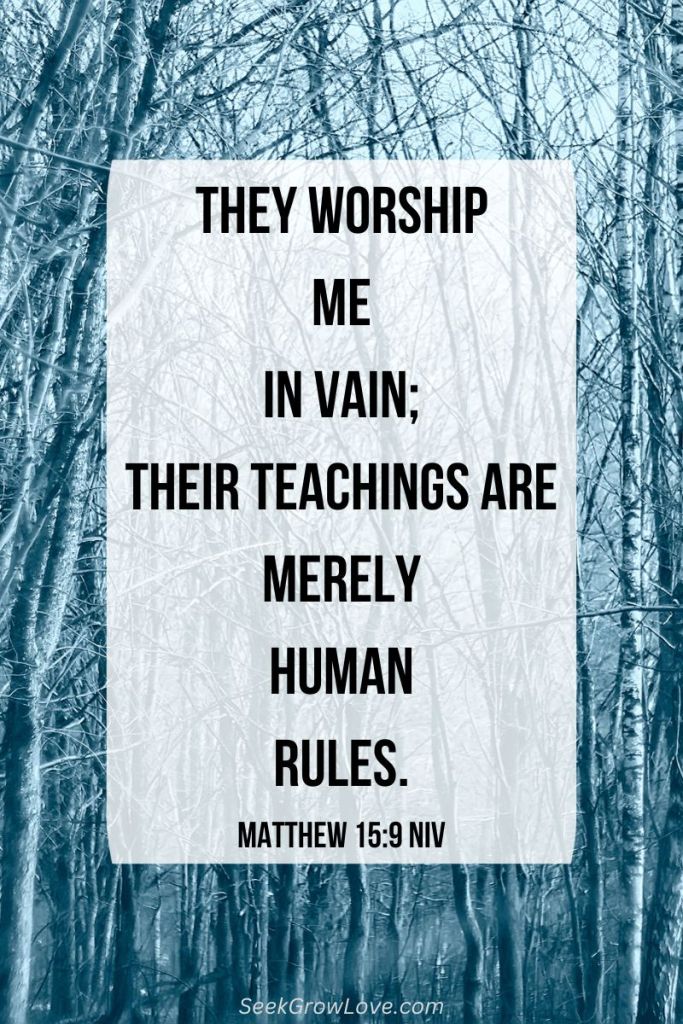
Does this happen in church too? When it comes to eternal life and being saved, do we add requirements that were not originally stated by Jesus or the apostles? Jesus encountered this in our passage today with the Pharisees and scribes. They were teaching that one must wash their hands before eating in order to be “pure” before God, something that is called the tradition of the elders. While washing your hands is still a good practice, there was nothing in the Old
Testament that ever stated this as a requirement: God was not requiring this to be in His presence, but men were. They were seeking control over the people and adding requirements that were not original.
Unfortunately, the Church today oftentimes does the same thing: adding requirements for salvation that were not original. For example, the Nicene Creed (325 AD) that is recited at many churches today states that Christians must believe that Jesus is “true God from true God, begotten, not made, consubstantial with the Father…” There isn’t a single verse in Scripture that
describes Jesus in this way, but it is a required belief for salvation in many churches today. Not only that, but there are usually cultural expectations in many churches that are required for fellowship, such as the clothing you wear or the way you have your hair put up.
What does Scripture say about salvation? “If you confess with your mouth Jesus as Lord, and believe in your heart that God raised him from the dead, you will be saved.” (Romans 10:9) Many might call me a minimalist, but I don’t believe Jesus intended salvation to be complicated: it’s difficult to make him the Lord of our lives and do what he says, but it’s not complicated. It is supposed to be simple enough for a child to understand (Matthew 18:3).
Reflection Questions
- What church traditions are alive around you that are beyond Scripture?
- What have you been taught is required, even if it’s not found on the lips of Jesus or the apostles?
Talon Paul
 Seek Grow Love