
Lost

Old Testament: Hosea 6-8

Poetry: Psalm 78

New Testament: Luke 15:8-10

It is fairly maddening how quickly I can lose an object. I will set down car keys to load a child into the car and they are gone.  I can be in the middle of a text conversation, get up for a drink, and my phone disappears. Parking passes, debit cards, proof of insurance, checks, grade verifications, etc – there is no limit to what I can lose. My students will even tell you that I don’t collect work directly into my hands because if I touch it, I’ll subconsciously place it near my next conversation. It is infuriating to lose items so important, but each time, I rise to the occasion to search with determination that matches the importance of what is missing.

When we consider those who have not yet heard the Good News of Jesus Christ, what responsibility do we have to recover the lost?  If it is gauged upon the importance of the object, and we are searching for those who were paid for with the blood of Christ, then it requires all the strength we can muster.  We do not sit patiently in our homes and churches, waiting for our doors to be darkened by their presence. If we do this, then the searching is being done by the wrong party. We are to turn on the light, get our butts moving, and carefully search each room where our feet land.

Fallen out and forgotten, lost in the shuffle, moved out of place, and never properly cared for are the people of God we are looking for. They are every bit as equal in value, but they need to be found with the Gospel in hand. It is possible that they choose to remain wherever they are.  Unlike lost coins and keys, there very well may be a struggle. Like a teenager who slips back under the covers on a school morning, they too may crawl back into the couch cushion or make a home with the dust bunnies.  No matter, our role is the same in the search, to find them and expose them to the Light.

God remains steadfast in his desire to continue the search despite Israel’s determination to commit to being unfaithful. While Israel acknowledges guilt and recognizes revival is needed, their actions do not yet match their lips,“Come, let us return to the LORD. He has torn us to pieces but he will heal us; he has injured us but he will bind up our wounds.” They continue to reject what is good and are forced to deal with the consequences of a rebelling nation.

“We will not hide them from their descendants; we will tell the next generation the praiseworthy deeds of the LORD, his power, and the wonders he has done” – Psalm 78:4

Whether it is with a coworker, an acquaintance, a straying brother or sister in Christ, or our own children, we do not simply wait patiently, but continue to pursue the lost coin.  We share our own experiences of feeling lost.  We share the consequences of our own rebellion against God.  We share our testimony and the promises of God, not hiding our faith for the sake of relationship.  We cannot simply pick them up and place them in our pocket, but we can surround them in love and prayer.  We extend the love of God to them determinedly and unconditionally. No one is less valuable in the eyes of God. Ultimately, we hope to rejoice and reap a return, giving praise to our gracious God who has searched for all of us with salvation’s plan.

-Aaron Winner

Reflection Questions

  1. What does Hosea, the woman searching for her lost coin, the writer of Psalm 78, and the heart of God have in common?
  2. Do you most often sit and wait for the lost to come find you and the gospel message – or do you spend time and effort seeking out the lost?
  3. “No one is less valuable in the eyes of God.” Do you believe this? Can you find Scriptural evidence to support it? Do you live like this is true?
  4. What lost coin can you pursue this week? Why? When, where and how? Pray for God’s heart, guidance, wisdom, words, and love.
Can You Relate?

THREE PARABLES—Luke 15

Thursday, December 22, 2022

There are so many layers to these three parables of Jesus, but today I want us to think about whom we most relate to in these short stories. Probably we all want to cross off the Pharisees.  You know, those guys who stand on the sidelines, quick to distant themselves from the sinful people in the world. “And the Pharisees and scribes grumbled, saying ’This man receives sinners and eats with them’.”( v.2)   None of us is like them, right?  We are anxious to see all the sinners repent and enter the kingdom when Jesus returns.  Most importantly, we are not quick to criticize people who reach out to sinners, as they did.  They even thought it was their righteous duty to criticize Jesus because He ate with sinners.  Surely, we cannot relate to them.   

Parable One—The Lost Sheep

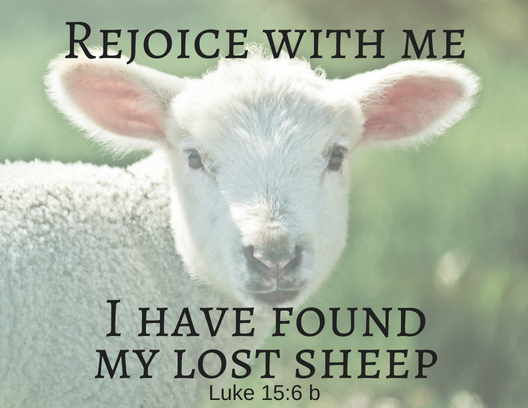
Jesus narrows in on the Pharisees’ pride in these three short stories.  It seems as though he specifically chose the first two parables to increase the ire of the Pharisees. Jesus’ first words,  “What man of YOU, having a hundred sheep…”(v3) stung.  How dare He compare THEM to a shepherd?  They were, after all, much above a lowly disgusting shepherd.  Their beautiful robes and position in religious society proclaimed their superiority.  Yes, really, the Pharisees thought they were much better than a shepherd was, and undoubtedly disliked Jesus’ comparison of them to a poor sheepherder.

Maybe, however, you relate most to the shepherd.  Of course, you would rush out to find that one lost sheep, even though you have more than enough other sheep (who by the way, are safely gathered together).  Think of a father, who rushes back into his burning home to save his one child who is still inside, even though his other children are safely outside.  Just like Jesus, you would pick up that child and carry him with great joy to safety.

Parable Two–The Lost Coin

The second parable serves to further increase the ire and grumbling of the Pharisees. Once again, their beautiful flowing robes and position got in the way of doing God’s work.  How dare He compare them to a woman, and, an obviously poor, careless woman at that!  But this woman, like the shepherd, has lost something extremely important to her. Perhaps you relate most to this woman who would not stop or sleep until her valuable lost coin was found. 

When Jesus uses this poor woman and shepherd as examples of God’s forgiveness, He is telling these Pharisees (and US), that this woman and shepherd represent God’s desire to seek lost sinners.  To end these two parables, Jesus shares a wonderful scene of great rejoicing in heaven among the angels when the lost sinners are found.  However, the Pharisees probably found it offensive to envision such rejoicing in heaven with sinners. Heaven forbid.

Parable Three—The Lost Sons

Traditionally, we think of this final parable as the Parable of the Prodigal Son.  You know, the son who considered his father “as dead” and asked for his inheritance from him before the father had even died.  He wanted to go out and live the good life, away from his father.  Things did not turn out so well for him, and the prodigal son soon realizes that he made a huge mistake and decided to return home and beg for forgiveness.

“But the father said to his servant, ‘Bring quickly the best robe, and put it on him and put a ring on his hand, and shoes on his feet.  And bring the fatted calf and kill it, and let us eat and celebrate.  For this my son was dead, and is alive again; he was lost, and is found.”  vs. 22-24

 This is a wonderful story of forgiveness, and probably the Pharisees think this story is tolerable because, after all, it is about a rich family, a beautiful robe, and a big party with music and dancing.   But hold on, the rest of the story was about to be told.

The other brother, the good other brother, was in the field working for his father when he approaches and hears the dancing and music.  He inquires and finds out the ugly truth.  His brother has returned to his father, and the party is for him.  Instead of going in and being happy that his brother was back home, the pity party began.  He reminded his father how good he had been; always served the father, never disobeyed, and certainly was not a son who wasted his father’s wealth on prostitutes. He made it clear that in his mind his brother is a sinner.  Once a sinner, always a sinner.  How could his father receive his brother back and eat with him? He could not let it go.

“He was angry and refused to go in.”(v.28)   Can you relate?

-Kayla Elwell

Questions for reflection:

  •  Whom did the other good son represent in this last story? 
  •  Can you relate to the resentment and anger the good son felt? Why or why not.
  •  Have you ever felt cheated, angry, upset, jealous, revengeful, or disappointed that you were not properly rewarded when others got recognition for lesser good works, or when others got forgiveness for messing up royally? Where do you believe that those feeling come from? A false sense of pride? A desire to get what is rightfully yours? Wanting to be better than others? Perhaps someone has hurt you deeply.  How do those feelings apply in this last parable?