~ Devotion by Cayce Fletcher (SC)
Cayce Fletcher is a wife and homeschool mom of three. She writes and podcasts at amorebeautifullifecollective.com where she helps women grow in grace, build with purpose, and live beautifully. Read the latest post in the Systematic Theology series here.
I live on family land, and over the years, there have been several different kinds of livestock that we’ve had ‘out to pasture.’ Cows, goats, and chickens all have their challenges, but what they all will do, when given a chance, is escape.
Several years ago, before we moved back to the Farm (as we call it), we got home after a long week at Southeast Camp only to find that the cows had escaped the fence and were busy eating up the vegetable garden and walking on the flowers in the yard. We had to shepherd them back into the fence.
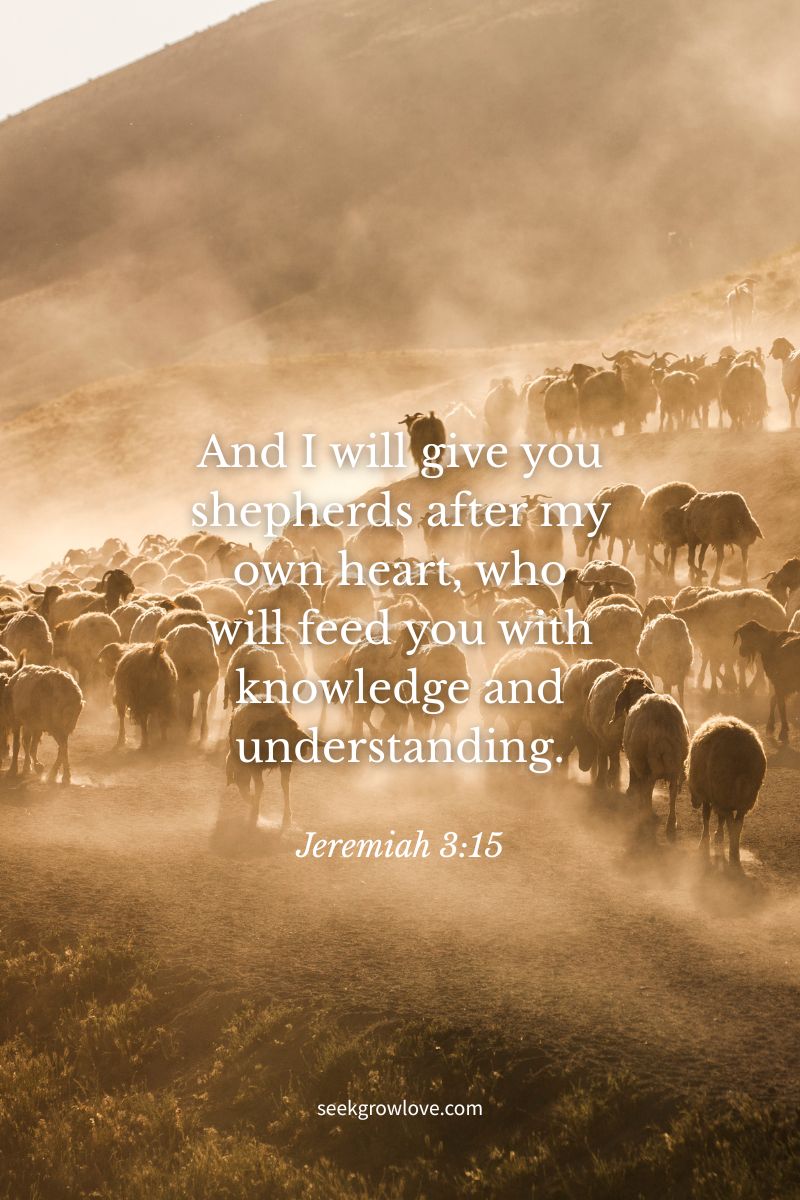
Israel often follows the same path. In the story of Israel, we see their propensity for ‘escape’ – or their ability to wander off the good path of God and pursue their own desires. They desperately needed a shepherd to care for them. God was their shepherd king, but in the time of Samuel, they rejected him. David stepped in to care for the people as the kingdom was handed to him.
What did the shepherd king do for his people?
The shepherd king guided them to green pastures.
The shepherd king needed to bring the people to good pastures. That means he needed to guide the people to the place where they would get life – and that place is in God’s presence. David recognized the importance of bringing people to God. 1 Chronicles 13:3, “Then let’s bring back the ark of our God, for we did not inquire of him in Saul’s days.”
During the time of the judges and Saul, the Israelites did not have a close relationship with God. As king, he could bring the people to God and show them how good God was. This is why bringing the ark back was one of his first actions as king.
The shepherd king protected them from harm.
David was a man of war. This was one way that David used his unique abilities in obedience to God. The people had not fully conquered the land in the time of Joshua. David continued this work during his time as king.
In 1 Samuel 17:34-36, he describes what a shepherd does: “David answered Saul, “Your servant has been tending his father’s sheep. Whenever a lion or a bear came and carried off a lamb from the flock, I went after it, struck it down, and rescued the lamb from its mouth. If it reared up against me, I would grab it by its fur, strike it down, and kill it. 36 Your servant has killed lions and bears; this uncircumcised Philistine will be like one of them, for he has defied the armies of the living God.”
The shepherd had to protect his flock from dangerous animals. The shepherd king had to protect his people from the surrounding nations and influences that would harm the people and lead them away from God.
The shepherd king watched out for the weakest in the flock.
1 Chronicles 12 describes the people who came to support David when he was on the run from Saul. 1 Samuel 22:2 gives more insight into who they were when it says, “All those who were in distress or in debt or discontented gathered around him, and he became their commander. About four hundred men were with him.”
David looked out for the outcast, the ‘weak links’, the poor. He took them in and led them in such a way that they turned into the mighty men we read about in 1 Chronicles 11-12. They were men of valor with such jaw-dropping military exploits that we can’t really comprehend them today.
In Psalm 72, we read about a prayer for this shepherd king. Verses 12-14 say, “12 For he will rescue the poor who cry out and the afflicted who have no helper. He will have pity on the poor and helpless and save the lives of the poor. He will redeem them from oppression and violence,
for their lives are precious in his sight.”
The shepherd king sees with the people the eyes of God. Each one is precious in his sight.
Every person who leads someone else has to step into the role of shepherd. That is why we call ‘pastors’ pastors – it is a word derived from the Latin pastor, which means shepherd. When we shepherd others, we don’t do it for our own glory, but to bring people to glorify God. The ultimate example of this type of shepherd is Jesus – the perfect fulfillment of the shepherd king.
May we humbly follow his example!
Reflection Questions
- Why do you think that the shepherd imagery is so strong throughout the scriptures? What can we learn from this today?
- Who has been a ‘shepherd’ in your life, leading you to God?
- How can you be a better shepherd to others?
Prayer
Lord,
Help me to guide other people to you through my words and deeds. Please bless the shepherds around me. Strengthen them for the task at hand. May we approach all things with humility and dependence on you.
In Jesus’ name,
Amen.