Just Two Choices

A Free Theme Week into the Book of Psalms

Psalm 1 6

Greetings!  I’m introducing a week of devotions based on the Psalms.  There are 150 psalms in the Bible. (Note there are Protestant Bible translations and Catholic Bible translations.  The psalm number has a variation in Catholic translations.  I’ll be following the psalm numbering in Protestant versions ie. NIV, KJV, NRSV etc…)

The word psalm comes from the Hebrew word “mizmor” and means melody.  When translated into Greek it is “psalmos” which means song for the harp or the plucking of strings.  The key is that they are musical pieces.  Just as we sing hymns and praise and worship songs in church, the psalms were written to be sung as part of worship.  Most of the Psalms have been used in Jewish and later Christian worship settings for over 3,000 years (and you thought Frank Sinatra or the Beatles was old music).

Not all psalms are alike.  Different commentators call them different things and they are grouped differently.  I like the following 7 groupings:  1.Wisdom, 2. Royal, 3. Lament, 4.Imprecatory, 5.Thanksgiving, 6. Pilgrimage, 7. Enthronement.  During this week I’ll focus on a different type of Psalm and give the description and brief example each day.

Let me also talk to you a bit about how I incorporate psalms into my daily worship.  For hundreds of years men who live in monastic communities or monks have used the psalms as part of their daily worship.  In many communities they sing/pray/chant through the entire Book of Psalms every month.

A few years ago I came across an idea for going through the entire Book of Psalms every month using 5 psalms a day.  On the first day of the month read Psalm 1, 31, 61,91 and 121, the next day read Psalm 2,32,62,92,122.  Whatever day of the month you are on, read that, and then add 30 and keep going up by 30.  That way, in 30 days you will read all 150 psalms.  I break this up during the day: one when I first get up, one mid-morning, one at lunch time, one at supper time and one at the end of the day.  This way I surround my day and fill my day with these prayers and songs to God.  You don’t have to do it that way, but you might want to try it, or whatever way works for you. (On months with 31 days I just pick a few of my favorites for day 31).

The first type of psalm is a wisdom psalm.  It’s a kind of teaching psalm pointing out the way to live a Godly life.  An example of a wisdom Psalm is Psalm 1.

Psalm 1

Blessed is the one
who does not walk in step with the wicked
or stand in the way that sinners take
or sit in the company of mockers,
but whose delight is in the law of the Lord,
and who meditates on his law day and night.
That person is like a tree planted by streams of water,
which yields its fruit in season
and whose leaf does not wither—
whatever they do prospers.

Not so the wicked!
They are like chaff
that the wind blows away.
Therefore the wicked will not stand in the judgment,
nor sinners in the assembly of the righteous.

6 For the Lord watches over the way of the righteous,
but the way of the wicked leads to destruction.


This psalm is a simple but clear message about the choices we have in life.  This theme has been taken up by many through history.  Robert Frost talked about having a choice to take one of two paths and he took “the road less travelled” and that it made all the difference.  Jesus talked about wide gates and narrow gates and the importance of following his path “I am the way, the truth and the life.”  Even the classic rock band Led Zeppelin sang “yes, there are two paths you can go by, but in the long run, there’s still time to change the road you’re on.”

This psalm teaches us that we do have choices.  We can follow the path of the righteous or we can follow the path of the wicked.  The path of the righteous is the “right or correct path.”  This path is the path of one who follows God’s instructions.  The law of the Lord is not so much a law like a legal code as much as an instruction about the way to live.  Jesus showed his disciples/students how to live a life that was faithful to God.  Those who follow this path delight in following God’s instructions for life and spend time meditating upon, praying about, thinking about God’s instructions.  What do you spend your time thinking about, focusing on, absorbing?  The person who is fully absorbed in God’s ways will live a fruitful and prosperous life.  That doesn’t necessarily mean they will be financially wealthy, but they will be successful in the way that God defines success, they will be godly, they will have life.

The other path is the path that leads to destruction.  This is the path that does not end well.  If I told you that there was a fork in the road: if you go right, you’ll end up at Disney World and a lifetime of fun and adventure, if you go to the left, you’ll be at the garbage dump and there’s no turning back.  I’m guessing you’d choose Mickey over a trash heap.  It all boils down to a simple choice.  If you feel like you’re currently heading on the wrong path, there’s good news “there’s still time to change the road you’re on.”

-Jeff Fletcher

Lessons from the Wilderness: David

Wilderness Wandering Lesson #3: When the desires of our heart lead us away from God, true repentance leads us back.

Psalm-51-Prayer.jpg

At the heart of our lessons from the Israelites and Elijah is a focus on trust. We need to trust that God knows best for us and will lead us in the right direction as the Israelites learned. And, we need to trust that God will provide and protect us according to his will like Elijah learned. Elijah, in our previous lesson, was not lead into a wilderness season by any failing on his part. Instead, the wilderness for him was because of circumstances outside of his control. By looking to God and remembering those past successes with God, he was able to overcome trying circumstances.

The wilderness story that we will look at today also concerns a man that could remember past successes with God. In his story, he had stood against giants, mad kings, had been through the wilderness once and overcame it. David was a “man after God’s own heart” (1 Sam. 13:14). We see in the book of 1 Samuel David’s victories. He was blessed by God, and because of this blessing, he was able to overcome his enemies. The book of 2 Samuel then describes what happened to David after he overcame these things and became King of Israel. During the first 10 chapters, David is set on the throne and receives the Davidic covenant, where he is told that Jesus will come from his lineage. If David could have just stayed in these moments where his focus was on God, he would have dwelt securely in the land and set up his children to do the same.

Instead, we see David drifting down a path that led him to devastation in 2 Sam. 11. In this chapter, we see the story where David, without questioning his actions for how they would reflect God, sleeps with Bathsheba and sends her husband to her death. After this, David is told that he would lose the baby Bathsheba just bore and that his house would be destroyed. David’s actions here lead toward the hurt that he faced with his son Absalom in 2 Sam. 14-15. The first sin that we see in these chapter 11, lusting after Bathsheba, began the sin cycle that led David into a wilderness period that was a time of intense pain that David never really got over.

So how did David get to this point? During this time, he had stayed back at his palace idle instead of going with his armies to fight in the wars he wanted them to engage in. At this moment, his desires began to be misaligned from the desires of God. And from here, his actions lead him away from God.

We see some of David’s reactions in 2 Samuel as he mourns his son and repents of his sin. But, at this time, we don’t see his feelings about this time in the wilderness. In Psalm 38, a psalm written by David, we see the danger that comes from drifting too far from God. We see the desperation in David’s voice as he says, “There is no health in my body because of Your indignation; there is no strength in my bones because of my sin. For my sins have flooded over my head; they are a burden too heavy for me to bear. My wounds are foul and festering because of my foolishness” (Ps. 38:3-5). Because of David’s sin, he had to experience terrible pain, a trying wilderness experience. We can look back at the lessons of the Israelites to realize this time in the wilderness was for purification, but still, if David had aligned the desires of his heart with the desires and character of God, he could have saved himself from this pain.

ps. 51

The wilderness is not always caused by our sin, as we’ve seen. But, at times, it is. And during these times, we can look to David’s example to see how to overcome those moments in the wilderness that were caused by our sin. Psalm 38 is an example of a penitential psalm, that shows both David’s true repentance and his desire for God in his life. Psalm 51 is another example of David writing in repentance. He says, “Be gracious to me God, according to your faithful love; according to Your abundant compassion, blot away my rebellion. Wash away my guilt and cleanse me from my sin. For I am conscious of my rebellion, and my sin is always before me. Against You – You alone – I have sinned and done this evil in Your sight. So you are right when you pass sentence. You are blameless when You judge” (Ps. 51:1-4). In this psalm and the other psalms, we see how David takes responsibility for his sin and also recognized what is required from him if he sins. He needs to be purified with a new heart that reflects the desires of God to be placed within him. This is key to accomplishing what David asks God in v. 12: “Restore the Joy of Your salvation to me and give me a willing spirit.” When we are in a wilderness of cause by our sin, we may be tempted to harden our hearts in anger against God. But, that is the path that leads us away from God and further into the wilderness. When we truly repent, we can receive back the true joy that comes from the salvation of God. After we have made it through the wilderness, we can use this time to bring others back to God (v. 13). If you are in this time today, choose the right path and come back to God. It may be painful to soften your heart and feel the weight of your sin, but that will lead you towards the true joy that comes from God.

~ Cayce Fletcher

In His Word – with the Poets

psalm 119 103

This week we are looking into the importance of God’s Word as well as some of the goodies we are rewarded with when we open the book.  First, we had an overview of the 5 books of Law.  Yesterday we considered the 12 books of History, so today we are up to the 5 books of Poetry.

When I was a school kid eating up my history classes, I was yawning during my poetry course.  And, I still haven’t matured enough to really enjoy a ‘good book of poetry’ whatever that means.  However, I truly love opening up my Bible to these inspired books of poetry.  So many times when I reach for my Bible – it is to the books of Poetry that I go, and I am not disappointed.

Often when reading the books of law and history you get the facts of the events.  And from there you can piece together the likely thoughts or emotions of the characters and what their relationship with God was like at the time.  But, in many of the books of poetry you get the poet’s raw emotion: disappointment, anger, depression, elation, thankfulness, etc… And, through it all – God is there.  Along with the poet’s emotion, you get to read of his personal testimony of God’s faithfulness.  Psalm 13 is one short example – it starts out with quite a bit of pain and anguish and questions for God – but it ends with a beautiful statement of God’s unfailing love and goodness.

I really appreciated Andrew Cheatwood’s devotions two weeks ago when he wrote candidly about his struggle with spiritual depression and the help he found in the Psalms.  I applaud his wisdom in looking to God’s Word.

Here’s a brief overview of the 5 books of Poetry

JOB – Suffering, But Still Trusting

Satan attacks Job.  He loses everything except his trust in God – and that is enough.  He prospers again, even more than before.

PSALMS – Jewish Songbook

Songs, prayers and praises to God in poetry.  The longest book of the Bible, mostly written by David.  Psalm 119 is the longest chapter in the Bible – all about the greatness of the Word of God

PROVERBS – Wisdom!

Wise King Solomon shares his wisdom on many matters: work, money, temptation, discipline, etc…These 31 chapters can be read one chapter a day every month and you will find yourself a wiser person.

ECCLESIASTES – Search for the Meaning of Life

Solomon found pleasures, riches, and fame don’t satisfy.  Instead, revere God, follow Him and let God be God

SONG OF SOLOMON – Love Songs

Poems by Solomon celebrating the beauty of married love, also called Song of Songs


Which is your favorite book of Poetry?  Go ahead – read some God-inspired poetry today!

Marcia Railton

ON PURPOSE – Worship

Matt 22 37,8


The rest of this week we are talking about living life ON PURPOSE – the way God intended.  Choosing God-given targets (not the fake worldly targets that keep popping up in our way), and then pursuing those goals with everything we have – both individually, as well as with the church body.


If you took the opportunity to read the passages at the end of yesterday’s post (Matthew 22:36-40, Matthew 28:18-20 and Acts 2:41-47), you read the Great Commandment(s), the Great Commission, and a brief description of the Early Church – great reading for sure.   In Rick Warren’s book, Purpose Driven Church, he recounts the work done at his church to create and live by a great purpose statement.  After much study of God’s Word they boiled it down to this slogan: “A Great Commitment to the Great Commandment and the Great Commission will grow a Great Church.” (p. 103).


Today let’s dive into just the first part of the Great Commandment passage.  A Pharisee tested Jesus, asking him what is the greatest commandment?  Jesus replied – quoting Deuteronomy: “ ‘Love the Lord your God with all your heart and with all your soul and with all your mind.’ This is the first and greatest commandment.” (Matt 22:37-38).  And, so living our life to love God should be our first and greatest priority.  What does this look like?  When we love something/someone we revere it and hold it up.  We spend time with what we love.  We seek out ways to honor those people and things we love.  We put up on a pedestal those we love – and in God’s case – he fully deserves this and much more.  We call this WORSHIP!


Worship is defined as, “the feeling or expression of reverence and adoration for a deity”.  I like that the definition includes not just feeling it – but showing it.  Our church worship services ought to be great places for us to be active, engaged, thoughtful, giving, speaking, singing participants in worship.  But, if that is the only time we are worshipping we are falling far short of our God-given purpose of worship.


Many examples of worship can be found throughout the book of Psalms.  Go ahead, pick a chapter or two and look for instances of worship – as well as why God is worthy to be worshipped.  Just a few examples are: “I will PRAISE you, O LORD, with all my heart; I will TELL of all your wonders.” (Psalm 9:1), “OFFER right sacrifices…” (Psalm 4:5), “WAIT for the Lord…” (Psalm 27:14).  “I PRAY to you, O LORD” (Psalm 69: 13).  “I will PRAISE God’s name in SONG and GLORIFY him with THANKSGIVING.” (Psalm 69:30).


This is all well and fine when we FEEL like praising God – when the sun is shining and we are on top of His world.  But, what about those days when the clouds are out and we are discouraged or feel God is silent or playing hide and seek with us.  Our feelings don’t change the first and greatest commandment – to LOVE God.  Our circumstances don’t change our first and greatest priority – to WORSHIP God.


Psalm 13 is a perfect example for us when we are stuck in the cloudy day mentality.  David feels forgotten by God, he is wrestling with dark thoughts and a heavy heart, he feels he has been trampled down by his enemies/life.  Yet, he ends the short Psalm with this: “But I trust in your unfailing love; my heart rejoices in your salvation.  I will sing to the Lord, for he has been good to me.” (Psalm 13:5-6).   God is worthy of our worship – all the time …. And all the time – God is worthy of our worship.


How will you WORSHIP Him today?


Blessings,

Marcia Railton


The Earth is the Lord’s

Psalm 24

versepsalm24

I absolutely love to see God’s creation. I love the snow falling on the bare, winter trees, covering them perfectly. I love to see the sun beams shining through a forest. I love the ocean and beaches with the seemingly never-ending water and countless (for me, not God) grains of sand. I also love rocks and mountains and caves. It’s amazing how different each nature scene can be, yet, each created by God.

Not only did God make these beautiful landscapes for us to see, but He also made YOU! Psalm 24 is one of my favorite chapters because of the first verse.

“The earth is the Lord’s, and everything in it, the world, and all who live in it;”

 I love how this verse is a great reminder of how God made the earth and breath-taking landscapes along with all the people in it. In fact, we’re created in the image of God (Genesis 1:27). Each of us are created in the image of God, which shows how we should treat others with kindness and love, because they too are made in the image of God, just like yourself.

Going back to the 24th Psalm, verse one, helps me realize that sometimes, I just need to step back and remind myself that this beautiful earth is God’s and the people that live on it, are made by God, too. Next time you get to experience new parts of the world you’ve never seen before or even the next time you look outside your window or step outside your house – see the nature you pass by every day and remember who made it. Remember who the earth belongs to. Remember that you belong to God, too, and that’s pretty special!

-Moriah Railton

GOOD!

Psalm 100

psalm 100 5 (1)

I chose to write about Psalm 100 because of how much we can learn from it despite its shortness. This is a great chapter to read, and it only takes a minute of your whole day. The first thing I would like to point out is that in verse four it says, “Bless his name.” This verse is talking about God and how we should give thanks to him and bless his name. Now if you’re like me you might be thinking, why should we bless God’s name? Well, God blessing us and us blessing God are not the same thing at all. God does not profit from us blessing him. It’s not like he gets stronger or better anytime someone blesses him. On the other hand, when God blesses us, we benefit from it. In this verse, it is talking more about how we should praise him.


Throughout the whole Psalm, it talks about how we should praise God. As a church, I believe we should be more joyful, and excited. This Psalm is a great example of how we should praise God. It tells us we should serve God with gladness, shout joyfully, enter his gates with thanksgiving, and give thanks to God.


Usually when we think of ‘good’ we use it to mean something between ok and great. But in this passage, it is saying that he is righteous and about how great God is. This reminds me of the popular song below:


God is good, all the time

And all the time, God is good.


This Psalm is a great one to meditate on. Here are some points from Psalm 100 that you can meditate on.

God made us

We are the sheep in his pasture

The Lord himself is God

His lovingkindness is everlasting

The Lord is good

His faithfulness continues to all generations

Throughout the whole book of Psalms, it says, “His lovingkindness is everlasting”. In fact, it says it 34 times. Of those 34 times, 26 of them are all in Psalm 136. It even says it in every single verse.

Even in this short Psalm we can take so much from it.

-Makayla Railton

Warning: Lethal Wound

Psalm 38

Untitled design (1)

I am afraid we have an ugly topic to talk about today.  It’s no fun, but it has to be done.  It is more fun to talk about sunshine, knitting and fruit salad (see the last two days’ posts).  But when we don’t talk about this topic and acknowledge it and be on the defensive against it, it has a way of festering, oozing out of control and taking over by force – consuming ourself and others in its path of destruction.

I am talking about sin.  One verse toward the end of yesterday’s psalm about trials points to the seriousness of sin: “If I had cherished sin in my heart, the Lord would not have listened.” (Psalm 66:18) .  Ouch.  The All-Powerful God who loves and cares for me will not hear my prayers, my petitions, or even my praise if my sin is creating a sound-proof barrier between me and Him.  His holiness will not allow it.  Sin is serious and must be dealt with in order for me to be heard by God.

King David was a man who knew a thing or two about the devastating effects of sin.  In Psalm 38 he describes many consequences of sin: God’s anger and discipline, ill health, overwhelming guilt, searing pain, severe depression, social isolation, increased enemies, and confusion.  What other consequences can you find in this psalm?  He states, “My wounds fester and are loathsome because of my sinful folly.” (Psalm 38:5).

The thing is…”sinful folly” sounds just a wee bit fun, doesn’t it??  Maybe it’s a glance at pornography, experimenting with friends doing drugs or alcohol, speeding recklessly down the interstate with some great tunes cranking out, making out with your significant other, or getting a good laugh out of the lunch crew when you share a great put-down.  It’s a little exhilarating – for a time.  And that’s the trouble with sin.  It can start by seeming like no big deal.  I highly doubt that King David woke up one morning and said, “This is the day.  I am going to go watch a woman bathe, and then commit adultery and that will lead to deception, murder, the death of my child, a plaque of violence on my family, and ….   No one plans to be sucked into a downward spiral of sin, deceit and pain.  Rather, it begins with small acts of selfishness – thinking of my own pleasure over and above what is right, pleasing to God and helpful to others.  And then the demon of pride enters and says we can handle this burning coal and we won’t get burned.  So, we say yes to that little urge of ‘sinful folly’.

Before we know it, we are facing festering wounds and a forest fire.  And the good-feeling exhilaration is long gone.  In it’s place is only pain, isolation, depression, guilt and confusion.

Sadly, this is not true for only adulterous murderers.  It is the same for me.  It is the same for you.  It is the same for the most saintly person you know.  In the New Testament James gives the same warning David does: “But each person is tempted when they are dragged away by their own evil desire and enticed.  Then, after desire has conceived, it gives birth to sin; and sin, when it is full-grown, gives birth to death.” (James 1:14-15).  Sin is a big deal, and not just for the sinner, but for so many others who will be affected.

I was looking for a great picture of gangrene to open this devotion.  They were much worse than I had anticipated (as is the case with sin) so I will not include an actual visual.  But, imagine, blackened decaying flesh surrounded by raw, oozing, pain.  Death has set in – even while the rest of the body lives.  Sin, left unchecked and allowed to grow, is like this extreme infection.  It leads to death most certainly – if not treated.  Sin, too, must be treated, and the earlier the better.  Psalm 38:18 shares the first important step to restoration: “I confess my iniquity; I am troubled by my sin.”  Tear down the sound-proof barrier your sins have built up between you and God.  Cry out to him in confession.  Thank God for the gift of His Son Jesus Christ who died so we might be forgiven when we come to the Father with a repentant heart, ready to be obedient in turning from our sins and seeking to live a holy life.

Even gangrene can be healed.  It requires hard dirty work (sometimes even using amputation or maggots) – a process of cutting out and destroying the old which causes death.  Maybe a friend who is a bad influence needs to be cut out, or maybe it’s a TV channel or social media.  And, then a lot of antibiotics and sometimes lifestyle changes are needed to return to health. God’s Word, prayer, a church body and healthy habits are great antibiotics for a repentant sinner.

Remember our memory verse for this week from Psalm 139:24 – “See if there is any offensive way in me, and lead me in the way everlasting.”  Sin is serious – even when it starts small.  Don’t let sins fester.  Pray for conviction where conviction is due, and healing and restoration where that is needed.  And seek out the everlasting way.

-Marcia Railton


Step Back and Praise Him

Psalm 66

psalm 66 1

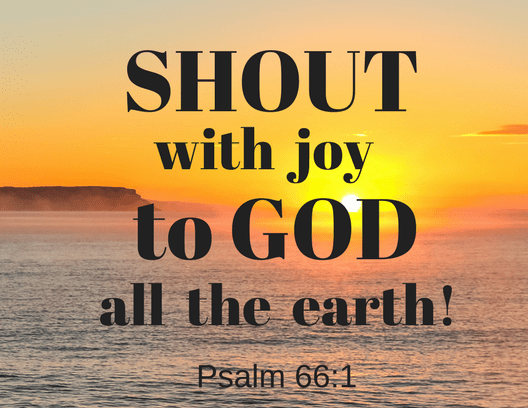
I think the hardest part about writing this week will be picking which Psalm to write about each day.  There are just so many great ones!  After looking at lots of options I went back to my first choice for day 2 –  Psalm 66.  It begins like so many of the other psalms – with praise.  “Shout with joy to God, all the earth!…Make his praise glorious!  Say to God, ‘How awesome are your deeds’ ”  (Psalm 66:1,3a)  You can read or listen to the rest of this great Psalm here: https://www.biblegateway.com/passage/?search=Psalm%2066.

Our God is a great God and so worthy of our praise.  All the time.  As the verse says – and the psalmist repeats later – His deeds are awesome!  May I repeat that?  HIS DEEDS ARE AWESOME!!  But, have you ever been in a place where that was difficult to see?  If you haven’t yet, you might find yourself there later.  It is like looking at a picture of a beautiful sunrise on a gorgeous beach – with a 3-D microscope.  There may be times when all that is in focus is a giant wave coming crashing down on top of you, or the tentacles of a poisonous jellyfish reaching toward you.  Life can be scary!  Life can be stressful!  Life can be sorrowful!  Life can be unfair!  Especially when you are looking up-close at one moment, one day, one season in time.

I am sure the Israelites felt a lot of fear, stress and uncertainty as they were hemmed in with the Red Sea in front of them and the advancing army of Pharaoh closing the distance behind them.  Praises probably weren’t the first to pop to mind.  When Joseph was sentenced to prison for a crime he didn’t commit after being sold as a slave by his brothers he may have been seeing up close some very tough, unfair circumstances.

I love how this psalm says over and over again to praise God, and not because life is always easy and he pampers and shelters his children.  No, this psalm includes several rough instances where God’s children were in tough spots – at the water’s edge, in prison, through fire and water, subjected to enemies.  And, not only were they in the midst of these trials that God certainly allowed, but sometimes He even brought these trials upon His children – testing us, refining us.

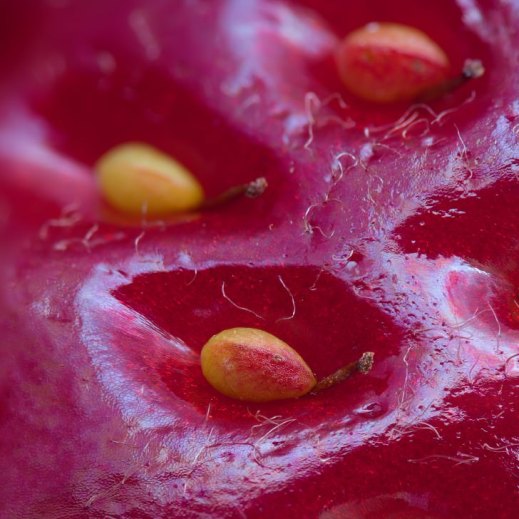
But – the trial is NOT the big picture – but just one snapshot in time, one zoomed in macro image of the great big beautiful scene God is creating in our lives when we seek to follow Him.  It’s like looking at this one somewhat gross looking image

extreme-close-up-of-a-strawberry-728x728

instead of seeing the delicious fruit salad this strawberry can become.

fruit salad

Sometimes we need to take a step back and readjust our focus.   Thank God for what He is doing in our lives, even through the painful trials.  As the psalmist says after listing several suffering situations, “But you brought us to a place of abundance.” (Psalm 66:12).

Thank you, God, for your presence through the storms and for using them to better our lives.  Better, not bitter.  “How awesome are your deeds.” (Psalm 66:3a)

-God Bless – Marcia Railton


Praise

Psalm 145-150

aaron-photo

Friday, January 20

A few years ago my wife and I went on a driving tour of Ireland.  We had the opportunity to see beautiful and wonderful things, many of them being the untouched creation of God.  Each morning we would leave our bed and breakfast early, then ride around and visit as many sites as we could fit in between dusk and dawn, making sure to get to our next bed and breakfast before the sun went down. Why? It was near impossible to navigate the streets and backroads of the smaller towns of Ireland in the evening.


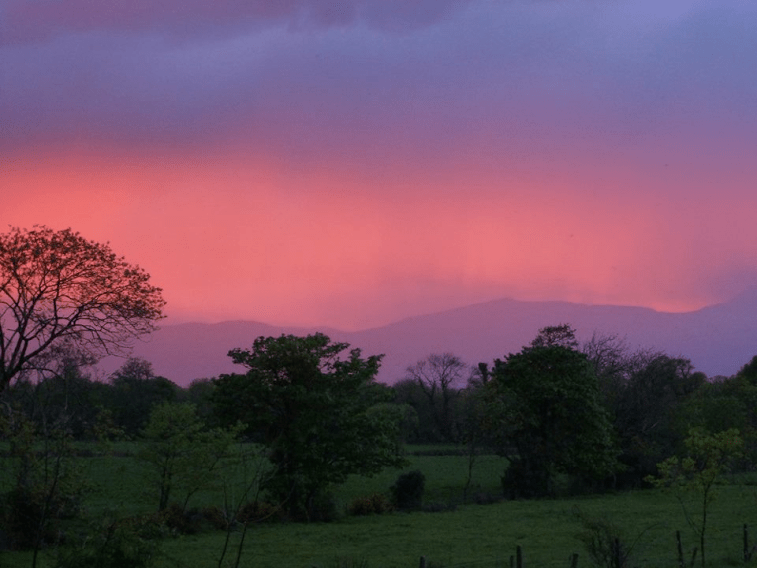
It was the fourth or fifth night into our journey, and we were having an exceptionally hard time finding our resting place for the evening.  We were driving (unknowingly) in the wrong direction, as the sun was starting to set.  There was a faint mist in the air and mountains ahead.  I watched as the sky and mountains turned from shades of gray to the most vivid reds, purples, yellows, oranges, and more.  It is not hyperbole to say that it was the most beautiful sunset I had ever seen in my life.  I was focused on how beautiful the sunset was, and I kept on oohing, awing, and driving in the wrong direction; however, my wife was focused on getting us safely to our destination, pouring through papers and maps.  I begged her to look up and take at look at the wondrous sight, but she wouldn’t have it; she told me to turn around (in the opposite direction of the sunset!) because we had made a wrong turn.  I turned around to avoid a fight (or more of one), but stopped when I saw a decent pull off.  I said, “You have to look at how beautiful the sunset is!”  We both got out of the car.  We oohed and awed together.  We snapped a photo or two that did not do the scene justice, and we drove off with a memory.


In that moment, I saw something that I wanted to give praise to.  I was amazed and astounded.  I thanked God, but that did not do it justice.  I had to share it.  I had to tell someone (now several someones) about it.  In fact, it was hard to think or speak of anything else.  C.S. Lewis says in Reflection on the Psalms ,


“I think we delight to praise what we enjoy because the praise not merely expresses but completes the enjoyment; it is its appointed consummation….It is frustrating to have discovered a new author and not to be able to tell anyone how good he is; to come suddenly, at the turn of the road, upon some mountain valley of unexpected grandeur and then to have to keep silent because the people with you care for it no more than for a tin can in the ditch; to hear a good joke and find no one to share it with… Fully to enjoy is to glorify. In commanding us to glorify Him, God is inviting us to enjoy Him.”


God has called us to enjoy His many wonderful attributes throughout the Psalms.  He is patient, kind, caring, merciful, just, faithful, and unrelenting.  While He is exalted in the highest heavens with knowledge too lofty to attain, He is a personal, close, and specific Father who gives us every opportunity to allow Him to work and act in our lives.  The highest of praise goes to an infinite God who has loved us so much! BUT, praise is far beyond acknowledgement.  Praise is an immersive experience. It may be great to see something praiseworthy, but to fully experience praise, we must share it.  Praise is not only see to see the sunset, it is to let others know and share in the moment.  When we experience His blessing, His healing, His power, His comfort, or His love, we cannot be silent or accept; we cannot let it go under the radar. We must let others know.  In this, we have then offered praise.


“Let them praise the name of the Lord, for his name alone is exalted; This splendor is above the earth and the heavens. And he has raised up for his people a horn, the praise of all his faithful servants, of Israel, the people close to his heart” Psalm 148:13-14.

“Let everything that has breath praise the Lord. Praise the Lord.” 150:6

-Aaron Winner

(Photo credit: Aaron Winner – most beautiful sunset)

Victory Set in Motion

Psalm 120 – 131

psalm126-3

Tuesday, January 17

J.R.R. Tolkien, the author responsible for the conversion of C.S. Lewis, insisted that his series, The Lord of the Rings, was not a direct metaphor or allegory of the Christian message, yet this series is steeped in Tolkien’s faith. It reminds me of a popular phrase where I’m from, “You can take the girl out of the country, but you can’t take the country out of the girl.”  When you are living for Christ, everything you touch becomes infused with your faith.


One such example that parallels Christian faith and hope, is from the second book in the trilogy, The Two Towers.  Go ahead and push up your glasses; indulge me. It’s about to get a little nerdy.


Near the climax of the story, the humans and elves are defending a last-resort fortress, Helm’s Deep.  The orcs, which greatly outnumber their foes, have come to take the fortress in the night.  They advance and breach the stronghold.  It is only a matter of time before all is lost. At the moment when defeat is certain for the human-elf alliance, those who remain are reminded of a promise made by a wizard friend, Gandalf, “Look to my coming on the first light of the fifth day, at dawn look to the east.”  As the sun rises over the mountain top, it reveals that Gandalf has literally “called in the cavalry,” assembling the Riders of Rohan.  Using the dawn’s blinding light to their advantage, they charge down from the mountain, break the enemy ranks, and leave the orcs to retreat.  Gandalf’s perfect planning was the difference in tragedy or triumph..


I am counting on the Lord; yes, I am counting on him. I have put my hope in his word. I long for the Lord more than sentries long for the dawn, yes, more than sentries long for the dawn. – Psalm 130:5-6


Norman Vincent Peale, minister and author of “The Power of Positive Thinking”, states that God answers prayers three ways: “yes, no, and wait a while”.  “Yes,” is obviously the easiest answer to hear.  We immediately receive the desires of our heart (Psalm 37:4) and celebrate.  “No,” is difficult to hear, but it brings closure.  Knowing a door is closed, helps us move in a different direction (2 Samuel 12:13-22). However, “wait,” is the toughest of the three.  “Wait,” means you must stay in the heat of battle (Exodus 17:8-12). “Wait,” means you must hold the enemy at bay (1 Corinthians 10:13). “Wait” means you must maintain tremendous trust, complete courage, and unfaltering faith to set aside what you want NOW, because God has a perfect time, one MUCH better than NOW, to fulfill His promise to you.

I look up to the mountains— does my help come from there? My help comes from the Lord, who made heaven and earth! – Psalm 121:1-2

Praise the Lord, who did not let their teeth tear us apart! We escaped like a bird from a hunter’s trap. The trap is broken, and we are free! Our help is from the Lord, who made heaven and earth. -Psalm 124: 6-8

And the other nations said, “What amazing things the Lord has done for them.” Yes, the Lord has done amazing things for us!  What joy! – Psalm 126:2-3

Whether it is college, career, children, or commitment that you are waiting upon, God is actively working on “amazing things,” preparing to fulfill and complete those who are willing to persevere (James 1:2-4). In the dead of night, when the odds are stacked against you, faithfully fight and look to the Lord and His promises for your help. He will soon overwhelm you with the victory that has long been set in motion.

-Aaron Winner

(Photo credit: http://markryman.com/BLOG/2013/11/03/a-fortune-of-joy/         Original photo by YousefTOmar)