
Devotion by Jennifer Hall (IN)
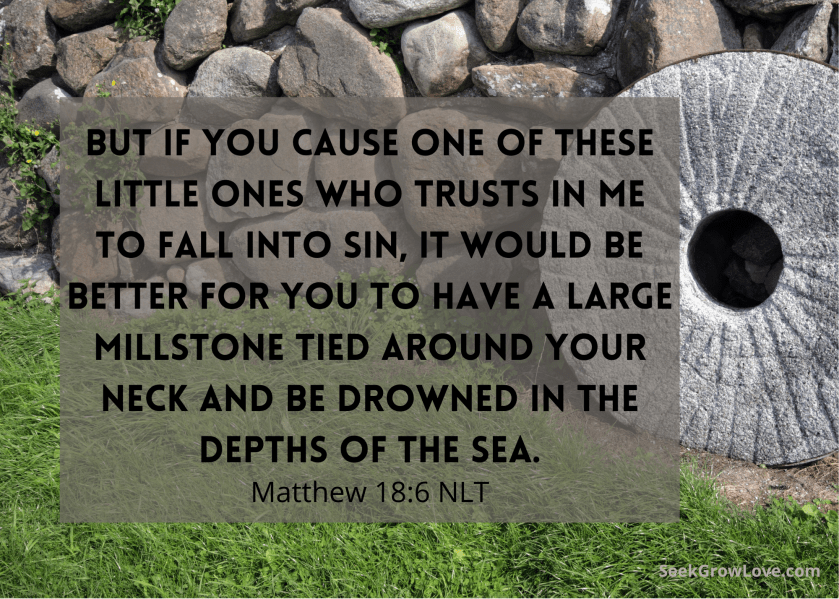
At my house, if I want to do something crazy like grind wheat or coffee beans, I turn on the Vitamix. The cat doesn’t appreciate the noise, but within about 60 seconds, the work is done. In Jesus’ day, the appliance for the same was a millstone. Extremely hard and heavy, millstones are referenced in the Bible a number of times as an illustration that would have been a familiar common item for the readers of the time. First mentioned in the Mosaic law (don’t take someone’s daily sustenance-grinder away in a pledge!), then a deadly weapon being dropped on someone’s head in Judges 9, and even a comparison to the strong chest of the Leviathan in Job…by the time Jesus is talking in Matthew 18, we get the idea that these millstones used for grinding grain were massive. So, when Jesus says it would be better to have one tied around your neck and thrown into the sea than to cause someone who believes in him to stumble…we know that is a big deal to him.
In Matthew 18:7 we are told that things that cause people to stumble are going to come, but we must guard against them. And not just casually. At an intentional, life-altering level at times. There are things that will cause us to sin. And there are people through whom they come. Woe to them per Jesus! The word for “things” used in these verses is also referenced as a stumbling block, offense, or thing that causes people to sin. Many things cause people to stumble, and the conviction or application of this passage to our individual lives is personal. But, some things are pretty common for most of us. In the New Testament time, millstones were common things apparently. In 2026, phones, social media, 24/7 internet access, and artificial intelligence are ordinary. Unfortunately, so are mental health crises, hostile and divisive spirits, unforgiveness, and addictions. Not just to chemical substances. But, also to feeds, constant information, visual input, likes, shares, and the next harder and heavier millstone than “they” have. Or maybe don’t have yet.
I say this not to suggest we should gouge out all electronic devices from our homes/cars/watches and who knows what else and throw them into the sea….. but to recognize that through them, there seems to be a profound struggle going on for our minds, our attention, and the very cognitive abilities God has created us with and given us for this type of self-reflection and sound reasoning. And through them, stumbling blocks are now available far more privately and abundantly than in the millstone days…..they are reading our eye gaze, knowing our weaknesses, designed to addict us, divide us, and distract us. All. The. Time.
However, when we stumble, and when other believers stumble, Matthew 18 showers on us a message that we all need. The shepherd looks for the lost sheep and rejoices when found. The Messiah wants the humble children who don’t know everything. We are called to welcome the lowly. The church has sinners and Jesus tell us how to deal with it. And the last 14 verses of the chapter give a vivid picture of the abundant forgiveness Jesus expects and gives.
As heavy as the millstones were, the weight of sin Jesus lifts is far greater. As we seek to purge the stumbling blocks from our lives, pray to have discernment to even recognize them in a sneaky world, and strive to not lead others astray . . . let us also forgive abundantly and return to the shepherd when we find ourselves lost.
“What do you think? If a man owns a hundred sheep, and one of them wanders away, will he not leave the ninety-nine on the hills and go to look for the one that wandered off? 13 And if he finds it, truly I tell you, he is happier about that one sheep than about the ninety-nine that did not wander off. 14 In the same way your Father in heaven is not willing that any of these little ones should perish.” (Matthew 18:12-14)
Reflection Questions:
- Have you ever had someone in your life who helped you from stumbling?
- What millstones or stumbling blocks might you need to be freed from today?
Prayer:
Dear God, thank you for providing us a direction to live our lives for You, and for the many teachings of Jesus which infuse wisdom and guidance. Please give us the discernment to recognize possible distractions and stumbling blocks in our lives and the strength to keep our eyes towards You. When we fail, thank you for being our deliverer in our times of trouble and for continually seeking us out. In Jesus’ name, amen.


 Seek Grow Love