Are You Battle Ready?

“I may never march in the infantry

Ride into cavalry

Shoot the artillery

I may never fly o’er the enemy

But I’m in the Lord’s army!”

Growing up in Sunday School, this song was my favorite, and it is so applicable to our theme this past week. You, as a soldier in God’s army, are fighting in a different kind of war—a spiritual battle. It’s a battle of God and sin competing for your heart. It’s a battle of protecting your flag, the Gospel message that has been placed inside of you. It’s a battle of sharing the Gospel with a broken fallen world that needs to hear a message of hope.

Just as Gideon and his men shouted into battle, you, too, need a battle cry. A word to inspire you, unite your army, and intimidate your enemy. This week, I’ve proposed a few words for you to embrace throughout the year, but don’t stop there. Find words that resonate with you, hold them tight, and live by them each and every day.

Surrendered: In a society that strives for control, surrender isn’t easy, but knowing that who you are surrendering to is more powerful than any another force in this world should give you peace. Like Elijah, choose a place of vulnerability to let God blow your mind. If He can send fire to an altar drenched in water and rain to a scorched earth, just imagine what He can do in your life.

Broken: You can rejoice in your brokenness because you didn’t stay broken. Through Jesus, your wounds were healed and are now a sign of victory. You are a teacup that was shattered but has been pieced back together with gold; you are restored and you have value. God is eagerly waiting to use you in big and unimaginable ways, just like He used Rahab.

Committed: God wants His soldiers to be fully committed to battle. He is jealous for every ounce of you. When Jesus asked three men to follow him, they answered back with excuses and pre-arranged plans, leaving Jesus unsatisfied. When Jesus has a task for you, I challenge you to answer yes, leaving behind your comfort zone and things of this world.

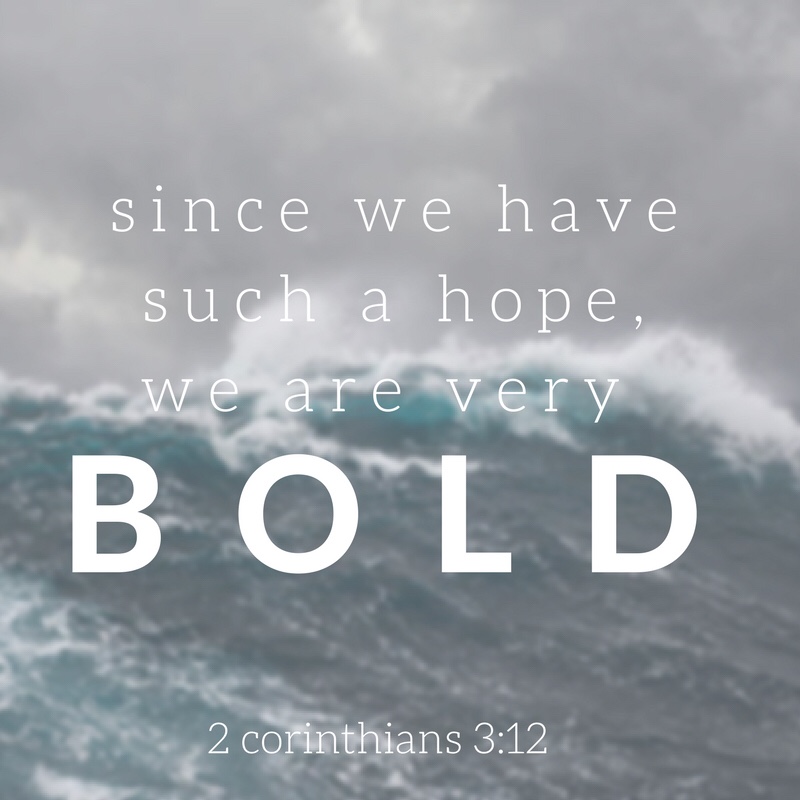
Bold: Boldness rejects popularity for the truth, and comfort for the cross. Just as John and Peter stood up for Jesus, their Savior and friend, be unashamed of the hope that you have. You may receive opposition, but don’t fret because Jesus’ side is going to win the war in the end. Thus, go forth with confidence and boldness.

Connected: You can’t win this battle alone. Stand hand in hand with your brothers and sisters, just as the Early Church modeled for us. The depth of our connection to other believers is dependent on the depth of our connection to God. Abide in Him together with the Church, the Bride of Christ.

Inline image 1


~ Mackenzie McClain

Connected

bred.png

As a soldier, you would never storm the enemy by yourself. You need a team standing beside you to support you, uplift you, and challenge you.  Spiritual battles are the same; you cannot stand alone. There is always safety in numbers, as the enemy hunts for those who are outcast. Connection, both to each other and to God, is the best defense against the enemy.

Yesterday’s devotion was about how the people of the early church were persecuted, yet stood in boldness. They were able to stand so boldly because they stood together. In Acts chapter 2, we are given an inside look into just how connected the Church was:

“They devoted themselves to the apostles’ teaching and to fellowship, to the breaking of bread and to prayer. Everyone was filled with awe at the many wonders and signs performed by the apostles. All the believers were together and had everything in common. They sold property and possessions to give to anyone who had need. Every day they continued to meet together in the temple courts. They broke bread in their homes and ate together with glad and sincere hearts, praising God and enjoying the favor of all the people. And the Lord added to their number daily those who were being saved” (Acts 2:42-47).

The early believers were an impenetrable front. They ate together, prayed together, performed miracles together, gave generously together, met in the temple together, and praised God together. The Church, being the people and not the building, is the Bride of Christ. If Jesus was so passionate about believers meeting together, I think we should be, too. The depth of this connection that we have with each other is ultimately dependent on the depth of our connection to God.

“The Kingdom of God is not going to be advanced by our churches becoming filled with men, but by men in our churches becoming filled with God.” –Duncan Campbell

Connection to our Creator is the first priority. Connection to God, like connection to the Church, doesn’t come without effort. Building a strong relationship takes time and an open line of communication, prayer. Your prayer life is the biggest factor of your connectedness with God, which then strengthens your connection to your fellow believers.

“Let us hold unswervingly to the hope we profess, for he who promised is faithful. And let us consider how we may spur one another on toward love and good deeds, not giving up meeting together, as some are in the habit of doing, but encouraging one another—and all the more as you see the Day approaching” (Hebrews 10:23-25).

~Mackenzie McClain

Bold

If you want to leave a lasting impact on this world, you must first learn to be different than the rest of the world. Boldness rejects popularity for the truth, and comfort for the cross.

When Jesus died, the world saw him as a criminal. After Jesus ascended into heaven, the apostles were tasked with changing the world’s hearts, from yelling “Crucify!” to calling Jesus Savior. This was no easy job, yet they went forward with boldness.  They rejected popularity for the truth, and comfort for the cross. They persevered through persecution and hardship.

As Peter and John, two of Jesus’ closest friends, were speaking to the people at the temple about Jesus and even healed a crippled man, they received great opposition. They were approached by the priests and Sadducees, who “were greatly disturbed because the apostles were teaching the people and proclaiming in Jesus the resurrection of the dead” (Acts 4:2). Peter and John were thrown in jail and met before the rulers, elders, and teachers of the law that made up the Sanhedrin the next day. The Sanhedrin poses the question, “by what power or what name did you do this?” (Acts 4: 7). Peter responds with such a boldness we should imitate today,

“Rulers and elders of the people! If we are being called to account today for an act of kindness shown to a man who was lame and are being asked how he was healed, then know this, you and all the people of Israel: It is by the name of Jesus Christ of Nazareth, whom you crucified but whom God raised from the dead, that this man stands before you healed. Jesus is ‘the stone you builders rejected, which has become the cornerstone.’  Salvation is found in no one else, for there is no other name under heaven given to mankind by which we must be saved” (Acts 4:8-12).

The rulers, elders, and teachers of the law were astonished by the courage of Peter and John, who were just ordinary men. Before Jesus called them, they were lowly fisherman, yet they approached the courts with such assurance and strength. After the hearing, Peter and John were commanded “not to speak or teach at all in the name of Jesus” (Acts 4:18). Despite the opposition, they answered with confidence in their Savior, “judge for yourself whether it is right in God’s sight to obey you rather than God. For we cannot help speaking about what we have seen and heard” (Acts 4:19 & 20).

You, too, have seen and heard all that Jesus has done. The Kingdom message, which is compared to a pearl of great value, has been revealed to you. Will you shamefully keep your pearl hidden, or will you unashamedly share that pearl with the world who so desperately needs it?

Just like in the times right after Jesus’ death, believing that Jesus is Lord and Savior is an unpopular opinion, yet the Great Commission still stands: “go and make disciples of all nations, baptizing them in the name of the Father and of the son and of the Holy Spirit, and teaching them to obey everything I have commanded you” (Matthew 28:19 & 20). Spoiler alert, God’s side is going to win the war when He establishes His Kingdom on the earth. In the meantime, fight this battle to win over hearts for that Kingdom. You may receive opposition, but do not be afraid because you already know the outcome of the war. Go forward with the same confidence Peter and John had. Be bold.

~Mackenzie McClain

Committed

committed

You are at battle. The lines have been drawn and shots have been fired. The life of a soldier isn’t an easy one. It was never promised to be easy; instead, it was guaranteed to be difficult and requiring sacrifice.

In Luke chapter 9, as Jesus walks through Samaria to Jerusalem, a man approaches Jesus, saying that he will follow Jesus wherever he goes. Jesus is quick to qualify what really following him means, saying “foxes have holes and birds of the air have nests, but the Son of Man has no place to lay his head” (Luke 9: 58). A home is often seen as a place of security and Jesus requires his followers to be willing to abandon everything else that has given security. Are you more committed to your comfort zone or Jesus?

Jesus calls on another man to follow him, but the man replies “Lord, first let me go and bury my father” (Luke 9:59). Jesus answers, “Let the dead bury their own dead, but you go and proclaim the Kingdom of God” (Luke 9:60). The things of this world aren’t as important as the things of this world. As citizens of the Kingdom, your whole life should be centered around its work. Are you more committed to this life or the next one?

The third man says he will follow Jesus, but must first say goodbye to his family. Jesus replies, “no one who puts his hand to the plow and looks back is fit for service in the Kingdom of God” (Luke 9:62). Jesus wants your commitment without delay. Do you understand the urgency of the message you have been told, the gospel? God has placed his treasure, the Kingdom message, in jars of clay, that’s you (2 Corinthians 4:7). Your time on this earth is fleeting, so you must do everything you can to spread that message. Are you more committed to the distractions around you or the sharing of the gospel?

God doesn’t want to share you, He wants all of you. He is jealous for your love and devotion. The God of the universe finds deep value in your love, and in that, you should find your worth and confidence. He sent his son to die for the purpose of having a committed relationship with you. You can’t just dabble in being a Christian. Your thoughts, speech, and actions must always be a reflection of your devotion. Being a follower is a full-time job; are you ready to make that commitment?

~ Mackenzie McClain

Broken

my flesh and my heart may fail, but God is the strength of my heart and my portion forever-4

When suiting up for battle, the biggest lie the enemy tells you is that you’re too broken to be loved by God. The whispers in your head that you are damaged goods, scuffed and bruised, attempt to overpower the innate value that you have because you are God’s child. By trying to hide your brokenness, you fight for the wrong side. Brokenness isn’t meant to be hidden, but embraced.

Scars become stories. Think of the physical scars you have—all those little gashes and scratches tell of what you have been healed from. Scars no longer hurt; instead, they are signs of victory. Just like your body repairs your physical wounds, God has healed you from your brokenness and sin. He has picked up your shattered pieces, brushed off the dust, and glued you back together. Your brokenness is a sign of victory. Jesus conquered death, and in doing so conquered your sin. When you weep and wallow in your brokenness, you send Jesus right back to the grave.

Kintsugi is the ancient Japanese art of repairing broken pottery with gold. When a piece of pottery is dropped, it isn’t thrown out. Instead, it is restored and made even more valuable. This, in essence, is the gospel. You were crushed under the weight of your sin, but God, through the sacrifice of His son, pieced you back together. Where you see your life shattered to pieces on the ground, He sees restoration. If the Creator of the entire universe embraces your brokenness, you should, too.

Moses killed a man. David had an affair. Jonah ran away. Rahab was a prostitute. Noah got drunk. Paul murdered Christians. God could have left these details out, but He didn’t; He transforms broken people and puts them on pedestals to bring glory and honor to His name.

Let’s take a closer look at the story of Rahab, which is found in the second chapter of Joshua. Rahab had lived a promiscuous life as a prostitute, yet God redeems her. Joshua, the leader of the Israelites searching for the Promised Land, sent two spies to the city of Jericho, hoping to conquer the land of Canaan. When the officials of Jericho tried to hunt down the spies, they found safety in the home of Rahab. When the officials come knocking at Rahab’s door, she hides the spies on her rooftop under stalks of flax. This same woman who used to live a life of sin and shame helped save God’s chosen people. This same woman who used to live a life of sin and shame is an ancestor of Jesus, God’s own precious son (Matthew 1:5).

When the enemy stares into your eyes and tells you that you are broken, embrace it, knowing that your brokenness doesn’t define you; your Savior does.

~Mackenzie McClain

Surrender

mackenzie day 2

Shouting “surrender!” into battle may seem counterintuitive, but I am not suggesting that you surrender to your enemy; instead, surrender to your God. To surrender means to choose a place of vulnerability, giving up control, to give authority to a different power.  In a country where you’re told to control your own destiny and to pull yourself up by your own bootstraps, surrender does not come naturally. You must understand that letting go and letting God is not weakness; instead, it takes great strength.

If you want to see God work in your life, you first have to give him something to work with. Today, we are going to read about a man who chose a place of vulnerability so that God would be glorified. The whole story is found in 1 Kings chapter 18, so give it a read, but in the meantime, I’ll give you a quick summary.

Israel is in the midst of a three-year draught as a punishment for their idol-worshipping, until God tells Elijah that it’s finally time to confront Ahab. Elijah arranges for Ahab to gather 450 prophets of Baal on Mount Carmel. He says to the people of Israel, “How long will you waver between two opinions? If the LORD is God, follow him; but if Baal is God, follow him” (1 Kings 18:21). Elijah, being the only prophet of the one true God left, challenges the 450 prophets of Baal to a competition. The two teams set up altars and placed a bull on top. The god, Baal or Yahweh, to answer with fire will be declared the one true God.

As the 450 prophets call out to and dance for Baal, Elijah taunts them, saying maybe Baal is busy or maybe sleeping. The prophets of Baal grow more and more frustrated, so Elijah calls them all to his altar. Elijah, surrounded by all these people that oppose him, has surrendered all of his control to his God. He surrenders himself even further as he created a trench around the altar filled with water. Elijah has no intentions for personal gain, but has instead surrendered everything into God’s own hands, which he knows are much more powerful than his own. God, of course, delivers and sends fire to the altar. All the people “fell prostrate and cried, ‘The LORD—He is God! The LORD—He is God!” (1 Kings 18:39). Then comes the icing on top, God sends rain.

That same God who sent fire to an altar drenched in water and made it rain after years of drought is the same God who is fighting on your side. Surrendering isn’t so scary when you’re leaving it all in God’s hands, which are far more capable than your own. This year, let “Surrender!” be your battle cry.

“Those who leave everything in God’s hands will eventually see God’s hands in everything.”

~Mackenzie McClain

It All Comes Back to His Kingdom

Jesus & Cross

In case you have missed part of this week’s study, here is a quick summary of each of our daily devotions this week:

Sunday –  Luke 13 – The Kingdom of God is Like – Like a virus, a mustard seed, or yeast is the Kingdom of God.  The smallest amount can cause a giant reaction in your life.  You are called to be contagious; constantly build and spread the hope you have in Christ.

Monday –  Luke 14 – Counting the Cost – We are to take account of all we hold valuable.  We may be asked to trade those things in to live within the will of God as we seek his Kingdom.  Entry may cost us everything, but it is a meager price to pay by comparison.

Tuesday – Luke 15 – The Parable of the Lost Ring – God will not stop searching for those who want to be found.  He desires that all men are saved, having a home awaiting in His Kingdom.  The whole of heaven rejoices when the lost sheep are restored to their shepherd.

Wednesday – Luke 16 – The Master and Manager – God is the master of all wealth.  He wants us to be faithful in small ways before we are given more responsibility.  When we acknowledge that we are mere managers, we look at our fortunes differently, as the master’s talents to do his bidding.

Thursday – Luke 17 – One Thank You – Like the lepers, we have been restored; we now can enter the eternal city, The Kingdom of God.  We need to acknowledge God’s restoration through Jesus Christ; no longer are we outcast.  A deliberate and thoughtful thank you is a life that turns to Him.

Friday – Luke 18 – The Power of Persistence –  We should not give up our hope that our Father is listening to our appeal.  Perseverance is the outcome of faith.  Stay the course.  Appeal to the Lord.  He will turn His ear and answer you.

As we have taken a closer look at the six chapters of Luke, we see that it all comes back to the Kingdom of God.  Parables, teaching, healing, reproach – They all point towards the eternal hope that all men can have when they accept Jesus Christ as the Lord and Savior of their life.  Jesus does not dilute the truth of the price of admission.  He says we must be faithful with what we are given; it could cost us everything. Consequently, the reward isn’t necessarily immediately.   The crown of life is not for those who casually follow commands, or openly do good works to receive their inheritance in this present age.  The Kingdom of God is for those who become infected with His love, truth, and message and spread His hope at all cost.  Each of these teachings have been immeasurably challenging and equally thought-provoking.

It has been a great opportunity to write for you this week.  I hope my narratives and notions have resonated in some way to the circumstances and challenges presented in your own life.  I pray you have found connection, truth, and hope in these handful of chapters for the Good News of Luke because these works speak the greatest of truths.  Continue to read, grow your faith, and pray for His Kingdom to come soon.

~With love, your brother in Christ,

Aaron Winner

Allow Me to Introduce You to Luke…

Luke 1_4


 “I too decided, after investigating everything carefully from the very first, to write an orderly account for you, most excellent Theophilus,  so that you may know the truth concerning the things about which you have been instructed.”    Luke 1:3-4

If you have grown up in the church like myself, you were probably taught basic theology at a young age. I sang the songs, made the crafts, remembered my memory verses, and before I realized it, I had formed beliefs. Everything seemed so simple.

As we grow older, everything becomes complicated. We look at all the denominations around us, with many differing perspectives, and that child-like belief starts to become muddled by all of the confusion. This is the point where we ask ourselves, “What do I really believe?”

This is why I love Luke. His in-depth account of the Lord Jesus Christ from his birth through his resurrection not only gives us insight into the Son of God in an intimate way, it gives us backing to the beliefs that we hold dear.

Regardless of any creed, doctrine, or ideal, I know, without a doubt, that I can sit down and read Luke’s account of the story of Jesus and know that it is true. That validity is such a faith builder and invigorates me to dive deeper into the gospel.

This week, we are going back to our roots. Let’s start from the beginning together shall we? Because, sometimes, in order to jump forward, we have to get back to the basics.


-Leslie Jones

Who Are You?

Monday –

2 cor 5 17 sunrise

Do you ever feel like who you are is not really who you are?  Or maybe that you know you could be a better/different version of yourself, but aren’t sure how to find that person?

You know, all of us carry labels of some sort.  Maybe you’re the funny guy, or the smart girl, or the troublemaker.  Sometimes we may not feel like we totally deserve our label.  Like, maybe people see you as argumentative, but that’s not how you see yourself.  The fact is, right or wrong, we are all labeled in some way by those around us.

So…what’s your label?

Don’t pretend it doesn’t exist.  What is it?  How would people around you describe you?  What are you known for?

Got it in your mind?

  1. Now think this: What’s true about me now, doesn’t have to be true about me forever.

Our goal is not to reinvent ourselves by trying to be some perfect person.  It’s to uncover our true self as God created us.

Have you ever thought about that?  When God created you, he had the BEST version of you in mind.

And that is the version we need to be striving to become.  The best version of ourselves.

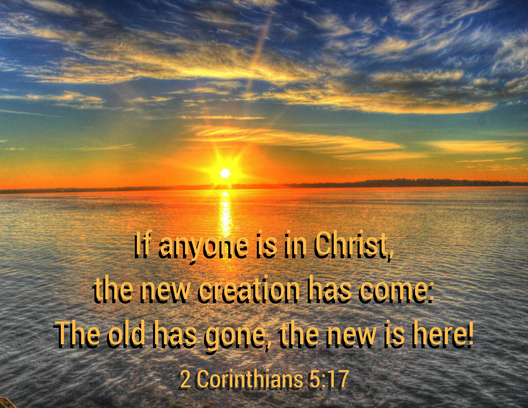
2 Corinthians 5:17 says that “if anyone is in Christ, the new creation has come: The old has gone, the new is here!”

We’re going to be looking this week at how we go about becoming who God says we are, who He had in mind when he created us.  So for today, remind yourself again that what is true about you now, doesn’t have to be true about you forever.  You can be a new creation!

Sneak Peek at tomorrow’s devotion:  Try to find examples in Scripture of times when God gave someone a new name.  Why do you think he did that?

-Susan Landry

A True Friend

PROVERBS 27 – Monday

Prov 27 17

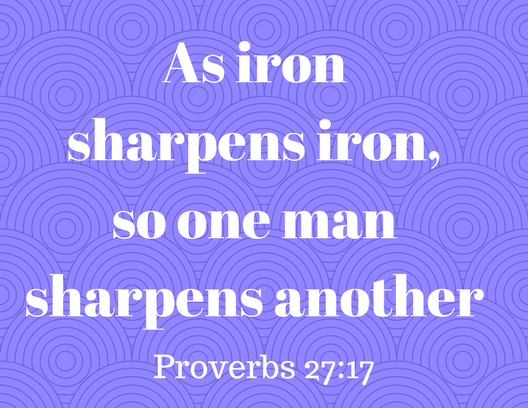
Verse 6 reads “faithful are the wounds of a friend…”  In this context, the wounds of a friend appear to be necessary.  Friends who love us enough to be honest with us, even when it hurts, are the best kinds of friends.  I can remember multiple times in my life in which I didn’t enjoy the truth that I was told, but my friends and family loved me enough to tell me anyway.  We often think that allowing people their momentary happiness is a kindness, but if someone is in sin, it is our duty to tell loved ones the painful truth.  Just as iron sharpens iron (verse17) by chipping away the outer bits of metal, honest friends sharpen each other by helping each other to turn away from sin and helping to recognize the things that are keeping us spiritually dull.


Finding a friend or a group of friends who can be open enough with each other to share this kind of love is invaluable.  Someone told me that a friendship that lasts 7 years is a lifelong friendship—if you can make it 7 years, you can make it forever.  I don’t particularly like the idea that a length of time is necessary to determine true friendship; I think that real friendship is proven by friends who can be brutally honest in love.  I was close to a girl in college for 4 years, but I could never tell her hard truths.  It weighed on me when I saw things that needed attention, but I was too scared of upsetting her to be a forthright friend.  “As iron sharpens iron, so one person sharpens another.”  Don’t be afraid to confront your people when you see them in or approaching sin.  We need each other to keep us accountable.

-Megan Bryant