
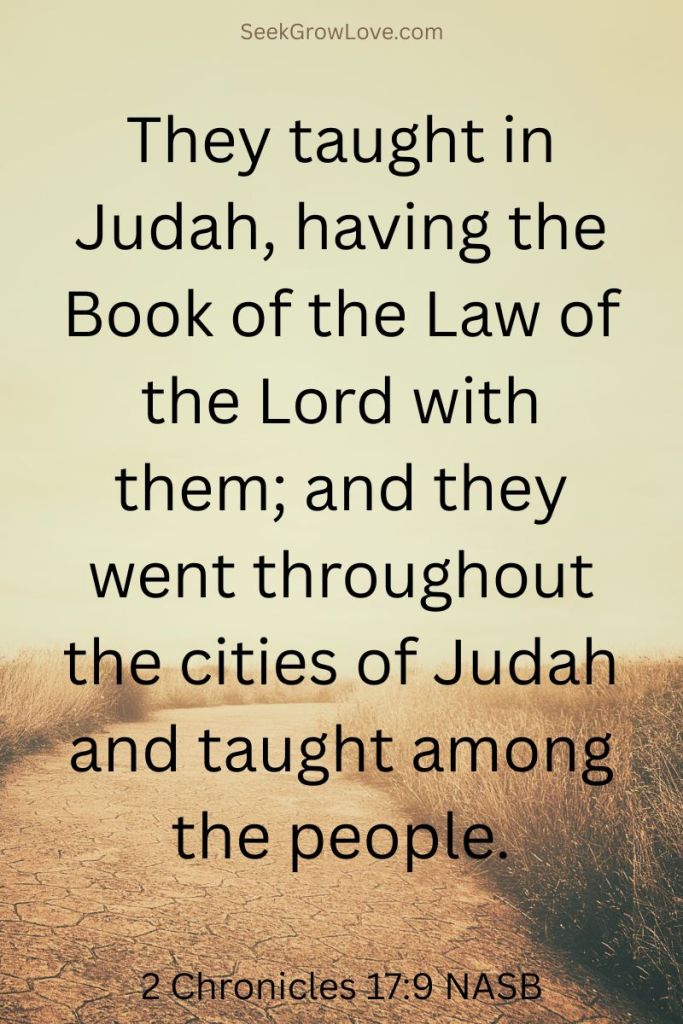
2 Chronicles 17
1 Kings 15:25-16:34
I was rushed out of the room, carrying a kid in each arm, and taken to the recovery room to wait for the return of my wife. The twins were here, and I had no idea what to do. There was a bassinet nearby, but I honestly couldn’t figure out the logistics of laying down one newborn without compromising my grip on the other. “That’s okay,” I thought. “My wife will be here soon, and she’ll help me sort it all out.” So I waited. I nervously held onto them in a football hold as the minutes crept by. But then the minutes became longer than expected, and my confidence started to fray. I waited with my little ones—without information, without control, and without a clue. In that intermission, I did the only thing I could think to do: I sang. Out of praise, to stave off fear, and to quiet the echoing newborn cries, I sang:
“From my mother’s womb, you have chosen me, love has called my name,”
and “You’re perfect in all of your ways… perfect in all of your ways to us.”
Waiting isn’t for the faint of heart. To be patient is to fight our innate desire for safety and certainty. It reminds us that we are not in control—that our desires are only a small variable in any given situation. If we’re looking for holy ground—a place where our striving ends and God’s sovereignty begins—look no further than the weight of waiting.
As the northern kingdom of Israel spiraled under a succession of corrupt kings, Jehoshaphat began his reign in Judah. He watched the pendulum swing wildly in the wrong direction. But instead of rushing to react, Jehoshaphat paused. He sought the Lord. He devoted his heart to God’s way first, building his faith and fortifying the kingdom—not through conquest or alliances, but by spreading the Word and Law of the Lord and strengthening what already belonged to Judah.
There were no flashy political plays. No dramatic battles or self-promoting power grabs—all of which might have benefited a new king eager for approval. In contrast to war-beaten, idol-chasing, anxious Israel, Judah found peace—politically and spiritually—by halting, reflecting, focusing, and waiting on the Lord to move.
“The fear of the Lord fell on all the kingdoms of the lands surrounding Judah…”
(2 Chronicles 17:10)
Waiting made Israel restless. But it made Judah rooted. Israel scrambled. Judah stood still.
So how do we wait in a manner that is pleasing to the Lord when life is beyond our control—when answers are delayed or the enemy seems to be advancing? We fortify what’s already been entrusted to us. We hold our families, will continue using our gifts in ministry, and give consistently with our tithes. We don’t chase what we don’t yet have—we deepen what God has already given. We also choose worship over worry. Worry imagines every possible outcome.
Worship reminds us who holds them all. Even if God is silent, He is moving. Commit to the wait. Trust in the Lord. He will act.
– Aaron Winner
Reflection Questions
- How well do you wait? How much do you worry? Can you think of a time where your waiting increased your peace?
- What is wise to do while waiting? What is foolish to do while waiting?
- What do you appreciate from Aaron’s list of waiting activity – halting, reflecting, focusing, and waiting on the Lord to move?



 Seek Grow Love