

Old Testament: Leviticus 2 & 3
Poetry: Psalm 37
New Testament: Acts 5
Yesterday I touched on how one remedy for financial insecurity is to look to the future promises of prosperity for those who put their faith in the LORD. Our understanding of this future is to be the Kingdom of God. Psalms 37 also talks about how God helps his people in the here and now. We saw this briefly at the end of Acts 4. Today, we are going to discuss generous givers.
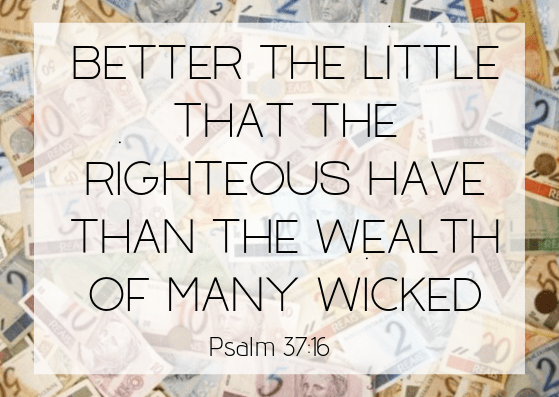
The church can be a very generous place. The example of pooling resources and caring for each other is set for us by the early church. It is discussed also in Psalm 37: “The wicked borrow and never repay, but the godly are generous givers” (verse 21 NLT). Having grown up in the church, I have heard many many stories of how God uses generous givers to care for and look after His people. I have been the recipient of such generosity several times in my life. Just last week, my sister-in-law surprised me by sending me money for my expensive prescription. We were at a birthday party and I was telling her of all the craziness it had been trying to track down this medication at a price I could attempt to afford. As we left the party, I looked at my phone and saw a notification. She had sent me the exact price for the prescription. I insisted she did not have to do that. She said “I know, but I felt like I should.” She felt God nudging her, and listened to the call. I have also tried, with my limited resources, to be generous to others. For example, before inflation got crazy and my dog got fat–needing a pricey special diet, I used to save $10 of every paycheck to give to my younger sister in college.
My grandparents, Scott and Gayle Ross, are the two most generous people I know. Psalms 37:26 reminds me of them: “The godly give generous loans to others, and their children are a blessing.” My grandparents are generous with more than just money, but their time, wisdom, love, home, and coffee. One Saturday morning I was dropping my dog off to stay with them as I had a long day of dance classes to teach. I remember frantically calling them to ask if they could prepare a to-go cup of coffee as I hadn’t time to make or get any before class. I rushed into their house, dropped off my dog, grabbed the coffee and hugged them both saying if there was one thing I can count on my grandparents for, it’s free coffee and free babysitting. Many times have my grandparents also been on the receiving end of generous givers. It is an endless beautiful cycle of generosity God has set for his people.
The generosity in Psalms 37 contrasts dramatically with the story of Ananias and Sapphira we read in Acts 5. It is important to note what Ananias and Sapphira’s sin was. This story is not meant to scare people into giving money to the church. Peter states, “The property was yours to sell or not to sell, as you wished. And after selling it, the money was also yours to give away.” (verse 4 NLT). Ananais and Sapphira’s sin was that they lied about how much money they were giving. The pair tried to elevate themselves and produce their own reward by gaining status in the church for being generous givers while still retaining some wealth. This is the opposite of what is described in Psalms 37:37, “Look at those who are honest and good for a wonderful future awaits those who love peace.” It was not a lack of giving that caused God’s wrath on Ananias and Sapphira, but a lack of honesty.
Not everyone all the time can afford to be generous givers monetarily, but there are always ways we can be generous with each other. This could be donating our time and talents to the church, which we will look at more tomorrow. For now, I encourage you to reflect on the generous givers in your life, thank God for them, and ask God if there are ways in which you can be generous to others.
Special Note on Leviticus 2: In the instructions for grain offering it is listed that the bread be made without yeast. While this could be symbolic of the first passover, when the Israelites had to leave Egypt quickly and did not have time to put yeast in their bread, there is also a practical reason to leave out yeast. A bread that does not have yeast will last longer. Leviticus 2:10 explains how the remaining grain offering will be given to the priests as their food. Making this bread without yeast preserves it longer for the priests to consume. That is also why in Leviticus 2:13 God instructs his people to never leave salt from a grain offering, as salt is a preservative. The priests did not have regular jobs or land to farm. Their source of food came from the portion of the people’s offerings God allowed. In God’s infinite wisdom he instructs these offerings only be made in a way that ensures quality. How cool is that!
-Emilee Ross
Reflection Questions
- Who are some of the most generous people in your life? How have you seen them give? How can you thank them for their generosity?
- When did you generously give? How did it feel?
- What do you have to give right now? Who would you like to give to?







 Seek Grow Love