Instincts

OLD TESTAMENT: Jeremiah 22 & 23

POETRY: Psalm 119:9-16

NEW TESTAMENT: Jude

Human instincts are a funny thing. We have certain tendencies that our bodies will turn to without thinking in order to preserve itself. Some will say it’s hard-wired in after years of evolutionary learning. I say it’s given by God, a level of thought that we can have without even realizing we’re having it. Our nervous system is an incredible miracle, along with the rest of our body, in how it communicates. 

I’m taking martial arts classes currently, and one of the things they teach us in self defense is the ability to yell past our tension. They have us pull air from deep within, really forcing the diaphragm to the point of discomfort, and expel a yell that feels almost animalistic. And we, especially females, practice that in order to help us should we ever have a violent encounter. You see, when we meet a moment of fear and stress, our fight/flight/freeze/fawn response kicks in. We will either spring into action, run, freeze in fear, or try to appease our opponent. 

No matter which decision is made, what often occurs first is a moment of freeze, as you try to process. And breaking out of that freeze is DIFFICULT. I know because it has happened to me. When frozen in terror, it’s a struggle to make any noise at all. We practice yelling before and during attacks, so that muscle memory will hopefully help us if we ever have a confrontation. We prepare so that we can push past our instinctual response of fear and call for help or cry out in attack. 

Preparing so that you can overcome an instinct seems counterintuitive. We must have that instinct for a reason, right? But our natural instincts don’t always serve us best.

Verses 17-21 say, “But, dear friends, remember what the apostles of our Lord Jesus Christ foretold. They said to you, ‘In the last times there will be scoffers who will follow their own ungodly desires.’ These are the people who divide you, who follow mere natural instincts and do not have the Spirit. But you, dear friends, by building yourselves up in your most holy faith and praying in the Holy Spirit, keep yourselves in God’s love as you wait for the mercy of our Lord Jesus Christ to bring you to eternal life.”

We have a lot of natural instincts. Children don’t need to be taught to lie, they do it instinctually to avoid trouble. The instinct to act on attraction is a natural one that causes endless trouble. We have instincts to avoid pain, both emotional and physical, which can lead to us not reaching out to others. We have survival instincts that make us want to look out for our own needs or the needs of our closest family members before looking to the needs of others, frequently leading to selfishness and greed. 

Jude is warning us that we can’t let people who follow these natural instincts divide us. Not only that, but we have to build ourselves up in faith. In other words, we must train ourselves out of those instincts. God calls us to a higher level. The world will say to act on how we feel, because those feelings are natural. But there are many things that are “natural” that are actually terrible for us. 

Train yourself out of those instincts by frequently turning to God’s word. We are told to test every idea, every belief, every teaching, and even every instinct to be sure whether or not it is of God. Test it against the scriptures. 1 John 4:1 says, “Dear friends, do not believe every spirit, but test the spirits to see whether they are from God, because many false prophets have gone out into the world.”

Do not let the world lead you astray simply because something “feels” right. Test that feeling against scripture every time. This is going to pit you against most of society. Stand firm. Hold fast and keep yourselves in God’s love. 

Reflection: 

What tendencies do the world see as “right” because they are “natural,” when the Bible calls them wrong? How can you keep those views from dividing you? Do you see those sorts of divisions happening in your church? They could be as simple as concerns over money keeping us from helping others as much as we should. They could be as socially complex as issues of homosexuality, or sex before marriage. 

What are some instincts you find in yourself that you find difficult to contend with? How can you “build yourself up” in faith and train yourself out of some of your own dangerous instincts?

Beloved friends, my prayer for you today is the same as the one ending Jude: “To him who is able to keep you from stumbling and to present you before his glorious presence without fault and with great joy – to the only God our Savior be glory, majesty, power, and authority, through Jesus Christ our Lord, before all ages, now and forevermore! Amen.”   – Jenn Haynes

Chameleon Effect

OLD TESTAMENT: Jeremiah 20-21

POETRY: Psalm 119:1-8

NEW TESTAMENT: 3 John

My kids love to study animals, especially my 8 year old son, Oliver. He has a particular interest in sea-life. He told me once, in depth, about the amazing mimic Octopus. This creature mimics the actions of some other sea life, rather than just using camouflage, in order to protect itself. 

There are other animals in nature that do something similar, pretending to be something they are not in order to achieve safety or to catch prey. They pick out what works for other animals, and do those things themselves. We do this all the time, sometimes knowingly, sometimes not. When in a group of people I generally am subconsciously on high alert to fit in. It’s exhausting and tense and causes me so much anxiety. I will likely mimic what is around me so that I can be more comfortable while interacting. This is normal human behavior that some use more than others. And it’s not necessarily a bad thing! It entirely depends on who and what we are mimicking. 

There have been studies behind how and why people do this, and it has been coined the chameleon effect. We subconsciously pick up on micro-level behaviors around us and those behaviors affect how we interact. When someone around us is tense and rigid, it tends to make us tense up as well. If someone is relaxed and at ease, this puts us at ease and we subconsciously relax. It’s why yawns are “contagious” and why some people pick up speech patterns and mannerisms when in a group of people speaking in a style different to their usual one. This phenomenon allows us to interact with others with greater ease. 

3 John verse 11 says, “Dear friend, do not imitate what is evil but what is good. Anyone who does what is good is from God. Anyone who does what is evil has not seen God.” We are constantly picking up the speech and behavior around us and whether we actively try to imitate them or not, we will do so. Even if it’s on smaller levels, those around you will have an effect on how you speak and behave. John is warning a friend in this letter of a church leader who is being self-serving and giving false teaching. But not only is he warning him away from this danger, he’s also giving an example of who he should imitate instead. 

We like to think that we are stronger than we are, when it comes to this particular issue that John is warning against. How many of us have had the thought, “It’s ok, their bad influence isn’t affecting me. In fact, I’m probably having a good influence on them!” We are called as disciples to go out into the world, yes. And we are to set a good example for others to follow. But this requires some maintenance. When we are fully immersed in worldly behavior and speech for a majority of our time, those mannerisms will affect you. Don’t delude yourself otherwise. 

1. Guard yourself. Spend frequent time in scripture, prayer, and worship. Arm yourself with spiritual armor and replenish that armor frequently. 

2. Balance your time. Most of your time should not be spent being surrounded by sinful behavior. Be sure that most of your time is spent imitating godly mannerisms by surrounding yourself with them. 

3. Have accountability. Be sure that you have a reliable, godly support system who will keep you in check. We often don’t even realize when we pick up bad habits, but our closest friends and families will. 

4. Keep your focus on imitating good. When you’re out in the world, preaching the gospel and interacting with others, your goal should always be to imitate Christ. Without Jesus visually there in front of you, sometimes that is harder to do, so be sure you have another wise influence in your life that you can imitate as John mentions here. When you are focused on imitating good, it’s much more difficult to imitate evil. Be vigilant. 

Reflection: 

Who in your life should you be imitating? Are they solid examples of good, Christian behavior? Why? Those traits that tell you they are good to follow are probably traits you want to work on in your own life. 

Are you regularly around non-christians and possibly some dangerous habits and behaviors? Probably, as we don’t all work and live in a fully Christian setting. However, it’s important to recognize those potential areas of our life where we might be imitating bad behavior in order to fit in well. 

Are there any behaviors or speech you’ve picked up from them that aren’t good or godly? How can you counteract those? What is a good way to behave in those settings while still being able to interact and have a positive influence on your environment? 

My prayer for you today is that you have a positive influence on your surroundings and others are led to imitate you! I pray that if you don’t already have a person in your life with godly influence for you to imitate, one steps in. I pray that you find the support and strength you need to go be in the world, but not be a part of it. Be a world changer for Christ today! – Jenn Haynes

Word Association Games

OLD TESTAMENT: Jeremiah 18 & 19

POETRY: Psalm 119

NEW TESTAMENT: 2 John

Word association games. Have you ever tried them? If I say, “Fruit,” for example, what is the first thing that comes to your brain? 

Have you ever tried those with people? I don’t think most people can be broken down into one word. We are far too complicated. But when you think of an individual – for example, “Mom”- what is the first word that comes to mind? I just tried this exercise on each member of my family, using other family member’s names. I’m happy to say that at least one of my children as well as my husband said, “loving” when presented with my name or “Mom.” I’ll take that win and ignore the fact that the others thought of food. 

When doing a word association with “Christian,” what do you think people come up with? What about when nonChristians think of you? 

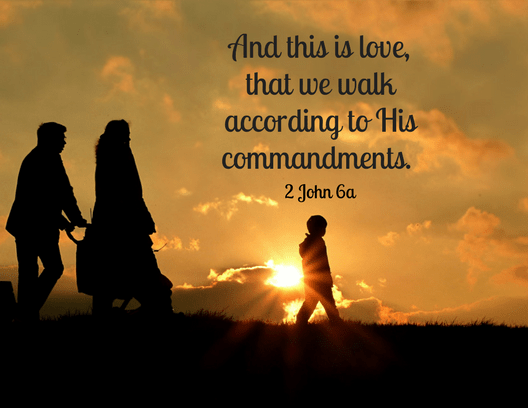
Verses 5 and 6 are another reminder from John to love others. And again, as he did in 1 John, he describes what love is. “And this is love: that we walk in obedience to his commands. As you have heard from the beginning, his command is that you walk in love.”

Walk in love. The Greek here is agape, which is the highest form of love. This is a selfless and sacrificial love. And the command is that we walk in it. 

This is not an occasional action, loving one another. It’s not even a frequent action. It’s even more than that. Walking in love means that every intention and motivation must be love. Love should be our defining characteristic. When people see you and think of you and hear you, they should associate you with God’s love. And walking in love means behaving like Jesus. 

It’s difficult knowing how Jesus would behave in every situation. There’s so much misinformation out there, and so many lies. I started and deleted so many examples of common lies that Christians believe here. I will instead say this: read the scriptures. If you’re unsure as to how Jesus would behave in a given situation, read the scriptures. Read God’s commands. 

This short letter was important enough to write and send, so the short message in it must be vital. Walk in love and in truth. In other words, live as Jesus did. 

Reflection: 

What do you imagine people think of when they consider you? Is your most defining trait love or something related to love? If you don’t think it is, how can you go about changing your actions and words so that others see God’s love being reflected from you? 

Think of other strong believers that you know and admire. Do a word association for them. What characteristics do you think of? Are any of those characteristics ones that you’d like to work on in yourself? 

Have you allowed any lies to sneak their way into your faith? How much time do you spend in scripture that would allow you to recognize the lies if they showed up? Do you find yourself thinking of how Jesus would behave in a given situation when you encounter it? 

My brothers and sisters, my prayer for you today is that you have open eyes and hearts so that you can see how God is working in you. I pray that your influence on others be one that is full of truth and love.

– Jenn Haynes

Crushed or Overcoming?

OLD TESTAMENT: Jeremiah 16 & 17

POETRY: Psalm 118

NEW TESTAMENT: 1 John 5

Have you ever felt crushed by the world? I joke sometimes that that’s basically adulthood – being stressed, harassed, crushed, overcome, squeezed by life. Sad way to look at it, really. Some days it just feels like everyone around me is trying to suck out every last bit of patience, gentleness, joy, and peace that I have. They aren’t, of course. But sometimes I just feel so … done. Have you ever felt that way? Then you just have to take a deep breath, request a refill from God, and get back to living, serving, and loving, right? It sounds easier than it is, sometimes, but John here is basically telling us just that. 

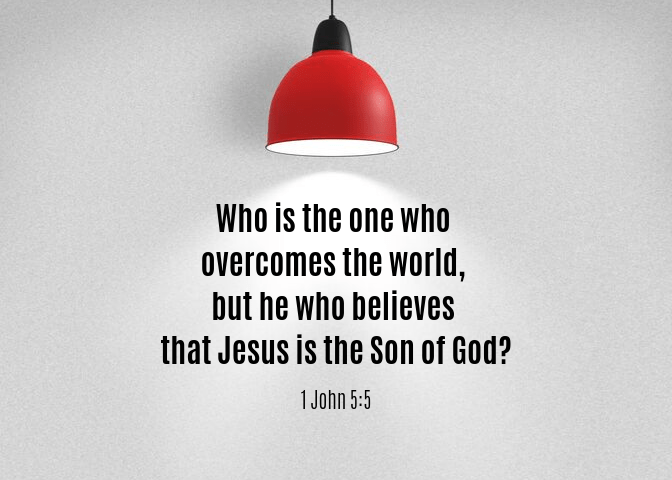
1 John 5:2-6 says “This is how we know that we love the children of God: by loving God and carrying out his commands. In fact, this is love for God: to keep his commands. And his commands are not burdensome, for everyone born of God overcomes the world. This is the victory that has overcome the world, even our faith. Who is it that overcomes the world? Only the one who believes that Jesus is the Son of God.” 

Who overcomes the world? The one who believes that Jesus is the Son of God. I love that. It reminds me of John 16:33, one of my favorite passages. Jesus is talking to his disciples, describing how the world will hate them, but to remember that it hated him first. And he warns them that they will grieve, but promises that their grief will turn to great joy. And before he prays over them and over all believers, he says, “I have told you these things, so that in me you may have peace. In this world you will have trouble. But take heart! I have overcome the world.”

We believe in the savior given by God our perfect father. And he was hated and crushed and persecuted by the world. But he followed God’s commands, and found that in those commands he overcame the world. In 1 John 5:19, John says, “We know that we are children of God, and that the whole world is under the control of the evil one.” 

That explains the frequent crushing feeling, then. Of course we sometimes feel overwhelmed and under fire. We are children of God in a world that is under the enemy’s control. But John follows by saying, “We know also that the Son of God has come and has given us understanding, so that we may know him who is true. And we are in him who is true by being in his Son Jesus Christ. He is the true God and eternal life. Dear children, keep yourselves from idols.”

There is a lot in the world we could easily give in to. When crushed, we could give in. We could turn to sinful comforts. We could allow our frustrations and complaints to turn to bitterness, unkindness, pride, gossip, and the like. We could give our attention to worldly things and idols to distract ourselves from our trials. 

But God’s commands are not burdensome. In fact, they are freeing. It’s very difficult to succumb to sinful nature when I’m in God’s word, or when I’m worshiping, or when I’m serving or loving others. When I’m doing something God commands of me, my heart and my thoughts are protected and the world cannot touch it. I’m no longer in the world’s control.

Reflection Questions:

How is the world controlling you right now? How is it affecting your attitude, your actions, and the way you speak to others? How is it affecting your heart? Are you bitter? Are you angry? Are you envious? 

What are some of God’s commands that you aren’t giving enough attention to that could help you overcome this worldly influence? Could you be spending more time communicating with God, rather than gossiping or complaining to others? Could you spend more time in gratitude rather than in frustration? Are you spending enough time in God’s word or is most of your time devoted to entertainment? Maybe put more worship into your life, rather than secular music? 

What could you be praying over right now, rather than complaining over? Take some time now to ask God to help you overcome the frustrations of the world. 

My beloved friends and fellow children of God, I hope you choose God’s commands every day and that those commands lift you and free you. The world should not be holding that kind of power over you and your heart. God gave you his son, so take heart! He has overcome the world, and so will you! 

– Jenn Haynes

Perfect Love

OLD TESTAMENT: Jeremiah 14 & 15

POETRY: Psalm 117

NEW TESTAMENT: 1 John 4

There are some pretty confusing messages about love out there in the world. I’m sure you’ve seen some of them. Oftentimes it’s defined as an emotion, a feeling. (How vague and disappointing a definition.) Some say it’s something you cannot help. You fall in and out of it, with little to no control. (Yikes. No accountability there.) Some say it’s something you have to work at, and that love takes effort. (Ok, I have to agree with that one a bit.) The Greeks separated love into 8 categories: eros, ludus, philio, agape, storge, mania, pragma, and philautia. (Talk about complicated.) I very clearly remember listening to a lot of DC Talk as a kid in the 90’s and they told me that love is a verb. (Or maybe that was Luv. It has been a long time since I was “d-d-down with the DC Talk.”) And then there’s the currently popular, on bumper stickers everywhere, “Love is love.” (Not super helpful, thanks.) 

John here tells us God is love. And if that doesn’t tell you how amazingly wonderful and powerful real, actual love is, then I don’t know what will. And fortunately for us, John goes into this a bit more.

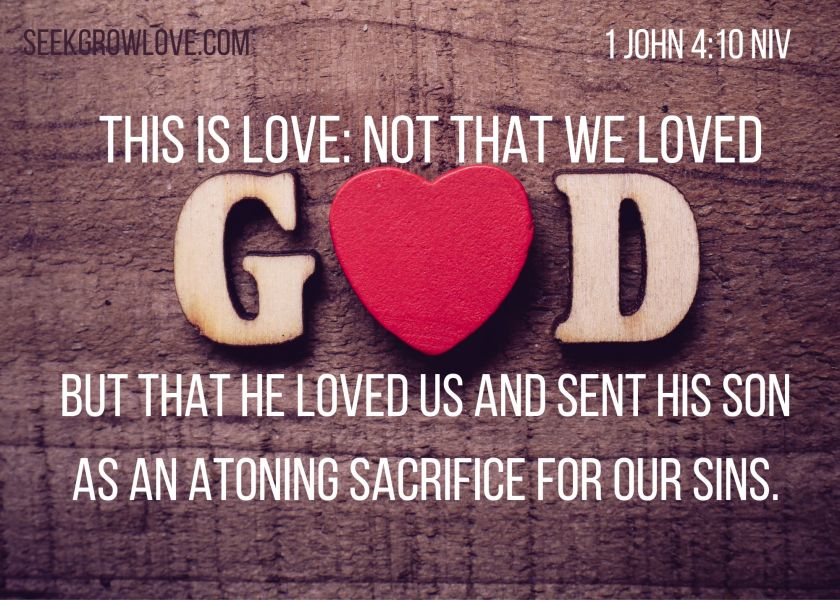
 “Dear friends, let us love one another, for love comes from God. Everyone who loves has been born of God and knows God.  Whoever does not love does not know God, because God is love.  This is how God showed his love among us: He sent his one and only Son into the world that we might live through him.  This is love: not that we loved God, but that he loved us and sent his Son as an atoning sacrifice for our sins.”

We know what love is when we know God. And we know God by listening, and learning, and understanding exactly what kind of sacrifice was made in order that he could have a relationship with us. I think we sometimes miss the gravity of this. When you sit and truly contemplate it, it sits heavy on your chest and chokes you. This love is devastating. 

I have a son. I love him dearly. I would die for him without hesitation. And there’s not a person on this planet that I want a relationship with badly enough to put my son through the torture and death that Christ suffered. I can’t fathom it. My heart breaks with the thought. 

God did not love his son any less than I love my little Oliver. In fact, God, in his perfect love, loves his son more, I’m sure, though that’s hard for me to understand or admit because I feel like I love my boy without end. But God is love, and God is perfection, and God loved his son Jesus. And yet he offered his son as a sacrifice. 

WHY!? Why would he do that!? If he loved his son so much, HOW could he do that!? 

That same perfect love extends to each of us as well. Though we are imperfect, ungrateful, selfish, and sinful, God’s perfect love covers us. He loves us SO MUCH, that he gave us his son. Jesus Christ was the model of all things good and perfect and brought us hope of a kingdom and eternal life with God and then he willingly suffered and died to make that future a possibility for all of us. And God allowed it. God gave us everything. And that is real Love, with a capital L. That is God’s Love. 

And God asks us to show that Love to others. I’ll admit immediately that I’m not capable of that kind of perfect Love. It hurts. It’s difficult. I don’t always understand it. My imperfect self, with my petty thoughts and frustrations and impatience… I’m only capable of love with a lowercase l. I’m not sure I can Love like God Loves.

But even when I’m not able to Love like that myself, I am VERY capable of sharing God’s Love with others. My version of love fails, but my God never does. 

“This is how we know that we live in him and he in us: He has given us of his Spirit.  And we have seen and testify that the Father has sent his Son to be the Savior of the world.  If anyone acknowledges that Jesus is the Son of God, God lives in them and they in God.  And so we know and rely on the love God has for us.”

We must know and rely on the Love God has for us. We are not capable of this kind of Love on our own, but God grants us his Spirit, and we know what his Love looks like. Share His Love with others. Love your neighbors enough to share God’s true and perfect Love with them. 

Reflection:

Who do you struggle to love? Do you have any relationships in your life where you find it difficult to love your neighbor? 

With whom can you share God’s perfect Love? Who do you know that desperately needs to see that Love in action? Who do you know that needs to hear that they are loved SO MUCH that God wants a personal relationship with them? 

Do those around you see God’s Love in your actions and in your words? Do they recognize God’s Spirit working in you? If not, or if not often enough, how can you do a better job of allowing God to work in you? 

My friends, I hope that this was a message of Love to you today. I pray that God’s perfect Love overcomes you this week. I pray that it overwhelms you so much that you have to share it with others.

– Jenn Haynes

Can they Recognize you as God’s Child?

OLD TESTAMENT: Jeremiah 12 & 13

POETRY: Psalm 116

NEW TESTAMENT: 1 John 3

I love looking at my children and seeing which traits of theirs are mine and which are my husband’s. My eldest is my miniature, with her blue eyes and wavy brown hair. She also has all my attitude, but also my creative flair. My second has her father’s eyes and coloring and his gentle spirit. And our son…I’m not sure if either of us were ever that mischievous, but I think we can both claim his cleverness. 

What a beautiful thing to be recognized as God’s child, though. 1 John 3 starts out with this proclamation. “See what great love the Father has lavished on us, that we should be called children of God! And that is what we are!” He claims us as his own, and loves when people recognize us as being children of God. And who can recognize us as such? Only those who know the Father as well. 

Those who know me well, can likely look at my children and see that they belong to me. They recognize characteristics. But those that don’t know me? It’s not so obvious. And that is why the world does not understand us. If the world doesn’t know God, it won’t recognize God’s traits in us. 

This chapter speaks a great deal on sin and how we must turn from it. It speaks on love and hate. But my favorite part of this passage is the promise that it offers, right off the bat. Verse 2 says, “Dear friends, now we are children of God, and what we will be has not yet been made known. But we know that when Christ appears, we shall be like him, for we shall see him as he is.” 

One day, we will be without sin. One day, our relationship to God will be obvious. We will look like his son, Jesus Christ our savior. Everyone will see the resemblance. But until that time, we struggle against sin and imperfection. Verse 9 tells us, “No one who is born of God will continue to sin, because God’s seed remains in them; they cannot go on sinning, because they have been born of God.” 

The world is looking at us, Christians. They are seeing us proclaim to be children of God, followers of Christ, and they are suspicious. If they don’t know God, they won’t recognize our conviction and our faith. But they recognize sin as we all do. And they see when we proclaim to follow God but refuse to turn from our sin. They see when we don’t love. They see when we are spiteful, or petty, or cruel. They see when we say “Love your neighbor” but do not carry out the actions. They see selfishness, pride, and haughtiness. These traits are fully recognizable as worldly traits. 

The world may not always understand true, Godly love, but we are to show it anyway so that others can see glimpses of God’s love for them. It is his great desire that we all be his children, and that one day, at Christ’s return, we are all made pure and fully known as Children of God. 

Reflection Questions: 

What traits do you show that you hope others see as Godly traits? Which areas in your actions and attitude do you feel you need to work on so that others better recognize you as God’s child?

How can you better love those around you? Is there someone in your life right now that frustrates or hurts you that you find difficult to love and be kind towards? Read through verses 21-23 and pray now for some extra strength and grace from God to be more loving toward them, so that they can see God in you.

Praying over you this week, my brothers and sisters. I’m so grateful to be a part of God’s chosen family with you.

– Jenn Haynes

Loving the Things in the World

OLD TESTAMENT: Jeremiah 10-11

POETRY: Psalm 115

NEW TESTAMENT: 1 John 2

What do you love? Love is such a flexible word. I love God. I love my wife. I love my children. I love my favorite sports teams. I love eating a good fettuccine alfredo. I love ice cream. The way we use the word “love” varies widely on the context.

In 1 John 2, John spends some time contrasting the way that we love the things of the world with our love for God. And while his words may sound harsh, there is a great lesson for us in them:

1 John 2:15-17 (ESV)

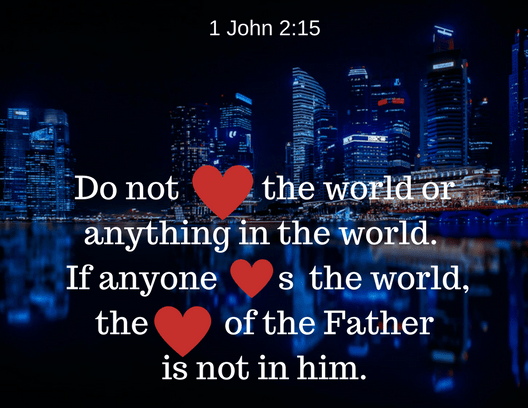
15 Do not love the world or the things in the world. If anyone loves the world, the love of the Father is not in him.

16 For all that is in the world–the desires of the flesh and the desires of the eyes and pride of life–is not from the Father but is from the world.

17 And the world is passing away along with its desires, but whoever does the will of God abides forever.

John commands us to not love the world or the things in the world. Does this mean that we are not to love people, like Jesus commands us to? Of course not! John is using expansive language to remind us of a key point: we are not to love the evil things we find in the world.

There is evil all around us: in the media, on TV, in movies, and on the Internet. We are bombarded with images all day everyday. While they had evil imagery in the ancient world, our modern world far outstrips the ancient world in how easy it is to see evil things and how often we are assailed with these images.

So what is John asking us to do? He is asking us to love the things of God, which means that we should avoid the evil of the world. We all have innate desires in our flesh that are not godly. If we act on those desires, we are separating ourselves not only from God through our sin, but we are also consciously deciding that our way of living is better than living the way God says that we should.

Friends, that is a dangerous place to be. I know that I have walked in darkness at times, enjoying the desires of the flesh and of the eyes. But what I found is that those dark places lead nowhere good. God does not want us to avoid sin because we are good little trained creatures. It’s not like God is running a circus, and we get to play the part of the circus animals, just jumping through hoops of fire to prove to God that we love Him. That’s not it.

God designed life. God designed us. He loves us. He wants the best for us. Just like I tell my children “no” from time to time, that does not mean that I do not love them. I want what is best for my kids, even when something wrong or dangerous looks attractive to them.

Let’s avoid the evil things that our world is trying to sell to us. Let’s be examples of love and light instead. As we do so, we are examples to others of what life will look like in the coming kingdom of God. The kingdom of God and the things of God will abide forever.

-Will Barlow

REflection Questions

Do you have a love for the things of this world that is unhealthy? What can you do to return to a purer love for God?

    Have you ever noticed that when you feed your mind something, it focuses on that concept more and more? How can you guide your thoughts in a healthier direction?

    When people look at your life, can they recognize the kingdom of God? Can they see the fruit of the spirit, evidence of a changed heart and life?

    Where are you Walking?

    OLD TESTAMENT: Jeremiah 7-9

    POETRY: Psalm 115

    NEW TESTAMENT: 1 John 1

    Have you ever felt completely at home someplace? Maybe it was your family of origin, maybe it was your first home on your own, maybe it was the first home you shared with someone special, like your spouse or a close friend. I hope that you have experienced that feeling.

    We want to feel at home in our relationship with God and with our Lord Jesus (and of course, with each other!). But sometimes, our brokenness, shame, and guilt get in the way of our feeling “at home” with God and others. Thankfully, the Bible tells us how to remedy this situation.

    In the beginning of 1 John, John talks about this “at home” feeling using the word “fellowship.” The word for “fellowship” basically means to share together or to participate together or to have close friendship with someone. We want to feel close to God, to Christ, and to each other. Those of us in church communities want to feel this closeness especially with those we are in community with on a regular basis. Living this way brings a special sweetness to life that is unlike any other feeling.

    Unfortunately, we don’t really experience this fellowship or “at home” feeling to the fullest extent possible in this life. Why? One reason is because, when we sin, our sin makes us feel distant from God.

    1 John 1:6-10 (ESV)

    6 If we say we have fellowship with him while we walk in darkness, we lie and do not practice the truth.

    7 But if we walk in the light, as he is in the light, we have fellowship with one another, and the blood of Jesus his Son cleanses us from all sin.

    8 If we say we have no sin, we deceive ourselves, and the truth is not in us.

    9 If we confess our sins, he is faithful and just to forgive us our sins and to cleanse us from all unrighteousness.

    10 If we say we have not sinned, we make him a liar, and his word is not in us.

    Walking in darkness is having our lives saturated with sin. Christians should not live this way. Christians are called to become more and more like Jesus every single day through the power of the holy spirit. This is called “walking in the light.” Walking in the light does not mean that we will never sin again ever in this life, but rather that we will not practice sin.

    So, how do we restore this fellowship with God when we do sin? Verse 9 tells us to confess our sins. One often overlooked fact about verse 9 is that it says that God does not hesitate to restore us. It says instead that God is “faithful and just.” We can trust God to forgive us and restore us because He has been faithful through the ages. And when He does so, He is acting in a just way, because Jesus has paid the penalty for sin at the cross.

    Forgiveness by God is an act of justice accomplished through Jesus our Lord. 

    We have a lot to be thankful for!

    -Will Barlow

    Reflection Questions

    Have you ever experienced the “at home” feeling? What conditions made you feel safe and at peace?

      Do you have any parts of your life that are “walking in darkness”? What do you need to confess to bring them back into the light?

      What are the benefits to those around you when you are walking in the light?

      Today’s Idols

      OLD TESTAMENT: Jeremiah 5 & 6

      POETRY: Psalm 115

      NEW TESTAMENT: 2 Peter 3

      Have you ever stopped to think about idolatry? In the ancient world, many groups of people would literally make statues out of wood or metal. They would sacrifice animals to these idols. They would pray to these made up, created things.

      The Psalmist talks at length about the silliness of such behavior, especially in the context of worshipping the actual Creator of the Universe:

      Psalm 115:3-7 (ESV)

      3 Our God is in the heavens; he does all that he pleases.

      4 Their idols are silver and gold, the work of human hands.

      5 They have mouths, but do not speak; eyes, but do not see.

      6 They have ears, but do not hear; noses, but do not smell.

      7 They have hands, but do not feel; feet, but do not walk; and they do not make a sound in their throat.

      The point is clear: idols look like they can speak, see, hear, smell, feel, walk, and talk, but they cannot. They offer something that is not real. It’s a mirage. It’s a false comfort. Worshipping that way is meaningless.

      What does this have to do with us, you might ask? I don’t have an idol in my house. I don’t worship to anything made with hands.

      Friends, I wish that was true. We still have idols today. They don’t frequently look like human images made of silver or gold. Perhaps they are other people. Perhaps they are the rectangular boxes we carry around in our pockets. Perhaps it’s our favorite sports team. Maybe it’s our job or our family. There are always things that vie for our allegiance and our attention.

      Unlike the ancient idols, many of these things are not bad in themselves, as long as we walk in a balanced way. The balance begins, however, with total devotion to King Jesus. Full stop. End of story.

      When we live unbalanced lives, we might find ourselves feeling more and more unsettled, anxious, or depressed. Living the way that God wants us to live does not guarantee a life free from those things, for sure, but the point remains: when our life is unbalanced, we get negative results. Just like the ancient people sacrificing to blind and mute forms of their own creation, we sometimes get too caught up in worldly things that take our minds in directions that are unhealthy and unhelpful.

      As the Psalmist reminds us, the Lord is our help and shield. The Lord is the One who blesses us. The Lord is the one who is worthy of worship and honor. We shall praise the Lord!

      -Will Barlow

      Reflection Questions

      Do you have things in your life that are idols or cause you to be unbalanced? What can you do to get back in balance?

        Can you think of a time when you came out of a longer period of darkness and into light? How did that feel?

        Can you think of a friend that has an obvious idol in their life? What can you do to help them find better balance? (Maybe telling the story from your answer in #2 could be a place to start.)

        A Kingdom Promise

        OLD TESTAMENT: Jeremiah 3 & 4

        POETRY: Psalm 115

        NEW TESTAMENT: 2 Peter 2

        What are you tempted to do when things get bad? Especially in the USA right now, it seems like everyone is divided, the country is full of anger, and Christianity is on the decline. What’s going on? Is there any hope?

        Looking through Scripture, we can find examples of difficult times for the people of God. Jeremiah chapter 3 is one such example. In the beginning of the chapter, God talks again and again about how corrupt and faithless the people of Israel and Judah have been. God uses the language of divorce, sexual immorality, and idolatry to describe the past mistakes of Israel and the current status for Judah. The problems were obvious. The solution also seemed obvious — return to the Lord. And not only did God declare that this was the right answer — He actively called for His people to return to Him.

        But what did the people do?

        Reading the rest of the book of Jeremiah, we know that they did not return to the true worship of Yahweh, at least before the exile.

        Nevertheless, the middle of Jeremiah 3 should catch our attention. The story does not end with the faithlessness, corruption, and sin.

        Jeremiah 3:15-18 (ESV)

        15 “‘And I will give you shepherds after my own heart, who will feed you with knowledge and understanding.

        16 And when you have multiplied and been fruitful in the land, in those days, declares the LORD, they shall no more say, “The ark of the covenant of the LORD.” It shall not come to mind or be remembered or missed; it shall not be made again.

        17 At that time Jerusalem shall be called the throne of the LORD, and all nations shall gather to it, to the presence of the LORD in Jerusalem, and they shall no more stubbornly follow their own evil heart.

        18 In those days the house of Judah shall join the house of Israel, and together they shall come from the land of the north to the land that I gave your fathers for a heritage.

        The story ends with the goodness of God. No matter what, God will send good shepherds, most importantly the Good Shepherd, Jesus. All nations will come to worship God in the holy city of Jerusalem. The people of God will be reunited again. This is a kingdom promise, a kingdom promise located in the darkest period of the history of the people of God.

        Friends, that is our lesson for today: no matter how dark the world gets, no matter how hopeless our future seems, the kingdom is coming. The King is returning.

        Instead of focusing on the darkness around us and the turmoil (war, politics, etc.), let’s focus on God and on the hope we have for the future. And let’s share that with others, too.

        -Will Barlow

        Reflection Questions

        Self assessment: how are you feeling with all that is going on in the world today?

          What can you do to be a brighter light in the midst of this darkness?

          How can you stay anchored in the hope of the return of Jesus while also paying appropriate attention to the things of the world?