Joseph: More Pain

Genesis 44 34

Joseph, from the Old Testament, was a very godly man.  He endured many hardships, but held onto his faith. But along the way, he picked up some bitterness and resentment toward his brothers.  When he had the chance, he tormented them, exacting some measure of revenge.  At that time there was such severe famine that Joseph’s brothers were forced to go back to Joseph a second time and buy grain.  This time, Joseph started by being kind to his brothers, and then he veered off, continuing to emotionally torment them.

In Genesis 44, everything finally came to a head.  Joseph deceived his brothers further, and made it appear that he was going to force the youngest brother, Benjamin, to stay there with Joseph in Egypt.  This plan may have seemed like another fine way to punish his brothers, but there was a huge problem.  His brother Judah approached Joseph, and said, “If you keep the boy Benjamin here, our elderly father will die from sorrow.”  Perhaps Joseph hadn’t considered the pain he was about to cause his own father–or the pain he had already caused him.  At this point, Joseph just about had an emotional breakdown (read it for yourself in Genesis 45).  All along Joseph had been trying to hurt his brothers, but he was the one who was hurt the most.  The pain he wished for them turned out to be the pain he felt.

At some point in your life, you may have someone really hurt you.  Maybe you already have.  And maybe at some point you will have a chance to hurt them back.  Maybe even hurt them back really bad.  Consider this: it will come with a huge cost to you.  You may want to hurt them back, but it will cost you something very real and something very big.  It would be better for everyone involved if you can somehow forgive them, and not pay them back in the way they deserve.

-Jason Turner

Joseph: A Time for Revenge?

Genesis 42 8 9

There’s an old saying that goes something like this: many people pass the test of poverty only to fail the test of plenty.  The idea being that many people do okay while living in poverty, but if they become wealthy, they don’t do as well.  Joseph remained faithful to God and very honest during his time of slavery and imprisonment.  But in Genesis 42, Joseph had become incredibly powerful and wealthy.  His ten brothers who had sold him into slavery, came before him practically begging for food.  Joseph deceived them, he played mind games on them, he messed with them, he exacted his revenge.  Joseph had suffered for years in slavery and prison, and now it was payback time.  Read through the chapter, and ask yourself if these were the actions of a godly person.  How would you have responded in the same situation?  What will you do when you are given a chance to repay someone evil for evil?  How will you repay someone who has genuinely hurt you?

-Jason Turner

Joseph: Right Where God Wanted Him

Gen 41 38

In Genesis 40, Joseph is still stuck in prison for having done nothing at all.  He has now gone from living a pampered life as the favorite son to being a slave and then being a prisoner. It would appear that the circumstances in his life have literally gone from bad to worse.  But whether he knew it or not, God was putting Joseph right where Joseph needed to be.

In chapter 40, Joseph demonstrates an amazing ability to interpret dreams. In chapter 41, Pharaoh has a dream, and he wants Joseph to interpret it.  Genesis 41:15 says, “So Pharaoh sent for Joseph, and he was quickly brought from the dungeon. When he had shaved and changed his clothes, he came before Pharaoh.”  After Joseph was able to interpret the dream for Pharaoh, Pharaoh declared, “You shall be in charge of my palace, and all my people are to submit to your orders. Only with respect to the throne will I be greater than you.”  Toward the end of the chapter, it reads, “Pharaoh had Joseph ride in a chariot as his second-in-command,  and people shouted before him, “Make way!” Thus he put him in charge of the whole land of Egypt.”

In one day Joseph went from being a prisoner to being a big wig, the second most powerful person in all of Egypt. You know you’ve reached the top if you ever have people running in front of your chariot telling everyone else to get out of the way.  How did this all come about?  Joseph was faithful to God, and God blessed Joseph.  No matter what happened in Joseph’s life, Joseph did not turn from God.  Let me ask you a question: do your circumstances ever get you down?  Do you allow yourself to become discouraged or frustrated or even depressed by where you are in life?  Have you ever considered that perhaps God is putting you right where He wants you to be?  The next time you feel tempted to give up on your relationship with God, remember Joseph, and all he went through, from the prison to the throne room–all in one day.

-Jason Turner

Joseph: Prosperous Slave & Successful Prisoner…And God Was With Him

Gen 39 20b-21a

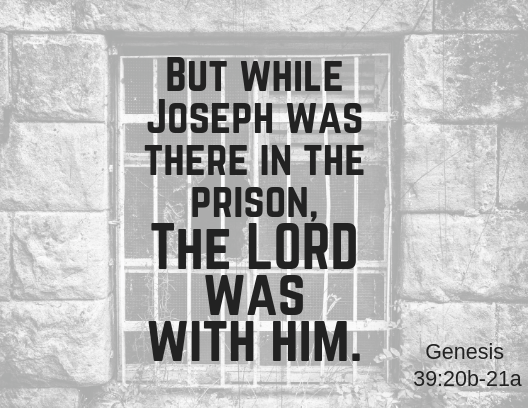
In the beginning of Genesis 39, Joseph has just been sold to a new master named Potiphar.  During the course of the chapter, Joseph is falsely accused and thrown into prison.  The chapter ends as Joseph goes from being a slave to being a prisoner.  Sounds pretty bad, right?  Strangely enough, the chapter starts out by saying of Joseph the slave, “The Lord was with Joseph so that he prospered, and he lived in the house of his Egyptian master.”  The chapter ends by saying of Joseph the prisoner, “The warden paid no attention to anything under Joseph’s care, because the Lord was with Joseph and gave him success in whatever he did.”  So God was with Joseph and gave him success and prosperity even as a slave and a prisoner.  Sounds very strange to me.  It would seem to me that success would be not being a slave and not being a prisoner.  But Joseph understood some things that many of us never understand.


We can learn a lot of good things from Joseph.  Whatever happened in his life, he kept on trying to live for God.  He continued to have a good attitude and he continued to work hard.  He didn’t pout, become discouraged, depressed or cry out, “Why me?”


How about you?  When you go through tough times, do you continue to seek God and discover His will?  Do you try to keep a positive attitude?  Would you keep working hard if you were in Joseph’s shoes?  We will soon see how God’s plan unfolded in Joseph’s life.  Feel free to read ahead in the Bible on this story of Joseph.  It is way more interesting than a TV show.


-Jason Turner

Joseph: Trouble Comes…for a Time

John 16 33

One day Joseph’s brothers were out watching the flocks in the fields (and in the sun), and Joseph was kept at home to relax.  Later on, their dad sent Joseph out to check on the brothers.  When the brothers saw Joseph coming from a distance, they hated him so much that they talked about killing him. After some discussion, they decided to beat him up and threw him into a large, dried out, underground water storage container.  Later, they pulled him back out.  Joseph thought his ordeal was over, but instead his brothers sold him to a caravan of traveling merchants.  Joseph pleaded with them for mercy, but his brothers just smiled and waved goodbye.  You can read about this in Genesis 37 and some of the following chapters also reveal some of the details.  Joseph had basically done nothing wrong, but he found himself betrayed by his own brothers and sold into slavery.

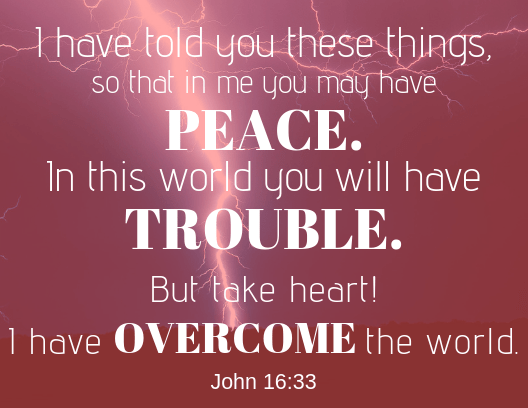
Sometimes people think that if they do everything right, then no bad things will ever happen to them.  Sometimes people are very cautious in order to avoid problems or troubles.  Some people think that if they serve God without making any mistakes, they will then have a nearly perfect life.  But life doesn’t work in these ways.  Joseph did nothing wrong, but he was sold into slavery.  In John 16:33, Jesus said, “In this world you will have trouble.”  The Bible never promises us an easy, trouble free life.  In fact, we are promised we will have trouble.

Joseph was taken to Egypt as a slave, but during his time there, he would see God’s plan unfold for his life.  A much greater good would occur because of his time as a slave.  Perhaps some day you will face tough times when God is trying to bring about long term good.  It will be hard to face at the time, but in the long term, you will see God’s hand at work in your life.

-Jason Turner

What Moses Teaches Us Today

Heb 11 26

Summary

Thanks for reading along this past week, and I really hope you have benefitted from this.  I know I have enjoyed studying and writing this past week. I just wanted to finish off with a quick summary.


The story of the Exodus is a story of a people who had been promised so much from God, but had forgotten him and taken on a culture and pantheon that was inherently sinful.  God then works through Moses to directly attack every sinful aspect of their culture and every false god that his people were following to show them beyond a shadow of a doubt that he is the King of Kings and Lord of Lords and that there are no gods before him.  As they are heading out of Egypt on their way to becoming their own nation with their own land God begins to form their culture around himself in order to help them to stay true to him.


So many aspects of the passover point the Israelites towards Jesus in the future and prepares their culture for his coming, but we know that when Jesus did come they did not accept him because they had walked away from the lessons they had learned under Moses.  Similarly Jesus’s message brought a massive change in culture to all those who followed him. People started to live changed lives and loved others truly instead of just following rules because they had to. That is the changed life that we are supposed to live.  Just as the Israelites had to sacrifice the lambs that the Egyptian culture worshiped we need to lay aside the idols in our culture that only bring sin into our lives. Maybe that is social media, or crass tv shows, or sleeping around, or any number of other things that are standard in our culture but can easily consume our lives and become idols.


Also just as Moses’ story and the Exodus points towards Christ, Jesus’ points us towards the Kingdom and his second coming.  So unlike the Israelites we need to remember what Jesus taught and live by his teachings so that we will be ready for his return.


Revelation 21:1-5

Then I saw “a new heaven and a new earth,” for the first heaven and the first earth had passed away, and there was no longer any sea. 2 I saw the Holy City, the new Jerusalem, coming down out of heaven from God, prepared as a bride beautifully dressed for her husband. 3  4 ‘He will wipe every tear from their eyes.There will be no more death’ or mourning or crying or pain, for the old order of things has passed away.”

-Chris Mattison

Revelation 21-2,3

The Passover

exodus 12 13

I had touched very briefly yesterday on the plague of the firstborn and the passover ceremony which spared the lives of those who followed God.  Let’s look at that a bit more today.


To prepare the Israelites for the passover they were to have each family take a lamb and slaughter it at twilight and take some of the  blood and put it on the doorframes of their houses and then cook and eat the lamb that night with bitter herbs. They were to also take care of the lamp for a week before they slaughtered it.  This would not be an easy thing to do and the meal would not taste good. This was meant to show the pain and sorrow that sin causes and the blood that is required to wash away sin.


Slaughtering the lamb in Egypt would also have taken a lot of faith.  Animals were of great value back then, which is why so many of the Egyptians worshiped them, and most likely many of the Israelites did as well.   Animals were of even greater value as well because of all the plagues that had just wiped out the animals in Egypt. Earlier we had seen that they could not do any sacrifices in the land of Egypt because the Egyptians detested it.  Now they are doing just that. In order to do this the Israelites are sacrificing their material wealth, as well as turning their backs on the Egyptian gods. If they were not able to let go of the wealth or culture then they would have faced the judgment.  He goes on to say,


Exodus 12:12-14

12 “On that same night I will pass through Egypt and strike down every firstborn of both people and animals, and I will bring judgment on all the gods of Egypt. I am the Lord. 13 The blood will be a sign for you on the houses where you are, and when I see the blood, I will pass over you. No destructive plague will touch you when I strike Egypt.

14 “This is a day you are to commemorate; for the generations to come you shall celebrate it as a festival to the Lord—a lasting ordinance.


The plague of the firstborn was to be the final blow to the Egyptian culture/gods, and with it God is also implementing a lasting holy day in their culture by which they will remember what God has done for them for all generations, and the seder passover dinner is practiced around the world to this day.  The problem with the Israelites in Egypt was that they forgot what God had promised them. God was not going to let them forget again so easily.


In the Old Testament there were many festivals and holy days and cultural things that God implemented in the Israelites in order to remind them of his work and power in their past.  Even with these they often forgot and wandered away from God. After Jesus we do not live under these laws and we do not have to follow these feasts and rituals, but we still need to make a permanent change in our lives every time that God acts in our lives.  We need to constantly remind ourselves of what God has done for us. The passover ceremony was designed to make people ask why they would do such a thing so that the Israelites could tell people the story of the Exodus. Similarly our stories of how God has changed our lives are our most powerful tool for spreading the Gospel.

-Chris Mattison

The Plagues

exodus 6 7

After Moses goes back to Egypt and starts trying to get things going with the exodus it backfires on him and he is starting to have doubts (Exodus 5).  God replies


Exodus 6:6-8

6 “Therefore, say to the Israelites: ‘I am the Lord, and I will bring you out from under the yoke of the Egyptians. I will free you from being slaves to them, and I will redeem you with an outstretched arm and with mighty acts of judgment. 7 I will take you as my own people, and I will be your God. Then you will know that I am the Lord your God, who brought you out from under the yoke of the Egyptians. 8 And I will bring you to the land I swore with uplifted hand to give to Abraham, to Isaac and to Jacob. I will give it to you as a possession. I am the Lord.’”


God is ready to go.  He is done with people doubting him, and he is ready to show his power.  To do this he sends the ten plagues on Egypt. (Exodus 7-11) Each of the plagues was very symbolic and directly attacked the gods and culture of the Egyptians.  I’ll cover just a few of them here and their symbolism.


The plague of blood turned the water of the Nile river into blood, which killed the fish and other things in the river.  The Nile was the source of life in Egypt and was represented by the god Osiris. God shows that he is more powerful than Osiris and that refusing him brings death.


The plague of gnats/lice was a really fun time.  The dust became gnats that covered everything. This was an insult to the god Set who was the god over the desert.  This also was directed towards the priests and magicians who prided themselves on being pure and clean, but God was pointing out their sin and uncleanness to everybody.


The plague of livestock involved all of the Egyptian cattle dying. This attacks many of the Egyptian gods because many of them take the form of cattle.  This came right after Moses says that the Egyptians would stone the Israelites for sacrificing cattle and livestock to God. God is telling Pharaoh that he can either give up some of his cattle to God, or lose them all.


The plague of the firstborn involved an angel of God killing all of the firstborn in Egypt that were not covered by the passover blood of the lamb.  This obviously killed a lot of people but it also was a direct attack on Pharaoh who was supposed to be a god in Egypt but could not protect his own son from the wrath of God.


Each of these plagues tore down a god or aspect of Egyptian society that the Israelites had adopted and showed that it did not bring life or an escape from sin, but only brought death in the end and that only God is worthy of being worshiped and followed.


I hope that once we come to Christ it is obvious which aspects of our old lives were only bringing sin and pain.  Sometimes though we do not realize which things in our society are against God and many Christians continue to live in their old ways.  We need to pray and be wise in our life choices to make sure we are not putting any idols before God, because one day Christ will return and most parts of the book of Revelation make the plagues look like a walk in the park.


On that happy note, I’ll see you guys back here tomorrow 🙂

Chris Mattison

Moses and the Burning Bush

exodus 3 15

After Moses fled Egypt and saved the Midianite women from the jerks at the well he settled down and had children and lived a simple life as a farmer.  Meanwhile the rest of the Israelites were groaning in their captivity in Egypt and their cry rose up to God and he took pity on them (Exodus 2:23-25).  God was then ready to call up Moses out of the wilderness so that he can carry out God’s plan.


Exodus 3:10-15

10 So now, go. I am sending you to Pharaoh to bring my people the Israelites out of Egypt.”

11 But Moses said to God, “Who am I that I should go to Pharaoh and bring the Israelites out of Egypt?”

12 And God said, “I will be with you. And this will be the sign to you that it is I who have sent you: When you have brought the people out of Egypt, you will worship God on this mountain.”

13 Moses said to God, “Suppose I go to the Israelites and say to them, ‘The God of your fathers has sent me to you,’ and they ask me, ‘What is his name?’ Then what shall I tell them?”

14 God said to Moses, “I am who I am. This is what you are to say to the Israelites: ‘I am has sent me to you.’”

15 God also said to Moses, “Say to the Israelites, ‘The Lord, the God of your fathers—the God of Abraham, the God of Isaac and the God of Jacob—has sent me to you.’

“This is my name forever,

   the name you shall call me

   from generation to generation.”


It is very interesting that Moses had to ask God about his name.  In the eyes of the Israelites God had abandoned them when they were enslaved in Egypt, and they had mostly wandered away from God since then and had taken on the gods of the Egyptians.  It was the mindset of the Israelites that God had forsaken his promises to Abraham, Isaac and Jacob and Moses was basically asking if God was wanting to start over in his relationship with the Israelites and form new covenants.  God emphatically states that he is to be known to his people as the God of Abraham, the God of Isaac, and the God of Jacob, to remind them that those promises still stand, and will stand for eternity. It is helpful to remember God in terms of what he has done for you or your loved ones, which is why God instructs the people to remember him as the God of Abraham so they will remember the stories that have been passed down of God’s faithfulness to their ancestors.


We need to be reminded of the fact that God does not change his mind like we do.  God does not forget a promise. Just because things have changed in our lives and we are having doubts doesn’t mean that God is no longer the one who created the foundations of the earth.  If we have sinned, or walked away from God for a time, or had a traumatic event in our lives it doesn’t change the fact that God IS, and that the blood of Jesus can still cover our sins.

-Chris Mattison

Moses and Justice

amos 5 15a

After the Israelites reject Moses’ leadership and betray him to Pharaoh he flees to the land of Midian.


Exodus 2:15-17

15 When Pharaoh heard of this, he tried to kill Moses, but Moses fled from Pharaoh and went to live in Midian, where he sat down by a well.

16 Now a priest of Midian had seven daughters, and they came to draw water and fill the troughs to water their father’s flock.

17 Some shepherds came along and drove them away, but Moses got up and came to their rescue and watered their flock.

18 When the girls returned to Reuel their father, he asked them, “Why have you returned so early today?”

19 They answered, “An Egyptian rescued us from the shepherds. He even drew water for us and watered the flock.”

20 “And where is he?” Jethro asked his daughters. “Why did you leave him? Invite him to have something to eat.”

21 Moses agreed to stay with the man, who gave his daughter Zipporah to Moses in marriage.

22 Zipporah gave birth to a son, and Moses named him Gershom, saying, “I have become a foreigner in a foreign land.”


This is a very bold move by Moses.  He is no longer a prince, but a refugee in a foreign land.  He still has his zeal for justice, even though it just got him in trouble with the murdering of the Egyptian that was beating the Israelite.  We also see that he loves justice more than the social hangups that he was raised with, because we know that Egyptians detest shepherds. From this we see that Moses was perfectly suited to be the one who establishes God’s law in Israel and who will be the Judge over Israel.


Oftentimes in our lives we see things that are wrong, but we don’t want to stick out our necks for another person.  Maybe we don’t know them that well. Maybe it is just something that is normal in society. However we justify it in our minds, we let injustices happen around us all the time because we are afraid of the personal repercussions.  We have seen with Moses that sometimes it might go terribly wrong, and other times it might go incredibly well. We need to have faith to stand against injustice and trust that God will take care of the consequences. Stand up for the person being bullied or mocked.  Talk to your friend who is considering an abortion. Confront racial discrimination in your community. Help your friend who is in an abusive relationship.


Hate evil, love good, and establish justice.

-Chris Mattison