Keep Walking

OT – Joshua 5-6

Poetry – Psalm 47

NT – 1 Corinthians 2

Keep walking, but you won’t knock down our wall. 

Keep walking, but she isn’t gonna fall! 

It’s plain to see your brains are very small 

to think walking will be knocking down our wall.

– the Pea soldiers, from Veggie Tales “Josh and the Big Wall”

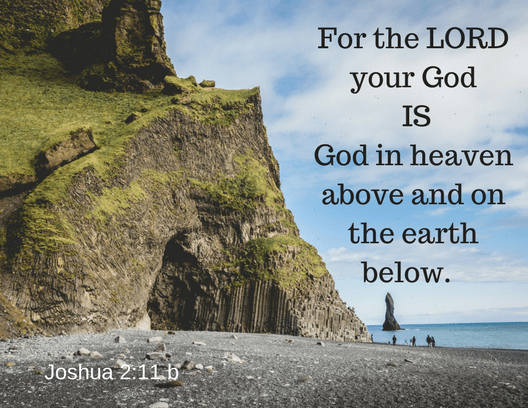
I’ve never been in the military (even preschool gymnastics was beyond my capabilities, and let’s just say I was usually a last pick in gym class), but even I can imagine that the mighty Israelite soldiers felt mighty silly walking around the city once a day for six days. Just walking behind the ark. And blowing some trumpets. Wow, fierce. I wonder if they wondered what God was thinking? Had they accidentally signed up for the (mostly-silent) marching band instead of the military? But on the seventh day – seven is the biblical number of completion – they marched around the city seven times, and then, a different kind of trumpet blast sounded, and Joshua ordered everyone to shout. And then, the wall collapsed. The mighty, impenetrable wall of the great city of Jericho, along with everything inside (save Rahab and her family), became a pile of rubble. Yet again, the people obeyed what seemed like ridiculous commands for an impossible task, and God worked through it all. I don’t know why God chose to take over Jericho in such a strange way, but I bet part of the reason was to display His awesome power and make sure everyone knew that He was the One True God. 

Psalm 47 even sounds like a song of praise that might have been shared after conquering Jericho: “He subdued the nations under us… He chose our inheritance for us… God has ascended amid shouts of joy, the LORD amid the sounding of trumpets…”

All of our lives should reflect back to the power of God. In our New Testament reading today, Paul also says, “My message and my preaching were not with wise and persuasive words, but with a demonstration of the Spirit’s power, so that your faith might rest not on men’s wisdom, but on God’s power” (I Cor 2:4-5) Just like when God made it clear that it was only by His power – not the marches and shouts – that the walls fell down, God likes to use ordinary, untrained people to do His biggest work, so His might is evident through their humility. 


God displays His power by working in big ways through us. He doesn’t NEED us; after all, God created the whole world without any input from mankind! But He wants to use us as part of HisStory, to help tell the world the greater message of His saving power. Will you join in the Greatest Mission of all time? 

-Rachel Cain

Reflection Questions

  1. How will you join in the Greatest Mission of all time?
  2. How/when have you seen God at work doing what seemed impossible in a way that you wouldn’t have expected? Who did He use in the mission?

Creating Memory-Sparkers

OT: Joshua 4

Poetry: Psalm 46

NT: I Corinthians 1

As a history buff, I love touring historical monuments. Even pre-digital-selfie days, I would try to capture a film-based image of myself at national memorials and important sites to remember the adventure. When we’ve studied certain landmarks and events in our homeschool, I’ve proudly shared my visual memories with my (thoroughly unimpressed) children. I’m hoping they will be more impressed when we take them on a historical tour of the East Coast next month, but I’m already preparing myself to accept their inevitable apathy (while I have enough fun for the whole lot of us!). 

In Joshua chapter 4, we find the throng of Israelites having just completed the journey across the Jordan River (no simple task, especially at flood stage). What do you think was of first priority? Moving on to their destination? Getting a snack? Setting up camp for the night?

No, God had bigger plans – plans that might seem trivial to us, but that were much more important in the eternal perspective. He told Joshua to select twelve men (one from each tribe) to select a large stone from the river and bring it to their campsite for the night. They would then stack the stones near the river to build a monument representing the twelve tribes of Israel. “In the future, your children will ask, ‘What do these stones mean?’ Then you can tell them, ‘This is where the Israelites crossed the Jordan on dry ground. For the Lord your God dried up the river right before your eyes, and he kept it dry until you were all across, just as he did at the Red Sea… so that all the nations of the earth might know the power of the LORD and that you might fear the LORD your God forever.’” (Joshua 4:21-24, NLT)

God knew that the Israelites had a tendency to worship other gods and forget His faithfulness. With more challenging battles ahead, God wanted them to have a visual reminder of how He had provided for them in miraculous ways. Not only that, but He wanted the other nations to know the power of God! This monument served as a memory-sparker to help the Israelites pass down the legacy of their God to their children. 

As a parent, I know firsthand how easy it is to get caught up in the day and forget to share about God’s faithfulness. But God, who created children, surely knows that two of the favorite activities of children are 1) playing with rocks and 2) asking a bazillion questions, so a large and unavoidable monument made of rocks was the perfect reminder for parents to share with their children about God’s provision! But God didn’t want them to remember him only when they passed the monument; he wanted his people to remember him all of the time! 

Deuteronomy 6:4-9:  Hear, O Israel: The Lord our God, the Lord is one. Love the Lord your God with all your heart and with all your soul and with all your strength. These commandments that I give you today are to be on your hearts. Impress them on your children. Talk about them when you sit at home and when you walk along the road, when you lie down and when you get up. Tie them as symbols on your hands and bind them on your foreheads. Write them on the doorframes of your houses and on your gates.

That section of scripture contains the Great Shema, a major tenet of our faith. Don’t overlook the part about remembering God’s faithfulness! We are called to talk about God constantly throughout our day, remembering Him together from the time we get up until we go to bed and all the time in between. This can even be as simple as praying when we hear an ambulance or thanking God for lovely nature. 

We might feel inadequate for such an important task as helping those around us to remember God throughout the day, but remember the words of Paul from our reading in I Corinthians 1:27-29: “God chose the foolish things of the world to shame the strong. He chose the lowly things of this world and the despised things and the things that are not – to nullify the things that are, so that no one may boast before him.” Even Moses, the man chosen to lead God’s people out of slavery, insisted that he could not do it because of a stutter, among other excuses. (We all like to give excuses, don’t we?) But God used Moses in mighty ways, and He has plans for us too – if we will choose to remember his ways and live for him. 

-Rachel Cain

Reflection:
-What are your excuses for not doing some of the things God has asked you to do? Debunk those excuses and pray to God to soften your heart. 

-How can you help pass along the message of God’s faithfulness? What memory-sparkers would God like to see you create? How can you remember and speak of God and His faithfulness more throughout the day?

Thankful for Their Legacy

OT: Joshua 3

Poetry: Psalm 45

NT: Romans 16

Last Friday marked one year since my father lost his battle with a terrible neurodegenerative illness. My sisters and I had helplessly watched him decline for over a decade, advocating intensely during that time to help him get the complex care he desperately needed while grieving the slow waning of our once-healthy father. Then, three days after Easter, our dad succumbed to his illness and was finally able to rest from this broken world. 

We sisters all shared a lot of our fond memories of our dad at his memorial service: his love for the color yellow, his affinity for hiking in nature, his proclivity to play practical jokes on unsuspecting coworkers and family members, his devotion to his daughters. As I remembered his life, I also considered what I would want written in my epitaph. What do I want people to say about me at my memorial service? What kind of legacy do I hope to leave? While considering my own funeral might sound a bit morbid, it is important to remember that we are mortal, our actions in this lifetime can have consequences (for the good or the bad), and we need to be focused on our mission for Christ. 

Perhaps, like me, you tend to skip over chapters like Romans 16, in which Paul is just thanking and saying hello to some random people with difficult-to-pronounce names, much like we might skip over the Acknowledgements section of a book. However, I encourage you to read it again, focusing on how all of these people were important to Paul and his work in some way. They all left a legacy, built a foundation for the early church. Paul didn’t complete his great missionary journeys alone; there were countless people supporting him in various ways the whole time. Some of the people were mentioned elsewhere in scripture; some of the others we have never heard of before, but they were all instrumental in the ministry work that Paul was doing, so he wanted to thank them publicly. (This is a good reminder to me that we need each other for help and encouragement, and we should offer gratitude to those people who have made a difference in our lives, especially those who encourage us in the ministry.) This chapter is a testament to the devotion of the early believers who helped spread the message of Jesus so we can all be believers today! And even though these are just names to us now, they were real people doing real work for the Kingdom, and their names are still being read thousands of years later. What a great legacy!

As followers of Jesus, we also have a hope beyond the grave. This life is not all that there is! We have a hope for resurrection and eternal life in the Kingdom with God and Jesus, and we are called to share that hope with others during our lives. Take another peek at the poetry reading for today. The explanation under the heading of Psalm 45 states that it was a wedding song, but many scholars also believe that it actually has some parallels to our Messiah and the hope of the coming Kingdom, the wedding feast of the Lamb (Jesus) with his Bride (the Church). What comparisons do you notice between the poem and the coming Kingdom? 

So, let’s keep living with an eternal perspective, focusing on the work God has called us to do, leaving a legacy for Him by contributing to the work of His Church. 

-Rachel Cain

Reflection questions:

-Who has been an encouragement and support to you as you seek out and pursue the work God has for you? How can you thank them?

-What do you hope is written in your epitaph? (What kind of legacy do you want to leave?)  What can you do this week to further develop or strengthen your legacy?

Rahab – Used by God

Old Testament: Joshua 2

Poetry: Psalm 44

New Testament: Romans 15

Isn’t it funny how you can read the same passage of scripture numerous times and still find new nuggets within it? I know the story of Rahab quite well, and since I love studying strong women of the Bible, I even read a historical fiction novella about her (“Unashamed” by Francine Rivers, if you’re interested). Still, I discovered a rabbit trail of new insight into Rahab through an oft-overlooked Bible feature: the footnote. 

In the first verse of Joshua 2 (NIV), upon noticing a footnote following the word “prostitute,” I glanced to the bottom of the page to find this clarification: “or possibly, an innkeeper.” Excuse me? “Innkeeper” and “prostitute” are very different occupations! As I dug deeper, I found respectable commentaries arguing on both sides of the fence why one interpretation was definitely more likely than the other, and some even suggested that she operated both an inn and a brothel. In either case, Rahab was a Gentile who, because she met many travelers, was privy to a lot of information about the happenings outside her city walls, including the miraculous power of the God of Israel. When the king’s men came to inquire about the spies, she not only hid them, but committed treason by leading the guards astray to chase after the spies, knowing full well they were hiding on her roof. Rahab risked her life to protect the spies, and the spies honored her request to spare her life (and the lives of her family) when they would later take over Jericho. Not only was her physical life spared, but Rahab married Salmon (who was perhaps one of the spies), became grafted into God’s chosen people, and is mentioned as an ancestor to Jesus. 

Let’s assume that she was a prostitute, as many interpretations of the Bible seem to imply. This woman was super important to the success of God’s people. Though we think she had a dark past, Rahab feared and trusted God perhaps even more than the Israelites did. How cool is it that God used not only a Gentile, but a promiscuous one at that, to help His people gain their Promised Land! It really gives us all hope that God can use us no matter our histories. In Romans 15, Paul reminds his readers that he is preaching not only to his fellow Jews, but also to help the Gentiles know about the saving power of Jesus. Thank God that his grace is for all of us! 

Psalm 44 ties well into this storyline of conquering Jericho, confirming over and over again that it is only by God’s power that people throughout history have conquered their enemies: “They did not conquer the lands with their swords; it was not their own strength that gave them victory. It was by your mighty power that they succeeded… only by your power can we push back our enemies; only in your name can we trample our foes… it is you who gives us victory over our enemies.” (Psalm 44:3,5,7)

I’ll close with this blessing for your day from Romans 15:13 (NIV): “May the God of hope fill you with all joy and peace as you trust in him, so that you may overflow with hope by the power of the Holy Spirit.” 

-Rachel Cain

Reflections: 

– God has a history of using “unworthy” people (like Rahab) for His glory. Reflect on your life, your unworthiness. How has God used your story for His glory? In what ways can you allow Him to do that even more in the coming years? 

– Can you think of anyone in your life whom you would have judged as unworthy, whom God has saved for his glory? Praise God for His faithfulness to all of us! 

– For further reading about Rahab, check out this article: https://tidings.org/articles/her-name-is-rahab/

A Good Leader

*Old Testament: Joshua 1

Poetry: Psalm 43

New Testament: Romans 14

Ahh, don’t you just love the political campaign season?! The mud-slinging ads, heated debates, and unwelcome solicitation of political literature are so refreshing to the soul! (Can you detect any sarcasm?) While I care deeply about this world in which my children are growing up and will always be grateful for the brave men and women who paved the way for freedom and suffrage, all the negativity and animosity around the primary and general elections, especially in a presidential election year, wear on my spirit. 

Speaking of elections and leaders, did you know that George Washington never wanted to be President? The great military general was relieved when the Revolutionary War ended so he could continue living simply on his Virginia farm, Mount Vernon. The only president to be voted in unanimously by the Electoral College, Washington spent exactly zero dollars on his campaign. He took his role as President very seriously, but feeling the weight of the country on his shoulders, he set the precedent for serving only two terms because he was more than ready to retire. One could argue that it was his humility that made him a great leader; others had grievances against him, claiming that many of his actions were quite negative. Though we can be prone to consider him a flawless leader, George Washington definitely had his share of critics by the time he left office. 

Biblical leader Moses had been a great guide for his people (the Israelites) and Joshua became leader of Israel following the death of Moses. He had been an assistant to Moses and, like Washington, seemed to have unanimous support. The theme of Joshua chapter one could be COURAGE. God knew that the tasks ahead seemed impossible, from crossing the flooded River Jordan to fighting all of the established cities that stood between the Israelites and their Promised Land. God reminded them that He would be present every step of the way. It wouldn’t be easy, but they only needed to obey, and He would fight with them. The people rallied around Joshua, promising in verse 16 to do whatever he commanded. 

Did you notice the directive (Joshua 1:7b-8) sandwiched between the reminders to “be strong and courageous”? The LORD reminds his people to follow all the commands given to Moses and to “meditate on the Book of the Law day and night, so that you may be careful to do everything written in it. Then you will be prosperous and successful.” God wants His people to have success and to enter their Promised Land, but it is conditional; they must stay true to Him, not straying from His ways and His laws.

Though these words were spoken to a distinct group of people at a specific time in history, I think they are still applicable to us today. God wants us to be strong and courageous to do the work He has called us to do for Him, but it is important that we are careful to follow His ways and stay in the Word. While you and I will most likely never be in charge of a country or even millions of people, we all lead in some ways. As a parent, I lead my children so they can become responsible, God-fearing adults. As a tutor, I lead my students in understanding math and reading concepts. In my church family, I try to encourage and help other people, both tall and small, learn more about God. In all of these areas, if I did not depend on God’s wisdom and strength to help me, I would fail. I could say that my leadership doesn’t matter all that much compared to being a President or a famous leader from the Bible, but in reality, the small steps you and I take as leaders can have eternal influence, especially when we are investing in the spiritual lives of others in the family of God. Lead with God as your Guide. Keep focused on His Word as you do His work. 

-Rachel Cain

Reflection questions: 

– Make a list of all the big and small ways you lead – at home, at your job, at church. How do you (or should you) rely on God’s strength to lead? 

– Where might God be calling you to step up as a leader, or back down so you can pursue other things he has for you? 

Feelings

Old Testament Reading:  Deuteronomy 33-34 

*Poetry Reading:  Psalm 42

New Testament Reading:  Romans 13

You’ve had the opportunity to read Psalm 42 for the last few days and maybe you have some ideas of why God included this in His Word to us. 

One commentary titled this Psalm as “Honest prayer from a discouraged saint” (Enduring Word).  You can see that the Psalmist was discouraged when writing these verses:  “My tears have been my food day and night, while they say to me all the day long, ‘Where is your God?’” (3).  “Why are you cast down, O my soul, and why are you in turmoil within me?” (5a).  “As with a deadly wound in my bones, my adversaries taunt me, while they say to me all the day long, ‘Where is your God?’” (10).

Satan taunts us, trying to make us doubt God’s goodness and His omnipresence.  His ploy works far too often.  We look at this world and see the sorrow, stress, and sinfulness that is everywhere and it is easy to become discouraged and to doubt. 

The Psalmist recognizes that he is feeling cast down and in turmoil.  He brings those feelings to God in verse 9a, “I say to God, my rock: ‘Why have you forgotten me?’”.  While he honestly tells God he’s feeling forgotten by Him, he still has confidence in Him and shows that in calling him “God, my rock”.  God can handle our honest outpouring of emotions – even the really big, overwhelming ones! 

The Psalmist responds to these feelings by remembering a time of praising God (4), telling himself he will praise Him again (5, 11), recalling God’s love (8), and telling himself to hope in God (5, 11).  Rather than dwelling on what is wrong, he chooses to believe what he knows to be true and to hope in that.  He knows God is trustworthy and able to save.  Even when he doesn’t feel it. 

Feelings are fickle.  They come and go; swing up and down.  Feelings are not dependable.  But they are real.  The evil in this world is also real.  And we can become discouraged just like the Psalmist did.  God wanted us to have an example of how to handle these feelings.  And to ultimately choose to hope in Him.

Amy Blanchard

Reflection Questions

  1. Are you discouraged?  Why – what is making you feel that way?  Tell God about it.  Then take some time to counter that feeling with a reminder that God is always with you and will always love you.   There is hope!
  2. For all living things, water means life or death.  This Psalm begins with a word picture of a deer panting for water.  It brings to mind a desperation – in this picture, a desperation of being thirsty and needing water to survive.  Then he says that just like that deer, his soul thirsts for God and he asks when he shall appear before God.  Again, reflecting a desperation, this time not for water, but for fellowship with God.  Have you ever been desperate for a closeness with God?  I find that the more time I spend with Him, the more I crave that connection.  If God seems distant to you, try spending some quality time with Him. 

A Living Sacrifice

Old Testament Reading:  Deuteronomy 32

Poetry Reading:  Psalm 42

*New Testament Reading:  Romans 12

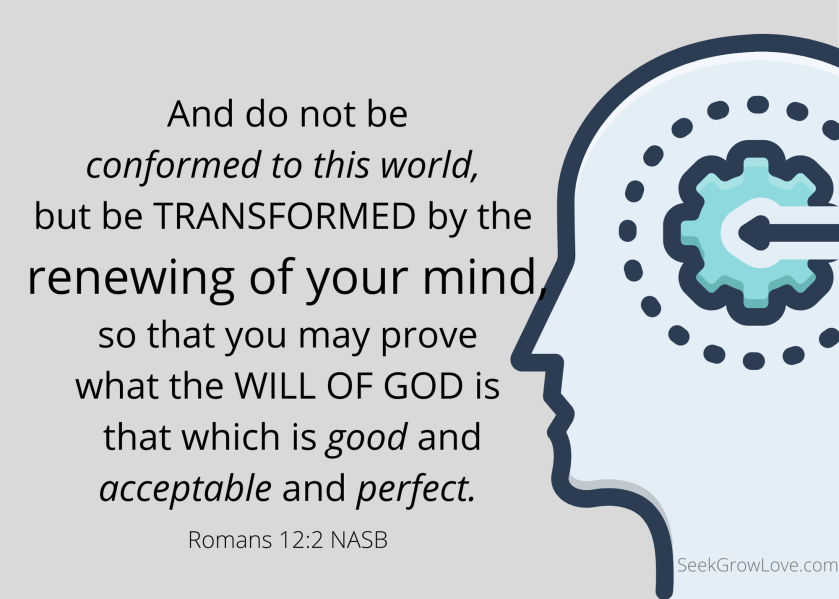
“Do not be conformed to this world, but be transformed by the renewal of your mind…”   -Romans 12:2a (ESV)

Pleeeeease!  Can you hear a child begging their parents for something.  Maybe for a treat, or a toy, or to stay up later? 

Romans 12 begins with Paul begging us to follow his advice.  Different versions use appeal, request, plead, urge, or beseech.  These words all tell us one thing:  that it is our choice.

So, who is Paul begging and what is he asking of them?   He is speaking to his brothers in Christ, and that includes all Christians then and now.  He is asking us to live a life worthy of claiming the name of Jesus Christ.  He asks us to “present our bodies as a living sacrifice, holy and acceptable to God”.  Then he tells us this is our “spiritual worship”, or our “spiritual service of worship”, or our “true and proper worship”, or our “reasonable service”.  In other words, it is reasonable for us to live as God desires us to because He has done so much for us (“by the mercies of God…”).  True worship involves all of us – our heart, soul, strength, and mind (Luke 10:27). 

One of my frequently used phrases is, “What does that look like?”.    Well, fortunately, Paul tells us in the very next verse, “Do not be conformed to this world, but be transformed by the renewal of your mind”.  Conform means to be in agreement with, or to adopt the form of those around you.  Transform means to change in character or to change the appearance of.   Both are verbs – action words.  Both of them require us to change.  This is what Paul is pleading with us about – we will either be conformed by the world or we will be transformed to be holy and acceptable to God.  Our world was created perfect but sin corrupted it.  Until Jesus returns to restore it to perfection, we must live in it.  We are warned several times in Scripture not to love the world, become like the world, think like the world. 

It sounds like an easy choice, and it is.  The hard part is choosing it every minute of every day.  Choosing to live it with our whole body – heart, soul, strength, and mind.  Every time we make a choice about our attitudes, actions, words, thoughts, etc.  This requires humility and being humble requires us to let go of our pride, arrogance, and egos.  Not so easy. 

Paul then goes on to warn us not to think of ourselves more highly than we ought.  Sounds like more humility. 

This chapter is full of godly advice; here are just some pieces of that advice.  Believe God has given you a gift, figure out what yours is, use it.  A healthy body (church) needs every member to be using their gifts.  Genuinely love one another.  Be constant in prayer.  Hate evil.  Contribute to the needs of the body.  Show hospitality.  Live in harmony with one another.  Do not be haughty.  If possible, live peaceably with all.  Never avenge yourself. 

Chapter 12 concludes with this, “Do not be overcome by evil, but overcome evil with good.”.  This brings us full circle.  The world is evil; if we are conformed to the world, we will be overcome by evil.  If we choose to be transformed, we will be able to overcome evil with good. 

Amy Blanchard


Reflection Questions

  1. What of the world draws you toward conforming?  Maybe it’s always wanting your way, viewing yourself as right all the time, or not determining what is evil so you can detest it.  Maybe it’s good things like family, showing hospitality, or volunteering.  Be aware of what messages are out there trying to turn your attention away from God.  Family, showing hospitality, and volunteering are good; but the place you give them shouldn’t be ahead of God.
  2. Transformation begins in your mind.  Paul says that it happens by the renewal of our minds.  What changes do you need to make to renew your mind?  It is our will to make the choice to be transformed, but God does the transforming.  We need to humble ourselves and let Him.  We are told that then we will be able to know God’s will.                

God is Trustworthy

*Old Testament Reading:  Deuteronomy 31

Poetry Reading:  Psalm 42

New Testament Reading:  Romans 11 

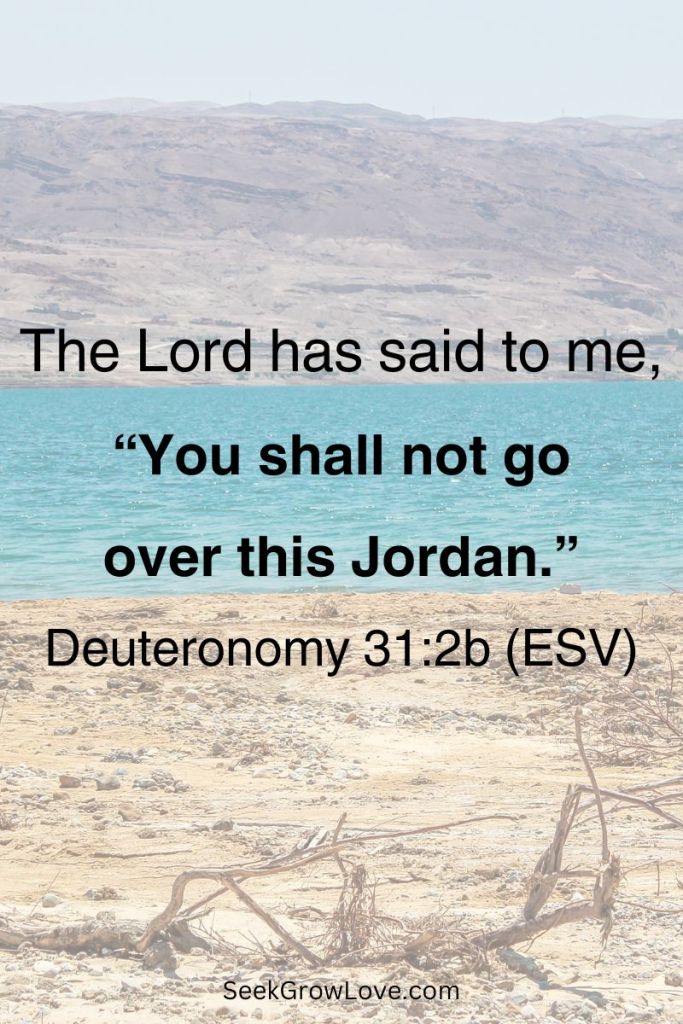
“The Lord has said to me, ‘You shall not go over this Jordan.’“  – Deuteronomy 31:2b (ESV)

Deuteronomy 31 begins with Moses acknowledging his advanced age (120 years) and telling the Israelites that he will no longer be their leader.  Deuteronomy 31:2b says, “The Lord has said to me, ‘You shall not go over this Jordan.’“  Moses does not get to enter the promised land because he broke faith with God – but he does get to see it from a mountain before he dies (Deuteronomy 32). We learn in this brief statement that God’s word WILL hold true, He had told Moses he wouldn’t get to enter (Numbers 20:12) and His stated consequences will apply (helpful parenting tip).

This might seem overly harsh, but it helps us trust that what God says will happen, will happen.  Moses accepted this consequence from God and went on to give the Israelites some parting words.  He begins with telling them to be strong and courageous (verse 6) and reminds them that God will never leave them.  Then he commissions Joshua to lead the people and tells him to be strong and courageous and that God will never leave him.  He tells the Levites to read the law every seven years, specifically so that the next generation will hear it and fear God (verses 12-13). 

After God reminds Moses that he’s going to die soon, He tells him that the Israelites will break His covenant.  How sad that must have made Moses!   God then has a final instruction for Moses.  In verse 19a God says to Moses, “Now therefore write this song and teach it to the people of Israel” and verse 22 says, “So Moses wrote this song the same day and taught it to the people of Israel.”

What was so important that it was one of the last things God wanted Moses to do for Him?  You can read the song itself in chapter 32, but basically it was a warning to the Israelites.  The song Moses was instructed to write begins with a reminder of God’s faithfulness, then moves to their future failures and turning away from God and then of God’s punishment that will follow. 

So what can we learn from this passage that was directed very specifically at the Israelites of that day? 

First, can people trust us when we speak?  Do we do what we say we will?  It is important to know that we can trust God.  It is also important that we are trustworthy.

Second, it’s easy to look at the Israelites and think, “What was wrong with them?  God told them how they would fail Him and they didn’t stop it from happening!”  However, if we are honest with ourselves, we do the same thing.  God has told us in Romans 3:23 that, “all have sinned and fall short of the glory of God”.  We all sin.  We all turn away from God.  But the good news is that God is there, waiting for us to turn back to Him!

Amy Blanchard

Reflection Questions

  1. It is important that we are trustworthy.  Do your actions line up with your words? 
  2. Just like the Israelites needed to not get stuck in the place of accepting and acknowledging their sin but doing nothing about it, we are not to sit there, either.  God tells them in verse 21 that, “this song shall confront them as a witness”.  What confronts you when you reject God’s plan for you?  Do you heed the warning?

Choose Life

*Old Testament Reading:  Deuteronomy 29-30 

*Poetry Reading:  Job 42

New Testament Reading:  Romans 10

 “Therefore choose life, that you and your offspring may live” – Deuteronomy 30:19b (ESV)

In chapter 42, Job again responds to God.  He is humble, accepting that he cannot understand God nor His ways.  He repents for speaking about what he doesn’t understand.  He responds just as God wanted him to, in humility. 

Job’s friends first made their appearance in Job 2.  They “made an appointment together to come show him sympathy and comfort him” (Job 2:11b).  The first thing they did was an outward display of sharing his pain (wept, tore their robes, sprinkled dust on their heads).  Then they just sat with him.  In silence.  For seven days. 

If you’ve been reading along in Job, you have heard their advice.  Much of it sounds good.  Much of it would likely be great advice in a different situation.  Their focus was on what Job had done wrong to incur God’s wrath.  They couldn’t see any alternative to Job’s suffering.  Yet they gave up their silence and tried.  They did their best, but it turns out, they were wrong.  And God wasn’t about to let them get away with it. 

We’ve all been there….sitting (in person, via text, on social media, over the phone, etc.) with a suffering friend not knowing what to say.  Eventually, the silence drives us to speak.  Our desire to help is strong and pushes us to try to solve the problem, to figure out the “why” so they can fix it, or at least understand it.  Our hearts are in the right place.  I think Job’s friend’s hearts were in the right place, too.  They wanted to help. 

God says that His anger burns against them and that they haven’t spoken of Him what is right.  I don’t want to be in that place with God.  While He does offer them a way out – a way to repent – it is humbling, and likely even humiliating.  They thought they were offering good advice to their friend and now they have to humble themselves and ask him to pray for their misspeaking. 

What can we learn from this exchange?  First, reaching out to a friend who is suffering is good.  Sitting in silence is good, too.  But what I take away from this is that we need to seek God before we respond on His behalf.  Before we tell someone what God would have them do, we should ask God.  That can be in prayer or in reading His Word.  Someone once said that God will never contradict His Word, so whatever you “hear” him saying, cross-check it in the Bible. 

And a quick dip into Deuteronomy for some great thoughts to meditate on today…

Deuteronomy 29:18b-19a says, “Beware lest there be among you a root bearing poisonous and bitter fruit, one who, when he hears the words of this sworn covenant, blesses himself in his heart, saying, ‘I shall be safe, though I walk in the stubbornness of my heart.”

Deuteronomy 30:19-20 says, “I call heaven and earth to witness against you today, that I have set before you life and death, blessing and curse. Therefore choose life, that you and your offspring may live, loving the Lord your God, obeying his voice and holding fast to him, for he is your life and length of days, that you may dwell in the land that the Lord swore to your fathers, to Abraham, to Isaac, and to Jacob, to give them.”

I think Job chose life.  Even though he didn’t do anything really big to sin, God called him out on his attitude and words.  He didn’t bear poisonous and bitter fruit and he didn’t hold on to his stubborn heart.  He humbled himself. 

Amy Blanchard

Reflection Questions

  1. Do you know a friend who is suffering?  What can you do to help them?  Remember to start with asking God.
  2. Do you have a stubborn heart that thinks you’ll be safe from God’s wrath?  Consider what choice you are making – life or death, blessing or curse.  Remember that your choice not only determines if you will dwell in the land of God’s promise, it also affects those following you – don’t make it harder for them to choose life and blessing.

Overtaken!

*Old Testament Reading:  Deuteronomy 27-28

*Poetry Reading:  Job 41

New Testament Reading:  Romans 9

To keep up with our reading in Job, starting back in chapter 38, God began His rebuttal to Job.  God is still giving Job examples of his greatness and Job’s lowliness.  He’s still responding in chapter 41.  God could go on so much longer with His “Were you there when…”, “Who determined…”, “Do you know…”, “Can you….” questions.  After a brief allowance for Job to respond in chapter 40, God jumps right back in with his proclamations.  It certainly explains why God told Job to put on his big boy pants before he began (“Who is this that darkens counsel by words without knowledge?  Dress for action like a man; I will question you, and you make it known to me.” Job 38:2-3)!  More to come tomorrow….

Back in Deuteronomy 11, God tells the Israelites about the events that are now taking place in chapters 27 & 28.  Deut. 11:29: “And when the Lord your God brings you into the land that you are entering to take possession of it, you shall set the blessing on Mount Gerizim and the curse on Mount Ebal.”  Can you imagine?  Two groups of men standing on different mountains shouting the blessings and curses which God will send based on their choices?  Clearly God takes accountability seriously! 

After reading the curses in 27:6 (and there are some pretty odd and icky ones), it wraps up with a very broad umbrella, “Cursed be anyone who does not confirm the words of this law by doing them”.  God wasn’t going to allow any loopholes here!

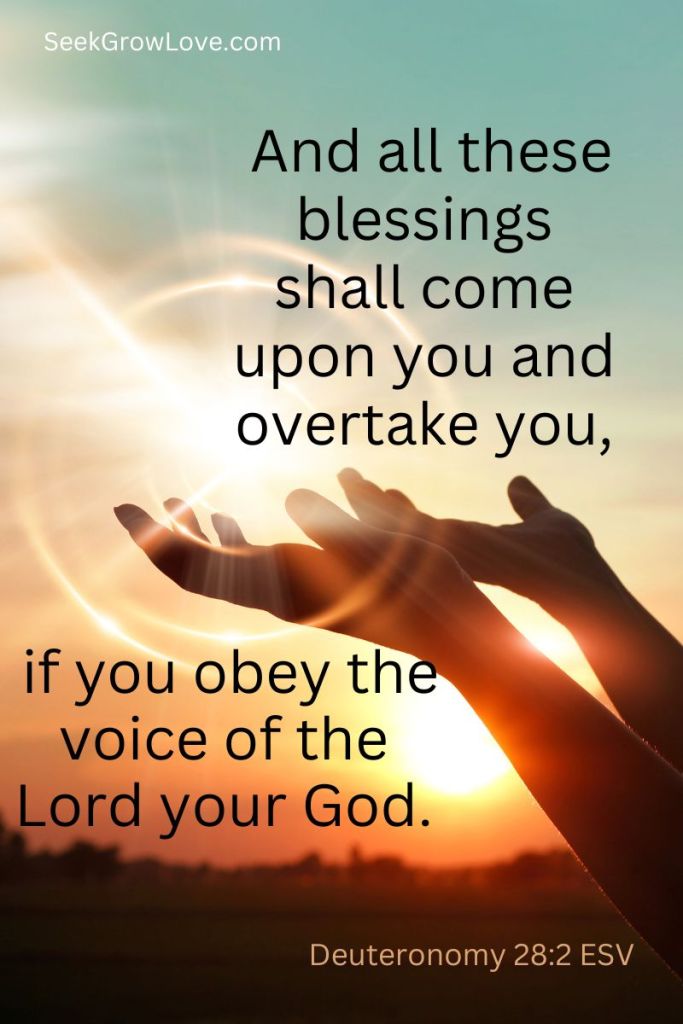
Chapter 28 begins with the blessings they will receive IF they “faithfully obey the voice of the Lord”.  These are really nice.  This is where we want to pause and feel good about our loving God.  28:2 says, And all these blessings shall come upon you and overtake you, if you obey the voice of the Lord your God.”

Sadly, we don’t get to sit with this image of a loving, blessing-giving God for long.  They jump right back into more curses.  And in verse 45 he uses the same phrasing, “All these curses shall come upon you and pursue you and overtake you till you are destroyed, because you did not obey the voice of the Lord…”.   

Remember, the Levites are proclaiming these loudly from facing mountains.  Participating in the yelling or just listening to it, I imagine you would feel like the matter of us choosing to obey God or not is very important to God.  They were obviously making a big deal out of it.  Our choices matter. 

Deuteronomy 27:9-10 says, Then Moses and the Levitical priests said to all Israel, “Keep silence and hear, O Israel: this day you have become the people of the Lord your God. 10 You shall therefore obey the voice of the Lord your God, keeping his commandments and his statutes, which I command you today.”  Moses commands the Israelites to obey.  We have a choice – God gave us a free will to choose to obey or not.  Moses simply tells the Israelites that since they are God’s people, they shall obey Him.  If it were only that simple to do!  But, isn’t it?  Well, it should be. 

Amy Blanchard

Reflection Questions

  1. I read this beautiful definition of being overtaken by blessings, “the blessings of the Lord will be so abundant, that they will chase us down.”  Have you ever felt overtaken by blessings? 
  2. Listening to the voice of the Lord your God will change you – your thoughts and behaviors and attitudes.  If you are not seeing that change, first honestly look at if you are really listening to God’s voice.  Read the curses.  Read the blessings.  And make your choice.