
1 Kings 21–22
-devotion by Brian Froehlich (IL)
1 Kings ends with two powerful reminders:
God sees injustice.
And truth does not change simply because people refuse to listen to it.
Chapter 21 tells the heartbreaking story of Naboth’s vineyard.
King Ahab wanted Naboth’s land, but Naboth refused to sell it because it was part of his family inheritance under God’s law. Ahab responded like a spoiled child — sulking, pouting, and lying in bed angry because he could not have what he wanted.
Then Jezebel stepped in.
She arranged false accusations, manipulated the legal system, and had Naboth executed so Ahab could seize the vineyard.
It is one of the clearest examples in Scripture of powerful people abusing authority for personal gain.
And God saw every bit of it.
Elijah confronted Ahab with devastating words of judgment. Yet something remarkable happened afterward: Ahab humbled himself temporarily, and God delayed part of the judgment.
Even here we see God’s mercy mixed with justice.
But chapter 22 may be even more sobering.
Ahab wanted reassurance before going into battle. So hundreds of prophets told him exactly what he wanted to hear:
“Go, for the Lord will give it into the king’s hand.”
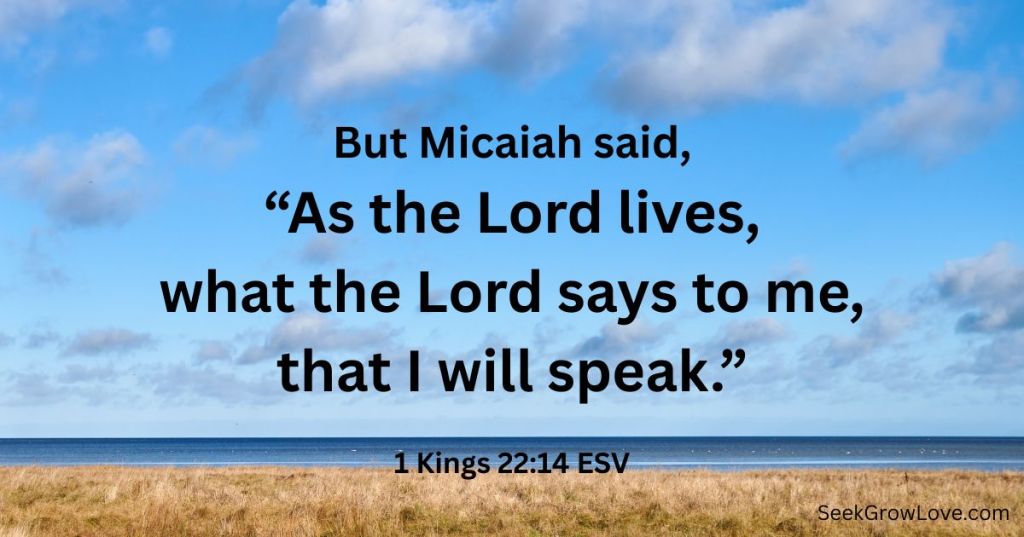
Only one prophet, Micaiah, told the truth.
And everybody hated him for it.
Ahab openly admitted:
“I hate him because he never prophesies anything good about me, but always bad.”
That sentence reveals something deeply dangerous about human nature.
Many people do not actually want truth.
They want reassurance.
Validation.
Comfort.
Approval.
They want spiritual voices that confirm their desires rather than challenge their hearts.
False prophets often become popular because they remove the discomfort of repentance.
Micaiah stood alone and spoke the truth anyway.
And he was imprisoned for it.
Ahab ignored the warning, disguised himself in battle to avoid danger, and still died exactly as God had foretold. A random arrow struck him between the armor plates.
No disguise could hide him from God.
No political power could override truth.
No amount of denial could change reality.
That is one of the major themes running throughout 1 Kings:
Human leaders repeatedly fail.
Human wisdom repeatedly collapses.
Human kingdoms repeatedly drift toward corruption.
But God remains faithful.
And despite all the darkness in these chapters, Scripture continues pointing forward to a better future — a righteous King who will judge perfectly, defend the innocent, and establish true justice forever.
Unlike Ahab, that coming King will not abuse power.
Unlike false prophets, He will speak truth completely.
Unlike earthly kingdoms, His reign will not end in corruption and death.
That is where the story of Scripture is heading.
Toward resurrection.
Toward restoration.
Toward the Kingdom of God.
Three Things to Remember
- God sees injustice.
Naboth’s murder was not hidden from the LORD.
- Truth is often unpopular.
Micaiah was hated precisely because he spoke honestly.
- Human kingdoms fail, but God’s Kingdom will endure.
Ahab’s reign ended in death, but God’s promises continued forward.
The end of 1 Kings leaves us with an important question:
When truth confronts us, will we humble ourselves before God…
Or only listen to voices that tell us what we already want to hear?
Reflection Questions
- What do you do with truth that contradicts what you want to hear? Give some examples.
- Where do you see injustice? How might God want you to respond?
Prayer
Dear God – Thank you for your faithfulness! Give me a discerning heart that knows truth and stands strong against lies and injustice. Thank you for your love and guidance today and your Coming Kingdom where truth and righteousness will reign forever.

