
Our Amazing Living Hope

OLD TESTAMENT: Isaiah 61 & 62

POETRY: Psalm 112

NEW TESTAMENT: 1 Peter 1

Isaiah 61:1-2 (LEB):

“The Spirit of the Lord Yahweh is upon me,

because Yahweh has anointed me;

he has sent me to bring good news to the oppressed,

to bind up the brokenhearted,

to proclaim release to the captives

and liberation to those who are bound,

to proclaim the year of Yahweh’s favor

and the day of vengeance of our God,

to comfort all who mourn.”

Isaiah 62:11-12 (LEB):

“Look! Yahweh has proclaimed to the end of the earth:

Say to daughter Zion, ‘Look, your salvation is coming!

Look, his reward is with him, and his recompense in his presence.’

And they shall call them ‘The Holy People, The Redeemed of Yahweh,’

and you shall be called ‘Sought After, A City Not Forsaken.'”

Psalm 112:6-7 (LEB):

“For the righteous will not be moved forever;

they will be remembered forever.

They are not afraid of bad news;

their heart is steadfast, trusting in Yahweh.”

1 Peter 1:3-4 (LEB):

“Blessed be the God and Father of our Lord Jesus Christ,

who according to his great mercy

has caused us to be born again to a living hope

through the resurrection of Jesus Christ from the dead,

into an inheritance imperishable and undefiled

and unfading, reserved in heaven for you.”

Isaiah 61 presents a powerful declaration of the Messiah’s mission. This passage, which Jesus Himself read in the synagogue (Luke 4:16-21), speaks of the transformative work of the Spirit of God. The Messiah brings good news to the oppressed, heals the brokenhearted, and proclaims freedom to captives. This is a message of liberation, healing, and hope—a mission of restoring what sin has broken and bringing the year of the Lord’s favor.

As we move into Isaiah 62, the focus shifts to the future glory and salvation of Zion. God’s people are given new names: “The Holy People” and “The Redeemed of Yahweh.” These names reflect their restored identity and the transformation that salvation brings. Once forsaken and desolate, God’s people are now called “Sought After” and “A City Not Forsaken.” This is a beautiful reminder that God’s salvation renews our identity, bringing hope and purpose where there once was despair.

Psalm 112 describes the life of the righteous, those who fear the Lord and delight in His commands. The psalmist paints a picture of a life marked by generosity, justice, and steadfastness. The righteous are not afraid of bad news because their hearts are secure in the Lord. Their confidence is not rooted in circumstances, but in the unshakable nature of God’s character.

Even in the face of uncertainty or difficulty, the righteous remain steadfast, trusting in Yahweh. This psalm encourages us to live with a heart that is grounded in God’s faithfulness. Like a tree firmly planted, the righteous are not easily moved by the storms of life, for their foundation is in the One who holds all things together.

In 1 Peter 1, we are reminded of the incredible hope we have in Christ. Through his resurrection, we have been born again to a “living hope,” an inheritance that is imperishable, undefiled, and unfading. This hope is not something fleeting or fragile, but a secure and eternal reality that is reserved in heaven for us.

Peter goes on to call believers to live lives of holiness in light of this great hope. Just as God is holy, we are called to be holy in all we do. This holiness is not a burdensome requirement but a response to the incredible mercy and grace we have received. We are to set our hope fully on the grace that is to be revealed at the return of Jesus Christ, allowing this hope to shape our lives and our actions.

This week, meditate on the liberating mission of the Messiah in Isaiah, the secure life of the righteous in Psalm 112, and the living hope that is yours through the resurrection of Jesus in 1 Peter. Let these truths remind you of your identity as God’s holy and redeemed people, and allow the joy of your salvation to shape every aspect of your life.

-Jeff Ransom

Reflection Questions:

How does the mission of the Messiah in Isaiah 61-62 inspire you to reflect God’s love and healing in your life and the lives of others?

In what ways can you cultivate the steadfastness described in Psalm 112, especially when faced with difficult news or circumstances?

How does the living hope described in 1 Peter 1 give you encouragement in your daily walk? How can this hope shape your perspective and actions?

What steps can you take to live a life of holiness, as Peter encourages, knowing that this is a response to the incredible grace and salvation you have received?
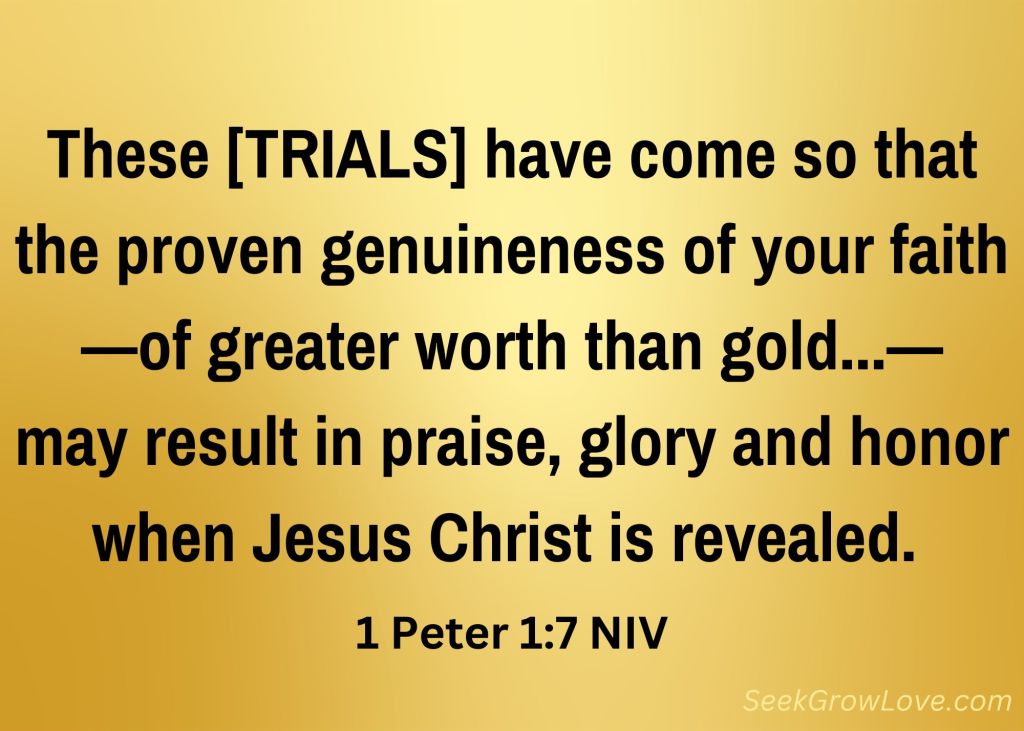
Your Trials

THEME WEEK – PETER: 1 Peter 1

Old Testament: Nehemiah 1 & 2

Poetry: Psalm 19

This week at FUEL we focused on the life of Peter. Peter is an amazing character in the Bible. His life was full of ups and downs. His faith was high and it was low. Yet, Peter was used to do great works for God. I find a lot of parallels between Peter’s life and ours as believers.  Today’s devotion is not as much focused on Peter’s life, but rather how he uses what he learned from his life experiences.

1 Peter 1 starts by proclaiming the good news and our hope in Christ. He says in verse three, that through mercy we have been given a new birth through the resurrection of Jesus. Now Peter continues this by saying that even though we have our hope in Jesus we will have a lot of grief and many trials. This is true for our lives as well, most of us have gone through something that is incredibly challenging. Life can really beat us down or we build sandcastles on false beliefs. But when you have a living hope through Jesus Christ, you have a strong foundation to rely on during the waves of life.

 Peter also faces many trials in his life such as when he was called out on the water by Jesus, he took his eyes off of Jesus and began to sink because of his lack of faith. Peter also denies Jesus three times. He is ashamed and scared because of what might happen to him so he turns his back on Jesus. But even through all of these difficulties and trials Jesus calls him back. I know that I have taken my eyes off from Christ and maybe even have denied my faith. But he continues to call me back and offers grace.

Peter uses his life experiences to help strengthen fellow believers. He says in verse six and seven that trials come and that “these have come so that your faith … may be  proved genuine and may result in praise, glory and honor when Jesus Christ is revealed” Even when we face trials and setbacks in our life, we can still return to Christ. Or as Amber shared on Monday night, we all need a comeback. So the next time you find yourself sinking, think about Peter and remember that if he can be pulled out of the water, so can you!  Peter reminds us in verse 23 “For you have been born again, not of perishable seed, but of imperishable, through the living and enduring word of God.”

-Camden Bormes

If you would like to hear Amber speaking on comebacks, check out the FUEL 2023 Monday Evening General Session on youtube (where you can also find all the other general sessions as well). Amber starts speaking, with sound, at 36 minutes.

Reflection Questions

  1. What trials have you already been through? Have they helped to prove the worth of your faith? If so, how?
  2. Are you currently in need of a comeback (has a trial beaten you down)? What steps could be useful in the process of a comeback? How might the living and enduring word of God play a part?
  3. What can we learn from Peter about faith? About Jesus? About God?

Things that Fade, and Things that Don’t

1 Peter 1

Friday, October 7, 2022

Everything is dying. Your phone’s battery is draining and will need to be recharged. Your phone itself will someday give out or become so slow or outdated that you’ll need a new and shiny one. But that one will die too. Your car will get you places…until it doesn’t. Your body itself will eventually lose its ability to sustain the delicate balance known as life, and will stop functioning altogether. This will happen to you, everyone you know, and everyone you don’t know.

The human race and life on earth are in deep trouble if the wrong supervolcano decides to erupt or if a very large random rock hurtling through space collides with earth. Our existence is a very delicate thing.

Even the sun as we know it is dying. It’s said that in somewhere around 4 to 5 billion years, our sun will eventually begin to die as its hydrogen fuel runs out. It will swell to a red giant and swallow at least Mercury, Venus, and our own planet before becoming a white dwarf.

It’s predicted that eventually the universe itself will expand hopelessly into a cold and dark nothingness of no usable energy. It’s called “heat death” and is a lot like winter, but much worse.

That’s a lot to take in all at once. The realization that everything we know is fading away can lead us to a dark place. It may remind you of Nietzsche’s caution that “if you gaze long enough into an abyss, the abyss will gaze back into you.” What gives? Is there anything that lasts?

“For ‘All flesh is like grass and all its glory like the flower of grass. The grass withers, and the flower falls, but the word of the Lord endures forever.’ That word is the good news that was announced to you.” (1 Peter 1:24-25 NRSV)

Not everything dies and fades away. Peter is telling us that the good news you were given—the word of God—endures forever. To us, the phrase “word of God” can often mean the Bible, but the way the Bible uses it is so much more broad and rich. I tend to think of it as something like God’s life-giving wisdom, through which he created everything. In John 1 we can read about how Jesus, through his life and ministry, became the perfect embodiment of that word among us, carrying on another chapter of something that was always there.

That chapter seemed to come to a close when Jesus was executed. To his followers, it must have felt like all hope was lost. But we know how that story ends up! We are shown there is more to come when Jesus is resurrected. It’s another chapter of this everlasting word. 

As there was more to come for Jesus, there will be more to come for us. Because of Jesus’ resurrection, we are given hope and an inheritance that won’t fade away. Jesus is said to be the “firstfruits” of the resurrection, meaning his was the first resurrection, and we’re given confidence ours will be yet to come.

Paul tells us in 1 Corinthians 15 that through resurrection, the dead are “sown” perishable, but raised imperishable. Resurrection transforms things that have perished (or would perish) into things that can’t perish. It transforms the dust of the ground into something new and alive and beautiful. Remembering that Jesus was transformed from a dead man into some kind of mysterious, eternal, resurrected being, we embrace the living hope that someday we’ll experience the same transformation.

As we reflect on how resurrection will transform us, there are hopeful rumblings that it will transform all of creation into a new heaven and a new earth. How mind-blowing is it to think of an entire universe raised imperishable? What does that even look like? That’s such an amazing mystery to think about!

There’s no way for me to know how long I’m going to live, or how long there will be an earth or sun or universe. I do, however, know that God outlives all of those things! If God is around, there is always more to come. There is always another chapter of the word.

So let’s not grasp at the things that are going to die and fade away. Instead, let’s keep our hope in what will last forever—what Peter calls “the living and enduring word of God.”

-Jay Laurent

Questions to ponder

1. What might Peter say our response should be now that we’ve heard the good news (hint: verses 13-16 might offer a good start)?

2. What other things besides the word of God do you think are “imperishable”?

Following the Alien Way

1 Peter 1

1 Peter 1 15 nasb

As we open the first letter from Peter, we find that he identifies himself as an apostle. This is a word that is rarely used outside of the church today. It translates to one who is sent. Peter says of himself, “I am one who is sent of Jesus Christ, I am his ambassador, his representative to you.” The you he refers to are all of those “living as aliens” across the region. I remember when I was a child, I would think of Marvin the Martian or some other made-up extra-terrestrial when I though of the word alien. Now I understand that an alien is simply one who is living in a place that is not their own. I now know that we, as servants of Christ, are living as aliens in a world that has turned itself over to follow evil. So, Peter is actually writing to us as well.

He continues by saying that we are chosen according to God’s foreknowledge. So, God knew the future enough to chose us as His servants for this time and to guide us to believe in His Son so we can enjoy life everlasting in His amazing Kingdom at the appointed time! WOW!!! It is incredible to think of the ways that God sets so many things in motion for our good, even when we have no idea of what He is setting up. We are set aside to obey Jesus and be cleansed by his blood. As if that was not enough Peter then asks that grace and peace be ours in the fullest! This is quite the blessing … and that is just the first 2 verses!

In the next three verses he reminds us that our inheritance is stored up where moth and rust cannot destroy. He says our hope is in resurrection and salvation is to be revealed in the last time. This is a beautiful reminder that the dead sleep and we will receive the promise together. In verse six Peter reminds us that the troubles of this time will pale in comparison to the blessings of the Kingdom of God, and this is where we draw our rejoicing from.

Verse thirteen says because of the gospel that has been preached to us we must be ready for action, with our hope fixed, because the world will continue to resist us for a time. Therefore, we must be obedient. We are called to be like Him.

As obedient children, do not be conformed to the former lusts which were yours in your ignorance, 15 but like the Holy One who called you, be holy yourselves also in all your behavior; 16 because it is written, “You shall be holy, for I am holy.”     1 Peter 1:14-16 (NASB)

In the last parts of this chapter Peter again writes of what is imperishable. This time he is telling us that we were not saved by what is perishable, such as gold and silver (these even vary in worth today), but by what is eternal, the blood of Christ. “You have been born again not of seed which is perishable but imperishable, that is, through the living and abiding word of God.” (1 Peter 1:23)

-Bill Dunn