See Where God is at Work

Romans 1-16

The theme for our devotions this week was the gospel. The Bible is full of accounts and teaching but the most important teaching is the gospel. Self-examine and be honest with yourself, ask ‘Do I know the gospel? Can I show someone in the Bible where it is? Do I understand the gravity and significance of this message?’ Often times many Christians are weak on the gospel. Either they don’t know it or they don’t live by it or they fail to share about it with others. Which leads us to today’s lesson: share the gospel with other people.

If you have ever shared the gospel, you know it is scary. In the two years God has worked with me about sharing the good news to people, and let me tell you whether I’m sharing with an immediate family member or a total stranger, it’s scary every single time. But that doesn’t mean I don’t get comfortable with it. Just like with anything, the first time you share is rough and you might stumble over your words or be extremely nervous. But the more times you do it, the better you become at it. When you share the good news with someone, you are speaking the eternal into the temporal. You speak life into death. You shed light into the pitch black void. God is with you and the spirit is at work in you when you share the gospel. I want to share some lessons I’ve learned in my experience with sharing the gospel.

  1. Have spiritual eyes and ears to discern a situation.

Let God direct you with whom to speak the gospel to. Some people are at a place in life where they’re not ready to hear the message. Be sensitive to the spirit and if you feel a prod to talk to someone or steer a conversation to faith, do it – God is with you. You don’t have to share the gospel with every person you come across.

  1. You don’t save anyone, God does.

The greatest miracle is the miracle of conversion. God is the only one able to bring that about. Don’t gauge your success by how many people you get to convert, that’s not what God wants from you. You can’t even save yourself, how can you save someone else? Instead gauge your success by if you’re sharing the gospel or not. If you are faithful and share, then you’re a successful evangelizer. I’ve shared the message with many people and none of them, to my knowledge have converted, still, in God’s eyes I am successful.

  1. It’s not an option, it’s a command.

It may be easier to not evangelize however it directly disobeys Jesus’ command at the end of Matthew 28:

“Go therefore and make disciples of all nations…” – Matt. 28.19

It’s easy to go to church, attend Bible studies, listen to Christian music, or post verses on your social media and so on. But the mark of a mature Christian is one who takes the message of salvation they received and shares it with others. Let us have confidence to obey Jesus in this all too important area of life. You can do it. You can do it. You can do it.

Be the one who obeys Jesus and spreads the gospel. Be the spiritual warrior who wages war against the powers of darkness. Be the one who breaks the silence and darkness with the power and glory of the kingdom of God and the name of Jesus.

“For I am not ashamed of the gospel, for it is the power of God for salvation to everyone who believes…” – Rom. 1.16

“But when they believed Philip preaching the good news about the kingdom of God and the name of Jesus Christ, they were being baptized, men and women alike.” – Acts 8.12

-Jacob Rohrer-

The Resurrection

Thursday

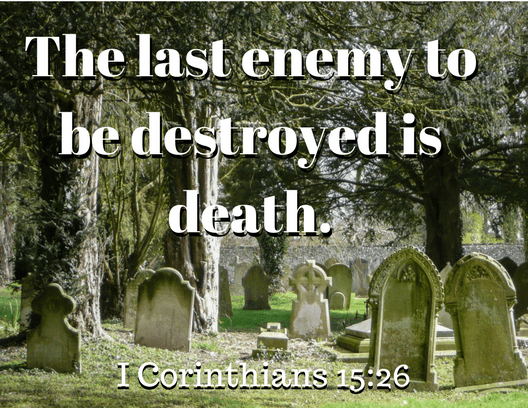
I Corinthians 15-26

Everything hangs in the balance with the resurrection. Whether the claims of the resurrection are true or false, the outcome has unparalleled consequences. If true, then everything Jesus said about himself, about God, and about the human condition is true. If false, billions of people have been deceived into believing a lie and Jesus turns into another great moral teacher of history and nothing more. There has been work done to provide a defense for the historicity of the resurrection. If you are curious into learning more about this go to youtube and look up William Lane Craig or Gary Habermas, concerning the resurrection. The evidence they provide for the resurrection may surprise you. It is not something we just have to take on “faith”, but there is reasonable evidence to believe Jesus really did rise from the dead. For the purposes of our devotion, I’ll assume that we hold Jesus really did rise from the dead. The resurrection of Jesus is the next aspect of the gospel that we’ll look at.

In the gospels’ accounts the only gospel message that is being preached is the kingdom of God, which we have seen from earlier this week. However, after Jesus is raised his disciples for the first time proclaim Jesus’ death and resurrection as gospel alongside the kingdom message they heard and preached with Jesus. We see this most clearly in the book of Acts:

“…this man delivered over by the predetermined plan and foreknowledge of God, you nailed to a cross by the hands of godless men and put him to death. But God raised him up again, putting an end to the agony of death, since it was impossible for him to be held in its power” Acts 2.23-24

“But you disowned the holy and righteous one…[and] put to death the prince of life, whom God raised from the dead to which we are witness” – Acts 3.14-15

“Therefore having overlooked the times of ignorance, God is now declaring to men that all people everywhere should repent, because he has fixed a day in which he will judge the world through a man whom he has appointed having furnished proof to all men by raising him from the dead” – Acts 17.30-31

For I delivered to you as of first importance what I also received, that Christ died for our sins according to the scriptures, and that he was buried, and that he was raised on the third day, according to the scriptures” – I Cor. 15.3

The resurrection is essential for many reasons, however today we’ll review two: one, the resurrection provides evidence that Jesus was who he really said he was. And two, because Jesus was brought back to life, those who are in Christ will rise again too. Acts 17.30-31 is a great verse because in it Paul says that God has given evidence to the world that Jesus is his son because he was raised back to life! This means everything Jesus said would be true then. Jesus said he is the way, the truth, and the life, he tells us to repent and believe in the gospel, and he says he will execute judgement.  And all this is true because God raised him back to life. Why should Jesus have authority over anyone’s life? Because God raised him from the dead and made him “Lord and Christ” (Acts 2.36).

Because Jesus is alive those who are in Christ will be raised back to life:

“…he who raised the Lord Jesus will raise us also with Jesus…” – II Cor. 4.14

“For the Lord himself will descend from heaven with a shout, with the voice of the archangel and with the trumpet of God, and the dead in Christ will rise first” – I Thess. 4.16

Just as Jesus’ death is essential for us to be in the presence of God, so to is the resurrection. Without the resurrection, we would die forgiven, but there would be no future hope of any kind (I Cor. 15.15-19). At the resurrection those who are in Christ will be changed and given the gift of immortality (the ability not to die), this allows us to be in the presence of God and Jesus in the kingdom:

“Now I say this, brethren, that flesh and blood cannot inherit the kingdom of God; nor does the perishable inherit the imperishable. Behold, I tell you a mystery; we will not all sleep, but we will be changed, in a moment, in the twinkling of an eye, at the last trumpet; for the last trumpet will sound, and the dead will be raised imperishable, and we will be changed. For this perishable must put on the imperishable, and this mortal must put on immortality” – I Cor. 15.50-53

The resurrection of Jesus is the most significant event in history and it resides in the greatest message the world has to hear, the gospel.

-Jacob Rohrer


Turn Away and Live

Sunday

Acts 3-19

No matter who you are, everyone has a cause or topic that they are passionate about, whether it be about social concerns, politics, or sports teams. I too am zealous for a particular topic: the gospel. For many years I thought I knew about the gospel, until I attended Atlanta Bible College, where for the first time in my life I read for myself how the New Testament described the message that is central to the Christian faith. However, I soon realized that many professing Christians were confused or ignorant about the gospel that our New Testament teaches. This is the inspiration behind this week’s devotions.

The components to the gospel message are: repentance, the kingdom of God, the cross, the resurrection, and obedience. Nobody, including yourself, has to possess a full scholarly understanding of each topic, but some knowledge of each is essential. The first component we’ll look at today is repentance.

Repentance is a word not used commonly today; however, it is widespread in the Bible. To repent is turn away from an aspect of your life that is not godly and pursue God’s way. Repentance is not a feeling and it’s not something you say. Repentance is action. The very first word of Jesus’ public ministry was “repent”:


“From that time Jesus began to preach and say “Repent, for the kingdom of heaven is at hand” – Matt. 4.17


“The time is fulfilled, and the kingdom of God is at hand; repent and believe in the gospel” – Mk. 1.15


Jesus speaks of repentance elsewhere in the gospels:


“I have not come to call the righteous, but sinners to repentance” – Lk. 5.32


“I tell you in the same way, there will be more joy in heaven over one sinner who repents than ninety-nine righteous persons who need no repentance” – Lk. 15.7


“I tell you no, but unless you repent you will all likewise perish” – Lk. 13.3


The desire of Jesus, is for those who hear his words to repent of their sin and turn to God. Repentance is intimately tied with the kingdom of God, which we’ll look at tomorrow. The reason a person should repent is because the kingdom is coming. An event when all evil will end and evil doers will be done away with (Rev. 21.8).


Forgiveness and repentance are sometimes confused as being the same thing, however they’re not. Take for example two sermons Peter preaches in the book of Acts:


“Peter said to them, ‘Repent, and each of you be baptized in the name of Jesus Christ for the forgiveness of your sins; and you will receive the gift of the holy spirit” – Acts 2.38


“Therefore, repent and return, so that your sins may be wiped away, in order that times of refreshing may come from the presence of the Lord…” – Acts 3.19


In other words, forgiveness is predicated on repentance. Or to say another way, without repentance there can be no forgiveness. Forgiveness is something we can say and ask God for, while repentance is our action in response to God’s forgiveness in Christ. We can ask for forgiveness many times, but do our actions reflect the plea we make to God?

What is in your life that you need to repent from? Porn, lying, seeking validation from other people, not honoring authority, selfishness, gossip, manipulation? Pray and ask God to bring things to mind that you need turn from. God strengthens you through his spirit to turn from these things and offers forgiveness and mercy when you fail. Repentance must be a part of the gospel message that you present to someone.

-Jacob Rohrer

Searching for Jesus

Mark 16:1-8 (Friday)

Mark 16-6

On the Sunday after Jesus was crucified, Mary Magdalene and Mary the mother of James & Salome went to the tomb to anoint Jesus’ body.  They went first thing, right as the sun was rising (as early as they could and still respect the Sabbath).  When they reach the tomb, they find the stone rolled away and a young man in white telling them Jesus was raised from the dead and was no longer here.  He tells them go and tell Jesus’s disciples and Peter that “He is going ahead of you to Galilee to meet you there.”  So the two women fled from the tomb in astonishment and trembling, saying nothing.

And that is how the oldest versions of Mark end.  That’s it.  All the rest of chapter 16 (verses 9 – 20) were added afterwards.  No appearances of the risen Jesus.  No commission to the world.  No ascending up to heaven.  Just an empty tomb and silence.

What in the world is Mark doing?!  If this were a movie, it would easily be one of the worst movie endings of all time.  And that includes some pretty unsatisfying movie endings (Inception, X-Men 3, Matrix Reloaded…).  BUT, as we’ve seen, Mark isn’t a crummy writer.  Remember his artful use of “stay alert” and his plot timings in the Temple?  Mark knew how to craft a remarkable story and to tell it with purpose.  I believe that Mark was up to something here that makes me like this older ending more than the extended one (it’s like the original vs the extended edition).  Here’s my take on Mark’s original ending.

First, we – as the reader/audience – are in the know.  From the very beginning we know that Jesus has been raised and that the church emerged as his followers continued his work.  So we know what happened.  Because we know that the church exists and that the disciples continued the work, we know that Mary & Mary weren’t silent forever.  The word spread and the gospel message grew.  I think that Mark is using our knowledge of this as a way to emphasize the irony of this moment and as a challenge for the audience to do what they know wasn’t done: DON’T BE SILENT!  Spread the good news!  From the first verses, Mark is preparing us to speak out; to be the voice in the wilderness shouting out.  We are meant to take the message forth to take up the responsibility we know we have but that is left unfulfilled in the text.

Second, the audience is meant to experience the suffering and despair of the crucifixion – not just for Jesus but for his followers as well.  Mark leaves us unsatisfied as a tool for helping us step into the shoes of those who were living this out in real time.  We experience the uncertainty and trepidation that comes with uncertainty.  BUT we still must move in light of that uncertainty.  Which then becomes faith.  Faith is belief in things unseen.  In Mark’s gospel, that faith is put into the text literally with the absence of the risen Christ.  If Mark wasn’t written until the disciples and witnesses of Jesus were all dying, then it was for an audience that would have never seen Jesus face to face.  Their faith isn’t based on some encounter with a man but an encounter with his love in the community he started.  Mark’s original ending helps us feel the void of uncertainty (what happens in our lives all the time) but also move us to a faith that is open to uncertainty and still demands that we act anyways.

Finally, I think that Mark is leaving the story in our hands.  The man in the tomb says, “Jesus is going ahead of you; there you will see him.”  Jesus isn’t in heaven in this story.  Jesus is out there – in the world.  Waiting for us.  We have to go find him.  We have to search for him.  We have to take this story and find Jesus in the love and grace and truth of a community that is searching together in the world.  This is my favorite idea in Mark; that this ending calls us to go forth and live a life for Christ so that we might find him.  But where can we find Christ?  We’ll find him in the orphan we adopt, the prisoner we visit, the poor we protect, the immigrant we give refuge, the sick we heal, the hungry we feed, and the oppressed we redeem.  I know that Jesus is in heaven now, and I can’t see heaven.  But I can see the Kingdom of God – the good news he came to spread – break into this world bit by bit when I live out the life I was created to live.  Jesus is out there, waiting for us to come and serve and find him.

Now Mark says, what are you going to do?  Will you remain here, quiet?  Or will you go and be a part of the work God is doing?

-Graysen Pack

Be on the Alert!

Mark 13 & 14 (Thursday)

Mark 13 33

The thirteenth chapter of Mark finds Jesus teaching his disciples on the Mount of Olives outside of Jerusalem.  Jesus is teaching his disciples about the tribulations that are to come and his second coming.  He ends with this admonition in 13:35-37…

“Therefore, be on the alert – for you do not know when the master of the house is coming, whether in the evening, at midnight, or when the rooster crows, or in the morning – in case he should come suddenly and find you asleep.  What I say to you I say to all, ‘Be on the alert!’”

Jesus begins and ends his command with “be on the alert.”  In fact, Jesus says “be on the alert” in verses 33, 34, 35, and 37.  For Mark’s audience, this is like shining the spotlight on the words while fading everything else to black.  Like we covered earlier this week, the gospel was meant to be heard and hearing the same phrase back to back like this is a sign that it should be held onto.

Now, let’s jump just ahead a bit to Mark 14:32.  We’ve been through the Last Supper and Jesus has taken his disciples to Gethsemane.  He picks his three favorites (Peter, James, & John) and takes them a bit further than the rest.  He says to them, “My soul is deeply grieved to the point of death; remain here and keep watch.”

You ready for this?  Jesus is using the exact same word as he did back in chapter 13.  It’s even in the same tense!  The word is gregoreo by the way (like gregarious).  It’s a command directed directly at his listener.  Jesus was asking his disciples to do something much more than just stay awake.  He was pointing them back to what they had heard the night before: to be alert because the end is approaching.

In fact, when Jesus returns to find his disciples sleeping the first and second time, he repeats this same command to them, gregoreo!  Stay alert!  But upon his third visit he says it is enough, the time is now here.  In Mark 13, Jesus commands his disciples to be alert so that they may be prepared for the (ultimate) end, but in Mark 14, when the (immediate) end comes, they are asleep at their post and ultimately all leave him and flee (14:50).

This is not just a word by Jesus for his disciples but a word for us today as well.  Like the chorus in a Greek play, Mark’s words in 13:37, “What I say to you I say to all…” is a clear calling out to us here today.  Be on the alert for the end is coming and we must be prepared.  We must be prepared to face our own crucifixion – to die each day as a living sacrifice – as our own immediate ends in service, love, and sacrifice for others.  It is the cup we are called to bear as followers of the one who showed us the way.

OK – tomorrow is the big finale!  Mark’s last words to the earliest followers of Christ.  It’s a shocking, amazing, inspiring vision of Jesus’ ministry.

-Graysen Pack

The Strength of Christian Friends

Mark 2

paralytic top

Many years ago, a precious lady in our church was coming to the end of her battle with cancer. One of her closest friends, also from our church, was sharing that she had been to her bedside to visit. While she was there our friend said that she could no longer pray for herself. The visiting friend reassured her that she had fought the good fight, she had finished the race and she had kept the faith, but it was time for her to rest and others would be praying on her behalf.


I’m not sure why this has stuck with me for probably longer than 20 years. Maybe it’s because I know that the bond of friendship between these two Godly women had endured a great many of life’s other trials as well as celebrations.


In Mark chapter 2 we see another wonderful example of friendship. Four friends going to extreme measures to bring another man to the Great Physician. Because of their faith, the man with the physical disability was healed and the five of them walked out of the room together. Can you imagine the celebration that took place among them and their families?


I realize that many lessons from Mark 2:1-5 have been taught about faith and the healing powers that Jesus demonstrated on that day. But to me, my attention always gets drawn to the message of how important friendships are.


We are not meant to walk our faith out in isolation. Faith is meant to be experienced in community. I know I said this in yesterday’s post, but we need others of like-minded faith, by our sides. This is so, so important. Our friends in the faith are who keep us on track, who support us when life gets tough, and who help us cheer when life is spectacular. And just as importantly, we do the same for them.


My prayer for you is that you have a network of people with whom you can do life together.  


-Bethany Ligon


Social Media Warning: Stripping on a Winter’s Day

Proverbs 25 – Thursday

“Like one who takes away a garment on a cold day, or like vinegar poured on a wound, is one who sings songs to a heavy heart.”   Proverbs 25:20

Prov 25-20

Any of us could be forgiven if, by looking at our latest social media feed, we were surrounded by people full of joy living their best life today.  It’s easy to see how perfect our friend’s lives appear when viewed one photo, tweet, or snap at a time.  It’s a perfect and tailored vision of what their lives are.


It isn’t uncommon for me to find myself not refreshed by spending a few (many) minutes on my latest Instagram feed, but actually more tired, weary, and heavy.  In fact, recent studies have shown that spending more time on social media platforms actually increases the likelihood of depression.  I know that I’m not the first one to say this, but holding our own lives – with all its boring, sad, weird bits – against the lives we see portrayed every day in these feeds is a pretty easy way to see yourself into a sadder state.  


The thing is, we have a hard time stopping.  We delete our Facebook, shut down our Twitter, and delete Snapchat from our phone.  But before long, it’s right back again.


I want to talk about this, because I think that this verb from Proverbs speaks as deeply to how we treat ourselves as to how we treat others.


The more obvious way to read this verse is to see it as a directive to treat others and their pain with the respect it deserves.  If someone’s in pain, don’t try to gloss over it.  If they’re hurting, quit trying to just make them laugh.  Quit telling me to smile.


And I can easily point out a ton of examples of how we see this same message echoed throughout scripture. The best thing that Job’s friends do isn’t to try to tell him how to fix it all, but to sit with him in the ashes and mourn with him.  Paul tells us to rejoice with those who rejoice and mourn with those who mourn.  God sent Christ to meet us exactly where we are.  


The Christian message is one of meeting people in their pain and sharing its load with them.  Just like the song says, lean on me when you’re not strong, and I’ll be your friend.  I’ll help you carry on… (you’re welcome for getting that stuck in your head).  


But I want to focus on how we can each steal garments away from ourselves and pour vinegar on our own wounds.  Although we can and do find all sorts of crutches in our life, few of them have the alluring power that social media has inspired over the past decade.  Why?  Because unlike many addictions, social media – when misused – can give us the fleeting sensation of being connected with others without any of the benefits of actually engaging in relationship with them.  


Because social media also has the ability to be a transformative tool for actual social engagement.  It can help us find a community of friends who will help us bear that load (to help us carry on…get it???).  I don’t want you to mistake this as a tirade against social media usage, but rather as a call to reflect on how we should keep it in its proper orientation.  Where digital connections enhance and strengthen the bonds you’ve built IRL (in real life), it can provide a way to stay connected in meaningful ways like never before.  But if it has become an addiction that keeps us from engaging in the richness of the world around us, then we may find ourselves stripping off our own clothing on a winter’s day.


We need to not only treat others emotional trauma with the kind of respect and “sitting-with-ness” it deserves.  But, we need to be attentive to our own emotional needs so that we can feed ourselves with relationships and community that doesn’t just feel engaging, but actually is.  


-Graysen Pack

Feeling Hungry Yet? – Psalm 119:1-56

Bread of Life

I am just about the opposite of a foodie. Though my boyfriend has gone to culinary school and makes just about the best food I’ve ever had, when I cook for myself, normally my meals are limited to eggs or maybe pasta. This being said, I have a love-hate relationship with food. Though I can’t detect hints of cinnamon or nutmeg in my food, man, when it comes time for lunch or dinner (or breakfast), I’m ready to eat. I tried to fast once (yep! Just once.) and I remember getting halfway through the day and calling it quits. My stomach was starting to grumble and hurt. When I tried to run, I remember feeling a little faint. I felt like I needed that food, right then.

Yesterday, we talked about wisdom and how important it is to follow God’s wisdom and trust in God. Today, we are going to talk about what it means to desire that wisdom. If we look at Matthew 4:4, Jesus likens the word of God to bread, to our daily food. We need this spiritual food to live, just as we need actual food.

What is your relationship to God’s word? Stop and think now about how you think about God’s word. Do you long for it as you get up in the morning and as you go throughout the day? Do you pant for it like someone panting for water in the hot summer Sun? If you go without it, do you start to feel those spiritual pains of grumpiness, anger, and hunger? Do you get hangry? The daily nourishment of God is even more important than the daily nourishment of our bodies with food. This sounds like a cliché. But, let me remind you, if you go without eating for long enough, you will die! This is serious and important stuff!

Growing up, I did not long for God’s word. I would read it every now and then, but it wasn’t something that I read in order to survive, to make it through the day. I had a friend recently whose relationship with God and his word has completely changed. She mentioned how after she had made a point to daily meet God in his scriptures, she had begun to desire it. She needed it. And now, she can’t imagine life without it!

Our verses today come from the longest chapter in the Bible, Psalm 119. This psalm focuses on what the Bible does for us and how we should desire it. If we seek God with all our heart, we will learn to keep his commands. Psalm 119:11 says, “I have treasured Your word in my heart so that I may not sin against you.” Do we believe that God’s word is such a gift that we treasure it in our hearts? Though discipline and commitment are incredibly important in every stage of our relationship with God, if we desire him and his word, our relationship with him will grow so much deeper!

To follow down the right path of life that we talked about yesterday, we have to make it a point to pursue God through his word. Psalm 119:2 says, “Happy are those who keep His decrees and seek them with all their heart.” Do you seek God and His Word with all your heart?

Unveiling the Past, Present and Future…And Then Repent!

Monday, July 17

revelation1-8

Revelation 1-3

The final book of the Bible is known as the Book of Revelation.  It is also known as the Apocalypse.  Apocalypse mean “unveiling”.  It has the idea of that which was hidden has now been unveiled or brought out into the open to be seen.  There are other passages in the Bible that contain apocalyptic material (parts of the book of Daniel and Ezekiel are two) but this is the only book of the Bible that is fully apocalyptic.
Revelation can be a little confusing (ok, a lot confusing).  A big part of this confusion comes from the challenge of pinning down the proper timeline.  It contains material that was past, present and future to the writer, John, who wrote toward the end of the first century.  The angel who gave this revelation to John said: “Write, therefore, what you have seen, what is now and what will take place later.”(Rev. 1:19).  There are different “schools of interpretation” that see Revelation as mostly focusing on John’s time period (end of first century in the Roman empire), others see it as being fulfilled progressively over the past 2000 years of the Church, and others see it as still to be fulfilled in the future.  This is compounded by the use of symbol and imagery that fill the visions of Revelation.  A lot of time can be spent trying to discuss and debate these issues, but for our purposes I’d like to focus on basic principles found in Revelation that can be of value to our lives as followers of Jesus today.
In chapters 1-3 a focus is on letters written to seven Churches throughout Asia.  John is writing to them as a pastor who at the time was living in isolation on an island in the Mediterranean sea.  He can’t be physically present with his churches, but he is with them in spirit and wants to encourage and instruct them, to help them stay strong during a time when many believers were suffering persecution by the Roman empire.  Imagine what it would be like to try to encourage Christians today living in places like Pakistan, or Egypt, or Sudan or Syria, where Christians were being killed because of their allegiance of Jesus Christ rather than to Mohammed.  What kinds of encouragement would Christians whose family members, friends and fellow believers were dying for their faith need to help them not lose faith?
In the Roman Empire during John’s time of writing it was required by law for citizens to declare allegiance to Caesar by publicly declaring Caesar to be Lord.  Jewish people were largely exempt from making such declarations (but not always).  Often Christians came under the umbrella of the Jewish exemption, but now always.  Thousands of Christians died as a result of religious persecution during the early Roman empire.  John writes to offer encouragement to keep faithful to their commitment to God and to Jesus Christ in the midst of such persecution.  The challenges we face today may not be the same type that first century Christians faced, yet we still have challenges, struggles and temptations.
Chapters 2 and 3 of Revelation contain words of exhortation and correction to the various Churches to which John is writing.  Each Church had many good things happening for which they were praised, but several also had not so good things going on for which they needed to be corrected.  One of the common themes of each letter to each Church was a call to repentance.  To repent means to turn around or change direction.  To the Church at Ephesus, John said that you have “lost your first love.”  They were just going through the motions of their faith, without the passion.  Perhaps you can relate to that.  Anyone who has been a Christian for a while has to be aware the danger of “just going through the motions” and losing their passion for God.  John is trying to get them fired up again.  John says: “repent” and do the things you did at first.  Most Christians, start out enthusiastic… they read the Bible a lot, they pray a lot, they tell their friends about God and their faith a lot, and they consciously seek to get closer to God and do things to please God.  But over time, they lose the passion, lose the drive… become complacent.  John says- get back to the love and passion you first had for Jesus.
Maybe this is you.  If it is… let it be a wake up call.  If this isn’t you, then keep reading through Revelation 2 and 3.  Look at what is said to each of the seven churches.  Is there anything that rings a bell?  Is there anything there that applies to you?  I’m guessing there is.  Read it… and then repent.
-Jeff Fletcher

Pearls from Peter

I Peter 1-5

1-peter-3-10-11

Thursday, July 13


The Christian lifestyle can be hard to follow for a variety of reasons- worldly desires,  living in ignorance, not submitting ourselves to authority, or going through tough times. Thankfully, Peter gives us advice on how to live a life that is pleasing to God and, also, explains how to endure the struggles and hardship we may be facing in our daily lives.

Peter tells us that as God’s chosen people, we need to live holy lives by loving the brotherhood of believers, fearing God, honoring the king, and showing proper respect to everyone. 1 Peter 3:8-9 states: “Finally, all of you, live in harmony with one another; be sympathetic, love as brothers, be compassionate and humble. Do not repay evil with evil or insult with insult, but with blessing, because to this you were called so that you may inherit a blessing.” Our lives may become more manageable and less stressful once we dedicate our lives to Jesus.
Suffering from major depression, anxiety, or any other hindrance can be hard to live with. “Humble yourselves, therefore, under God’s mighty hand, that he may lift you up in due time. Cast all your anxiety on him because he cares for you” (1 Peter 5:6-7 NIV). It is nice to know that all we have to do is ask God to take our pain and suffering away because he loves us.
According to 1 Peter 3:17-18, “it is better, if it is God’s will, to suffer for doing good than for doing evil. For Christ died for sins once for all, the righteous for the unrighteous, to bring you to God…”  We are taught to depend on Christ more when we suffer and we shouldn’t feel ashamed for suffering as a Christian. Luckily, we know that we aren’t the only ones suffering in the world and can help each other when things seem to get out of control.
Whatever you may be doing this week, next month, or a year from now, remember 1 Peter 4:7-11: “The end of all things is near. Therefore be clear minded and self-controlled so that you can pray. Above all, love each other deeply, because love covers a multitude of sins. Offer hospitality to one another without grumbling. Each one should use whatever gift he has received to serve others, faithfully administering God’s grace in its various forms. If anyone speaks, he should do it as one speaking the very words of God. If anyone serves, he should do it with the strength God provides, so that in all things God may be praised through Jesus Christ.” I pray that we all learn how to live the correct way that is pleasing to our Lord and serve Him in whatever capacity we can with the gifts He gave us. God bless you. Amen.
-Cynthia Fyfe
(Photo Credit: https://dailyverses.net/1-peter/3/10-11)