Entitled

David

man after my own heart

Acts 13:22, 2 Sam 11:1-17, 2 Samuel 12:7-14

If you grew up in church your Sunday school classes were probably full of the stories of David’s triumphs. He was the shepherd boy who killed lions, bears, Goliath and eventually became King. His triumphs were nothing short of amazing. David was even called a “Man after God’s own heart” in Acts 13:22. Yet just like the other characters we have discussed, David was flawed.

In arguably the most famous story of his flaws David ultimately caused catastrophe to befall his entire Kingdom. First off, in 2 Samuel 11:1 it says that David stayed home in his cozy palace instead of going off to war as he was supposed to. Next, since he wasn’t where he was supposed to be he saw a beautiful woman named Bathsheba bathing on her roof. Even though she was married to a man who was serving in David’s army David decided to send messengers to bring her to him. We find out in verse 5 that she became pregnant.

In an attempt to cover up what he had done David asks for Bathsheba’s husband Uriah to come home from battle but Uriah is honorable and refuses to sleep in the comfort of his home knowing the other men in his army are not able to do the same. Frustrated David sends a note with Uriah as he goes back to the battle front. The note carries Uriah’s death sentence as it commands the commander of the army to send Uriah to the front line of the fiercest battle. With Uriah out of the way David takes Bathsheba to be his wife and she gave birth to a son who later died because of David’s sin. Not only that but David was later driven out of his own Kingdom because of the sin he committed. Everyone suffered because of the flaw that David allowed himself to be entitled to do as he pleased.

David suffered for his actions and repented for it. Despite his flaws through grace God used David to establish the throne of Israel even making Jesus a decedent of David. No matter what you have done God sees your potential and can use you in amazing ways.

-Lacey Dunn

A Rule that’s NOT of this World

Monday

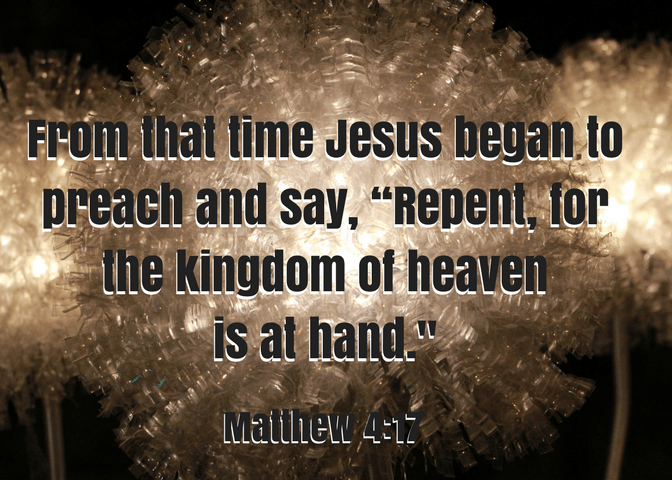
Matthew 4 17

Proverbs. You probably wouldn’t think that Proverbs would have anything to do with the topic for our devotion this week, the gospel. However, there’s a small nugget of wisdom in the 13th chapter of Proverbs in verse 12a:

“Hope deferred makes the heart sick”

A heart void of hope makes the heart sick and sad. So many people go through life with no hope or if they do have a hope it’s wrongly placed and are disappointed when it doesn’t satisfy their deepest longings. Hope is crucial to a life of joy and contentedness and with our look at the second component of the gospel, God has provided a hope to all who want to follow him. This hope is the kingdom of God.

The kingdom of God is the foundation of Jesus’ ministry. If you don’t understand the kingdom, you won’t understand Jesus. Now there are two aspects to the kingdom of God, a present reality and the future hope (or the eschatological kingdom for the technical term). Today, we look at the future hope. But in order to understand the future, we have to first understand the past. Let’s start in Genesis.

God created the cosmos and everything in it, including a tiny blue marble we call earth. God intended humans to be his vice-regents on the earth, humans were to reign and rule over all that he had created on earth:

“Then God said, ‘let us make man in our image, according to our likeness; and let them rule over the fish of the sea and the birds of the sky and over the cattle over all the earth, and over every creeping thing that creeps on the earth’…God blessed them and said to them ‘be fruitful and multiply, and fill the earth, and subdue it and rule over the fish of the sea and the over the birds of the air and the every living thing that moves on the earth” – Gen. 1.26,28

However, the perfect union that God and man had together was short-lived. Sin came into the picture and with it, death, evil, oppression, and injustice have reigned to this day. But God decided he wanted to save his creation, humans and the world, thus began God plan’s on reconciling everything back to himself. We’re going to look at two passages from the Old Testament that provide the pillars to the New Testament and Jesus.

In Genesis 12, God makes a covenant or a faithful promise with Abram:

“Now Yahweh said to Abram, ‘Go forth from your country…to the land which I will show you; and I will make you a great nation…and in you all the families of the earth will be blessed” – Gen. 12.1-3

God promises three things to Abram:

  1. Land that Abram will possess
  2. He will be made a great nation
  3. The entire earth will be blessed through him


Jumping ahead to I Chronicles 17, God makes a covenant with David:

“When your days are fulfilled that you must go to be with your fathers, that I will set up one of your descendants after you, who will be of your sons; and I will establish his kingdom. He shall build for me a house, and I will establish his throne forever…I will settle him in my house and in my kingdom forever, and his throne shall be established forever” – I Chronicles 17.11-14

God promises that there will be one who comes after him, from his line, and his throne will be established forever. Remember God promised Abraham land and during David’s time God’s people had the land, then God promises the king of that land that there will be one after him whose throne will rule forever and ever over that land and kingdom.

Let’s take a look at what Luke 1 says about Jesus:

“And behold, you will conceive in your womb and bear a son, and you shall name him Jesus. He will be great and will be called Son of the Most High; and the Lord God will give him the throne of his father David; and he will reign over the house of Jacob forever, and his kingdom will have no end” – Lk. 1.31-33

Jesus is the king over the promised kingdom of God. Thus when Jesus proclaims his inaugural statement in Matt. 4.17 and Mark 1.15, it’s the king announcing the arrival of the kingdom. This kingdom and it’s king reverses the effect that sin has ravaged on the earth, because Jesus himself has overcome the grave.

One day Jesus is coming back to establish the full reality of the kingdom and its influence here on the earth. We have a taste of it now (which we’ll get into tomorrow) but we hope and long for the return of Jesus. Because of his return this ravaged broken down system will be set right, and the true king with a just and righteous rule will govern the earth and we will reign and rule just as it was in the beginning. This was gospel for Jesus and this is gospel and hope to us.

“Let us hold fast the confession of our hope, without wavering, for he who promised is faithful” – Hebrews 10.23

-Jacob Rohrer


No “Works Cited” In Prayer!

Psalms 85-89

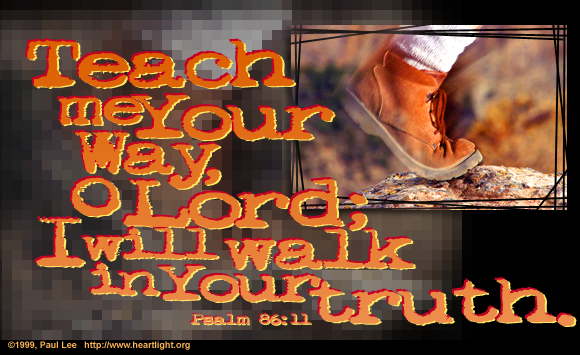
psalm86_11

Monday, January 9

Have you ever stopped to think about copyrighting? In our world, even words can be trademarked and copyrighted. For example, if I was going to start making a comic called “Superheroes of Scripture” (which would be awesome), I would be infringing on the trademarked word “superhero”, a trademark of Marvel and DC Comics. That’s pretty impressive that the word “superhero” can’t be used in a product that you desire to sell unless approved by Marvel/DC! Also, if I use someone else’s words or even information in a paper for school, it is considered stealing unless I cite my source. (I know my seniors doing research papers understand the pain of a “Works Cited” page.)
However, the authors of Scripture felt no such compunction to cite their sources or honor “copyrights” of previous authors. You’ll see tons of quotations of the Old Testament in the New Testament, when you get there. But there will be parts without quotes that you may recognize were pulled out of the OT without a reference to the original author. The authors of Scripture quoted, summarized, paraphrased and referenced previous books of Scripture with abandon, because the books and words were part of how they thought.
A prime OT example of this is Psalm 86:15. The author (David, here) writes “But You, Lord, are a compassionate and gracious God, slow to anger and rich in faithful love and truth.” If you have been following along since August, you may catch what is being referenced. Know what it is? It is Exodus 34:6 – “Then the Lord passed in front of him and proclaimed: Yahweh—Yahweh is a compassionate and gracious God, slow to anger and rich in faithful love and truth…”  In this Psalm, David turns the narrative of Yahweh passing in front of Moses, hidden in the cleft, into a prayer. YOU, Yahweh, are compassionate and gracious, etc. David knew that this was written before, but he is not writing something new, he is not breaking ground, he is using what God has already said about Godself to speak to God.
We can do the same. Sometimes, we have no words to say about God or our words to God sound so small. I’ve been there; thinking that what can I say to God? If you don’t know where to begin to pray, one of the best places is to look to Scripture and use the words you find there to pray. We have permission to pray using the words of Scripture in the Psalms and the Psalms themselves are great passages to use. If your prayer life is struggling, or if you are wanting to grow closer to God, may using God’s own words bless you!
-Jake Ballard
Pastor Jake attended Atlanta Bible College, and has been a professor there in the past. He would like to encourage those who want to know more about the Bible, about leadership and about Christian Spirituality, to get in contact with the college. It is a wonderful opportunity, and if you are one of those juniors or seniors working on research papers, as you are applying to and investigating different college options, don’t forget ABC!
(Photo credit: http://www.heartlight.org/gallery/psalm86_11.html)

Fortress

Psalms 61-67

psa-61-2-ww-notrace-9x6

January 4, 2017

Living in Minnesota can be challenging, yesterday it was 35 degrees and it started raining. Shortly after that, the temperature started to drop. This caused a thin layer of ice making walking dangerous and driving difficult. Today, the temperature has continued to fall and the wind has picked up. I am counting on my house to keep me warm and safe. I do this because my house has kept me warm and safe for many years.

David claimed God as his shelter and source of protection against all that threatened him. Experience had shown how God cared for him and loved him. There were many times David called upon God to watch over him and God was always faithful to David’s pleas.

Psalm 62:1-2, “My soul finds rest in God alone; my salvation comes from him. He alone is my rock and my salvation; he is my fortress, I will never be shaken.”

David questioned God when he felt his enemies threatening him, and God always reminded him he was with him. God is our fortress, a place to rest and reset to face our troubles.

-Susan Johnson

(Photo credit: http://www.alittleperspective.com/psalm-61-chiastic-structure/)

Our Refuge

Psalms 31-34: God our stronghold, our refuge.

“The LORD is the stronghold of my life –

of whom should I be afraid?” – Ps. 27:1b

Imagine you are in a battle, with your enemies pressing you on every side. You need a place to regroup, get rest, and then continue fighting. Where would you seek your refuge?

This scenario might be hard to imagine for most of us, who have never fought a battle, but David, who wrote several of these psalms, knew exactly what it was like to be pursued by an army. In many of these psalms, he refers to God as his refuge, fortress, and stronghold. God is the place where he goes to receive rest, to be rescued.

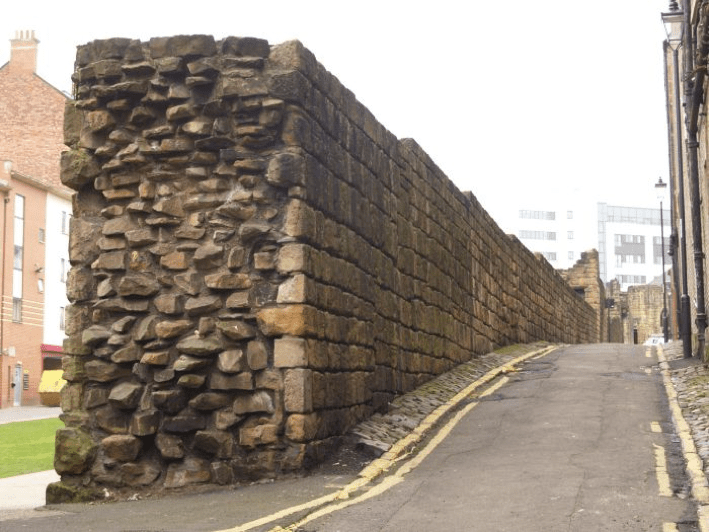
One of the main attractions to visit while in the city of London is the Tower of London. This structure, that was built over the past millennia, was designed in such a way that it would prevent attacks from arrows, canons, and more. The base of the White Tower even has walls that are 15 feet thick!

Though the strongholds that David was referring to may have not been built like medieval buildings, the purpose of them would be the same. They were designed to be impenetrable. To be a safe place amidst the arrows, swords, and fighting. A refuge that David could come to for peace in the turmoil of a fighting life.

We, like David, can come into the refuge of God’s fortress. God can be our stronghold! When we follow God’s direction and trust in him, we have walls shielding us that are much thicker than those of the Tower of London. Praise God who protects even in the turmoil of this life.

-Cayce Ballard

Praying through the Ups and Downs

Psalms 25-30: Praying through the Ups and Downs

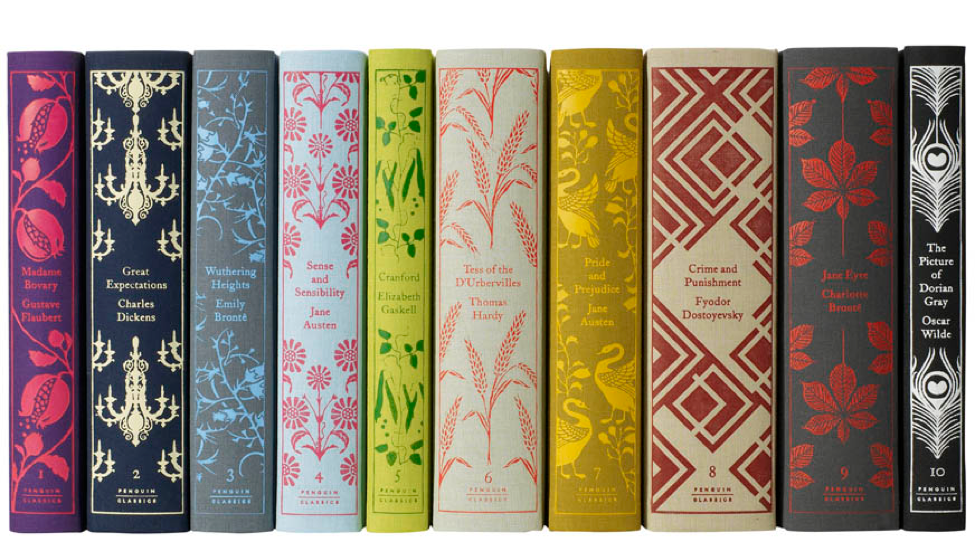
As an English major, I have come to be a voracious reader, and one of my favorite past-times is cuddling up with a good novel and a cup of coffee. In all my reading, I’ve come to see patterns in books.  I am now able to discern what I will like to read and what I won’t. A common thread through all the books I like is how they display a wide range of emotions of humanity, not just the good aspects. Instead of painting a glossy, rose-tinted picture, the novelists try to capture how broken the world is, and by doing so, show something much deeper, a common humanity.

I love novels and reading, but I will be the first to say that I do not look to these things for my hope and salvation. When I want to look to something that speaks to my life now, I look to the Bible. As I read through the Psalms, I recognize in scriptures the same thing I love in literature through these prayers and praises. The Psalms we read for today, Psalms 25-30, were all written by David. In these Psalms, David pleads to God for vindication and deliverance and praises God when he does so. These wonderful prayers model for us how we can come to God in all our pain as well as our joy. In both of these places, God longs to hear from us.

Like novels and books help the author to communicate to us, Psalms shows us how we can communicate with God and the many ways that God can communicate back, through His word, nature, and more. These prayers show us how to come to God in a way that is pleasing to Him and open up our hearts to what He wants from our lives.

God longs for us to pursue Him with prayer, and the New Testament focuses on this heavily. Jesus gives us an example of prayer in Luke 11 with the Lord’s prayer. Paul says in Ephesians 6:18 and 1 Thessalonians 5:17 to pray constantly. These examples and admonitions about prayer point to the same thing that David’s psalms do: we should communicate with God all the time. James says it best in his letter, chapter 5 verse 13, “Is anyone among you suffering? He should pray. Is anyone cheerful? He should sing praises.”

As we can see in the Psalms and through the life of Jesus, prayer is the backbone of our faith. To know and pursue God we need to communicate with Him, and prayer is where that communication, that relationship, begins. We don’t have to gloss over our problems or focus on them solely. God longs for our whole humanity, and we, like David, can bring it to Him.

-Cayce Ballard

books

Our Boundary Lines

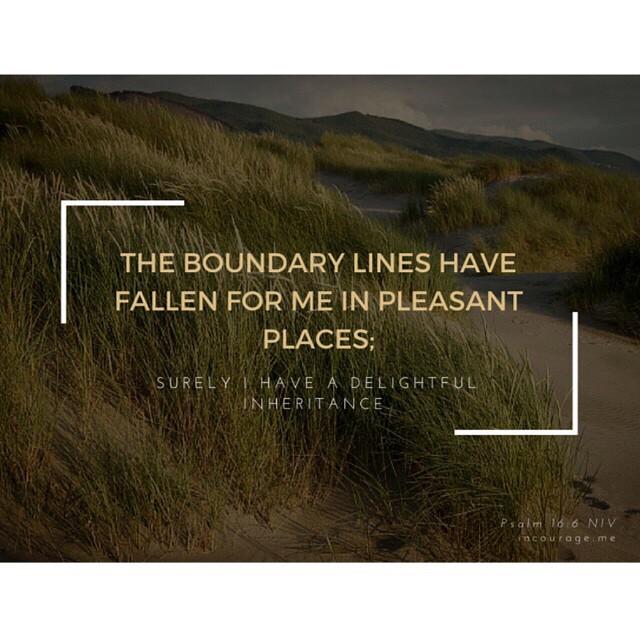
boundarylinesWhen the Israelites finally entered the Promised Land after wandering for forty years, they had a big job to do. After taking possession of the land, they had to divide the land between the twelve tribes. Joshua was given this job, and you can find the boundary lines of each tribe in Joshua 16-21. These boundary lines were designed by God so that each tribe would have access to enough good land to survive. They were a provision from God as the Israelites settled into their new home.
Hundreds of years later, David talks about boundary lines in Psalm 16. He says,

“LORD, you are my portion

and my cup of blessing;

You hold my future.

The boundary lines

have fallen for me

In pleasant places;

Indeed, I have

A beautiful inheritance.” –vv. 5-6

The boundary lines David was talking about were not only boundary markers on the ground dictating the land he would inherit. These boundary lines concerned something far more important. These boundaries established a spiritual inheritance that we also receive, the Kingdom of God.

Hebrews 9:15 says, “Therefore, He is the mediator of a new covenant, so that those who are called might receive the promise of the eternal inheritance.” Jesus is our mediator, so that we can receive our promised inheritance. The portion that we receive, our future and our inheritance, is the Kingdom of God. Indeed, our boundary lines have fallen in pleasant places!

Like many of David’s psalms, his celebration of God does not end with a praise. David always includes action. If we continue to read through the rest of Psalm 16, we see the reflection of a heart change in David’s life. He praises God, because God counsels Him- through his meditation on God’s word, he reflects on how he can better live for God. Through David’s purposeful study of God’s word, he walks on the path of life, which leads to the Kingdom.

Often, we think about boundaries as hemming and restricting us. David rejoices because, though the law does give him restrictions on how to live, he sees that life with the law is pleasant. Our boundary lines are great not only in the future to come, but also this world now.

Let’s rejoice in our inheritance and follow David’s example of walking and reveling in God’s word and presence.

-Cayce Ballard


Photo Credit: https://pbs.twimg.com/media/B8CzfQUIcAAi1yT.jpg

Look to the Cross

Psalm 8-14

prettyplace.jpg

“When I observe Your heavens,
the work of your fingers,
the moon and the stars,
which You set into place,
what is man that you remember him,
the son of man that you look after him?” -Ps. 8:3-4

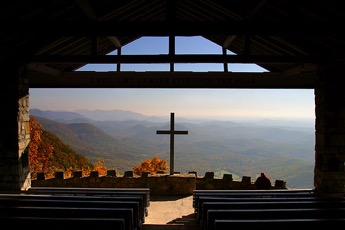
A few years ago on the UP Project, me and several other groggy kids were woken up at 5am to travel up into the heart of the South Carolina Blue Ridge Mountains.  Our destination was Pretty Place, an open chapel in a camp ground. From the chapel, the view of the ridges of the mountains are held in stunning display as they roll towards Greenville. The view can easily take your breath away. But, this chapel never held the view above the object that was placed directly before it.

In the middle of this lookout is a cross, and sitting in the pews, you can’t look at the view without first looking at the cross.

Psalm 8 describes our wonderful God and creator, who made the heavens majestic and us the caretakers of this world. Like David, there have been many times that I have called out, “Who am I, Lord? Who am I that you should remember me?” Travelling through this country and others, the magnificence of God is always in my mind, the way that he formed so many different places for us to inhabit. But, again I think, who are we to be the partakers of this beauty? My thoughts turn back to that image of the cross, held in stark relief to the blue hills below.

Today is Christmas, a day where we celebrate the birth of the heir to David’s throne, Jesus Christ! During this advent season, I remember that my Savior, God’s son, was born for me, and there are many times when I echo David’s question of ‘who is man that you remember him?’ When I think about the great love that God has for us, that he would send his son to die for us, my breath is taken away, similar to, but much greater than, the feeling I had as I gazed out over the mountains. God gave us this great gift, even while we were still sinners. Even on, especially on, this quiet (or perhaps rather hectic) Christmas morning, we should dwell on the Savior that was born for me and you.

Through Jesus’ birth and, like that cross symbolizes, his death, the great divide between God and man was overcome. The position of the cross at Pretty Place should mirror the position of the cross in our lives. The beauty of this world and its comforts are all secondary to the gift we have from God. Without Jesus’ death, we are nothing, but with the death of Jesus, we become God’s adopted children. Praise God for this wonderful gift we have been given!

-Cayce Ballard

Cayce is a Senior this year at the University of South Carolina, studying Secondary English Education. She plans to continue her education next year in the M.T. program at USC. She loves traveling, reading, and playing with her new puppy, Finnegan. Cayce leads a Young Adult Bible Study based on the Grow reading plan.  She would like to thank everyone for contributing to these devotions.

Photo Credit: http://m0.i.pbase.com/u15/jrandyh/upload/20105330.pplacec01.jpg

Counted Faithful: Are You a Grain of Sand or a Star in the Sky?


(I Chronicles 27-29)

1chronicles-2820

Wednesday, November 23

“And so a whole nation came from this one man who was as good as dead–a nation with so many people that, like the stars in the sky and the sand on the seashore, there is no way to count them.” Hebrews 11:12

When I was around 8 years old I heard a pastor give a message titled “Are you a man or a mouse?” That title stuck with me because of the imaging that went on in my mind. Reading through I Chronicles 27-29 I kept wondering if I would be considered a star in the night sky or a grain of sand along the seashore.

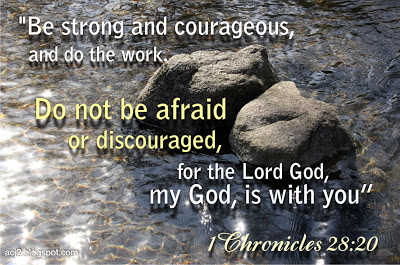
King David had ordered a census of Israel, but in Chapter 27:23 we learn, “but David didn’t take the number of them from twenty years old and under, because Yahweh had said He would increase Israel like the stars of the sky.” They could have been counted to arrive at a number, but the faith of Abraham was still at work and was not to be discounted in the mind of David. He was looking expectantly toward the future and all who were to be added to that number.

We are a part of that number. And since I am beyond 20 years, I am wondering if my place is among the sands of the sea. I hope you all realize this is a bit tongue and cheek; but it does leave an image in my mind worth exploring. The idea of movement and brightness and dancing across the sky is a lot like children full of laughter chasing fireflies in the night.f

Lying on the ground as a grain of sand among the masses; with life washing over us and moving us along to different moments, circumstances and even settling among different groups of individuals does seem to fit my post 20 years a bit easier. Even the idea of being trampled upon by those unable to realize we are foundational to their days of relaxation seems to fit many of my days.

But the promise of God was not in counting the value of days, or the counting of the value in people. It was a counting of the faithfulness of God and what He is able to produce in the lives of those who trust in Him. It was a recounting of His giving life from what was impending death.

King David was not allowed to build the Temple for Yahweh, but that didn’t prevent him from gathering necessary provisions and having them ready for the project his son Solomon would oversee as King. Throughout Chapter 29 David acknowledges that all we have to offer back to God was given to us by God in the first place and still belongs to God. David’s reign was coming to an end, but he had faith in what God had promised and the life that was yet to come.


            “I know also, my God, that you try the heart, and have pleasure in uprightness. As for me, in the uprightness of my heart I have willingly offered all these things.”  King David                1 Chronicles 29:17


As we offer up ourselves and seek to build the Temple of God in our lives, keep in mind all we have to give is God’s already. We can count all our moments shining like a star in the heavens or count the days pressed along the edge of powerful events that truly are out of our control. We can even count our resources down to the penny. Or, we can live in faith, trusting God to supply our needs and fulfill His plans for our life as we give ourselves back to Him.

Keep shining the glory of God in purposeful ways throughout your day. And if you feel walked upon, know that God is looking at your heart and He wants to count you faithful.

Glennis Walters

Sacrifice that is Pleasing to God (I Chronicles 21-23)

Monday, November 21

1-chron-21-24

Chronicles 21-23 continue with various exploits of David and opportunities to see the need for a savior to stand between sinful man and Yahweh. David had earlier gotten into trouble numbering the “strong men” of Israel who were ready for battle. He doesn’t seem to learn the lesson to trust in God and follow His plan. At times David seems ready to be God’s servant and listen before acting, but he can’t let go of the idea that he needs to be in control.

David decides to order a census. On the surface there is no problem, but God required a tax to be paid to the tabernacle or be plagued each time they were counted in order to take time and count their blessings before God. (Ex. 30:12-15) Joab reasoned the people would not want to pay another tax and would be plagued. In chapter 20:3 Joab asks David, “my lord the king are not they all God’s servants? Why become the cause of guilt for Israel?”

Joab did his best to intercede on behalf of Israel, but David would not relent and Israel was plagued. God keeps His word even when it hurts. When David realized what was happening to the people he asked God to forgive him and if you have heard the story before you know God offered David three choices. Three years of famine. Three months under the control of enemies. Or he could choose three days under the sword of Yahweh.

David asks that he fall into the hands of God because he had witnessed that the mercies of God were great. As God’s angel was ready to strike Jerusalem, God relented after hearing all the cries for mercy and ordered David to build an alter at the spot the angel stood. The story that follows is one of my favorites. Ornan and his four sons have seen the angel and are hiding, like that would help. David approaches to ask to buy the land where the threshing floor stands to build an alter for God and Ornan tells David to take the land and oxen for an offering and suggests David use his tools for the wood to start the fire and to use the wheat he has milled for a meal offering. Ornan says, “I give it all.” Talk about being “All In”!

David could have done just that, but he has had an epiphany. He understands that the sin belongs on his shoulder and he wants to pay the price. He tells Ornan in v. 24, “No; but I will certainly buy it for full price. I will not take that which is yours for Yahweh, nor offer a burnt offering without cost.” Forgiveness comes with a cost. Ornan was willing to give it all to protect his sons. David asked that Israel’s sin be counted to him and his family. He trusted God to love and show mercy and always provide a covering for the sins of men. David was so messed up when he acted on his own impulses. When he came face to face with God, I believe he realized he was a type of Christ to come to mediate for all mankind.

God asks so little of us when you really stop and think about it. Basically God said; if you want to be counted in your own strength, pay a tax to the treasury of God so you are reminded that all you have is mine, all you are is mine and we are in this together.” A sacrifice has to have a cost, otherwise what is the purpose of going through the motions.

Just as David came to realize how he set Israel up for failure and the need for a sacrifice to cover the sins of Israel; let us examine our behavior in light of God’s word and determine each day to be a guide rather than a stumbling block as we interact with our friends and family. And thank the Good Lord above He didn’t hide His son from us, but offered HIM as the perfect sacrifice and the light to a darkened world.

Glennis Walters