Endurance

OLD TESTAMENT: Isaiah 32-33

POETRY: Song of Songs 6

*NEW TESTAMENT: Hebrews 12

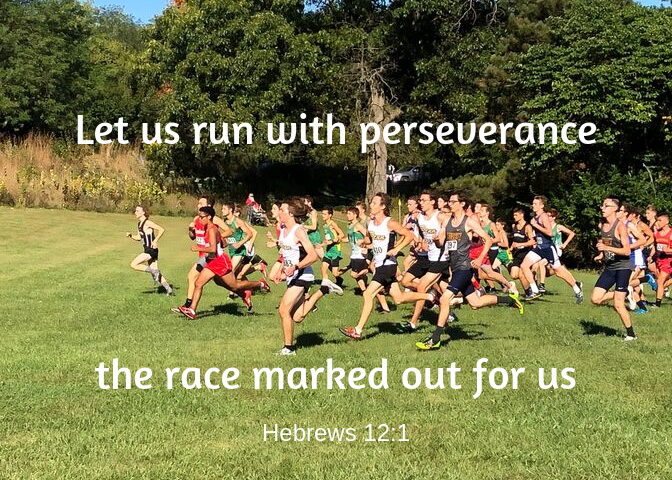
If you’re feeling sluggish, tired of enduring the hardships that come with choosing to be faithful to the end of your race in this age, caught in sin that’s hard to get disentangled from, then think on all of those faithful chosen of God from chapter 11. They made it! They’re going to the Kingdom!

We have to have the endurance to make it to the end to, for our own good. If that great cloud of witness doesn’t move you, consider Jesus’s faith, by which he endured the cross for you. God’s will for him involved the shedding of his blood to resist the sin of others against him and to free us from it. Has God asked you to shed blood to resist sin? That’s probably not God’s will for you, thank God, though many of his children have. I pray it never comes to that.

What’s it going to take to finish your faith race? This writer says endurance, and it comes through discipline (he may even be referencing the letter he’s penning as part of that discipline). He is reproving the Hebrews, but discipline involves more than reproof. It involves scourging (I think the definition of scourging here is “suffering”), and it takes training.

The Hebrews seem to have forgotten that they are heirs to the Most High; they are sons of God. If you’re a son, then you will be disciplined (if not, you’re illegitimate). God’s discipline is like that of a father to his child. It is like the training up of the child in the way he should go so that when he is old, he will not depart from it. The child who was disciplined experienced how to endure as an adult.

The discipline was for the child’s good, though it was sorrowful in the moment. As adults, the discipline will be sorrowful in the moment, but remember, the discipline of the Lord happens because he loves his children, so welcome it. If you’re not disciplined, you’re going to hurt yourself or others with sin. You might forfeit your entrance into the kingdom.

Discipline removes sin. It shapes us into holy people – sharing in the holiness with God (because we are transformed into people who want good for others and therefore do the will of God). It yields the peaceful fruit of righteousness (it turns you into a person who is faithful to do God’s will).

With the Lord’s leading, we can take steps to discipline ourselves to resist sin with endurance, for a whole lifetime. Here are some examples from this chapter:

Serve those in need – strengthen the hands that are weak and the knees that are feeble.

Pursue peace with all men.

Don’t let any root of bitterness spring up causing you trouble.

Don’t refuse the one who is disciplining you.

Don’t trade your birth right for food (like Esau did); God didn’t forgive that sin.

Remember, you didn’t endure what God’s firstborn son (the children of Israel) did. They were not allowed to be where God was like you are through Jesus. Through their mediator Moses, they had to stay away from the mountain where God was. And they were terrified because if they touched the mountain, they’d die. They were terrified of hearing God’s voice, sounding like thunder and lightning.

Instead, you’ve come to the church of the firstborn (Jesus). You have approached the throne room of God, with his angels, with your brothers and sisters who have all been made perfect by Jesus’s sacrifice, and you can do it without being terrified. You’re not going to die if you approach the throne room of God through Jesus.

Oh, and by the way, Jesus’s sprinkled blood as our living sacrifice speaks better than Abel’s blood that cried out for vengeance. Jesus’s blood cries out for love/sacrifice for others. Our job is to follow the cries of the one who’s better, who’s blood lets us into the throne room of God now to be in his presence. God will oblige both, but he says vengeance belongs to him.

God once shook the earth when he spoke from earth. In the end, he’ll speak from heaven, and shake both heaven and earth, so that the things that can be shaken will be removed, leaving only those things that are unshakable. What’s unshakeable is the Kingdom of God. Let’s praise God that we can be a part of that Kingdom now, showing him reverence and awe for what he’s doing. It’s a new thing, and it’s better. 

-Juliet Taylor

Reflection Questions

1. Can you think of something you endured faithfully through discipline?

2. Do you have a routine of discipline that helps you stay on track?

3. Abel’s blood cries out for vengeance. Jesus’s blood cries out for love/sacrifice to save others. God will oblige both cries, but vengeance belongs to God, not to those under the New Covenant. Our responsibility is to love, as Jesus loved because it can change hearts and allows us in God’s presence now (in spirit as we draw near). Our job is to love even those who have hurt us. How can you love someone who has hurt you?

Producing Endurance

Old Testament: Jeremiah Intro – found below

Poetry: Proverbs 3

New Testament: James 1

(James is the only book we are reading twice, back-to-back. What can you find in a second reading of this short but wise letter?)

“Count it all joy, my brethren, when you meet various trials, knowing that the testing of your faith produces endurance.” — James 1:2–3

The testing of your faith through trials produces endurance. What is the opposite of endurance? Well, I suppose the opposite of “endurance” is “giving up”. When faith doesn’t endure it peters out. So if you don’t want your faith to peter out then you need some trials. Because James says it is trials that “produce endurance.”

Few experiences expose who we are like the experience of suffering. When trials come, we almost cannot help but hold out our heart for all to see.

Some sufferers bow their heads and give glory to God, while others curse him. Some say, through tears, “I trust you,” while others refuse to pray. Some collapse into God’s presence, and learn to love him with a broken heart, while others turn their backs and walk away.

What makes the difference between these sufferers? Dozens of factors, of course. But one of the most significant is what we know about suffering. The apostle James, writing to Christians beaten up by trials, calls them to suffer faithfully because of what they know: “Consider it all joy, my brothers, when you meet trials of various kinds, for you know . . .” (James 1:2–3).

Rejoice, James says, because you know something about suffering. And what did they know? They did not know many of the specific good God was working in their trials. They did not know why these trials should be happening now. Nor did they know how long their trials would last. But they did know a simple promise, filled with power: “. . . for you know that the testing of your faith produces steadfastness” (James 1:3).

Testing produces steadfastness. If these three words can sink their roots down into our souls, then we might meet our trials with the most radical response of all: joy.

If we know the promise that testing produces steadfastness, we may gain strength not only to endure our suffering, but to trace a line from our present pain to our future perseverance — and, wonder of wonders, to find ourselves counting even trials as joy (James 1:2).

Such joy will not be a simple joy. It will not be a fake smile or the motivation of a great speaker. It will instead be a complex joy, a joy mingled with tears and mixed with sorrow, all the way to the bottom (2 Corinthians 6:10). In other words, it will be an otherworldly joy, the kind that can only come from the man of sorrows himself. And being from him, it will one day return to him on the other side of our trials, “perfect and complete, lacking in nothing” (James 1:4).

In order to get there, we need to recognize our suffering for what it is: not ultimately a thief who steals our best years, nor a murderer who kills our greatest dreams, or a madman who wields his weapons at random. Our suffering is, rather, a servant from God, sent to make us strong and to use our word again. Steadfast.

-Andy Cisneros

Jeremiah Introduction

The book of Jeremiah was likely written by Baruch, Jeremiah’s scribe, as Jeremiah dictated it.  He prophesied against the people of Judah because of their wickedness – but nobody listened to his message.  Jeremiah prophesied during the rise of the Babylonian empire and the subsequent destruction of Jerusalem.  God commanded him to never marry and have children because God was going to send deadly diseases, sword, and famine.  Jeremiah ultimately was carried off to Egypt by fleeing Israelites, and likely died in Egypt.

Jeremiah didn’t have much choice in his profession, as we see in 1:4-5, “The word of the Lord came to me saying, Before I formed you in the womb, I knew you, before you were born I set you apart; I appointed you as a prophet to the nations.”

Jeremiah is called the “weeping prophet” because we see so much about his personal life and his sorrow.  4:19 is one of many examples, “Oh, my anguish, my anguish!  I writhe in pain.  Oh, the agony of my heart!  My heart pounds within me, I cannot keep silent.  For I have heard the sound of the trumpet; I have heard the battle cry.”

Jeremiah was very straightforward, whether talking with the rebellious people of Judah, as we see in 44:23, “Because you have burned incense and have sinned against the LORD and have not obeyed him or followed his law or his decrees or his stipulations, this disaster has come upon you, as you now see.”; or when talking with God, as we see in 12:1, “You are always righteous, LORD, when I bring a case before you.  Yet I would speak with you about your justice:  Why does the way of the wicked prosper?  Why do all the faithless live at ease?”

While most of the book of Jeremiah prophesied judgment, there are still many places (like Chapter 31) where God promised that He will make a new covenant with Israel.  31:34 says, “No longer will they teach their neighbor, or say to one another, “Know the Lord”, because they will all know me, from the least of them to the greatest declares the Lord.  For I will forgive their wickedness and will remember their sins no more.”

As you read Jeremiah, consider the sins of Judah and the judgment God poured out on them because of their sins.  And then consider the sins of our own society…  

-Steve Mattison

Being Refined

Old Testament: Job 22-24

Poetry: Psalm 41

New Testament: John 21

The process of refining gold or silver is very long and tedious, as they, when mined, are found with many impurities. To get rid of these impurities, these metals are heated to the extreme temperatures of the metal’s melting point. This allows the impurities to rise to the surface of the gold or silver, as the impurities are much less dense than the actual metal. The impurities can then be removed from the metal to the best of the ability of the refiner. After doing so, this process is restarted to continue trying to get rid of even more impurities that remain within the gold or silver.


Throughout the Bible, the testing of people’s faith is constantly compared to the refinement of metals, such as gold or silver. We all face many trials within our lives as we try to live out a life of faith. In James 1:2-4, it says, “Consider it all joy, my brethren, when you encounter various trials, knowing that the testing of your faith produces endurance. And let endurance have its perfect result, so that you may be perfect and complete, lacking in nothing.” James tells us all that we must take joy in knowing that our trials and testing of faith produce a good result in us. For these difficult times create endurance, and endurance creates in you perfection and completion. Note that James did not say that we were going to encounter a singular trial to produce endurance, but instead stated that we would encounter various trials to achieve the result of perfection and completion.


Job knew the same thing that James did. He knew that the trials that he was facing were going to bring him forth to be more perfect and complete from his endurance. While we do not know the exact length of time Job suffered, we do know that he must have had great endurance to face all of his trials. In Job 23:10, he said, “But He knows the way I take; When He has tried me, I shall come forth as gold.” Job knew that he was going through a process of refinement. He was being made more perfect and complete, becoming a piece of gold with fewer impurities. Knowing that he was going through refinement didn’t make any of the trials less for Job, but it did give him hope for the end of them at which he would be a refined person, more like God.


Job is not the only human who has and will face refinement of their faith. Each and every one of us will go through trials that test our faith. In Isaiah 48:10, it says, “Behold, I have refined you, but not as silver; I have tested you in the furnace of affliction.” Job was not put in an actual furnace of fire to be refined, and neither will we. But, we will all face the furnace of affliction in a way to refine our faith. Job was confident in the end result of his refinement by suffering. Are you as confident as Job that when the trials come you will stand in the end as a piece of refined gold?

-Kaitlyn Hamilton

Reflection Questions

  1. Is there a trial you have emerged from more “refined” than you were before? What did you gain through the difficult process? Can remembering that process and result help give you joy when you encounter the next trial?
  2. Sometimes, rather than being refined in a trial, people just melt, or the impurities seem to multiply. What makes the difference? How can you work towards using difficult times to improve and become more godly?
  3. What role does God take in your refining process?

Consumed with the Vision

Matthew 24

January 24

Do you know someone who had a quote or a phrase that they said so often that you can hear it in their voice? Maybe it’s Jerry Seinfeld’s “What’s the deal with…” or you can see a cute electric mouse and hear “pika-pi”. I think most people at Timberland Bible Church can hear these words in my voice : “That’s good news! That’s gospel message! That’ll preach! Can I get an amen?!”

I bring up this aural phenomenon because it happened to me while reading Matthew 24. Every time I read Matthew 24:14, I am transported back to my grandparent’s house. I am sitting at the kitchen table, and James Mattison, who I knew as Papa Jim, is telling me about his ministry in Africa. I had asked, “Why did you go?” right before we ate lunch. And he opened his worn down Bible, though he quoted the verse by heart. “This gospel of the kingdom shall be preached in the whole world as a testimony to all nations, and then the end will come.” I can hear and see him, but I can also feel him : I still see his composure brimming with energy, I can still hear his confidence tempered with humility, but I FEEL his burning conviction. It was not someone else’s duty to speak this gospel to the world. It was his. Malawi, Mozambique, Africa needed the gospel of the kingdom of God to be preached to them. It was imperative, and Papa Jim knew it was his imperative.

James Mattison was consumed by the vision of Matthew 24. He knew it inside out and backwards. But most of all, he knew what it entails. Lots of Matthew 24 is worrisome. Things look bleak, destruction is coming, the end is scary. But that isn’t what Jim was focused on. Primarily he knew that the end had to come so that the perfection of the Kingdom could come.  He also saw in this teaching commands, commands that I want you to see. He was consumed by three truths of Matthew 24. 

  1. No matter what comes at the end, there is given to the faithful the strength to endure it all. Jesus says the one who endures (in Revelation, the parallel phrase is “the one who conquers”) will be saved. (24:13) But that enduring is not merely hanging on. 
  2. In verses 42-51, Jesus declares that he will return like a thief in the night, like a master on a long journey. The ready and alert won’t be caught off guard, and therefore they will keep doing what the master has commanded them. 
  3. And what Jesus has commanded each of us is to preach the gospel of the Kingdom. Technically, in Matthew 28:19-20, Jesus commands us to make disciples (more on that later), but part of that is to teach people to follow the commands of Jesus. Preaching the gospel of the Kingdom and teaching all Jesus commanded us is the call for Christians. Let us continue so that the master might find us working. 

You may not be called to Africa and in fact most of you AREN’T. You are called to where you are. To endure, to be ready, you need to be consumed by the vision that we see in Matthew 24. Will you listen to the call of Jesus, and tell others the gospel of the Kingdom?

-Jake Ballard

Questions for Reflection and Discussion

  1. Are you consumed by the vision of Matthew 24? James Mattison believed it was his imperative to preach the gospel to the world, especially Eastern Africa; to where are you called? Are you listening for the call of Jesus at all, and if you are telling others of your faith, do you tell them about the gospel of the Kingdom?
  2. Do you feel like you have been skimming by, enduring, or conquering the last year? Do you feel like you AREN’T enduring or conquering? How can you be empowered?

Your Work, Labor & Endurance – through Faith, Love & Hope

1st & 2nd Thessalonians

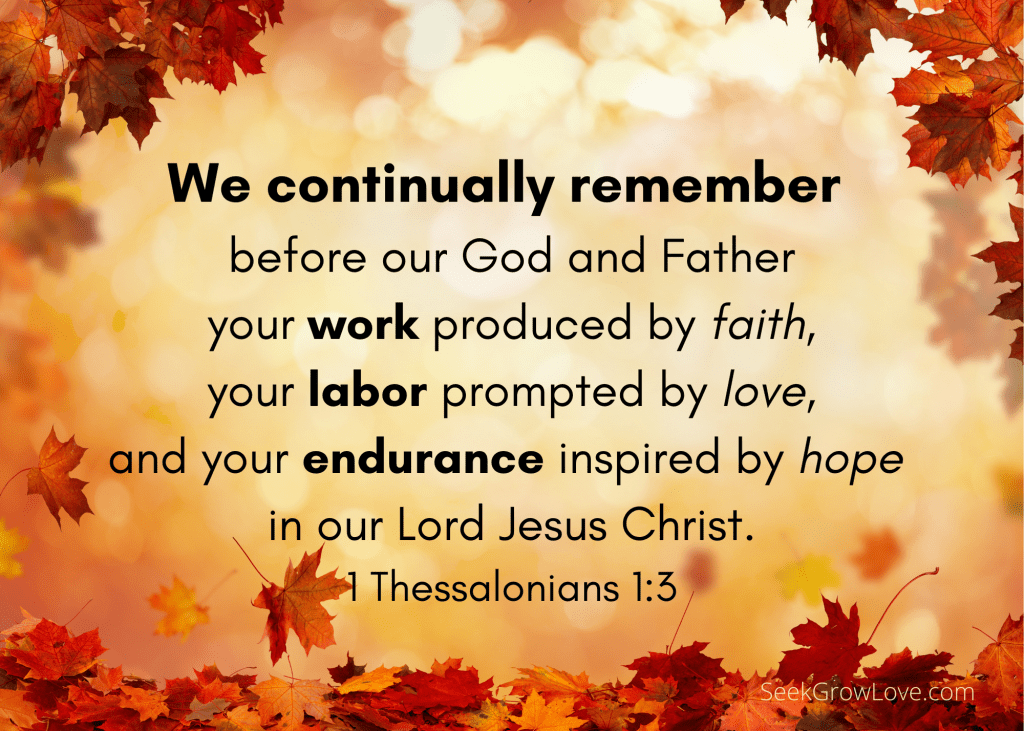
1 Thessalonians 1:3 – We continually remember before our God and Father your work produced by faith, your labor prompted by love, and your endurance inspired by hope in our Lord Jesus Christ.


Work Produced by Faith

Faith is defined as having a firm belief, complete trust and confidence in something. As a Believer, our faith is determined by the extent of which we believe that God is who He says He is and that His son, Jesus the Messiah, was born of a woman, lived a perfect life, died on the cross for the redemption of your sins, was raised to life, is currently sitting on a throne next to his Father, waiting to return again to reign in the Kingdom. IF you and I believe all of that – then our day to day life will be a compilation of evidence of acts done in faith and by faith. 


James makes the claim in the third chapter of his letter “to the twelve tribes scattered among the nations” (James 1:1) that “in the same way, faith by itself, if it is not accompanied by action, is dead” (3:17). And in verse 26 of the same chapter, James writes, “As the body without the spirit is dead, so faith without deeds is dead”. 


The Thessalonians didn’t just accept the gospel message, they acted on it. Jesus was both their Savior and their Lord, meaning that they were obedient to the call on their lives. They were doing the work that God had prepared in advance for them to do (Ephesians 2:10). Likewise, when we accept the gospel message for ourselves, we have to respond. Jesus tells us in the book of Luke that we must take up our cross (do the work) and follow him (9:23). 

Labor Prompted by Love

Mark 12:30 says, “Love the Lord your God with all your heart, and with all your soul, and with all your mind, and with all your strength”. Have you ever wondered why these four domains are identified? Have you ever loved someone so much that there isn’t anything you wouldn’t do for them? You sacrifice all that you have in order to serve them, sacrifice for them, and labor for them. In the following verse, we’re told to love our neighbors as ourselves. Sacrificing ourselves for family members and close friends is one thing…serving and laboring for others beyond our closest relationships is quite another. 


This is why we’re told to love with all of our heart, soul, mind and strength – because it’s not easy. Sometimes loving another is labor. It’s hard work. It’s humbling ourselves by putting our own desires off to the side in order to honor others. But it’s what we are called to do. And it is possible if we lean into the strength that is provided through our faith in Christ. 

Endurance Inspired by Hope

One of my favorite types of exercise is a 20 minutes HIIT (high intensity interval training) workout. I like it because I don’t have to do it everyday, it’s quick, and efficient. And I get to rest for almost half of the time during the “down” intervals. If I were ever called upon to do something that took longer than 20 minutes, I would be gassed! I do not have the endurance for it. And I have no enthusiasm to train for it! 


Walking out your faith knee deep in “works produced by faith” and “labor promoted by love” is not for the faint of heart! It’s not a one time deal. And unlike my HIIT workouts, it’s an all-day, everyday kind of commitment –  for a lifetime! This requires an endurance that cannot be faked nor manufactured. The only source for the necessary fuel to keep this faith-centered life going is HOPE. A hope that has a foundation on the love God has for us. When we stay zeroed in to that – we are able to dig deep and and go the distance. As Paul says in his second letter to Timothy, “I have fought the good fight, I have finished the race, I have kept the faith”. We can have a FULL life that gives us the endurance needed to do the good works. 


The Christian life is not for the wimpy. In this single verse out of 1 Thessalonians, we are told that we must work, labor, and endure. I don’t know about you, but this doesn’t seem very comfy. It’s not a life of luxury and indulgence. The ONLY way that we will be able to sustain this day to day living is doing so out of Faith, Love, and Hope. May these virtues fill your heart today.

-Bethany Ligon

Today’s Bible reading passage can be read or listened to at BibleGateway here – 1st Thessalonians & 2nd Thessalonians.

Tomorrow we will read Acts 18:19-19:41.

Endure

Genesis 25-26


Genesis 26 29 NIV

Yesterday we looked at Abraham and how committed he was to God and didn’t hold anything back. Today our passage is Genesis ch.apters 25-26 but we are really going to hone in on Genesis 25.29-34. Hopefully all of us including myself can gain a different perspective on it. But first, story time….

I grew up running. When I was in high school, I ran track and field. I ran the half mile, the mile and the two mile. I did that for a couple seasons but was pretty inconsistent. When I didn’t compete one season I didn’t run at all because who really likes running with no goal.  In college I had to run because I went to a military school. I had physical fitness tests that I had to pass. That sort of renewed my interest in running and I began to run more frequently. I had always dreamed of and put on my bucket list to run a marathon. When I was 26 I made my first attempt to train for a marathon. Training for a marathon requires a lot of commitment. You need to run 5-6 times a week for 16 weeks. Many of these runs during training are quite literally hours long and exhausting. You essentially make yourself a slave to your running program and do whatever it tells you to do. On my first attempt I fractured my ankle on the longest run of the program, three weeks before my race. It was terrible. I had invested 13 weeks of training into something that would never produce any fruit. I was literally right at the end of my program. All the runs in the program after this would have been easier than previous runs and I was easily on my way to completing a marathon before I stepped on that cracked sidewalk.

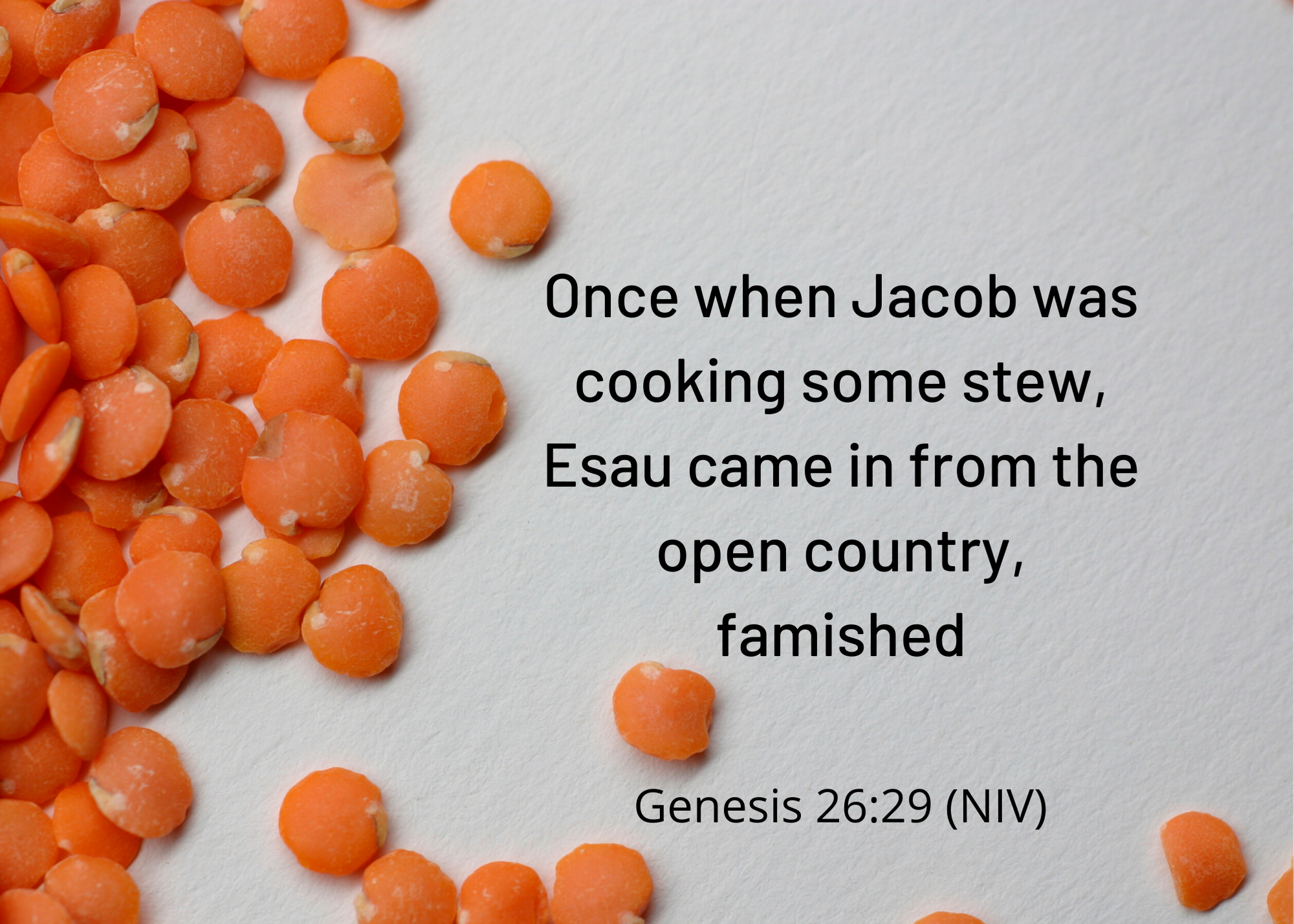
In Genesis 25.29-34 we have Isaac’s two sons, Jacob and Esau. Jacob was a quiet man who dwelled in tents. While Esau was a skillful hunter and a man of the field. Esau comes back in from the field and is starving. I feel like all of us have been there. Sometimes the last thing that you want to do when you come in the door after a long day is to cook yourself a meal and I think this is what Esau was feeling. It is hard for me not to empathize with Esau here. Rough day of hunting and he is exhausted and his younger brother has stew on. His brother takes advantage of his situation and asks him for his birthright in exchange for some wonderful stew. This feels super under handed and not a great way to treat your siblings or frankly anyone. We could cry “Where is the justice in this situation, God?” but I think a better attitude for this situation is to ask “What can I learn from this situation?” and I don’t mean how to exhort people’s birth rights.

I think that the lesson to be learned here is not from God’s perspective or Jacob’s but from Esau’s perspective. When Esau came in from a hard day out in the field and didn’t have any food, I’m sure he could probably get food from somewhere. Esau was right there at the end and at the very last second, he let his desires to satiate his hunger get in the way of what was good for him. If Esau had persevered for a little while longer, I imagine that he would have been able to find food somewhere and may have not even gone to bed hungry. Instead, he let something as inconsequential as some stew get in the way of him receiving his birthright.

In my case with the marathon it was an injury that stopped me. It’s too often that I end up quitting right before I get to the part where my efforts bear fruit. Too often just a little bit more effort and a little bit more endurance would give me the results of all my work. 2 Timothy 2.12 says, “If we endure with him, we will also reign with him.” We need to not lose sight of our hope and endure with him so we will reap the rewards of all that God wants to do in our lives. If we focus on this hope I believe that we will also be able to persevere with him until the end.


Daniel Wall


Today’s Bible passage can be read or listened to at https://www.biblegateway.com/passage/?search=Genesis+25-26&version=NIV


Tomorrow’s Bible reading will be Genesis 27-29 in the 2020 Chronological Bible Reading Plan

Endure

Colossians 1

Colossians 1 24

I like to listen to audio books. Most of the books I read could be considered “self-help” or “Leadership” books. The one that I have just started in the last couple days is called “Can’t Hurt Me” by David Goggins. David is a former Navy seal and an ultra-athlete. The premise of his book is to have a mentally tough and disciplined mind that allows us to push through the worst experience’s life can throw at us. This idea of “Can’t Hurt Me” reminds me of what Paul said in Colossians 1:24-29

 “Now I rejoice in my sufferings for your sake, and in my flesh,  I do my share on behalf of His body, which is the church, in filling up what is lacking in Christ’s afflictions. Of this church I was made a minister according to the stewardship from God bestowed on me for your benefit, so that I might fully carry out the preaching of the word of God, that is, the mystery which has been hidden from the past ages and generations, but has now been manifested to His saints, to whom God willed to make known what is the riches of the glory of this mystery among the Gentiles, which is Christ in you, the hope of glory. We proclaim Him, admonishing every man and teaching every man with all wisdom, so that we may present every man complete in Christ. For this purpose, also I labor striving according to His power, which mightily works within me.

Here we see Paul bringing up a time where he had been persecuted for bringing the Gospel to the Colossians. Where he endured hardship while preaching fully the Gospel to them. He mentions in verse 27 “God willed to make known the riches of the glory” and also mentions “hope of glory”. I believe that this for Paul was meaning no matter what kind of tribulations, trials, or persecution he goes through Jesus also went through this, and God revealed the mystery of resurrection power to the world as well as the Gospel through Christ.

We will have days, often, that are going to be horrible from our perspective. Now I don’t know what David Goggin’s believes personally. However, if we adopt what I think David Goggin’s and Paul would say is a “Can’t Hurt Me” mindset, we can look forward to the resurrection and the kingdom of God.

Jesse Allen

If Paul can, You can

Philippians 1 

7

Shipwrecked on an island, stoned, bitten by a snake, beaten, and thrown into prison. It seems that Paul could never catch a break. The letter of Philippians was actually written while Paul was imprisoned in Rome. After a short greeting to the church of Philippi, Paul explains his current predicament:

Now I want you to know, brothers and sisters, that what has happened to me has actually served to advance the gospel. As a result, it has become clear throughout the whole palace guard and to everyone else that I am in chains for Christ. And because of my chains, most of the brothers and sisters have become confident in the Lord and dare all the more to proclaim the gospel without fear.(Philippians 1:12-14)

Paul’s attitude is truly humbling. Instead of grumbling, blaming, or whining, he recognizes that all of his difficulties have “served to advance the gospel.” What a mindset to strive for! By being transparent about his sufferings, Christians at the time were encouraged to be more confident and daring, spreading the gospel without fear. I was shocked to read that the people were more encouraged by Paul’s endurance than petrified by his tribulations.

My sister once brought a box of bacon-cheddar flavored crickets to a family gathering. At first, everybody thought the crickets were an amusing joke, but nobody seriously considered eating one. After staring at the crickets for a long while, my brother-in-law finally ate one as we all goggled and gawked. Then the next person ate one, and the next person, and eventually everyone in the room had eaten a cricket. After witnessing someone else eat the cricket, it was much easier for me to eat a cricket, too. (FYI crickets don’t taste like chicken).

In the same way, early Christians adopted an “If Paul can, I can” kind of faith. Let Paul’s resilience and conviction in the face of obstacles encourage you, too, to proceed boldly in your faith. If Paul can withstand being shipwrecked on an island, stoned, bitten by a snake, beaten, and thrown into prison, you can be daring and bold in your faith, too.

When was the last time you took a risk for your faith? Get your hands dirty, get uncomfortable, and get moving.

I eagerly expect and hope that I will in no way be ashamed, but will have sufficient courage so that now as always Christ will be exalted in my body, whether by life or by death.  For to me, to live is Christ and to die is gain. (Philippians 1:20-21).


-Mackenzie McClain