-Devotion by Jeremy Martin (TN)
The opening of Galatians is one of the (many) clear examples of Paul’s personal understanding of scripture, of the nature of the Most High God and of His Messiah, Jesus. The thing to keep in mind about Paul is that he was a “good Jewish boy” (just like Jesus was), and a Pharisee who trained under the renowned Gamaliel (and likely the “Hillel” school associated with Gamaliel) . The Pharisees were basically just what we’d call the “church leaders” of his time.
There were 4 predominant Jewish “philosophies” at the time, and it’s very important historically to understand them and their differences with each other in order to fully grasp what being a “Pharisee” meant. So here they are, in no particular order:
- Pharisees-Devout Jews who emphasized strict adherence to the Torah and the oral law. They believed in resurrection, an afterlife, and divine providence.
- Sadducees: A priestly and aristocratic group who accepted only the written Torah (Pentateuch) as authoritative, rejected the oral law, and did not believe in resurrection or an afterlife.
- Essenes: A separatist, ascetic group that lived in communal settlements (like Qumran), practiced ritual purity, and are associated with the Dead Sea Scrolls. They believed in divine predestination and awaited a messianic figure.
- Fourth Philosophy: A radical political and revolutionary movement advocating armed resistance against foreign rule, particularly Roman occupation. They opposed paying taxes to Rome, viewed submission to foreign powers as idolatry, and sought a theocratic Jewish state. This group is often identified with the Zealots and Sicarii (Remember Simon the Zealot? Yea, this is what they’re talking about: more stabby stabby, less “oh that guy was really zealous”. Look up “sicarii” for some really cool information about these guys.)
So here is the thing, the Pharisees were (as every branch mentioned) FIERCELY monotheistic; they believed in the one God, the God Most High, Yahweh. This particular sect was so fiercely monotheistic that they literally posted copies of The Shema (Deut 6:4-5) beside the doors to their houses, put it in little boxes and tied it to their hands, and tied them in little boxes around their foreheads to remind themselves: “Listen Israel! Yahweh God, Yahweh is one.” It was a big deal, so big that when Jesus was asked what the greatest commandment was in Mark 12:29-31 he quoted this (also note that the scribe agreed with him, and Jesus didn’t correct him). That’s just what every good Jewish boy knew. As good (Judeo-)Christians, we should know it too.
My point in bringing this up is simply this: if Paul had come to a more “complex” understanding of the nature of God and His Christ as some modern apologists have suggested it would have been a huge, earth shatteringly tremendous, shockingly big deal. It would have come up very clearly (not inferred) in conversation, and probably more than once. There would have been screaming bouts and yelling, probably violence. At least something in scriptures would have documented very clearly this huge diversion from an entire nation’s historical understanding of the nature of God, but it never comes up.
Gal 1:1-4, LSB:
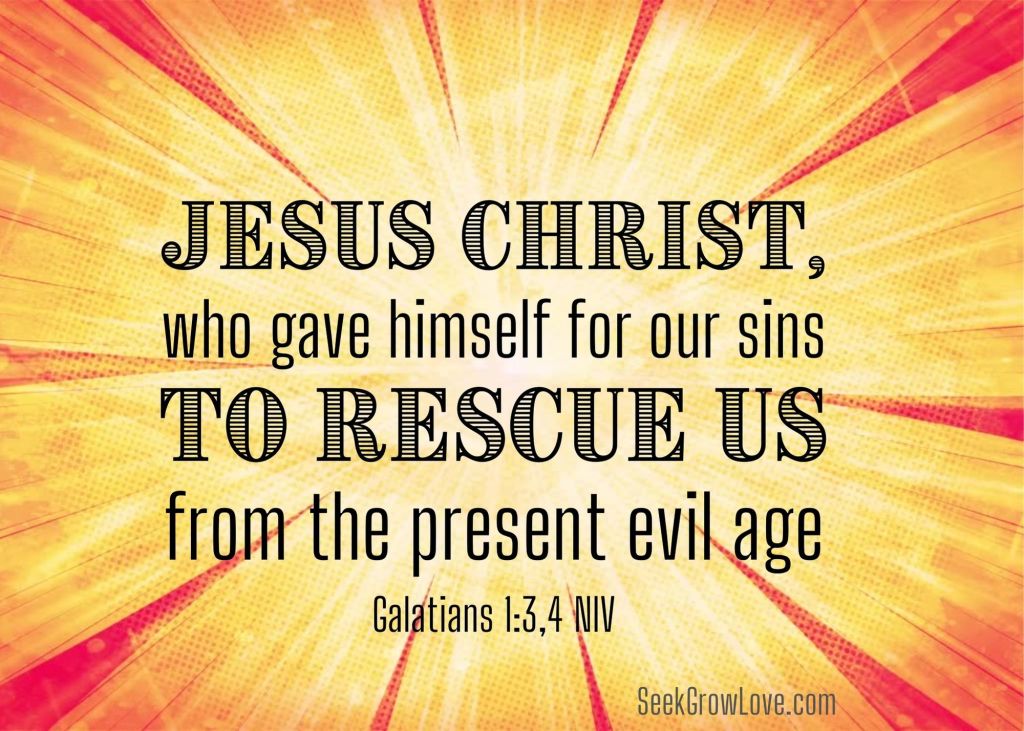
1Paul,…not sent from men nor through man, but through Jesus Christ and God the Father, who raised Him from the dead…3Grace to you and peace from God our Father and the Lord Jesus Christ,4who gave Himself for our sins …according to the will of our God and Father, 5to whom be the glory forever and ever. Amen.
We see from the above that Paul believed that Jesus was The Christ (The “Messiah”, see May 8th devotional), that God raised Jesus from the dead, that Jesus gave himself for our sins, and that this sacrifice was done according to the will of our God and Father (to whom be the glory forever). It’s pretty hard to have a “complex” reading of this, Paul delineates firmly between his God and his Messiah (as does Jesus, see John 20:17). Almost all of Paul’s openings in his letters clearly delineate between God and His Christ, the man Jesus of Nazareth whom he believes is the Messiah (as did Jesus, see John 4:25). All of the new testament authors (and Jesus himself) identify Jesus as the Christ, the Messiah. It is not good to go beyond what is written (1 Cor 4:6), and that is what is written. He is the Messiah, the son of David, the son of the living God (Matt 16:15). He has to be, to fulfill the prophecies of the Messiah (see 2 Sam 7).
As we can see in our 1 Chronicles 1-3 reading today, the Jewish folks have a passion for genealogy, we might view it as almost more of an obsession. I never really understood that, but it’s simple, and very practical: the inheritance of the people was determined by ancestry. In the book of Numbers (which has quite a bit of this type of genealogy) in chapters 34-36 it gives the breakdown of these inheritances for the Jews. The obsession was because, simply, that determined where you lived, who you were, and what you got. Want to be a priest in the nation of Israel? Well, who’s your daddy? Let’s break out the genealogical scrolls and trace you backwards because if you can’t make a pretty straight genealogical line from you to Aaron, you aren’t qualified. This concept ended up being carried over generationally, because who you were determined your inheritance.
This type of genealogical thinking is entrenched in the Jewish mentality because of this, and that’s why 2 of the gospels make a point to break down the genealogy of Jesus in order to prove that he met the requirements of being the “Messiah” or “Christ” (Matt and Luke), but Jesus also exemplified the loving nature of God towards His creation. John the baptist (in Matt 3:9) warns the people not to think that because Abraham is “their father” that they’re safe, because it is faith that determines spiritual lineage (Rom 4:16, Gal 3:7) and not genealogy. In John 8:44 Jesus tells some of the religious leaders that “You are of your father the devil”. This is not to imply that their biological father was Satan, but to explain that true spiritual paternity is determined by behavior, actions, and attitude. So with that understood, let me ask you the question: who is YOUR daddy?
Our Father in heaven is the Most Gracious, the Most Merciful. He has given us blessings abundantly, even when we didn’t deserve them, and even when we were acting in opposition to His will. He forgives freely to those who ask, He is faithful, He is loving, He comes running to meet us along the path when we wake up and begin to return home from our own folly. Even when He is wronged, He stands waiting with outstretched arms for His children to return. He is patient, He is kind, He always keeps His promises, and He will make a way for those who love and seek Him. He LOVES YOU SO MUCH that He sent His only begotten son to die to make a way for you.
So, again: who is your daddy? Read the above paragraph very carefully. If you are reflecting all of those traits, then you too are a child of the living God. If you are not reflecting those traits listed above stop for a moment, and with fear and trembling consider your path and who your father is, and how to return to the loving arms of the God who made you.
REFLECTION QUESTIONS
- What single thing can you do better to reflect the nature of God in your life?
- What flaw do you personally feel is the most detrimental to you, and how can you fix it?
- We are to regularly examine and test ourselves (2Cor 13:5): How do you normally do?
- Who is your Father, today? What about yesterday? Tomorrow?
PRAYER
Father God, my father, please show me what I can do better. Please teach me Your ways, and let me humbly seek after You with all my heart. Please forgive me when I fail You, as I so often do, and cleanse my heart of all wrongdoing and wrong thinking. Guide me on the path that leads to Your kingdom. Thank you for sending Your son to teach us, grant us the wisdom to listen. In Jesus name, Amen.