
Firmly Decided

Genesis 41-42

Genesis 41 32 NIV

My intention for the next week of devotions is to provide a few of the thoughts and questions that arise when I read the section for the day. This insight into my mind will, by definition, be insightful, but I also hope that it provokes thought and encourages you to think of these passages in a new way. A novel approach to a passage may be novel, but it is up to the reader to determine whether such a perspective is beneficial. After all, the conventional wisdom regarding these passages is conventional for a reason (Jeremiah 6:16). This wisdom has been cultivated for centuries and even millennia in many cases. We should respect the paths that have been laid down for us by our predecessors but also inquire as to the motivation for the creation of these existing structures.


Let’s begin by looking at verse 32 of chapter 41. “The matter has been firmly decided by God.” This implies that God decides matters, sometimes firmly, sometimes softly. When is a time that God has decided a matter, but not firmly? The situation that probably comes to mind for most people is when God had promised to destroy all of Israel as punishment for creating the golden calf while Moses was on Mt. Sinai (Exodus 32:14). Even though God had stated what he would do, he “relented.” Are there other times in the Bible or in present when God has decided to do something and is yet willing to change course? Are there times when he won’t relent?


In a single day, Joseph is elevated from a foreign slave in prison to the second in command in all of Egypt, probably the most powerful and advanced civilization of the time. The way in which Joseph is promoted in the story is rather abrupt. It feels almost as though a portion of the story is missing. What transpired between Joseph interpreting Pharaoh’s dream and his promotion? The interpretation of the dream had not yet come true, but the Pharaoh still trusted the word of Joseph. The credibility with which Joseph spoke came from the previous times when he interpreted dreams. If Joseph had never been accused of impropriety with the wife of Potiphar, then he never would have been in a position to interpret the dreams of the cupbearer and the chief baker. If he had never interpreted these dreams, then he never would have been promoted to his position over Egypt. This chain of events shows the foresight of God and how we need to trust that even in the bad times, the times that some may have intended for evil (ie Potiphar’s wife), God intends to use for good. The other thing of note in this short section is in Joseph’s reaction to the interpretation. He presented the problem to Pharaoh, but he also presented the solution and was ready to take action. If God provides special insight to you, you must be willing and able to take that insight and turn it into action. If you were incapable of action, would God have given you the insight? Take action.


Now that Joseph is in charge of storing food for the coming famine, he takes to accounting. This is an incredible feat that many of us don’t even bat an eye at. These events took place 3500-4000 years ago. Some historians claim that the Pharaoh of this time was Amenemhet, who reigned at the beginning of the twelfth dynasty. The twelfth dynasty is also the period when the oldest mathematical documents that have ever been uncovered were initially created. The Egyptians invented math. They were using fractions and solving geometry problems well before Socrates and Plato. In fact, they were about as far removed from the ancient Greeks in time as we are. That thought alone is mind boggling. This is all to setup my final point and to draw attention to what Joseph said of the amount of grain that he had stored up. He said that it was “beyond measure.” This phrase actually had meaning to Joseph and the Egyptians. They had been counting for centuries and had a hieroglyph for every number up to one million (𓁨 this is the unicode character for it). This glyph was used to represent the actual numeral one million or to signify “many.” It is a picture of a god with his hands raised to the sky. We take this kind of math and accounting for granted, but it was a fairly new development for the people of this time. I’ve included some links down below to articles that will get you started with further research for those of you who are interested in ancient Egyptian mathematics. Who knew Joseph would take us down this rabbit hole?

Nathaniel Johnson


https://answersingenesis.org/archaeology/ancient-egypt/a-correct-chronology/

https://en.wikipedia.org/wiki/List_of_pharaohs

https://en.wikipedia.org/wiki/Ancient_Egyptian_mathematics


To read or listen to today’s Bible passage – check out https://www.biblegateway.com/passage/?search=Genesis+41-42&version=NIV


Tomorrow’s reading will be Genesis 43-45 on our 2020 Chronological Bible Reading Plan
Persevering

Genesis 38-40

Genesis 39 21 NIV

Today is sadly, at least for me, my last day of writing devotions for this week. I have been super blessed to do this. It really makes me work the text and find the spiritual implication of the scripture. I love studying God’s word like that. I hope you guys have been getting as much from the devotions as I have.

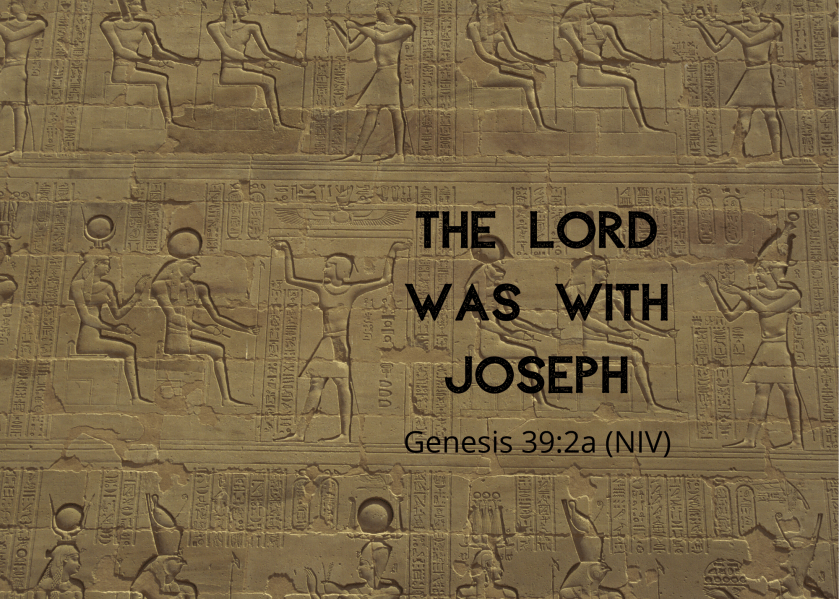
We are going to set up camp in Genesis 39 and talk some more about Joseph. Definitely read Genesis 39: 1. because it is awesome, 2. because it will fill in all the details that I miss. We are picking up the story with Joseph in Egypt thriving as a slave in Potiphar’s house. It says in verse 3 “His master saw that the LORD was with him and that the LORD caused all that he did to succeed at his hands.”. Notice Joseph’s perseverance in this situation. He is sold into slavery by his own brothers and now adjusting to life as a slave he is still applying himself and trying. It is so rare to find perseverance like that anymore. I can only imagine Joseph’s mindset here but I feel like being a slave of one of Pharaoh’s officials and becoming his right-hand man would not be the worst job to have as a slave.

Joseph had gained Potiphar’s trust so completely that it says that he concerned himself with nothing but what food he ate. I wish I could say all my employers have trusted me like that but that totally wouldn’t be true. Unfortunately, the story is about to get a little more difficult for Joseph.

Potiphar’s wife had taken a liking to Joseph and tried to make him lie with her. I want to zoom in on Joseph’s response. He tells her no, that he wouldn’t do it. The reason he cites in verse 9 is that his master has held back nothing but her and, “How then can I do this great wickedness and sin against God?”. He ultimately bases his choice on “I owe Potiphar” but “I couldn’t do this to God”. His morality, decisions and actions are guided by his devotion to God. God was the thing that guided everything for Joseph.

This heroic display of devotion to God wouldn’t be the last. In verse 10 it says that she asked him day after day to lie with her and Joseph refused. She seems to be determined because despite all of Joseph’s no’s, one day she got ahold of his garment and refused to let go. Joseph fled away to avoid the sin. She lied to the men of her household and Potiphar and told them he tried to rape her.

Joseph for this deed of righteousness and obedience was repaid with prison. For obedience through a testing and trial the immediate consequence of his amazing self-control was being sent to prison. Joseph must have felt like God’s whipping boy at that point. I would have felt like, “I was put on this Earth to be destroyed” if I were in Joseph’s shoes.

God rewards Joseph’s obedience and gives him favor with the prison keeper who puts him over all the other prisoners. God rewarded his obedience, suffering, righteousness, love, devotion, and endurance to and for Him. God didn’t abandon Joseph. Joseph went through many things much harder than probably any of us have ever or will ever go through. They were hard, made him uncomfortable, he suffered but he persevered. Pain, difficult things, sufferings are not the end of the world. Being comfortable in life is not the most important thing. Joseph’s happiness wasn’t his main concern. His love for God was paramount.

James 1.2-4 says “Count it all joy, my brothers, when you meet trials of various kinds, for you know that the testing of your faith produces steadfastness. And let steadfastness have its full effect, that you may be perfect and complete, lacking in nothing.”

James says to count it as joy when we encounter trials. As JOY. The trials, the suffering, the pain, the putting off of our desires, the obedience, the perseverance. James says it is making us perfect and complete. I want to be perfect and complete in what actually matters. The perfect and complete that James is talking about is in our love and devotion for God. I want to be perfect and complete in that.

In verse 12 James says that the man who endures under trial is blessed because he will receive the crown of life. We will receive the Crown of Life. Can you imagine Jesus placing a crown on your head at your judgement? Just imagine what that would feel like. The King placing the crown of life on your head.

Everything can wait. Think about what that would feel like.

In the next part of the verse it says that God has promised this to those who love Him. So let your perseverance, your suffering, your pain and obedience make that LOVE perfect and complete.

Dan Wall


Dan is a graduate of Atlanta Bible College and SUNY Maritime College. He recently completed an internship at Guthrie Grove Church of God and is hoping to become the pastor of a church one day, LORD willing. If you would like to contact him you can reach him via text or call at 631-576-5099 or via email danielaaronwall@gmail.com.


Today’s reading was Genesis 38-40 and can be read or listened to at https://www.biblegateway.com/passage/?search=Genesis+38-40&version=NIV


Tomorrow’s reading will be Genesis 41-42 as we carry on with the 2020 Chronological Bible Reading Plan
Forgiveness

Genesis 32-34

Genesis 33 4 NIV

Today we are going to look at what happened when Jacob and Esau finally meet again. If you remember the last time the two brothers were together was back in Genesis 27. Whatever city they were in it definitely wasn’t Philadelphia, the city of brotherly love. Jacob’s mother actually has to tell Jacob to run away to another land because Esau, his brother, is trying to kill him. Probably Esau rightfully felt these things because Jacob stole his father’s blessing from him and also extorted his birthright. I could imagine having a little bit of hostility towards a brother who did these things to me as well. Luckily, Jacob’s mama gets involved and sends him away to her brother where he was able to get married and prosper.

I can’t imagine the hostility that lay between these two brothers. Some of us are slightly more dramatically than others of us but we have heard people use phrases like, “They ruined my life”. Now I’m not saying that they didn’t but they probably didn’t do it like Jacob did to Esau. Jacob literally took away Esau’s inheritance from him for a bowl of soup. That better have been like some lobster bisque. On top of that while Esau was out hunting for an animal to make his father a nice stew Jacob and his mother went the easy route and took one of the animals from the flock and made their father a stew and stole Esau’s birthright. I couldn’t imagine doing all the work of hunting an animal just to see that your brother took one from the herd and used it to steal your birthright. Talk about adding insult to injury.

Imagine having all that happen and how you would feel if you ever saw your brother again. I am not sure about you but I would be expecting the best apology in the world. I’m not really sure what all would be included in that apology but at the very least I’m thinking something like a sky writing plane writing, “I’m sorry. You are awesome.” Maybe then I could possibly forgive them if they included like season passes to my favorite ski mountain. Let’s take a look at how the incident actually plays out in the Bible. You should go read the entire chapter of Genesis 33 but since I cannot put the entire chapter in this devotion. I will settle for one verse.


Genesis 33.4 “But Esau ran to meet him and embraced him and fell on his neck and kissed him, and they wept.”


Esau had twenty years to stew over how wrong Jacob had done him but instead of holding in all that hostility, anger and rage he chose to do something absolutely crazy. HE FORGAVE HIM. His reaction to seeing his brother is profound. He didn’t even just walk up and shake his hand. It says he ran to him, like children would when they see their father coming home from work. He embraced him, fell on him and kissed him. That’s love and forgiveness and all the stuff I want in my life.

I have things in my life that are as small as people have told lies about me and have said negative things about my character that I have a hard time letting go of and forgiving them for. But Esau, literally the leader of a non-Israelite nation, had way more forgiveness than I do.

Colossians 3.13 says, “bearing with one another and, if one has a complaint against another, forgiving each other; as the Lord has forgiven you, so you also must forgive.” This verse can seem kind of abstract and not practical. For me personally, when I see an example of how this is played out in real life like what happened with Jacob and Esau it raises the bar. It shows me my failure to fully attain to the level of Christianity that I want to be at; which is to live like Christ.

So how do you forgive somebody after something like what happened to Esau. I don’t think it is in our nature to. I think we need to bring it to God. I know that there are things that I wasn’t ready to forgive people for, my heart isn’t ready for and it still clings to the hurt. I think the only way to handle those types of situations is to bring it to God in prayer and ask something like, “God, please help me forgive this person and love them despite what they did to me.” Sometimes we just need to release that charge against them in our minds and tell ourselves, “I am not going to hold that against them.”

I hope that this helps any of you that are struggling in this way. I hope that we can all release that resentment we have and forgive each other fully.


Daniel Wall


To read or listen to today’s Bible reading you can check out Bible Gateway at https://www.biblegateway.com/passage/?search=Genesis+32-24&version=NIV

Tomorrow’s reading will be Genesis 35-37 in our 2020 Chronological Bible Reading Plan

The Covenant Story Begins

Genesis 12-15

Genesis 12 1 CSB

Genesis 1-11 details the heartbreaking story of a perfect world and people, created lovingly by God, turning away from him to pursue the desires of their heart. The consequences for this sin is great, but like the rainbow after the flood symbolizes, the redemption God provides is also great. In Genesis 3, God promises a future savior who will fight for and redeem mankind. In today’s reading, we see the plan set in place since the beginning start to take shape.


In Genesis 12, God tells Abram, a man from Ur (in Mesopotamia), “Go out from your land, your relatives, and your father’s house to the land that I will show you. I will make you a great nation, I will bless you. I will make your name great and you will be a blessing. I will bless those who bless you, and I will curse those who treat you with contempt, and all the peoples on earth will be blessed through you” (vv. 1-3).


These verses are so important, because in them, we see the storyline of the redemption begin. God chose Abram, the man from whom the Jewish people would be descended, and made a covenant or promise with him. If Abram followed God’s plan, then he knew that he would be blessed by God. This covenant was built on and changed over the course of scripture, but ultimately, it is still being fulfilled even now through Christ’s death on the cross. Abram began the chain reaction that led to Christ’s birth, death, and resurrection. Because Abram listened to God, we are blessed through him.


Abram is a prime example of a faith filled life. He didn’t know anymore of God’s plan than just to go and leave everything that he knew. Despite this, he eagerly followed God. This pattern of obedience continues throughout the rest of his life. When presented with God’s new covenant, the promise of salvation in Christ, do we faithfully trust that he will keep his promises? Do we faithfully obey when we hear his call?


As we read through the Bible this year, keep an eye out for the word covenant. God continues to refer to both this first promise and the promises he made after this as he faithfully pursues his covenant people.
Cayce Fletcher
You can read or listen to today’s passage at https://www.biblegateway.com/passage/?search=Genesis+12-15&version=CSB
Tomorrow’s passage will be Genesis 16-18 as we follow the 2020 Chronological Bible Reading Plan

To Know God

Job 40-42

Job 42 3 NIV

The last chapters of Job leave us with a terrifying and convicting picture. God continues to describe his wonders through his creations. We may have a pretty tame view of God based on a Santa Claus version of him that is popular in churches today. However, when we think about the fact that God, who made every great and mighty thing in the world from alligators to great white sharks to tornadoes and hurricanes, also controls them. He is greater and mightier than anything that exists.


When God tells these things to Job, Job recognizes how small and insignificant he is – just like we do when we stand on a mountain top or look at the vastness of the ocean. Job, before this moment, knew a lot about God. He knew the right theology and lived righteously. At the heart of the matter though, he didn’t truly know the depth of who God was, and because of that, he tried to put God in a box. He tried to put limits on God based on his own limited human understanding.


If you’ve grown up hearing about God, whether the things you heard were true or not, you may have a mistaken understanding of who God is. It’s like the game of telephone, where one person starts off a chain of spoken words. We all can remember some of the hilarious phrases that are morphed out of simple sentences when we don’t get the original saying from the source. When we try to base our understanding of God on what we’ve heard by word of mouth, we may have some pretty wacky understandings of God. When we come face to face with Him through the scriptures, we begin to see with clarity the awe and majesty of God.


That’s our hope for the new year. By the end of the year, we should say, like Job, “I had heard rumors about You, but now my eyes have seen You” (Job 42:5). Let’s commit to this goal together to desire to know God instead of just learning more about God this year.
~Cayce Fletcher
Meet God face to face in His Word.  You can read or listen to God here https://www.biblegateway.com/passage/?search=Job+40-42&version=CSB
We have finished the book of Job – tomorrow we return to the book of Genesis (chapters 12-15) in our 2020 Chronological Bible Reading Plan
Pursuit of a Righteous Life

Job 35-37

Job 35 3 CSB

Today, we read as Elihu continues to reason out why bad things happen to good people. In chapter 35, we read about a dangerous attitude: being righteous for the sake of what we can gain from God or others. The second that our circumstances turn negative, we can easily fall into the trap that Elihu explains in verses 2-9. In these verses, he says, “Do you think it is just when you say, ‘I am righteous before God?’ For you ask, “What does it profit you, and what benefit comes to me, if I do not sin?”


Even though we may not admit it, we may begin to think the same questions as Elihu and Job when we face difficult circumstances. Sometimes we think that we follow God for the benefits that we gain in this life. We feel that if we do the right things (we do not lie, cheat, steal, etc.) that we should have a good life with a good family, nice house, and steady paycheck. It is true that following the wisdom that we find in Proverbs and other books can lead to better life outcomes than following the path of the wicked. This being said, we were never promised an easy life full of worldly comforts. In fact, Paul said in 1 Corinthians 15:19 that he should be pitied more than all other men if it’s only for this life that he is hoping for. Jesus said in John 16:33 that we will have suffering in this world. In Luke 6:20-23, Jesus even says that we are blessed when we mourn and face persecution and difficult times. When we choose to follow Jesus and pursue a righteous life, we are choosing a more difficult path.


When we think in terms of what we can gain in this life, it may seem like there is not much benefit in pursuing a righteous life. So why should we decide to live a righteous life and not sin? Elihu attempts to answer how our sin affects God and others in verses 6-9. He says, “Your wickedness affects a person like yourself, and your righteousness another human being. People cry out because of severe oppression; they shout for help because of the arm of the mighty.” When we sin, we not only are grieving God, but also we are hurting those around us. Yes, we may not always have an easy life, but ultimately, we are living a better life when we choose to live by the commands that God gives us.


If you are facing difficult circumstances, you may feel like giving up on God. It may seem like he is silent. You may feel like the sacrifices you’ve made for your faith are not resulting in the good things that you want from God. But, don’t give up on pursuing a righteous life! Your actions will lead to a better life for you and those around you and will guide more people to the kingdom.

Cayce Fletcher

You can read or listen to today’s passage here – https://www.biblegateway.com/passage/?search=Job+35-37&version=CSB

Tomorrow’s passage will be Job 38-39 as we follow the 2020 Chronological Bible Reading Plan

Trusting in the Character of God

Job 32-34

Job 34 10b csb

We are deep into the book of Job, listening to Job’s friends who make pretty poor comforters as Job tries to process his grief. At the heart of all of these arguments which make up Job 3-42 is the question, “Why do bad things happen to good people?” We saw last week that Job had argued successfully that he had done nothing wrong; he was a righteous man. His friends though just couldn’t believe that God would allow bad things to happen to righteous people, unless it was as a form of discipline.


As we get into chapter 32, we hear from another one of Job’s friends. As with all of the other arguments, some of what he says is true and valid, while other parts are not. Elihu feels as though he has to speak because Job had “justified himself rather than God” (Job 32:2). He tells Job:


“It is impossible for God to do wrong,
And for the Almighty
To act unjustly
For He repays a person according to his deeds,
And He brings his ways on him.
Indeed, it is true that God
Does not act wickedly
And the Almighty does not
Pervert justice.”  (Job 34:10-12)


When we deal with difficult situations, we can be tempted to be like Job’s friends. We want to blame our situation on God disciplining us. When we feel we are righteous in our own eyes, we can begin to be bitter towards God and question his goodness and justice. We know that God is just and good. It’s so important not to lose sight of that fact as we deal with challenging situations. We need to rest in the character of God, rather than allow our circumstances to dictate what we believe about God’s character. The messy truth is that every good thing in our lives is a gift from God (James 1:17). When we receive these things, it’s not that we’ve gotten what we’ve earned. Instead, we have received grace upon grace. When we rest in God’s goodness and justice, we can face those hard days with more strength and peace, because we know that God is good despite what goes on around us.
Cayce Fletcher
You can read, or listen to, today’s passage at https://www.biblegateway.com/passage/?search=Job+32-34&version=NIV
Tomorrow’s Bible passage will be Job 35-37.  Print a copy of the schedule and follow along on our 2020 Chronological Bible Reading Plan
Who Are You Blaming?

Job 29-31

Job 31 2 NIV

I love the orderly layout for Job’s final 3 chapters of his defense before God and man.


In chapter 29 Job longs for his earlier days, “When the Almighty was still with me and my children were around me” (Job 29:5).  He isn’t dwelling on all the wonderful material  goods he once enjoyed, though we know they were many.  Rather, he is fondly recalling the interactions he had with others – the respect he felt, the ability he once had to help others: serving as the father to the needy, rescuing the fatherless, and comforting the mourners.  And, then he became the mourner.


In chapter 30 Job details his current despair.  Now he is detested by men.  He has lost all former dignity and safety and feels terror instead.  He is physically suffering with gnawing pain; blackened, peeling skin; and fever.  And perhaps worst of all, he feels like God is ignoring his cries for help.


In chapter 31 Job affirms his righteousness, denying his friends’ claims that he must now be suffering because of great past sins.  He describes many sins: lust, dishonest business transactions, marital infidelity, injustice, not caring for the poor and fatherless, abusing power, greed, idolatry, rejoicing over one’s enemy’s misfortune, and hiding guilt.  For each sin he says, I didn’t do it.  And for each sin he names a punishment a just God could give to him or anyone else who did that evil.


The problem is Job – and his friends we have heard from in the past many chapters – don’t understand that there are multiple reasons why we may be enduring trials.  His friends say trials are a result of God’s punishment.  And they were right – but only partially right.  They were erroneously blaming Job for his current trials because he must have deserved it.  Job says he was righteous (not sinless, but righteous) and thus shouldn’t be experiencing trials if God was just.  But, just who is God?  And why does He allow suffering?  These are still the questions that need answers today.


Last month I was delighted to watch the youth of our church develop and share a Youth Sunday based on several “apologetic” questions people ask about God.  Does God exist?  Did He create the world?  Is the Bible accurate and reliable?  Are science and the Bible enemies?  AND the biggie – why does God allow suffering?  Too many times a faithful person can believe all the right things and live the right life (just like Job) – until trouble comes.  And then the blaming and questioning tears them away from what they knew was true and the God that loves them.  It was powerful seeing these young people studying truth (guided by godly mentors) and gaining this understanding which will prepare them for trials to come.


I want to share with you a brief outline which youth group members, Kaitlyn and Addie, presented on “Why Does God Allow Suffering?”

  • The Fall (Genesis 3:14-19, Romans 5:12)
  • The Devil Causes Evil (2 Corinthians 4:4, 1 Peter 5:8,9)
  • God’s Judgments (Romans 6:23, Genesis 19:13) – this was the one Job’s friends knew about
  • God Uses Suffering for Good (Romans 8:28, James 1:2-4)
  • Sometimes People Don’t Get Healing Because of a Lack of Faith (Matthew 9:22-24, Mark 9:29)
  • Time & Chance (Luke 13:1-5, Ecclesiastes 9:11)


Many sermons could be written about any of these but I want to say just a few words about the devil, Satan, the accuser, the serpent, or the god of this age…the list goes on.  He goes by many names – perhaps a part of his deception and secret identities.  I find it very interesting that he plays a KEY role in Job 1 & 2 – and yet is not mentioned again by either Job or his friends.  He is the one bringing about these trials (which God is allowing) but everyone is pointing the finger at God rather than at Satan.  It is true that the Old Testament has a very limited number of references to Satan.  They did not yet have a very thorough understanding of many things God would reveal to His people through time – the Messiah, the resurrection, and Satan.


When Jesus enters the scene, he works to bring a clearer understanding of all these things.  All 4 gospel writers record Jesus speaking about (and sometimes directly to) the devil/Satan and the power he wields to tempt, deceive and inflict.  Every New Testament writer references the devil or Satan.  I believe we still point the finger at God often times when we ought to be recognizing, and fleeing from, the power of the god of this age.  Perhaps there is something you need to stop blaming God for and give the “credit” to Satan instead.


And, that is just ONE of the other Biblical reasons for our trials.  So much to think about in the book of Job!


I enjoyed looking into Job with you this week and I greatly look forward to the coming week when we get to hear from Cayce (Ballard) Fletcher as we get into the BEST parts of the book of Job!


Keep Reading and Seeking, Growing and Loving
Marcia Railton


To read or listen to today’s Bible passage check out – https://www.biblegateway.com/passage/?search=Job+29-31&version=NIV


Tomorrow’s reading will be Job 32-34 as we continue the 2020 Chronological Bible Reading Plan


Who Are the Wicked?

Job 17-20

Job 19 25 27 NIV (1)


Just who are the wicked?  What does it take to wear that label?  The three friends have talked much about the fate of the wicked – and they have even placed Job among the ranks of the wicked.  Job often speaks of the wicked – and hotly contests that he is NOT one of them.  How do you know?  How can you tell?  What is the criteria for wickedness?  Is it possible there are many who will be surprised to learn they fall within God’s wicked classification?  We don’t ask these questions to play judge and jury on the rest of the world – but for the very real task of keeping ourselves where we need to be.  On the wicked-righteous continuum we have some strong candidates for either extreme, but what about everyone else?  It gets quite muddled in the middle.  It’s a big question for a little devotion – but let’s see what we find here in the pages of Job.


First of all, let’s restate from previous days that we can’t tell who is evil by seeing who is suffering – as Job’s friends are arguing.  Yes, sometimes our sins bring very real consequences of suffering.  And, yes, wicked people will ultimately be judged and pay for their wickedness.  However, suffering does not necessarily equate with wickedness.  In Job’s case we know that God was pleased with Job’s righteousness, but still allowed Satan’s attacks against him, even though He would be blamed for them.  There are many reasons one may be experiencing suffering (more on that another day soon), but we cannot assume that all suffering people must be wicked people.


We can find some truth regarding the wicked in Zophar’s speech in chapter 20.  He says, “For he (the wicked) has oppressed the poor and left them destitute” (Job 20:19).  We know this is true of the wicked from many other passages, including the separating of the sheep (the righteous) and the goats (the unrighteous/wicked) in Matthew 25.  In this parable how well you do – or do not – care for others, especially the disadvantaged/least of society (those who are hungry, thirsty, strangers in need of being invited into your home, the cold and underdressed, the sick, the prisoner) will determine whether you are ultimately saved with the righteous or doomed with the wicked.  I don’t know about you, but this convicts me.  I have some work to do on regularly seeing the needs around me and adding these commitments and opportunities to my calendar – actually making them a priority not just an intention.   In this parable many believers were surprised by their placement with the wicked – and I believe that will be true in the day of judgment as well.  Seriously take the time to evaluate and challenge yourself regularly.


Some people may be feeling pretty comfortable right now because they do make it a priority to care for others.  But, there will be more than that required as well.  In Bildad’s speech in chapter 19 the evil man is synonymous with, “one who knows not God.” (Job 18:21).  Looking ahead to chapter 21 Job says of the wicked: “They say to God, ‘Leave us alone! We have no desire to know your ways.  Who is the Almighty, that we should serve him?’ ” (Job 21:14,15)  To know God and know His ways – so you can serve.  Faith and deeds.  How do we know God and know His ways?  Reading His Word is the best way I know.  I fear there are many today who would much rather create their own god with their own ways.  So they create a god who condones their actions and attitudes and beliefs.  It is a trap we could all fall into – unless we are grounded in seeking out and knowing the One True God and His ways which are revealed for us in His Word.


It is that grounded faith in God that is keeping Job going even as his world is falling apart.  He is hurting.  He is questioning.  He is still believing.  He knows that his Redeemer (the one who will care for him) lives and he can not wait for the day he will see him face to face (Job 19:25-27).   May we too look forward to that day – and not be caught by surprise.


Know Him and His Ways and Serve,

Marcia Railton


Today’s reading of Job 17-20 can be read or listened to here – https://www.biblegateway.com/passage/?search=Job+17-20&version=NIV

Tomorrow’s reading will be Job 21-23 as we progress through the 2020 Chronological Bible Reading Plan


The Trouble with Evil

Job 14-16

Job 16 11 12a

I am (generally) a rule follower.  I love a good list of rules so I know exactly what I can and cannot do – and exactly what YOU can and cannot do.  I vividly remember having a long fuzzy imitation lion tail pinned to my rear end as punishment from my 2nd grade teacher for being a classic “Tattle Tail”.  For some reason she didn’t think she needed my help in sorting out who broke what rule when.  For some reason she thought the whole class would function smoother if everyone focused on their own behavior and sins – rather than rushing to point out and wait for punishment on everyone else’s sins.  For some reason I was the person suffering when my classmate got away with murder  – well, I don’t even remember what he or she got away with, but I know it didn’t include the loss of life.  I would have made a pretty good police officer, but I am not that brave, so I run a home daycare instead.  Even better – I make the rules AND I police them.


While Job is suffering from his huge losses he is also tormented by his questions for God regarding why am I the one suffering when I have worked hard to be righteous and follow your rules?  Why do the wicked get away with anything and everything – sometimes even murder.  Does God need me to point out to Him who broke what rule when?  Job and I echo the psalmist who wrote one of my favorites – Psalm 119 – “It is time for you to act, O LORD; your law is being broken” (vs 126) & “Streams of tears flow from my eyes, for your law is not obeyed” (vs. 136).  Get THEM God!  Not me.


In today’s reading we begin a second round of “counsel” from Job’s friends.  In the first round Eliphaz was a bit sympathetic with Job, but he has become edgier and less patient with Job and his questions.  However, rather than answer why the righteous suffer while the wicked get away with evil, Eliphaz spends his whole chapter arguing (quite incorrectly) that indeed, “All his days the wicked man suffers torment” (Job 15:20).  He would like to believe that the wicked never prosper – when in fact, we all know better. Eliphaz began with some truth: “Let him (the wicked) not deceive himself by trusting what is worthless, for he will get nothing in return.” (Job 15:31).  There will indeed be judgment and payback for those who do evil, but not on our time schedule – on God’s.  He is insinuating that since God pays back the wicked (now), and Job is suffering, Job must have been wicked and deserving of the trials.


Job’s rebuttal begins in painful chapter 16.  He starts by saying “Miserable comforters are you all” (Job 16:1).  And then he shares several nightmare images of how he feels God has attacked him: “God tears me in his anger and gnashes his teeth at me” (Job 16:9), “He has made me his target; his archers surround me” (Job 16:12,13), “Again and again he bursts upon me, he rushes at me like a warrior.” (Job 16:14).  And, Job goes on.  The only encouraging tidbit is at the end of the chapter when he alludes again to an intercessor who could plead with God on behalf of man and he also realizes that at least at death his suffering will end.  Not too cheery.


It’s really a depressing few chapters as we fail to see the big picture, but just get a snippet of the erroneous arguments, poor examples of comforters and a picture of a man deeply struggling with loss, grief, evil and his vision of God.  If only Psalm 73 had already been written – it would have been a perfect interlude for Job that offers real truth and hope.  It’s like a mini book of Job, all in one Psalm.  I encourage you, even though it is not part of today’s reading – turn there and read the Psalm.  The writer, Asaph, begins with similar questions as Job – after all, who hasn’t asked them?  Why do the wicked prosper while the righteous suffer (sometimes with a tattle tail pinned to their behind, pointing finger still in the air)?  Take special note of verse 16 & 17.  What made the difference in Asaph’s understanding?  How, where, when can we do what Asaph did?  Does verse 21 & 22 remind you of Job, or maybe even yourself at some point? What did Asaph gain from his new perspective and understanding?  How can we put ourselves in a position that is near God? (verse 28).


Today I will leave you with just one more final question.  This one comes from the NIV Serendipity Bible for Study Groups which is chock full of great discussion questions.  In a reflection section relating to Psalm 73 they ask, “How would you explain to a child why God does not knock down bullies and troublemakers at school?”


God Bless Your Seeking with Growth & Love,

Marcia Railton

Recovering Tattle Tail Seeking God’s Sanctuary


Here’s today’s passage to read or listen to – https://www.biblegateway.com/passage/?search=Job+14-16&version=NIV

And – here’s Psalm 73, your bonus chapter for the day https://www.biblegateway.com/passage/?search=Psalm+73&version=NIV


Tomorrow’s reading will be Job 17-20 as we follow the 2020 Chronological Bible Reading Plan